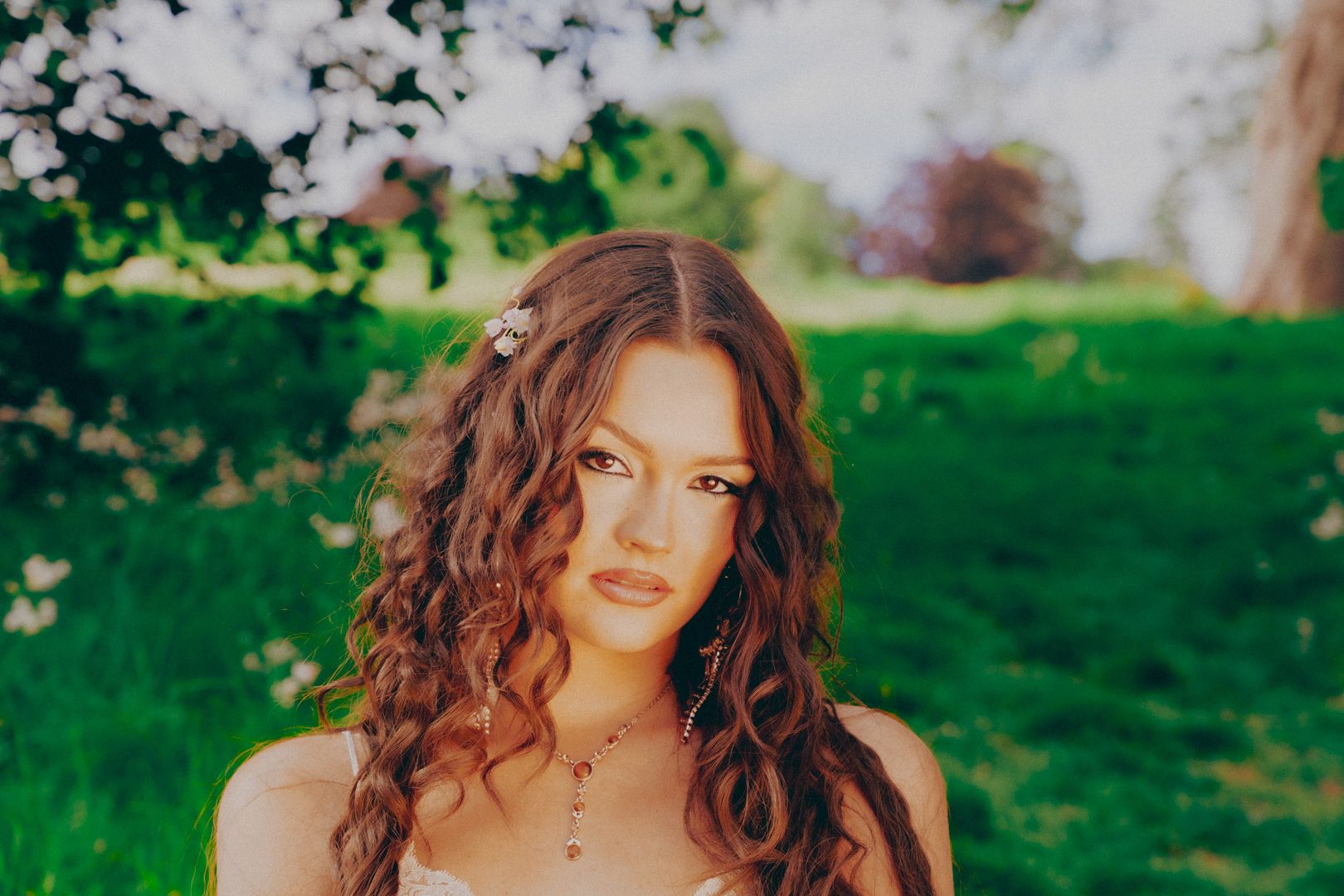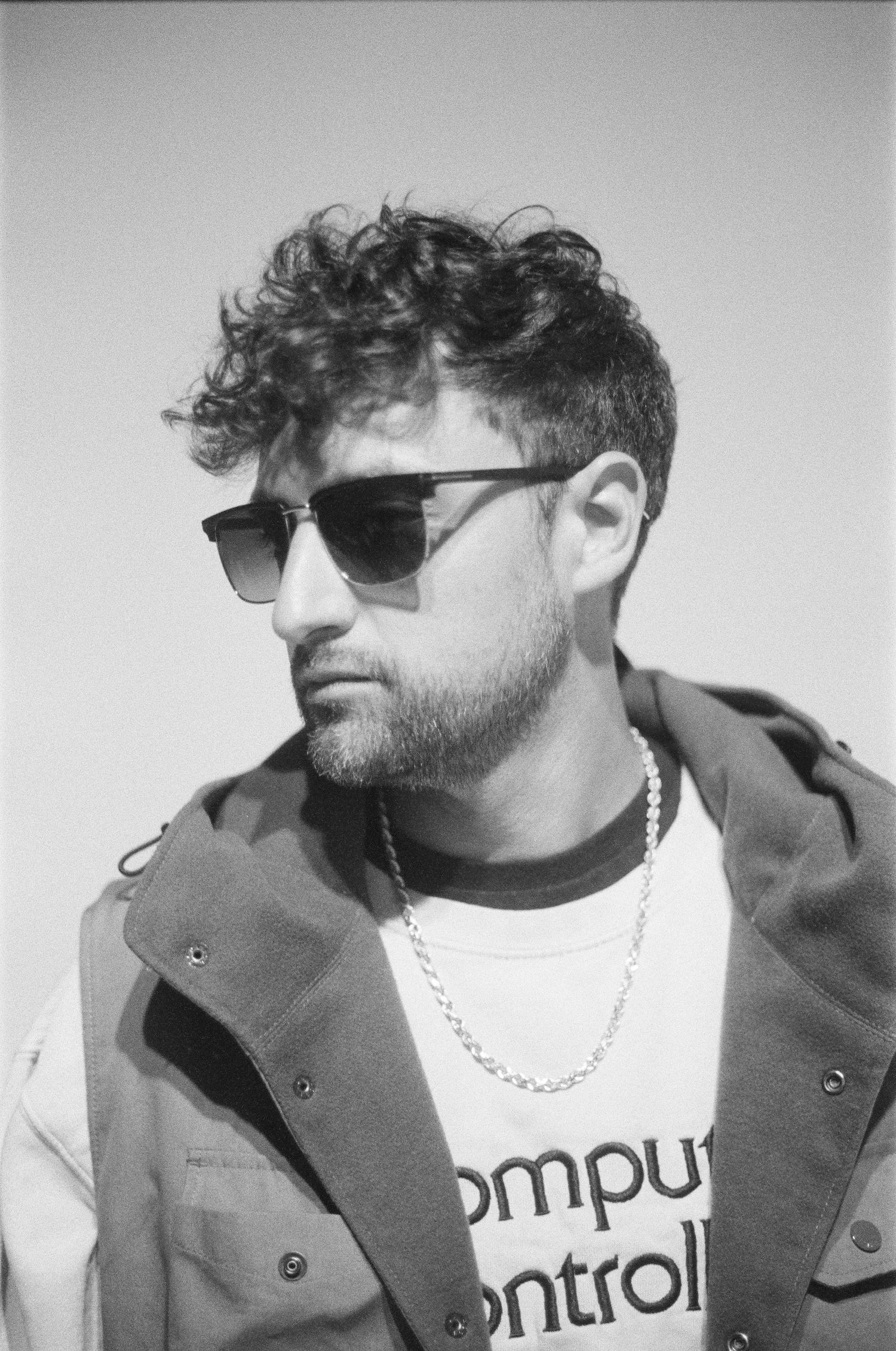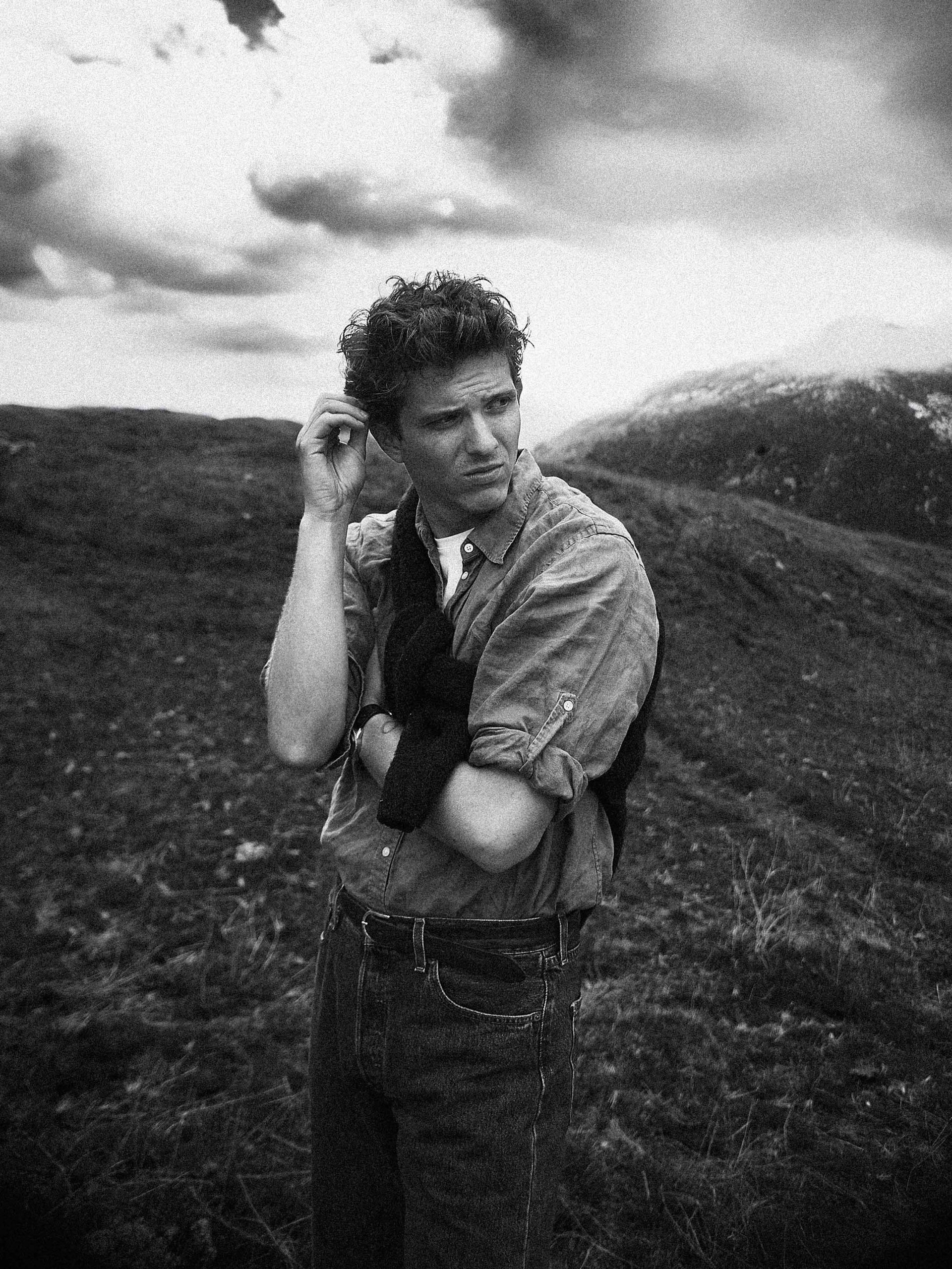
Lundbäck follows his gut instinct. Always. He has spent the better part of a decade quietly building something honest, and it shows. With over half a billion streams behind him and a sound that has travelled from the viral intimacy of “Cold” to the warmer, more organic textures of his recent work, “The Man Who Lost It All” arrives less like the work of someone who has finally made it and more like the work of someone who has decided to follow the path of transparency. What defines his vocal identity isn’t a single register but the tension between fragility and feeling, and his vocal processing is used not to polish but to deepen a track, lending it a kind of worn intimacy with a splash of innocence that sits at the heart of his electro-pop sound.
Listening back through his earlier EPs, “The Butterfly Affect” and “SWAY”, ahead of our conversation, what struck me was how much more confessional the lyrics have become. He has always been a storyteller with an emotional range, but his earlier work carried a layer of protection, emotion filtered through metaphor. Metaphors have their own kind of truth-telling, and those records are genuinely beautiful for it. Still, the evolution is unmistakable in how direct the new singles feel, as though the distance is no longer necessary.
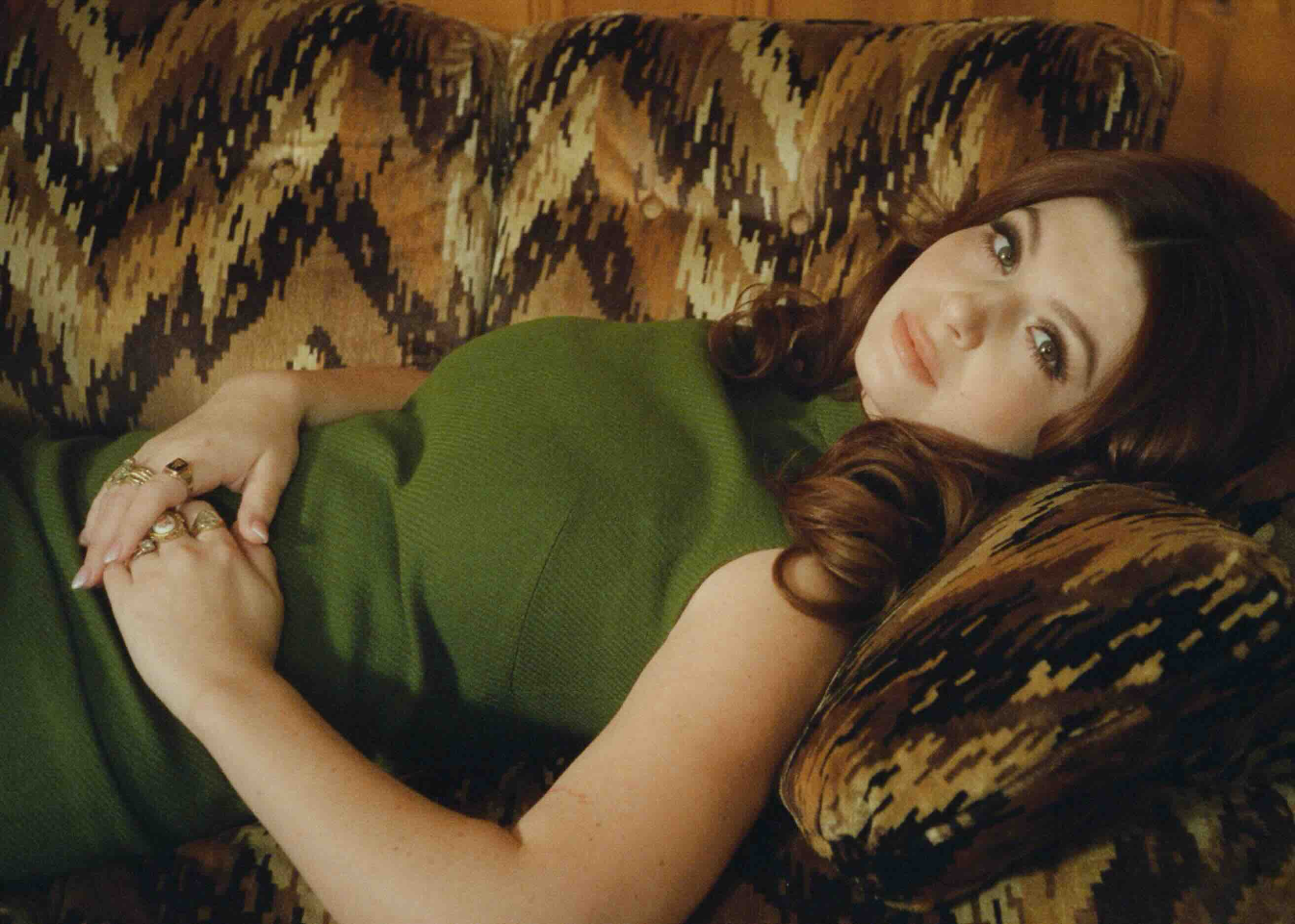
That shift is evident his new music video for “Switcheroo,” which was released earlier this month. The fourth track on the album, the video was filmed in his hometown and starring his fiancée, singer-songwriter Leah Maties, professionally known as Drew Now. Lyrics like “there’s enough drama to make a healthy heart stop,” “my hair carries trauma too,” and “took some time trying to find who you are, hard to see when you’re kept in the dark, what a switcheroo, babe we’re not twenty-two” explores and traces the messier edges of growing up, the highs and the lows, and suggest that what matters most is your experience in how you carry them.
What caught me off guard talking to Robin was how closely the person matched the lyrics. Within minutes, it stopped feeling like an interview and started feeling like a conversation with someone I’d known for years, which says something about how inseparable he has become from the artist he is becoming. Ahead of the album’s release, we put 18 Questions to him, covering everything from vulnerability and identity to the importance of having a genuine support system during his creative process, and what it actually means to let people into the room with you.
1. What’s the first thing you usually do when you wake up in the morning?
I head over to my Italian 1970’s espresso machine and make myself a good cup of coffee.
2. When do you feel most like yourself during the day?
Anywhere, really – but I process my thoughts better when I’m moving, whether that’s walking or exercising. When my body is active, my mind follows; I can actually work through things and understand myself more clearly. That’s also when inspiration tends to arrive. Nature adds another layer of calm to it, but for me it’s fundamentally about movement. When my endorphins are going, my mind is – in the most straightforward terms – regulated.
3. What’s something small that can completely shift your mood?
Social media!
4. Do you tend to overthink things or go with your gut?
I think I’ve always been more of a go-with-my-gut kind of person, but I feel like the older you get, the more you realise that sometimes you have to do things you’re uncomfortable with in order to grow. So if you’re going with your gut all the time — especially with big decisions, or with work — it can hold you back. I love writing music, that comes naturally to me, but there are things I’d rather avoid. My gut might be telling me I don’t need to sit down with the banking details for my company today, because it would be more comfortable to write a song instead. Gut feelings are there for a reason — they’re good. But with everything, I think it’s worth asking yourself whether your gut response is actually an accurate one.
5. What’s one habit you’re trying to break right now?
The need to constantly be entertained – by people, music, films, social media, anything really. I’m trying to find moments of stillness, even small ones. If I’m out walking, I don’t need to be listening to something; it just becomes unnecessary noise. I’m trying to break the habit of always needing to be stimulated, because I think that’s a slippery slope and the threshold keeps rising. I have ADHD, so my brain is constantly chasing dopamine. But I’m learning that I can just eat without watching something, or walk without listening to anything. I think you need those quiet moments – the silence – to even understand what you actually want or feel. When we’re constantly occupied with unnecessary noise, we can’t hear ourselves clearly.
6. What kind of energy do you naturally bring into a room?
I bring a lot of humour and energy, but it really depends on who I’m with. With my wife, I’m more of a hybrid – I’ll jump in with a punchline when it’s needed, but I can also give her the space to be that person. With my brothers, I turn into the younger brother instantly. And if I’m hosting a dinner party, I become this completely task-focused person – I’m cooking, fixing things, making sure everything runs smoothly, so I’m almost antisocial. Like, I genuinely want to hear about your work situation, but I have a salad to get to the table. [When asked whether he was an extrovert, ambivert or introvert]…I think I’m an extrovert, for sure. It’s just that when I have a task, my brain locks in completely and there’s no funny business — the social side sort of switches off until the task is done.
7. What’s the last thing that made you feel genuinely proud of yourself?
I have little moments where I just feel like I’ve made the right choice — like when I’m helping out family, or going beyond what’s needed to be there for someone. I really value those moments. But after the tour as well, my label had a small speech prepared, and that was something special, very much a ‘we’re so proud of you’ kind of moment. And I don’t mean that in the sense that their pride was what mattered. I think I was proud of myself in that moment too. Because when someone who is genuinely close to you, someone who sees your day-to-day struggles, expresses that they’re proud of the work you’ve been doing, I’ll admit I’m a little smug about it. It means something different coming from those people.
8. When you look back at where you started, what feels the most different now?
I started music really young. I used to busk and play on the streets when I was about fourteen or fifteen. There’s a tunnel in Gothenburg between the train station and a mall, and it’s called the “Piss Tunnel”, because, well, it smells like it. That’s where the drunk people go. But it has the most amazing reverb and incredible acoustics.
Around sixteen or seventeen I started posting covers on YouTube, and a label in Stockholm reached out. That gave me the opportunity to form a band with my brothers, and we made music together for a few years. But while that was going on, I kept thinking I wanted to develop my own artistry, and that’s really when “Boy in Space” came about. At that point I had no idea what my future in music would look like. You’re standing at the bottom of this big, scary mountain thinking, if I could just get over the first step of the trail, I’d be happy with that. But the further you get, the more you realise it’s a much longer path than you thought. And it’s not really about reaching the top.
It’s about the journey, and honestly, who even knows if there is a top. As a young musician I thought there would be this moment, this one point where I’d feel genuinely fulfilled and could say, that’s it. But the further I’ve walked down this path, the more I’ve realised it’s about having a good rhythm to it. A good day to day, a good team, a good relationship with your work. Because you can chase that mountaintop your whole life and then realise it’s not even where you wanted to go, and you haven’t enjoyed a single moment of the journey. And then you have to walk back down. Which is something else entirely.
9. Your upcoming album, “The Man Who Lost It All” was recorded live with a full band in just a few days. What made you want to capture it that way rather than building it up piece by piece in the studio?
Just to clarify, it wasn’t live takes with the whole band playing at once, but it was recorded with a full band, just in separate takes. I wanted to make that distinction.
But the intention behind it was very deliberate. Me and the two producers I worked with on this project, Oskar Widen and Freddy Alexander, talked a lot about the difference between making an EP and making an album. I’ve done four EPs, and what I wanted this to feel like was something different. Not a scattering of sounds recorded in different rooms with different microphones. I wanted you to close your eyes when you listen and feel like you’re in the room with me.
That’s something I’ve really explored as a listener myself over the last few years. The albums I love the most feel like a space. You’re in a room, and you stay in that room for the whole record. I didn’t want a song to suddenly throw you somewhere completely different. So we found a beautiful, large studio in the south of Sweden where we could record drums, guitars, bass, piano, everything in the same room as my vocals. Everything has the same feel to it. There’s nothing jarring or out of place. It all belongs together as one.
10. You’ve said this album feels like “letting go of a version of who you were.” What did that version look like and when did you know it was time to move on from him?
I think we’re constantly doing that. We are constantly shedding versions of ourselves. And if you look at my EPs, there’s always been some kind of change in style, feeling, expression. But this next move is probably the biggest I’ve ever made. It’s not just that the instrumentation is more organic and live-focused; the storytelling is different too. It’s always been authentic, but now there are actual details. You’re being led into the stories rather than observing them from a distance.
I think I’ve always been scared to let people in too much. So instead of saying what’s real, I’d reach for these big, grandiose gestures rather than just letting the truth be the truth. And what’s exciting about that changing is that so many people have connected to my songs over the years and asked me what they’re about, and honestly, I couldn’t always tell them. Because they weren’t specifically about one thing but instead, they were broad strokes. Now I’ll actually be able to share my thought process, and when someone has an experience with the music, I can meet them there.
Before, it was more like putting twenty percent of truth into a song and then dressing it up with clever bits to make it pop. And there’s nothing wrong with that – I love that kind of music. But I’m at a stage in life where I want to explore something different in my lyricism and my creative output. This felt like the next step that was just waiting for me. It was the scariest part of music for me, which is probably exactly why it was calling.
And I think there are different kinds of fear when it comes to truth. Everyone has experiences that are hard to face – even something as simple as standing in front of a mirror and looking at yourself honestly can be difficult. So, I’m trying to make “Boy in Space” less of a costume and more of a reflection of who I actually am.
11. Is there a song in your catalogue that didn’t blow up but means the most to you personally?
Not really. I have a song called “Remember Me”, and when I heard it, it was one of those songs I wrote way, way back, and held onto the demo for ages, and convinced it was going to blow up. It had such a radio feel to it, and I’d built it up so much in my head and I was expecting it to perform. And then it just didn’t. Which was interesting, because you can have this perception and this very clear picture of what’s going to happen with a song, and then reality just goes somewhere else entirely. I wanted to be edgier, I thought this was going to be a radio smash. It simply wasn’t.
12. You’ve said melody comes first for you. Does a melody ever arrive with an emotion already attached, or do the feelings come later in the writing?
It’s definitely melody. I’ve started a technique, at least when I’m going for walks or just living life, of jotting down little lyric ideas, and those can shape how the melody moves or sounds.
But melody is a powerful language in itself. I used to let melodies tell me what to write about, though you can go the other way too, which is equally interesting. I have a song called “Asshole” – it’s this upbeat, fun, quirky track with the most depressing lyrics. So it can go both ways. There’s something powerful about letting the melody speak for itself, almost doubling down on the emotion. If you’re trying to express something serious, let the melody reinforce that and guide what you write about.
As a listener, the first thing that clicks for me is production, not in a technical sense, not whether it’s well mixed, but whether the sound itself is saying something. Then melody, then lyrics. Though it all happens so fast that really they’re all telling me something simultaneously. Sometimes I’ll really love a song but the production is so off that I can’t blast it in the car without it blowing my speakers.
13. You write about universal emotions but in a very personal way. How do you know when a song is ready to be heard and when does it stop being yours?
I think if the music is speaking to me, that’s the first sign. Once that happens, I present it to people I’m close to; my mum, whoever, and I watch their reaction. I want to see if the experience transcends beyond me. Usually when you’re writing a song there are at least two people in the room, and you can already tell from that person whether it’s landing. I think if you’re creating something genuinely good, it’s not only going to resonate with you. There are almost rules to what works, what we respond to as humans. So I like to test it with the people I trust around me, and if everyone feels like this is the material, that’s as close as you can get to knowing.
14. Sweden has produced some of the most distinctive pop music in the world. How did growing up there shape your musical instincts? And outside of your own work, who are the artists you consistently return to?
Melodically, Swedes have a tendency to really emphasise the melody language. You hear it across Swedish music, and even the Swedish language itself is quite melodic. With the big names in Swedish pop, Abba, Björn Borg, Roxette, there’s always this strong pull toward hooky, memorable melodies. And I think part of that comes from the fact that English isn’t our first language. We’re never going to out-Bob Dylan someone in English, that’s near impossible. So we put the emphasis on melody instead.
That’s definitely been true for my own music too. But it’s not really a conscious focus, because melody comes so naturally to me. It’s my most natural vein as a musician, it’s just how I was wired. So even now, when my focus has shifted more toward lyrics, the melody is always there underneath. It never really leaves.
In terms of artists I keep coming back to, the Red Hot Chilli Peppers have always been one. Their lyrics are sometimes so abstract you have to really dig into them, and sometimes I think they don’t mean anything at all. It’s like they were scribbled on a napkin at a street food restaurant. Very rock and roll. From childhood I was heavily inspired by that kind of music such as Thin Lizzy, the Eagles. But as I’ve gotten older I’ve leaned more toward songwriteroriented music. James Taylor, Simon and Garfunkel, Jackson Browne, Joni Mitchell. That type of music becomes a resting place for me. It doesn’t feel like work. Some music I associate with expectations and pressure, but that music I can just listen to and drift off, or think. It’s not just escapism either, it’s more like a companion.
15. “Cold” hit tens of millions of streams almost out of nowhere. Did that change how you trusted yourself creatively, or did it create a pressure you had to shake off?
It just reassured me that what I was doing was right. It made me more certain that if you want to create something, it has to be exactly the thing you want to create. Don’t halfway do it, don’t try to please anyone else in the process, because if you don’t even like it, who’s going to?
“Cold”, and everything I’ve tried to do since, comes from asking what do I want to say and how do I want to express myself. It was reassuring to see that when I was actually doing that, it worked and it resonated with people. Because before that I’d made a lot of music that was more like, this is what I should say, or maybe people will like this. Almost looking for a pat on the back. So to see that the music I genuinely wanted to make was the music that connected, that was fascinating to me. And with music, the probability of failure is so high. I always had this thought that if I’m going to fail, I’m going to fail doing something I love. I have to be proud of what I’m putting out. Because if I’m just trying to make everyone else happy and I don’t even like what I’ve made, and then it fails anyway, I’ve ended up spending all that time on something I didn’t even believe in.
16. This new album feels like a different kind of openness compared to your earlier work. How has your relationship with vulnerability evolved? Does it become easier with time, or does it simply take a different form?
I’m yet to find out, honestly. I feel like I’m only at the beginning of writing in this way, really vulnerable, really open. And when you’re writing that kind of material it puts you in a very emotional place. When we wrote “Who’s Crying When I’m Leaving”, I think I cried four times in the session. So you have to do it with people you feel safe with. But whether it gets easier, I genuinely don’t know yet. I haven’t dived into the next chapter of that yet. I’m excited to see what it looks like, how it feels, whether I’ll approach it differently this time around. It’s still unknown to me.
17. When you imagine someone experiencing this album, where are they, how are they listening, and who are they with?
There’s a mix of songs on the album. Some you should listen to with the person you love, and some you might want to hear alone on a drive, with space to reflect. But what I want, more than anything, is for people to feel something when they listen. I want them to feel part of it. Sonically, I hope that comes through in the full experience of it. Not just three songs they like and then skip through the rest, but the whole thing, start to finish, like a good film. You sit down, you go on the journey, and by the end it feels like a complete package.
18. You called this album “a beginning.” What does the next chapter actually look like to you?
As an artist there are always new chapters, especially in an industry that never stops changing. For me, the next one is about connection. How do I get closer to the people who love what I do? I want to play more live. I want to find my voice on social media in a way that actually builds a community, whether that’s on Spotify, Instagram, TikTok, or on the road. I want there to be a continuity of feeling across all of those spaces. And touring more. That’s the next step.
Album The Man Who Lost It All is out 23rd October. Follow via @boyinspace
Interview Hanane Zahrouni
Photography Jesper Smeding