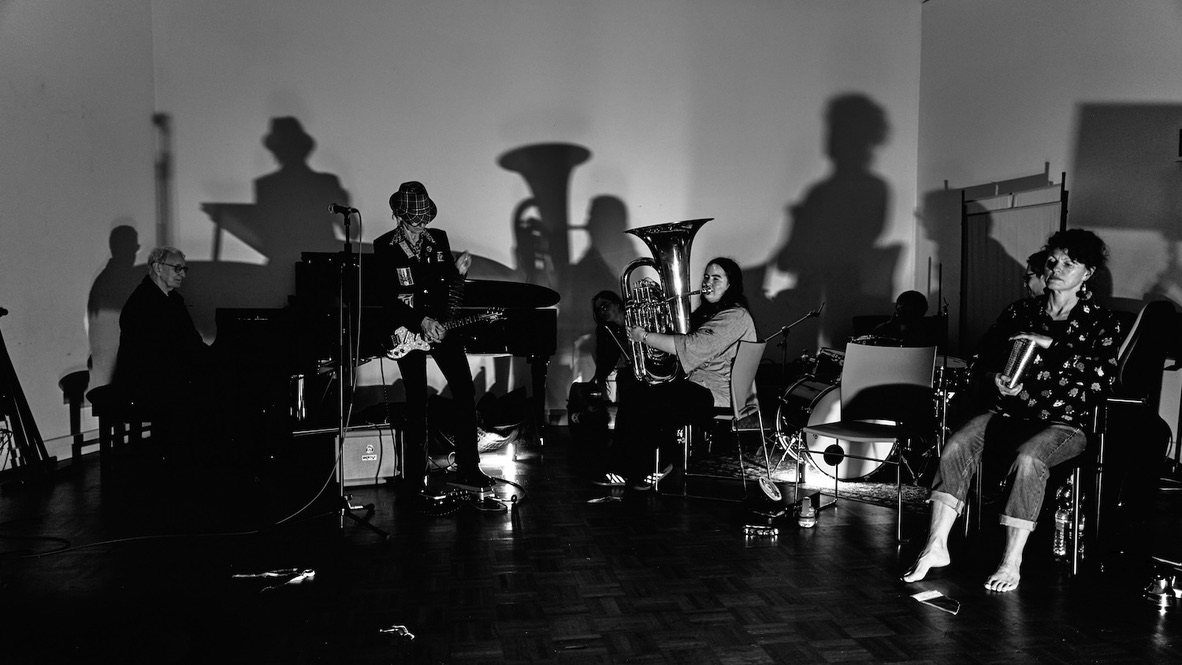
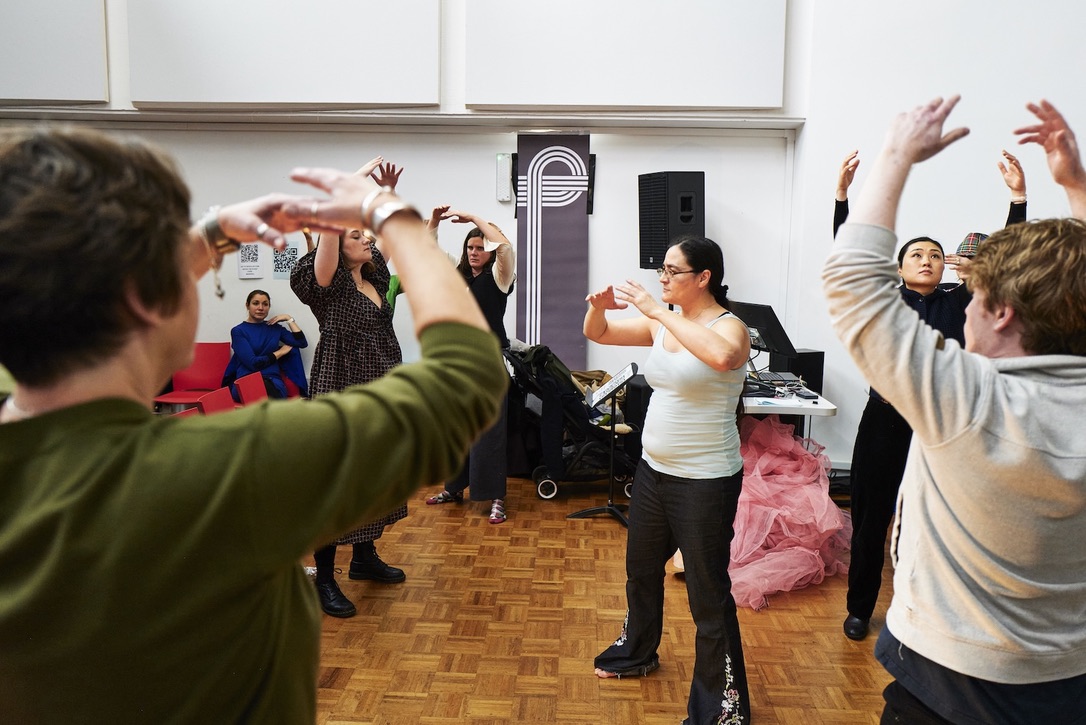
Noisy Women Present don’t do traditional concerts. At their Goldsmiths performance on November 7th, ten performers created something unrehearsed and collaborative: part music, part movement, part visual art. It was messy and interesting at the same time.
The collective was co-founded by Faradena Afifi, Maggie Nicols, Gwendolyn Kassenaar, and Marion Treby —four artists who started jamming online during lockdown in 2020. Nicols is a legend in free improvisation circles, having joined London’s Spontaneous Music Ensemble in 1968 and formed the Feminist Improvising Group in 1977. What began as pandemic-era online sessions has grown into something bigger: a collective that’s actively reshaping who gets to participate in experimental music.
The group provides an inclusive space for women and non-binary performers across all disciplines, but they’ve also established the Noisy People’s Improvising Orchestra, which specifically welcomes performers with neurodiversity and learning differences. Afifi specialises in healing music and T’ai Chi-based exercises for people with learning differences and brain injuries, bringing a different approach to improvisation that centers accessibility.
The Serpentine fellowship they received is significant. “Support Structures for Support Structures” provides unrestricted grants to artists and collectives who’ve been sustaining their practice for years without financial or institutional support. For a collective operating entirely outside traditional funding structures, this kind of backing actually allows them to keep going.
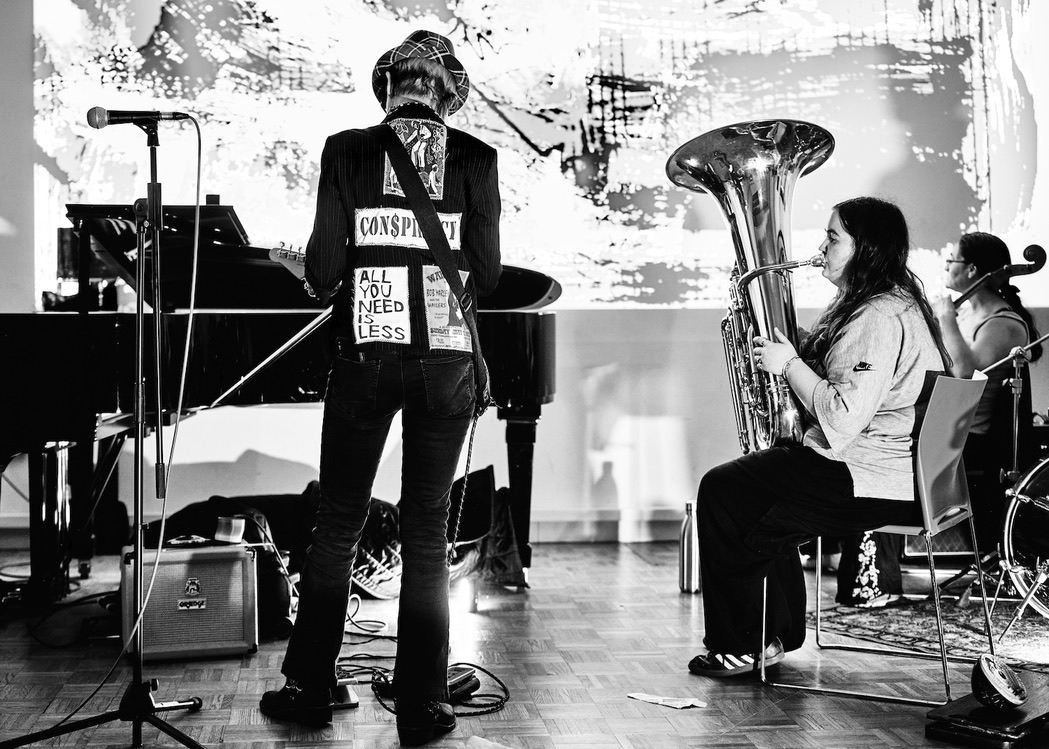
At Goldsmiths, the lineup brought together improvisation veteran Steve Beresford, who’s been a central figure in British experimental music for over fifty years, alongside Afifi, who switched between violin and cello. Kassenaar didn’t play an instrument. she moved, her body becoming part of the sound. Schroeder spoke poetry over electronic guitar. Liu worked with movement and live visuals. Wolloshin, who curated the performance, added atmospheric textures. McPherson was on drums. Suhail’s voice went from quiet to full eruptions. Morrison rounded things out.
The Performance
The evening unfolded in two distinct movements. The first set, led by Afifi, brought the full ensemble together around John Steve’s pieces, a grounding introduction that established the collective energy before things splintered into more exploratory territory.
At Goldsmiths, the lineup brought together improvisation veteran Steve Beresford, who’s been a central figure in British experimental music for over fifty years, alongside Afifi, who switched between violin and cello. Kassenaar didn’t play an instrument—she moved, her body becoming part of the sound. Schroeder spoke poetry over electronic guitar. Liu worked with movement and live visuals. Wolloshin, who curated the performance, added atmospheric textures. McPherson was on drums. Suhail’s voice went from quiet to full eruptions. Morrison rounded things out.
The second set turned toward Renée Baker’s graphic scores, and this is where the performance really opened up. Baker, a member of the Association for the Advancement of Creative Musicians, creates visual compositions that function more as catalysts than instructions. Her scores, dense with marks, shapes, trajectories, and interruptions, don’t tell you what to play. They suggest possibilities, leaving each performer to navigate the visual cues in real time.
What emerged was genuinely unpredictable. The ensemble stopped thinking in terms of melody and rhythm and started exploring texture, density, and spatial relationships instead. Sometimes the group converged into a unified mass of sound that felt almost overwhelming. Other times, individual voices carved out surprisingly intimate moments, and you could hear exactly how differently each performer was interpreting the same visual prompt.
This is where the format either works or it doesn’t. There were passages that dragged, moments where the collective energy dipped and you could feel everyone searching for the next move. But those lulls made the moments of genuine connection feel earned rather than rehearsed. When Suhail’s voice suddenly cut through a dense electronic texture, or when Kassenaar’s movement seemed to pull the sound in a completely different direction, it felt like discovery rather than execution.
More Than Music
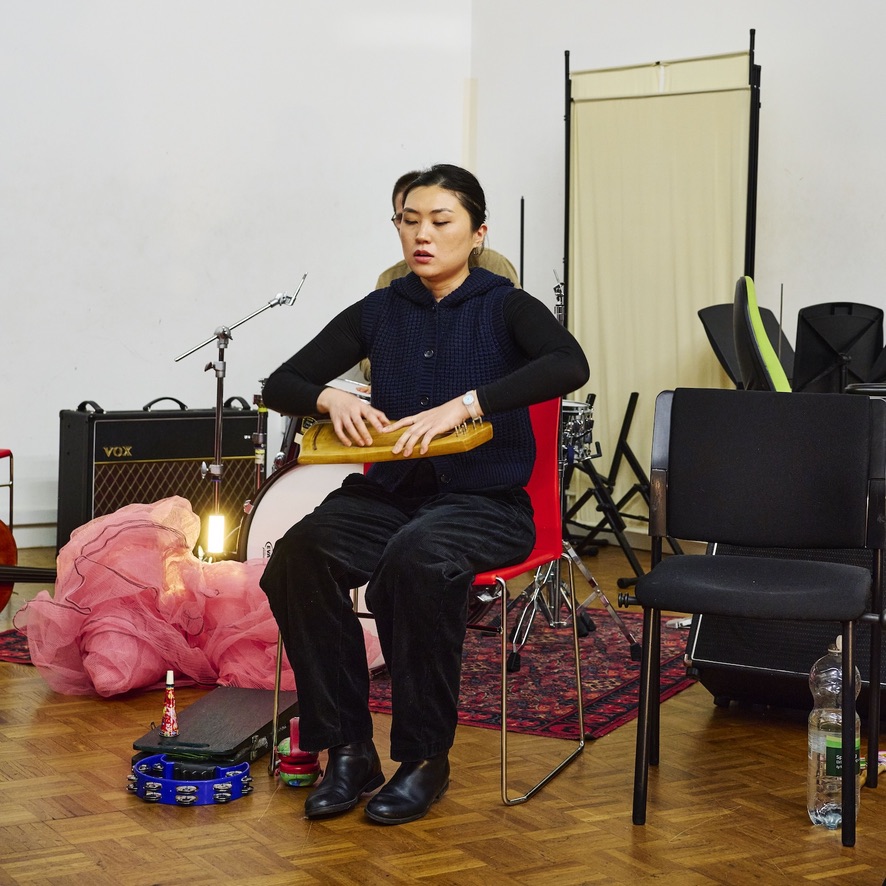
Chinese-born artist Ningrui Liu brought a different dimension to the performance entirely. Working across movement, spoken word, and live visuals, Liu’s practice weaves together elements that feel both rigorous and genuinely exploratory. What stood out wasn’t just her technical skill but her listening, she picked up on subtle shifts in texture and gesture that other performers were putting out, responding in ways that opened up new directions without dominating the space.
Liu’s contribution highlights something important about Noisy Women Present’s approach: the work isn’t just about making sound, it’s about creating frameworks where different practices can genuinely intersect. Her ability to participate creatively while also shaping the performance through visual and movement elements showed what interdisciplinary collaboration can actually look like when it’s done well.
Baker’s graphic scores gave them something to work from, but the rest was pure improvisation. Ten people, no rehearsal, no one person dominating. When it clicked, it really clicked. And when it didn’t? That was interesting too.
By James Mitchell
You can watch the full performance here: