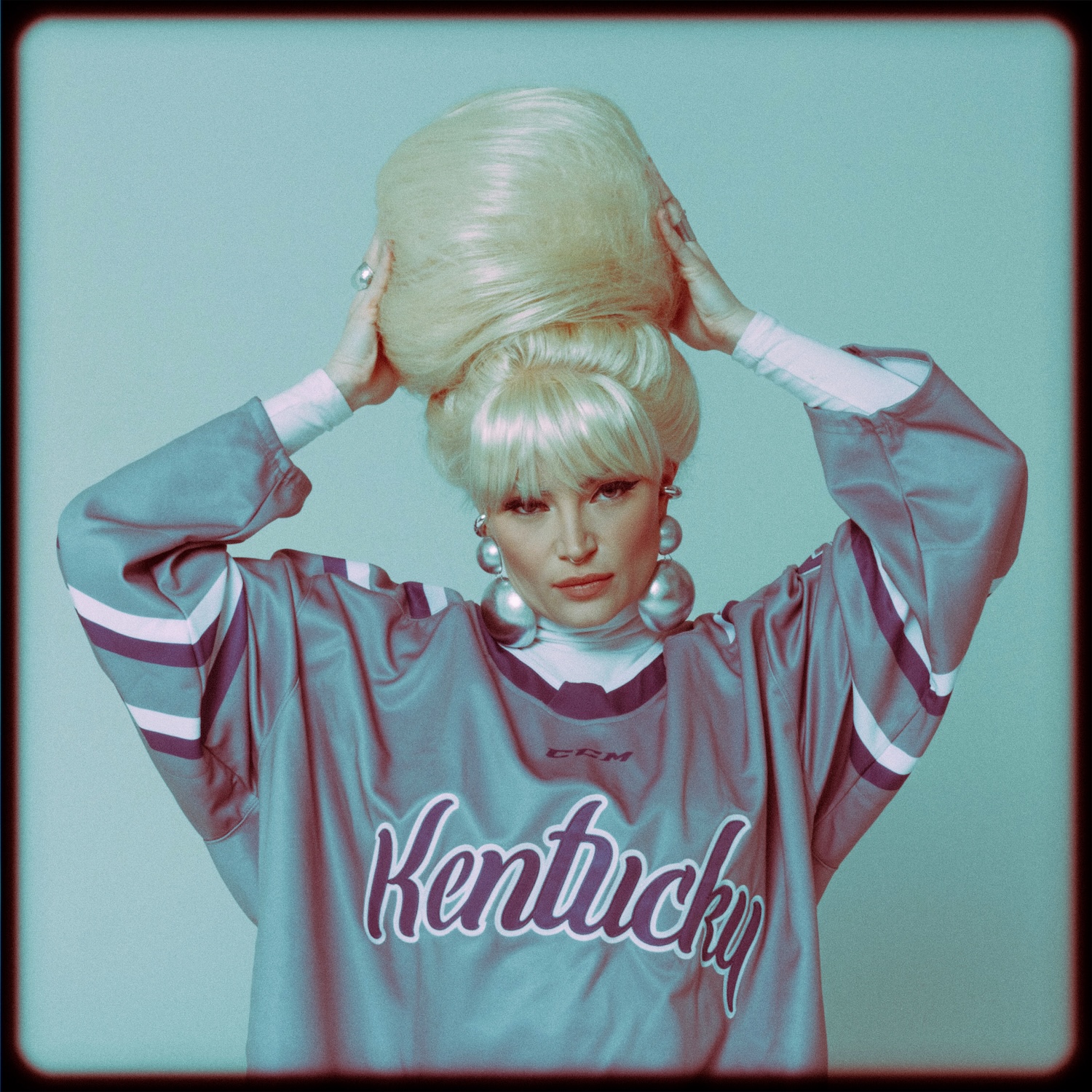
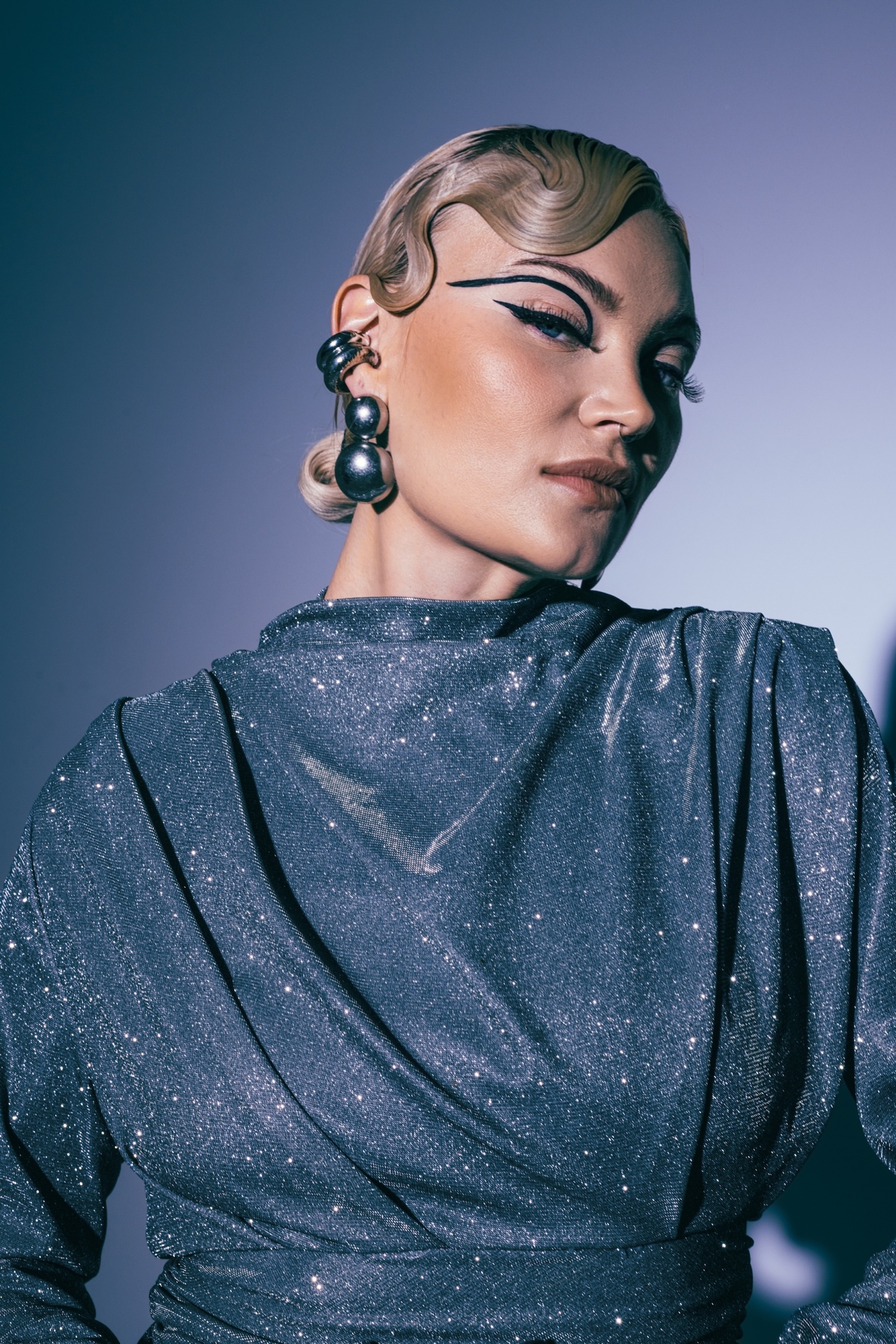
Kentucky-raised singer-songwriter Alana Hil opens the year with a renewed chapter of her EP Diaries of a Common Woman. This four-track project leans into emotional reflection and stripped-back storytelling. Merging elements of soul, blues, R&B and country, her voice sits low and steady before swelling into full projection. The record keeps her voice at the forefront, allowing the weight of her unfiltered lyricism to take centre stage.
This body of work paints the picture of the artist’s life experiences. Direct lyrics sit alongside gospel-rooted harmonies shaped by her upbringing, while her visual art practice and even her exposure to Indian classical music in the Himalayas subtly inform the project’s sonic identity. The EP leans into monochromatic emotional tones, exploring loneliness, resilience, mental health and love, with the singles “Love and Mental Breakdowns” and “In Between” anchoring its most personal moments.
Over the years, Alana has amassed millions of streams, worked alongside Printz Board, the two-time GRAMMY® Award-winning producer, and joined Macy Gray on her 25th anniversary tour. Now she is touring alongside Butter Funk Family, the classical funk band led by Board.
I attended her London show ahead of our conversation. She sang an array of tracks she’s featured on from BFF’s album FACTS, raising the energy in the room. The hypnotic grooves were well received, with members of the audience dancing throughout. She also performed the single “Love and Mental Breakdowns”, inviting the audience to sing along to the chorus before declaring “fuck those motherfuckers that hurt you”, which felt cathartic. When the commercial break was announced midway through the set, it was thought that the band would step offstage – instead, Alana Hil became the advert. Slipping into a vintage, all-American cadence, she sang a rundown of the merch for viewers, a routine plug turned into a theatrical moment that drew laughter from the room.
Off stage, Hil carries a similar duality. Warm and open in conversation, she speaks with a reflective calm that mirrors the diary-like intimacy of her EP. Following her London show, 1883 sat down with Hil to discuss the evolution of Diaries of a Common Woman, the creative decisions behind the project, and what she has planned next.
This project feels stiller and more reflective than your last one – what changed for you creatively between the two?
Andrew Joslyn in Seattle, Washington, composed a string version, and I just wanted to experiment hearing it with the orchestral sound.
Blue runs through the visuals of this EP. Is that colour symbolic for you?
Yes, for this current project, Diaries of a Common Woman, I did it more as a concept, as you would do for an artist exhibition. I was inspired by Picasso’s blue period because he lost his sister and went through a really dark time. I’m also a painter, and I painted everything in blue for a while. So that was the inspiration.
Do you still paint?
Yeah, I do.
Even whilst on tour?
Oh no, at home ha-ha.
When you’re writing something as exposed as “Love and Mental Breakdowns”, do you ever hesitate before putting those lyrics out into the world?
I didn’t, no, because I feel that the more honest I can be, the more people can feel safe in knowing there’s so much domestic abuse around the world. I personally grew up around domestic violence.
I wrote the song after an altercation with my partner. It took me about 10 minutes to write it. I just wrote what happened.
What was the thought process behind the title? Would you consider yourself common?
The thought process behind the title was it’s my innermost. I wrote it as if it were a diary entry. I thought, this is my story as of late – and do I consider myself common? Absolutely not. But I don’t think anybody is.
So, I thought it was ironic because we are common in the way that we experience the spectrum of human emotions. But I’m certainly not common, and most people aren’t so.
You have lived quite a life and moved from very different cultural and spiritual environments. What drew you to gospel choirs and going to the Himalayas to study Indian classical music?
Well, I think what really started it was when my parents divorced when I was around 11, and my mom married a reverend of the African Methodist Episcopal Church. So, I was raised partially by a black man in America, black siblings, which is kind of interesting.
It’s a different culture. Everybody in, especially in America, it’s like counterculture, I got to learn a lot about that. It set me into this mindset that I wanted to know more about every culture in a way. I was exposed to gospel music, and that’s where the soul came through, hearing that type of singing.
During ‘uni’, I attended Westminster for a while in London, and I was exposed to different types of music like punk and underground music. And I was just inspired by that. But after college, I decided instead of pursuing music that I was going to travel the world. And I don’t know why I decided that. I spent years backpacking – I would go to Northern California, trim/grow marijuana and save up a lot of cash for like a month or two. And then I would just go live in a van in Australia, and I had an Aboriginal guy teach me how to play the didgeridoo. I then lived in Maui. I learned how to play the ukulele and then went to the Himalayas, and I studied yoga.
I got my yoga certification to teach. And then I went to the North Indian school of classical music because they have a different scale, and they do a lot of slides.
Is yoga instructing something you would want to do, I don’t know, part-time or eventually, or maybe never?
Never. I did it for me. I wanted to learn the alignment. It’s a whole different thing. It’s funny. The simplest postures, I thought I was doing it right. Oh, and it’s such hard work.
Supporting Macy Gray last summer placed you in front of an audience that already understands soul storytelling. Did that tour validate your direction, or challenge you to refine it?
I would say that it validated me in some ways because the audience understood that type of storytelling. And it also made me realise that I had to work hard to become a good performer. I was not very strong in my performance. There are a lot of elements to holding down a show. So, for me to play before her and then her, watch her, I was like, I really need to set my game up. I worked hard at it for the next year and six months.
Last night, the energy stayed high and almost celebratory – When you were singing “Love and Mental Breakdowns”. In that moment, what did it feel like they were connecting to?
I wasn’t sure. It’s tricky with playing funk music and trying to tell that type of story. Because funk music, in general, especially in the old days, if you listen to the lyrical content, it’s funny. It’s not serious a lot of the time. When you get into soul and things like that from that era, it is, right? So, if someone’s coming to see a funk show, they’re not necessarily listening to the lyrics, typically.
I’ve found it to be an honour that the band allowed me to incorporate a little bit of my art into the show.
Do you prefer closeness with your audience, or do you thrive more on larger stages?
My biggest crowd that I’ve performed in front of was 10,000, but I did it in Senegal at an artist’s exchange. And the cultural difference was so it was big. So, they didn’t really understand what was going on. And then everybody else was into like Afrobeat, and Amapiano. So that’s my only experience playing in bigger crowds, unfortunately. Macy’s crowd isn’t even; it’s a smaller venue right now. So, I haven’t had that experience. I’m looking forward to it.
Are there songs on this EP that still feel unresolved for you when you perform them live?
I would say they do; I still feel those things for sure. But now that I’m working on my new EP, Diaries of a Common Woman Volume 2, I feel, as all artists do, I’m ready to move on. It’s a special body of work, but I’m like, now that I’m working on my new stuff, I’m like, oh, this feels like where I am right now.
It sounds like maybe Volume 1 might be a closed chapter for you. Will fans expect a new direction musically in terms of sound or energy?
Absolutely. It’s going to be more stripped back, more pop, less musical. When I say musical, I mean fewer complex chords; there are a lot of great musicians on Diaries of a Common Woman Volume 1. So, Volume 2, we’re going to just hit it straight pop, but still soulful, just straight pop.
Will the project include any features?
No, just purely me on this one. But I just did a feature, though, with CyHigh the Prynce. I got featured on his album. I’m really excited about that.
Thank you for taking the time to speak with me today about your story and projects. I look forward to your future projects as well!
Thank you!!
Alana Hil’s latest EP Diaries of a Common Woman is out now, follow via @alana.hil
Interview Nancy Anekwe