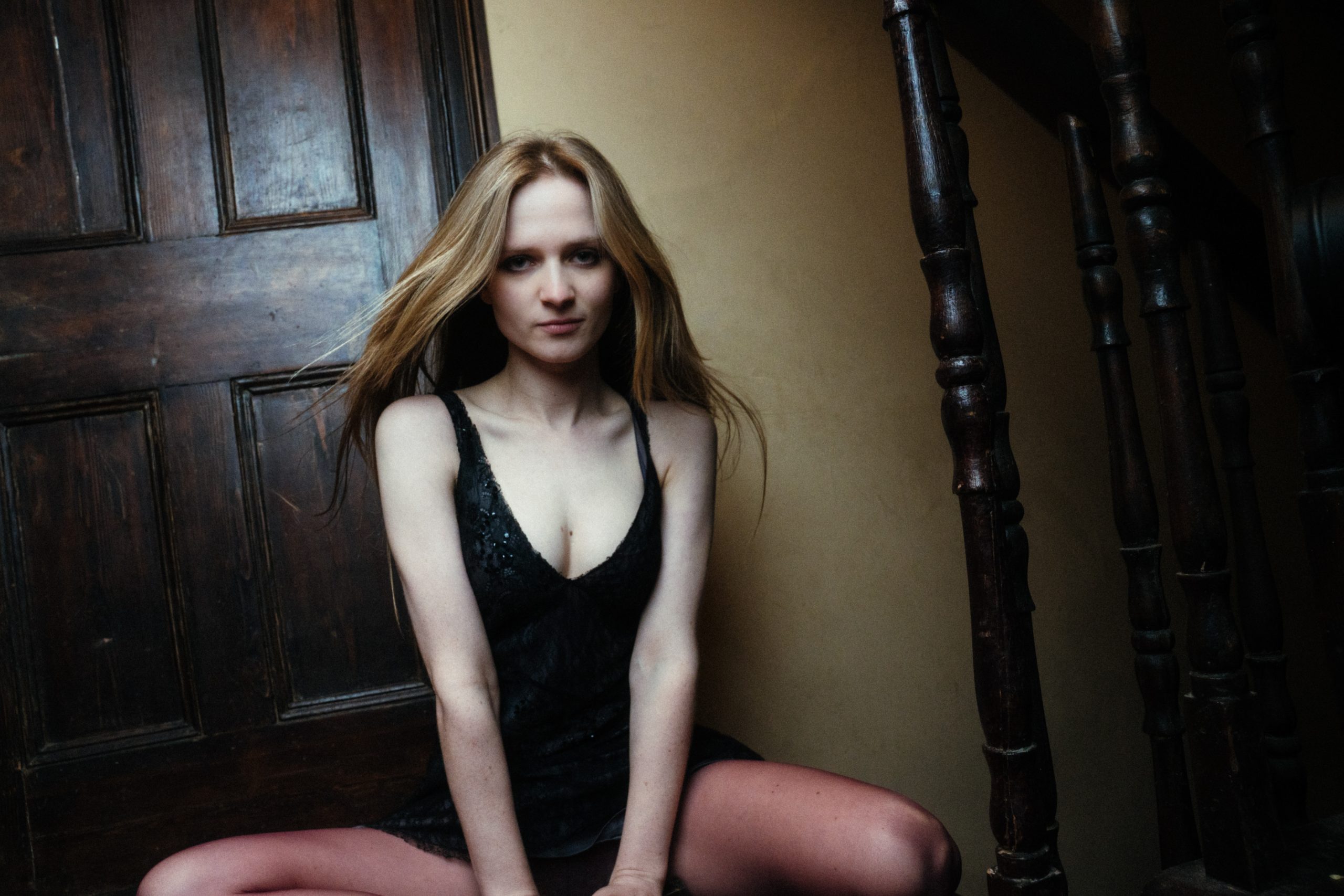
Nell Williams is exactly the kind of chaos most smart creatives aspire to. She joins our call laughing, hair still wet, only just clocking what’s behind her: her childhood bedroom. A painting of two women fills most of the frame. “That’s my mother and my grandmother. We used to paint a lot.” Nell, for all intents and purposes, is an artist.
Nell found her own way to films, as she seems to have found her own way through most of her creativity. After doing daily ballet lessons and pinning her hopes on that dream until the age of 11, she was scouted during a National Youth Music Theatre production and cast in Caryl Churchill’s Love and Information at the Royal Court Theatre. And just like that, a new dream was born.
From playing young Cersei Lannister in HBO’s Game of Thrones to working opposite Helen Mirren – twice – and Ian McKellen (all while finishing a degree in History), she has built a career that feels intentional. Now, she’s wrapping up the promotion tour for A24’s How to Make a Killing, helmed by John Patton Ford (of Emily the Criminal fame) and starring Hollywood darling Glen Powell. Williams plays the rebellious, if very posh, mother of Powell’s character, and is the reason the story begins in the first place.
1883 Magazine sits down with Nell Williams to chat about curating a career as an actor, why she wants to make political films, and her passion for interweaving creative practices into her life.
It seems you’ve been travelling a lot!
I’m so jet lagged. It’s been for promo, to LA and then back, and then the BAFTAs. So it’s been a lot! I try not to engage with the event side of things normally. I’m a bit scared of them. They’re quite intimidating.
They can be, for sure! Especially if you go on your own.
I went to one on my own and was alone for at least an hour. Then I bumped into someone I knew and he was like, “You’ve just got to go and talk to people right now. I’m not going to be your blanket.” And he was absolutely right. I did make friends. I went and spoke to Jonathan Glazer and he was really nice.
How did you get involved with How to Make a Killing? Was it a normal audition process? Did you get sent the script?
I was shooting a film called SPF, where I play an influencer, in Mexico, which was cool. Lucy Bevan was casting it with Olivia Grant, and I’d worked with Lucy before, so it came in and I read the script and thought, “This is a crazily slick script.” I’d been a massive fan of Emily the Criminal, which was John [Patton Ford]’s last film. I did a tape and that went well.
Then I had a meeting with John, and he was just so cool. I really liked the idea of him going from the indie space with Emily the Criminal straight to a really big movie. That was something I wanted to be involved in. I think it was the same for everyone, we’d all loved Emily the Criminal and just wanted to support John and be part of that journey.
That must be amazing for John, the fact that Emily the Criminal brought him directly to this, it’s the success story people like to read and be part of.
I’d actually written him a letter after watching Emily the Criminal, telling him how much I loved it. It was amazing. That’s kind of what I want to do. It’s so hard to curate a career as an actor, but it’s such a joy working with people who come from an indie space.
How do you curate your career as an actor, what excites you as a script? Can actors curate when they’re constantly in search of work?
I think you can, but it’s incredibly difficult. What you fill your time with, what you fill your head with, is ultimately what gravitates towards you. People want people who are interested in their work. The best advice I could give anyone is to find your taste and watch as much as you can. I watch about a film a day. If I’ve got time, I watch more.
I really want to direct my career toward working with filmmakers I admire, because I admire so many.
If you were shooting for the stars, what would be your dream role? Whether that’s working with a filmmaker or the role itself.
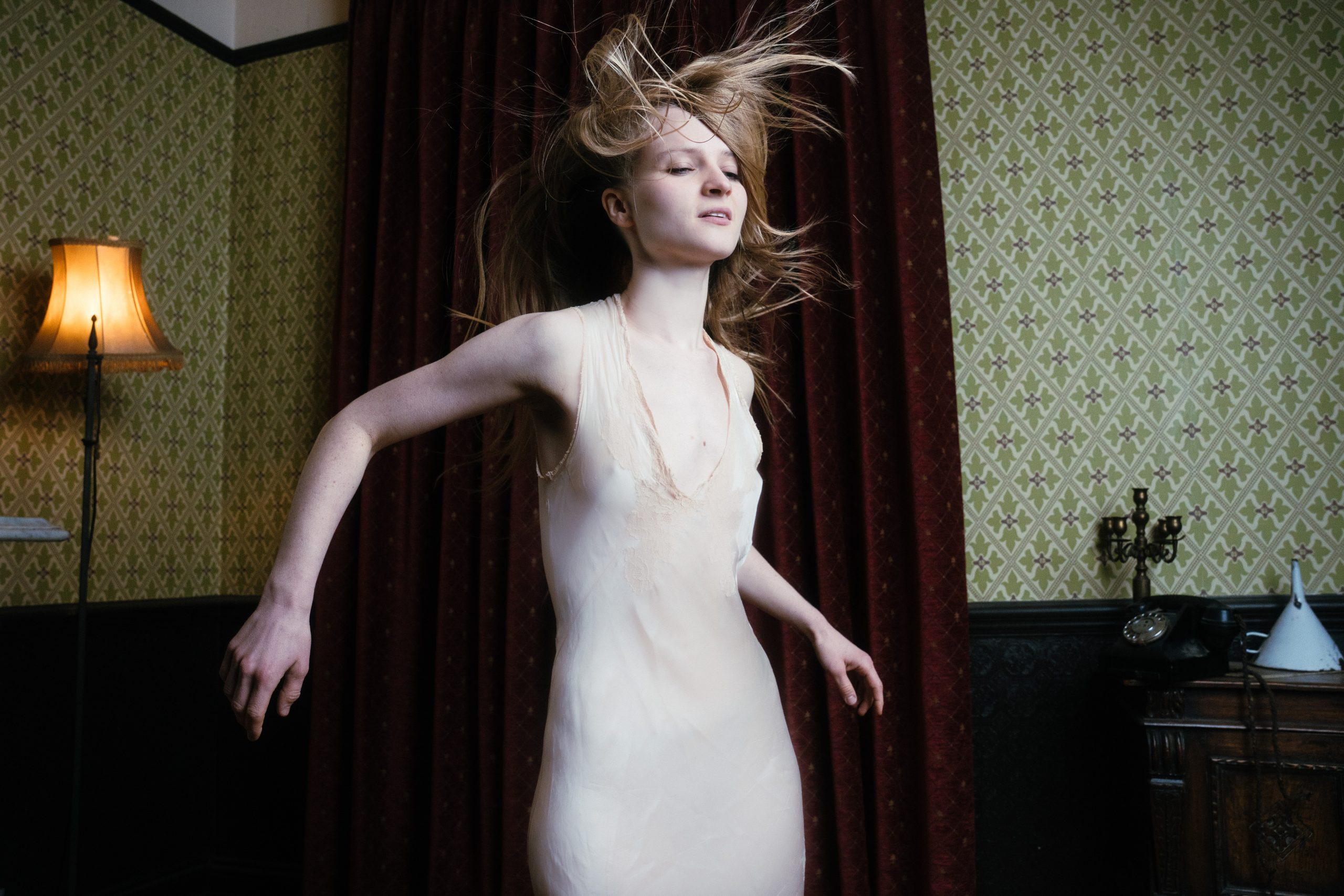
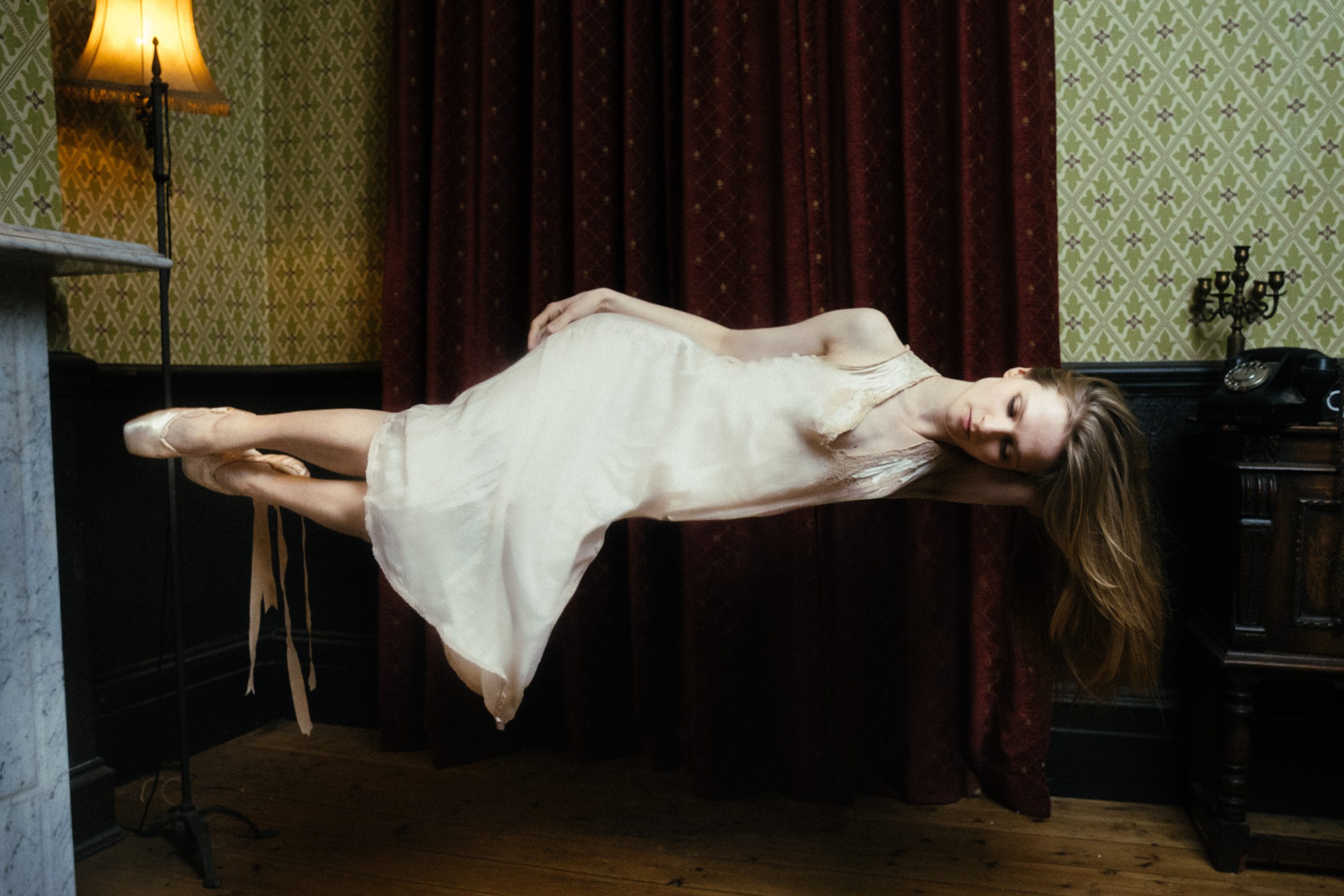
That’s a huge question! I did ballet growing up, very intensely. I was trying to be a ballerina until I was about 12, and then I carried on training until I was 16. So I’d maybe like to do something connected to that.
Has ballet helped you as a performer?
Yeah. It gives you inner strength. You know where your strength comes from, your core, your ass, and you know how to be still on camera. There’s control, and it’s very grounding. It makes you able to look relaxed without being all over the place. It gives you a stillness, which can be really useful. And it’s also very good to completely forget it all as well.
In How to Make a Killing, Mary is free-spirited and slightly different compared to the family, but at the end of the day, she also still has the same entitlement and vengefulness to her. How did you approach her?
I think we all have that inside us, whether we’ve been born with a silver spoon or not. She’s got lots of different sides to her, which is always really fun to play. I loved playing her as wild and free and fun, because she is fun.
On one side, she’s her dad’s favourite. And then he does the most unforgivable thing: he kicks her out of the family and never sees her again, never sees her child again. I get to play her over a long period of time, so I could lean into different aspects of her as she got older. When she was younger, I tried to make her more unencumbered, more unbothered by her greed and aspirations.
I thought of her as cat-like, quite predatory. That stillness, that focus, that calculating feeling. I leaned into that especially once she’d been cast out of the family. She’s steely. She knows what she wants and how to get it. She’s always got her eyes on the prize, whether she’s young and wild, or older and desperate.
From being the favorite to being ousted obviously shapes the way that she sees the world. How did you think about that aspect of it?
It quite literally calcifies something inside of her, because she then gets cancer and dies. It has a physical impact. I imagine people like Mary bottle things up and store them inside themselves, use it as energy. But it stays there.
The reason I say I thought she was cat-like is because I remember reading an interview with Ivo van Hove and Ruth Wilson where he told her to “die like a fish.” That was his direction. I thought that was cool. So I tried to think about Mary being quite animalistic, because she’s very intense and impulsive. She’s a force of nature, and so are animals. I thought about how an animal would react if it had been taken from a place of feeling safe and thrown into a violent world where nothing is guaranteed and you have to kill or be killed.
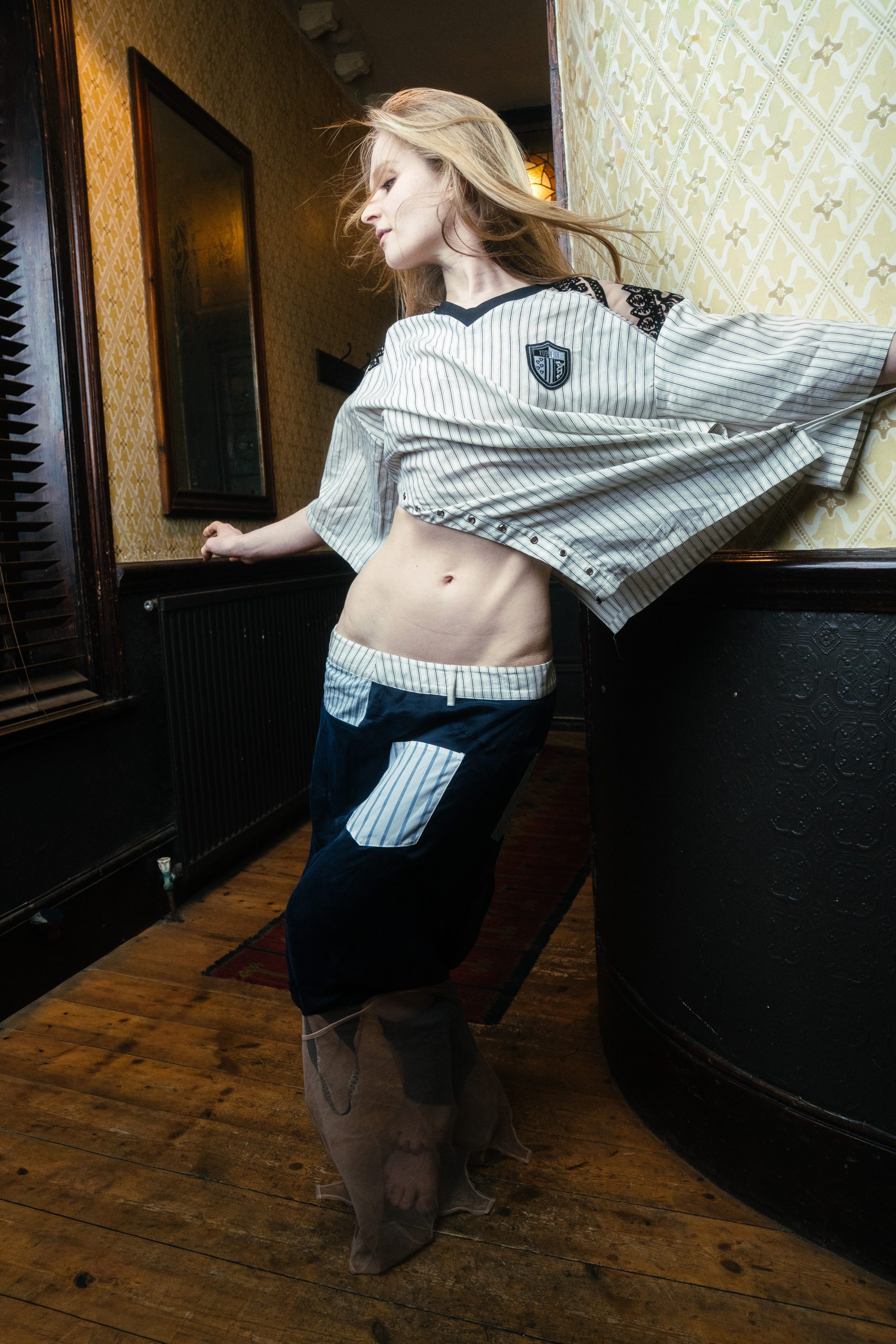

There’s also an aspect in this film where it treats the heritage of money in a very British aristocratic way. Did you use some of your knowledge of being British and having grown up with an aristocracy here?
Absolutely, yeah! It’s almost an English understanding of class which I related to very much. In America, being rich is so aspirational, it’s not at all lame.
English people have a much more inbuilt understanding of class conflict. That’s very relevant to the film, and I’d automatically bring that in. Even when Mary is included in her family, she’s not quite in power. It’s a very patriarchal household. I definitely used my English understanding of class.
You also read History at university.
I’ve been very political my whole life, to be honest!
That’s interesting given the film discourse at the moment.
It’s the most interesting aspect of so many films I admire. Every film is political, it’s just whether you choose to admit it. When I make my own films, they’ll be driven by politics. I think this one is, from John’s perspective. It’s about class warfare. The violence of poverty.
Do you think that having had a degree in History, something that’s more academic than performance and acting, informs your choice in work?
Yeah. I want to be involved in political films. History is just great stories. I studied the Russian Revolution and Cuba, Cuban cinema during the revolution. That cinema is amazing. It’s the drama that is inherent in human beings and in collections of people. It’s just so moving to me.
Studying History made me want to work in films more. It galvanised me to come back and be in films. But it made me much more aware of the kind of work I want to do. It opened my eyes. During the Cuban revolution, they deconstructed how to do it. There were manifestos about how to make an audience active instead of passive, they would address audiences at the beginning of films and then they would stop and have conversations about the films after. It was groundbreaking for me as a young person to learn about the different ways of doing film.
Even in the 60s, those manifestos had impacts on filmmakers that I was aware of but didn’t know had ties to that kind of history, like Lars von Trier and Dogme 95, which is one of my favourite cinema movements. Their manifesto was very closely linked to manifestos that I’d studied at uni, specifically “Towards a Third Cinema” and ”Imperfect Cinema”. And that foundation of understanding, thinking about cinema in that way, had impacts all the way into modern life.
That’s such a cool way to find purpose in your work. And to really fall in love with what you were already doing, because you started acting at 11. Do you ever think about what you would be doing otherwise? Would it be politics or painting? Or would it always come back to this?
I think that they’re all tied together. I think that it would always be a combination of these things. I would feel frustrated if I wasn’t able to escape myself somehow. Acting is movement and shape-shifting and thinking outside yourself.
If I’d gone down the art route, I’d probably have done performance art. I made some art films – they weren’t very good, but they were cool to do. As I get older, I’m more drawn to traditional narratives than I was at art school when everything was abstract.
I want my life to be a continuation and an exploration of all of those things. They’re all extremely important to me, and they’re all very intertwined.
You played young Cersei Lannister in Game of Thrones, and now you’re playing the mother of Becket in How to Make a Killing. Both are seeds of the morally dubious. Did you think about that? How do you approach that being the inciting incident of something that audiences might not necessarily agree with?
That’s so interesting. That’s everything I’m into, it’s about watching someone decay, or watching them become riddled with things that we’re all exposed to, watching them decide and fall from grace, or, the outside world getting in.
Putting it like that, it makes a lot of sense for your career. Elizabeth is Missing is also, in a lot of ways, about that.
You’ve done your homework!
I love Elizabeth is Missing.
It’s actually one of the highlights of my career, working on that film.
I was actually going to ask you if you had a role that keeps coming back to you from your career, they all do, I imagine. But if there’s one that taught you the most.
I’ve been incredibly lucky with having a lot of mentor-like figures come into my life. Aisling Walsh, [director of Elizabeth is Missing] was one. Glenda Jackson was another. So that was two in one job. Helen Mirren as well, during The Audience and The Good Liar.
But I think I’ll talk about Elizabeth is Missing, because I could talk for hours about it. Both of those women were so locked in to giving everything. I was at uni when we shot, and we were all living in Glasgow together, and I’d never really felt as part of something as I did in that filming process.
I think everyone was shocked at how included and important we felt. And I think that way of filming comes from a lot of things, but it mostly comes from Ashley being so sensitive and knowing exactly what she’s doing. She was cultivating an environment where everyone could participate. You could tell that people were engaging in a very different way, and it felt very free. It was thrilling to be a part of, it really changed how I thought about what I could give to a set.
What are you recommending people read and watch at the moment?
I’m reading an Olga Tokarchuk book. I have been obsessed with her work since seeing Drive Your Plow Over the Bones of the Dead in the theater by Complicité, who are my favorite theater group. I’m reading her new book called The Empusium, which is incredible, and so cinematic.
I’m watching a lot of Julia Loktev, who I cannot believe isn’t famous; she’s my favorite director. Everyone should go and see Day Night, Day Night. Also Masha Schilinski, Julia Ducournau, Eugene Kotlyarenko, Óliver Laxe. They’re the young directors who I’m obsessed with right now.
I could talk to you for way longer, but we’re running out of time. So to finish off, what’s coming up for you?
I’ve got an incredible Gothic British horror film, Deepest Darkest, which we shot in 18 days. It’s directed by Florence Koski, an incredible young director, and I’m extremely excited for it to come out. It’s spooky, and a little bit like The Witch, and a little bit like… like modern girls in a Tarkovsky movie, that’s what her MO was.
We’ll keep an eye out, because that sounds very cool. Thank you for chatting with us.
Thank you, you’ve been really incredible!
How To Make A Killing is out in UK cinemas now.
Interview Natalia Albin
Photography Salahudin Redpath
Stylist Johnny Bloom
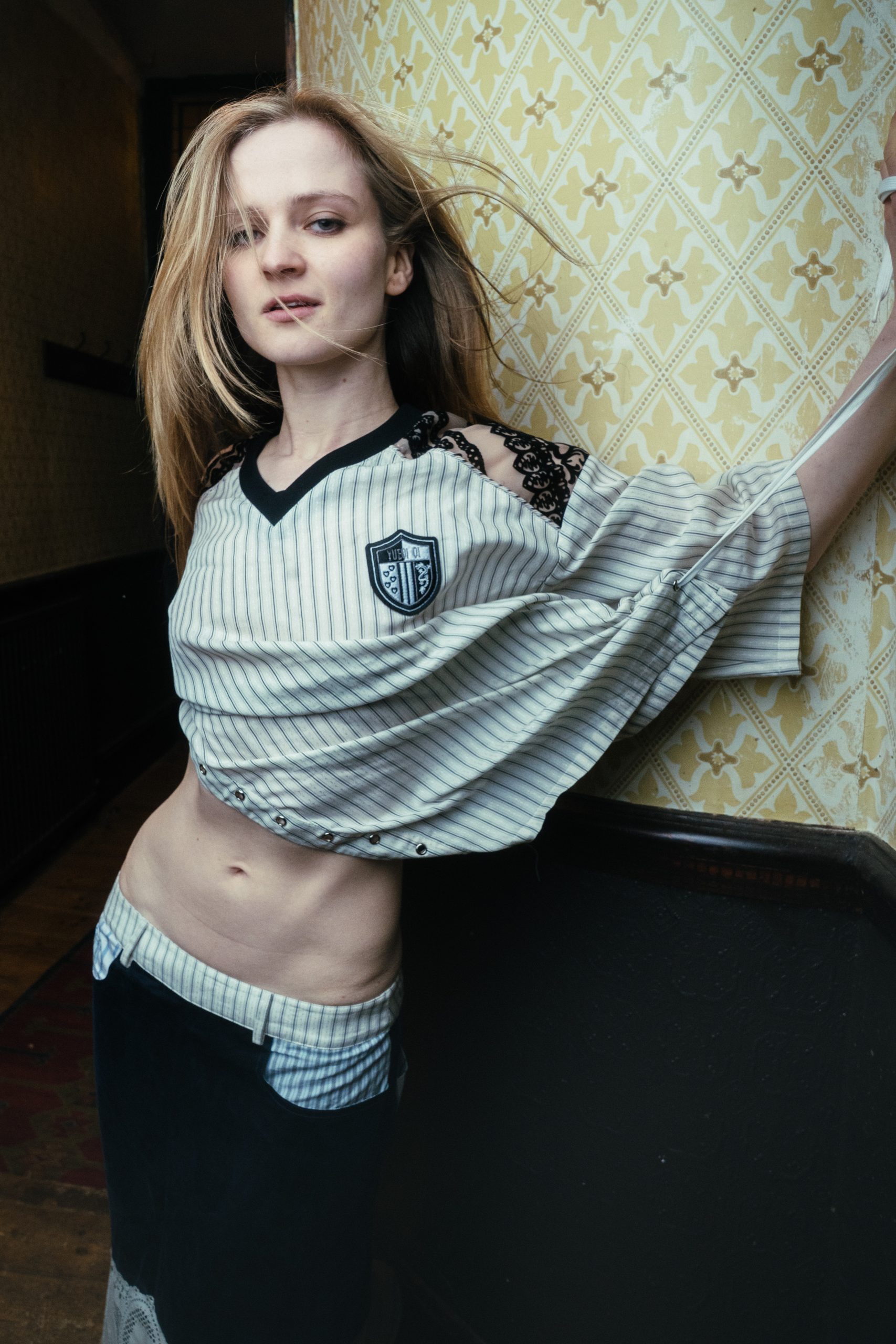
Yueqi Qi (football T-shirt outfit)
Location Last House on the Left