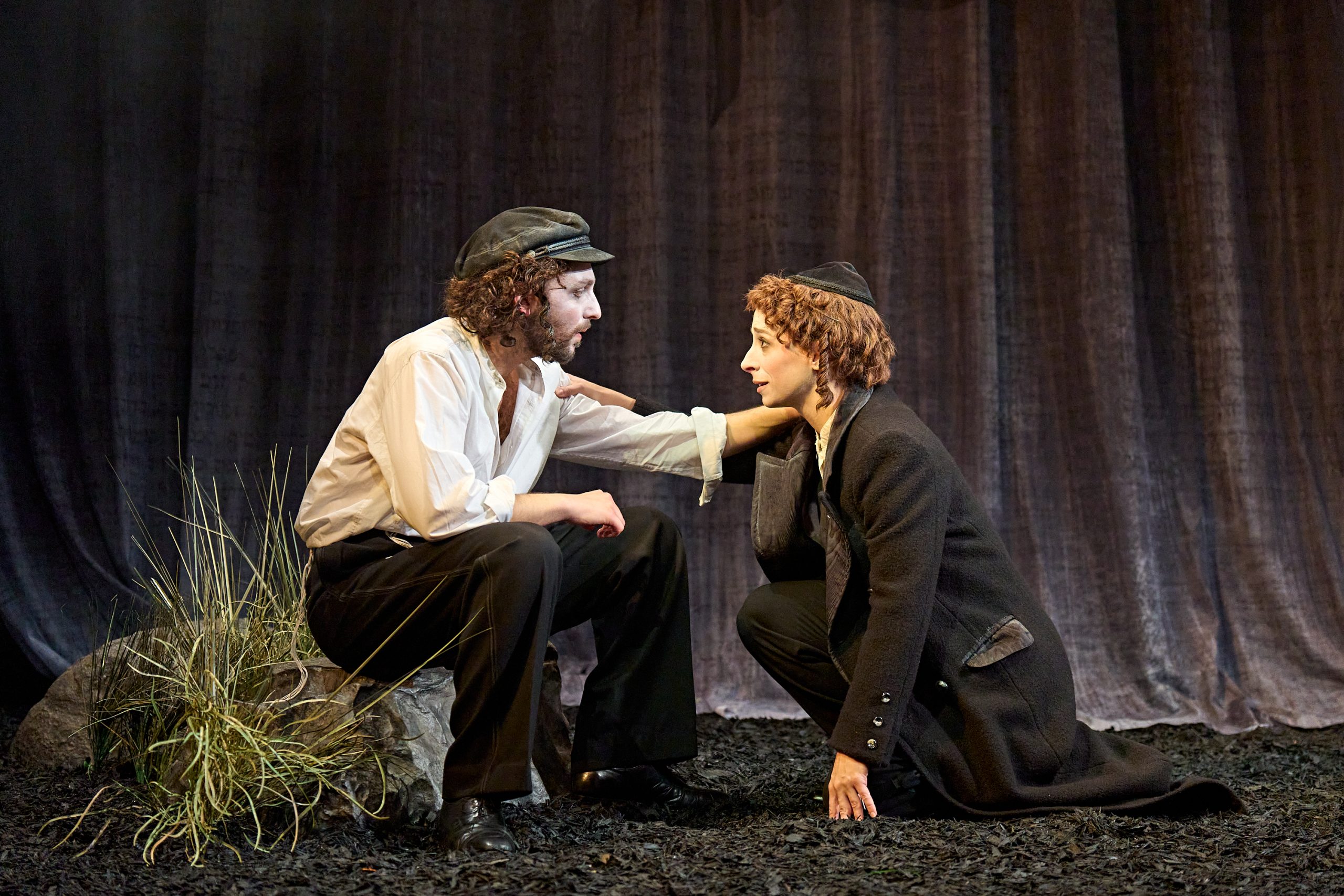
Yentl is best known as a 1983 musical film that starred Barbra Streisand. It’s not everyone’s cup of tea. This play is NOT adapted from that. The Marylebone Theatre is hosting a production from Australia by Kadimah Yiddish Theatre, directed by Gary Abrahams, which arrives in London after earning widespread acclaim and a string of five-star reviews in its original run. Performed largely in English but threaded with Yiddish, it brings Isaac Bashevis Singer’s story to life with a strong sense of the language and culture of Eastern European Jewish life.
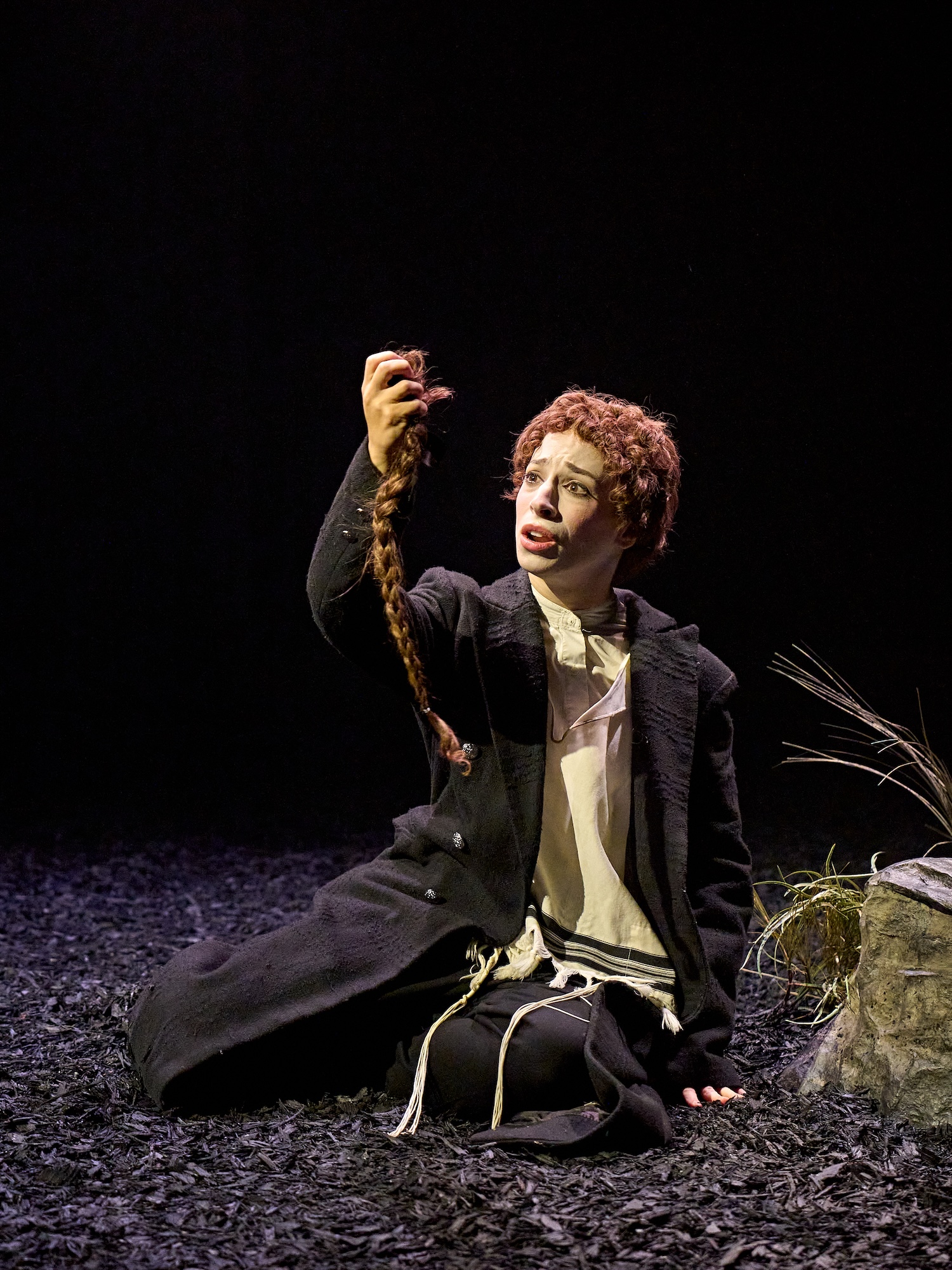
Both the film and this play are adapted from a 1962 short story by the Polish-American writer Isaac Bashevis Singer, entitled Yentl the Yeshiva Boy. The story tells of Yentl, a young woman growing up in a Jewish shtetl (a small town with a large Jewish population) in Eastern Europe in the late 19th century. She wants to study Torah, something reserved for men in her deeply traditional community. After her father dies, the only person who ever encouraged her learning, Yentl cuts her hair, binds her chest and adopts the identity of a young man, Anshel, so that she can enter the male world of religious study and pursue the life of the mind she has always been denied.
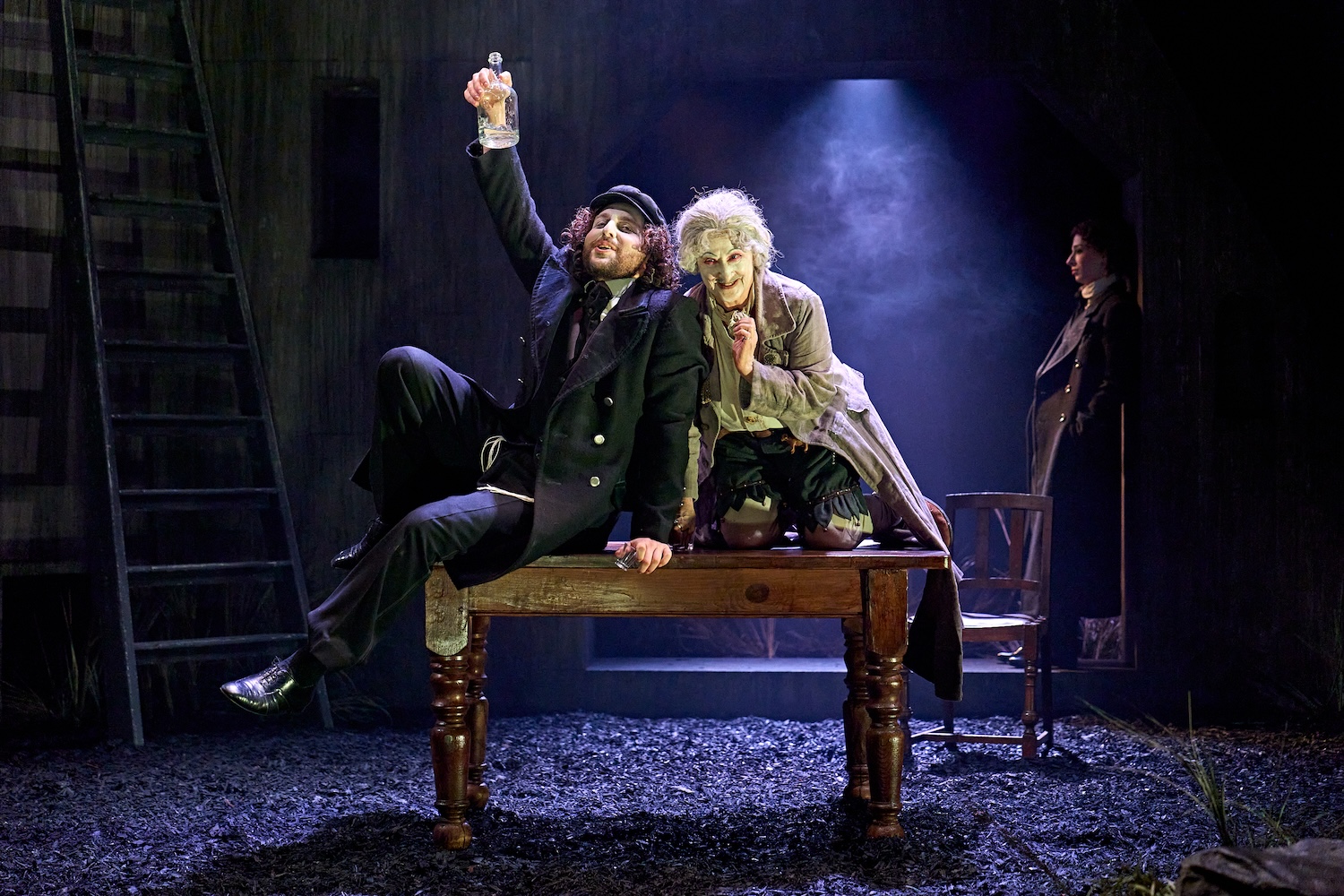
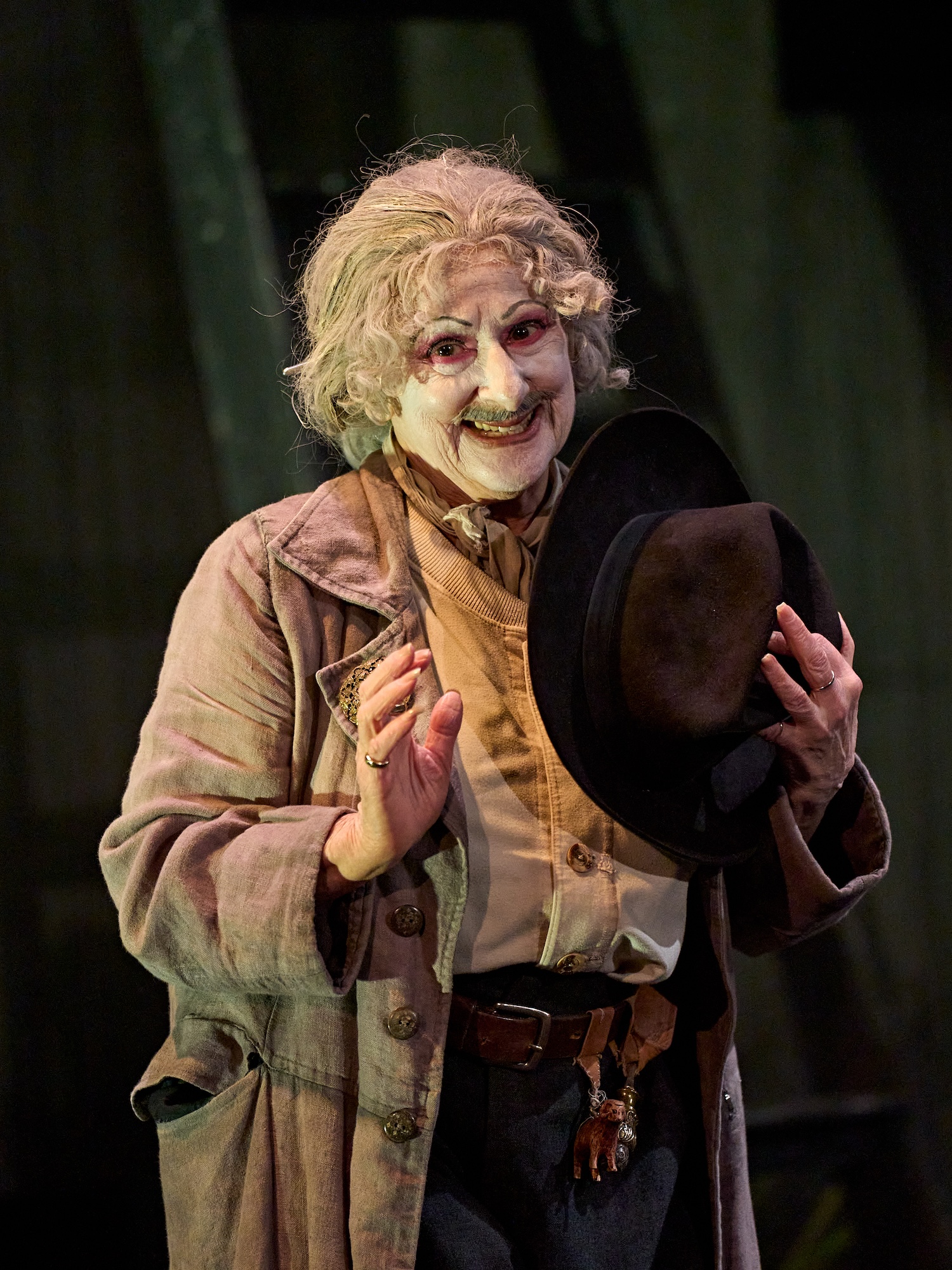
One of the most intriguing presences in the show is a mysterious character known simply as The Figure, played masterfully by Evelyn Krape. They exist somewhere between narrator, conscience, and something darker – perhaps even demonic. At times they seem to guide Yentl, at others they tempt her, question her, or push her further down the path she has chosen. They are the only character who seems able to speak directly to Yentl’s inner turmoil, and their presence adds a layer of philosophical reflection to the story.
At the beginning of the play they offer a line that lingers long after it is spoken: ‘There’s always a choice, even if it’s the one you were always destined to make.’ That tension between destiny and choice runs through the entire production.
From the very first scenes it becomes clear that this is not simply a story about a woman disguising herself as a man. It is about identity, power, and the rigid structures of the society she inhabits. Yentl’s father catches glimpses of the truth early on. She secretly reads and studies when he is away, and even wears his clothes. When he notices that his clothing has been disturbed, he warns her: ‘When the body dresses in the clothes of a man, the soul is confused.’ Yentl replies quietly but firmly, ‘My soul is already confused.’
It is an extraordinary line, and it lands with enormous weight.
Watching this today, it is impossible not to see how strongly the story resonates with modern conversations around gender identity. Yentl is someone assigned female at birth who grows up feeling an overwhelming need to live as a man, not simply for knowledge, but for freedom and authenticity. In a time when discussions around trans lives and gender identity are at the forefront of public debate, the story inevitably echoes those realities. It highlights the cruelty of forcing people into rigid boxes based on gender and the damage that can be done when society insists someone must live a life that does not feel true to who they are.
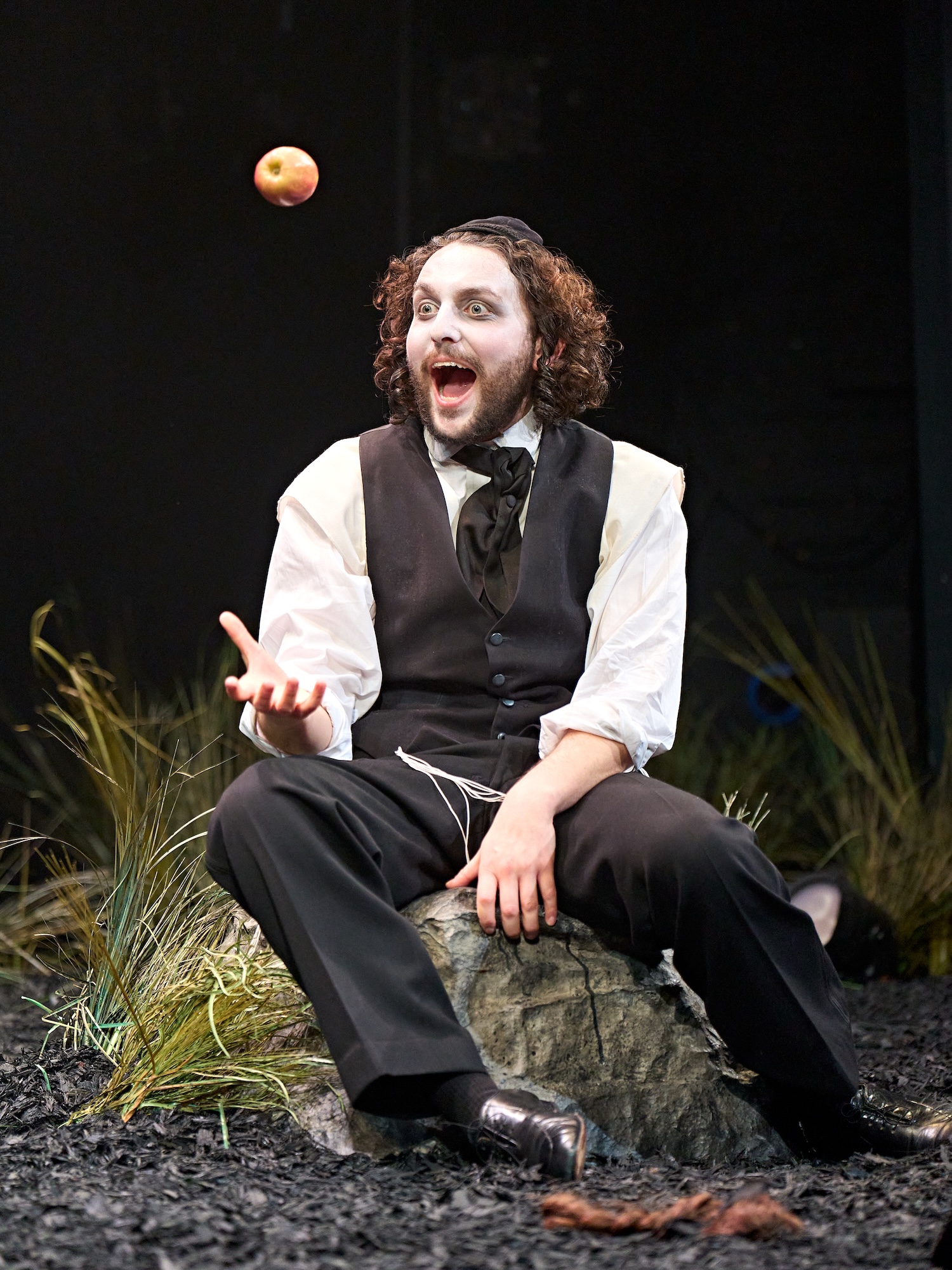
Within the world of the play, that struggle is also about power. Yentl does not simply want knowledge; she wants the freedom that comes with being a man in this society. That freedom becomes particularly clear once she begins living as Anshel, forming a close friendship with Avigdor, played with huge energy and emotional openness by Ashley Margolis. Avigdor is passionate, restless and deeply conflicted, particularly when it comes to his relationship with Hodes, played beautifully by Genevieve Kingsford.
Their conversations expose the limitations placed on women with blunt honesty. At one point, while speaking with Anshel, Avigdor casually remarks that a wife is not someone to talk with – a woman’s role is something else entirely. Later, when Anshel speaks privately with Hodes, the contrast between those expectations becomes painfully clear. Anshel asks why Hodes does not challenge the role society has mapped out for her. Hodes replies simply: ‘I’m a woman. I’m helpless.’
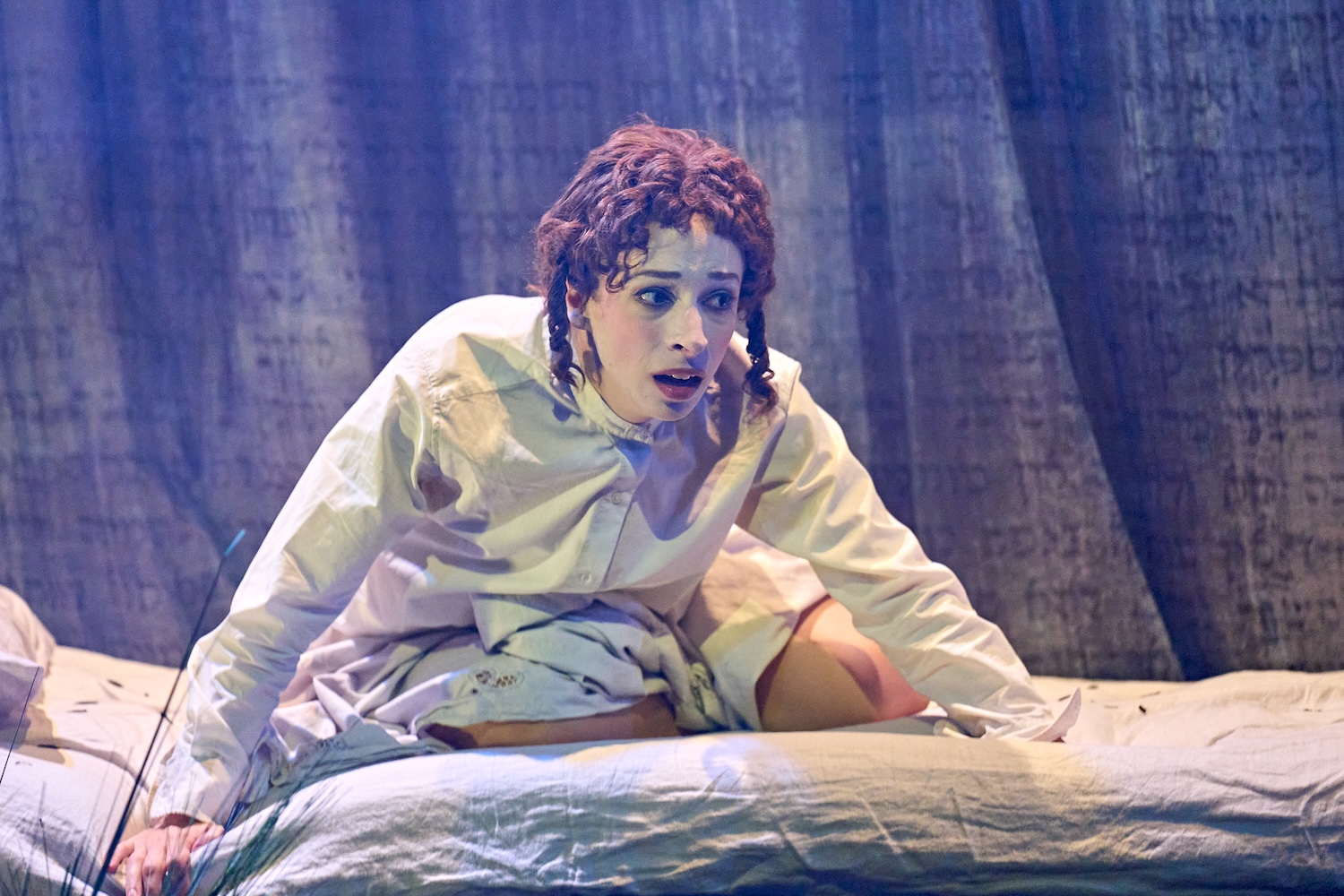
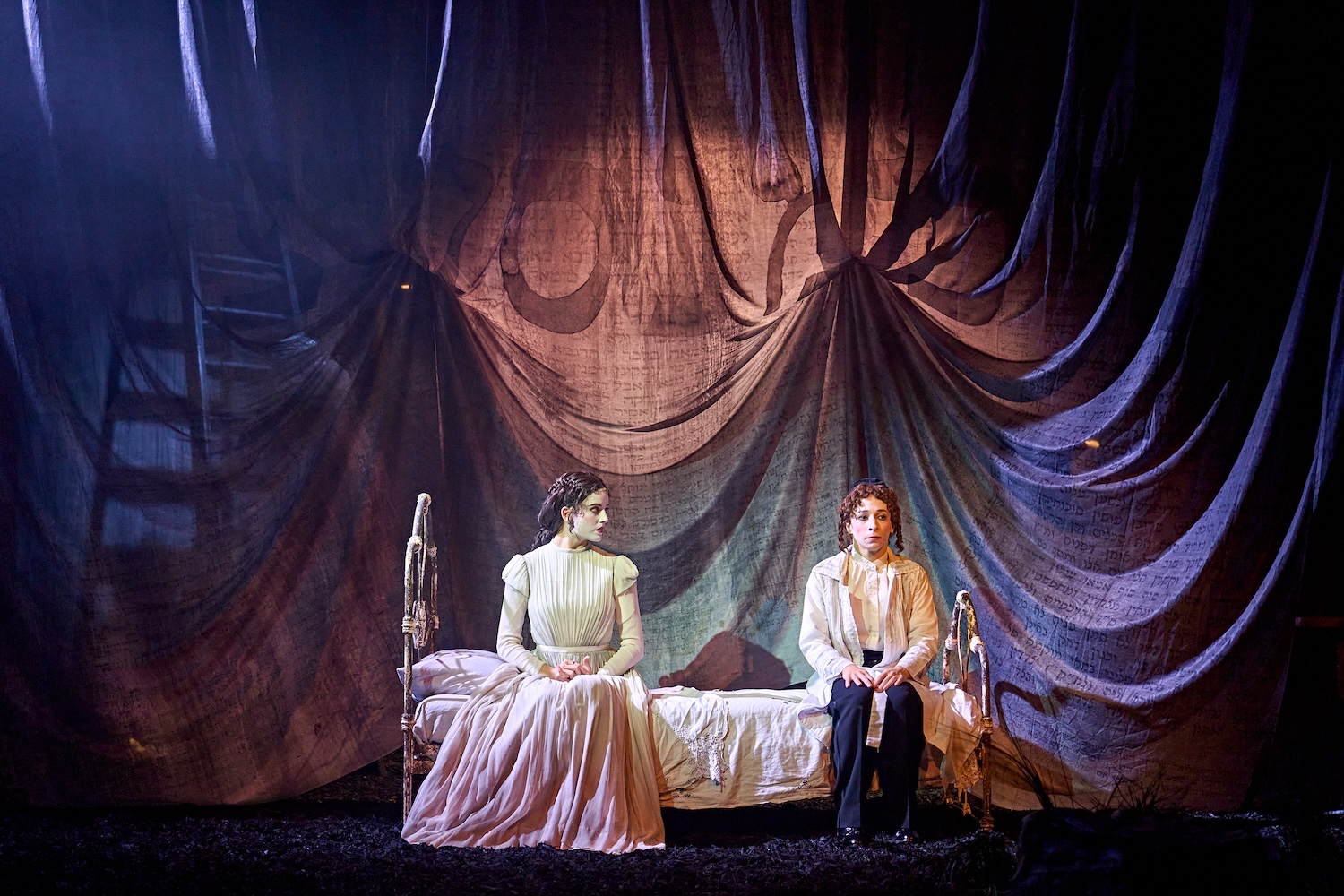
Anshel’s response is simple but powerful: ‘You let men make you helpless.’
The play constantly circles the idea of power – who has it, who doesn’t, and what happens when someone suddenly gains access to it. At one point, overwhelmed by the consequences of the identity she has created, Yentl cries out, ‘Why do I have all this power?’ The Figure answers calmly: ‘You are a man.’ That moment resonates hard with the modern audience.
At the centre of it all is Amy Hack as Yentl, delivering a performance of enormous emotional range. Hack takes the character through joy, fear, longing, love, deception and guilt, often within the span of a single scene. Watching her navigate the emotional labyrinth of Yentl’s choices is completely absorbing. By the end of the play, the sheer exhaustion and pain of maintaining her double life feels almost physically tangible.
The bilingual nature of the production is also beautifully handled. Yiddish flows naturally through the dialogue from time to time, never feeling forced or distracting. In fact, it does the opposite. It deepens the world of the play and adds a layer of authenticity that pulls the audience further into the world of the shtetl. The surtitles are cleverly integrated into the set design, meaning you never have to look away from the action to follow what is being said.
Structurally, the play takes its time. The first half is dense with information, relationships and thematic groundwork. By the interval I realised that while I had been thoroughly engaged, I hadn’t quite fallen in love with the production yet.
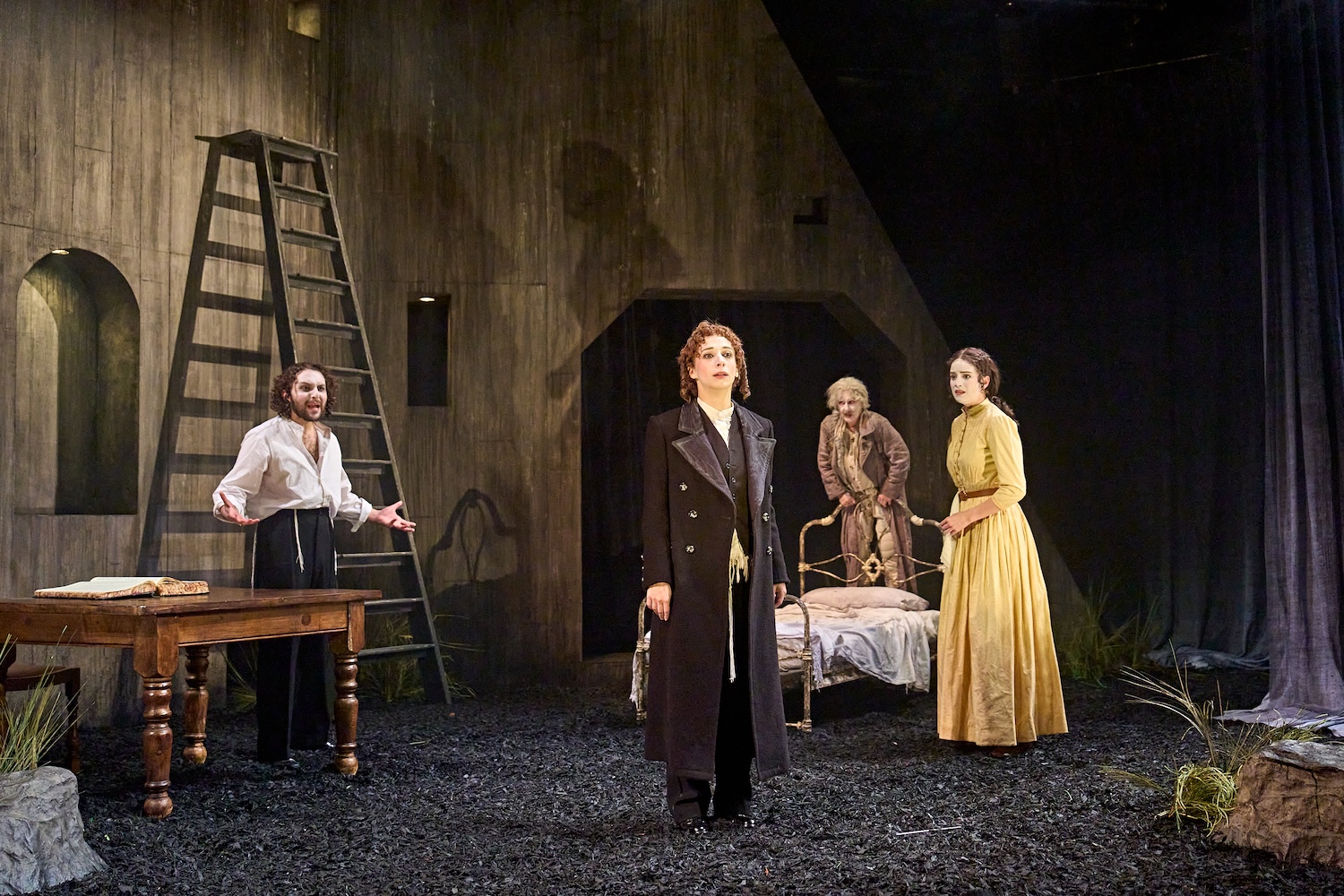
Then the second half begins. And suddenly everything clicks into place.
Every thread that has been quietly laid in the first act begins to tighten. Relationships shift, secrets unravel, and the emotional stakes climb steadily higher. One by one, the storylines collide in ways that feel both inevitable and devastating. The writing – by Elise Hearst, alongside Gary Abrahams (the show’s director) and Galit Klas – reveals its full power in these later scenes, where the philosophical questions posed earlier suddenly become painfully real.
The technical design supports this beautifully. Gillian Starr’s sound design is masterfully subtle for much of the show, quietly building atmosphere almost without you noticing. Then, at key moments, it swells and intensifies, amplifying the emotional tension until it becomes almost unbearable.
The lighting, often dim and shadowy, evokes the sense of a world lit by candles and lamplight, reinforcing the period setting while also giving the production an intimate, almost dreamlike quality.
By the final moments, Amy Hack’s performance reaches a level of raw emotional honesty that is genuinely moving. Yentl’s journey – her longing, her defiance, her confusion, and ultimately her desperate desire to simply be free – lands with tremendous force.
There are many memorable lines throughout the play, but one lingers above the rest: ‘I tried every day, and every day felt like a lie.’
In the end, what makes this production so powerful is that the questions it raises feel just as urgent now as they would have been in the 19th century. The story reminds us how damaging it can be when societies try to force people into rigid definitions of who they are allowed to be. Yentl’s struggle for knowledge, freedom and self-determination speaks directly to ongoing conversations about identity, gender and the right to live honestly without fear or constraint.
By the time the lights fade, it is impossible not to feel the weight of everything Yentl has endured.
This is an extraordinary piece of theatre – thoughtful, moving, and powerfully performed. It asks big questions about identity, freedom and the roles society demands we play, and it does so with compassion, intelligence and emotional depth. If the Marylebone Theatre wanted to bring a production to London that would provoke discussion and linger in the mind long after the curtain falls, they have absolutely succeeded.
This is a show that deserves to be seen.
Yentl is at the Marylebone Theatre until 12 April 2026.
Book your tickets now at marylebonetheatre.com
Words by Nick Barr
Photography by Manuel Harlan