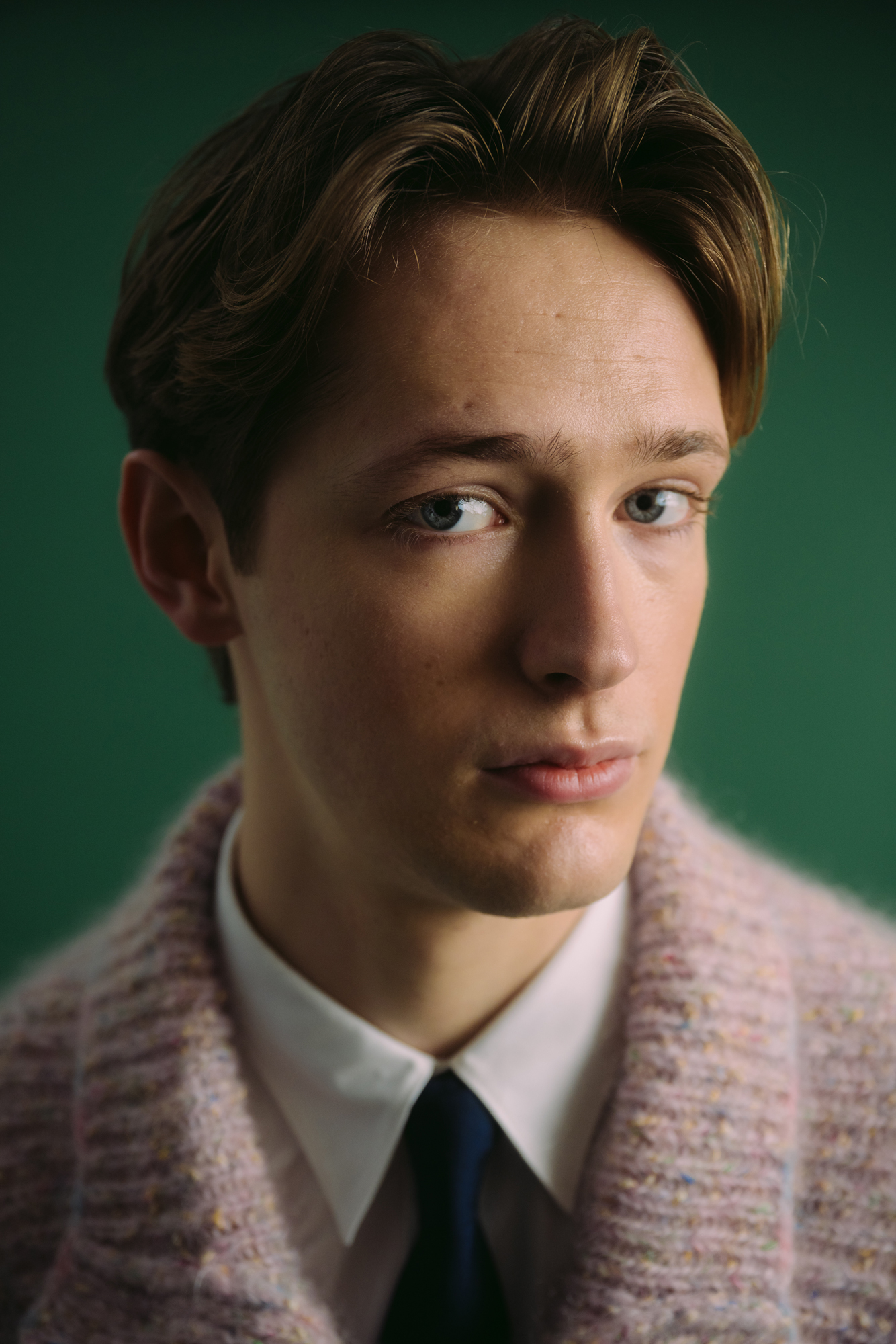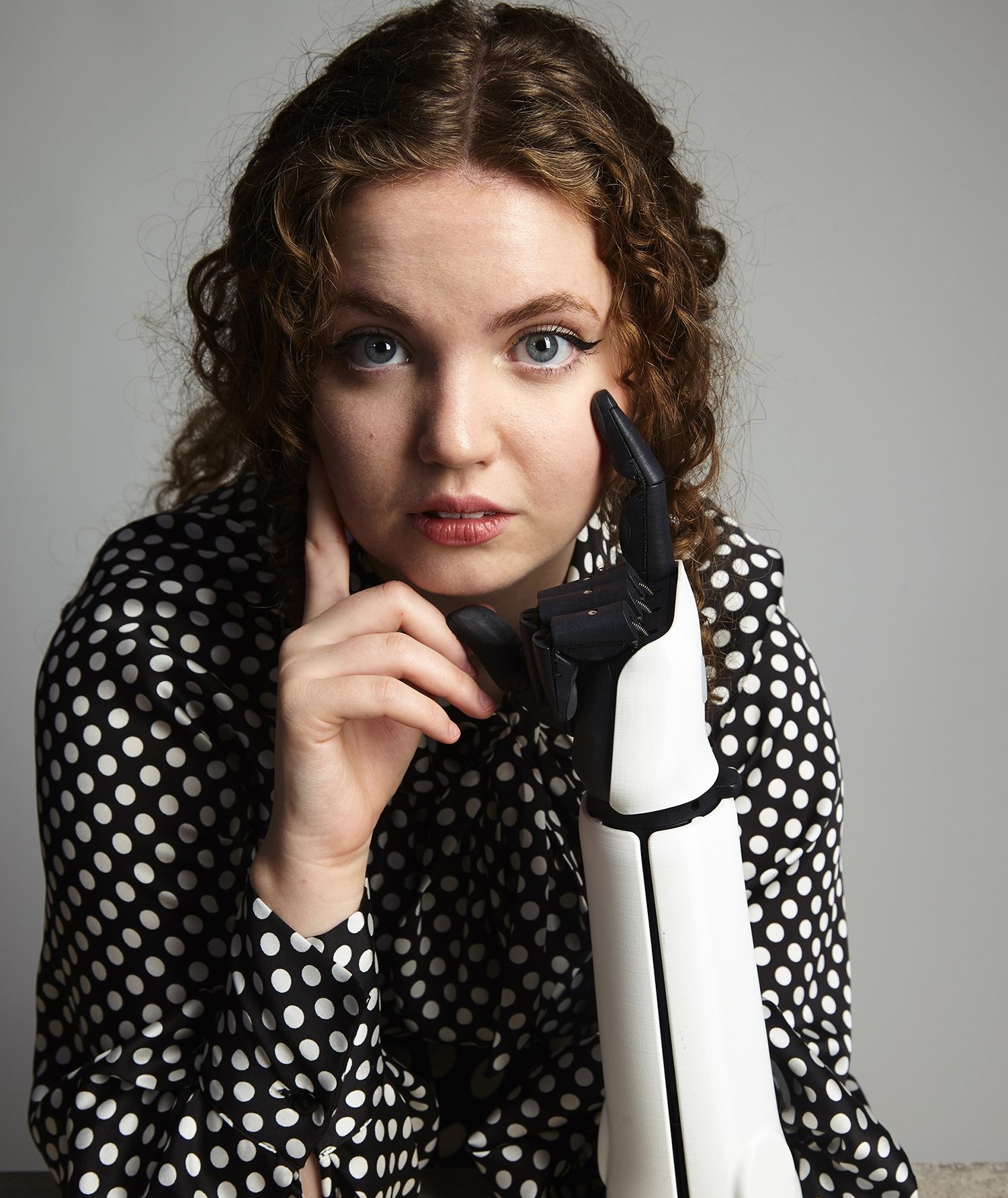
Gracie McGonigal is living her best life. After scene-stealing appearances as Hazel in Bridgerton and Little Red Riding Hood in Into the Woods (my review here), she’s quickly become a fan favourite, praised for her warmth, comic timing, and quietly magnetic screen and stage presence. Off screen, she’s just as engaging – brimming with youthful exuberance, thoughtful about representation, refreshingly honest about the realities of the industry, and clearly loving every minute.
Before speaking with Gracie, I asked members of one of the largest Bridgerton Facebook groups for their questions, and the response was overwhelming. From career inspirations and behind-the-scenes moments to disability representation and fan theories, their curiosity shaped much of our conversation.
We talked about everything from panto and Sondheim to self-tapes, bionic arms, and whether Hazel might secretly be the new Lady Whistledown.
Kristina Dawn Bass and Annamária Tóth from the Facebook group both wanted to know: what first inspired you to get into acting, and when did it become something you wanted to pursue seriously?
I think my parents encouraged it quite early on because I was a child with a disability, and they wanted to make sure I had confidence. Performing gave me a space where I could express myself and feel comfortable, and I quickly fell in love with it.
One of the first things I did was a Saturday morning drama club at Ealing Studios. Being around that environment so young was really exciting and made the world of acting feel very real.
As I got older, I applied to the BRIT School, which is completely free, removing a huge financial barrier for people who want to train. I went there full-time from 16, travelling about two hours each way every morning, but it was absolutely worth it. Being surrounded by other young people just as passionate about performing was incredible.
Then the pandemic hit, and everything stopped. I realised I could either sit around being bored, do ballet on Zoom in my living room, or start auditioning. So I began putting myself forward for roles. That led to small opportunities, including a tiny part in The Power, and things gradually started building from there.
When you were starting out, were there any particular actors or performances that made you think, that’s the kind of career I’d like to have?
Musical theatre was a huge influence on me when I was younger. I was the kind of kid on YouTube watching classic performances – people like Bernadette Peters and Julie Andrews. Those performers were massive inspirations.
As I got older, actors like Aimee Lou Wood really stood out, and Helena Bonham Carter is a big influence. I love how she moves effortlessly between Sondheim, straight acting, and those wonderfully eccentric roles. I recently watched her again in Seven Dials, the new Agatha Christie on Netflix, and she’s just consistently brilliant.
What really inspires me is the idea of a long career – being able to keep doing this job for decades and letting it become your normal life. Theatre makes that feel possible, because you work with actors of all ages. I did The Crucible with Carl Johnson, who’s in his late seventies, and we were bonding over a pint. It really makes you realise you can do this for life.
I was also chatting with Valda Aviks, who plays my granny in Into the Woods, about dream roles, and despite the age gap we both said Mrs Lovett in Sweeney Todd. I’ve always loved those kinds of funny, clever, dramatic parts. I also grew up watching Oliver! constantly, those classic Cockney performances were hugely influential.
Before Bridgerton and Into the Woods, you’d already done quite a bit of theatre. And you mentioned panto – you did Aladdin, right? Was that at the Lyric Hammersmith?
Yes, I did Aladdin at the Lyric Hammersmith. It was funny because at drama school there was a lot of conversation about what kind of roles I might play as a disabled woman, especially in musical theatre, where people talk about “types” like the ingénue or the funny side character. But I don’t really think the industry works like that anymore.
My first job out of drama school was playing Aladdin’s brother, Wishy Washy, in this brilliant, very modern and inclusive panto where anyone could play anything. We just had the best time.
Panto has such a strong community feel. I’ve also worked at Theatre Royal Stratford East, and I’d love to do Hackney one day and complete that trio of really progressive pantos.
Honestly, panto is the bedrock of theatre. If you can do panto, you can do anything. You’re sometimes doing twelve shows a week, performing from ten in the morning through to the evening. The audiences are great too, whether it’s year fives having the best day out, or a whole group of sixth form boys where you’re not quite sure how it’s going to go. I loved my panto era.
I’ve watched some of the documentary videos you made about receiving your bionic arm, including some really touching ones with your mum. What made you want to document and share that whole experience?
In a lot of ways it was about saying thank you to the donor, Tej Kohli, who gifted me the arm. I didn’t pay for it myself, so I really wanted to acknowledge that generosity.
Around that time I was also making decisions about drama school, and it felt like I was constantly being asked to choose between things that both mattered. It was almost like: you can have a £10,000 bionic arm, or you can go to drama school. Those are the kinds of choices people with disabilities sometimes have to make, between education and something that will improve your access to everyday life.
When the funding came through it felt incredible, and I thought the best way to show my gratitude was to share the experience and explain why it would be useful to me. I wanted people to see that I’m an actor and that having the arm could genuinely help me do the work I love.
So documenting the process became a way of celebrating that moment and thanking the people who made it possible. At the end I even organised a little concert and invited Tej Kohli along with friends and family, so it became a real event.
Looking back at those videos now is a bit strange because no one really enjoys watching their old performances, but I’m glad I made them. It allowed me to properly thank the people who supported me, and it ended up giving me some unexpected experience with documentary filmmaking as well. That whole little mini-series is just out there on the internet now, which is quite nice.
You’ve talked before about thinking the bionic arm might open up more opportunities. But in the roles people know you for so far, like Bridgerton, Into the Woods, and Fangirls, you haven’t actually used it. Did you ever imagine you’d land those kinds of parts and not need it?
Probably not. I’ve had a lot of conversations with other disabled actors about it. Nadia Albina, who’s a wonderful actress, was hugely influential for me. She said people are going to view you as disabled whether you’re wearing a prosthetic or not, so the most important thing is just being a good actor.
At the time I didn’t fully identify as disabled because I’d always adapted everything. At drama school I was constantly modifying exercises so I could do them, and I saw that as just being capable. Later I realised that’s exactly what disabled people do, and that disability isn’t a negative thing. It’s a really important part of who I am.
The bionic arm also feels very different from the prosthetics I had before. Those were more about blending in, whereas this one is unapologetically robotic and draws attention. It actually does something, which changes the conversation.
I haven’t used it in a role yet, but that’s just because the right opportunity hasn’t come up. It wouldn’t make sense in something like Into the Woods. But in something like SIX, for example, it could be amazing, especially if it was incorporated into the costume design. There are definitely places where it could really enhance a show.
What was it like stepping into the world of Sondheim, playing a character as iconic as Little Red Riding Hood?
It was amazing. This is actually the first time I’ve done a show that already existed. As a disabled actor I often find myself in new work, which is exciting because you’re creating something from scratch, but it was really nice to have all this history and source material.
There are so many brilliant performances of Little Red Riding Hood. A good friend of mine, Linzi Hateley, played the role years ago at Curve Leicester, and it was fascinating talking to her about it. I love the idea that every actor brings their own lived experience to the character, and over time you get all these different interpretations.
Sheridan Smith also played the role at the Donmar when she was very young, and I was really curious about that performance. I’d only ever seen Into the Woods in amateur productions before, so this was my first time encountering it on a professional scale.
It felt like my starting point was already influenced by so many different interpretations and conversations, which was a really exciting place to begin.
Bridgerton is such a huge cultural phenomenon. What was your first reaction when you found out you’d been cast?
It was life changing. I couldn’t believe it, especially because I only did one self-tape, which is basically unheard of. Usually you tape, then tape again, then maybe get called into the room. But this was just one tape at home and that was it.
Months went by and I’d completely forgotten about it. I was doing Fangirls at the Lyric Hammersmith at the time and I was in a period where I was getting a lot of rejections. Even when you’re working, hearing no again and again makes you wonder if anyone’s going to hire you.
Then my agent surprised me at the theatre and told me I’d got it. I’m a huge Bridgerton fan, so it felt surreal. I’d even had headshots taken specifically with Bridgerton in mind, hoping one day I might be right for that world. I went on stage that night still shaking.
I then had to keep it secret, which was terrifying, especially being surrounded by other actors while knowing I had this massive job coming up. It was also the longest contract I’d ever had, about nine months, which meant I could finally relax a bit and plan ahead.
It just felt like a huge moment of luck, but also a reminder to keep going.
Seren Lian Gunter-Sellers from the group said stepping into the world of Bridgerton must have felt like walking into a fairytale, with the costumes, locations, and scale. What was it like arriving on set for the first time?
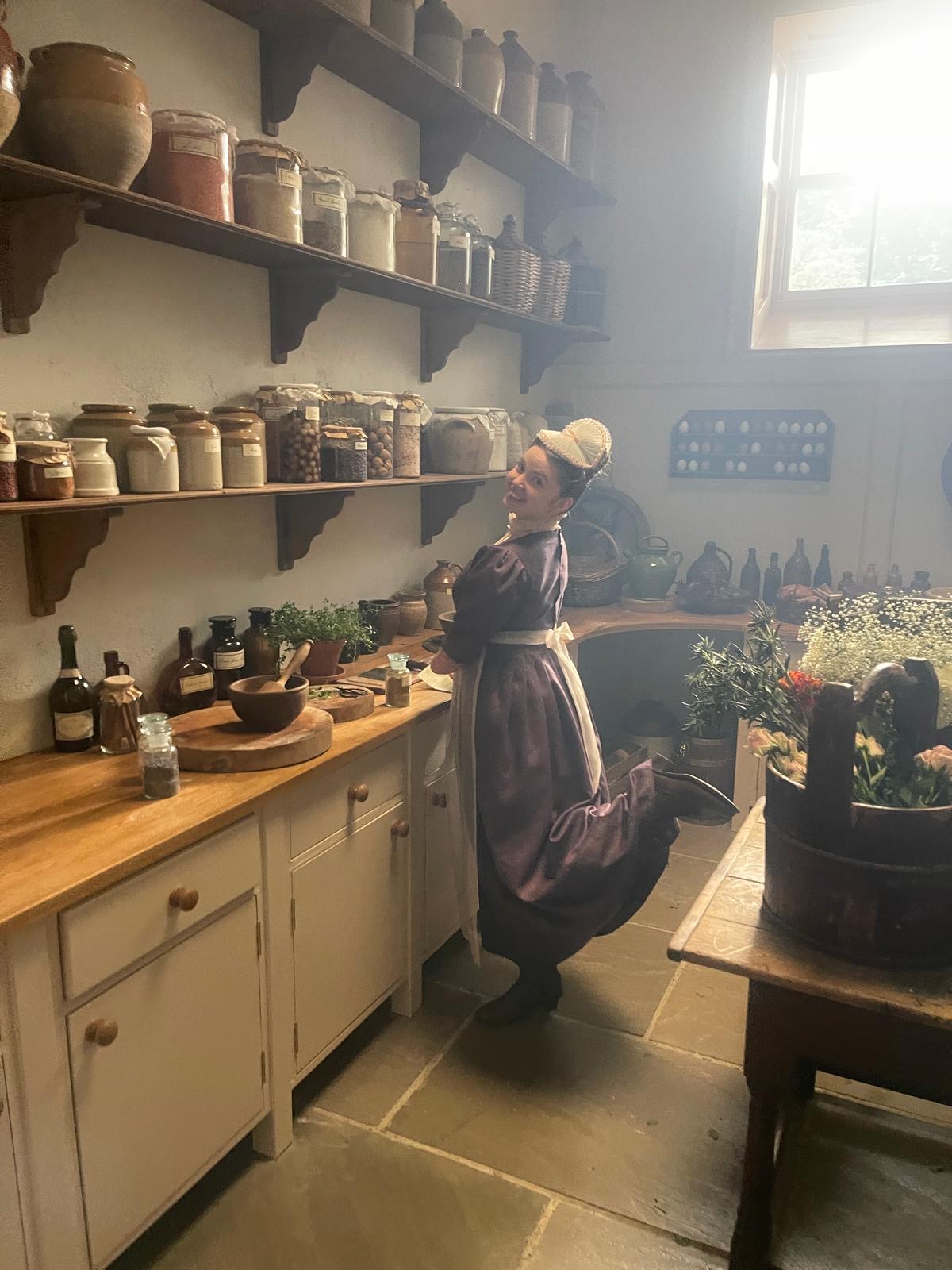
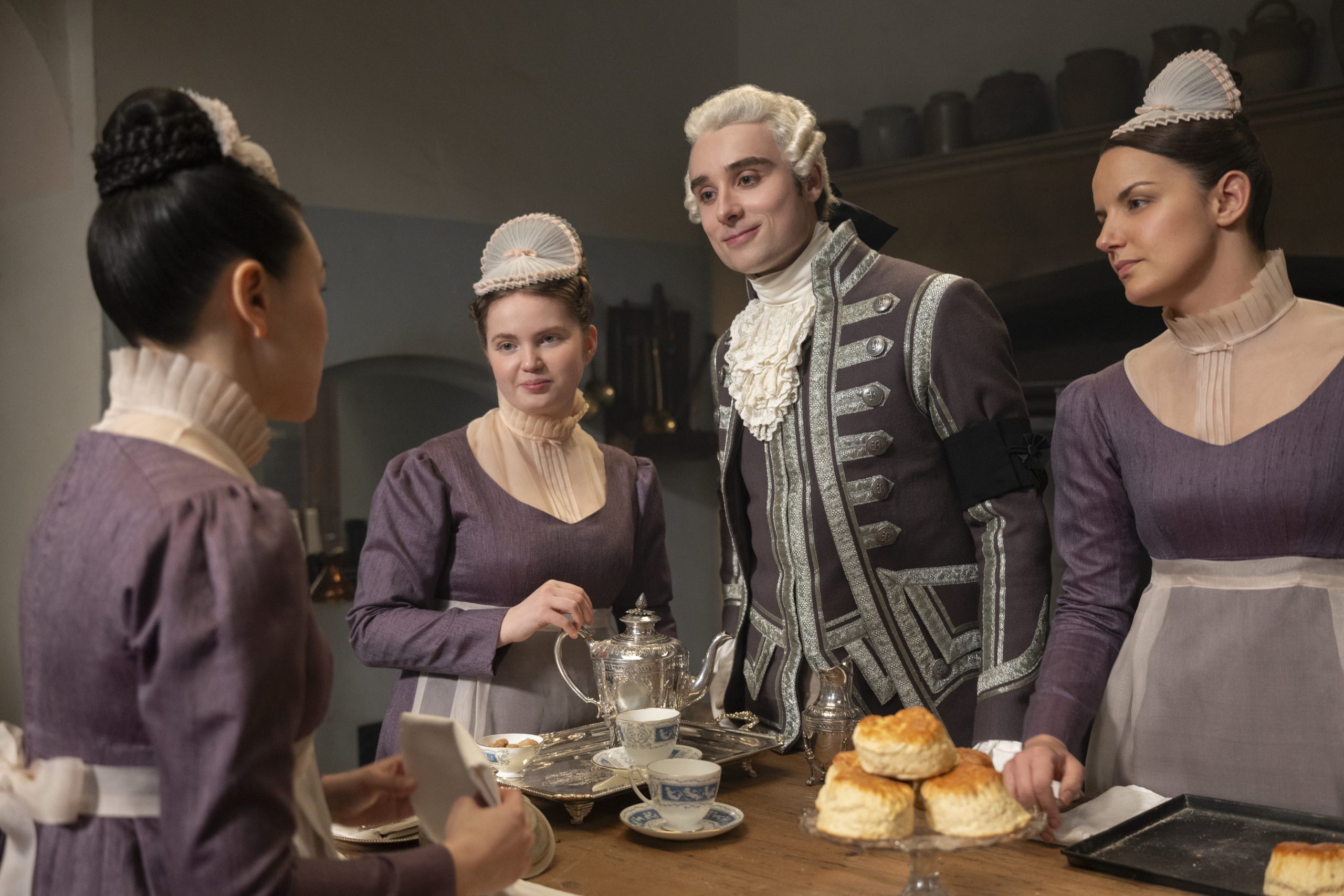
It was amazing. The scale is unbelievable, especially the downstairs sets. You’re suddenly in these huge kitchens with incredible detail everywhere, trays of food, tiny handcrafted cakes, pheasants hanging up. Things you might only see on screen for a split second are fully built. It really feels like you’re stepping into that world.
It’s very different from theatre because there’s no fourth wall. You can look around and genuinely feel like you’re there.
The costumes were incredible too. Having something made specifically for you feels really special. I had custom gowns fitted perfectly, with different sleeve lengths tailored to me, which you don’t often experience in real life. It felt like being measured for something like a wedding dress.
I also had a beautiful look for the wedding at the end, with matching embroidery alongside Jonathan Bailey since Hazel was part of the wedding party. That was a lovely day to film because it was one of the few times the downstairs and upstairs worlds were all together. We’d all met at the table read, but otherwise the class divide is very real in the show.
So having everyone together at the end felt like a proper happy ending.
Quite a few people have asked what some of your most memorable moments were from the show. Were there any that particularly stand out?
We had a really fun day filming after the big Hyacinth recital scene. We had dancers come in from the graduating class at Urdang, playing the young guests in the scene, which brought this great energy to the set. It was about eight and a half months into filming, at the end of a long 13 hour day, and we ended up having this huge group dance to Candy, in the ballroom with all the disco lights going. It felt like we’d worked really hard and then got to celebrate together.
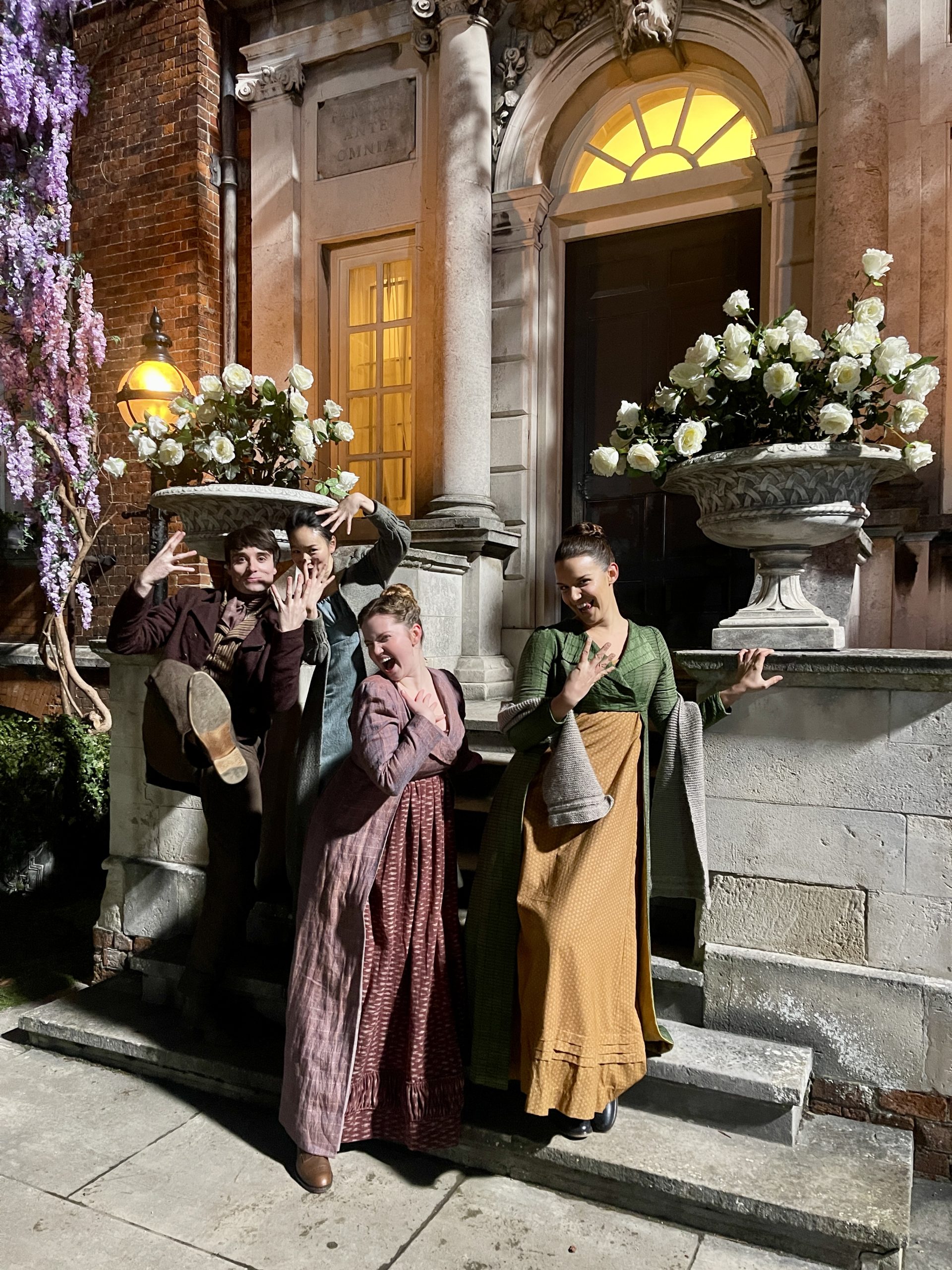
But honestly, a lot of my favourite memories are just laughing with Yerin Ha, who plays Sophie, and Oli Higginson, who plays Footman John, making silly TikToks and goofing around between takes. A lot of it wasn’t documented, it was just us being silly behind the scenes.
Lots of people asked who the joker on set was, and who you were having the most fun with. Was Yerin Ha the one cracking you up?
Yerin’s definitely a strong contender, especially because she was in so many scenes. You don’t want to mess her up because she’s the lead, but she’s very happy to laugh and joke about – while still being incredibly professional, of course.
Amber Borkoski and Ashleigh Dean asked whether anything ever went hilariously wrong behind the scenes that didn’t make the cut. Did anything like that happen?
One of the funniest moments was actually the final scene we filmed for the whole season. It was in episode eight, where I interrupt the Bridgertons and reveal that Sophie is in jail. We were all so tired by that point, and we just kept forgetting our lines over and over again.
It took ages because everyone knew that as soon as we got it right, someone was going to call, ‘That’s a wrap on season four’, and we’d all celebrate. The pressure of knowing that made it even harder. We were all just completely blanking, like we’d never spoken before.
So it ended up taking much longer than it should have, but it was quite funny. I think there would have been a lot more wrap footage if we hadn’t kept messing it up.
Jennifer Gronau asked who Hazel might suspect is the new Lady Whistledown. Quite a few people in the group also love the idea that Hazel herself could be. Who do you think Hazel would suspect?
I think Hazel would love it to be her, but she’s not subtle enough in the slightest. Also, whoever it is would need to be around everything and be able to read and write, which I’m not sure Hazel can do at the moment.
A really good shout might be Alfie. He’s always in the markets, chatting to everyone, and he seems to have a bit more freedom to move around. He’s also such a great character, and I’d love to see more of him.
But honestly, maybe it is Hazel and no one’s told me yet. You never know!
AJ Madjeski asked whether you feel pressure representing the disabled community on stage or screen.
Definitely, because I don’t have the same lived experience as every disabled person. I might say things that others completely disagree with. Even how much I’ve spoken about disability this season, some people might think that’s important, others might feel the work should stand on its own.
For me, it is important to highlight positive representation where it’s happening. But all I can really do is share my own experience. I know I’m representing a community, but I’m not the only voice, and I’d love there to be more disabled actors on stage and screen so audiences can see many different perspectives.
Hannah Swan, who mentioned she’s also a disabled actress, asks how you stay positive during long gaps between auditions or acting jobs.
Staying busy and recognising the positives in that time really helps. Depending on your perspective, unemployment can either just feel like unemployment, or it can be a chance to reconnect with friends, work on your craft, or even take a normal job for a while.
I’ve pulled pints between jobs, and that can actually be grounding. It reminds you what you enjoy and don’t enjoy about different kinds of work, and why you’re pursuing acting in the first place.
When you’re working, especially in theatre, life can be very intense. You’re doing six days a week, you don’t see many friends, and you don’t really get evenings free. So when a job ends, I like to use that time to see friends, go to the theatre, and reconnect with the things that made me love acting to begin with.
Hazel and John. Lots of people watching wondered whether there might be something between them. When you were filming those scenes, did you see the dynamic as romantic, flirty, or just friendly?
A bit of both. Oli Higginson and I became really fast friends on set, and we had a lot of fun playing with that dynamic. We knew there was something there, and we filmed different versions, some with more flirtation and some with less, but it all depended on what made the final edit.
Because it’s such an ensemble show and you often only have a few lines, we’d try to squeeze in little moments of connection. It became a bit of a game, adding small looks or reactions to build that sense that they liked each other.
I don’t know if they were fully together, but they were definitely vibing. And who knows what might happen in the future.
Finally, Sheena Burlton asks what advice you’d give to young disabled people who want to pursue acting.
Go for it fully, because there aren’t enough disabled people in the industry. If we want it to be proportionally representative, we need more disabled actors coming through. So keep going!
Catch Gracie in Bridgerton Season 4 on Netflix, and in Into The Woods at The Bridge Theatre until 30th May 2026.
Follow her on Instagram or Tiktok @graciemcgonigal
Words by Nick Barr
Bridgerton photos by Liam Daniel/Netflix © 2025
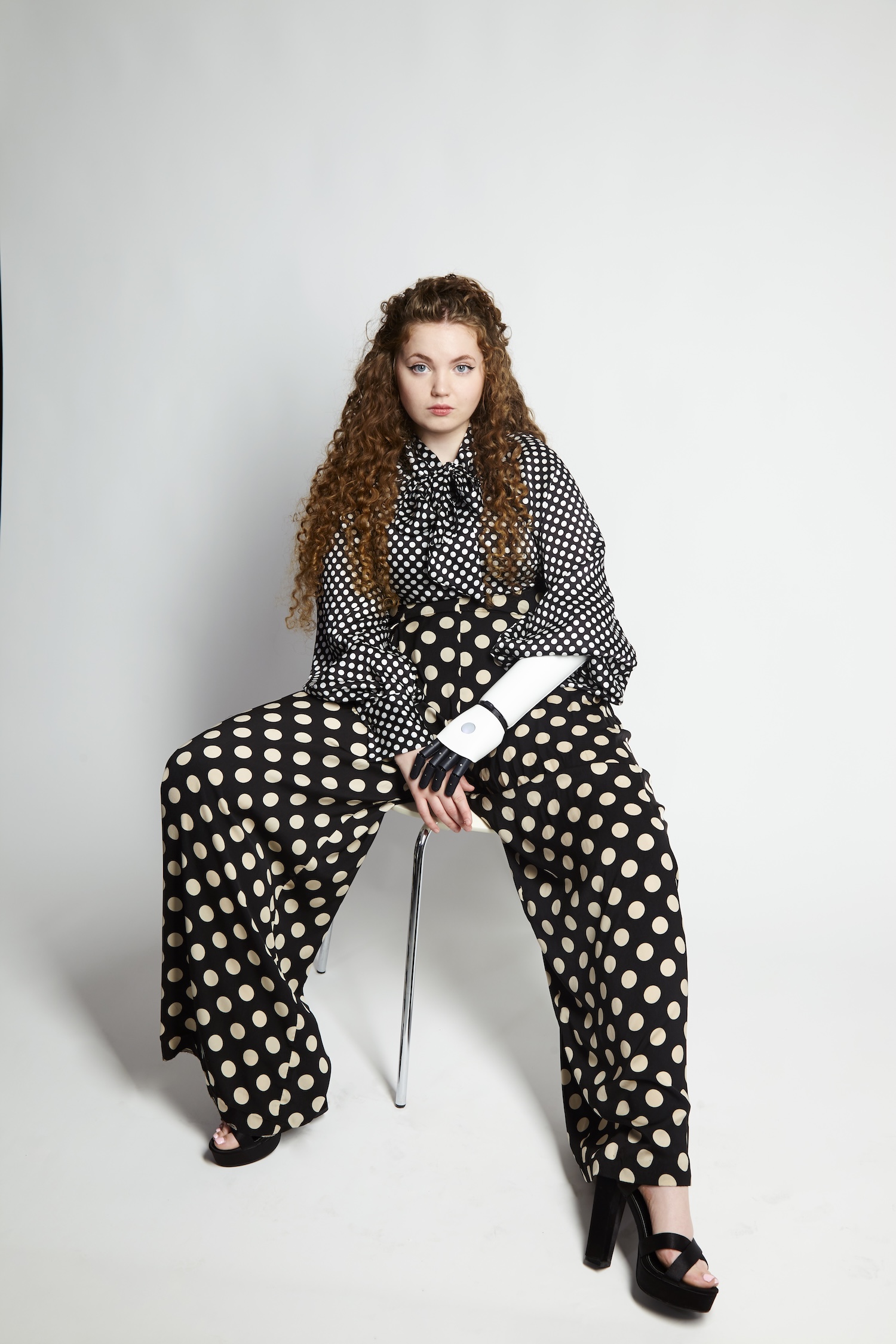
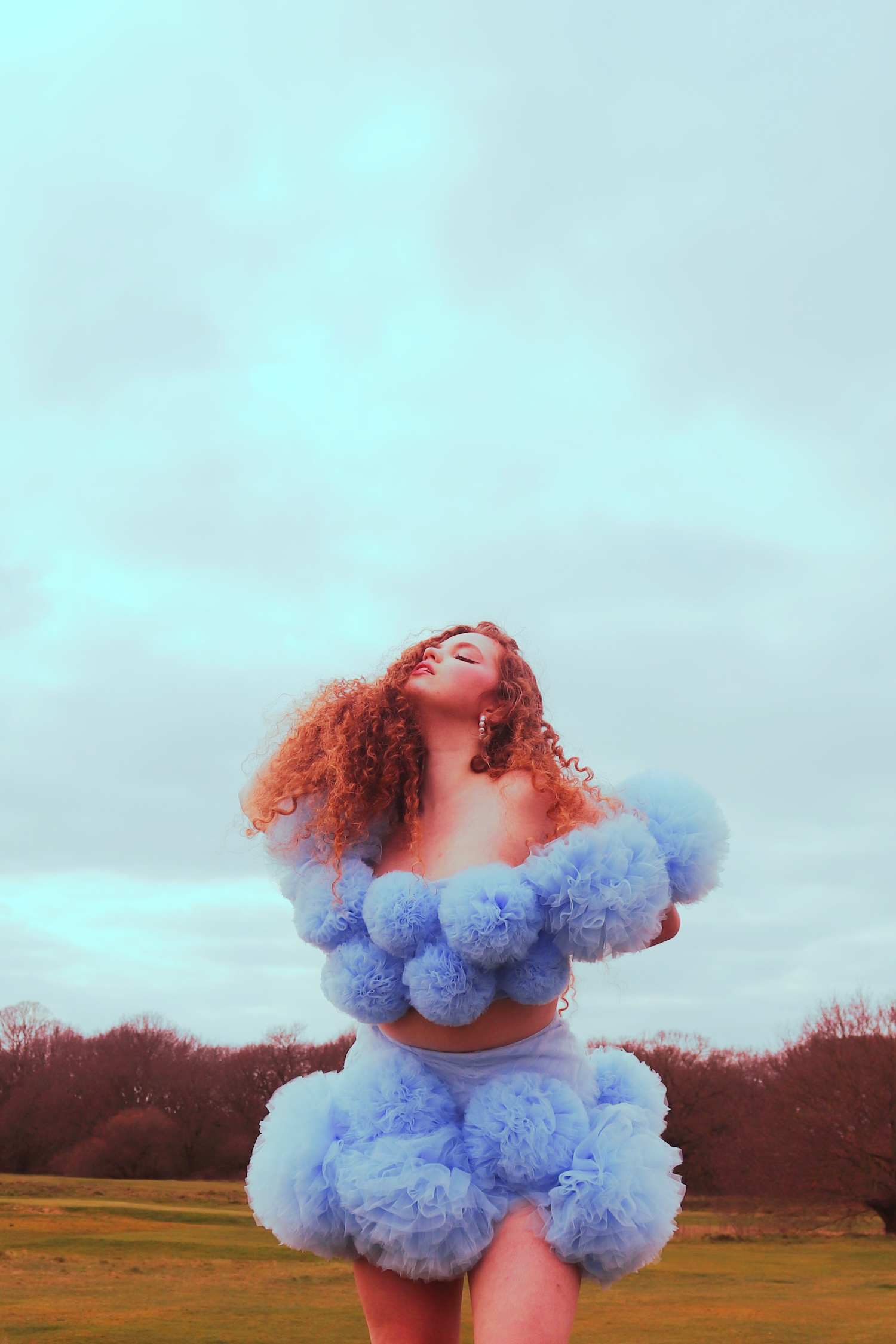
Editorial photos – Polkadots Geoff Waring, Blue Dress and Orange look Satori Cascoe