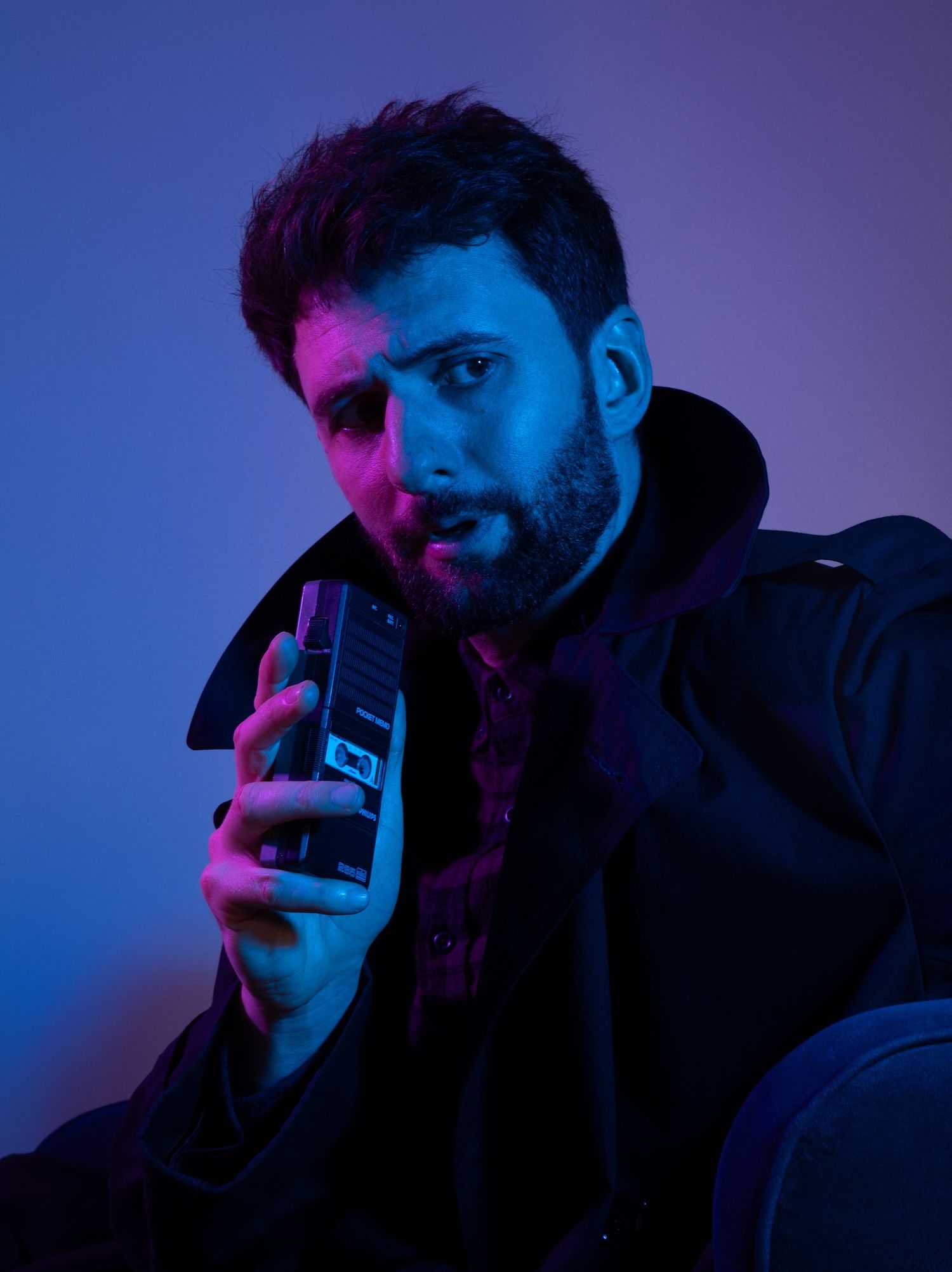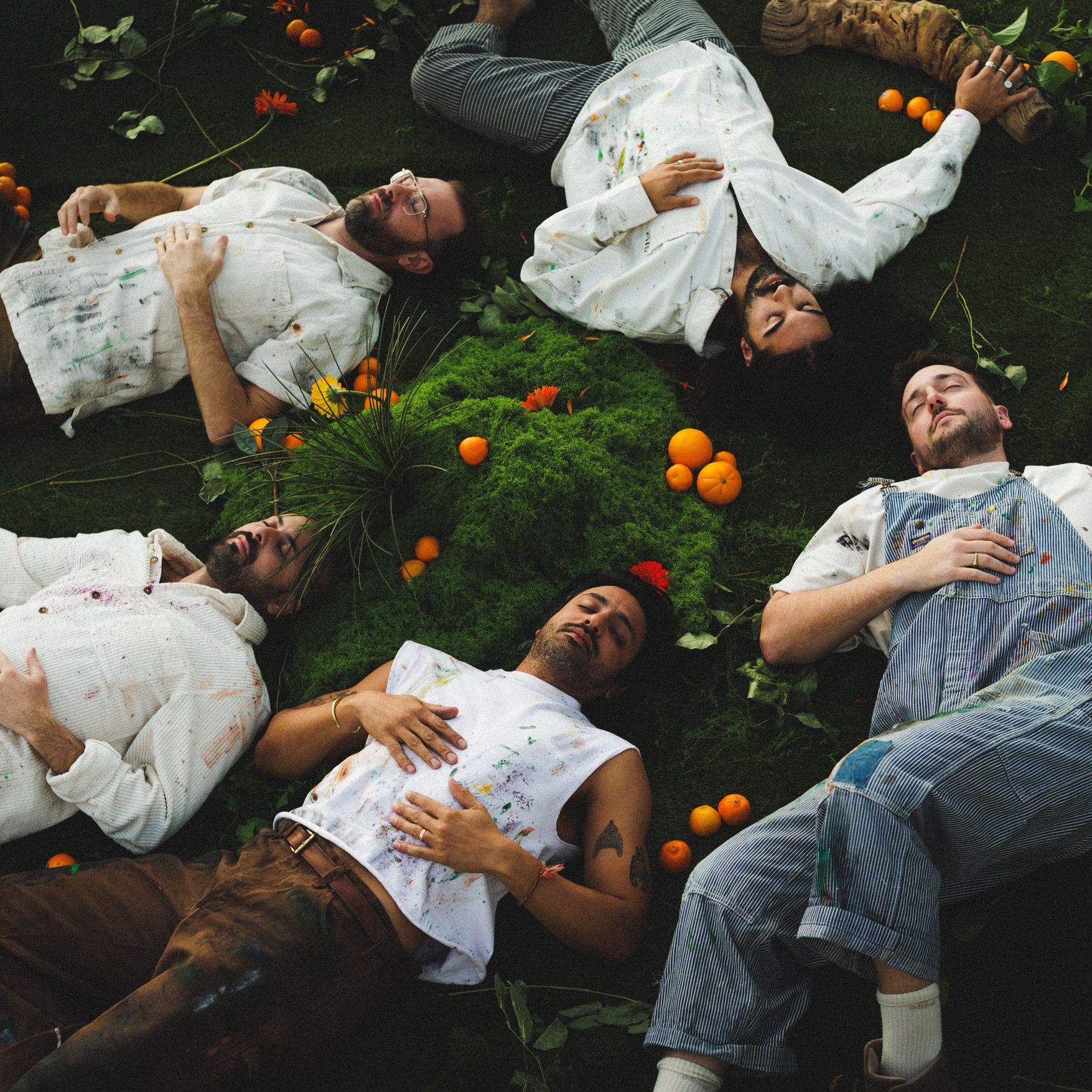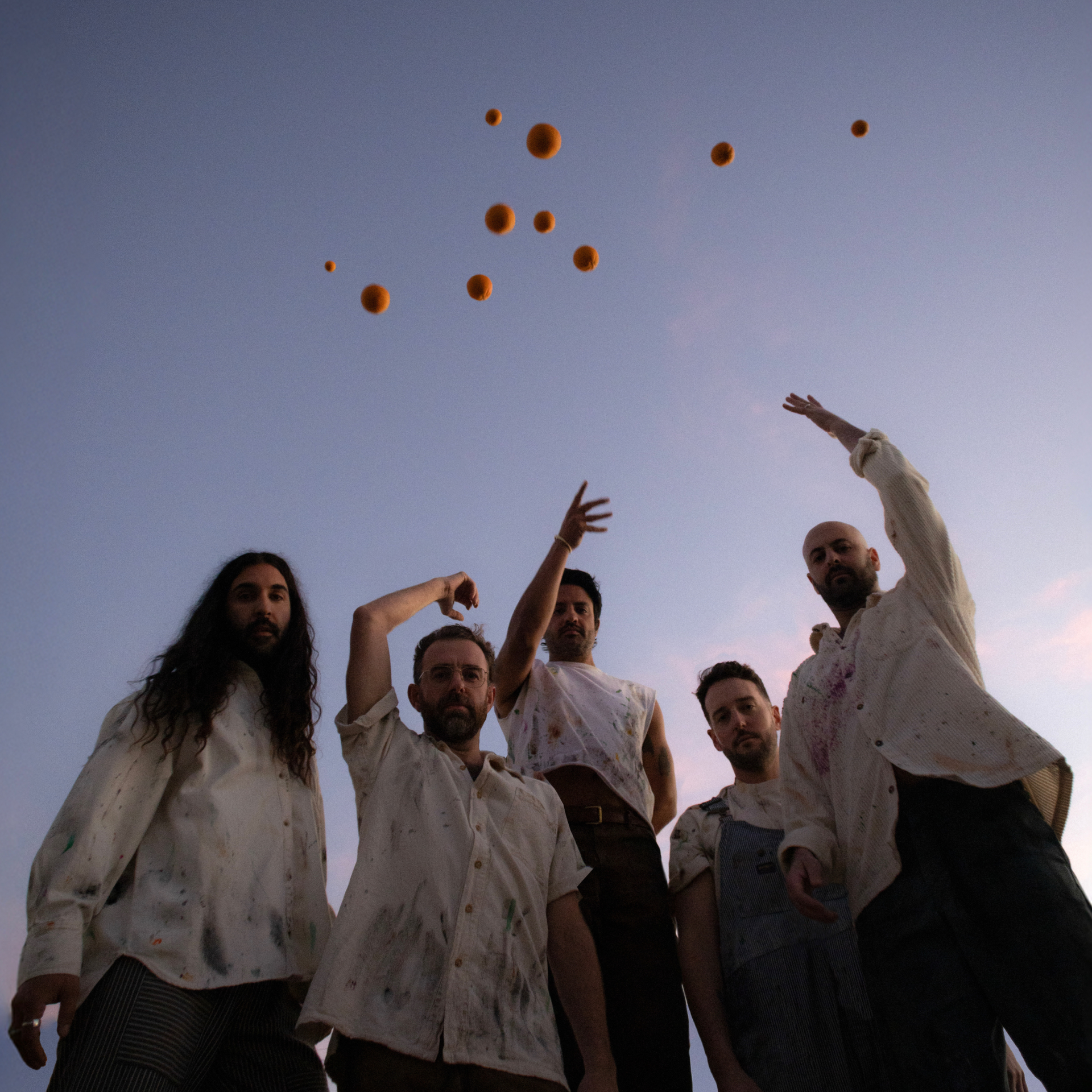
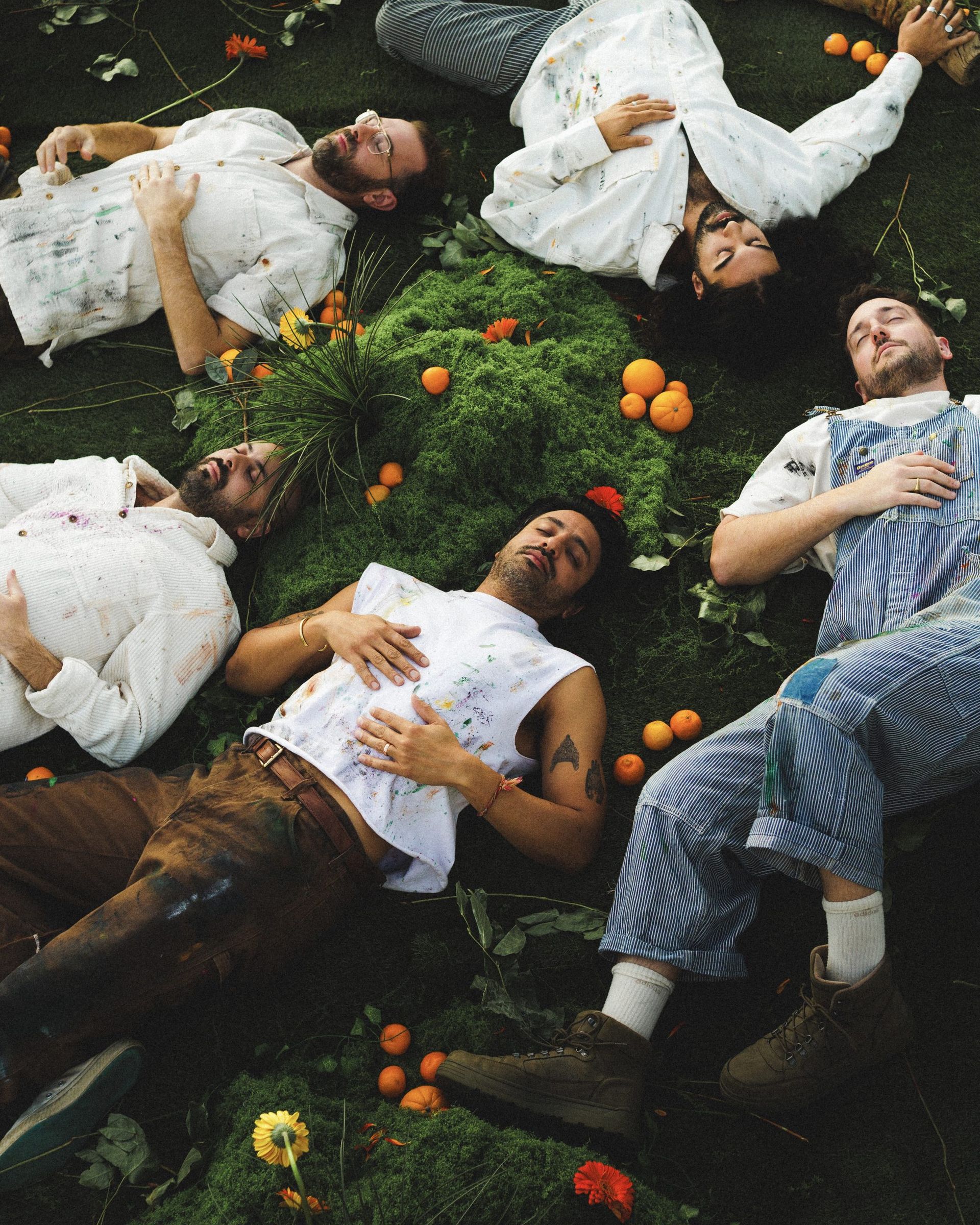
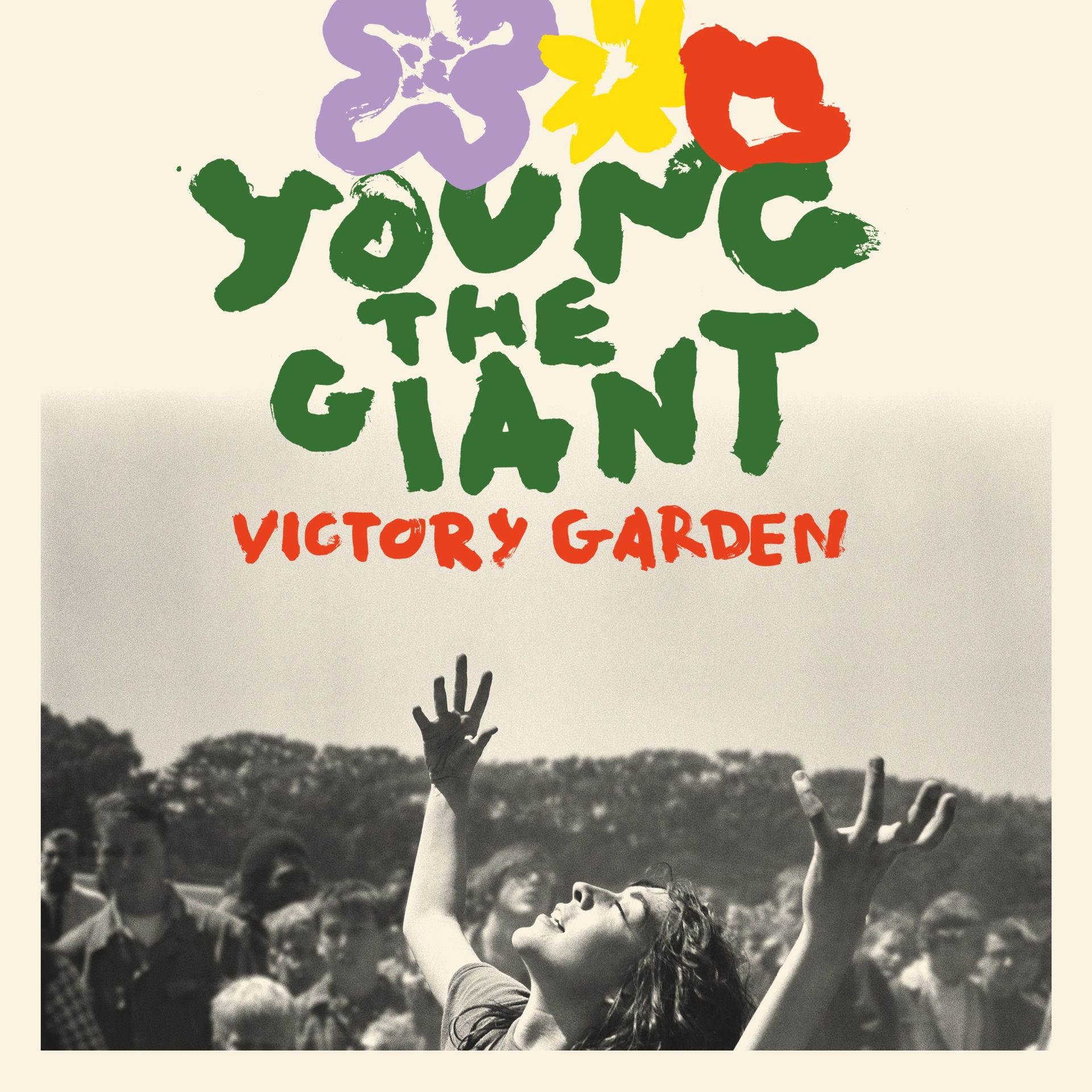
Five-piece indie legends Young The Giant are back with a bang with the release of their sixth studio album, Victory Garden. Made up of Sameer Gahdia, Eric Cannata, Payam Doostzadeh, Francois Comtois and Ehson Hashemian, Young The Giants’ career spans a phenomenal 15 years.
The band now partners with Fearless Records, offering what might be their most spectacular work to date. An experimental culmination of mastery and vision, Victory Garden delivers everything from shimmering indie melodies, thrashing drum and bass to emotionally resonant piano. Truly, you’ll find it all here.
However, one key theme remains intact through the album, as it has through the bands’ discography. Victory Garden deeply explores ideas around identity, personal power, hope and radical empathy. With breathtakingly beautiful lyrics and a soundscape of pure soul, they really hit the mark with this one.
Emerging from Sunny California 2011, under their original Moniker ‘The Jakes’, Young The Giant have built a legacy of deeply explorative lyrics, incredible live energy and a humble, fan-friendly personality. From some of their first hits such as My Body and Cough Syrup, through ambitious and critically acclaimed albums such as Mirror Mind and American Bollywood, the band have gained recognition and adoring fans worldwide.
Now, with Victory Garden, they prove once again that their creative prowess is in constant evolution, and in my humble opinion, that they just get better and better.
In conversation with 1883 Magazine, Sameer and Eric from Young The Giants discuss their new studio record Victory Garden and more.
‘Different Kind Of Love’ feels like both a protest and a plea for people not to lose touch with empathy and with that which makes us human. How did you arrive at this message as the cornerstone of the album?
Everything right now can feel overwhelming. You turn on the TV and see war, chaos, families being torn apart. You open your phone and it’s this endless flood of noise — so much of it stripped of any real human presence. It can start to feel like we’re losing something essential.
At the same time, it feels like everyone is becoming more divided, less willing to see each other with empathy. The truth is that behind all the headlines and arguments are real people; people with families, fears, and hopes that aren’t so different from our own.
More than anything, this moment has made us think about the kind of love the world needs right now. Not just the easy kind, but the harder kind, the kind that asks us to slow down, listen, and remember each other’s humanity.
You co-produced the track with Brendan O’Brien, whose catalogue spans some amazing artists. What was it like working with him and what did he draw out of you in the studio that perhaps wouldn’t have surfaced if you’d produced it alone?
We came into the studio with demos that were already pretty close to finished. What we needed was someone who could protect the heart of those songs while helping us take them further. Brendan has a real gift for capturing a band playing together in a room.
There’s an immediacy to it that feels honest and alive, and that was important to us. We also wanted a producer who would push us to trust our first instincts and not overthink every decision. Because of that mindset, we were able to record and finish the album in under three weeks.
I’ve heard that Victory Garden was written during retreats in Idyllwild and Joshua Tree. How did those landscapes seep into the sound and spirit of the album, and what influences shaped its DNA?
When we wrote the first few records, we lived together in a house. Then we all got married and/or started having kids, so we obviously got our own places and weren’t able to write together in the same room as much anymore. The pandemic made it even harder. For this album we knew we wanted dedicated time away from the city to connect more with our roots and our childlike selves–just be five brothers in a room. Victory Garden is the result of four one-week long excursions to Joshua Tree and Idyllwild, where we lived, breathed, and made music non-stop together.
This is your first full-length release since American Bollywood and your debut with Fearless Records. In this new chapter, what sonic or thematic territories are you leaning into?
I think we have done a few albums that are pretty conceptual. But, just us existing as a band; five people working together from five different far-flung places of the globe, in itself is a novel concept. With everything going on in the world it felt like we needed to just be a beacon for freedom of expression and childlike wonder; it’s something we all start out with in life but tend to lose sight of along the way. We reconnected with ourselves as a group of humans, brothers, and best friends. This also meant surrending to instinctual sonic and songwriting choices without overthinking. Doing it analog and fully human.
You’ve described ‘Different Kind Of Love’ as an act of resistance through radical empathy. In our current political and cultural climate, the timing of this release feels intentional. Do you see the album as a response to the current landscape, or as something more timeless?
I think our current landscape, like it always has and will, reflects the timelessness of the human condition. Empathy has always been the highest form of human consciousness. Throughout history, it has also always been radical. I think the timing of this feels inevitable.
Over fifteen years and six albums, you’ve moved through distinct sonic eras while maintaining a strong identity. When you look back at your journey so far, what do you feel is the most enduring mark Young the Giant has left on music?
That we haven’t even gotten started. We’ve been around for 15 years, but we’re still just in our 30s. Our music is the chronicling of our public adolescence into adulthood in real time, and the journey to find home, even as we now find home right where we left it. This means we have come into a creative Renaissance of sorts, a new era of Young the Giant coming into its brightest bloom like a magnolia.
Victory Garden is described as an ode to radical empathy. Beyond chart positions or accolades, what kind of emotional or cultural footprint do you hope this album leaves behind?
If heard, to pay it forward. To be a beacon yourself, for freedom of expression, child-like wonder, and radical empathy.
With a new label partnership and your tour coming up, it’s clear that you have a lot be excited for. After Victory Garden, what’s next for the band?
Like for all of us, the future is wild, terrifying, and beautiful. It’s unknowable. We’re just enjoying where we are at right now.
Victory Garden is out now.
Interview Katie Eliza