Darkfield create immersive experiences that are surprisingly difficult to describe to anyone who hasn’t been through one themselves.
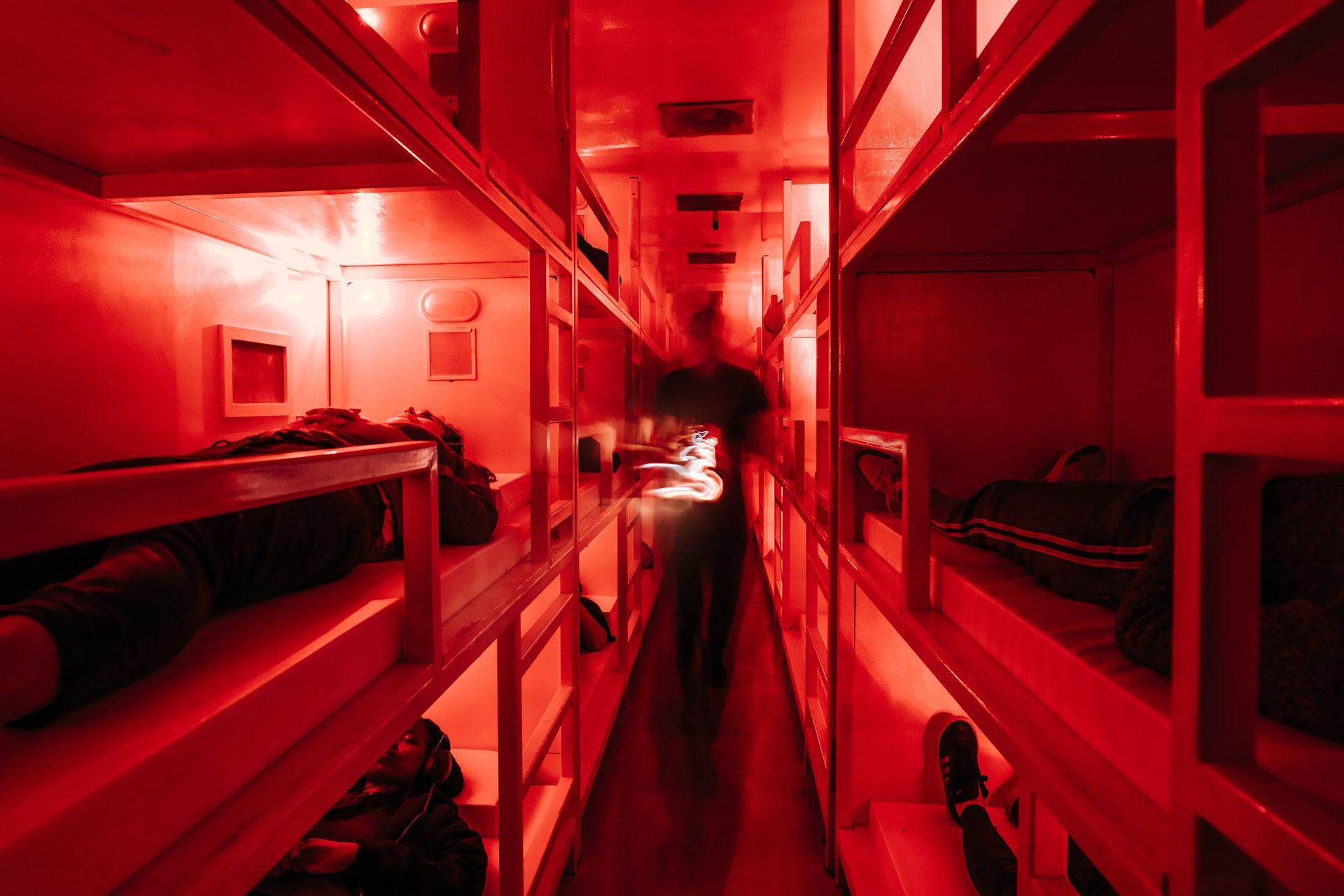
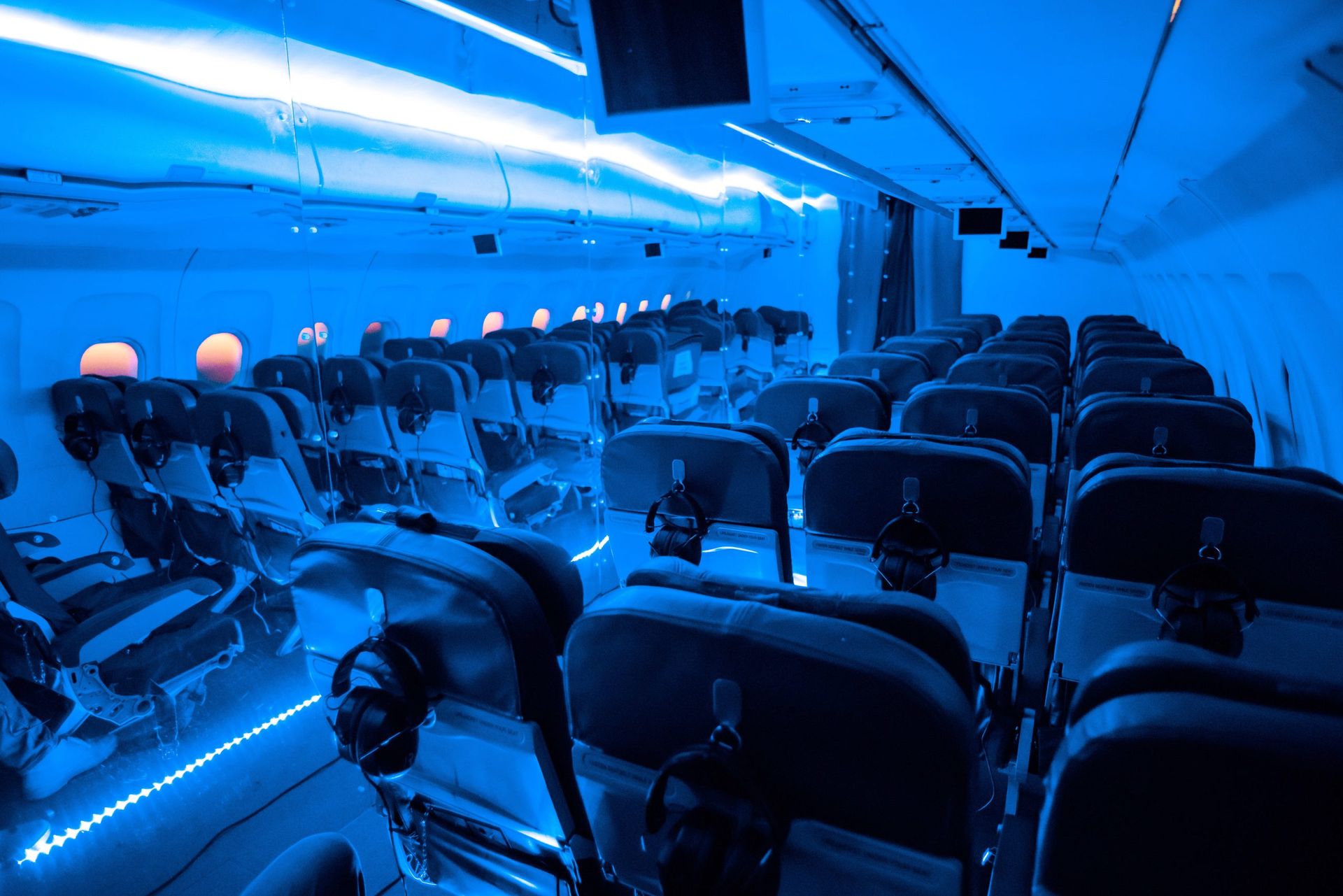
You enter a shipping container, sit down, lie back, or strap yourself into an aeroplane seat. The lights go out. Then suddenly you are somewhere else entirely.
Across experiences like Flight, Coma, Eulogy, and Arcade, Darkfield have built a devoted following by blending binaural sound, where audio is engineered to feel as though it is happening all around and beside you, total darkness, philosophy, psychology, and immersive storytelling into experiences that are thrilling, unsettling, and unexpectedly reflective. Their work explores questions of reality, memory, mortality, free will, and perception, while also delivering the kind of visceral reactions that leave audiences standing outside afterwards swapping stories and comparing experiences.
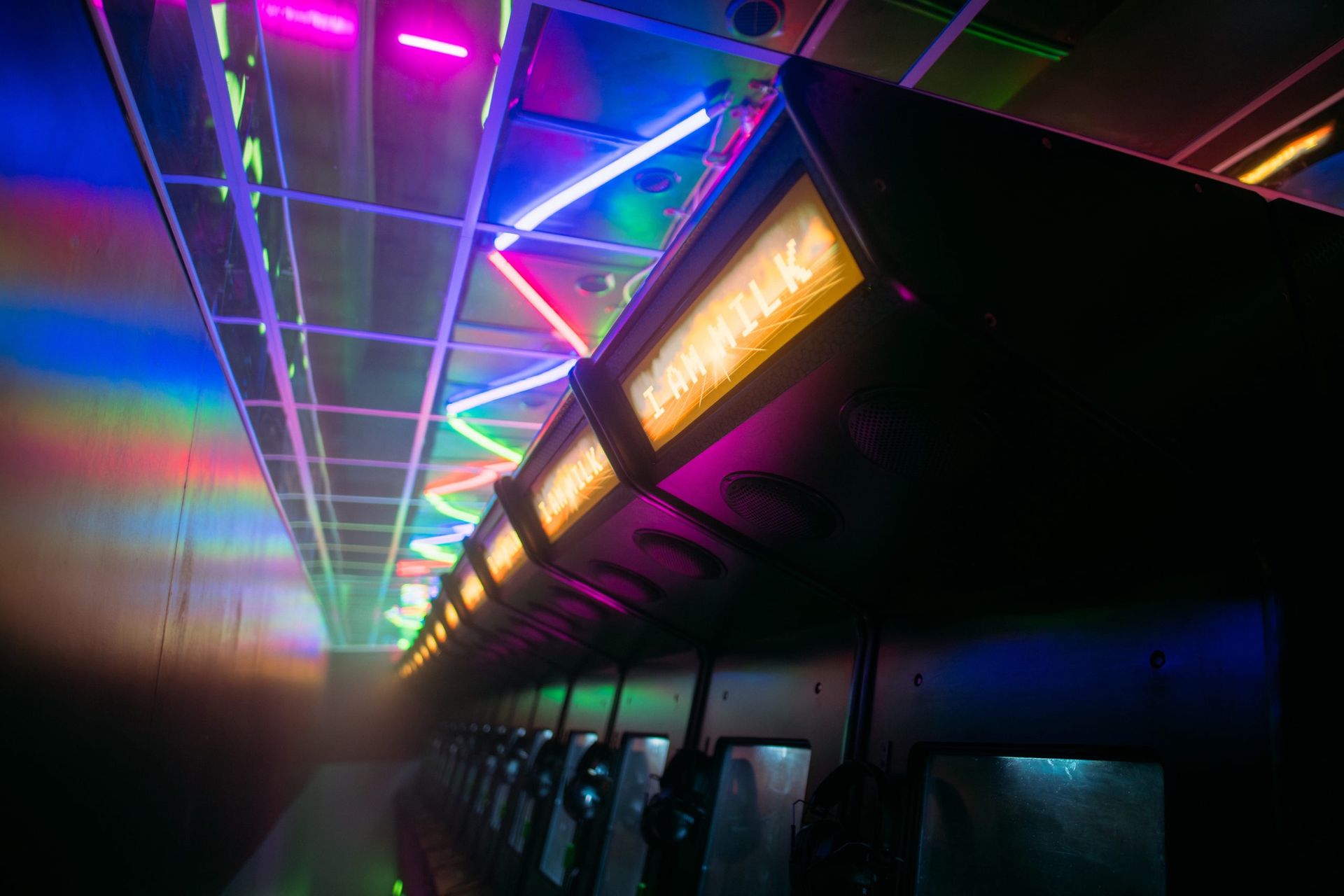
What began inside shipping containers has since grown into one of the most internationally recognised immersive theatre projects around, touring globally, expanding into installations, digital works, and in-venue experiences, and reaching audiences across the UK, Asia, Australia, New Zealand, North America, Turkey, and Mexico. In 2021, Darkfield also won Columbia University’s Digital Storytelling Lab Breakthrough Award in recognition of the year’s most innovative narrative work.
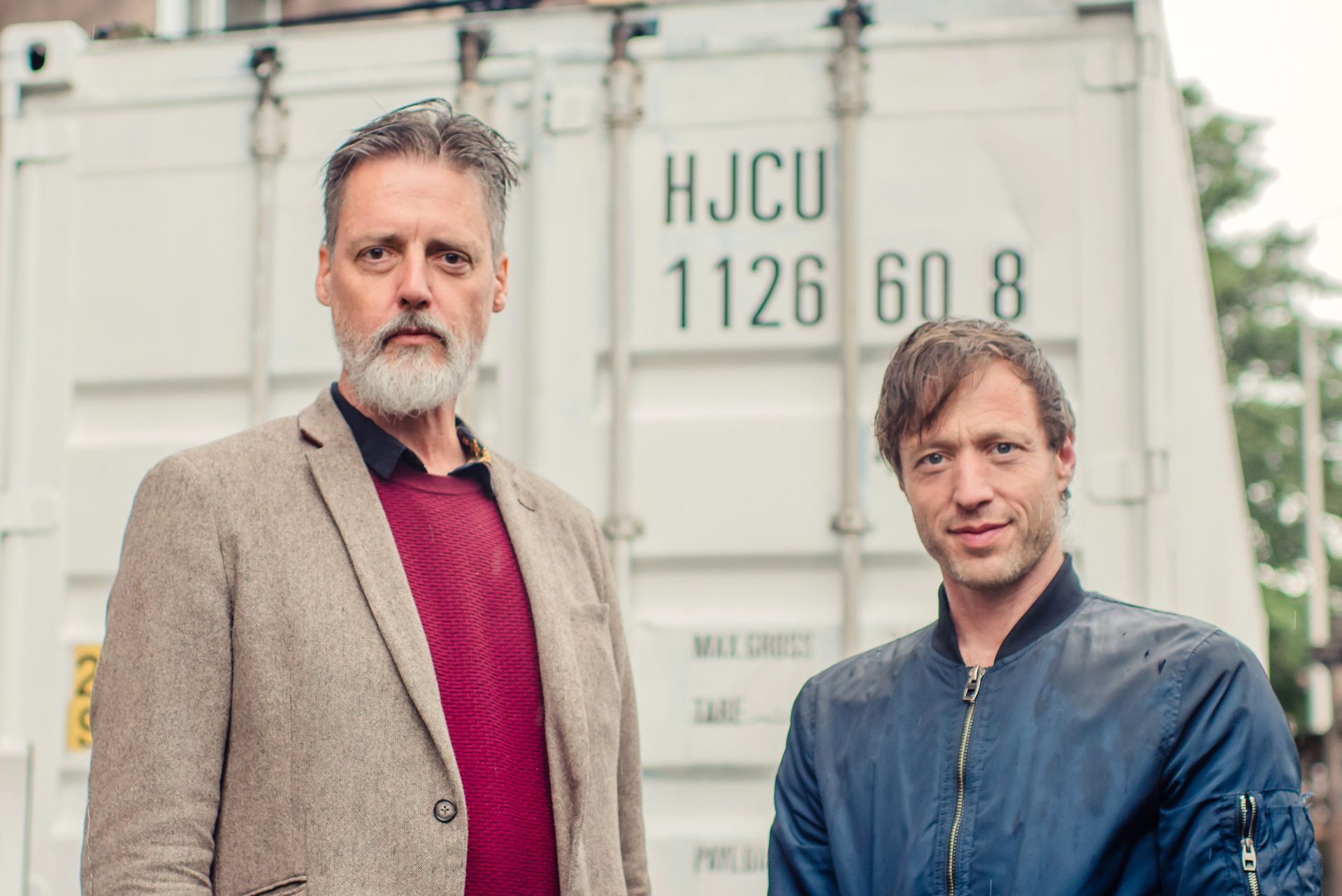
After experiencing all four shows at Darkfield’s London residency last year, I sat down with co-creators Glen Neath and David Rosenberg to talk about how Darkfield began, why shipping containers became their unlikely canvas, how audiences react when deprived of sight, and how a simple idea about putting an aeroplane inside a metal box somehow led to quantum mechanics, multiverses, and one of the most distinctive bodies of immersive work around.
So first of all, let’s start at the beginning. How did the two of you meet? What were you doing creatively before you got into creating Darkfield together?
David: We’d both been involved in different kinds of theatre-making. I was working with a company called Shunt, creating immersive work where audiences were completely mixed up inside the experience. Around that time, I’d started experimenting with binaural audio and headphone-wearing audiences, and Glen and I began talking about making a show in total darkness using that technology.
That became our first show, Ring, back in 2012. What fascinated us was this idea that audiences wouldn’t quite know whether what they were hearing was live or prerecorded. People became hyper-aware of everyone else around them in the darkness, constantly wondering what was real. That uncertainty became the core thing we’ve been exploring ever since.
Glen: I started making work through Shunt’s open-to-all cabarets and eventually David and I began collaborating around 2010 or 2011.
David: After those first dark shows, we realised we wanted more control over the environment, which is what led us towards shipping containers. We could guarantee total darkness, control exactly how the audience was positioned, and carefully design the textures and imagery people carry into the darkness with them.
That led to Séance, our first container show, and suddenly we had about twenty ideas for different experiences we wanted to create.
Wow. And how many of those have you actually made?
David: Six… is it six? We’ve already lost count, which probably isn’t a great sign considering it’s still under ten.
What’s amazing is that you’d think once you limit yourself to a twelve-metre shipping container, total darkness, binaural sound, thirty audience members, and a twenty-minute runtime, you’d run out of possibilities pretty quickly. But weirdly, those constraints have actually opened up more ideas rather than limiting them.
When you’re using binaural sound in the dark, it feels almost limitless. Did the sound and technology side originally come more from you, David, and the narrative side more from you, Glen? And did Darkfield emerge naturally from those experiments?
Glen: Broadly speaking, yes, although it’s become very collaborative. I do the writing, but David contributes creatively throughout and there’s a lot of shaping together.
Those early shows made us realise how powerful sound, darkness, and uncertainty could be. The containers came later, but once we built that first show we realised we’d found something bigger.
David: What fascinated us wasn’t just that sound could create limitless environments, but that audiences might genuinely question whether what they were hearing was happening around them.
That uncertainty became central to the work.
Glen: We realised very early that recording and replaying sound within the same space was the most interesting thing we could do, because audiences couldn’t tell what was live and what wasn’t.
That became the foundation of the early shows. Séance, Flight, and Coma are all rooted in the physical space around the audience, while later shows moved more into imagined worlds.
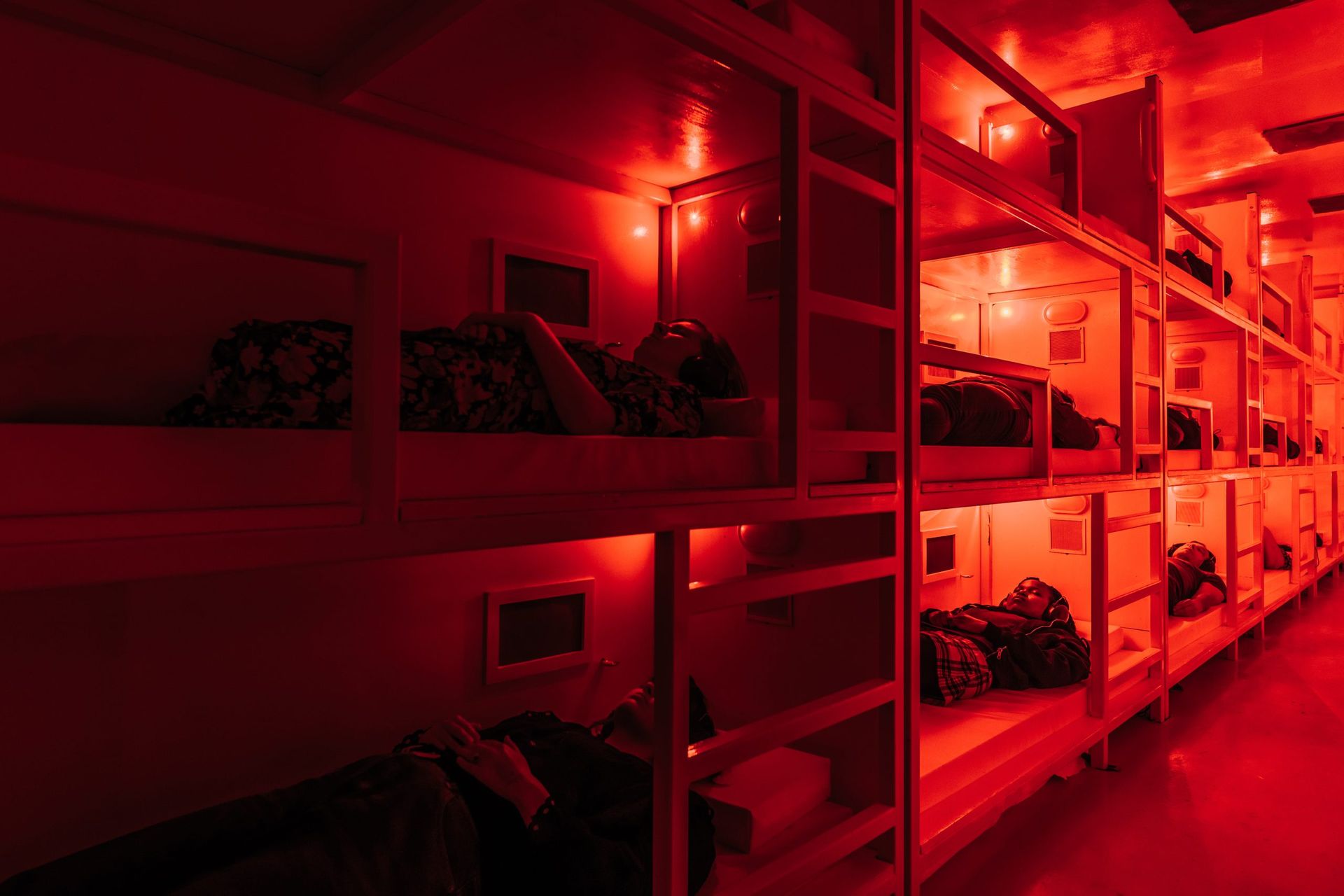
One thing that really struck me was how important the physical environment before blackout becomes. In Coma, for example, simply lying in that space completely changed the psychological effect once the lights went out. How conscious are you of what audiences see and absorb before darkness takes over?
Glen: It’s hugely important. The audience carries those images into the darkness with them, so the physical space becomes part of the storytelling even after they can no longer see it. As David said, a lot of the work is about creating uncertainty around whether what you’re hearing could actually be happening in the room.
You’ve talked a bit about the containers themselves. Practically speaking, are those literally shipped around the world, or do you have different versions in different countries?
Glen: Internationally we have sets built to the same specifications and localise the shows with translations, cultural adjustments, and local recordings.
With Flight, for example, the air stewardess was considered too rude in South Korea, so we had to adapt aspects of the performance for that audience. And because many of the shows rely on the idea that the people you hear around you might actually be inside the container, we also record local voices in each country so the audience feels culturally connected to the world they’re hearing.
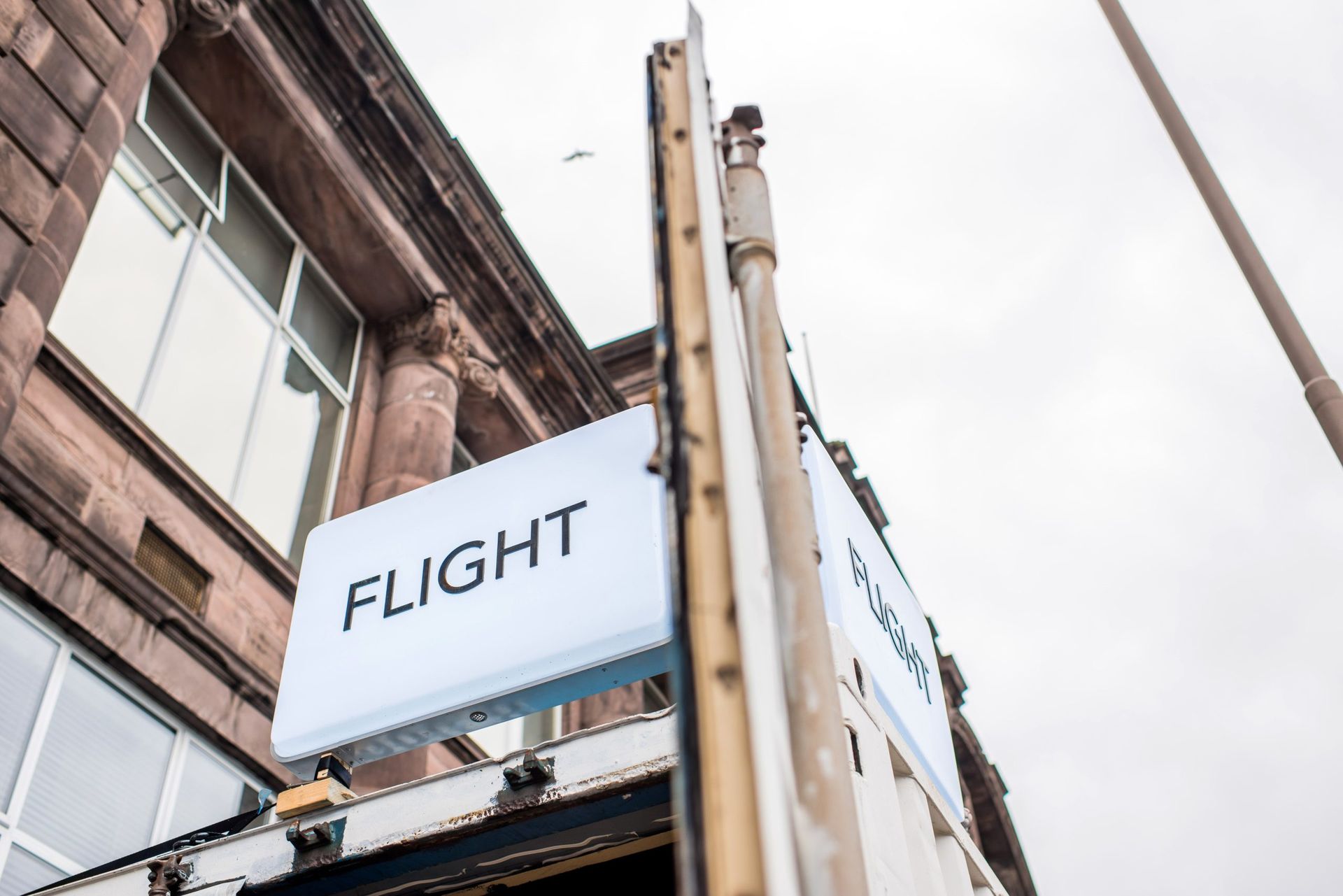
Do you think audiences become a lot more vulnerable in the dark? And how consciously do you design around that vulnerability?
Glen: I think they absolutely do. When we made our first show, Ring, we weren’t even specifically trying to frighten people. It was much longer than the Darkfield shows are now, about fifty minutes, and more like a strange self-help meeting in complete darkness.
But we quickly realised audiences were having very intense reactions to it. That complete darkness is deeply unnerving because you almost never experience darkness to that degree in normal life. There’s usually always some light somewhere. In these shows, the darkness almost becomes a texture in itself, like a physical thing.
What’s interesting, though, is how differently people respond to it. Some people find it terrifying, while others find it strangely comforting. The reactions vary hugely from person to person.
Your work sits somewhere between theatre, horror, philosophy, and psychology. How do you describe Darkfield when someone asks what it actually is?
David: We don’t actually tend to describe the company through genre very often. But there are definitely recurring ideas running through the work, especially existential questions around reality, identity, and perception, how you know what’s real, how you define the self, and whether you can trust your own experience.
Those questions feel especially potent when you’ve got an audience sitting in complete darkness in a vulnerable or unnerved state. It becomes a very interesting space in which to question reality.
Have you ever had audiences react so strongly that it surprised you, particularly in terms of fear or panic?
David: Surprisingly few people have had truly extreme reactions like panic attacks, actually. We’re very careful now with the briefings before people go in and with how the shows are advertised, so audiences generally know the kind of experience they’re walking into.
The sound design is incredible. I remember actually taking my headphones off at one point because I genuinely thought noises were happening around me. Do you design the sound to move audiences physically, emotionally, or both?
David: Both, really. We’ve been making these kinds of shows for long enough now that there are certain techniques we know will reliably create reactions. There are ways of using whispering or extremely close sounds, for example, that immediately make the hairs stand up on the back of someone’s neck.
I genuinely thought Coma was making the mattress vibrate, only to discover afterwards it hadn’t been. That blew my mind.
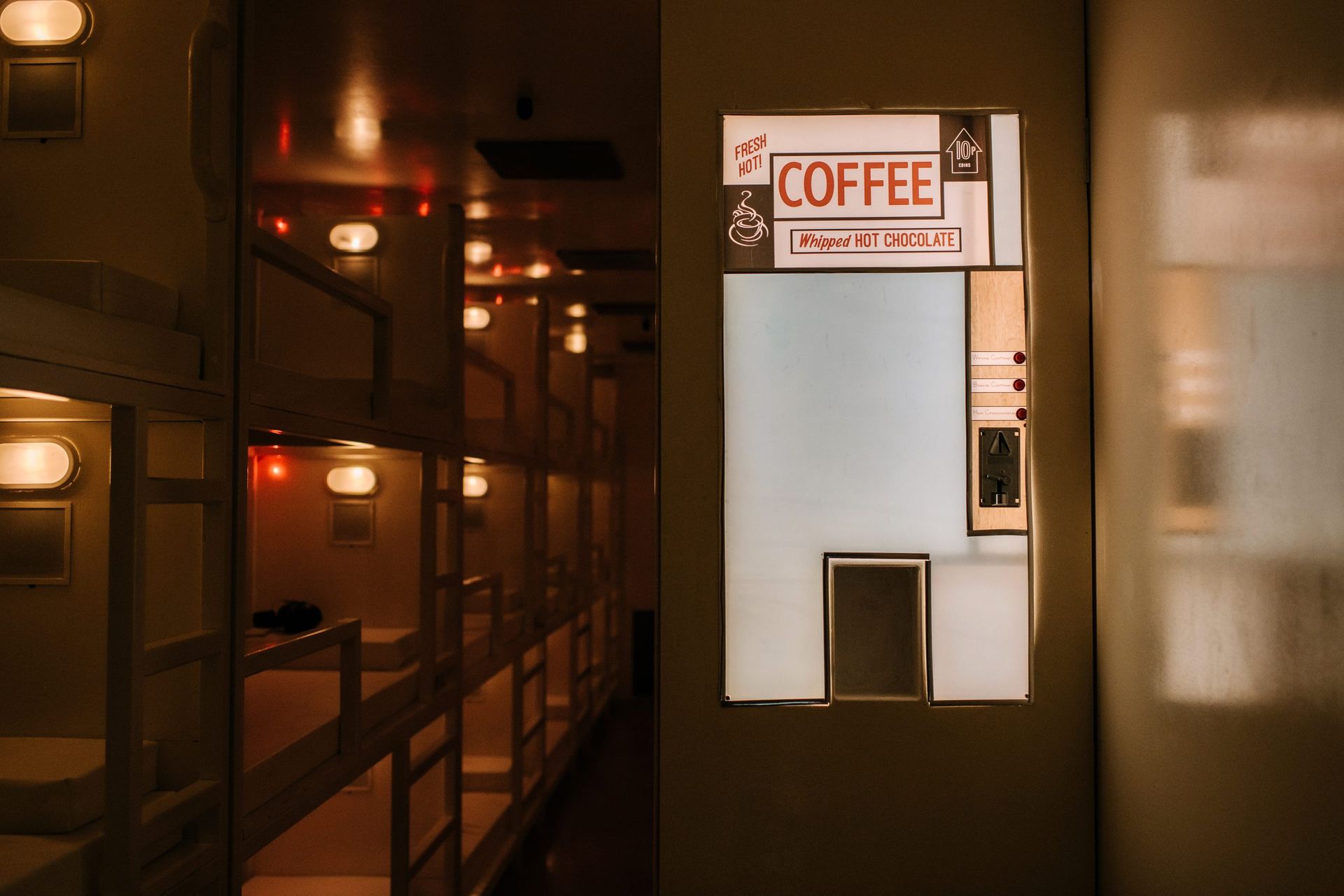
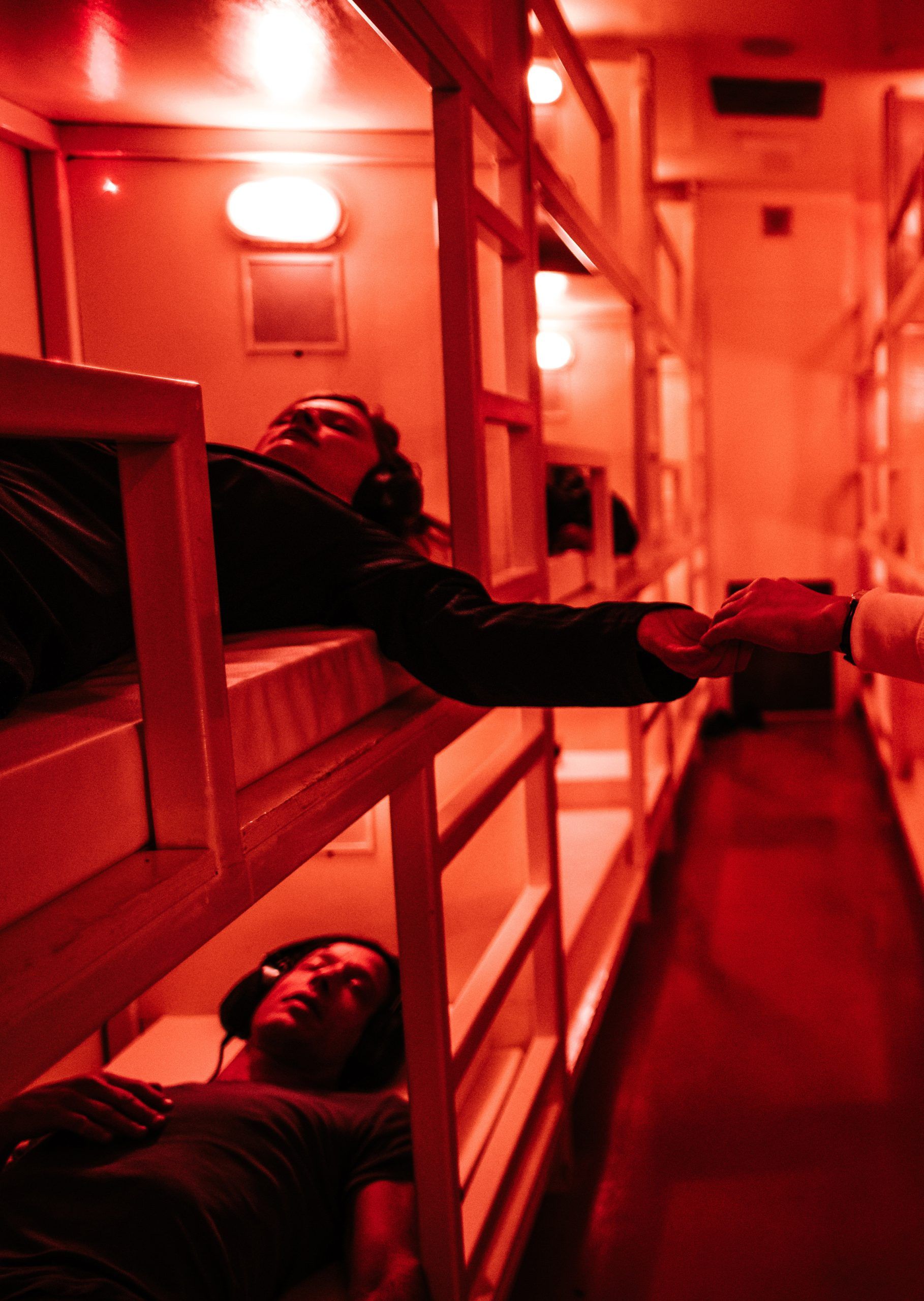
Are there recurring audio tricks or techniques you keep returning to across the shows?
Glen: We use sounds like coughing, laughter, sobbing, and movement to create audience presence. We also play constantly with proximity.
David: Whenever we record, one of the things we always do is capture groups of people making all those incidental audience sounds, coughing, chuckling, whispering, shifting in their seats.
Do you literally just put people in a studio and ask them to cough?
Glen: Honestly, it’s even sillier than that. We basically orchestrate it. We’ll just tell people, ‘Right, everyone cough…now.’
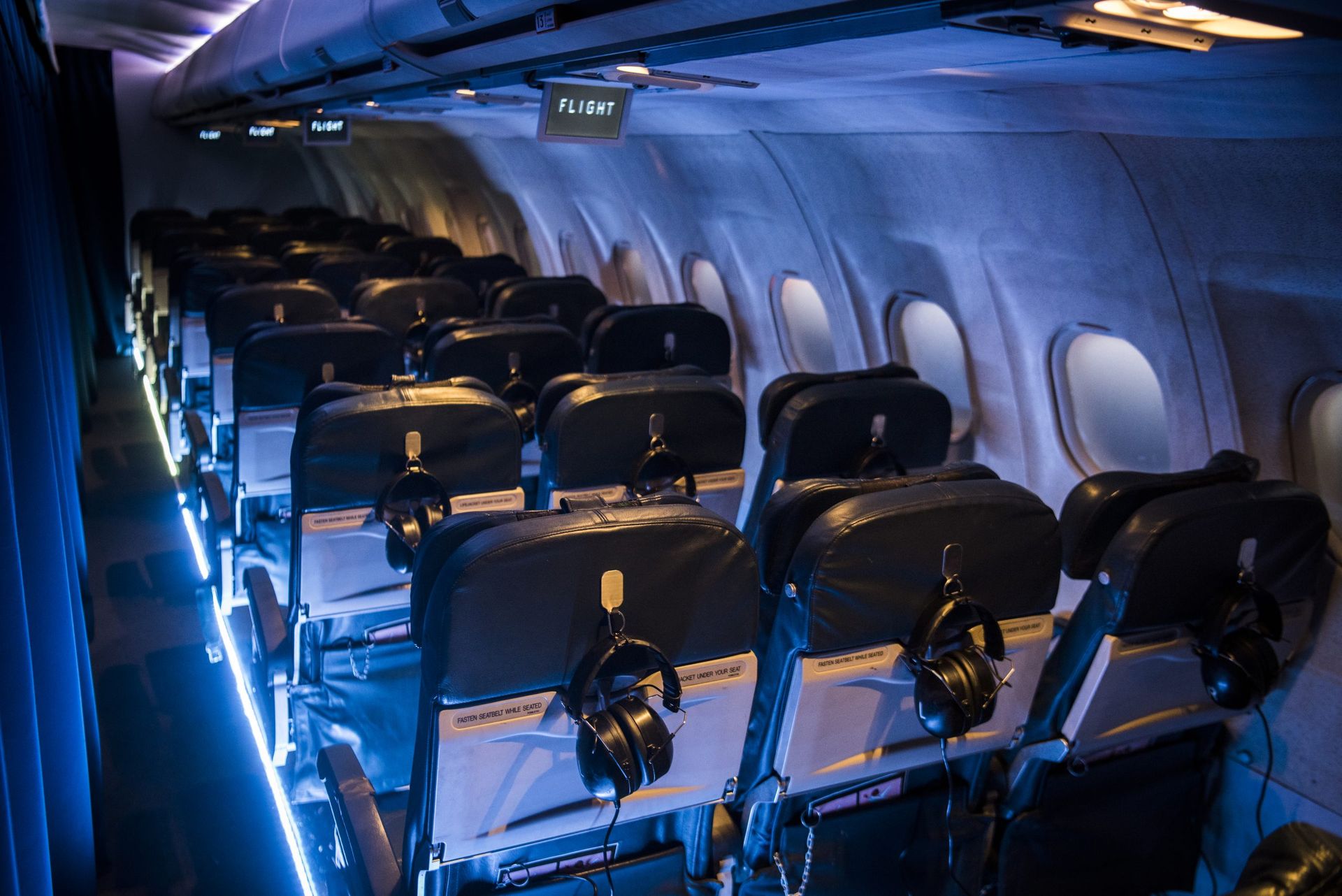
Flight has one of the strongest senses of place of all the shows. How did that idea first come about?
Glen: It honestly began with David saying, ‘Let’s put an aeroplane inside a shipping container.’
From there, we started thinking about the overlap between the reality of sitting inside a shipping container and the experience of being on a plane, trapped inside a metal tube with a group of strangers.
That psychological tension became one of the anchors of the show and eventually evolved into the multiverse idea of multiple realities existing simultaneously.
There’s also this really strong philosophical thread running through it around alternate outcomes and probability. Where did that come from?
David: We started exploring the many-worlds interpretation of quantum mechanics, particularly through David Deutsch’s work. He wrote two brilliant books, The Fabric of Reality and The Beginning of Infinity, which explain those ideas in a really exciting way.
That led us towards this thought experiment known as quantum suicide, the idea that if you were playing Russian roulette, you would never consciously experience losing because your consciousness only continues in the realities where you survive.
So there’s this strange implication that, from your own perspective, you never actually die.
That became a really concise way into Flight. In a sense, you can never truly experience the plane crashing because there is always another reality in which it lands safely.
It’s basically Schrödinger’s plane.
David: Exactly. That’s exactly what it became. We loved the fact that Schrödinger’s cat also involves a box, because we had an audience sitting inside a box as well. Suddenly all these ideas around quantum mechanics, parallel realities, and physical confinement started fitting together in a really satisfying way.
Coma feels much more intimate and vulnerable than Flight. Was that a deliberate response to the show that came before it?
David: In a way, yes. We definitely think about the order we make the shows in. After Flight, where audiences are being physically jolted around and pushed through this intense experience, there was something very appealing about creating a piece where people simply lie down and almost drift off to sleep if they want to.
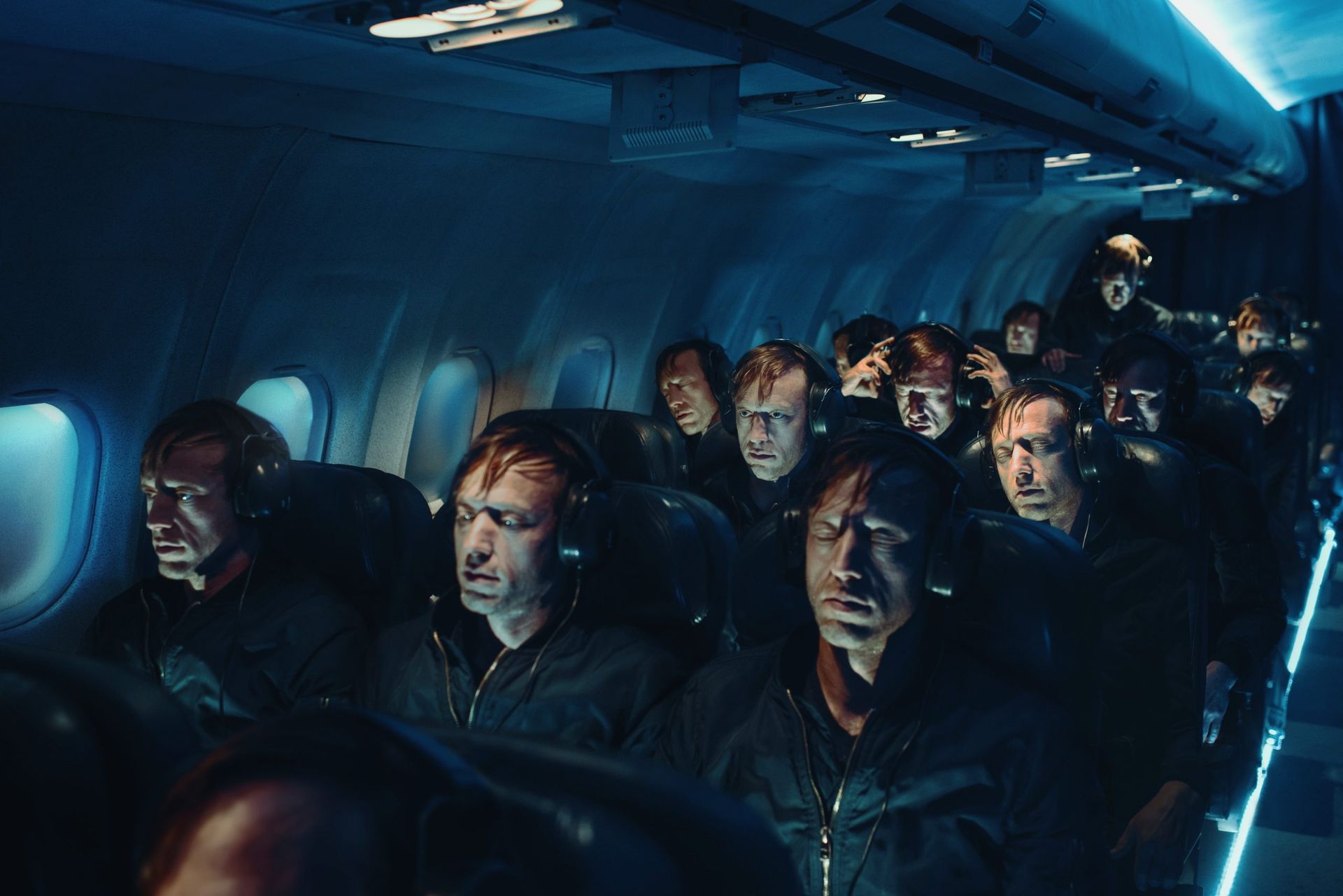
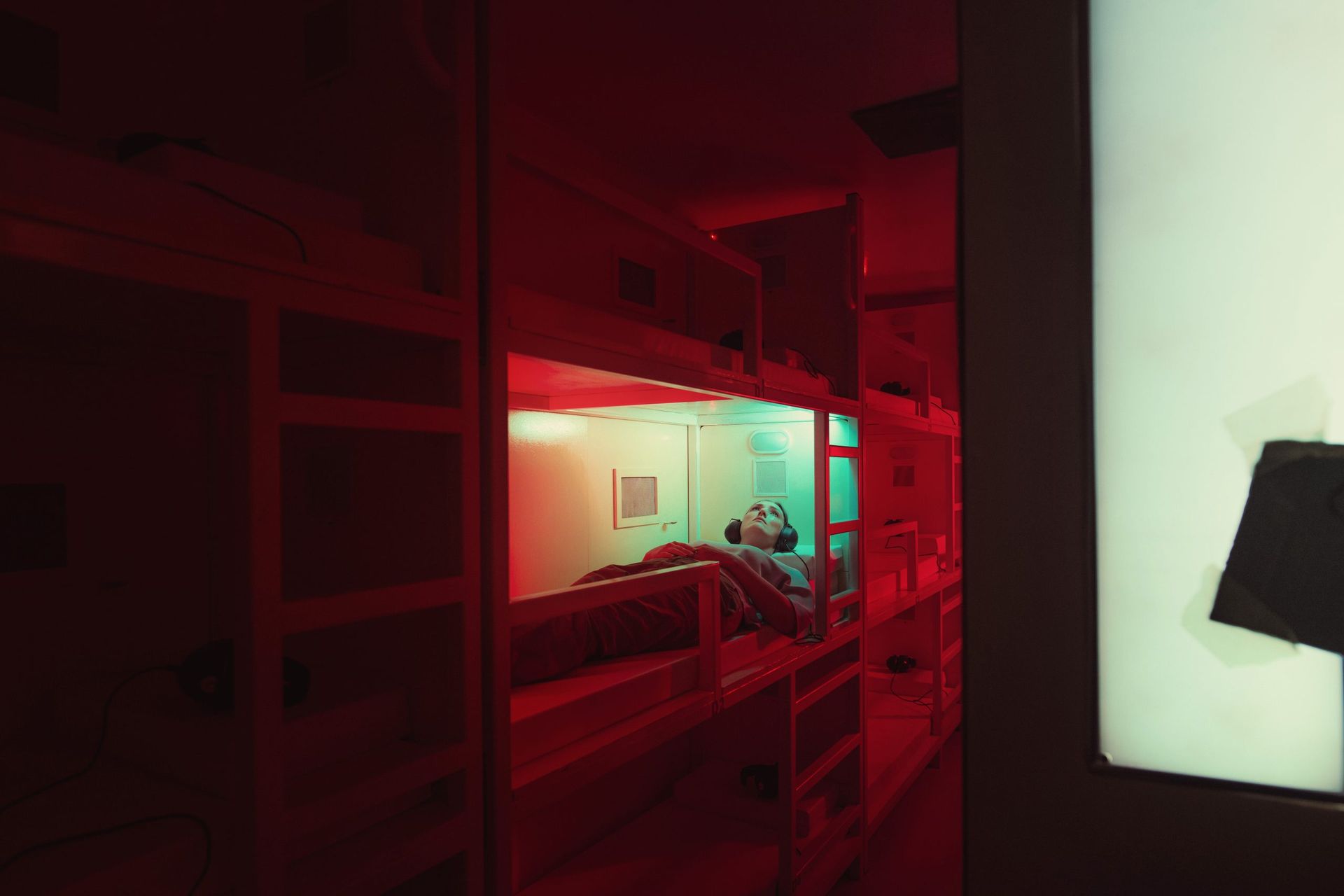
Lying down completely changes your relationship to the experience as an audience member. What interested you about that?
Glen: Honestly, it began simply with the idea of having people lying down. That came before we even knew what the show itself was going to become.
Then we started finding inspirations around that idea. A Borges story about a map so detailed it had to be exactly the same size as the thing it represented became one of the inspirations for Coma.
The show became about shared imagination and collective memory inside a confined space. Then gradually the mind begins populating that space with people, memories, and eventually something much darker.
Eulogy felt much more abstract and dreamlike than the other shows. What were you exploring with that one?
Glen: We really wanted to create the sensation of being inside a dream. A lot of it came from playing with dream logic, that feeling of constantly trying to complete a task but continually getting distracted, losing track of where you are, and suddenly remembering something you were supposed to have done.
We built the entire experience around repetition, disorientation, and shifting perspectives, really leaning into the instability of dreams and the strange way memory functions inside them.
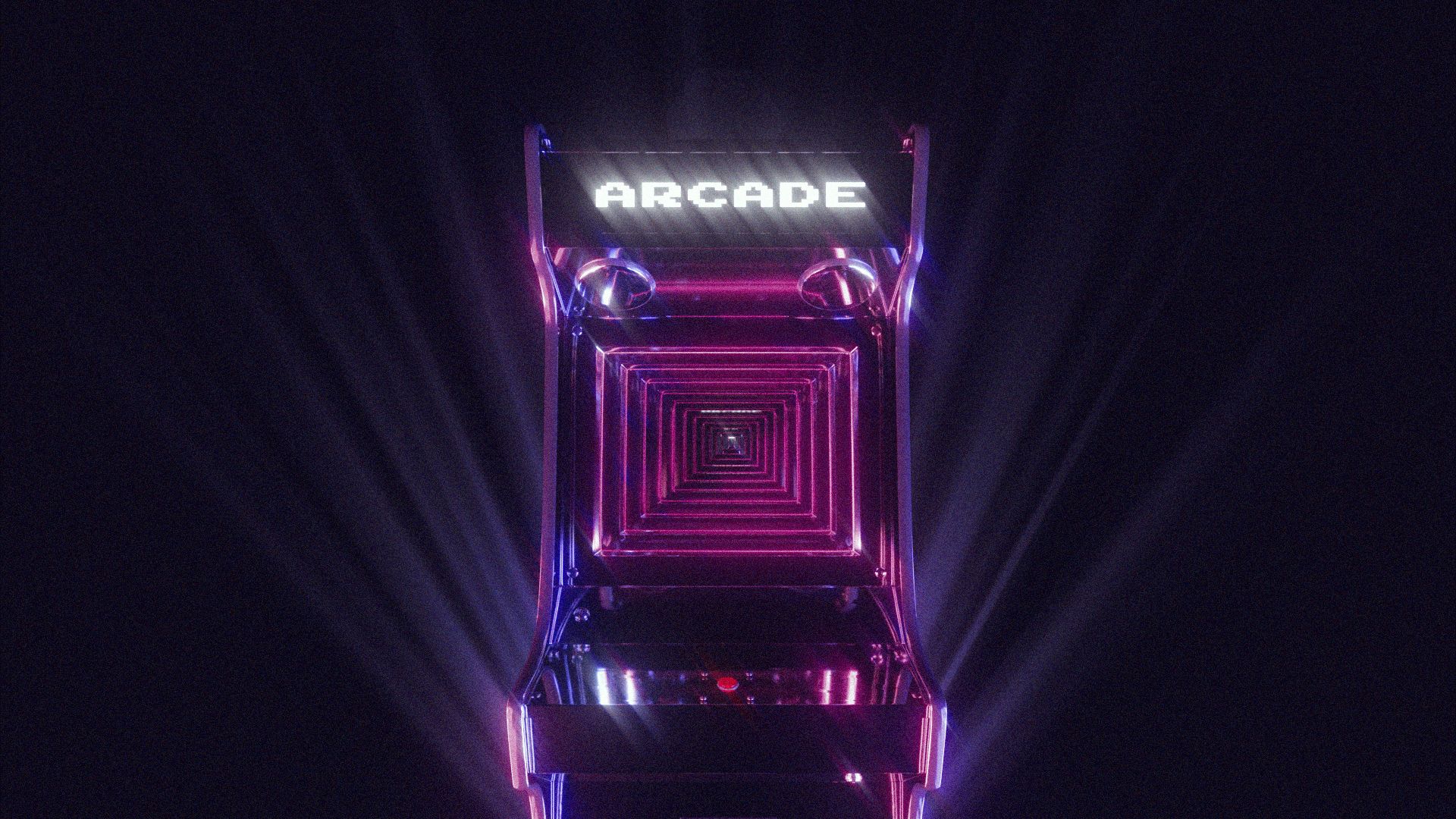
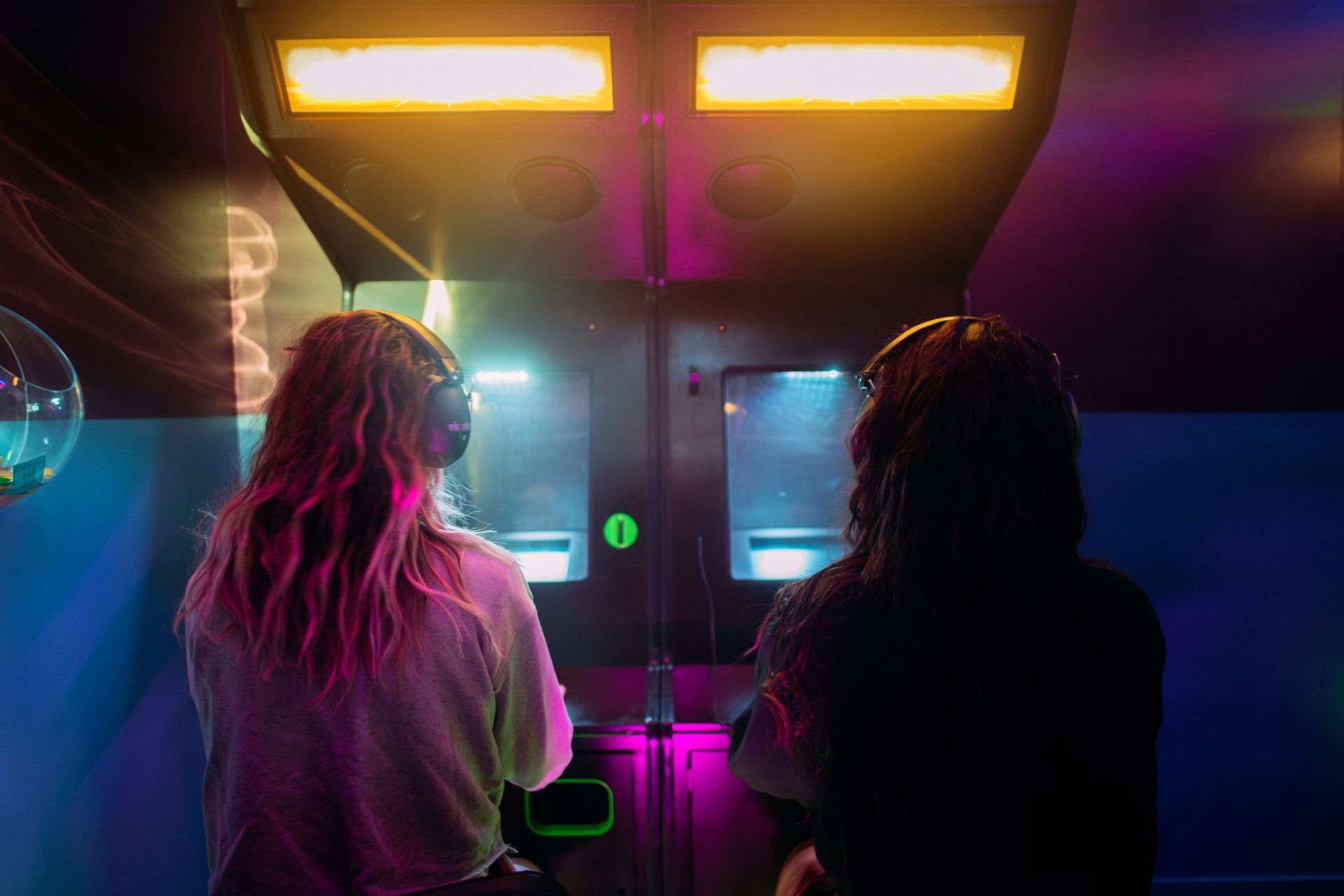
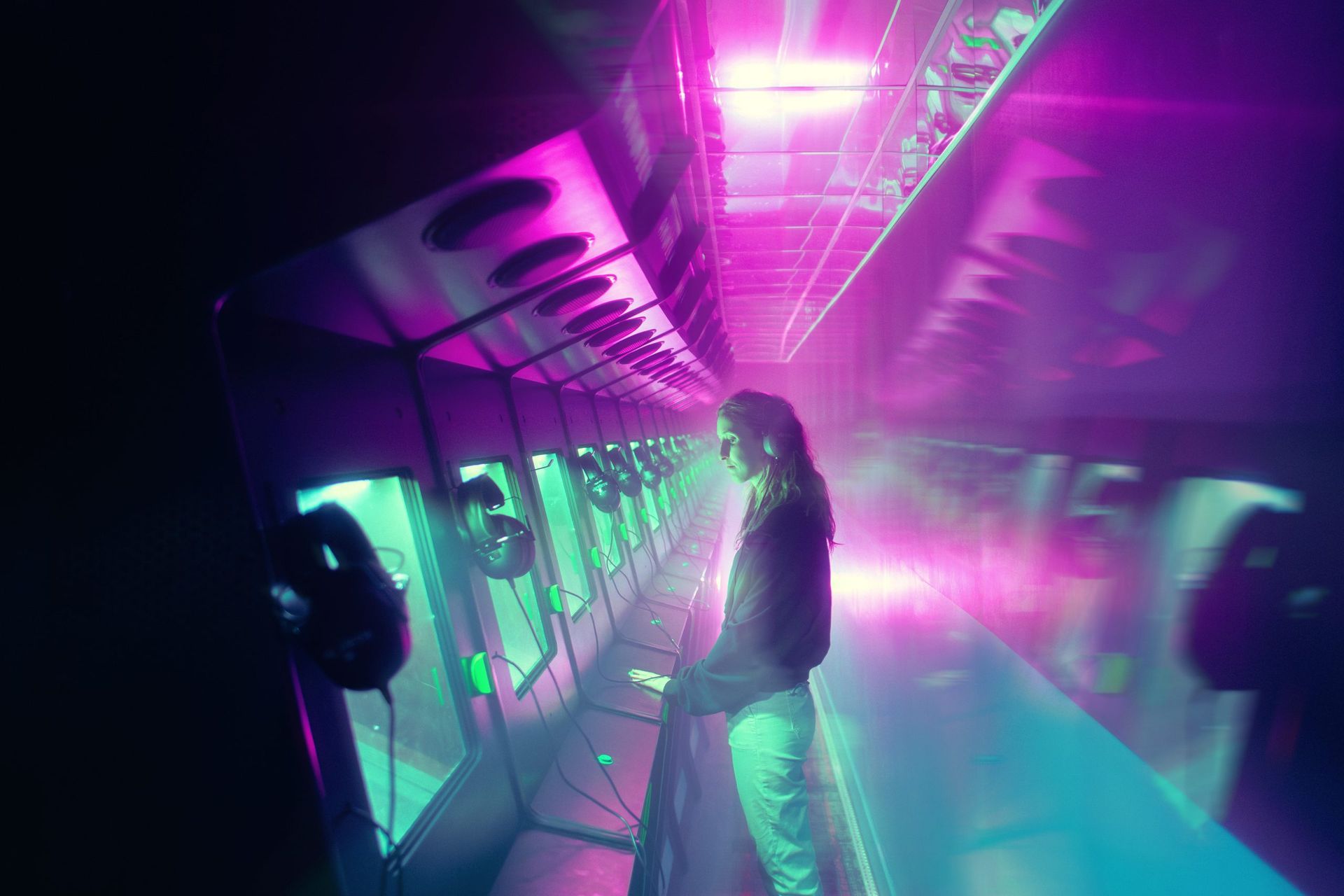
Arcade introduces audience choices and branching paths. What prompted you to move towards giving audiences that kind of agency?
David: That actually grew out of Eulogy. We’d already started experimenting there with speech recognition and small audience choices, and once we realised that technology genuinely worked, we became interested in pushing the idea much further.
We pushed branching storytelling as far as we could inside a Darkfield show.
There are around fifty different endings, which becomes incredibly complicated surprisingly quickly once you start building binary choices into the structure. At one point we thought we might bring audiences back onto the same narrative path eventually, but in the end we embraced the idea that once people diverge, they continue down completely different routes.
One of the most interesting parts for me was actually hearing other people’s experiences afterwards and realising how different their versions had been.
David: Ideally you’d experience the show multiple times and discover different paths through it, but realistically most people won’t. So comparing experiences afterwards became part of the design.
That conversation becomes part of the experience itself.
How difficult is it to design something that structurally complicated?
David: Completely insane.
What made it especially difficult was that every possible version still had to finish at exactly the same moment, down to the second. So not only are you building all these branching narratives, you’re also solving this enormous timing puzzle underneath it all.
When you’re creating these experiences, do you want audiences to leave with specific philosophical questions in mind, or are you more interested in provoking emotional reactions?
David: With Arcade especially, there are definitely quite specific questions running through it. Depending on the route you take, the show can become very focused on ideas around free will, choice, and whether we genuinely control our own decisions.
There are certain moments where the structure creates what feels like a very physical demonstration of those ideas, where audiences may genuinely start questioning their own position on free will. I think those kinds of philosophical questions are very much part of what interests us.
What excites you both most about the future of Darkfield?
Glen: Obviously there are always new shows we want to make, but from the beginning I had a strong sense that this format could become something bigger than just individual productions.
There was always this feeling that we were building something ongoing rather than creating standalone experiences.
What’s surprised us most is how well Darkfield has translated internationally.
David: We both came from quite niche areas of theatre and immersive work, so we honestly assumed this would be another niche project. We had no idea how broad the appeal would become. On paper, these shows probably shouldn’t appeal to such a wide audience, but somehow they do.
What do you ultimately want audiences to take away from a Darkfield experience?
Glen: Someone once described Flight as ‘a high-art theme park ride’, and I actually thought that captured what we’re trying to do quite well.
We want the experiences to feel genuinely exciting and visceral, but also to leave audiences with something lingering afterwards, some larger idea or question that stays with them long after they leave.
Darkfield is currently touring the UK and Ireland.
Experience FLIGHT at Galway International Arts Festival in July 2026, and FLIGHT, COMA & ARCADE at the Edinburgh Fringe in August 2026.
For booking and further information, visit Darkfield.org, and to keep up to date on future locations follow them on Instagram @darkfield_org
Words by Nick Barr
Photography by Mihaela Bodlovic, Katie Edwards, Sean Pollock