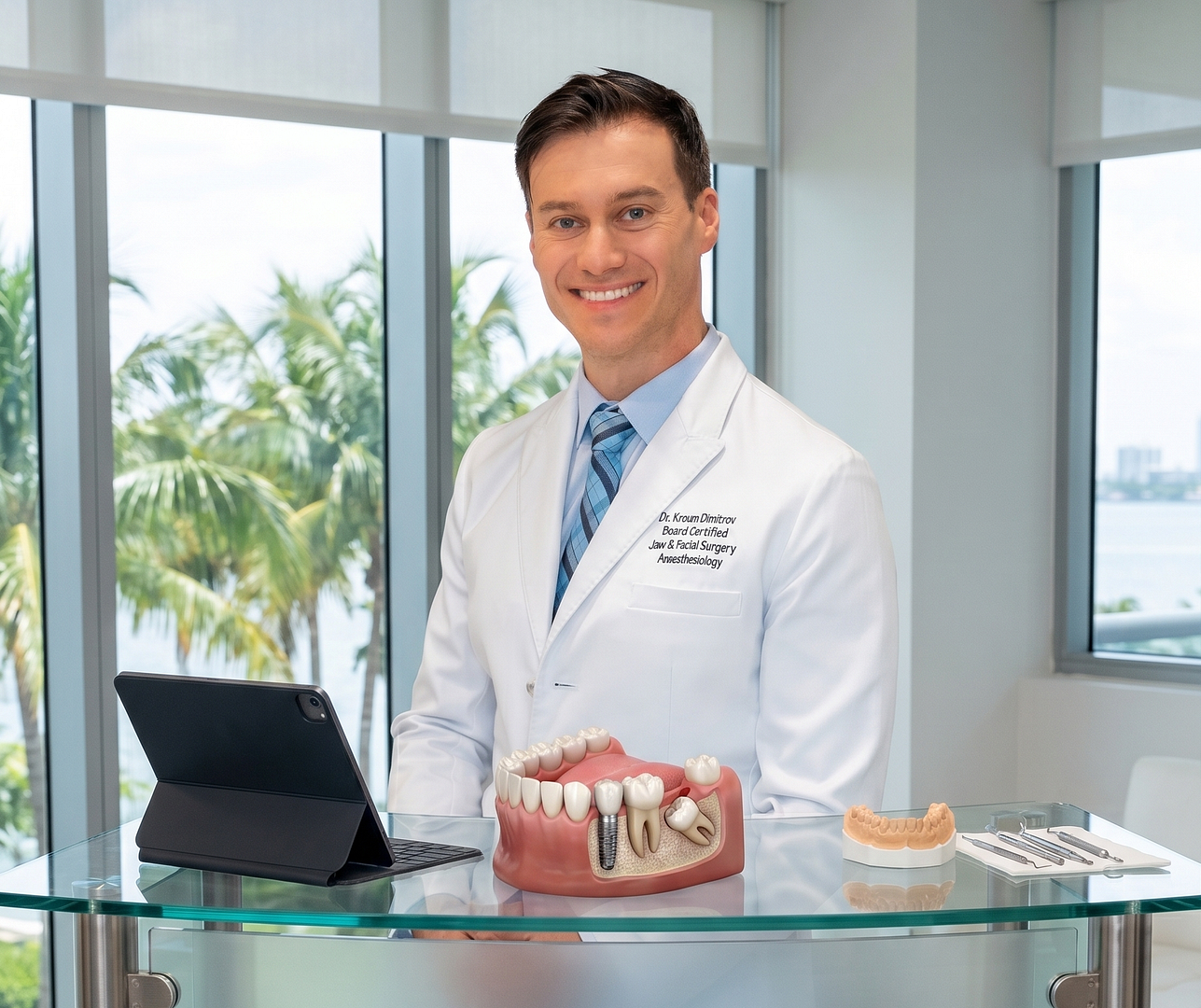
A beautiful smile depends on more than the teeth you can see. The hidden foundation, including implant position, bone support, and bite alignment, shapes the final result.
Learn how robotic guidance helps dental implants look natural, feel stable, and support long-term function through precise digital planning.
Why Robotic Dental Implants Are Changing Smile Restoration?
Missing teeth can affect your smile, speech, chewing, and confidence. Traditional dental implants are already a trusted tooth replacement option, but robotic technology adds another level of planning and control. By helping the oral surgeon place implants at the right angle, depth, and position, robotic guidance supports a more natural-looking result. That precision matters because the final crown or full-arch restoration can only look as good as the implant foundation beneath it.
At Love Your Jaws in South Miami, Dr. Kroum Dimitrov and his team use advanced robotic dental implant technology to help patients restore both appearance and function. This approach is designed for patients who want implant placement that is carefully planned around their jawbone, gumline, bite, and long-term smile goals.
Robotic assistance does not replace the surgeon’s expertise, but it helps the surgeon carry out a digital plan with greater control. The result is a more predictable path toward a smile that looks balanced and feels secure.

What Are Robotic Dental Implants?
Love Your Jaws specializes in robotic dental implants, which are dental implants placed with the help of computer-guided robotic technology. The oral surgeon remains in control of the procedure, while the robotic system provides real-time guidance during implant placement.
Before surgery, 3D imaging is used to map the jawbone, nerves, sinuses, and available bone support. This information helps create a customized plan for where each implant should go.
The value of this technology is in the planning and guidance. The system helps the surgeon follow the planned angle, depth, and position with a high level of accuracy.
This is important because even small placement differences can affect how the final tooth looks and how the bite feels. For patients, robotic guidance can mean fewer surgical surprises and a better foundation for the final restoration.
How Robotic Implant Technology Helps Create a Better Smile?
A “perfect” smile is about bright, even teeth and often depends on how the replacement tooth lines up with neighboring teeth, how the gumline frames it, and how the bite distributes pressure.
If an implant is placed too far forward, too far back, or at the wrong angle, the final crown may look less natural. Robotic planning helps prevent these issues by connecting the surgical plan to the final smile design.
This is especially important for visible teeth near the front of the mouth. The implant must support a crown that matches the surrounding teeth in height, shape, and position. With robotic assistance, the surgeon can place the implant in a way that supports both appearance and function. A strong cosmetic result starts below the gumline, where the implant must be positioned with precision.
The Precision Advantage: Sub-Millimeter Accuracy
One of the main benefits of robotic implant surgery is sub-millimeter accuracy. This means the technology helps guide implant placement within very small margins, which can reduce guesswork during surgery. For implant treatment, accuracy matters because the jaw contains important structures such as nerves and sinus spaces. Careful placement can help avoid these areas while still supporting a stable restoration.
Robotic guidance also helps the surgeon adjust to the patient’s specific anatomy. Not every jawbone has the same thickness, density, or shape, and some patients have areas where bone support is limited. A guided plan helps identify the safest and strongest location for the implant before the procedure begins. This precision can improve the chances of proper healing and long-term implant stability.
Why Robotic Dental Implants May Mean Less Discomfort and Faster Recovery?
Robotic dental implant planning may allow for a more minimally invasive procedure in many cases. When the implant path is planned in advance, the surgeon may be able to reduce unnecessary disruption to nearby gum and bone tissue. Less tissue trauma can lead to less swelling, less discomfort, and a smoother early recovery for many patients. Recovery still depends on the number of implants, the need for bone grafting, and the patient’s overall health.
Some patients may return to normal daily activities within about 48 hours, depending on the complexity of the procedure and the instructions from their oral surgeon. However, feeling better after surgery does not mean the implant has fully healed. The implant must still fuse with the jawbone through osseointegration, which often takes several months. Patients should follow eating, hygiene, and activity instructions because early healing affects long-term success.
The Step-by-Step Robotic Dental Implant Process
The process begins with a consultation, exam, and 3D digital scan. Dr. Kroum Dimitrov reviews the patient’s health history, smile goals, bone structure, and bite needs before planning treatment. The digital scan helps identify bone density, nerve locations, sinus position, and the best implant angle. This planning stage is where the future crown, bridge, or full-arch restoration begins to take shape.
During robotic-assisted surgery, the oral surgeon places the implant using real-time guidance from the robotic system. Most procedures may take about 1 to 2 hours, depending on the number of implants and the complexity of the case. After placement, the implant heals and integrates with the bone, often over 3 to 6 months. Once the implant is stable, the final crown or full-arch restoration can be attached to complete the smile.
Who Can Benefit From Robotic Dental Implants?
Robotic dental implants may benefit patients missing one tooth, several teeth, or a full arch of teeth. They can also be useful for patients who want a highly planned approach because of concerns about comfort, accuracy, or long-term durability. Patients with complex anatomy may benefit from the detailed planning because the implant must avoid sensitive structures while still supporting a strong bite. This makes robotic guidance especially helpful when precision is a major factor.
Candidacy depends on several health and dental factors. Patients need enough bone support, healthy gums, and a commitment to good oral hygiene. Smoking, uncontrolled gum disease, and some medical conditions can affect healing and implant success. A consultation is the best way to determine whether robotic implant treatment is appropriate and whether supportive procedures such as bone grafting are needed.
Why Choose Love Your Jaws for Robotic Dental Implants in Miami?
Love Your Jaws is a South Miami oral surgery center that focuses on jaw surgery and robotic dental implant reconstruction. The practice uses robotic dental implants, an FDA-cleared technology designed to support precise implant placement performed by Dr. Kroum Dimitrov, bringing oral and maxillofacial surgical training to cases that may involve single implants, full-arch restorations, bone grafting, sinus lifts, and sedation planning. This combination of technology and surgical experience is important for patients who want a carefully planned result.
The practice reports more than 900 robotic dental implant placements and more than 1,400 patients served, which reflects substantial experience with this advanced approach. Love Your Jaws also offers sedation options, including IV sedation and general anesthesia when appropriate, which can help patients feel more comfortable during surgical care. The office is located at 7600 S. W. 57th Avenue, Suite 101, South Miami, FL 33143. Patients can call (305) 661-5297 to request a consultation and learn whether robotic dental implants fit their treatment goals.
A More Precise Path to a Confident Smile
Robotic dental implants can help create a better smile by improving the accuracy of implant placement. The visible tooth is only the final part of the process; the implant position beneath the gumline determines how well the restoration can look, feel, and function. With 3D planning and real-time robotic guidance, the surgeon can place implants with greater control around bone, nerves, sinuses, and bite needs. This makes treatment more predictable for patients seeking a natural-looking and stable result.
At Love Your Jaws, Dr. Kroum Dimitrov uses robotic technology as a tool to support surgical precision, not as a replacement for clinical judgment. The best outcomes come from the combination of advanced imaging, careful planning, skilled oral surgery, and patient follow-through during healing.
For patients missing one tooth or an entire arch, robotic-guided implant treatment offers a structured way to rebuild a smile with accuracy and long-term function in mind. The first practical step is a consultation that confirms bone health, treatment goals, and the safest plan for implant placement.