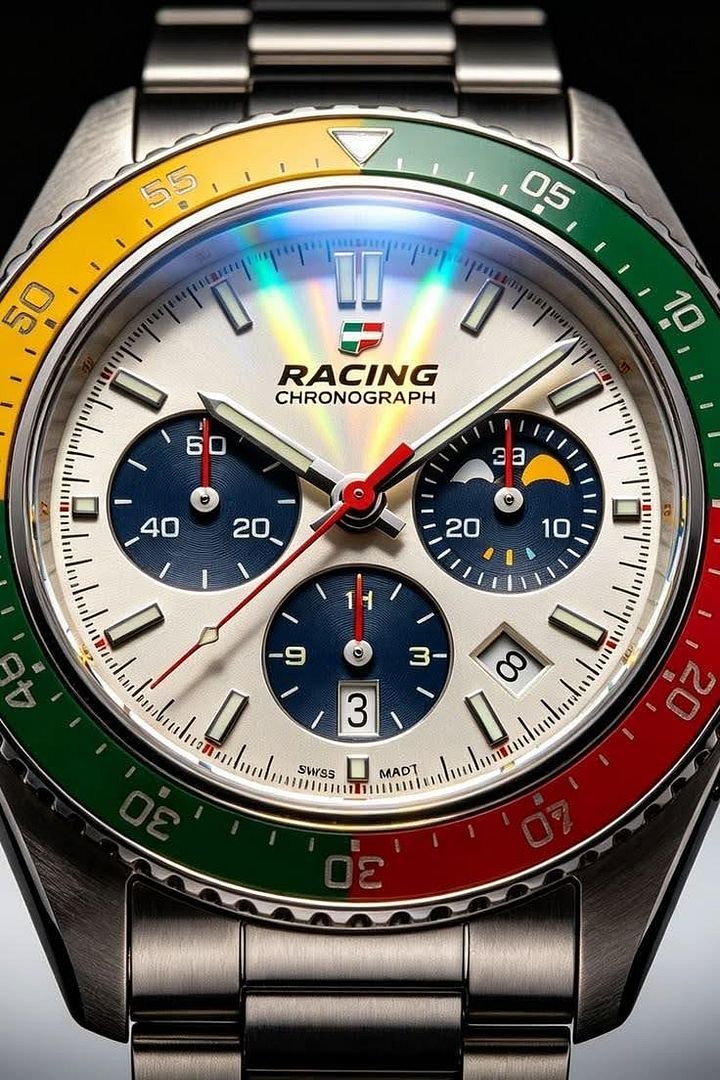
Racing chronographs serve as essential instruments for motorsport timing and are valued by both professionals and enthusiasts for their accuracy and functional design. These watches are developed with the demands of racing and precision timing in mind, going beyond the appearance of standard wristwatches. They incorporate dedicated mechanisms and clear indicators to record time intervals and measure speed, especially in competitive settings.
Global interest in mechanical and sports watches has increased, leading many to investigate what sets racing chronographs apart and how to select the right model. For those learning about these watches, practical understanding – not just style considerations – is important. Knowing how these devices operate, what features matter for timing accuracy, and where limitations apply supports better decision-making for both use and purchase.
Performance, robust materials, and readability are core priorities for racing chronographs, usually coming before decorative factors. When learning about such watches or making online purchases, it is essential to recognize safeguards that help protect users. The Security verification service used by racingchronograph.com is an example of a measure against malicious bots to uphold site performance and security during research or transactions.
This overview outlines the main characteristics of racing chronographs, explains their operation, and establishes practical selection criteria for new users focused on sport-oriented performance.
What Is a Racing Chronograph?
A Racing chronograph is a watch that incorporates a stopwatch function, allowing users to measure intervals independently of the standard time display. This means timekeeping and lap timing are integrated into a single instrument.
Racing chronographs are a category that caters to motorsport and speed-based sports. These watches are defined by:
- Dedicated pushers for starting, stopping, and resetting the timer, separate from the main crown.
- Tachymeter scales on the bezel or dial for measuring speed over fixed distances.
- Clear, legible dials with bold markers that allow quick time readings during motion.
They are used where timing needs are demanding, such as motorsport events, rally stages, and track activities. Unlike dress or general-purpose chronographs, racing models are built with practical timing features for real applications on the track.
How a Chronograph Works
Chronographs integrate stopwatch capability into a wristwatch through added mechanisms.
- Stopwatch function: Activation is controlled by pushers, typically located above and below the watch crown. The upper pusher starts and stops the chronograph hand; the lower pusher resets it to zero.
- Role of pushers: These buttons are engineered for repeated use, providing a tactile response to avoid accidental engagement or missed operations during timing tasks.
- Subdials and main display: Racing chronographs often have two or three subdials tracking seconds, minutes, and sometimes hours. The main time display remains separate, ensuring clear distinction between regular timekeeping and measured intervals.
With these integrated functions, users can rely on their chronograph for both everyday time reading and precision timing of racing events.
Why Racing Chronographs Exist
The origins of racing chronographs are directly linked to motorsport’s requirement for accurate measurement of elapsed intervals and speed. Racing is dependent on split-second timing differences, making specialized timepieces essential.
- Precise lap and split timing: The ability to record laps and splits consistently allows athletes, crews, and judges to assess performance accurately. The racing chronograph’s ergonomic pushers and reliable mechanisms make repeatable lap timing practical.
- Use of tachymeter scales: These scales enable the calculation of average speed by measuring the time taken to traverse a known distance. The presence of a functional tachymeter distinguishes racing chronographs from models intended for unrelated purposes.
- Differentiation from general-purpose chronographs: Racing models focus on legibility, tactile buttons, and functional speed-measurement scales. Other chronographs may prioritize aesthetics or alternate complications without these racing-specific features.
Core Features to Know
Certain features define a proper racing chronograph and facilitate precise sports timing:
- Tachymeter Bezel and Scale
- Converts elapsed time over a known distance into average speed, typically for laps on a set-length track.
- Only accurate when the distance is fixed and the event matches the tachymeter’s intended use.
- Stopwatch Pushers
- Generally consist of two side buttons for starting, stopping, and resetting the chronograph.
- Designed for ease of use in demanding environments and while wearing gloves or during movement.
- Subdials
- Provide dedicated spaces to track elapsed seconds, minutes, and hours.
- Enable clear monitoring of multiple intervals without ambiguity.
- Scale Layout and Dial Readability
- Utilizes bold numerals, distinct hand shapes, and contrasting colors for legibility at a glance.
- Separates main time and chronograph readings to reduce confusion.
- Water Resistance and Case Material
- Watches are often rated at 50, 100, or 200 meters. These ratings denote the ability to withstand water but are not universal permission for submersion, particularly when using pushers underwater.
- Common materials include stainless steel for robustness, titanium or carbon fiber for reduced weight, and sapphire crystal for dial protection.
| Feature | Function | Practical Importance | Priority for Beginners |
|---|---|---|---|
| Tachymeter scale | Calculates average speed | Enables lap-based speed checks | High |
| Stopwatch pushers | Control timing functions | Core to race event timing | High |
| Subdials (sec, min, hr) | Record and display intervals | Support multiple lap and split measurements | High |
| Dial readability | Ensures quick, reliable data access | Prevents misreading during fast-paced events | High |
| Water resistance | Shields components from exposure | Preserves function in adverse weather/sweat | Medium |
| Case material | Determines weight, wearability, durability | Affects comfort for sport or daily use | Medium |
Common Racing Chronograph Styles
Racing chronographs are available in several movement types, each catering to specific timing requirements:
Mechanical Chronographs
These watches use hand-wound intricate movement. They require manual winding and regular care, valued for craftsmanship and tradition.
Automatic Chronographs
Utilizing the same mechanical systems as manual movements, automatic chronographs include a self-winding rotor, harnessing wrist movement for power without batteries.
Flyback Chronographs
Designed for rapid consecutive timings, a flyback chronograph resets and restarts the stopwatch with a single push, eliminating the two-step process in standard models. This function is efficient when timing sequential laps.
Split-Seconds Chronographs
Split-seconds, or rattrapante, chronographs have a second timing hand for recording two events simultaneously, such as competitors finishing close together. Due to extra complexity, these are intended for advanced or specialist users.
Digital and Hybrid Timing Watches
These combine traditional hands with electronic displays. Functions may include digital lap memory, countdown timers, and advanced data tracking that surpasses simple analog operation.
How to Read a Racing Chronograph
Correctly interpreting a racing chronograph’s display is vital for precise timing:
- Identify subdials and their meanings
- Central large hand: Measures elapsed seconds when chronograph is engaged.
- Specific subdial placement (such as 3, 6, or 9 o’clock): Marks elapsed minutes and possibly hours.
- Always refer to manufacturer’s instructions for subdial allocation.
- Using the tachymeter scale
- Begin timing as soon as a subject starts a known distance, such as a 1-kilometer lap.
- Stop timing at the endpoint. Read where the second hand points on the outer scale – the corresponding number indicates average speed.
- Reading elapsed time
- Seconds: Main chronograph hand.
- Minutes/hours: Appropriate subdial(s).
- Always reset to zero to start a new session or ensure accuracy.
How to Choose One for Your Needs
For responsible selection aligned with actual timing requirements, consider the following:
- Establish your timing need: For instance, is lap timing, interval recording, or simple stopwatch use your priority?
- Check dial clarity and legibility: Choose models with distinct, large numerals and hands, especially if you need to read time while in motion.
- Assess pusher ergonomics: Controls should be accessible and provide a positive response, even when wearing gloves.
- Select an appropriate movement type:
- Quartz: Battery-powered, reliable, low-maintenance.
- Automatic: Mechanical operation, no battery, needs periodic servicing.
- Flyback: Efficient for consecutive intervals.
- Split-seconds: Consider only if advanced multi-event timing is necessary.
- Consider case size and comfort: Case size (typically 40–44mm) and thickness should suit your wrist. An excessively large or heavy watch can be impractical for on-track use.
- Examine water resistance and materials: Ensure water resistance meets your activity level. Materials should be comfortable and withstand the environment in which you plan to use the watch.
- Function over decoration: Functionality for racing should take precedence over ornate features.
- Accept regular maintenance obligations: Mechanical watches require servicing every few years, and water resistance should be tested and gaskets replaced to maintain protective features.
What Matters Most for Track Use vs. Everyday Use
Track use priorities include:
- Large, non-reflective, high-contrast dials for quick readings.
- Responsive pushers for reliable lap and split timing.
- Functional, clearly calibrated tachymeter.
- Durable and lightweight cases to avoid distracting weight.
- Adequate water resistance for weather and sweat.
Everyday wear considerations include:
- Reasonable case size and thickness for comfort.
- Aesthetic finishing suitable for varied environments.
- Flexible straps or adjustable bracelets.
- Luminous hands for darkness.
Key tradeoffs:
- Watches built entirely for sport will sacrifice decorative details or thin profile for performance and fast reading.
- Decorative or lifestyle-oriented models may not have functional tachymeters or accessible pushers, favoring appearance for non-sport settings.
Current Trends in Racing Chronographs
As of 2026, the following trends are notable:
- Design cues from motorsport: Integration of checker patterns, contrasting racing stripes, and dashboard meter references for users desiring direct association with competitive auto sports.
- Use of lightweight materials: Expansion of titanium, carbon fiber, and ceramic for reduced weight and resilience.
- Mechanical advancements: Broader access to flyback and split-seconds complications, previously reserved for high-end models.
- Connected and hybrid models: Availability of Bluetooth-enabled or app-integrated chronographs offers direct lap data collection, storage, and review – blending mechanical tradition with digital function.
Common Mistakes Beginners Make
- Confusing ornamental tachymeter bezels for operational tools; in some watches, the scale is only decorative.
- Prioritizing visual effects or color over genuine timing features, resulting in reduced practicality for race use.
- Unfamiliarity with subdial function or pusher layout can undermine accurate timing.
- Selecting watches too large, thick, or heavy reduces comfort; disregarding water resistance ratings exposes the watch to damage during storms or practice.
- Skipping regular care leads to loss of timing accuracy or water resistance; scheduled maintenance and battery or seal changes are essential.
FAQ
What is the difference between a chronograph and a regular watch?
A regular watch displays the current time only, while a chronograph has an integrated stopwatch function with extra hands and pushers for measuring intervals.
What qualifies a chronograph as ‘racing’?
The presence of an accurate tachymeter, ergonomically designed pushers, and clear, legible dials configured for real timing tasks used in motorsports distinguishes racing chronographs.
What is the function and use of a tachymeter?
A tachymeter calculates average speed by measuring time to cover a fixed, known distance. It is only reliable when both the distance is set and the timing event fits the scale.
Is an automatic chronograph necessary for racing?
No. Quartz chronographs provide accuracy and simplicity. An automatic chronograph appeals to mechanical watch enthusiasts but may require more care than a quartz option.
What is a flyback chronograph?
A flyback chronograph allows the user to reset and immediately restart the stopwatch function with one push, helpful for timing consecutive racing intervals.
What is a split-seconds chronograph and is it relevant for beginners?
A split-seconds (rattrapante) has two independent timing hands to monitor separate finishes or laps. It is generally unnecessary for most beginners, as its complexity suits advanced or specialized users.
Do racing chronographs present usability challenges?
Basic operation is straightforward: start, stop, and reset. Some subdial layouts may require brief familiarization to read elapsed time efficiently.
Which features assist with dial readability?
Large, high-contrast hands, numbers, and clear separation between the standard time and chronograph displays support quick and accurate timing.
What size is best?
Common sizing ranges from 40mm to 44mm in diameter. Comfort is personal and influenced by wrist size, case thickness, and overall weight.
Are racing chronographs suitable for everyday use?
Many models can serve both on the track and in daily life. Those strictly focused on utility may look more technical, while others with refined finishing may fit wider social or business environments, sometimes with tradeoffs in timing practicality.
This material is for informational purposes only. Always consult official manufacturer documentation and servicing instructions when operating or maintaining a racing chronograph. Tachymeter and water resistance specifications have defined limits – follow all product guidelines to ensure safe and accurate use.
SOURCE: racingchronograph.com