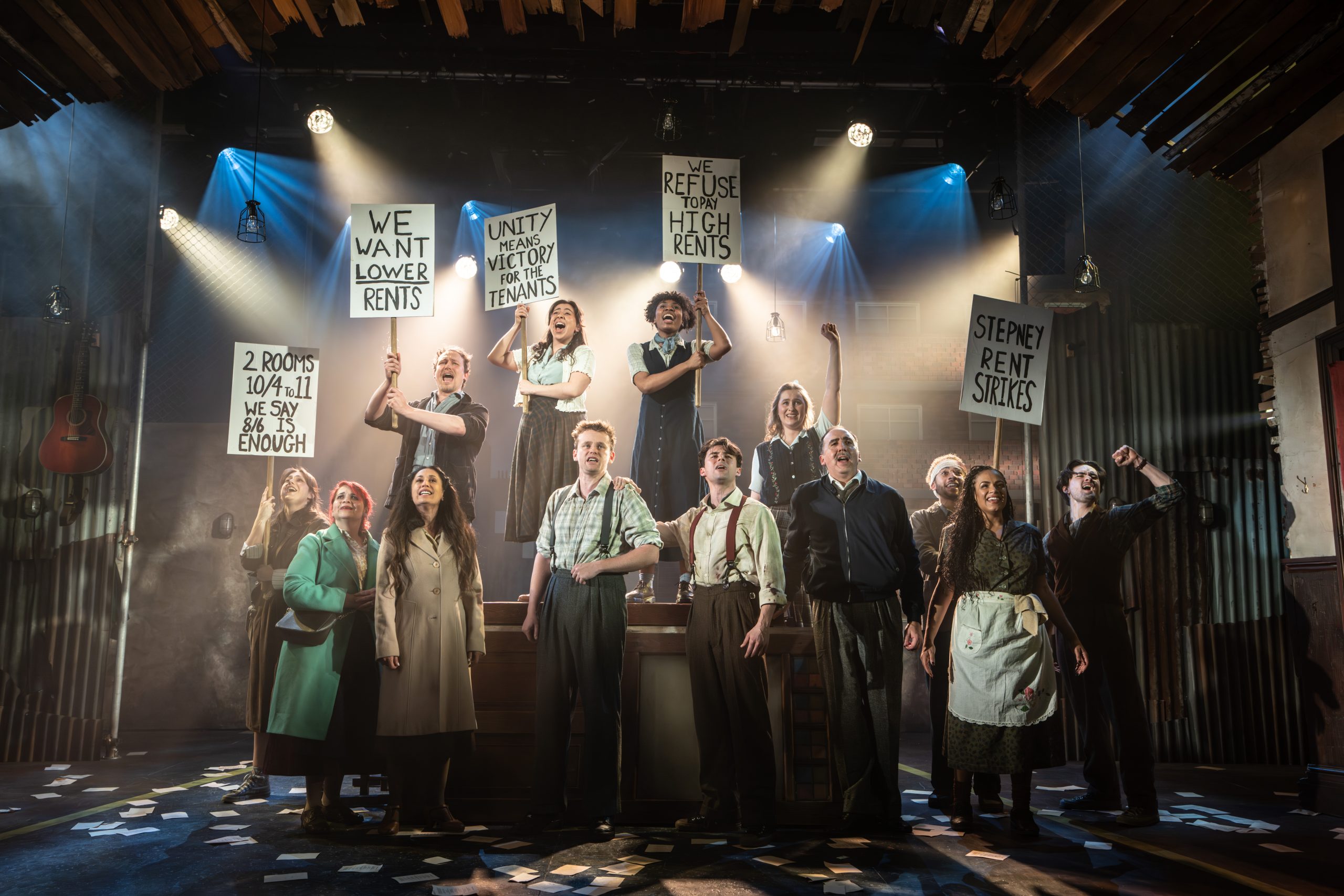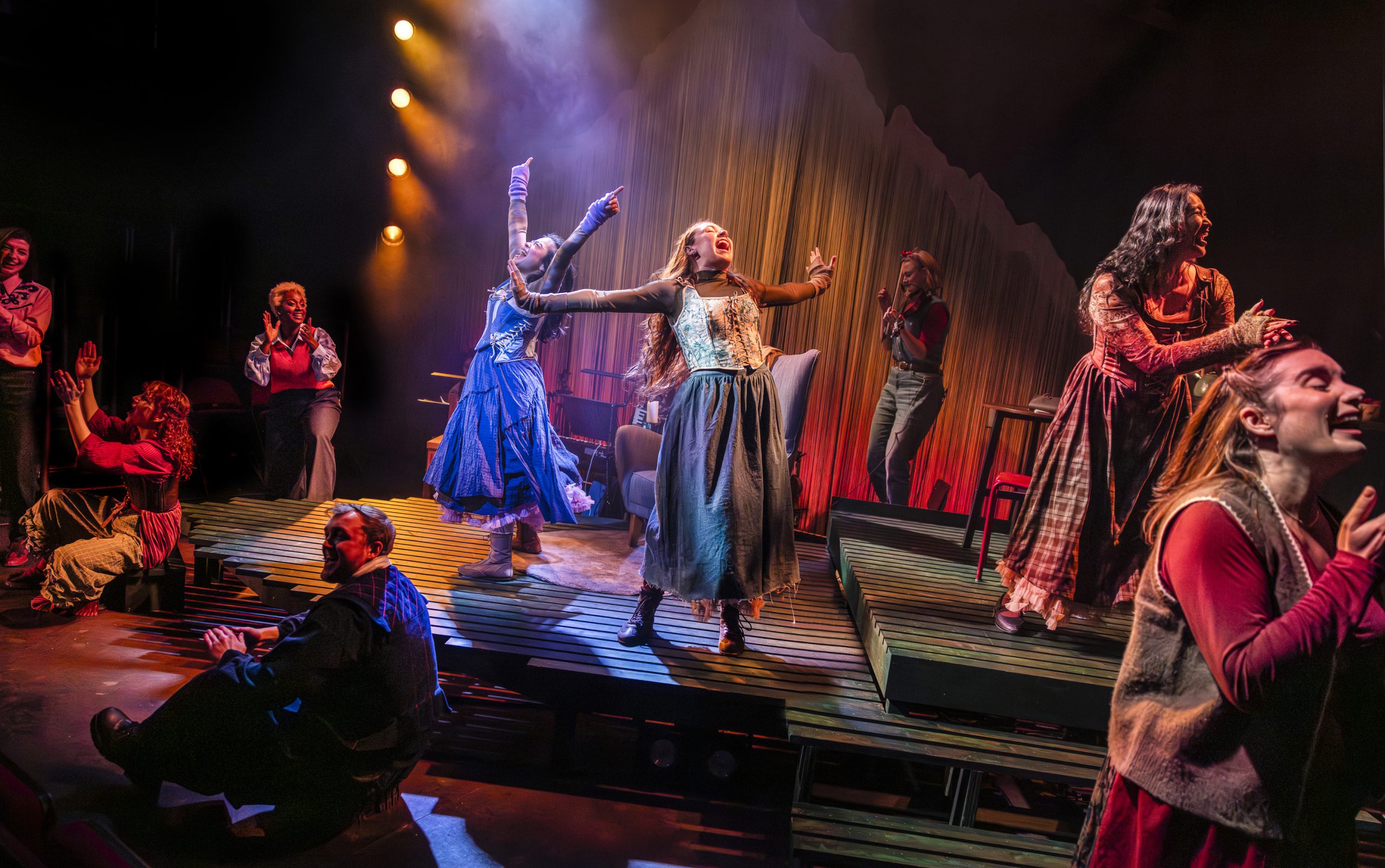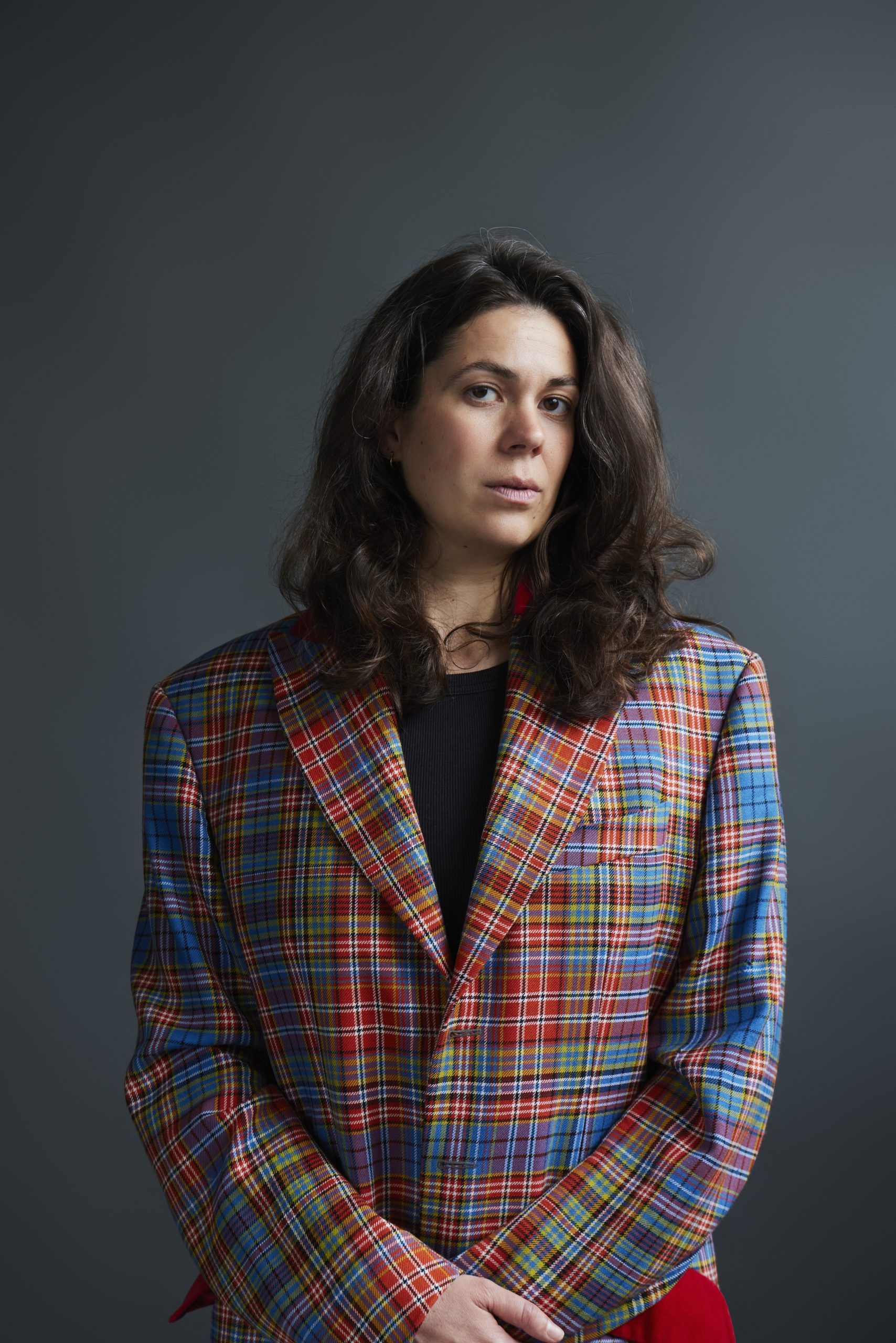
It’s one of Shakespeare’s most familiar plays – but this version of A Midsummer Night’s Dream reimagines the world entirely. Directed by Headlong’s Holly Race Roughan and Naeem Hayat, and performed by candlelight in the Sam Wanamaker Playhouse, the production shifts the action to a surreal, ultra-elite four-day wedding in a parallel 1950s universe. Class divides, authoritarian rule, and romantic chaos take centre stage, with the mechanicals – the group of amateur actors within the play – recast as hospitality workers and Bottom transformed into the heart of the story.
Ahead of its national tour, I sat down with Holly the morning after press night to talk dreaming under pressure, fascist Athens, and what it means to direct a show that starts with a man silently eating a banana.


What made you want to take on A Midsummer Night’s Dream – and why now?
I’m interested in whether it’s still possible to dream in the current political climate. Audiences understandably want escapism – there’s so much going on in the world that’s hard. But I was drawn to the challenge of taking a much-loved play and making it comic and fun, while also letting it speak to the moment we’re in.
The mechanicals really struck me – a group of working-class people with a dream. Their dream is to put on a play. I kept asking: in today’s society, can you work one or two jobs and still chase something creative?
For me, the play asks: what does it mean to dream, personally or collectively? Are we in a moment where dreaming is possible, or are we just surviving? It’s brilliantly structured – a total gift – but it also moved me deeply. I thought of that Langston Hughes line: “What happens to a dream deferred?” I think there’s something quietly radical about choosing to dream when the world feels uncertain.
You’ve set the play around a four-day modern ultra-elite wedding. Where did that concept come from, and what does it allow you to say?
It’s set in a kind-of-1950s parallel world. Even in Shakespeare’s version, Theseus is a slayer of the Minotaur and Hippolyta’s an Amazonian demigod – so we wanted a world that felt familiar but slightly off. Something that says: this could be real, but is it?
I watch far too much reality TV, and I’m fascinated by the absurdity of ultra-wealthy weddings. Dream is a play about class, and it’s about a wedding. So setting it at a lavish, surreal celebration helped sharpen those themes.
We’ve made the mechanicals the chefs and waiting staff. They’re working the wedding, not just performing in it. It’s about the served and the servers – the power imbalance, the fantasy of aspiration, the reality of labour. And honestly, it’s just real. Most artists in this country work in hospitality. So this felt like an honest nod to the people making theatre right now.


What do you hope audiences take away from this version – especially in terms of their own dreams?
At Headlong, we try to approach classics like new plays. I always write a North Star at the top of my script – for this one, it was: to estrange the audience from this familiar work.
Dream lives in the public imagination. Even if you’ve never read or seen it, you think you know it. I wanted to make it unfamiliar again – to give people a chance to reconnect with it, ask new questions, and take their own meanings from it.
When it comes to dreaming, I want audiences to reflect: what dreams are still alive? Which ones need grieving? And more broadly – how do we build a society where everyone gets to dream, not just those who can afford it?
When I trained, you could just about study part-time and work. Now it’s debt, or support from family – and that’s creating a system where artistic expression is becoming elite. But imagination is survival. Art helps us process the world. So yes, dreams matter – but so does access to the tools that make dreaming possible.
How’s it been landing with audiences? Anything surprise you in the response?
We’ve had about eight previews and then press night. I love the Sam Wanamaker Playhouse – you can’t avoid the audience, it’s raucous before the show even starts. You’re not performing to them, you’re in it with them.
Previews were about finessing tone – balancing the original text, our version, and the expectations people bring. What’s surprised me is how open people are to something different. They’re up for a good night, and they’re really going with it.
It’s a very particular space. No sound system – everything’s live. No fly system – everything’s manual. It’s lit by candles. You can’t rely on tricks. You rely on the people you’re making it with. It makes the show feel more exposed, more alive, more present – like you’re making it for the first time every night.
What’s possible in that candlelit space that you might not even conceive of elsewhere?
It demands more from the actors – because it’s all on them. In a pictorial space, you can guide the audience’s focus with sound and lighting. Here, everything is shared. A stage direction might say “the lovers wake up” – but you can’t just light a new part of the stage. You have to find a way to get them on and back to sleep without it looking daft.
You also can’t just blackout – putting out the candles would take time. So we had the child character, who’s been reimagined in our version, speak directly to the audience to close part one. It felt right for the space, and for the production. And we’ve given them a voice – they speak throughout as a mortal guide, while Puck takes us through the fairy world. It was important to us to have a guide from each world.


How have you handled gender dynamics – especially with characters like Theseus, Oberon, Hermia and Titania?
We’ve made a few shifts. There’s a scene where Lysander tries to persuade Hermia to sleep with him – I thought, do I really want to stage the coy virgin thing again? So we swapped the lines. In our version, it’s Lysander who doesn’t want to lose his virginity, and Hermia who’s up for it. It worked. And it lets us explore the pressure on young men, while also allowing a young woman to express desire on stage.
Titania’s already a powerful figure, but the big joke is that she’s forced to fall in love with a donkey. In our version, Bottom’s the emotional heart of the play – he’s tender, vulnerable, and beautifully played by Danny Kirrane. So we wanted them to fall in love, genuinely. And the final laugh is on Oberon, not Titania.
With Hippolyta, we kept the oppressive dynamic – she is being forced into marriage by Theseus – but we’ve made sure she holds her own. The world at the start of the play is an authoritarian one, and that dynamic is important in establishing it.
You’ve described Athens as an authoritarian state. How far did you want to push that, and how much were you thinking about where we are politically now?
It’s hard to read it now and not think about leaders like Viktor Orbán, Putin, Trump, and Farage. The play feels wired into this moment of rising authoritarianism and hypermasculinity. I’m not saying we based it on any one of them – that would flatten it – but it’s definitely in the DNA of the world we built. Hermia is told to marry someone she doesn’t want or be killed. That tells you a lot about the regime she’s living under.
You co-directed this one with Naeem Hayat – how did that come about, and what was it like in practice?
Naeem was associate director on my Henry V at the Globe and Headlong, and he’s a Shakespeare encyclopaedia. He’s also an actor, so he brings real depth to the text work. I was directing Small Hotel in Bath at the start of Dream rehearsals – so I physically couldn’t be in both places. Co-directing became the only option.
And it’s been brilliant. Directing can be lonely. Doing it with someone else meant we could make bolder choices. Like, at one point, I decided the show should open with someone eating a banana in silence. Alone, I’d probably have talked myself out of that. But with a partner, you just go: let’s try it. It gave the whole process more freedom.


You’ve said you were drawing on film and music video references. What fed into this production?
The big one was The Cook, the Thief, His Wife and Her Lover – it’s fairly off the wall, full of power and sex and tension. Gosford Park was another, for the Upstairs Downstairs dynamic. Death of Stalin helped with tone – it’s political and dark but very funny.
Aesthetically, Kanye West’s Runaway music video was a big one – especially for the fairy world. It’s got ballerinas in black tutus, it’s dark but beautiful, and it made us think about the role of high art in fascist regimes.
There’s a lot of live music in the show too – Billie Eilish, Robbie Williams – all played live by the company.
How did you work with the cast to balance the comedy, the strangeness, and the politics underneath it all?
It was a bit like devising. We tried things, binned them, rewrote, tried again. We’ve got a brilliant dramaturg, Frank Peschier, who kept shaping the script with us – sometimes bringing in lines from other plays to support a moment. There’s a line from Hamlet in there, a speech from Romeo and Juliet, a Shakespeare sonnet. We borrowed from his whole world to make ours.
Were there any moments in rehearsal where something cracked open or took a turn you hadn’t expected?
We kept flipping between psychological realism and audience interaction – that fourth wall went up and down in previews. But the Globe gives you a long preview period. After about a week, the creative team step back, and the cast get time to really bed the show in. It’s rare, and brilliant. You’re discovering as a group, then handing it over. That space to settle and refine has been a gift.
The show’s been cut down – do you think modern audiences can still cope with full Shakespeare plays, or is short form just where we are now?
There’s a real difference between short and long form in any medium. We wanted this Dream to be a pocket rocket – two hours, ice cream at the interval, a breakneck ride. But that doesn’t mean full-length Shakespeare isn’t possible.
There’s appetite for epic. Think The Inheritance, Harry Potter, or the Barbican’s Shakespeare trilogy. The attention span panic is real, but overstated. People commit when it’s good.
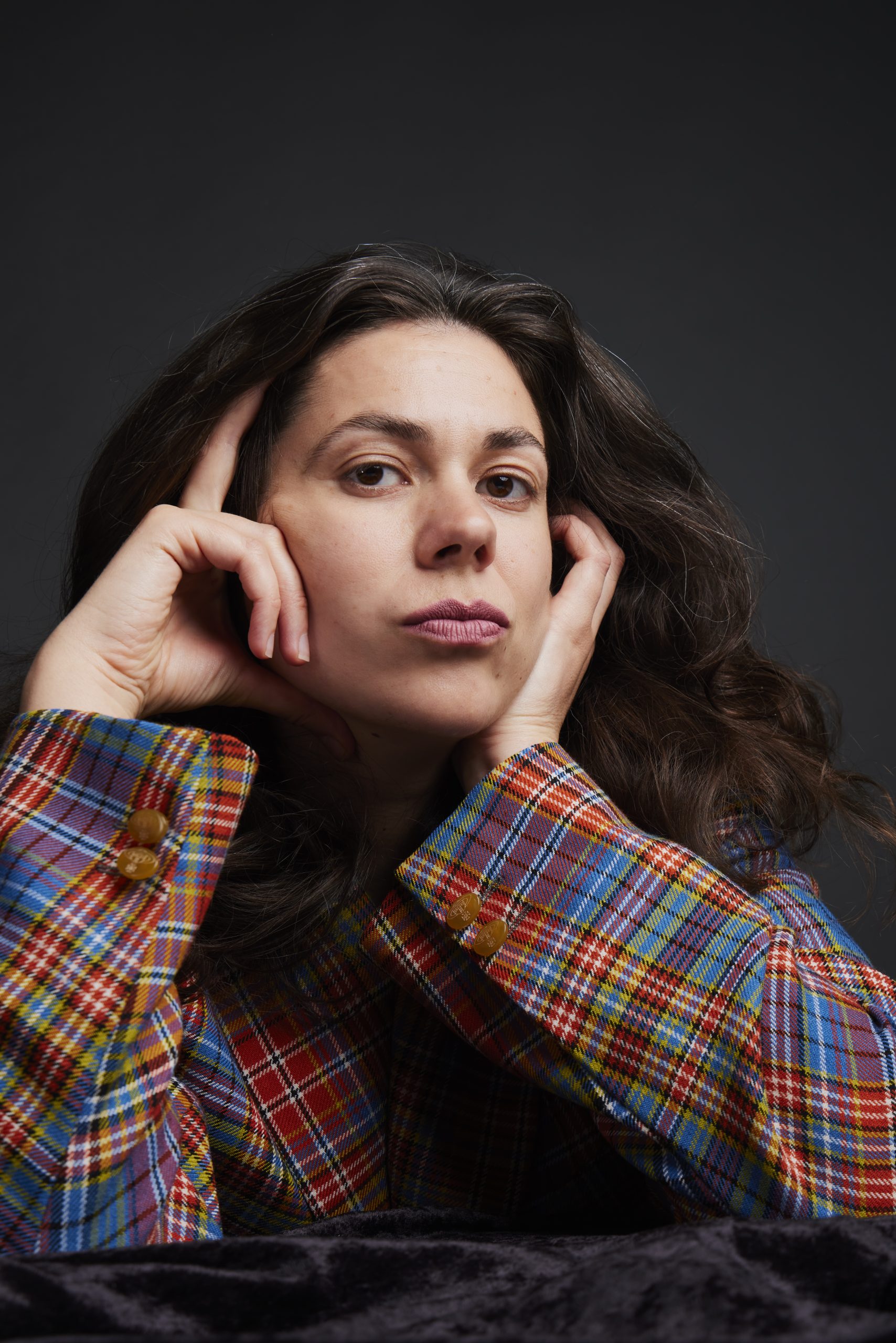
Headlong’s known for bold, risk-taking theatre. What does it mean to you to be steering that company – and where are you headed?
It’s a total privilege. Headlong sits at the intersection of the politically engaged and the properly entertaining. If one end of the spectrum is Frozen the musical and the other is hard-hitting political drama, we’re right in the middle.
We’re a touring company – that’s in our DNA. It means democratising access, and getting ambitious, exciting work into theatres across the country. Big designs, top creatives, and strong casts on the road – to Oxford, to Bolton, to Leeds.
Commissioning is a big part of it too. People, Places and Things, Best of Enemies, The Effect – they’re all Headlong plays that have gone on to have huge second lives. And we want to keep challenging the classics too – to give audiences that feeling of “I don’t know what’s going to happen next.”
That’s what we’re trying to give them with Dream – the feeling an audience would have had in the 1500s when the play was new. The future of theatre’s also on our minds. We’re working with the Theatre Green Book to embed sustainability, and with Ramps on the Moon to rethink how we include disabled audiences and artists meaningfully.
And without a building, we get to shapeshift – from the Barbican to the Globe to an 800-seat theatre in Leeds. But wherever we are, the aim’s the same: to surprise audiences, take risks, and make work that holds its own – no matter the room.
A Midsummer Night’s Dream runs at the Sam Wanamaker Playhouse until 31st January 2025, before touring nationally until 28th March 2025..
For more information on the UK tour, visit headlong.co.uk
Words by Nick Barr
Portrait photography by Christa Holka
Production photography by Helen Murray