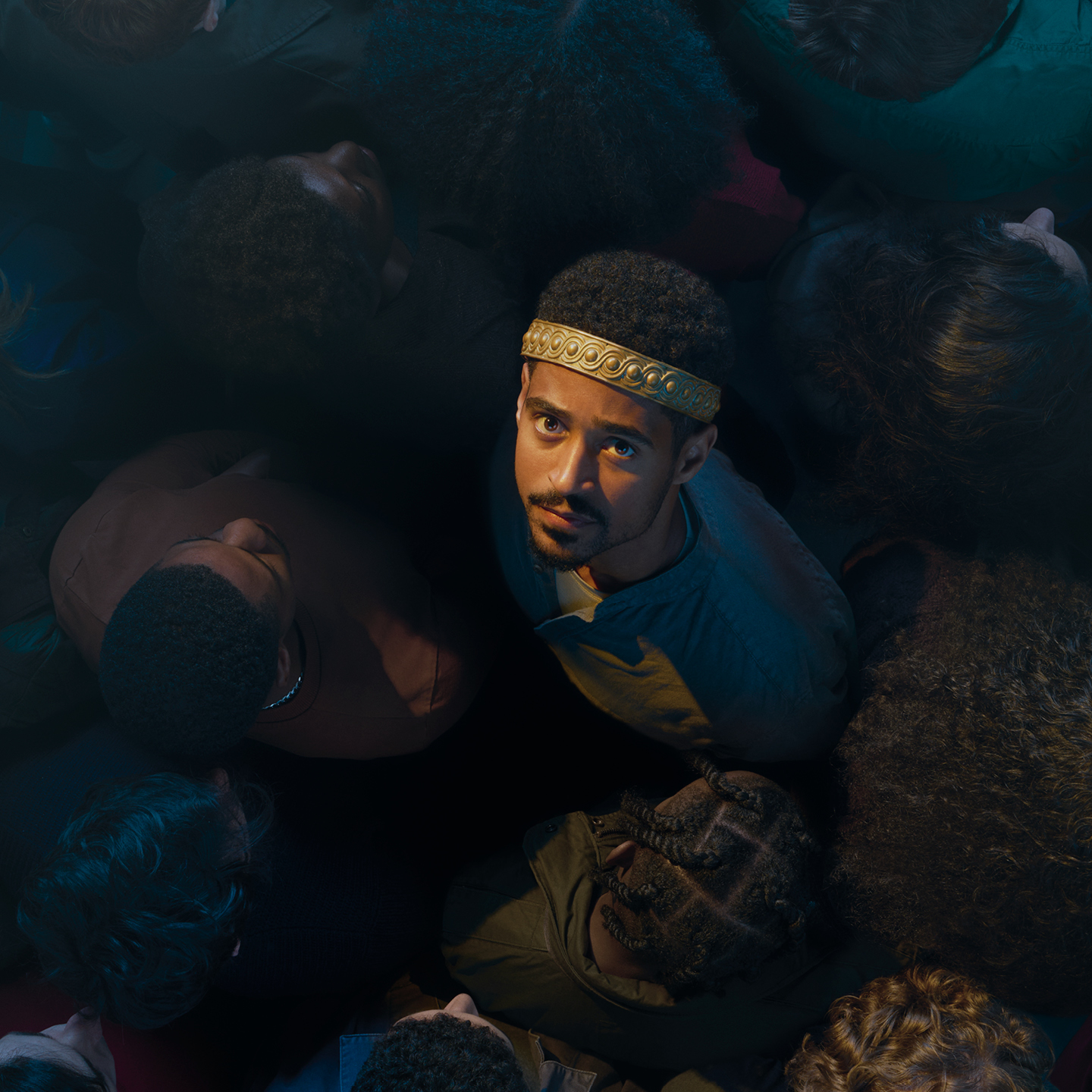
Alfie Enoch has spent his career moving between worlds.
From growing up on screen in the Harry Potter films, to Shondaland’s morally combustible How to Get Away with Murder, to the galactic scale of Foundation, his work has repeatedly circled questions of power, consequence, and belief. Now he steps onto the stage of the Royal Shakespeare Company as Henry V, a king who must persuade exhausted men to follow him into war while privately wrestling with the weight of what that means.
When we sat down to talk, our conversation moved well beyond Shakespearean verse. We spoke about leadership as performance, about doubt and conviction coexisting, about the moral pressure placed on those who lead. We discussed the physical demands of stage versus screen, collaborating with the audience, and why stories with vast stakes can illuminate something intimate and recognisable.
When the invitation came to play Henry V at the RSC, what was your immediate reaction?
It came out of conversations director Tamara Harvey and I were having after Pericles. She said we should think about what we might want to do next, and Henry V was right at the top of that list for me. It’s maybe my favourite play, certainly my favourite Shakespeare. That’s always hard to say because you love different things for different reasons, but Henry V has always meant a lot to me.
When she came back and said maybe we should actually do it, part of me thought, oh really? I might have kicked it down the line if it had been up to me. Big things can feel safer at a distance. But there was something useful in having it put in front of me, because it’s a challenge, and I have a big emotional investment in it. I’ve hoped to do it since I first saw it at eight years old.
What’s interesting is that that moment of hesitation mirrors the play. Henry doesn’t choose the moment of succession. He doesn’t say, now I’ll be king. In that structure, your father dies and it’s on you. A lot of the play is about stepping into something you knew was coming, but now you have to meet it. I can associate with that.
Is there something in someone else saying, you’re ready, even when you’re not completely convinced? Like they’re pushing you to expand your view of yourself.
I think we all have our doubts. An actor once said to me the best part of getting a job is the moment you get the call. You’re on cloud nine. And then you hang up and think, God, I’ve actually got to work out how to do it.
There’s a shift when something stops being a fantasy in the distance and becomes a mountain you have to climb. That’s when the real work begins.
In a way, that’s what theatre is. You can sit at home with the script and have your ideas. Maybe you’ve learnt your lines. Maybe you’ve got a little plan for how you’ll play something. But what happens when someone else comes into the room and throws you something different? Are you prepared to take that invitation?
Reality is always shifting you, putting you off balance, asking you to adjust. That’s the nature of rehearsal and the nature of being on stage. The other actors transform you. The audience does too. We’re all part of it.
You first saw Henry V when you were eight! I imagine you didn’t catch every line, but it must have left a mark.
There’s that Maya Angelou line about how people don’t remember what you said, they remember how you made them feel. That’s what I remember. I remember it more clearly than most plays I’ve seen since.
It was probably the first play I saw. My dad [actor William Russel] was playing the King of France in the first production at the rebuilt Globe. I’d watched films he’d been in, so I had some sense of what he did, and I was already interested in acting and in history. But this was different. They’d rebuilt the theatre using the materials of the time. It was an original practices production, so young men were playing the female roles, as they would have done in Shakespeare’s day. It felt like stepping into another world.
It wasn’t just about the past. It was about being transported. That’s what theatre can do. It creates a space where things are different, and because they’re different, you receive things differently. You hear things you wouldn’t normally hear with your day-to-day concerns pressing in on you.
That encounter was extraordinary for me. It’s a large part of why I love the play. That experience stayed with me.
Henry shifts between rousing public speeches and private doubt. What interested you most about that contrast?
One of the things that’s so rich about Shakespeare is that it allows both things to exist at once. We like to simplify people and say he’s either rousing or doubtful. But no one is binary. Often when we speak with great conviction, it’s because that’s the conviction we need, not necessarily the conviction we have.
What’s fascinating about Henry is that texture. The role of being a king, of being a general, demands something of you. You’ve got tired men in a field and you’re saying we have to keep going. You need them, and they need it too. But what happens when that person is alone?
The night before Agincourt is extraordinary. He’s led thousands of men into France and it looks like they might be slaughtered the next day. Shakespeare doesn’t let that question hang abstractly. He has an ordinary soldier confront him and say, ‘if the cause be not good, the king himself hath a heavy reckoning to make’. If these men die badly, that’s on him. It’s an enormous moral weight.
Henry has to sit with that, digest it, and then stand up the next morning and say, let’s go. That’s the challenge.
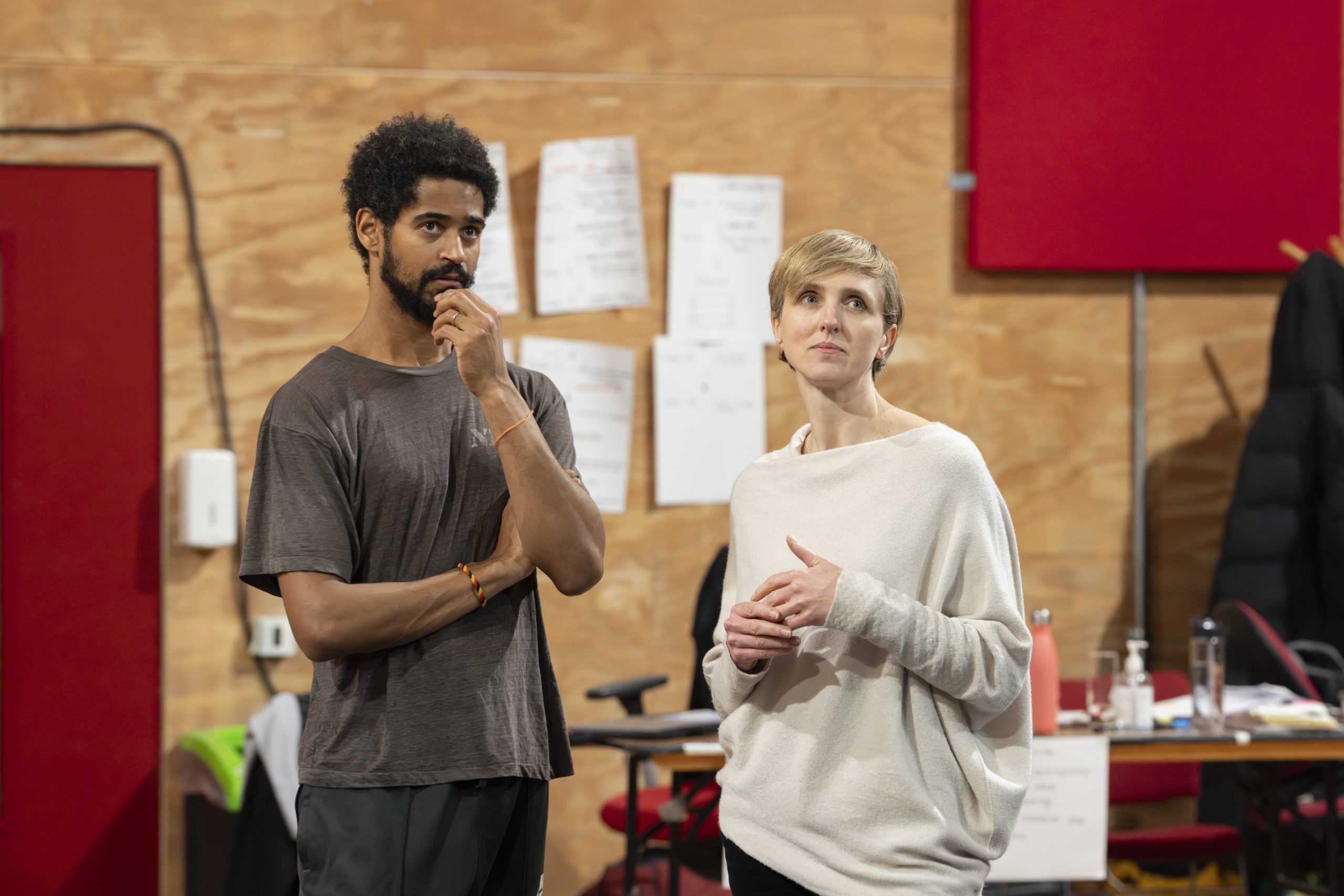 Alfred Enoch with Henry V director, Tamara Harvey
It’s basically the first ever episode of Undercover Boss.
It’s different, though. That’s what’s wonderful about it. It’s not the boss discovering someone slacking off. It’s the opposite. These men are saying, you’ve led us out here. If we die tomorrow, that’s on you.
And not just physically. Shakespeare raises the stakes even further. If the cause isn’t just, if these men die badly, then the king will have a reckoning to answer for. He’s responsible not only for their bodies but for their souls. It’s an inversion of the power dynamic. The ordinary soldier puts the moral weight squarely on the king.
That’s what makes it so powerful. It doesn’t let him off the hook. It’s about the pressure that falls on the person who leads.
When he delivers the ‘we happy few’ speech before Agincourt, do you think he fully believes what he’s saying, or is he simply motivating the men?
I don’t think you can get people to believe you if you don’t believe it yourself. Whatever doubts he may have had before, in that moment there can’t be a crack. If you’re asking men to trust you and follow you into battle, you have to mean it.
The play keeps returning to the idea of the theatre of kingship. In Henry IV, Part II, his father talks about his reign as if it were a scene being acted. There’s an awareness that leadership involves presentation.
Theatre works the same way. If we don’t believe in it together, nothing happens. The actors commit, the audience leans in, and the story moves forward. That belief is essential. Otherwise, we’re nowhere.
When Henry threatens the town of Harfleur with devastating violence, describing what will happen to women and children, is that his true nature surfacing, or strategic psychological warfare?
We spend a lot of time trying to answer the question, who am I, instead of asking it. We like to define ourselves. I’m this kind of person. I’d never do that. That’s a bad person over there, this is the good person here. It’s comforting to draw that dividing line.
But I’m not sure it’s that simple. We like to imagine we have these non-porous borders, that we’re structurally sound and consistent. The truth is probably more fluid than that.
So I don’t think it’s helpful to say this is his true nature or this is purely strategy. Those hard definitions often tell us more about what we want to believe than about what’s actually there.
When you’re speaking those lines at Harfleur, does your Henry mean it? Or is he simply trying to force an end?
I don’t think it’s helpful to decide that in advance and I hope it shifts slightly each time I say it. Theatre exists in the moment. It’s not a sculpture you finish and put on a shelf. You discover the bandwidth of what’s possible inside those words every night.
But if you’re standing outside a town and threatening violence, and the people inside think you’re just talking, what’s the point? A threat only works if it carries plausibility. The potency of it depends on the extent to which you believe it, and therefore it can be believed.
It’s not interesting to say, ‘he’s a good guy, he’d never do that’. Where’s the jeopardy in that? We start with the text and we end with the text. If those words are there, you have to allow them to be meant. And then let the audience decide what that says about him.

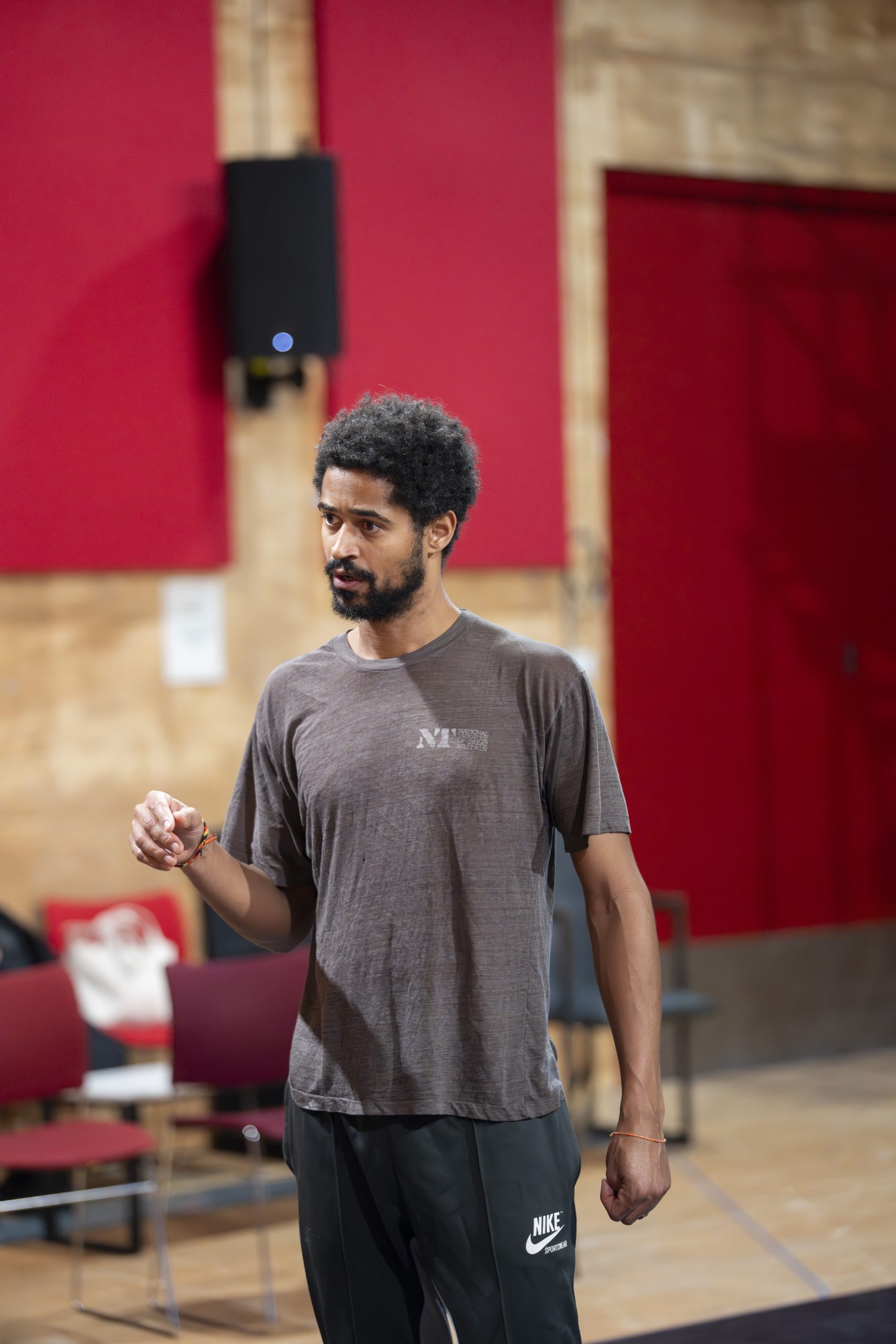
You’ve worked extensively on screen. What fundamentally shifts for you when you step back onto a Shakespearean stage?
The greatest gift is the audience. It’s all storytelling, whether it’s film or theatre, and storytelling needs someone to tell it to. But on stage, the people you’re doing it for, and really with, are in the room. That with-ness is palpable. It’s fundamental to the form.
You can play with them. They can be the soldiers. Do you trust me? Are you ready? Here we are together. That sense of togetherness, that band of brotherhood, is something you don’t get on screen.
That here-ness is the greatest gift you can have as a storyteller.
Does leading a play at the RSC demand a different kind of stamina or psychology than leading a television series?
This part requires a hell of a lot of stamina. It’s a real workout. Physically, yes, but in every sense. It demands all of you, and there’s a particular kind of exhaustion that comes from that.
But television isn’t a walk in the park either. When I was doing How to Get Away with Murder in America, we were shooting 14-hour days. Because of turnaround rules, your start time keeps shifting later through the week, so by Friday you’re finishing in the early hours and then resetting again on Monday. You’re learning scripts the night before. That requires stamina, focus, and real care of yourself.
It’s a different kind of demand. I’m still yet to discover what two-show days will feel like. That might require a very good nap in between.
It’s been nearly a decade since How to Get Away with Murder. Does that shift how your body experiences the workload now?
Yes, absolutely. It’s a different kind of match fitness. With television, you can have an exhausting day, but you might also have lighter ones. In theatre, you’re doing the whole journey every night. Monday to Saturday, sometimes twice in a day, you start at the beginning and live through the defining moments of the character’s life again.
That can feel daunting when you walk into the building. But theatre teaches you how to handle it. You don’t think about the finish line. You just take the next step, and then the next. If you start worrying about the whole mountain, you lose your footing.
So many people around the world still see you as Wes. How conscious are you of that when you’re stepping into Shakespeare, knowing some people may be coming because of your screen work?
It’s a wonderful thing. If someone’s seen you in something, liked your work, and wants to come and see something else you’re doing, that’s a happy outcome.
What I do is collaborative in every sense, but the greatest collaboration is with the audience. If people are prepared to leave home, come to the theatre, bring their attention and their energy into the room and share in that experience, that’s a gift. We’re making the story together.
You recently spoke to Kenneth Branagh and Alex Hassell, both former Henrys (see their conversation here). What was it like hearing their experiences before stepping into it yourself?
It was a treat. On a selfish level, it was great to hear what had stayed with them. They’ve both had that intense experience and then had time away from it, so it was interesting to see what remained once other things had fallen away. Those little nuggets are useful. You don’t want to stay in your own lane. Any provocation, any invitation to think differently, is valuable.
Did anything they said shift your perspective in a concrete way?
It’s hard to quantify neatly, but yes. Ken said something about faith that’s stayed with me. What does faith mean for Henry? And Alex spoke about having played Hal through the Henry IV plays, that sense of the same man who was in the tavern, playing pranks, now carrying this enormous responsibility. That continuity between those two versions of him has been turning over in my head in rehearsals.
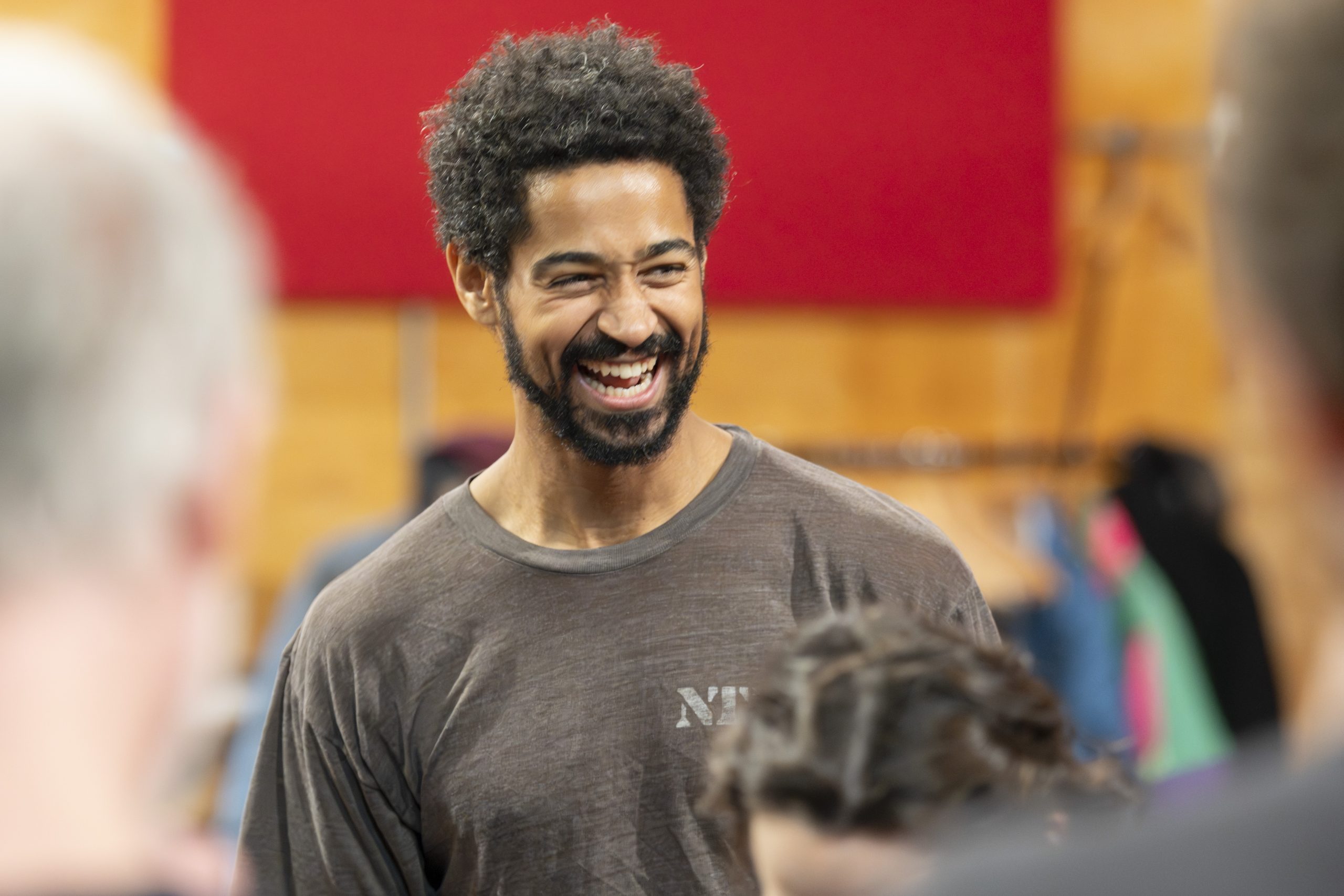
I’m a huge fan of Foundation, where you played Raych. That series is also concerned with power, legacy, and shaping history on a vast scale. Do you find yourself drawn to stories where the stakes feel that big?
There’s something very attractive about high stakes. That might mean nations going to war or the fate of a galaxy, but it can also be something domestic that feels enormous to the people living it. High stakes give the audience a kind of magnifying glass.
You might not be about to invade France, but you understand weighing the consequences of your actions, or the ethics of what you’re doing, or the version of yourself you present in order to achieve something. Seeing those questions writ large allows you to recognise them in your own life.
There’s something about stepping outside your own experience and then feeling that dialogue begin. You see something heightened and it illuminates something about you. That, to me, is storytelling.
Alfie is performing in Henry V at Royal Shakespeare Theatre, Stratford-upon-Avon from 14th March to 25th April.
Book your tickets now at rsc.org.uk
Words Nick Barr
Portrait The RSC
Production photo Seamus Ryan
Rehearsal photos Johan Persson