Reporter: Li Jing
The day after the shoot at the dunes, on my first weekend back in China, an interview that had been requested for several years finally took place in Dunhuang, in the northwest of China. Seated in a corner of the temporary base camp, Mo Xiaojun was softly illuminated by sunlight filtering through the canvas tent overhead, casting gentle layers of light and shadow across her profile. Her voice was calm, yet carried a resolute strength, much like the figures in her photographs: still, profound, and perpetually growing inward. This interview revolved around her ongoing series, Lost, and marked the first time in a public interview, she has systematically shared her creative philosophy, the architecture of emotion, and the spiritual motivations behind her imagery.
When discussing her choice of the dunes as a key setting for her Lost series, she described it as a deeply personal decision. The stark emptiness of the desert offers no escape from oneself. The wind, light, and shadows constantly remind you that your mental state cannot be concealed. She believes contemporary people have grown accustomed to diluting their emotions with speed, information streams, and the noise of the crowd, whereas the dunes strip away these external layers, forcing one to confront one’s consciousness in the raw. In her vision, “lost” is not an expression of fragmentation, but a return to the most primal, honest spiritual origin.
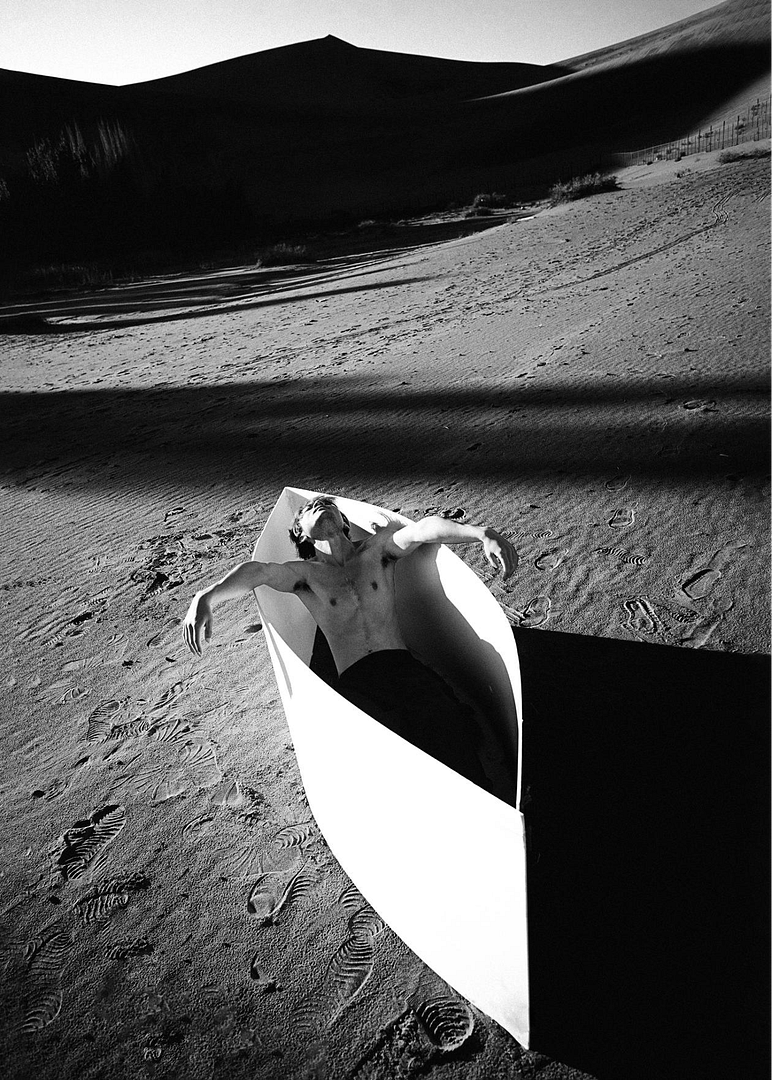
She emphasized that throughout the shooting process, she never sought meticulously choreographed scenes, nor did she want models to perform according to a fixed script. Instead, she focused on what emerges naturally among the environment, mood, and the body. She allowed the models to wander across the dunes, let the wind guide the drape of their garments, allowed the sun to dictate the length of shadows, and let their bodies respond instinctively to the temperature and resistance of the surroundings. “What I want the lens to capture,” she expressed, “is a genuine spiritual moment, not a pre-designed emotion. I am not photographing models; I am documenting their heart as it exists in that moment.”
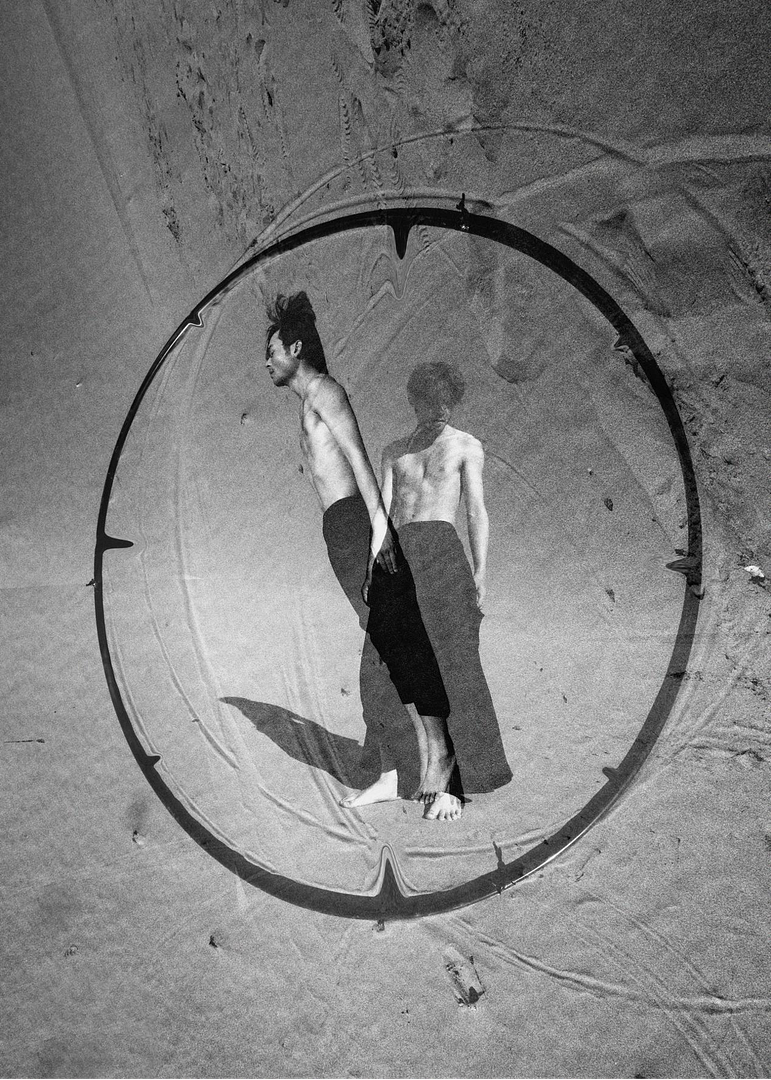
When asked about the frequent use of geometric symbols like circles and white structures in her Lost series, she explained that these props are not mere formalism. Rather, they are physical manifestations of her own mental architecture. The circle symbolizes cycles, entrapment, and recurrent thoughts, but also a gateway inward. The white constructs, meanwhile, act as “vessels of consciousness”, metaphors for states of being lifted, enveloped, and brought to a forced pause.
The concept of “healing” arose frequently in our conversation, though she does not equate it with gentle solace. For her, true healing entails courageously facing one’s depths, acknowledging the fractures, and embracing imperfection, gradually arriving at a reconciliation with oneself through this process. “The purpose of imagery,” she noted, “is not to provide answers, but to make you aware that the emotions you are experiencing are worthy of being seen.” She hopes that Lost can serve as an inward light, allowing viewers to resonate with their own emotions during the act of viewing.
When asked what she most hopes viewers take away from her work, after a moment of reflective silence, her answer was gentle yet firm: a feeling of “freedom through being understood”. She believes modern people universally endure immense psychological pressure, yet often cannot find space for expression or to be heard. She doesn’t want her images to magnify a viewer’s loneliness, but to let them realize, “I am not alone.”
As the interview drew to a close, she mentioned that the Lost series is merely a phase-specific work. It is a record of her feelings and questions that defined a specific period in her life. Moving forward, she intends to continue exploring different spiritual themes. She holds a firm belief that imagery can serve as a bridge to the inner self, and that in an age where people are particularly prone to losing their way, art can function as a means of rediscovering one’s bearings. “As long as we are still willing to confront our own emotions,” she said with a smile, “and to extract meaning from the chaos, then we are never truly lost.”