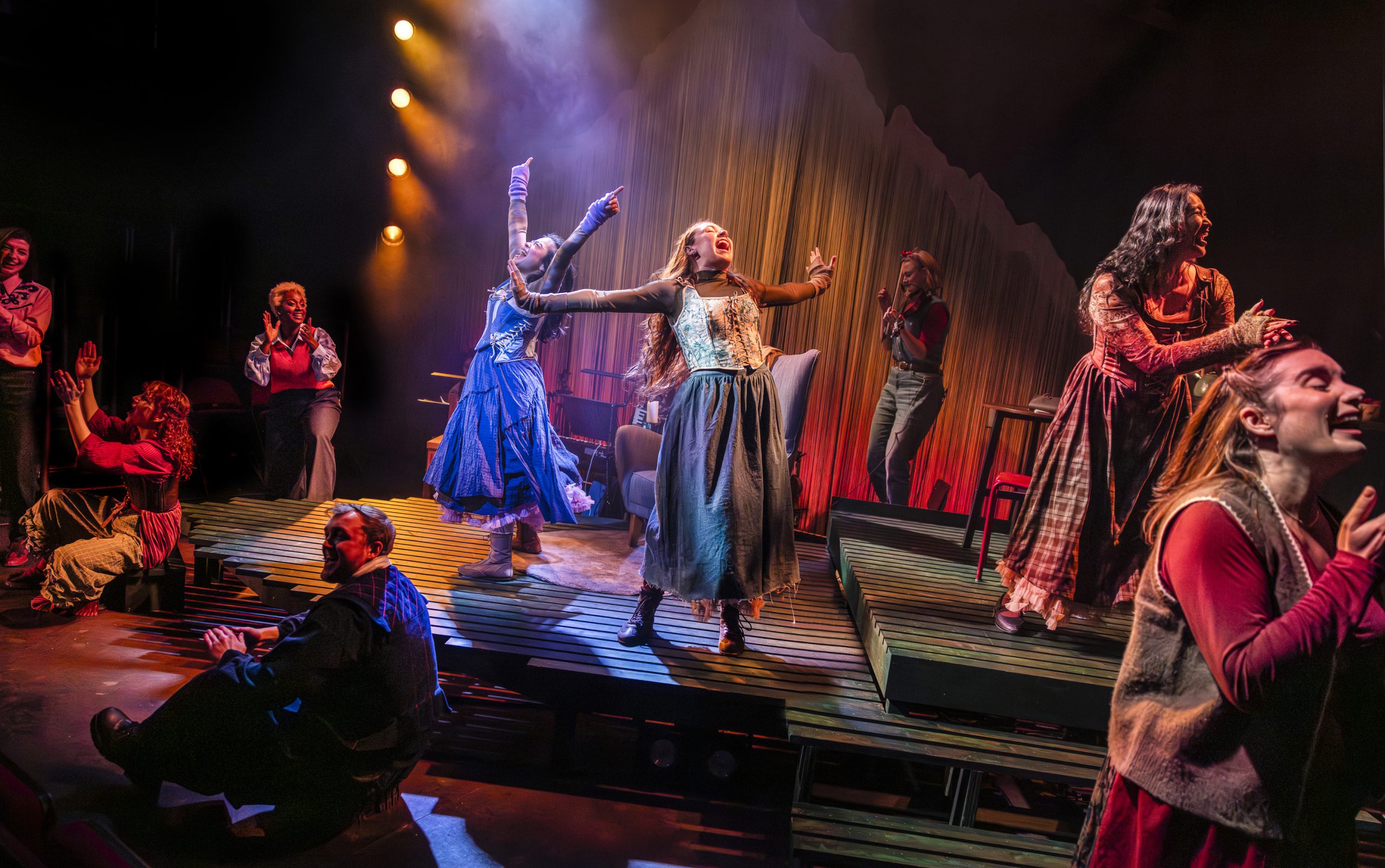
When you’re a theatre critic, you get to see a lot of shows – last year I saw 43, and this is not my full-time job. Some you really like, some you love, some not so much. But very rarely do you see a show that feels so unique and special that you immediately want to see it again, and want to bring everyone you know with you because it’s important, it’s beautiful, and it completely blows you away. Ballad Lines, a folk musical by Finn Anderson and Tania Azevedo, playing at Southwark Playhouse Elephant, is one of those rare, special shows.
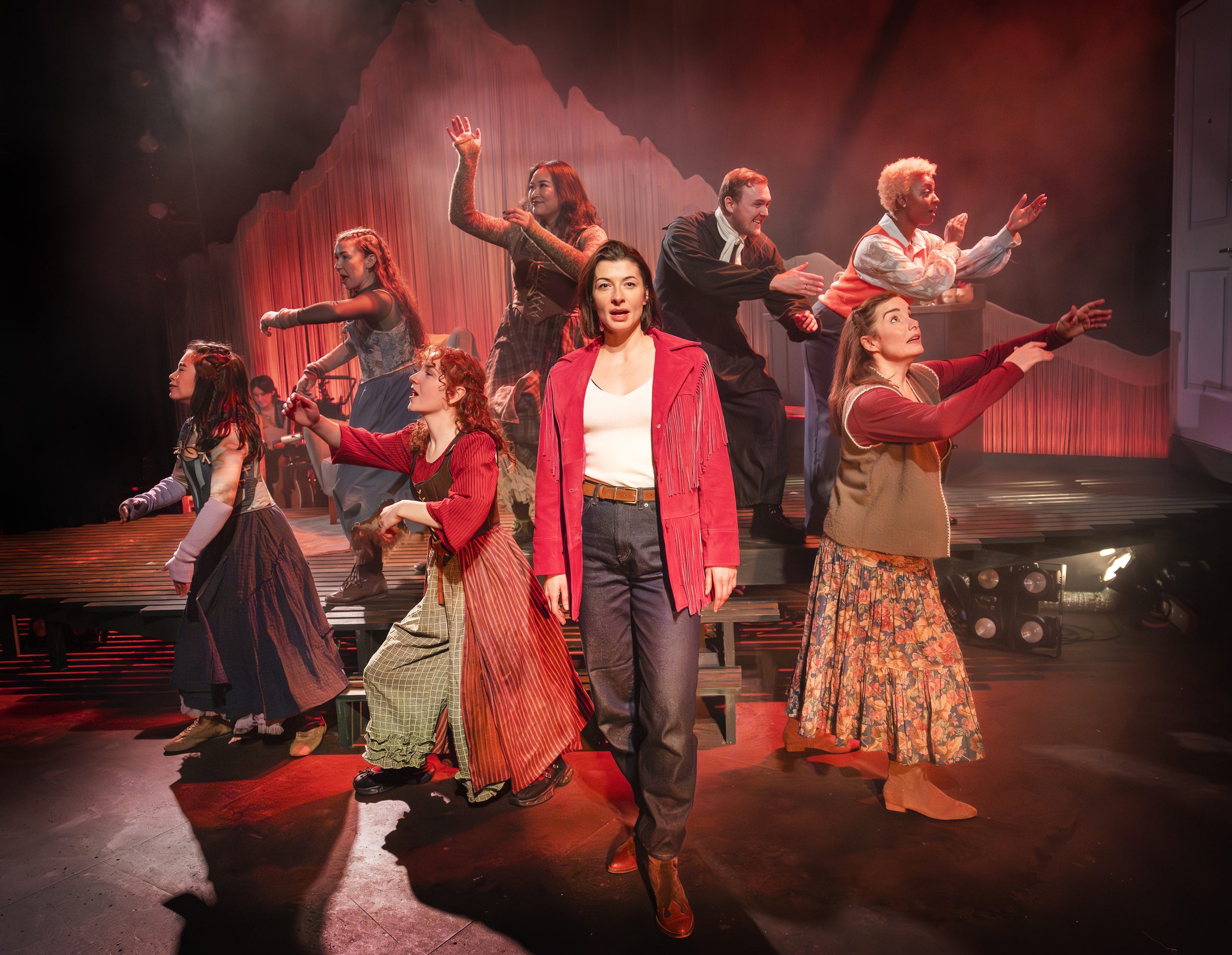
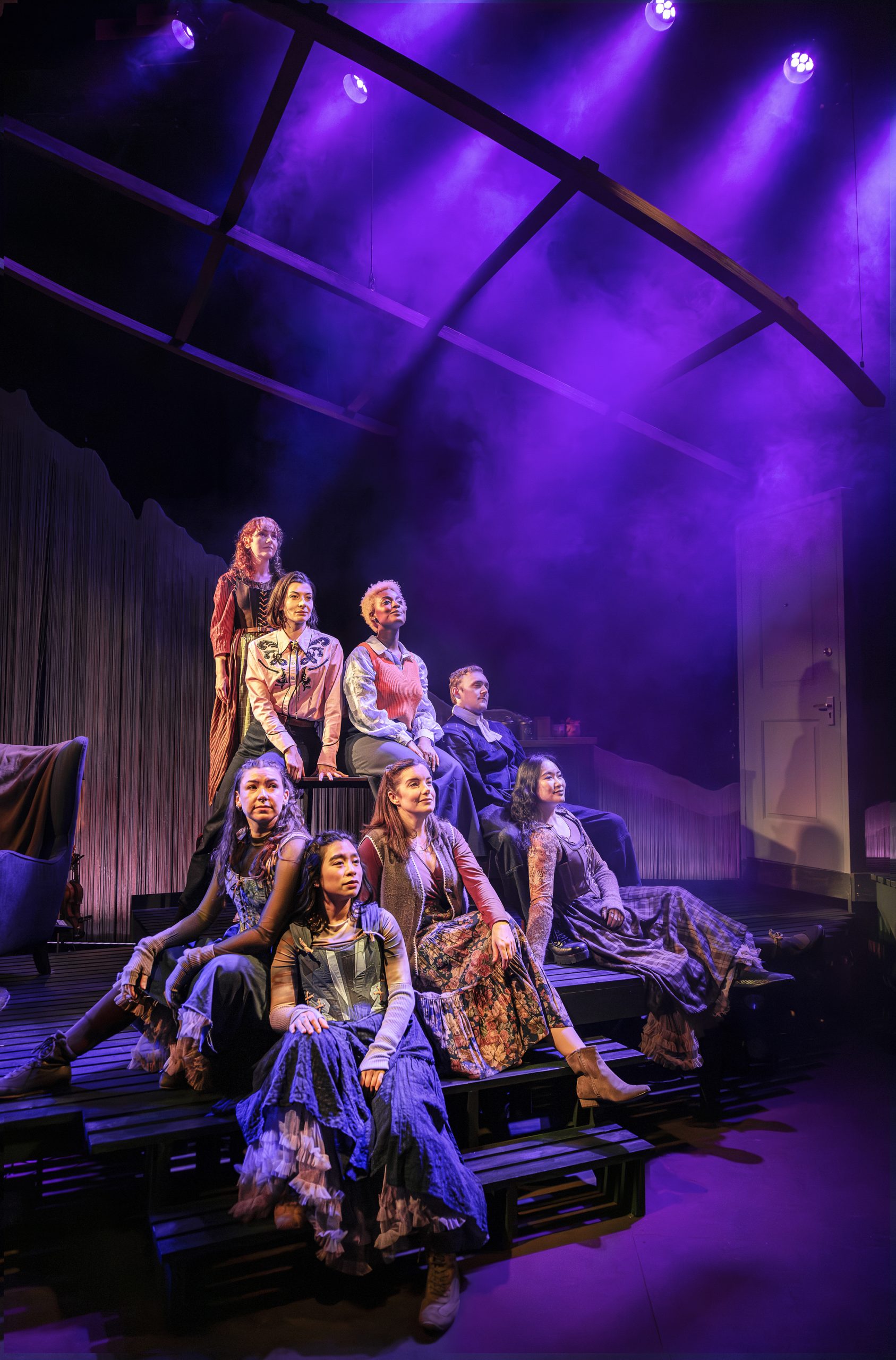
Walking into the intimate space of this small (but mighty) theatre, I was immediately struck by the set. TK Hay’s design strikes exactly the right chord – a backdrop of mountain ranges formed from tasselled string, gently stepped decking with a doorway to nowhere at the top, a comfy chair, a few versatile pieces of furniture, and a beautiful boat-shaped wooden frame suspended above. Everything feels rustic and natural, evoking journeys across land and sea, and perfectly tuned to what’s about to unfold.
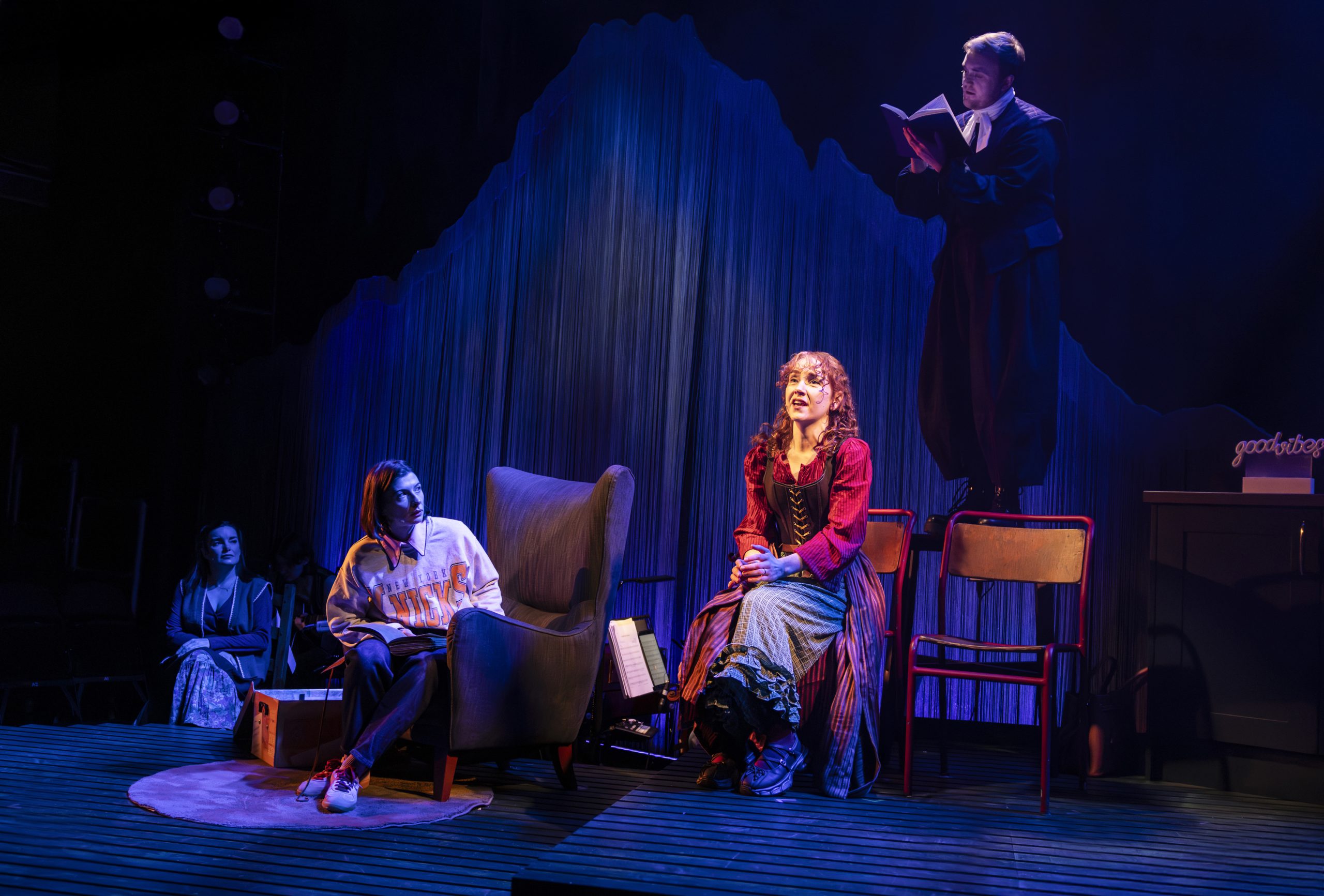
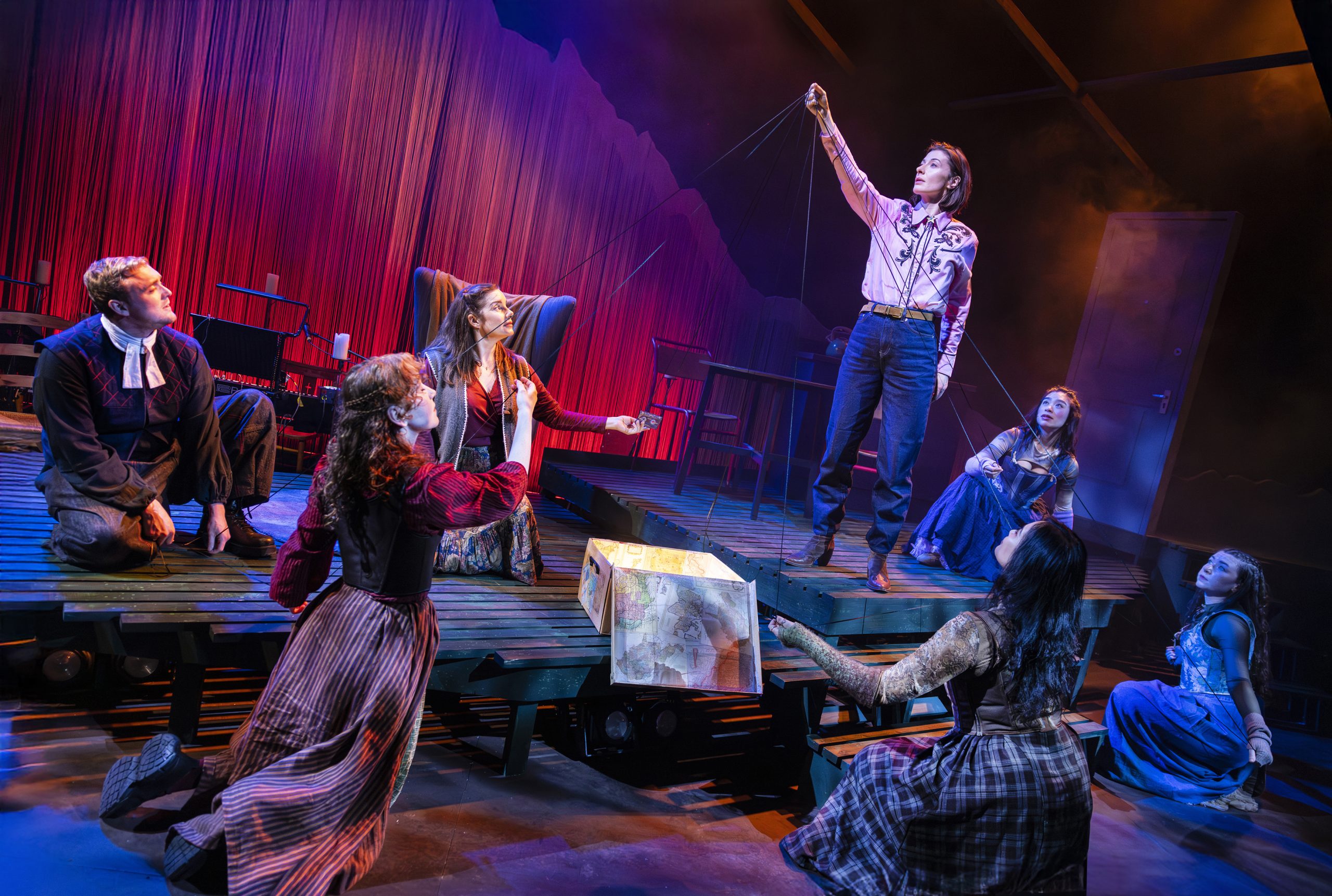
Then the beat starts, and the cast of eight – seven women and one man – arrive, dressed across multiple eras, moving and singing with such passion and intention that the audience is instantly pulled into the world of the story. I’m not exaggerating when I say my foot started tapping from the very first beats, and glancing around, I was far from alone.
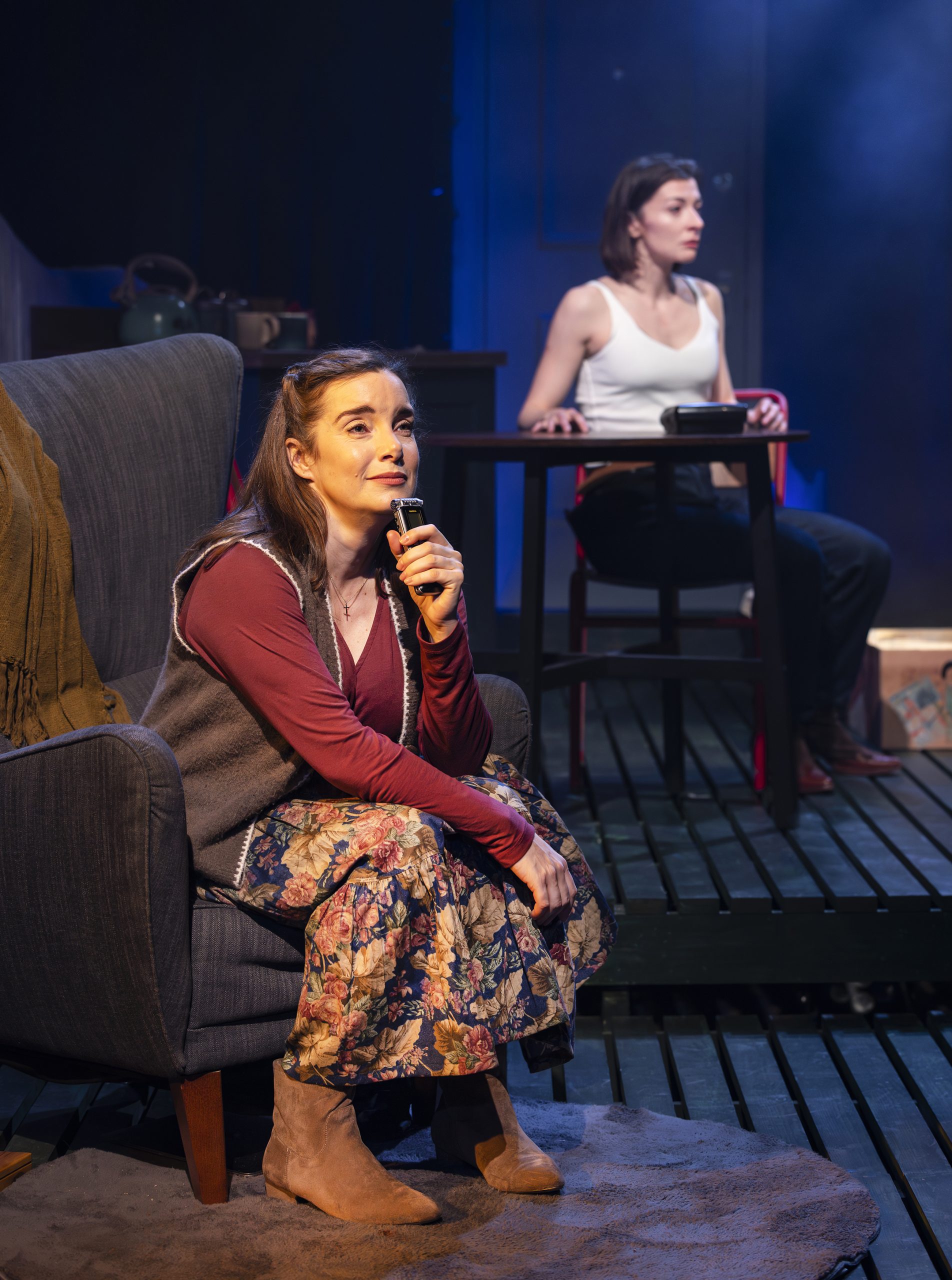
The opening number, simply titled ‘Prologue’, introduces us to Betty Carson, a strong West Virginian woman, played with warmth and heart by Olivier Award-winner Rebecca Trehearn. She tells us she comes from a long line of ballad singers, and that these songs travelled with her ancestors from Scotland, to Ireland, and eventually to the Appalachian Mountains. The lyrics speak of women bound by shared blood and names, carrying stories and songs across generations.
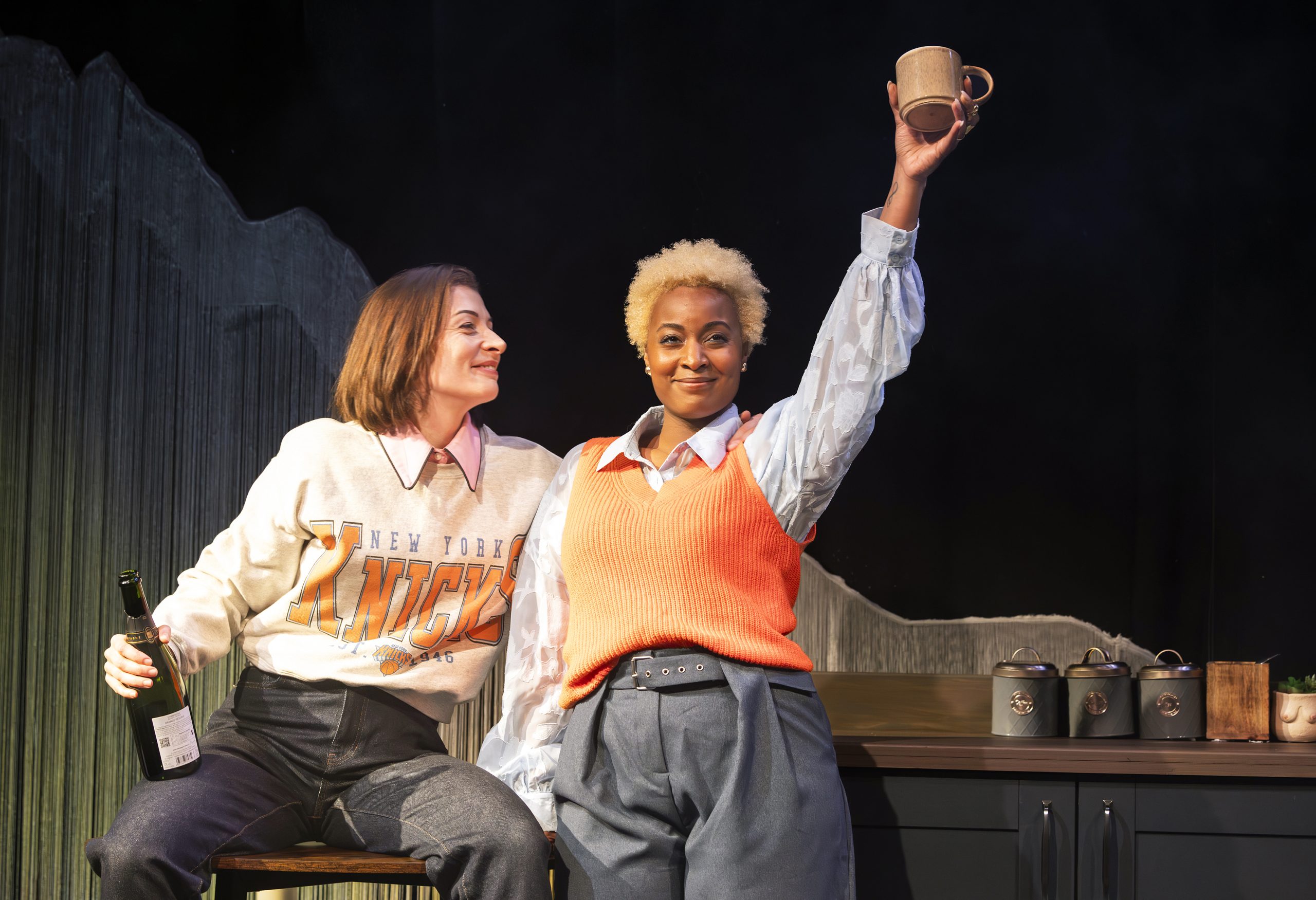
We then meet Sarah and Alix, a queer couple living in present-day New York, played by Frances McNamee and Sydney Sainté. Having just moved into a new apartment, they sing the gorgeous ‘Chosen Family’ – ‘you are the one I choose, you are my chosen family’ – a line that lands with particular resonance in a world where many of us feel closer to our friends than our relatives. Sitting ominously by the door is a large box, sent by Sarah’s late Aunt Betty – yes, the Betty from the Prologue. Sarah has been avoiding opening it. When she finally does, she discovers tapes recorded by Betty, telling the stories of two young women from their family’s past: Cait and Jean.
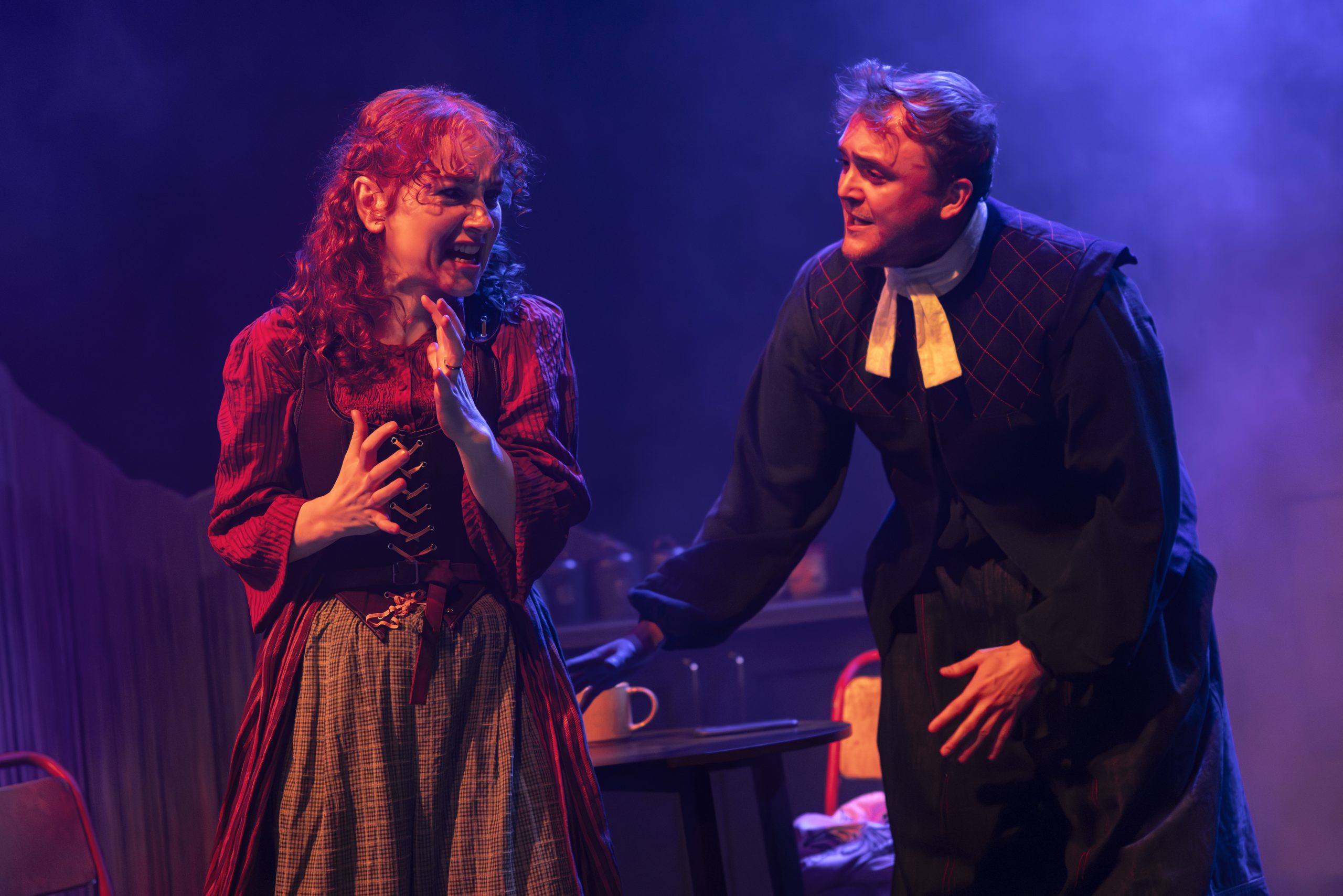
Cait lives in 17th-century Scotland and is played by Kirsty Findlay, who brings both power and vulnerability to the role. Cait is a minister’s wife in a world where her worth is defined almost entirely by her ability to produce a child. She has no real agency over her body or her future, and the pressure placed upon her is relentless. Findlay’s voice is extraordinary, and when she begins singing ‘The Four Marys’, a traditional ballad woven into the score, the theatre seems to hold its breath. It is one of those moments where time collapses and the centuries between us and her story feel paper thin.
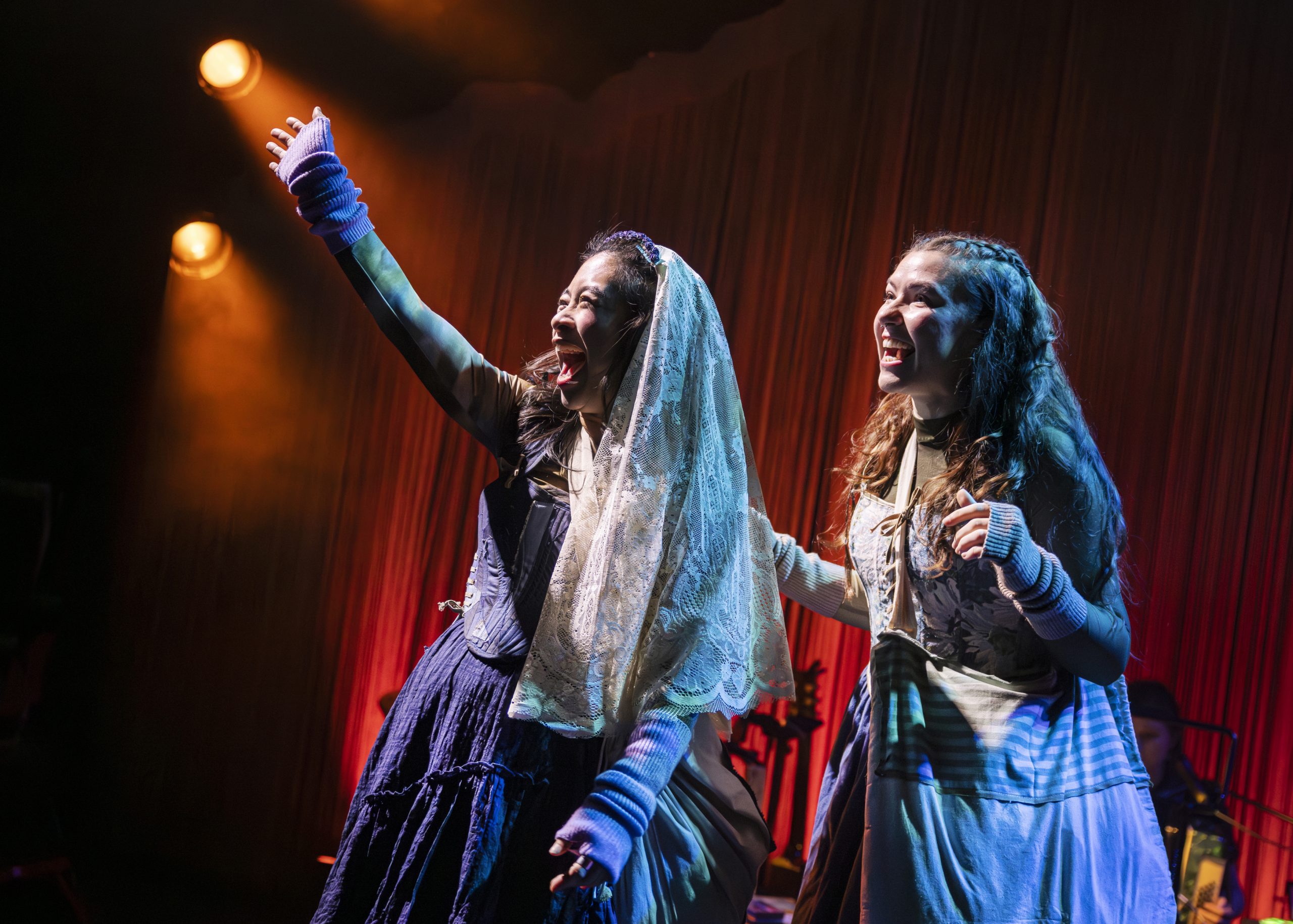
Five generations later we meet Jean, a spirited Irish teenager played by Yna Tresvalles. Where Cait carries fear and resignation, Jean is fire and freedom. She is funny, furious, alive with attitude, and absolutely determined to break free of what the world expects of her. Tresvalles is magnetic, bringing humour and defiance to the role. She sings the same songs Cait once sang, the melodies having travelled with her family from Scotland to Ireland, carried like heirlooms. The music quite literally binds these women together, passed down alongside their stories and their blood.
Jean’s relationship with her sister Shona, played by Siân Louise Dowdalls, adds another emotional layer – Dowdalls gives an impassioned performance, perfectly matching Tresvalles’ energy and grounding Jean’s fire in something tender and human.
Jean dreams of escape. There is a ship bound for America, and she wants to be on it. But once again, the choice is not fully hers. Like Cait before her, she finds herself trapped by circumstance, by expectation, and by the fear of what could be taken from her whatever she decides.
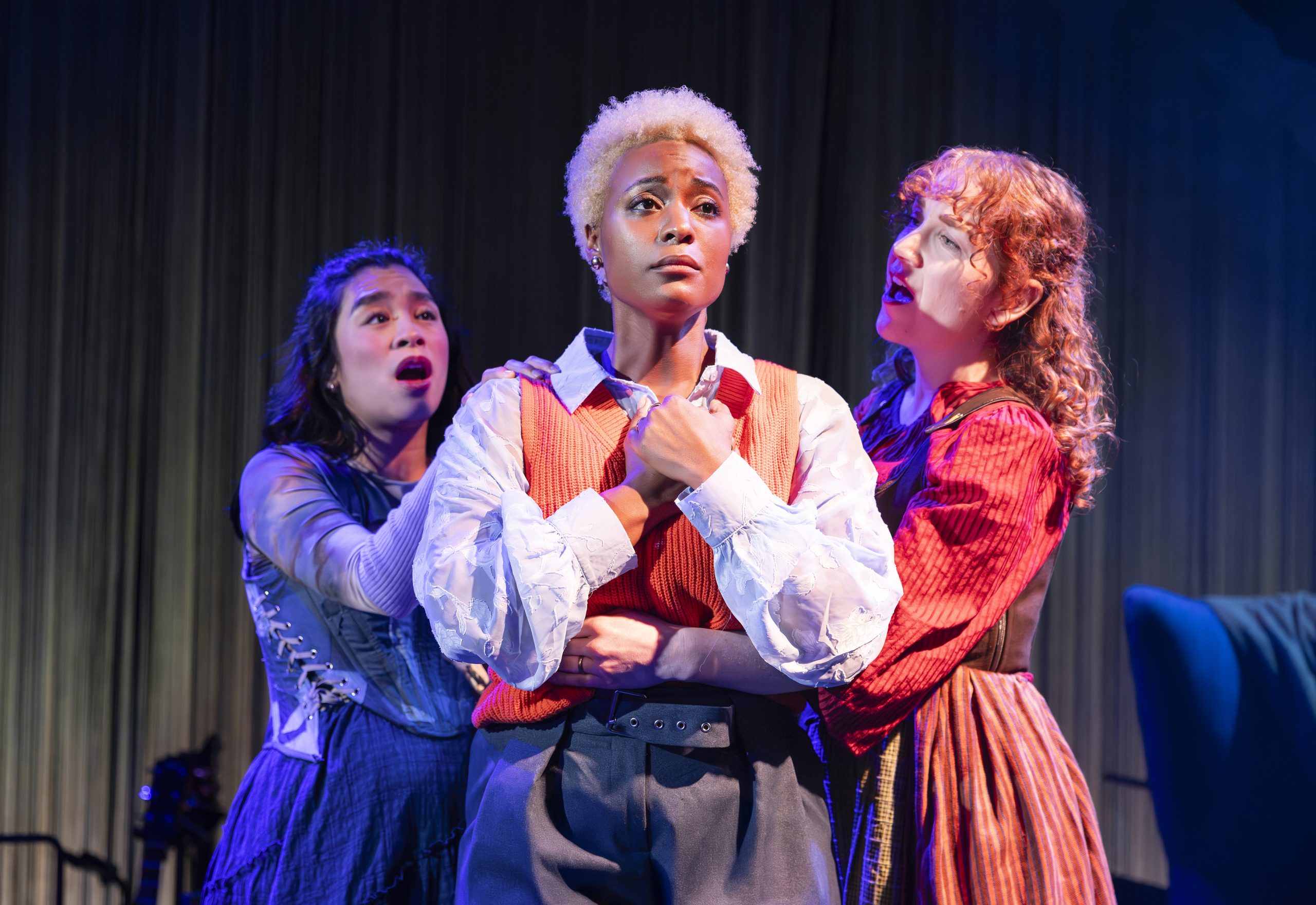
Back in the present day, Sarah listens to these stories and begins to feel their weight settling into her own life. She and Alix have long agreed that having children was not for them. It was a settled decision, unexamined, comfortable. But as Sarah absorbs the lives of the women who came before her, something shifts. The question at the heart of the show emerges quietly but powerfully: do we take our freedom for granted?
Sarah sings ‘Second Hand Shame’, a stunning number that captures her complicated relationship with identity, inheritance, and selfhood. One line in particular struck me: ‘a body full of second-hand shame and a box with my name on it’. It’s a song about the emotional baggage we inherit without realising it, about trying to be who we think we’re meant to be, rather than who we truly are.
Alix, beautifully played by Sainté, becomes something of an anchor for the audience. She watches Sarah unravel and question everything they thought they knew about their future, asking the questions we might ask ourselves. Their conversations are honest, tender, and at times painful. When Alix speaks about her fear of raising a Black child in present-day America, it lands with quiet force. This is not abstract politics, it’s lived reality, and it grounds the show firmly in the now.
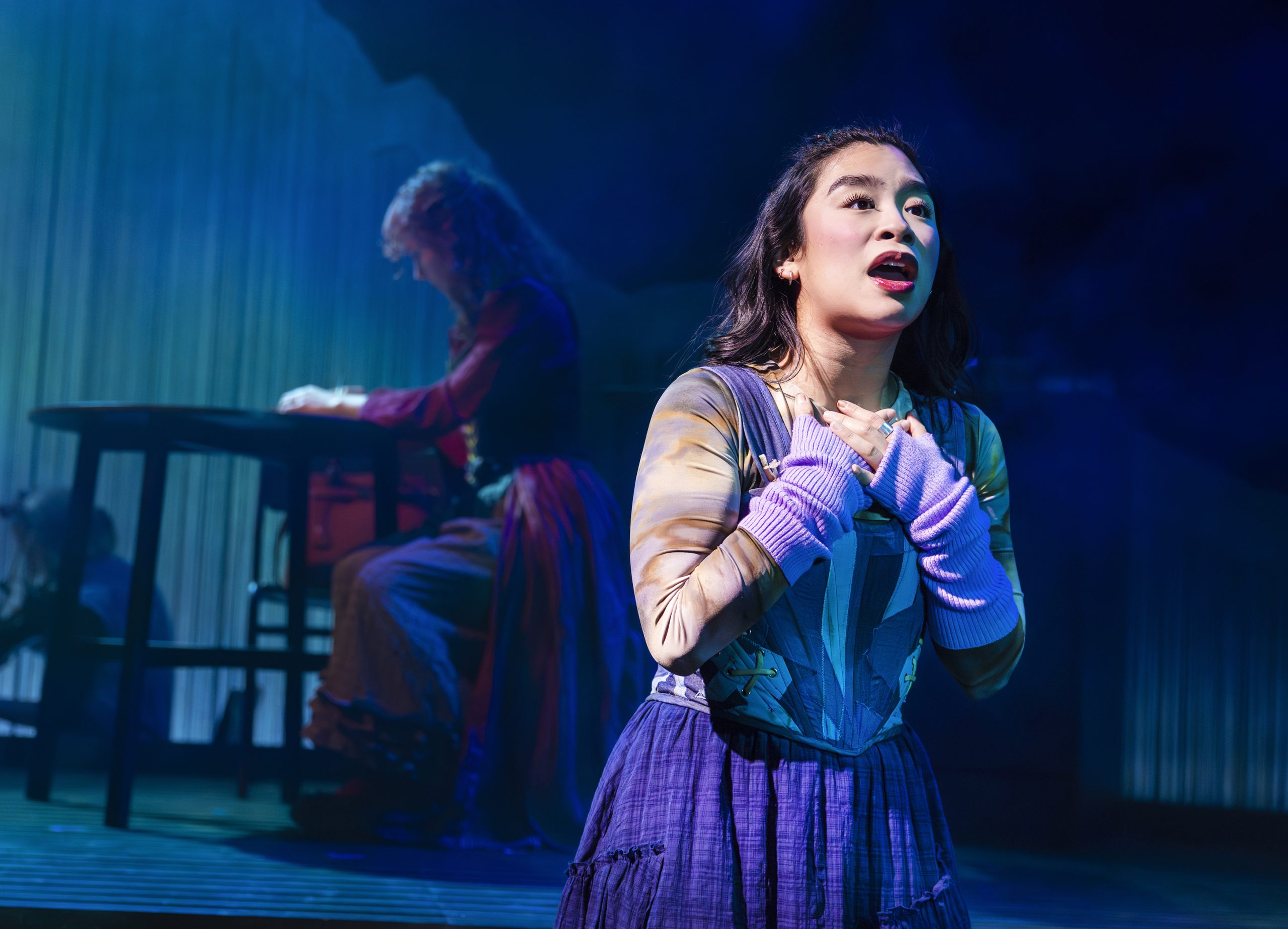
Ally Kennard is the only man in the cast, playing multiple roles with sensitivity and restraint. In a show centred so powerfully on women’s experiences, his presence never feels intrusive. If anything, it feels intentional and thoughtful.
The movement, choreographed by Tinovimbanashe Sibanda, is breathtaking. I struggle to find language big enough for it. The physical storytelling communicates fear, desire, resistance, and grief with a visceral immediacy that words alone couldn’t carry. There are moments where the ensemble move as one, as if pulled by an invisible current running through generations, and it is genuinely overwhelming.
Any time the full company sang together, the sound was transcendent. The harmonies are rich and layered, rooted in folk tradition but alive with contemporary urgency. Looking around the auditorium, I could see people smiling, swaying, tapping their feet. Others sat perfectly still, tears silently leaking from their – my – eyes.
There is a song in the second half, sung by Sarah and Alix, that is not on the cast recording, and I won’t name it here because it would spoil too much. What I will say is that it reduced a large portion of the audience to tears. You could feel the emotional release ripple through the room.
If pressed to find something critical to say, I might wish we saw more of Aunt Betty herself. But the way Betty is used is clever and restrained. She’s present throughout – in the music, in the recordings, in the space she still occupies – without the show ever needing to spell everything out.
This musical was previously titled A Mother’s Song, and while that makes sense, Ballad Lines feels perfect. This is a show about bloodlines, songlines, and the invisible threads that tie women together across time.
Sitting in the Southwark Playhouse Elephant, less than two metres from the performers, I was struck by how much people miss when they only see one or two big shows a year in cavernous theatres. This kind of intimacy, this level of connection, is a privilege. You can’t hide from the emotion. You have to sit with it.
Ballad Lines is emotionally devastating, profoundly beautiful, and quietly radical. Anderson and Azevedo have created something extraordinary here, and I cannot imagine a future where this story does not reach a bigger stage.
I will be back to see it again. This is a story that deserves to be heard. I don’t just suggest that you go and see it – I insist that you do.
Ballad Lines runs at Southwark Playhouse Elephant until 21 March 2026.
Book tickets at southwarkplayhouse.co.uk
Words by Nick Barr
Photos by Pamela Raith