Why March Is Actually the Best Time to Start LED Therapy
“Do LED masks actually work?” It’s the question we get asked most when skin is looking dull, tight, and generally done with life — which, after the winter we’ve just had, feels pretty on the nose. There’s a psychological hurdle with LED therapy that’s hard to shake: if something doesn’t sting, burn, or at least feel mildly uncomfortable, surely it can’t be working? We’ve been conditioned to believe effective skincare should involve some suffering.
But red light therapy operates differently. Instead of stripping or resurfacing your skin into submission, it works at a cellular level, using specific wavelengths of light (633nm red and 830nm near-infrared) to stimulate collagen production, improve circulation, and reduce inflammation. You sit there for 10 minutes with a glowing mask on your face, feel nothing except maybe slight warmth, and wonder if you’ve just wasted your time. Then, three weeks later, people start asking what you’ve done to your skin.
The science is solid. Once confined to dermatology clinics, LED technology now comes in at-home masks that deliver genuine results without the downtime, irritation, or discomfort of chemical peels or prescription retinoids.
We tested three of the best devices on the marke: CurrentBody Skin LED Light Therapy Mask, Omnilux Contour Face, and FOREO FAQ 202 LED Mask to see which one delivers the most effective skin reset when you need it most.
How We Tested These LED Face Masks
Over six weeks, we tested each mask on similar skin types (combination, dealing with post-winter dryness, fine lines around the eyes). Each device was used according to manufacturer guidelines — 3–4 times weekly, 10 minutes per session. We tracked radiance, texture, firmness, and whether the glow lasted beyond treatment day.
We tracked results over six weeks using detailed observations rather than before/after photos, which can be misleading due to lighting and daily skin fluctuations.
LED Face Mask Comparison: Which Red Light Therapy Device Works Best?
| Criteria | CurrentBody Skin LED Light Therapy Mask | Omnilux Contour Face | FOREO FAQ 202 LED Mask |
|---|---|---|---|
| Light wavelengths | Red (633 nm) + Near-Infrared (830 nm) + Deep NIR (1072 nm) | Red (633 nm) + Near-Infrared (830 nm) | 8 wavelengths (red, blue, green, yellow, orange, purple, cyan, NIR) |
| Technology | Triple-wavelength LED with flexible silicone | Medical-grade LED arrays in contoured silicone mask | Multi-LED Light Fusion™ with app control |
| Claims | Boosts collagen, reduces wrinkles by up to 30%, improves skin tone and radiance | Clinically proven to reduce fine lines and wrinkles, improve elasticity and firmness | Firms, brightens, targets acne and pigmentation, customisable for multiple concerns |
| Treatment time | 10 minutes | 10 minutes | 5–15 minutes (customisable via app) |
| Recommended frequency | 3–5× per week | 3–5× per week | 3–4× per week |
| Fit & comfort | Lightweight, flexible silicone that hugs face | Firmer silicone; adjustable straps | Featherlight, wireless with open eye area, most comfortable to wear |
| Results timeframe | Plumper, brighter skin in 3–4 weeks | Smoother texture and improved elasticity in 4 weeks | Immediate glow; cumulative firmness over 4–6 weeks |
| Extra features | Pairs with Hydrogel mask for enhanced hydration; 236 LEDs (most of any mask) | FDA-cleared; professional-grade power output | App-controlled; customisable wavelengths |
| Charging method | USB-C via mains USB adapter | USB-C rechargeable | USB-C rechargeable |
| Price (by maker) | £399 | £348 | £719 |
| Best for | Those wanting the most advanced tech with maximum LEDs and wavelengths | Users seeking clinical-grade, FDA-cleared, dermatologist-level results | Tech-savvy multitaskers who prioritise comfort and full customisation |
| We love | Most LEDs (236), three wavelengths including deep NIR, comfortable flexible fit | FDA-cleared clinical credibility, trusted by professionals, proven results | Most comfortable and wearable, full app control, multitask-friendly |
| Where to buy | currentbody.com | omniluxled.com | foreo.com |
The Fast Glow Up One: CurrentBody Skin LED Light Therapy Mask
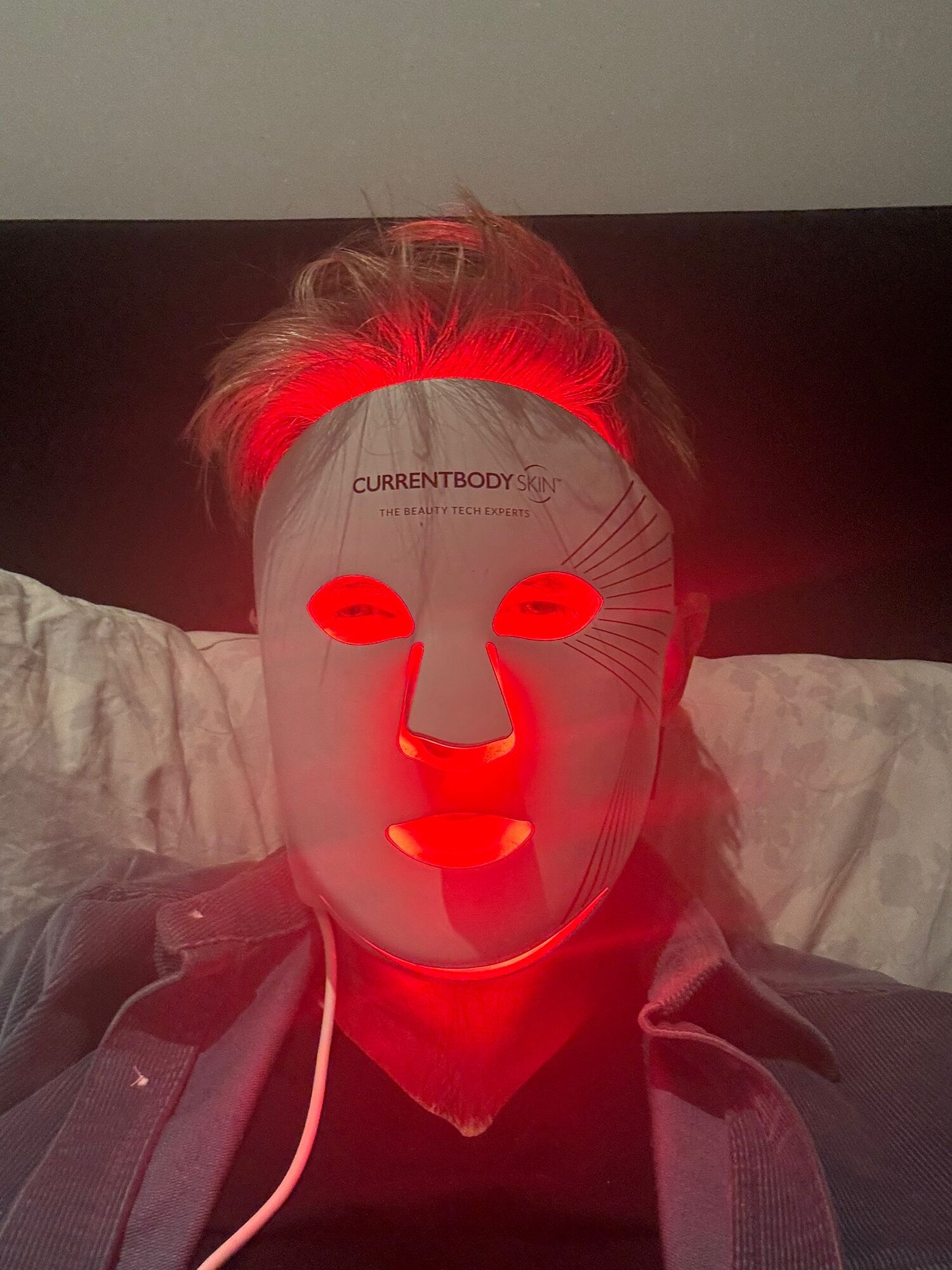
If you want the most technologically advanced mask of the three, CurrentBody’s Series 2 has the specs to back it up. With 236 LEDs and three wavelengths instead of the standard two, it’s the most comprehensive option here. The addition of 1072 nm deep near-infrared alongside the standard 633 nm red and 830 nm near-infrared means you’re getting wavelengths that penetrate further into the skin, particularly useful for targeting deeper lines and loss of firmness that worsens in cold weather.
The shape has been updated to curve around the chin and jawline more completely, improving light coverage in areas the original version missed. The fit is quite snug (glasses wearers will need to take them off), and the flexible silicone makes it comfortable enough to wear for the full 10 minutes without feeling like you’re strapped into something medical.
Our Results
After four weeks of consistent use (4× weekly), fine lines around the eyes became visibly softer, skin texture became noticeably smoother, and overall radiance improved significantly. Even without any skincare products, skin looked refreshed and less tired and dull. One thing we really didn’t expect: hair along the hairline looked shinier and healthier where the mask’s light touched it. (funnily enough, Current Body has also reacently launched a hair growth helmet, but that’s another story)
More importantly, skin felt less tight and uncomfortable, that raw feeling you get from cold wind and indoor heating eased up. Post-shave redness calmed down faster than usual, which was a welcome surprise. The biggest difference? Not looking completely knackered in morning meetings, even after a bad night’s sleep.
What We’d Tell a Friend
The included eye inserts help, but the light is bright enough that watching TV or reading can feel a bit intense. If you’re light-sensitive, you’ll probably prefer to just close your eyes and relax for the 10 minutes.
SPECS AT A GLANCE: 236 LEDs | 3 wavelengths (633/830/1072 nm) | 30 mW/cm² | 10-min session
Best for: Anyone after the most advanced technology and fastest visible glow-up without complicated settings—comfort meets comprehensive results
We love: The upgraded triple-wavelength technology that visibly improves texture and tone
Cost per use: £1.92 per session over one year (at 4× weekly). Compare that to £120–150 LED facials.
The Clinical One: Omnilux Contour Face
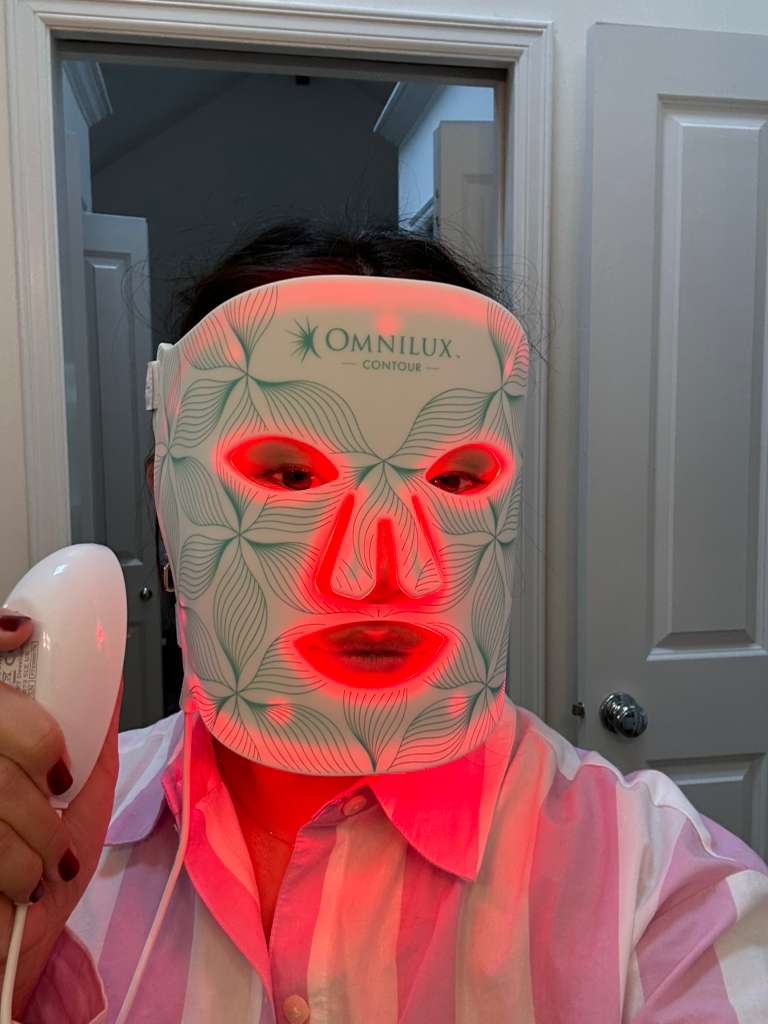
If you want the device a lot of the dermatologists trust, Omnilux has the clinical credibility that’s hard to match. The brand has been making professional LED systems for clinics for years, and the Contour Face uses the same medical-grade wavelengths (633 nm red and 830 nm near-infrared) found in those systems, it’s FDA-cleared and built to clinical standards.
The difference is immediately noticeable. It feels slightly firmer and more structured than the CurrentBody, with adjustable straps that keep it securely in place. Some people won’t like the less flexible design, but if you want something that stays put while you move around (or if you travel frequently and need something reliable), that structure is precisely the point. The light intensity is strong, you can feel it working, but it’s not uncomfortable.
Ten-minute sessions three to five times weekly sound manageable on paper, and in practice, they actually are. No complicated app, no multiple settings to navigate, just strap it on, press the button, and let it run. If you’re the type who prefers straightforward over customisable, this is your device.
Our Results
After four weeks, the subtle but unmistakable “lift” that LED enthusiasts talk about became apparent: tighter jawlines, softened nasolabial folds, and a more resilient skin barrier. It’s particularly effective on the papery texture skin develops from cold winds and indoor heating, and it helps calm inflammation and redness, making it excellent for skin that swings between sensitivity and dehydration as seasons change.
By week six, the jawline definition was noticeably sharper, and foundation sat better on skin that had improved texture and fewer visible pores. Beyond the visible changes, skin just felt sturdier, less reactive to temperature changes, less prone to that tight, irritated feeling after being outside. It could handle a freezing morning commute without looking angry about it afterwards.
What We’d Tell a Friend
Getting the strap fit right takes practice, be prepared to fiddle with it the first few times. It’s firmer and less flexible than the CurrentBody, which won’t suit everyone, but that clinical structure is precisely why it works so well.
SPECS AT A GLANCE: 132 LEDs | 2 wavelengths (633/830 nm) | ~30 mW/cm² | 10-min sessions
Best for: No-nonsense users who want a secure, stays-put fit and prefer a clinical “treatment” feel, ideal if you move around during sessions or travel frequently.
We love: Professional-grade results backed by clinical studies, trusted by dermatologists and facialists
Cost per use: £1.68 per session over one year (at 4× weekly)
The High Tech One: FOREO FAQ 202 LED Mask
If customisation and comfort are your priorities and you don’t mind paying more for them, the FOREO FAQ 202 offers the most versatile approach to LED therapy. With eight wavelengths (the most of any mask here) and full app control, you can tailor treatments to whatever your skin needs that day: red for collagen, blue for breakouts, yellow for brightness. Whether that level of customisation actually delivers better results than a simpler two or three-wavelength system is debatable, but the flexibility is undeniably there.
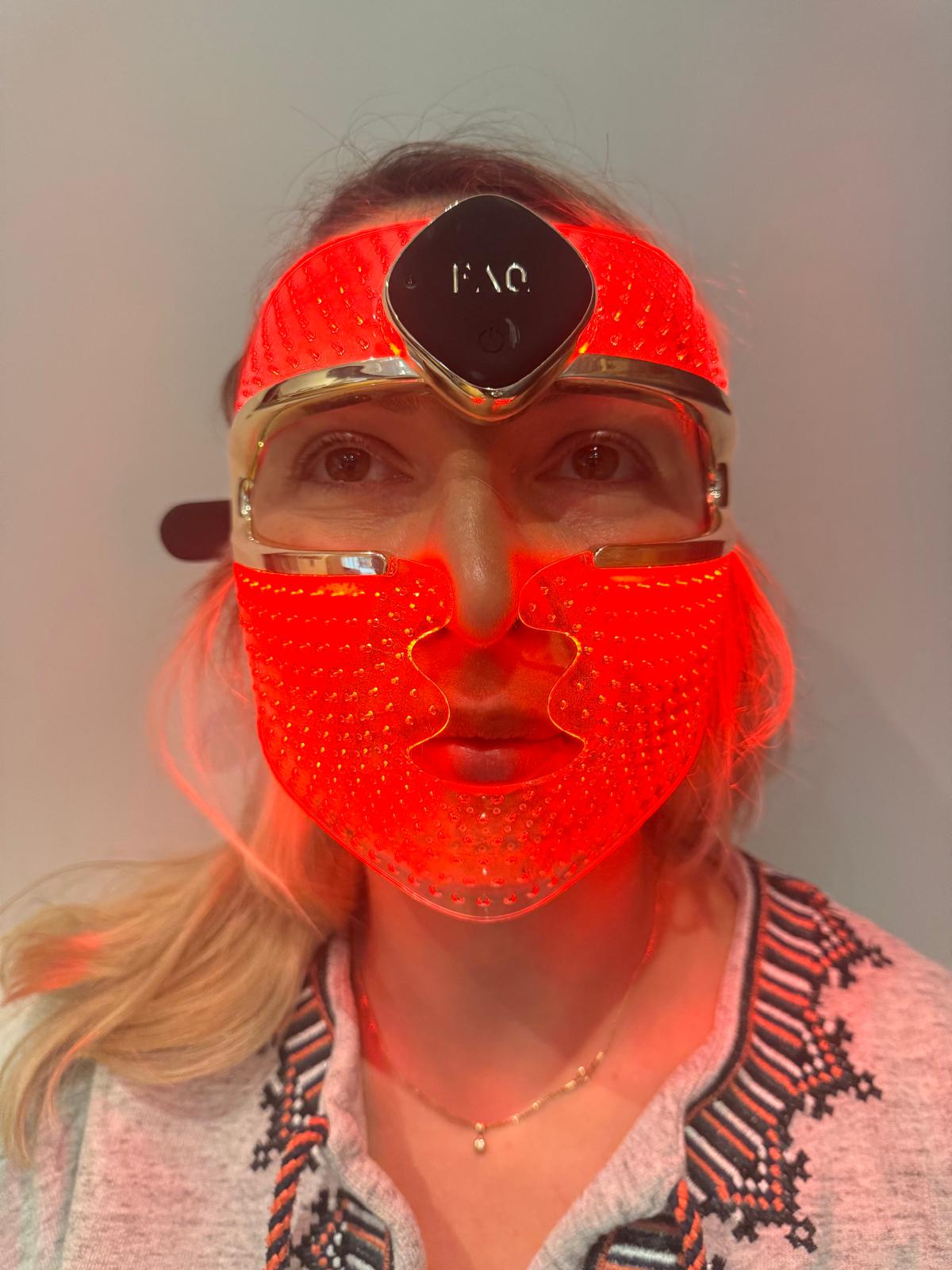
What’s not debatable is the comfort factor. This is hands-down the most wearable of the three. The featherlight silicone design and open eye area mean you can actually watch TV, work, or scroll through your phone without feeling like you’re strapped into a piece of equipment. For people who struggle to sit still for 10 minutes doing nothing, this solves that problem entirely.
Our Results
After a few weeks of consistent use (3× weekly), skin looked fresher, clearer, and noticeably firmer. Fine lines around the eyes softened, and the overall complexion appeared more even-toned—that flat, grey winter look gradually lifted. The multi-light function proved genuinely useful: switching to blue light when a breakout appeared helped calm inflammation faster, while red light sessions visibly plumped the under-eye area.
By week five, pores looked smaller, particularly around the nose, and skin texture had smoothed considerably. The customisable session lengths (5–15 minutes) made it easy to fit treatments into unpredictable schedules without sacrificing results. The real difference was waking up without immediately thinking “I need more more make up today” Skin felt more hydrated and resilient, less like it was constantly fighting the weather.
What We’d Tell a Friend
The control panel sits in the center of the forehead, which means there’s no LED light coverage in that spot, a trade-off for having easy-access controls. Not all guided treatment protocols on the app are free either, some premium programs require payment, though you can still use all light settings manually and create custom combinations without paying extra. The app dependency can be annoying if you just want to press a button and go, though manual mode exists for precisely this reason. At £719, (though you can often find it on offer through select retailers) it’s significantly pricier than the other two masks. You’re paying for that app technology, the comfort design, and the versatility—whether those features justify the premium depends entirely on how you’ll actually use it.
SPECS AT A GLANCE: 600 light points | 8 wavelengths (red/blue/green/yellow/orange/purple/cyan/NIR) | 5-15 min sessions (customisable)
Best for: Tech-savvy multitaskers who want multiple functions, customisable treatments, and the flexibility to address different concerns
We love: Versatile technology, lightweight comfort, ability to tailor treatments as skin needs change
Cost per use: £3.95 per session over one year (at 3.5× weekly average)
Quick Decision Tool: Which LED Mask Should You Buy?
Choose CurrentBody if:
✓ Fast glow-up is your priority
✓ You want proven results without fuss
✓ You prefer a “set it and forget it” approach
✓ You like pairing LED with other treatments (Hydrogel masks, serums)
Choose Omnilux if:
✓ You want clinical-grade, dermatologist-level results
✓ You don’t mind a firmer, more structured fit
✓ Professional credibility matters more than bells and whistles
✓ You prioritise FDA-cleared, evidence-based devices
Choose FOREO if:
✓ You’re tech-savvy and love customisation
✓ You want to address multiple concerns (acne, aging, pigmentation)
✓ Comfort and multitasking ability matter
✓ You enjoy tracking and optimising your routine
Making the Most of Your LED Session
Once you’ve committed to an LED mask, consistency matters, but so does how you spend those 10 minutes. London based skin specialist, Léa Gauthier has turned her daily sessions into something more than just a beauty treatment.
“ My favourite way to make the most of those 10–15 minutes under my LED is to turn it into a mindful little ritual. We’re all constantly on the go, trying to stay consistent with our wellness routines, so I love using that time to slow down and reset. I lie on the floor with my legs up the wall (Viparita Karani yoga pose) to ease stress and boost circulation. I’ll usually play a short guided meditation or body scan, and together it transforms my LED session into a moment of true restoration.
This ritual feels so good when we get less natural sunlight and our mood and sleep can take a hit. Red and near-infrared light can help support healthy circadian rhythms and boost feel-good hormones like serotonin and dopamine — a gentle way to lift your energy and spirit through the darker days. It’s my small but powerful way to disconnect, recharge, and give my body and mind a gentle glow-up.
Whether you follow Léa’s ritual or simply use the time to close your eyes and breathe, treating LED sessions as intentional downtime rather than just another task makes them far easier to stick with long-term.
What to Expect: Week by Week LED Results
Let’s be honest about what to expect, because overpromising helps nobody.
The first week is all about that post session glow. Your skin feels plumper for a few hours afterwards, and makeup seems to sit a bit better. Don’t expect transformation yet, you’re just getting started.
By week two, things get more interesting. Texture starts smoothing out, especially around your nose and forehead where pores tend to look larger. Those flaky dry patches from the cold? Less angry. Still subtle, but you’ll notice.
Week three is when it gets good. The glow starts sticking around between sessions instead of disappearing by bedtime. Fine lines around your eyes look softer, not just temporarily plumped. This is usually when someone asks if you’ve had a facial or changed something. You haven’t — your skin’s just finally caught up.
Weeks 4-6 are the payoff. This is when collagen production properly kicks in and you see actual firmness, not just surface improvements. Skin tone evens out, that grey winter flatness lifts, and your face generally looks like it’s got its act together again. The dullness that made you buy the thing in the first place? Gone.
Stick with it beyond six weeks and you’ll see continued improvements: better elasticity, even those deeper lines start softening, and your skin just becomes more resilient. It bounces back faster from late nights, stress, or particularly brutal weather. Worth it.
Mistakes to Avoid with LED Face Masks
Don’t use it straight after exfoliating. If you’ve just done a chemical peel or aggressive scrub, give your skin 24 hours to recover. LED on a compromised barrier can sting, and nobody needs that.
Stop expecting miracles after one session. LED builds results slowly, think weeks, not days. Quit after one week and you’ll miss the good stuff that happens around weeks 3–6 when collagen actually kicks in.
Consistency matters more than you think. Sporadic use won’t cut it. This is like the gym: 3–4 times a week gets results, once a month gets you nowhere. Pick your days and stick to them.
SPF isn’t optional. LED doesn’t make skin photosensitive like some treatments, but cold-weather skin is already struggling. Protect it properly the next morning — yes, even when it’s grey outside.
Always use it on bare skin. Makeup and SPF block light from penetrating. Cleanse properly first, or you’re basically just sitting there with a glowing mask on for no reason.
Week 1-2 breakouts happen sometimes. A few people get mild purging as skin speeds up cell turnover. It’s annoying but temporary — usually clears within two weeks. Don’t panic and abandon ship.
LED Face Masks: Your Questions Answered
Do LED masks actually work, or is this expensive nonsense?
They work. Clinical studies show red light (633 nm) and near-infrared (830 nm) genuinely stimulate collagen production, improve circulation, and reduce inflammation—all of which combat the barrier damage and sluggish cell turnover caused by cold weather. This isn’t marketing fluff; there’s actual science behind it.
How long before I actually see results?
You’ll get an immediate post-treatment glow that fades within hours. But real, lasting results—the stuff that makes your friends ask what you’ve done—start appearing around week 3-4 with consistent use (3-5 times weekly). Maximum benefits show up at the 8-12 week mark. Patience required.
Can I use it every day, or will my face fall off?
Your face will remain attached. LED therapy is gentle enough for daily use, but 3-5 times per week is the sweet spot. More isn’t always better—your skin needs rest days to actually rebuild that collagen.
Are these worth £350-£700, honestly?
If you’re the type who books LED facials (£120-180 per session), yes. These pay for themselves in 3-4 months. At £1.68-3.95 per at-home session versus £150 in-clinic, the maths works out for consistent users. If you’ll use it twice then forget about it? Skip it.
What’s the actual difference between red and near-infrared light?
Red light (633 nm) works on surface-level stuff—fine lines, tone, texture. Near-infrared (830 nm and above) penetrates deeper to hit the collagen-producing cells and reduce inflammation. Think of red as the quick fix, near-infrared as the long game. The best masks use both.
What about deep near-infrared (1072 nm)—is that just marketing hype?
Not entirely. Deep NIR penetrates even further than standard near-infrared, reaching up to 10mm into the skin to target areas where aging is most pronounced (think stubborn lines around eyes and mouth). CurrentBody’s Series 2 is the only consumer mask we tested that includes this wavelength. Does it make a massive difference? It’s incremental rather than revolutionary, but if you’re serious about targeting deeper wrinkles, it’s a legitimate upgrade.
Who shouldn’t use these?
Pregnant or nursing women, anyone with active skin infections, people on photosensitising medications, or those with a history of light-triggered seizures. If you have any doubts, ask your dermatologist before spending hundreds of pounds on a glowing face contraption.
The Bottom Line
LED light therapy genuinely delivers and if your skin is looking depleted after a long winter, there’s no better moment to start. Get into a consistent routine now and you’ll see real results within weeks.
Whichever device you choose, commit to consistency (3–5 times weekly), follow with barrier-repairing skincare, and always finish with SPF, yes, even on grey days.
In a beauty landscape full of expensive treatments that promise more than they deliver, LED masks offer something increasingly rare: visible, clinically-backed results you can build at home, on your schedule, with the science to support it.