London is a high-value production environment: world-class locations, dense talent, efficient transport, and the regulatory and logistical complexity that comes with a global city. Success is rarely about the camera package; it’s about alignment, permissions, sound strategy, risk control, and a delivery framework that protects the commercial objective. For organisations that want a partner with London-specific know-how, DreamingFish London combines creative direction with the operational fluency needed to execute cleanly across boroughs, buildings, and stakeholder calendars.
Define the business outcome before creative
Strong corporate films begin with a single measurable change: increase qualified applications by X%, generate Y product demo requests, reduce onboarding time by Z minutes, improve investor comprehension of a new strategy. One asset, one primary KPI. That decision informs structure, tone, runtime, casting, and crucially – the delivery set (hero film, cut-downs, social variants, internal versions). Planning the full asset family at brief stage prevents scope creep and avoids re-editing under pressure.
Stakeholder alignment and approvals
London corporates rarely have a single owner. Legal, brand, compliance, HR, comms, product – each can stop a project late if unaddressed. Map decision rights and constraints up front. A concise treatment should answer the likely objections (claims, risk language, brand guardrails) without reducing the film to a slide deck. The narrative should be human – a customer use case, an engineer solving a real constraint, a colleague story, with proof points embedded, not bolted on.
Locations: permissions, risk, and practicality
The city looks straightforward and sounds complex. Plan for both.
- Permissions: Public highways and council property often require notice and coordination; each borough has different thresholds. Private estates (e.g., Canary Wharf) and rail property (TfL/Network Rail) have their own processes. Drones need an operational authorisation and site-specific RAMS; some areas prohibit them entirely
- Access and unit base: Confirm loading bays, security inductions, lift bookings, parking suspensions, and power access. A 15-minute walk to base will derail a tight schedule
- Sound: Wind shear between towers, HVAC, river traffic, and sirens make audio the primary risk. Prioritise lavaliers plus plant mics, carpets or soft furnishings to tame atriums, and controlled voiceover for critical messaging
A professional recce at the same time of day as the shoot often saves a day in post.
On-camera contributors: credibility and control
Authenticity and polish are not mutually exclusive. Employees bring credibility and institutional knowledge; professional presenters bring time certainty and delivery consistency. Many corporate teams opt for a hybrid: cast key roles (presenter, customer) and feature employees in supported interviews. Provide beats rather than scripts, coach eyeline, and secure contributor releases. Accents should reflect your actual market; London’s audience expects that.
Production planning that respects calendars and risk
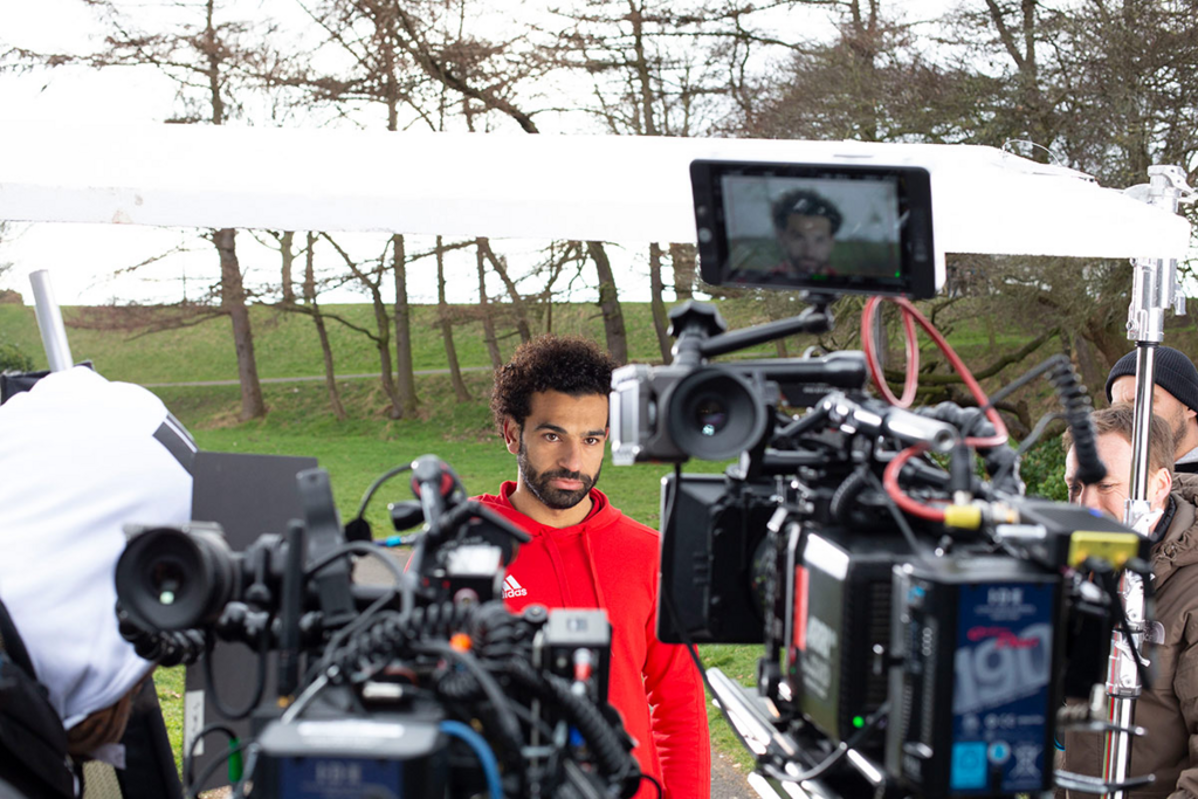
Senior leaders have narrow windows, and London timetables shift fast. Build shoot plans around predictable blocks, with buffers for lifts, traffic, and resets. A skilled two-camera crew with an experienced producer, gaffer, and sound recordist will outperform a larger but unfocused unit. Capture structured B-roll at every location – process, signage, exteriors, hands – as contingency against lost minutes or late legal changes.
Legal, compliance, and data protection
Treat legal as part of the workflow, not a finish-line hurdle.
- Releases: Location and contributor releases should be cleared before principal photography
- GDPR: Manage personal data lawfully; avoid incidental capture where possible
- Brands and IP: Plan to clear or cover third-party marks in shot; carry neutral tape/dulling spray
- Music and archive: Confirm licences early (term, territory, media, paid spend). Music rights are the single most common late-stage blocker
Maintain a rights log with licence PDFs and expiry dates; it will save a re-shoot or a legal pause six months later.
Post-production built for distribution
Editing is where business value is created. Cut for narrative pace, not duration. Grade to unify mixed sources (office tungsten, river light, LED), and mix voice above music, not inside it. Produce a 16:9 master and platform-native variants (1:1, 4:5, 9:16) with open captions from the start; most office viewers watch on mute. Motion graphics should clarify, not decorate: labels, steps, timelines, metrics. Maintain a lightweight brand pack (lower thirds, type, transitions) to ensure consistency across a series.
Accessibility and inclusion as standards
High colour contrast, readable typography, accurately proofed captions, and clear VO at low volume are non-negotiable. If a diagram carries meaning, ensure it remains legible on a phone during a commute. Representation on screen should mirror your workforce and customer base; London audiences spot tokenism immediately.
Timelines and budgeting that hold
Indicative, assuming two to three locations and clean governance:
- Pre-production (treatment, recce, casting, permissions): 1–2 weeks
- Production: 1–3 days, dependent on access and contributor availability
- Post-production (edit, grade, mix, graphics, captions): 10–15 working days with two review rounds
Budget with explicit line items: creative, crew, kit, location fees, talent, hair/makeup, travel, insurance (PLI), post (edit/grade/mix/mograph), music/stock rights, captioning, access versions, contingency. London adds cost via permits and access control but saves cost via short hops between looks; a capable producer will move money to the screen.
Measurement and iteration
Define how success will be assessed before the shoot:
- External: completion rate/retention curves, CTR on CTAs, assisted conversions, brand lift, qualified applications
- Internal: message clarity, time-to-competence, policy adoption
Use time-coded review tools (e.g., Frame.io) for factual, asynchronous feedback and keep learnings for the next asset. Corporate film is a programme, not an event.
Risk indicators and green lights
Red flags: no producer in the first meeting, a deck of frames with no process, vague schedules, “we’ll find the story on the day,” music “to be sorted later,” legal waved away.
Green lights: questions that refine the brief, a treatment with two feasible routes, an approvals map with owners and dates, styleframes that sit inside your brand system, early sound/VO planning, and a transparent schedule with buffers.
Сonclusion
Corporate video in London performs when strategy, production, and compliance are designed together. The city can elevate a brand film – or distract from it. The best outcomes come from disciplined objectives, stakeholder choreography, rigorous location and audio planning, and post built for where the work will live. With an experienced partner, the process becomes predictable, the asset family coherent, and the result measurable – exactly what a corporate team needs in a city that never slows down.