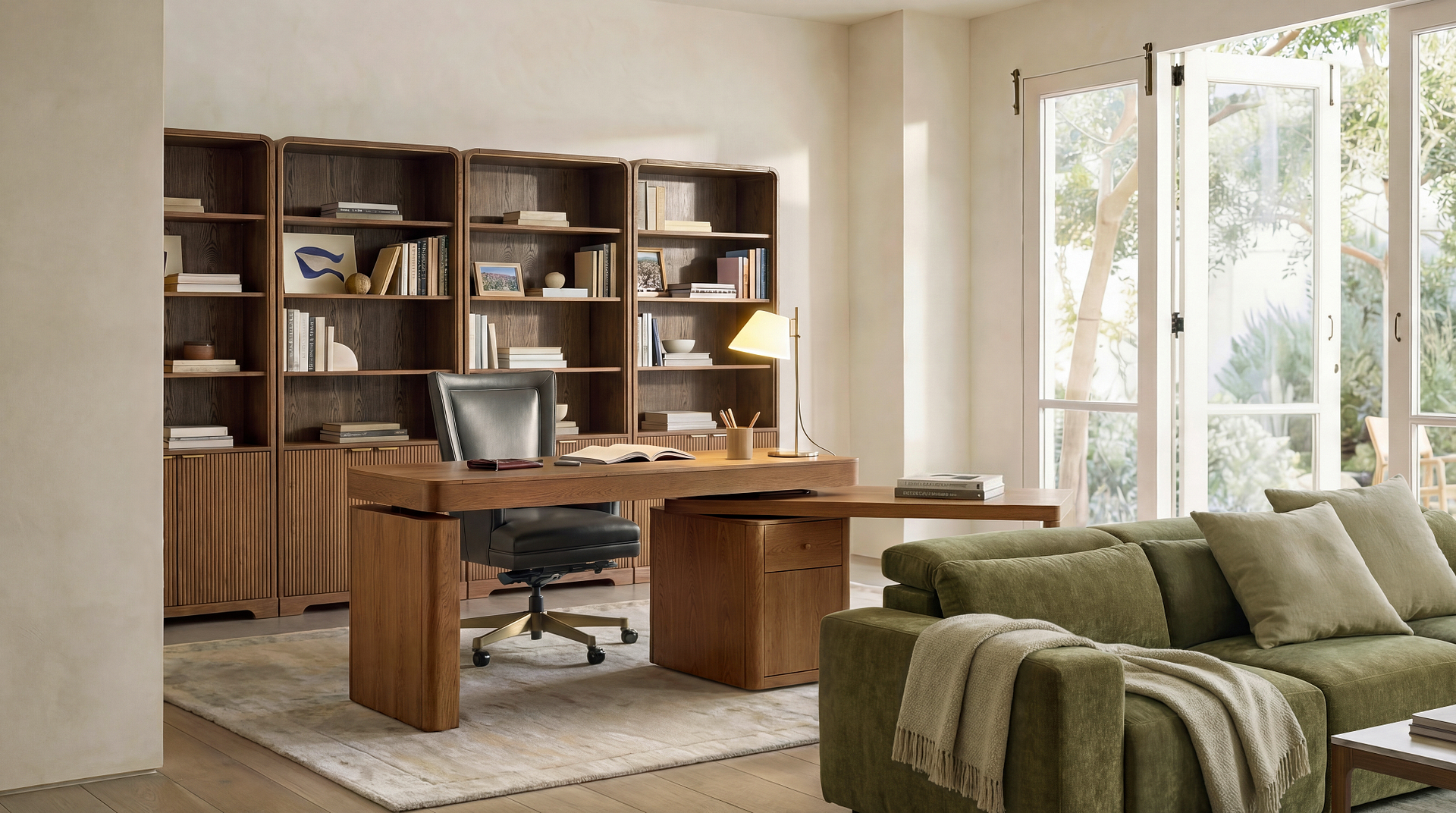
At some point, the dining table stops working as the family’s default study space. What begins as a spot for coloring pages and early homework soon has to accommodate laptops, school projects, virtual classes, and the occasional parent working from home. By dinnertime, everything has to be packed away—only to come back out the next day.
Parents spend plenty of time choosing schools, learning apps, and the right supplies, but the space where learning happens is easy to overlook. A thoughtfully designed study area won’t determine academic success, but it can make it easier for children to focus, stay organized, and build consistent routines.
The best family study spaces aren’t necessarily the biggest or most elaborate. They’re designed to remain useful as young children become teenagers, schoolwork becomes more demanding, and family routines change. Instead of creating a room for one particular age, the goal is to build a space that can grow along with everyone who uses it.
Why the Learning Environment Matters
Children are taught beyond academic subjects when they sit in a classroom. They also learn patterns, habits of mind, organizational skills, and even independence in their work habits. The environment that surrounds these activities could either encourage these behaviors or make them harder to keep.
A room that is cluttered with distractions can lead to brief periods of concentration, interrupted by frequent interruptions. In contrast, a designated study area signals that it’s time to write, read, think, and work on issues. In time, this simple visual cue is incorporated into the routine of a child and makes it much easier to get into a productive routine without having to be reminded constantly.
The same concept applies to adults. When it comes to reviewing the household finances as well as attending virtual meetings or professional development classes, a well-organized workspace can cut down on unnecessary mental stress. Instead of scouring for items or constantly changing the layout of the room,my focus is on the task at hand.
A study space can benefit the entire family, not just the smallest family members.
Designing for Today Without Forgetting Tomorrow
One of the most frequent errors families make is to design the study area around current needs, rather than those of the future. A desk designed for a 7-year-old could be impractical in a couple of years. The space that appears to be spacious in the present can soon become cluttered with laptops, books, stationery, and creativity-related tools.
It is better to look beyond what is happening in the present school calendar. Flexible furniture, storage options, and adjustable and efficient layouts permit the room to change as children age and responsibilities shift.
Instead of seeing the study space as a project for the future, take it as an ongoing decision to incorporate the study into your family’s everyday routine. Selecting solid materials, timeless colors,s and functional furniture will reduce the requirement for frequent replacements, while creating an area that is functional throughout the various stages of life.
This is also a way to encourage the making of better spending decisions. Making investments in furniture that change with the family is more cost-effective than replacing furniture made for only one stage of childhood.
Creating a Space That Encourages Independence
As children grow into competent learners, their surroundings should encourage independence and not dependence. Small changes can have a major impact. The books that are used frequently are best accessible, stationery needs to have a dedicated storage space, and learning materials should be organized so that children can manage their own.
This sense of ownership can help to build responsibility as well as academic abilities. Instead of relying upon parents to manage every event, children gradually begin to set up their own space, keep order, and establish routines that will last throughout their adulthood. Parents can also benefit from this arrangement. A well-planned study space reduces everyday stress and helps create a more peaceful environment when homework is being completed, which allows families to learn more with each other instead of scouring for supplies that aren’t there or removing unnecessary clutter.
A Flexible Workspace for the Whole Family
In many American homes, one room has to do several jobs. A parent may use the desk for a morning Zoom call, a child may take over for homework after school, and the same surface may hold an art project or family planning session in the evening.
Designing around these transitions makes the space easier for everyone to share. Adjustable furniture can accommodate different users, while accessible storage keeps school supplies, work essentials, and creative materials organized without leaving the room feeling cluttered. Task lighting and charging access also help the space shift from one activity to the next with less setup.
The goal isn’t to create a miniature classroom or squeeze a corporate office into the home. It’s to make learning and working feel like a natural part of family life.
Furniture That Adapts as Your Family Changes
Furniture designed for only one stage of childhood can quickly become outdated. Children get taller, schoolwork moves online, and a desk that once held a few picture books may eventually need to support a monitor, laptop, and larger projects. Choosing adaptable pieces from the start can help the space stay useful for years.
A standing electric adjustable desk is especially practical in a shared family workspace. The surface can be lowered for a younger student, raised as a child grows, and adjusted again when a parent needs the desk for remote work. The option to alternate between sitting and standing also gives family members more freedom to move during longer work or study sessions.
At Hulala Home, this kind of flexibility is designed to feel at home—not overly technical or office-like. By combining adaptable function with a warm, contemporary look, each piece can support homework, creative projects, and working from home while still feeling like a natural part of the room.
Balanced Technology and Thoughtful Design
Technology has revolutionized the way children learn. Educational platforms, online classrooms, electronic textbooks, and other tools for collaboration are now part of daily life. While these tools create new possibilities, they also bring new design issues.
A well-designed study space must accommodate technology, but not allow it to take over the space. The devices should be accessible; however, charging cables must be handled with care and a sufficient amount of desk space should be made available for both traditional and digital study tools. This balance promotes healthy studying habits, as it ensures that technology is an aid to learning, not an interruption.
Natural lighting is also a factor to consider. A study desk that is placed near windows can help reduce eye strain and create a more energizing, welcoming space. If there is no natural light, high-quality task lighting can enhance comfort during studying sessions and help reduce eye fatigue.
A Space That Supports Every New Chapter
Families are always changing. The children start school, the teenagers get ready to go off on their own, parents switch jobs, and many families remain committed to hybrid work. In every phase, the same thing is true: having a space that encourages learning, concentration and creativity can benefit everyone.
The most effective study spaces aren’t defined by the cost of furniture or designed interiors. They are designed around people who use them each day. Through a focus on flexibility, organisation and comfort, families create a space that naturally adapts to the changing demands of life instead of needing constant changes.
A well-planned study area is more than just a space to finish tasks. It’s a space where the mind expands as skills improve, thoughts develop, and important conversations occur. As every family begins an exciting new chapter, having the space designed to change with them is one of the best investments they can make, not just for learning, but also for daily moments that bring people together.