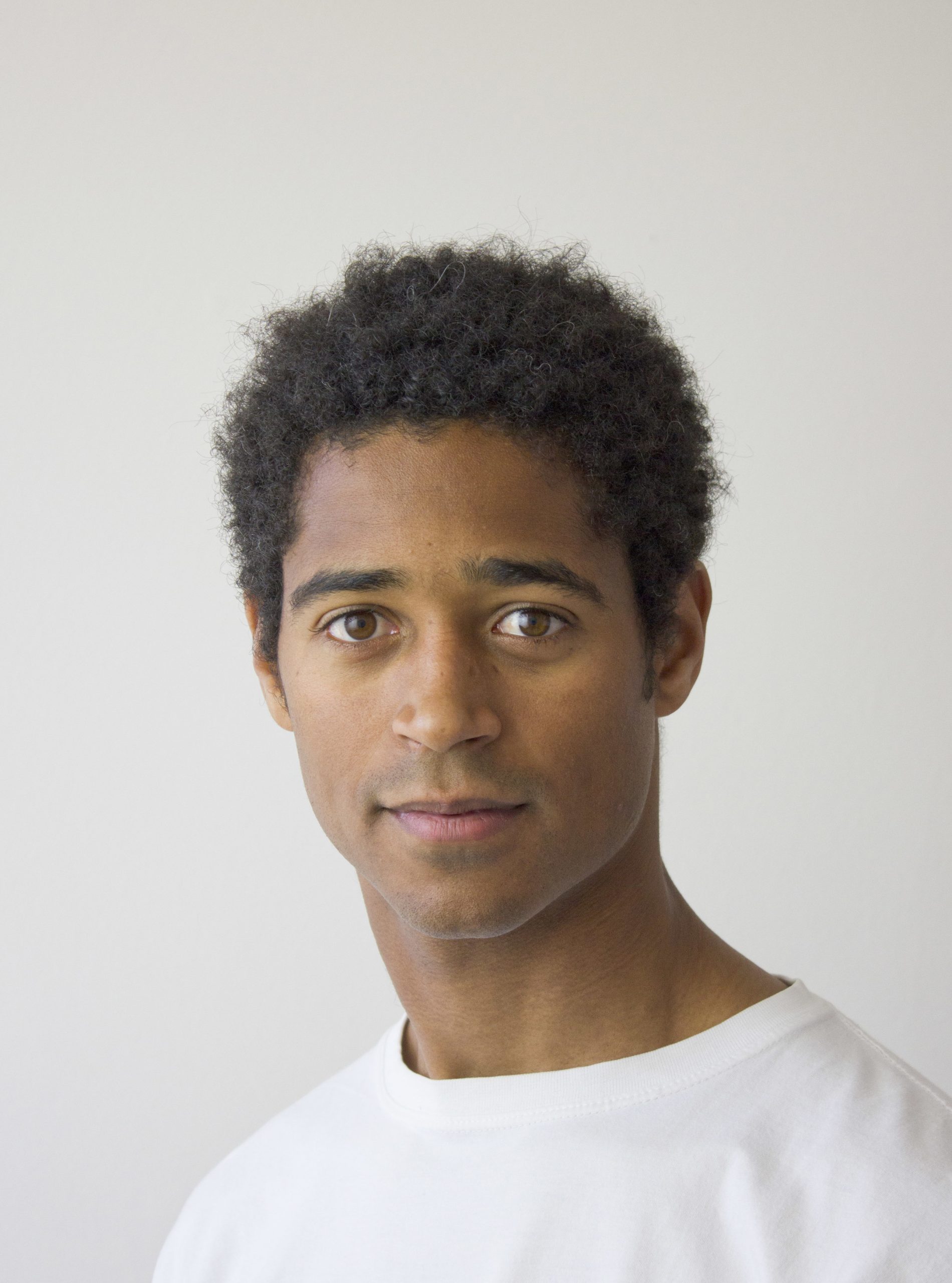
As a long-time and passionate fan of Star Trek, I’ve loved seeing how the franchise continues to evolve in recent years. I really enjoyed Star Trek: Discovery, so the announcement of Starfleet Academy – a new series set in the same future timeline, focused on cadets at the very start of their Starfleet journeys – had me genuinely excited. Sitting down with George Hawkins, one of the show’s breakout new faces, just a few days before its release, felt like an absolute gift for a Trekkie. We spoke about the weight of expectation and pressure that comes with stepping into such an iconic universe so early in his career, playing Darem Reymi, and what it means to boldly go where no Khionian has gone before.
Your life is about to change, really. You’re not long out of acting school, and suddenly you’re stepping into something as global as Starfleet Academy. What does that feel like?
I honestly don’t even know yet. It’s something you don’t really have control over, the outside perception of you. All I can do is focus on the work, get better at my craft, stay grounded, and stay close to my friends and family. I’m learning very quickly that this is a job, and that it’s important to keep your personal life and your professional life separate. That way, when you’re working, you can fully commit, and you’ve got somewhere else to go to recharge.
It’s happened very fast, and it does feel like being thrown in at the deep end, but that’s also what I’ve been asking for. This is the life I wanted, so it would be strange to deny it now that it’s happening. I think I’m in a period of learning how to accept success, accept joy, and accept people’s love for what I do. People love storytelling, and they really love Star Trek.
We’ve already had some intense and incredible experiences, things like San Diego Comic-Con and New York Comic-Con, where you’re suddenly surrounded by the most concentrated version of the fandom. It’s a real encouragement, because you know exactly who you’re making the work for. You don’t usually get to see your audience so clearly. With Star Trek, there’s a real priority on honouring what fans want and keeping everything aligned with the canon, and being part of that feels strange, overwhelming, and genuinely exciting all at once.
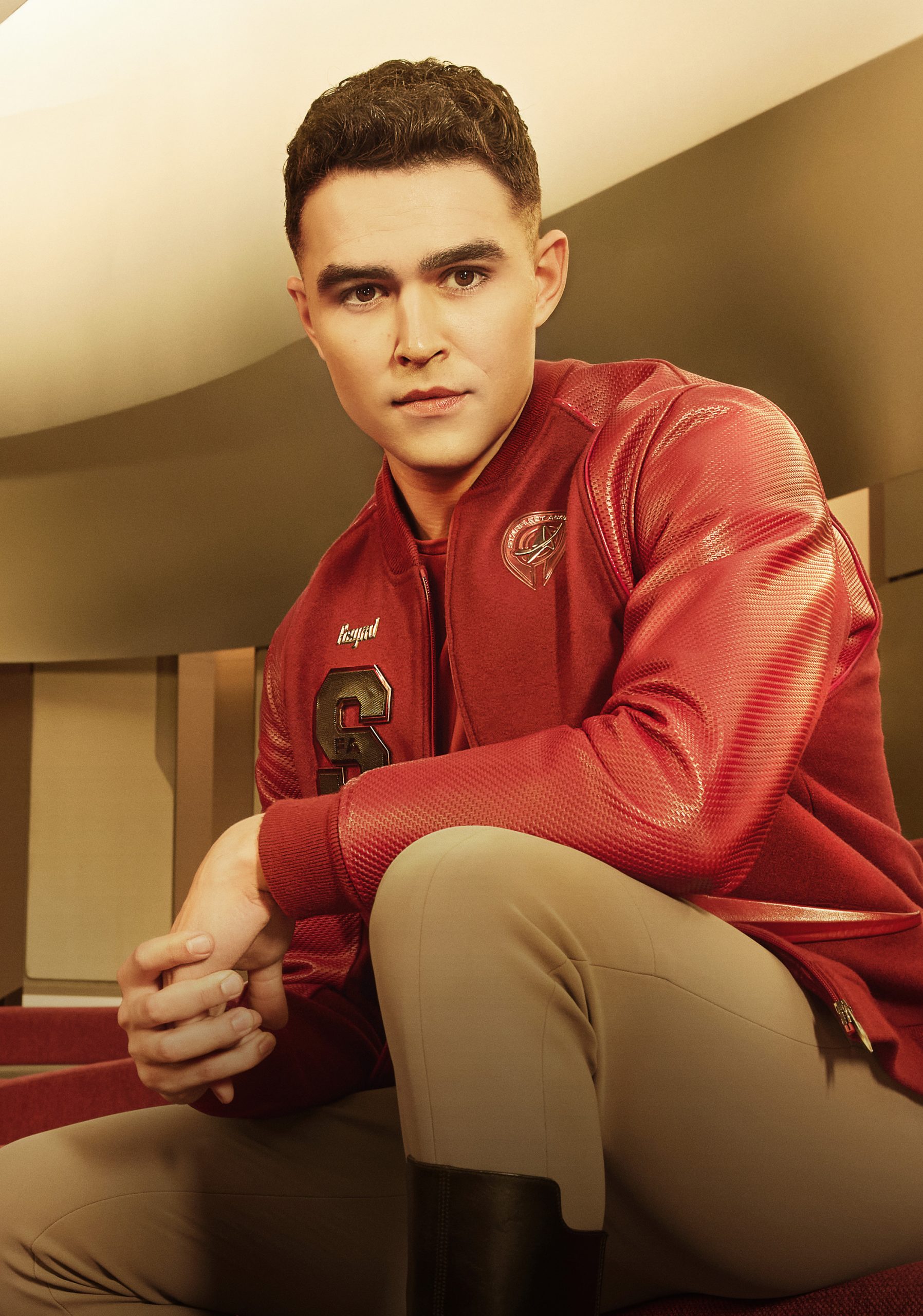
Take me back to your audition. What did you think the show was at that point, and what were you actually auditioning for?
We were given a script, but it wasn’t a Star Trek script. It was a human version of the story, reframed as a high school drama. My character was called Derek, and the scene was essentially what you see later in episode three, just transplanted into a school setting.
There were clues, though. You’re signing NDAs, you’re being asked if you’re comfortable with prosthetics, whether you can travel to Toronto, so you start to put the pieces together. At the time, I hadn’t had an audition in a few months and I was looking at other ways to support myself, so when this came through it really stood out.
I remember getting the self-tape through while I was coming back from the gym with my dad. I read him the character description and just said, ‘I feel like I’m going to get this.’ There was something about where I was at personally that aligned with the character. We went home, taped it, and then sort of forgot about it.
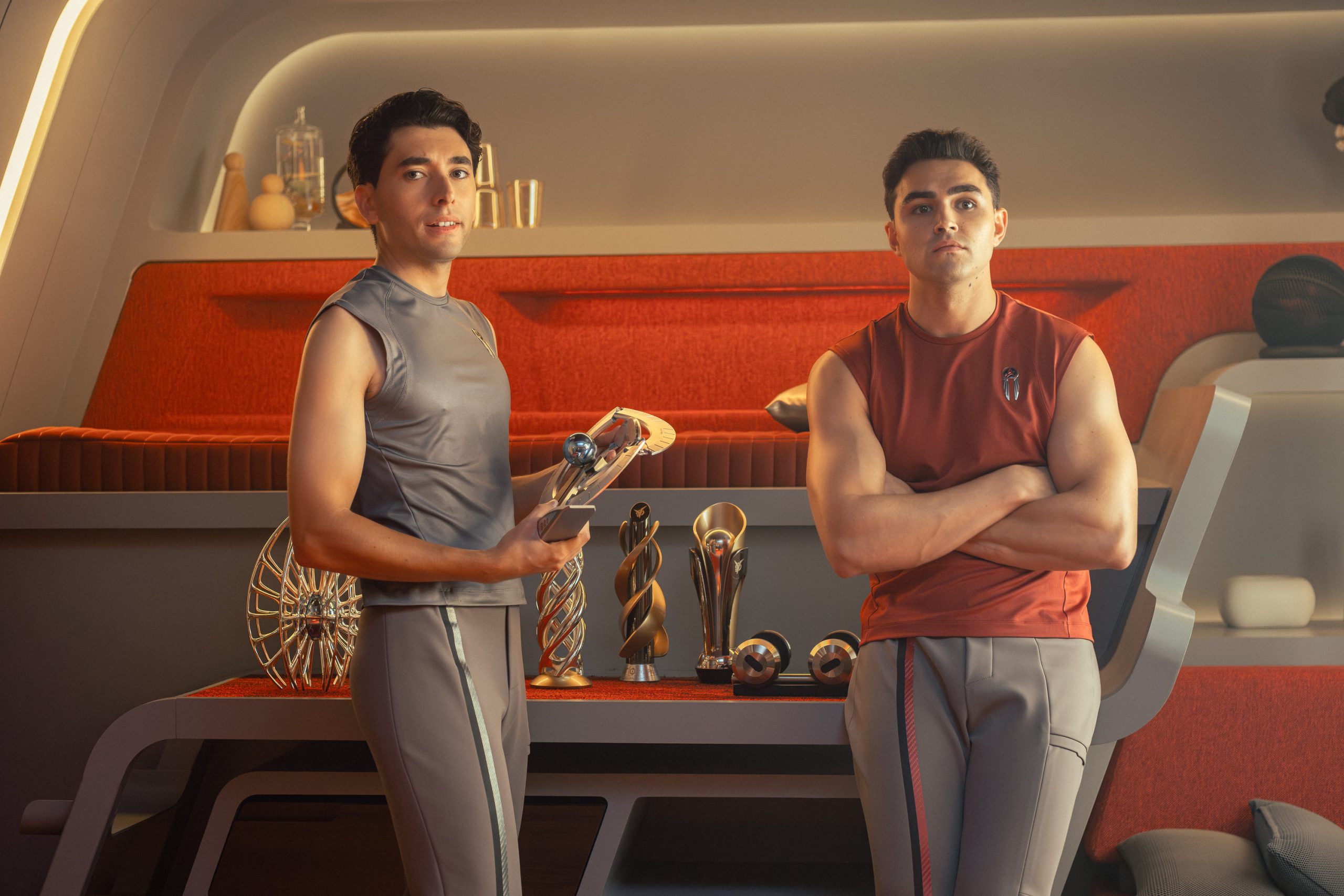
Looking back, I went into that audition with a real sense of drive, almost a hunting mentality, and that energy really matched Darem. He comes from a background of extremely high expectations. There’s a ‘standard of excellence’ he’s been raised to uphold. He’s Khionian, from a very specific family on Khionia, and there’s a promise he’s carrying for his people. If he’s going to come to Starfleet Academy, he has to be exceptional. It has to be worth it.
That pressure isn’t just personal ambition, it’s generational. It’s his family, and in a wider sense, his entire culture. He sees the other cadets as something to push past in order to prove himself. The pressure I was putting on myself to land the role and the pressure Darem lives with really collided, and I think that came through in the tape.
Originally, they were looking for an American actor. You can hear it in the writing, it’s very American in rhythm. I recorded two versions, one American, one English, and they responded much more strongly to the English accent. There’s this perception that an English accent carries authority and status, which worked well for the character.
That carried through into filming too. I felt empowered to say when something didn’t sound natural in my voice, and to have a bit of control over shaping how Darem spoke. That sense of collaboration was really exciting.
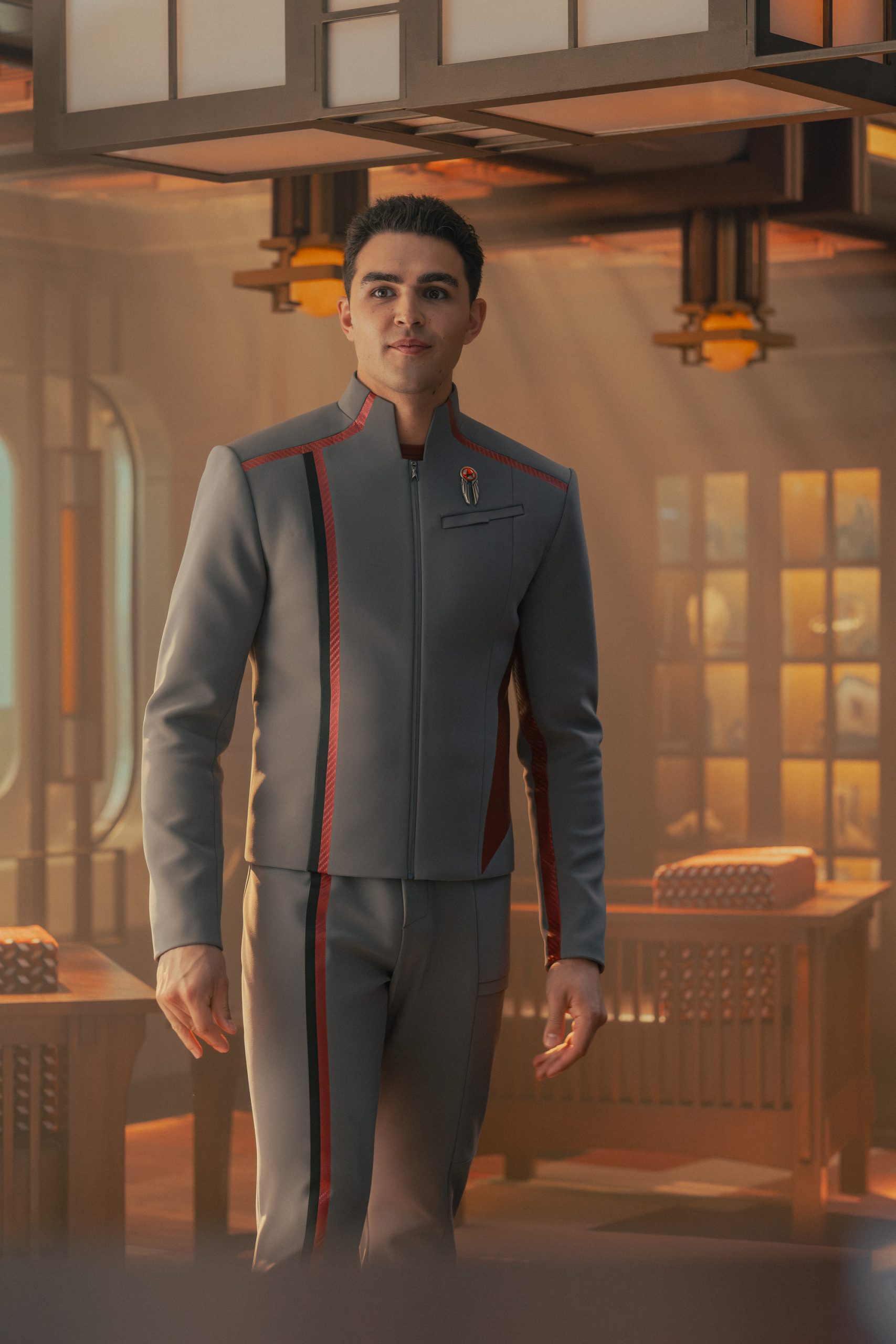
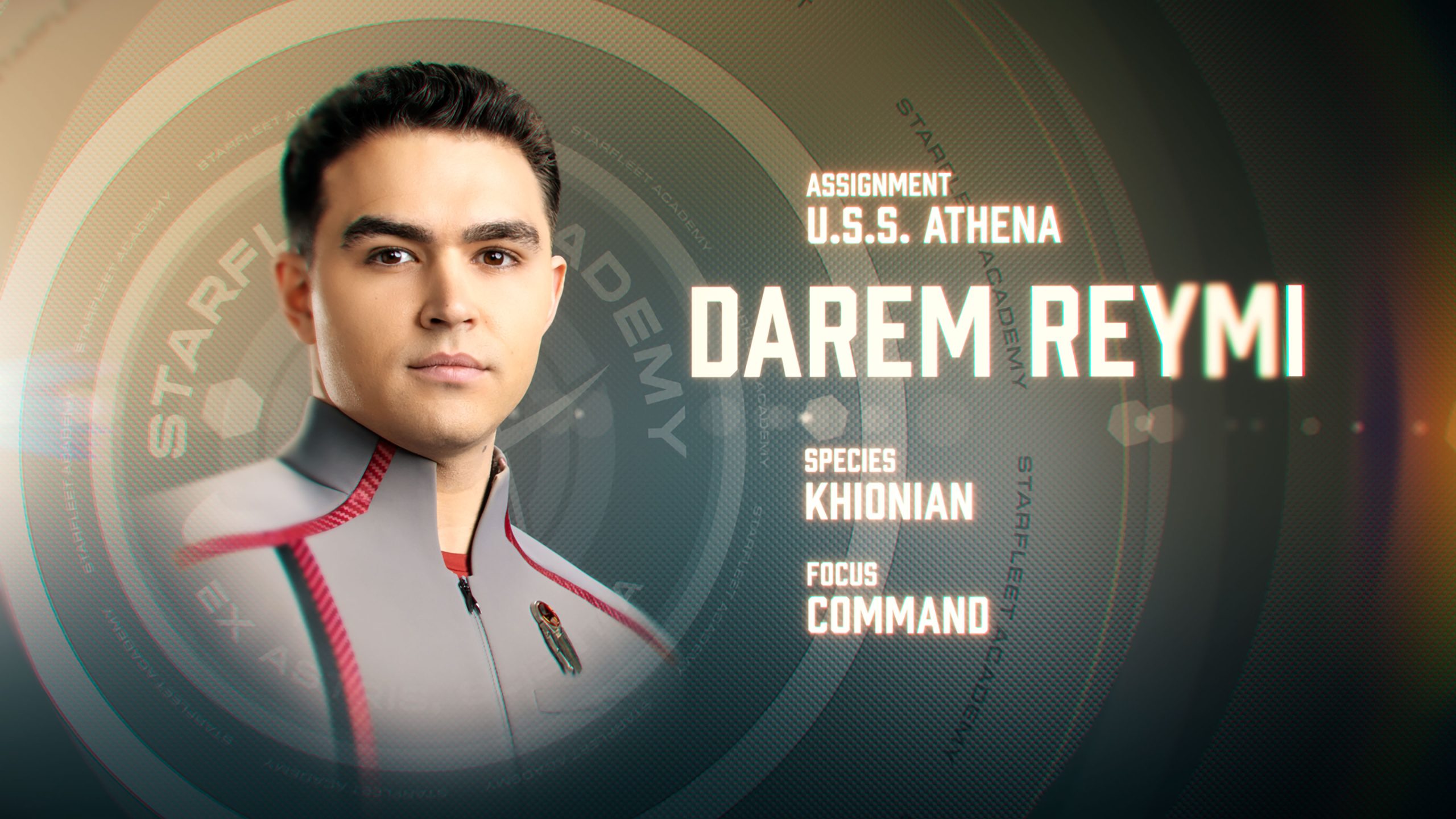
So your character is Khionian. Is Darem actually the first Khionian to make it into Starfleet?
Yes, he is. Darem is the first Khionian in Starfleet, and the first Khionian we’ve seen in the Star Trek universe. Because of that, there’s a huge amount of expectation on his shoulders. He’s carrying the weight of his people and having to prove that this path was worth taking.
That pressure is very real, and it mirrors what I felt coming into the show. You can’t deny how big this is or how much it means to people. I think it would be a disservice not to feel some sense of pressure, because that pressure comes from respect for how important Star Trek is. For me, it just made me work harder.
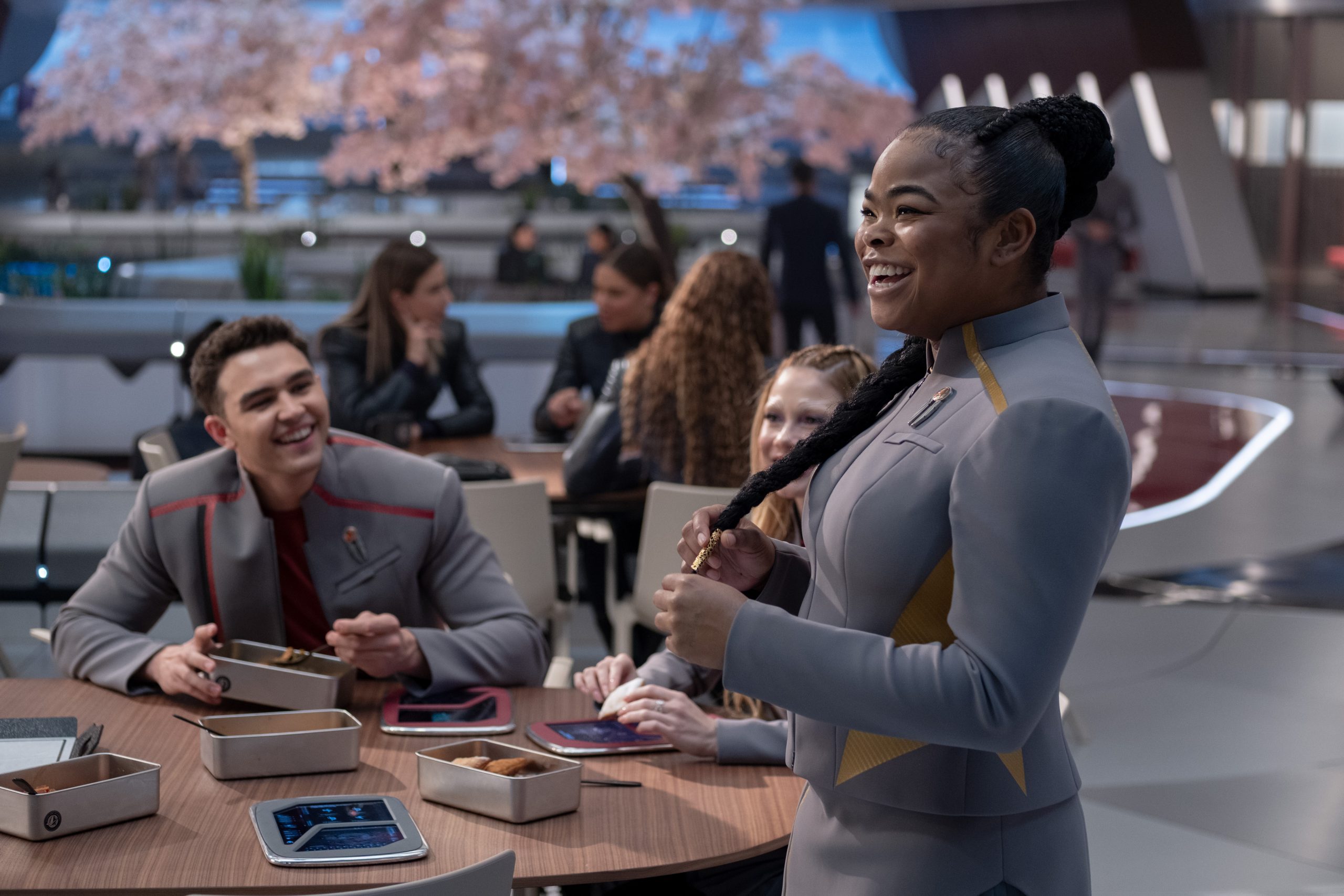
I remember my first day on set walking into the atrium with Noga Landau, our co-showrunner. It’s still one of the largest sets in North America. You’ve got multiple floors, hallways running off the main space into other rooms, a mess hall, stage areas, ponds, trees, a huge AR wall at the back, med bays – it just keeps going. I was completely in awe, but my immediate reaction was that I needed to go back to my scripts and make sure I was doing it justice.
The challenge is learning to switch off the external noise and not let the scale of it all affect what you’re doing in the moment. You have to be truthful to the character. I was lucky in that Darem is quite independent and specific. There’s Khionian culture, yes, but he also comes from a very particular family within that culture. It’s a bit like how I come from a specific family in England, which doesn’t represent English culture as a whole.
That specificity helped me focus. I could dive into the story and the script and fill my head with that, rather than with the fandom or outside expectations. That was the way I stayed grounded and kept the work honest.
Ahead of the interview, I invited questions from the Star Trek Shitposting Facebook group, and a few of those appear here, with contributors credited.
Sean Gillette and D. Eric Franks ask: did you have any personal connection to Star Trek growing up, and coming into it now, do you feel more like a fan stepping into an iconic franchise or a newcomer discovering it for the first time?
Honestly, no. I didn’t grow up as a Star Trek fan, and I wasn’t particularly knowledgeable about the canon. But at the same time, you can’t deny its influence. You can’t really escape Star Trek, it’s everywhere.
My first proper experience with it was actually the 2009 J.J. Abrams films, and they completely blew me away. They’re such an adrenaline rush, so loud, so adventurous, and they really push the scale and boundaries of what that universe can be. When you have that level of budget and ambition, it becomes something incredibly visceral. I think parts of our show tap into that same kind of energy. There’s a sequence early on that really captures that intensity and momentum you get from those films.
But the most authentic way I’ve fallen in love with Star Trek has been through the people who make it. Being part of that family, watching how committed everyone is to this universe. There are crew members who’ve stayed across multiple shows, this is what they do, and they love it. That goes beyond creative fulfilment. They’ve found their place in the industry, and they’re deeply invested in what they’re making.
Seeing that level of care and dedication is what’s really made me fall in love with Star Trek.
Once you started engaging with Star Trek properly, was there a particular era, show, or philosophy that really clicked for you?
What really struck me was the bravery of Star Trek. There’s a real focus on hope and joy, even when it’s dealing with very sensitive, difficult questions. Every iteration does that in its own way. Our show definitely asks important questions, and I think that’s essential, both in art and in life. Storytelling is one of the safest and most powerful ways to explore those ideas, because it creates distance. You’re not being personally scrutinised or isolated, you’re allowed to look at big issues through another lens.
Star Trek does that brilliantly by pushing us out into other galaxies, talking about people who don’t technically exist, while still asking deeply personal questions. You care about the scale because the intimate comes first. That’s what our show does particularly well. It focuses on relationships, on where these people come from, so that when they step out into vast spaces and unknown corners of the universe, you actually care about what happens to them. You understand why they’re there, and that makes all the difference.
Since getting the job, have you gone back and watched much Star Trek to prepare, or dipped into different eras to get a sense of it?
I’ve been quite careful with how I’ve approached that. For me, the more I watch, the bigger Star Trek becomes, and my job is to stay focused on Darem. If I let the scale of the franchise take over, I risk losing sight of what’s actually on the page and what my character needs in the moment.
That said, I have watched a fair amount from the newer era, especially to understand the style, tone, and pace. I’ve watched Discovery and Strange New Worlds, and I’ve also spent time with Lower Decks. In fact, there was a specific episode of Lower Decks that I watched as prep for season two of Starfleet Academy, which we’re filming at the moment.
What that helped with wasn’t performance so much as context. It gave me a sense of how references land, how the universe is playing tonally, and what certain moments might mean to people who know the canon well. If something comes up in our scripts, I’ll often go back and see where it originates, just so I understand the weight of it.
But I’m very conscious of not wanting to play the role as an act of homage. When you’re acting truthfully, the character isn’t thinking about legacy or references. They’re anxious, opinionated, insecure, and very present. In the moment, it has to be about what’s happening right now for Darem. The canon and the wider picture come together later, once you step back and look at the finished thing.
George Spettigue asks: as someone also called George, and of mixed Puerto Rican heritage, I’m curious about your own background and whether identity plays any role in how you think about representation within Star Trek’s future world.
That’s a great question. I’m Italian, Kiwi – so New Zealand – and English, and you can’t deny that your upbringing and background have a deep effect on who you are. That absolutely feeds into how you approach your work and how you understand yourself.
Within Star Trek, identity really does matter. We’re playing very specific, unique characters, and especially in Starfleet Academy, those characters are coming together from completely different places, with different beliefs, different upbringings, and different ways of seeing the world. Watching that group come together and learn how to collaborate is incredibly powerful.
It sends a really strong message, that different ideologies and differences of background aren’t obstacles to growth, collaboration, or even love. They’re not barriers, they’re part of what makes that future possible. So yes, identity plays a huge role, and it feels especially important in this show.
Jason Conley asks: what do you think the Academy setting allows Star Trek to explore that bridge-crew shows never could?
The first thing that comes to mind is Chancellor and Captain Nahla Ake, played by Holly Hunter. She isn’t just the Chancellor of Starfleet Academy, she’s also a captain, so she exists across both worlds. You see her on the bridge, but you also see her embedded in the school itself, building close relationships with students and cadets.
That dual role gives you a deeper understanding of her as a character. It’s not only authority under pressure or command decisions in crisis, but leadership in quieter, more intimate spaces. You see her as a mentor and a pastoral presence, listening as much as directing, guiding as much as commanding.
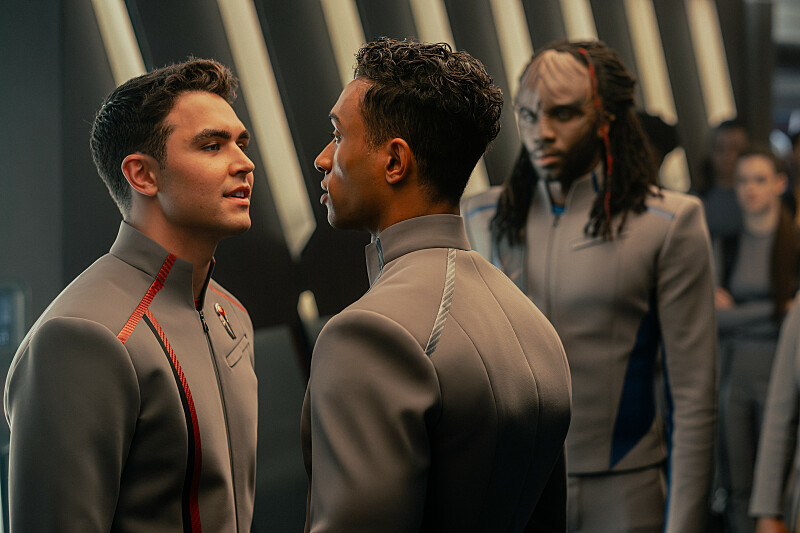
That really gets to the heart of what the show is about. Starfleet Academy is about beginnings. These cadets are full of doubt, fear, insecurity, and anxiety. We’re watching the heroes we know so well at the point before they become those figures. Instead of the finished article, this perfectly functioning machine, we’re seeing people in formation, working out who they are, making mistakes, and growing into the individuals they’ll eventually become.
Robin Lightcast asks: what value from Star Trek do you think our world could really use right now?
I think it’s the idea that disagreement isn’t an obstacle to collaboration. Diversity brings disagreement, of course it does. You’re bringing people from every corner and edge of the world into the same space to create growth, progress, and movement, and that’s naturally going to cause friction.
But that disagreement isn’t a barrier to progress. It’s actually a strength. It’s a source of power. When it’s handled with openness and respect, difference becomes something that drives growth rather than blocking it. That’s something Star Trek has always understood, and it feels especially relevant right now.
Once you strip away the ambition and drive, what do you hope people feel is really going on with Darem?
I think with someone like Darem, there’s always something underneath. Whatever he’s running towards, there’s something equally powerful that he’s running away from. Ambition doesn’t exist on its own. It usually comes from fear, or a sense of lack, or something unresolved.
The question I’d want viewers to be asking themselves is, what do you think Darem is running away from? That feels more interesting to me than just seeing his drive on the surface.
Catch Starfleet Academy on Paramount Plus, with new episodes dropping every Thursday until 12th March 2026.
Follow George on Instagram @georgeghawkins for all his latest news and updates.
Interview Nick Barr
Article portrait by Jenny Anderson
Production photos by Brooke Palmer/Paramount
Production portrait by Nino Munoz/Paramount