In recent years, curatorial practice is gradually moving away from the thematic presentation method with a single discipline as the core. In the face of complex cooperative structures, interdisciplinary creative practises and international working contexts, contemporary exhibitions pay more and more attention to building a structure that can accommodate multiple voices at the same time. Under this trend, the role of curators is also more reflected in the ability to mediate and maintain, gradually becoming a continuous and stable relationship between different institutions, cultures and practice forms. In contemporary art practice, the integration of interdisciplinary communication and multiculturalism is gradually becoming a norm. Artists are no longer limited to a single medium or cultural context, and exhibitions increasingly need to establish connections between different knowledge systems, cultural experiences and audience backgrounds. In such a curatorial context, curators with cross-cultural experience and cross-field background increasingly show their unique value. It is against this background that Weiwei Zhang has gradually formed a clear and stable curatorial positioning.
Before entering the art industry, Weiwei was engaged in tourism and service-related work. This experience has made her a highly sensitive understanding of different cultural backgrounds, geographical differences and audience acceptance. She does not aim to show differences, but focusses more on how to establish an understandable path between strange cultures, and how to enable the audience to naturally enter another cultural context through narratives, scenes and experiences. This understanding of cultural communication and audience psychology laid an important foundation for her later entry into the art field. Her opportunity to enter the art industry came from joining an art education institution, responsible for planning and implementing study tours and art exploration projects. At this stage, she no longer limits art knowledge to classrooms or textbooks, but takes field experience as the core, and introduces local cultural resources from different regions of China, as well as internationally representative museums and art institutions, into art education. Students gradually establish a three-dimensional understanding of art by walking into the scene, touching the original work, and understanding its historical and cultural environment. It is this series of cross-cultural geography and real experience-based work experience that gradually shaped Weiwei’s narrative style in the future curatorial practice. After entering the field of curation, she does not rely on grand theoretical declarations, but tends to place works of art in an understandable context through clear structure and gradual narrative. Under her translation, the complexity of the work has not been weakened, but it can be approached by the audience in a more open and friendly way. Therefore, curation is no longer a one-way explanation, but a practice of building an understanding path between art and the audience.
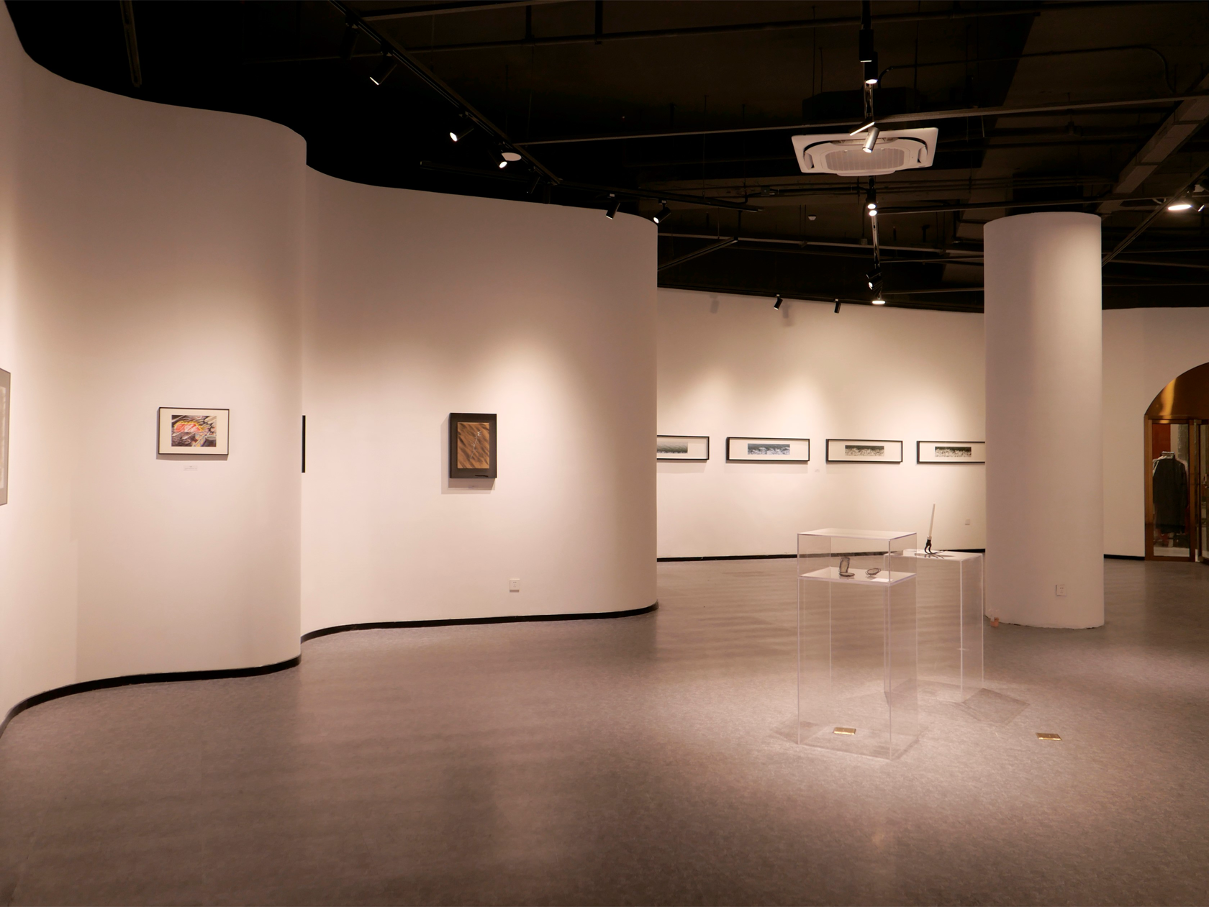
Triangle, Square, Round
This background also shaped her understanding of the essence of the countermeasure exhibition. From the beginning, she believed that curation was an infrastructure-based job. Behind each exhibition, there are countless details that ensure that the audience can enter the exhibition in a
coherent and clear way. After leaving the education industry, she worked as a curatorial manager in Arthology, continuing to participate in and lead exhibition projects in China and Britain. The scope of her work is not limited to project management, but also covers the development of curatorial concepts, the construction of research paths, spatial organisation and coordination between artists, scholars and institutions.
In many exhibitions planned by Weiwei, a stable curatorial logic can be clearly seen. The exhibition is regarded as a structure rather than the presentation of a single theme. She does not simply summarise the work under a certain concept label, but builds a multi-level system to make the meaning naturally generated in the relationship, parallel and spatial rhythm of the work. This method was reflected in the large-scale group exhibition “Triangle, Square, Round” held in Shanghai in 2025. “Triangle, Square, Round” is a group exhibition that takes geometric forms as a symbolic language to reflect the changes in the artist’s creation and life trajectory. The three forms are not only formal symbols, but also metaphorical for the flow and leap of artists in their mental state, identity posture and creative path. In the earliest visual expression of human beings, geometric form is the most original symbolic language. They are neither abstract nor concrete, but the intersection of thinking and emotion. As Kandinsky said, form is the coat of the soul. This exhibition uses “form” to see “heart”, and also uses “form” to see “time”. As the most directional geometric form, the sharp and upright momentum of the triangle symbolises the artist’s identification and breakthrough of the unknown in the early stage of creation. It is an upward force and a self-established posture, marking the outline of consciousness born from chaos. The square body unfolds on all sides, containing order and boundaries. It is the shape of construction and the place to live. It points to the artist’s self-timpering in methods, language and structure, which is a process of system generation and a stage result of stabilisation and reflection. The circle is fluid and inclusive, symbolising a kind of calmness and transparency after experience precipitation. It no longer insists on the tension of the form, but turns to a flexible dialogue with the world, which is a higher-dimensional self-concoration and openness, responding to the present and foreshadowing the possibility of the future.
Weiwei’s attention to structure is closely related to her research on intergenerational experience and cultural continuity. In the “Reconstruction and Regeneration of Ink” she planned in 2022, she served as the executive curator. The exhibition focusses on the new generation of artists using the traditional medium of ink to express contemporary art. The exhibition does not regard ink as a symbol of nostalgia, but as a field of memory. In it, Weiwei strives to balance tradition and transformation, so that contemporary experience can be manifested, while not cutting off the connection with cultural history. This method of finding a balance between the time level and the cultural context has gradually become an important feature of her curation practice, whether facing ink, sculpture or contemporary installation.
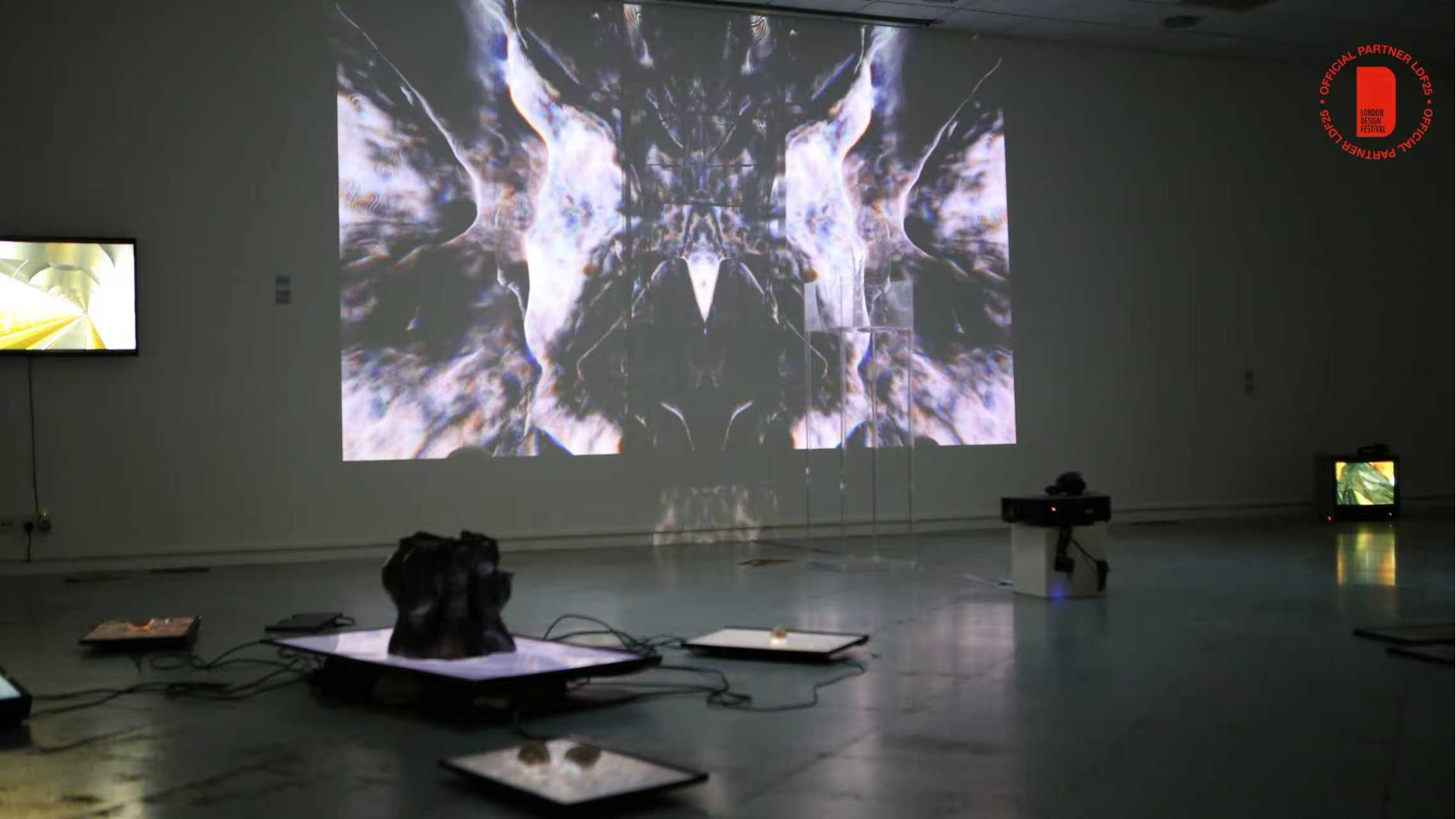
Backward Compatibility
Her project experience in London, especially the curation work related to the London Design Festival, requires her to constantly adjust between different audience structures and cultural expectations. In the official collaborative exhibition “Backward Compatibility” at the 2025 London Design Festival, Weiwei, as a project director, cooperated with artists, platforms and British universities to introduce the software concept of “backward compatibility” into the artistic context and explore how different generations, technologies and material systems can maintain interoperability. In this project, her role goes far beyond the execution of coordination. She coordinated and integrated three sections jointly planned by different institutions. Based on Weiwei Zhang’s curatorial practice, she can see a curatorial ethics with patience and responsibility as the core. Her exhibition does not try to resolve contradictions or give definite conclusions, but provides space for the unfolding of the process, the coexistence of multiple voices and the independent participation of the audience. This method reflects an understanding of curation as a long-term cultural work.
Author: Runsheng Yu