In a cultural landscape driven by velocity, where algorithms increasingly shape what we hear before we even realize we are listening, the Winchendon Music Festival is doing something quietly radical. It is slowing everything down.
Tucked into Massachusetts, far from the spectacle and scale that define most contemporary festivals, Winchendon has become an unlikely but powerful center for a different kind of musical conversation. One that does not separate past from present, but instead places them in direct dialogue. Under the direction of founder Andrew Arceci, the festival has evolved into a space where early music is not preserved, but actively reimagined, and where the future of creativity, including its entanglement with artificial intelligence, is examined with unusual depth.
That duality was especially clear in this season’s programming. What might initially appear as a traditional early music series gradually reveals itself as something far more ambitious. The performances and discussions are not simply curated to showcase excellence. They are constructed to ask questions. And in many cases, those questions feel more urgent than the music itself.
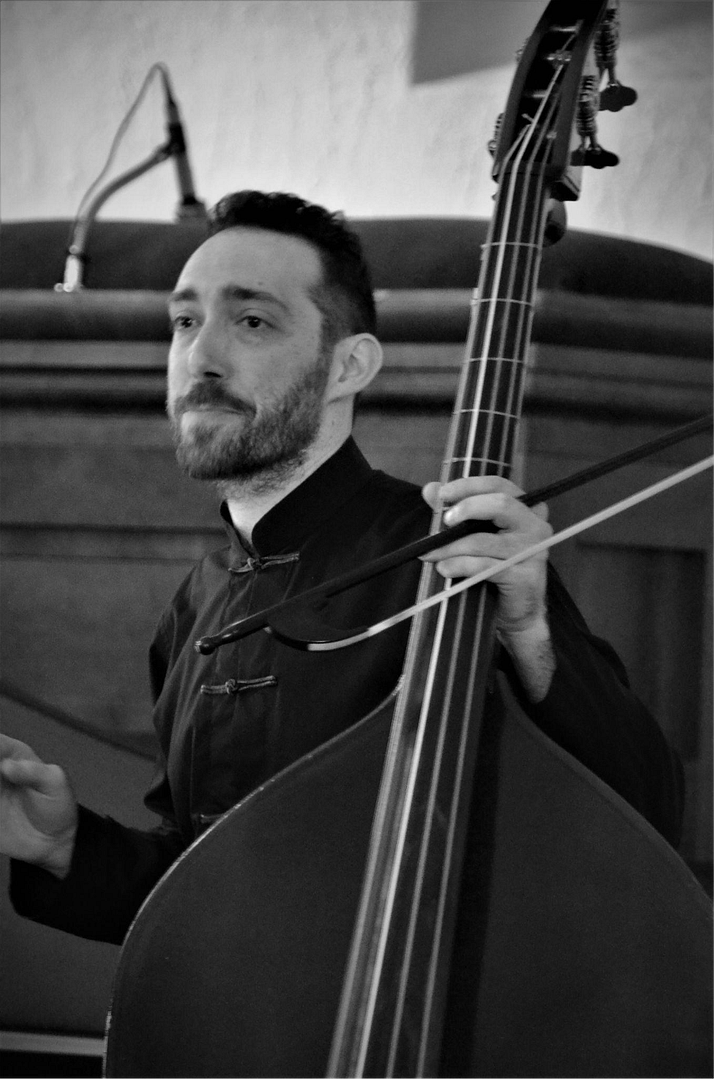
The April 23 performance offered a clear entry point into that world. Arceci was joined by baroque violinist Asako Takeuchi and theorbist John Lenti for a program centered on the works of Arcangelo Corelli, Antonio Vivaldi, and Francesco Barsanti. On paper, it reads like a familiar homage to the baroque canon. In practice, it felt far less settled.
There is something inherently destabilizing about historically informed performance when it is done at this level. The closer musicians get to the conditions of the past, the more they are forced to confront how much remains unknowable. Every articulation, every tempo, every ornament becomes a decision rather than a given. The result is a kind of musical tension that feels strikingly contemporary. It is not about recreating history with certainty, but about navigating ambiguity with intention.
That sense of ambiguity extends well beyond the stage. If anything, it finds its most direct expression in the festival’s intellectual programming. This season opened with a panel that could have easily belonged at a technology conference rather than a music festival. Bringing together faculty from Berklee College of Music, New England Conservatory, Longy School of Music of Bard College, and University of Massachusetts Amherst, along with music and entertainment attorney Sally R. Gaglini, the discussion focused on how artificial intelligence is reshaping composition, performance, authorship, and copyright.
What made the conversation compelling was not just its subject matter, but its framing. Rather than positioning AI as a disruptive force arriving from outside the tradition, the panel approached it as something that reveals underlying tensions that have always existed within music. Questions of authorship, originality, and interpretation are not new. They are embedded in the very fabric of early music.
In that sense, the leap from baroque reconstruction to machine generated composition is not as wide as it might seem. Both involve working with incomplete information. Both rely on interpretation layered onto existing material. Both challenge the idea that a work of art is ever truly fixed.
It is here that Arceci’s dual identity as performer and scholar becomes particularly significant. His work with instruments such as the viola da gamba and violone is not just about sound, but about methodology. He approaches music as a form of research, one that requires assembling fragments into something coherent without ever losing sight of what remains missing.
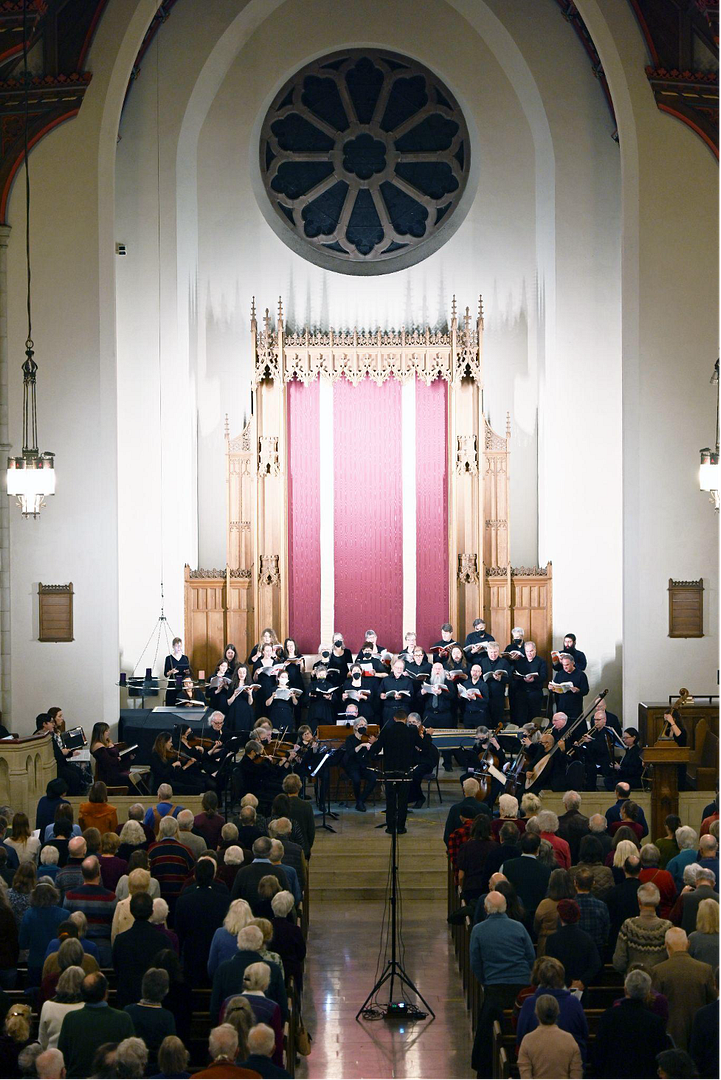
This approach carries through to the festival’s closing moment, the world premiere of his Missa Brevis. Positioned at the end of the season, the piece does not feel like a conclusion so much as a continuation. It draws on sacred traditions while remaining fully engaged with contemporary concerns, creating a bridge between centuries that feels both deliberate and unresolved.
The choice to premiere such a work in this context is telling. It suggests that Winchendon is not interested in separating creation from interpretation, or past from present. Instead, it treats them as part of the same ongoing process.
That process is also reflected in the broader structure of the festival itself. In contrast to larger events that prioritize scale and visibility, WMF operates with a kind of quiet intentionality. There are no massive stages or headline-driven lineups. The focus remains consistently on depth rather than breadth, on creating an environment where audiences can engage with music not just as entertainment, but as an intellectual and emotional experience.
This emphasis on depth may ultimately be what makes the festival feel so relevant. At a time when much of the music industry is grappling with the implications of automation and digital distribution, Winchendon offers a different model. One that does not reject technology, but situates it within a longer historical arc.
By doing so, it reframes the conversation. The question is no longer whether AI will change music. That much seems inevitable. The more interesting question is how artists will respond, and what frameworks they will use to navigate that change.
At Winchendon, the answer appears to lie in a deeper engagement with the past. Not as a refuge, but as a resource. A way of grounding innovation in something more durable than novelty.
As the final notes of Missa Brevis fade, what lingers is not just the sound, but the sense that something more complex is unfolding. A conversation that extends beyond any single performance or season. One that asks us to reconsider not just what music is, but how it evolves.
And in that sense, the Winchendon Music Festival is not simply presenting music. It is actively shaping the terms through which we understand it.