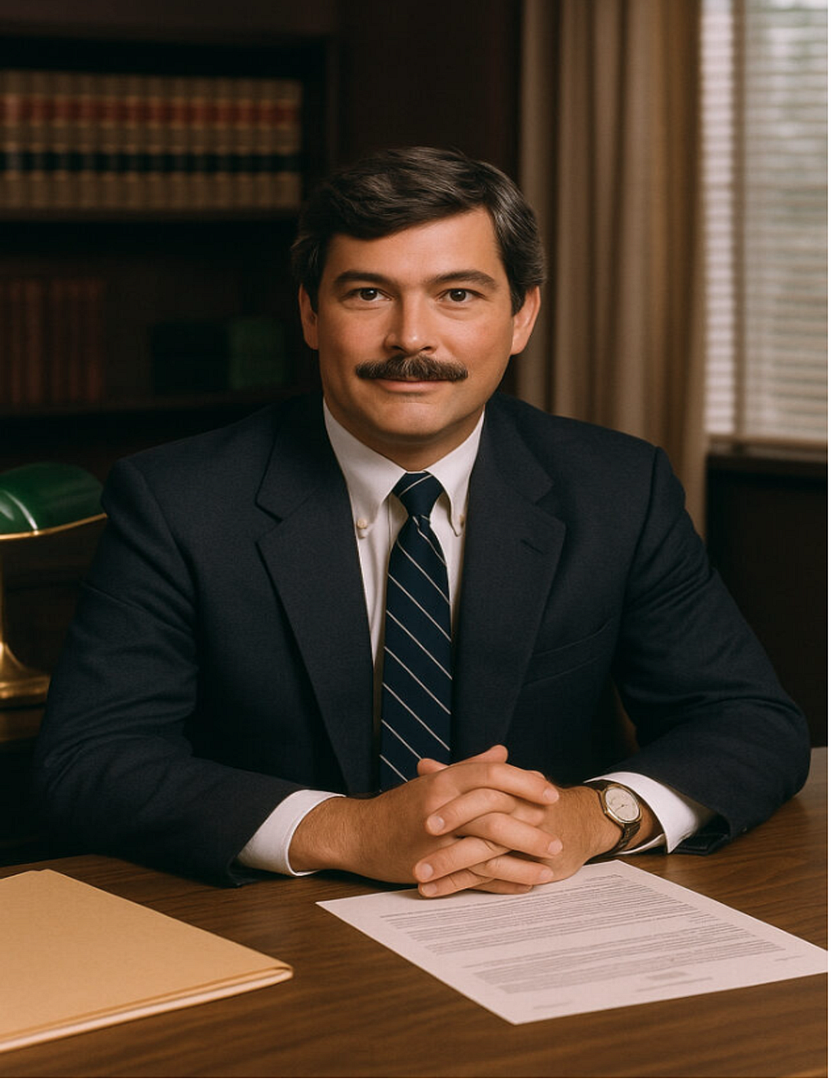
At a stage when most legal careers wind down, James Bain has become more relevant, not less. His name still carries weight in Colorado construction and commercial real estate law, but the center of gravity in his work has shifted. Today, his influence is measured less by cases won and more by professionals shaped.
That transition did not happen by accident. It reflects a deliberate rethinking of what a successful legal career looks like when the résumé is already complete.
Bain built his reputation the traditional way. After graduating from the University of Connecticut and the University of Florida College of Law, he established himself in Denver as a leading construction law attorney. His career included editorial leadership at The Colorado Lawyer’s Construction Forum for more than two decades and advisory roles with the Associated General Contractors of Colorado. He also co-founded Benjamin Bain Howard and Cohen, a boutique firm that earned national recognition and a roster of partners named Super Lawyers.
Those credentials alone would define most careers. For Bain, they became the foundation for something else.
From Craft to Counsel
Before law school, Bain worked as a carpenter subcontractor. That early experience still informs how he approaches legal work and, more importantly, how he advises younger attorneys. He understands the industries his clients operate in because he has worked within them. That practical grounding shaped his legal judgment and gave him credibility that cannot be taught in a classroom.
It also informs one of his most consistent messages to younger lawyers: confidence is a result of action, not a prerequisite for it.
Bain does not present that idea as theory. He lived it. Moving from manual labor into law required risk, uncertainty, and a willingness to operate without guarantees. That same mindset now anchors his mentorship.
Mentorship Without the Script
Bain’s approach to mentorship is notably unsentimental. He does not rely on polished success stories or abstract encouragement. Instead, he shares the parts of a legal career that are often edited out: failed strategies, lost cases, moments of doubt.
That honesty resonates because it fills a gap in legal training. Law schools teach doctrine, analysis, and argument. They rarely teach how to navigate uncertainty, manage pressure, or recover from setbacks. Bain focuses on those areas because he sees them as the difference between competence and long-term effectiveness.
One example stands out. A young attorney he mentored faced an opportunity that felt beyond his capabilities. The instinct was to decline. Bain pushed him to accept, not because success was guaranteed, but because growth required discomfort. Years later, that decision became a turning point in the attorney’s career.
For Bain, that outcome reinforced a broader realization. Influence compounds over time. The longer a career lasts, the more opportunities there are to shape others.
Redefining Professional Longevity
Bain’s career challenges the idea that professional impact diminishes with age. In his view, it evolves.
Earlier in his career, success meant building expertise, winning cases, and establishing a firm. Now, it means transferring knowledge, refining judgment in others, and contributing to the profession’s long-term health.
This shift reflects a broader philosophy about longevity in law. Bain believes sustained relevance comes from continuous learning and adaptation. He remains intellectually engaged, not out of necessity, but out of curiosity. The same analytical discipline that drew him to law still drives him.
That mindset allows him to remain active in a field that is constantly changing. Technology, client expectations, and workplace structures have all evolved. Bain does not resist those changes, but he also does not view them as the core of legal practice. For him, the fundamentals remain constant: sound judgment, clear communication, and ethical consistency.
The Missing Pieces in Legal Training
Bain is direct about what he sees as gaps in the legal profession. Technical knowledge alone does not produce effective attorneys. He points to three areas that deserve more attention: judgment, client relationships, and stress management.
Judgment, in his view, cannot be reduced to rules. It develops through experience, reflection, and exposure to real-world consequences. That is one reason he places such emphasis on mentorship. It accelerates the process by allowing younger attorneys to learn from others’ experiences, not just their own.
Client relationships present another challenge. Bain recalls early cases where the legal issues were only part of the equation. Clients often faced significant stress, uncertainty, and personal stakes. Managing those dynamics required empathy and communication, not just legal skill.
Stress management may be the most overlooked factor. The legal profession has long rewarded overwork. Bain sees that as unsustainable. His own career longevity, he argues, is tied to maintaining balance. Daily exercise, clear boundaries, and strong personal relationships were not optional. They were essential.
He now treats those habits as part of professional responsibility, not personal preference.
Integrity as a Competitive Advantage
Throughout his career, Bain built a reputation for straightforwardness. He emphasizes credibility as the most valuable asset an attorney can have. It is difficult to build and easy to lose.
That principle guided his work on high-stakes matters, including his involvement in the Uranium Antitrust Litigation, where significant financial recoveries were at stake. Even in adversarial settings, he maintained a focus on professionalism and civility.
That approach may seem traditional, but Bain views it as increasingly important. As the legal industry adapts to new technologies and faster communication cycles, the risk of cutting corners grows. He sees an opportunity to reinforce standards that do not change with trends.
For younger attorneys, that message is clear. Reputation is cumulative. Every decision contributes to it.
A Long-Term View of Success
Bain often references Warren Buffett as a model for sustained success. The comparison is less about industry and more about approach. Buffett’s emphasis on consistency, discipline, and long-term thinking aligns with Bain’s own philosophy.
Short-term wins matter, but they are not the ultimate measure of a career. Bain evaluates success over decades, not years. That perspective influences how he advises others. He encourages decisions that may not produce immediate rewards but build lasting value.
It also shapes how he views his own achievements. Awards, publications, and recognition have their place, but they are not what he considers most meaningful. Those markers fade over time. The impact on people does not.
Building a Different Kind of Legacy
Bain’s current focus is not on expanding a firm or increasing his caseload. It is on building a legacy that extends through others.
He advocates for more structured mentorship opportunities within the legal profession. Informal guidance has value, but he believes more intentional systems could amplify its impact. Connecting experienced attorneys with emerging talent in sustained, meaningful ways could address many of the gaps he identifies.
He also continues to engage with broader questions about legal education and professional development. How can the profession better prepare attorneys for real-world challenges? How can it support long-term well-being without sacrificing performance? These are the issues that occupy his attention now.
A Career That Keeps Moving
At 76, Bain is not interested in slowing down in the conventional sense. His pace may be different, but his engagement is not diminished.
He continues to learn, mentor, and contribute. His work reflects a belief that professional life does not have a fixed endpoint. It can be redefined at each stage.
That perspective offers a counterpoint to the standard career arc. Instead of a peak followed by decline, Bain’s trajectory suggests a shift from individual achievement to collective impact.
The distinction matters. It reframes what attorneys can expect from their careers and what they can contribute over time.
The Quiet Work That Endures
Bain’s philosophy comes down to a simple idea. The most meaningful impact is often incremental. It happens through consistent effort, honest conversations, and a willingness to invest in others.
Grand gestures are not required. Influence builds through steady encouragement and belief in potential.
That approach may not generate headlines, but it shapes careers, firms, and, ultimately, the profession itself.
For James Bain, that is the point.