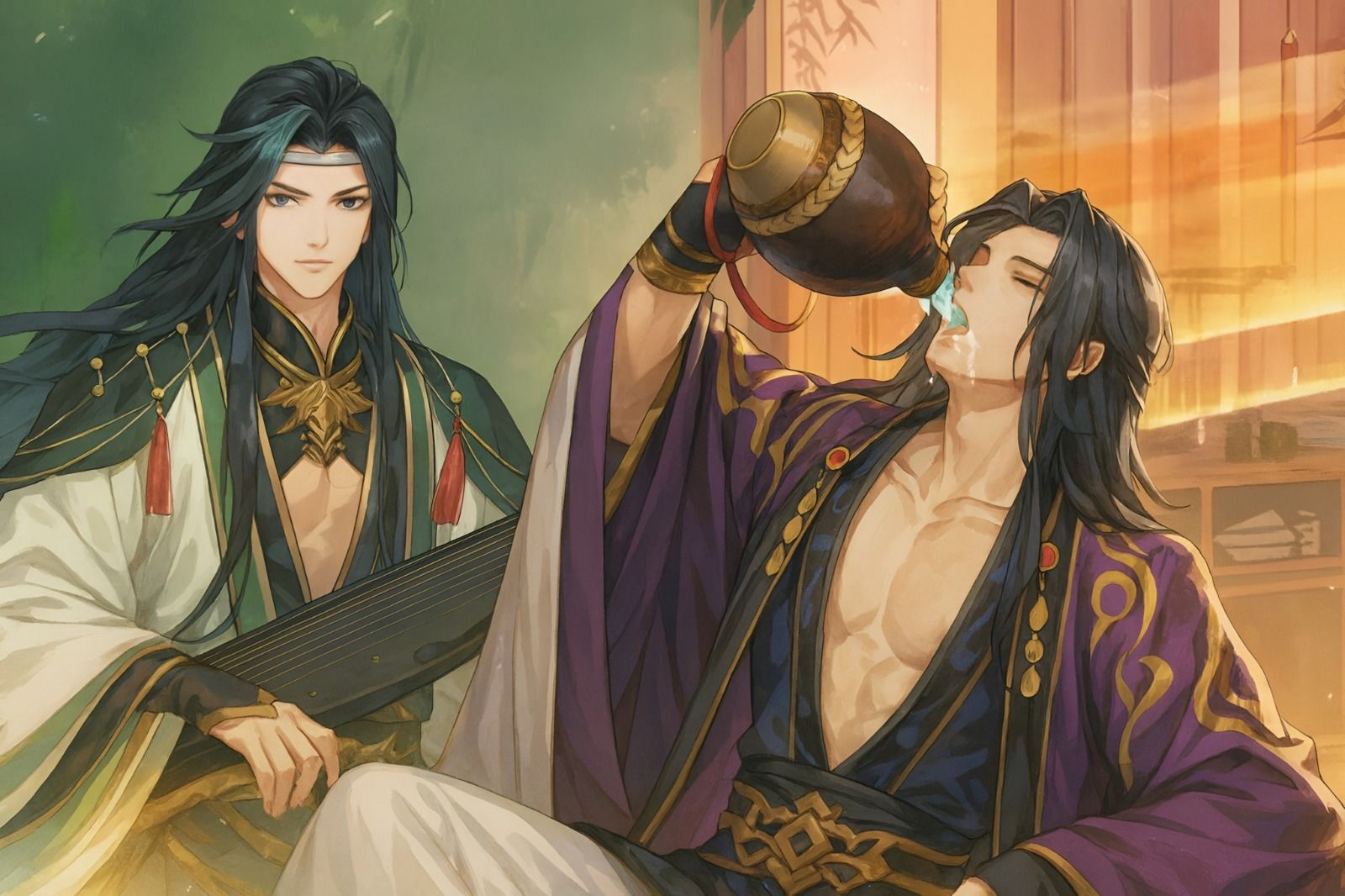
When dynasties collapsed in third-century China, two poets refused to surrender their souls. Ruan Ji and Ji Kang, remembered among the Seven Sages of the Bamboo Grove, withdrew from the decaying order of their age. Ruan Ji drank and wrote with melancholy insight; Ji Kang met death rather than flatter power. They resisted not by ruling, but by feeling — and by refusing to let a corrupt world decide what was true.
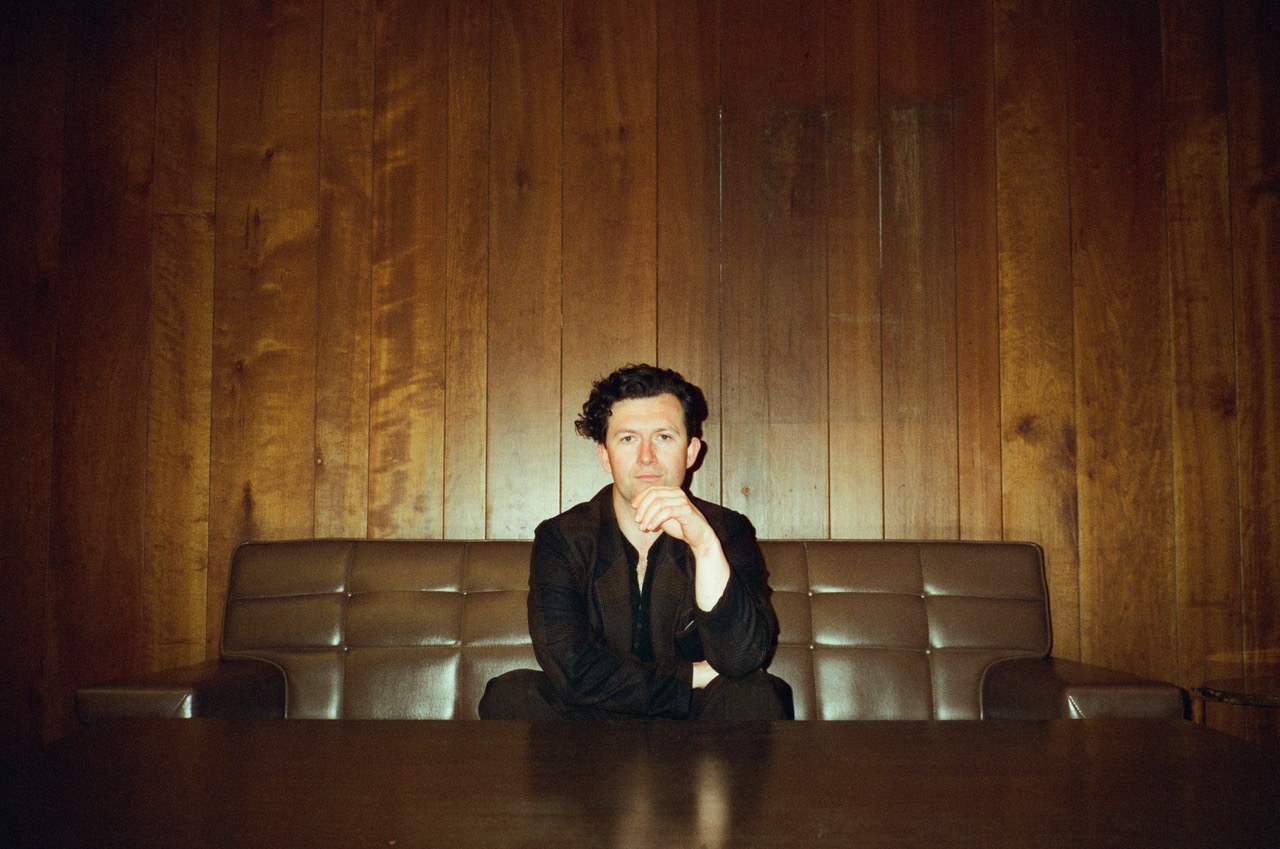
Seventeen centuries later, their refusal still matters. Jiahao Shen, an independent history researcher from the postgraduate program of World History and Philosophy at King’s College London, finds in their lives a mirror of his own. Having studied History and Asian Studies at James Madison University and completed a Master of Higher Education at the University of Oklahoma, Shen now writes from Japan, where he sees in the culture of endless work and productivity an echo of the ancient machinery of obedience. For him, the tragedy of Ruan Ji and Ji Kang is not distant history — it is the story of modern life.
In his essay “Ruan Ji and Ji Kang — The Painful Mind and the Internalization of the Idealized World,” Shen describes the painful mind as the consciousness that refuses to adapt to falsehood. It is the pain of thinking clearly in a conforming world. To see too much, to feel too honestly, to remain sincere amid convenience — this, he argues, is both the burden and the honour of intellectual life. For Ruan Ji, that awareness became poetry. For Ji Kang, it became martyrdom. For Shen, it has become a daily act of endurance.
He believes that the modern world, for all its freedoms, has created a subtler form of domination. Economic systems, bureaucratic hierarchies, and digital networks have replaced kings and emperors — but they rule the same territory: the human spirit. They govern not by fear, but by participation. They offer comfort, but demand conformity. Shen calls this a metaphysical oppression — a structure that erodes not the body but the possibility of an inner life.
What we now call success, Shen suggests, is often the quiet surrender of reflection. We no longer ask what is true or meaningful; we ask what works, what sells, what advances the system. The cost of that adjustment is invisible but immense: the shrinking of the inner world.
Shen’s answer is not to retreat but to rebuild that inner world deliberately. He calls it the idealised world — a space of sincerity and thought that exists apart from utility. Like Ruan Ji and Ji Kang, he sees reflection itself as a moral act. To preserve inner life, he writes, is to resist the world’s demand for adaptation. The painful mind is not a defect to be cured; it is the last evidence of integrity.
What distinguishes Shen’s view is his understanding that this struggle is not regional or cultural but global. Across continents, societies have absorbed the same logic: that human worth is measured by productivity, that work is proof of virtue, that exhaustion is the new form of pride. Whether in Fukuoka, London or Washington, the same quiet submission unfolds — and the same yearning for stillness persists. Shen’s insight is that this uniform exhaustion is not an economic crisis but a spiritual one.
His cosmopolitan education has taught him that progress can be as coercive as power once was. The structures that promise connection often deepen loneliness. The technologies that promise freedom often erase reflection. Shen writes with the melancholy clarity of someone who has looked across civilisations and seen the same pattern repeat: the world perfecting its systems while losing its sense of meaning.
Yet his work is not despairing. Beneath its austerity lies a faith that thought itself can endure. If freedom has moved from the outer world to the inner one, then the task is not to overthrow systems but to keep consciousness alive within them. Shen’s appeal is quiet but radical: to feel deeply in a culture that rewards indifference; to think slowly in a civilisation that hurries; to protect sincerity in a world that measures everything except truth.
Across centuries, Ruan Ji, Ji Kang and Jiahao Shen form an unbroken conversation about what it means to remain human amid order. Their answer is not revolution, but awareness. Freedom, Shen reminds us, begins not with permission but with perception — the courage to see clearly and to keep seeing, even when it hurts.
In that sense, the painful mind is not a wound. It is a light — and in its endurance, the last measure of our humanity.