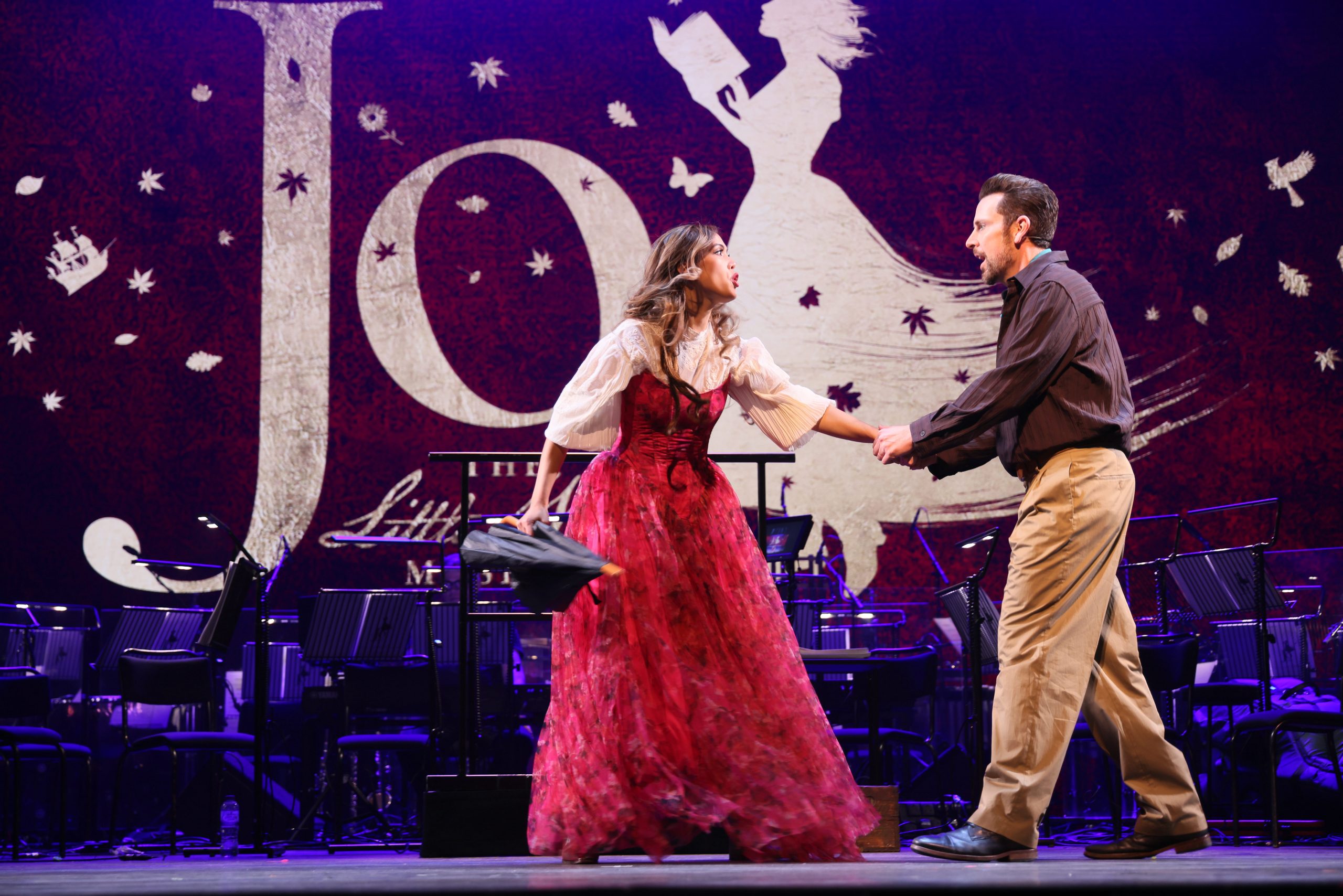
On Sunday night, I attended the world-premiere semi-staged West End concert of Jo – The Little Women Musical at the Theatre Royal Drury Lane, one of the grandest theatres in London. Adapted from Louisa May Alcott’s Little Women, one of the most enduringly popular novels of the past 150 years, it follows the story of the March sisters – Meg, Jo, Beth, and Amy – with the focus, unsurprisingly, falling most heavily on Jo.
The cast is, frankly, stacked, and has been causing a fair bit of buzz across theatre corners of the internet. West End royalty Kerry Ellis appears as Marmee, multi-Olivier winner and Tony nominee Tracie Bennett plays Aunt March, and Grammy nominee and original London Hamilton cast member Christine Allado takes on the title role. It’s an eye-watering line-up, bolstered further by strong performers from both sides of the Atlantic, and it explains why all 2,196 seats of Drury Lane were filled.
Jo has had a long road to this stage. Writers Dan Redfeld, Christina Harding, and John Gabriel Koladziej first began work on the musical back in 1996. Plans for an early-2000s launch fell through, and the project was shelved until 2020, when the team returned to it with fresh eyes. In May 2025, they followed in the footsteps of shows such as Les Misérables, releasing a studio cast recording of the as-yet unperformed musical. That album was extraordinarily well received, quickly developing something of a cult following before a single note had been sung live.
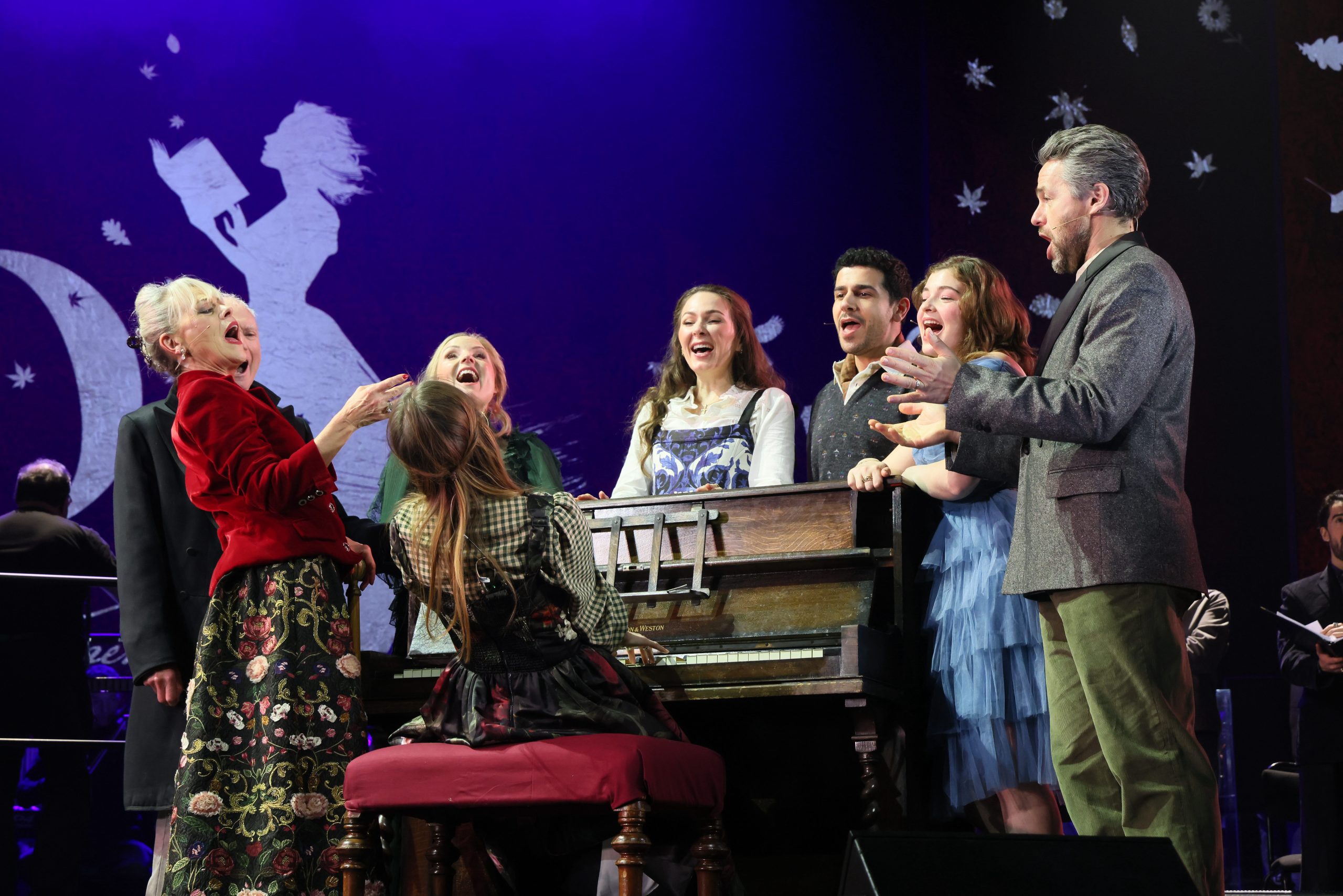
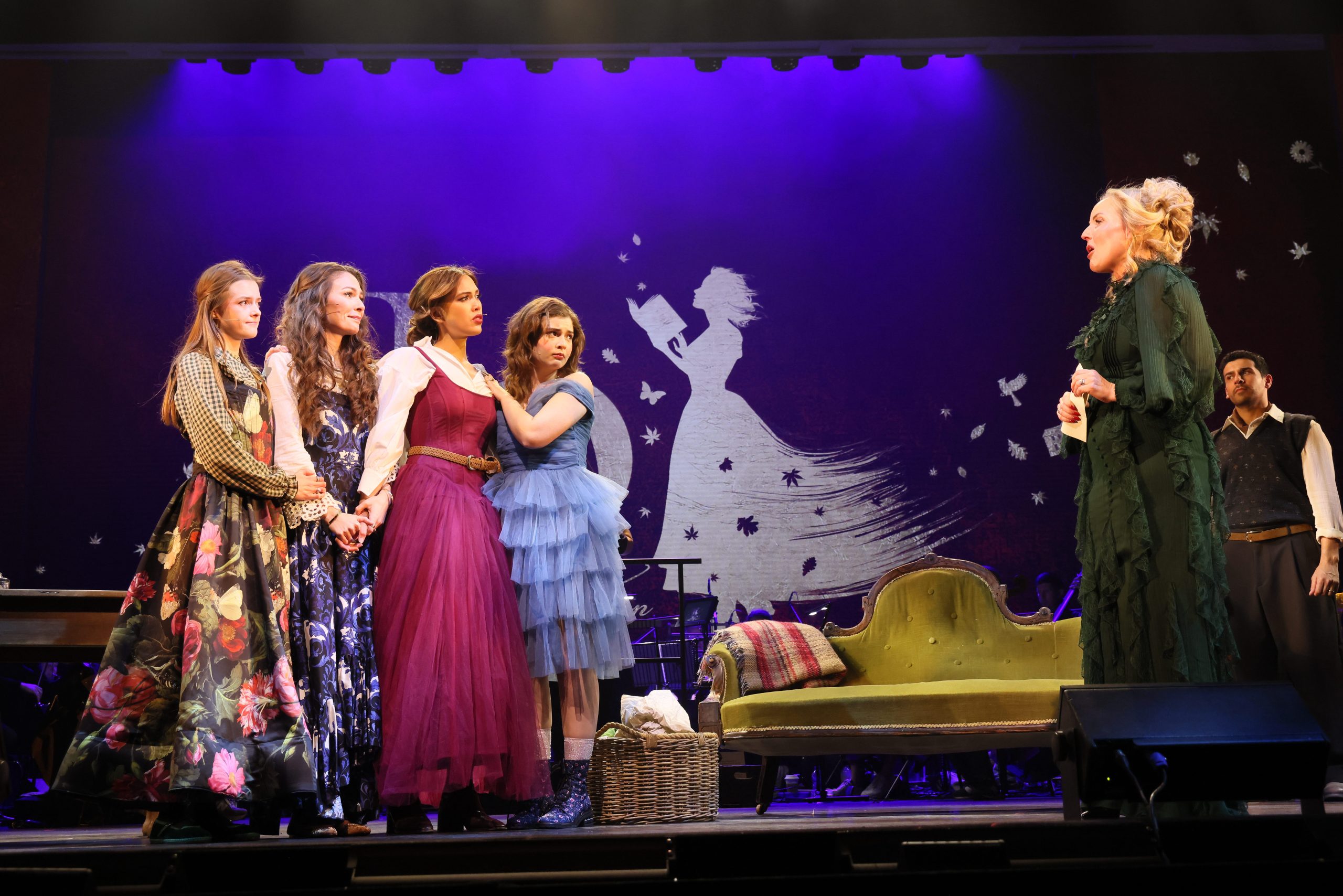
Billed as a semi-staged concert, the format was exactly that. A 27-piece orchestra filled much of the stage, with the action playing out downstage, supported by a handful of props and pieces of furniture moved on and off as needed. Calling it a concert was certainly accurate – there are more than 30 songs packed into an almost three-hour runtime.
Vocally, the evening is hard to fault. Christine Allado’s Jo has a rich, powerful voice that fills the auditorium with ease. Kelly Mathieson (Meg), Sophie Pollono (Amy), and Eleanor Grant (Beth) are equally impressive, each given moments to shine in solos, duets, and ensemble numbers. Despite the title, the first act does a decent job of sharing its focus between the sisters, rather than placing Jo front and centre at all times.
Where things become more uneven is in the storytelling. With such a strong cast, it sometimes feels as though everyone needs their song, leaving too little space for scenes to breathe in between. If you know Little Women well, this may not be an issue. If, like me, your familiarity largely comes from half-remembered film adaptations (and that one infamous spoiler in Friends), it can feel as though you’re expected to already know certain things.
That lack of scene-setting is particularly noticeable around the sisters’ ages. Allado is 30, and the actresses playing her sisters range from their early twenties into their thirties. That’s entirely normal for theatre, but without clearer signposting, it becomes confusing. I initially assumed Jo was the eldest and in her early twenties, only to find her sword-fighting like a pirate with Tobias Turley’s Laurie two scenes later. A quick interval Google revealed Jo is meant to be 15 and Meg 16 – information that would really benefit from being clearer from the outset.
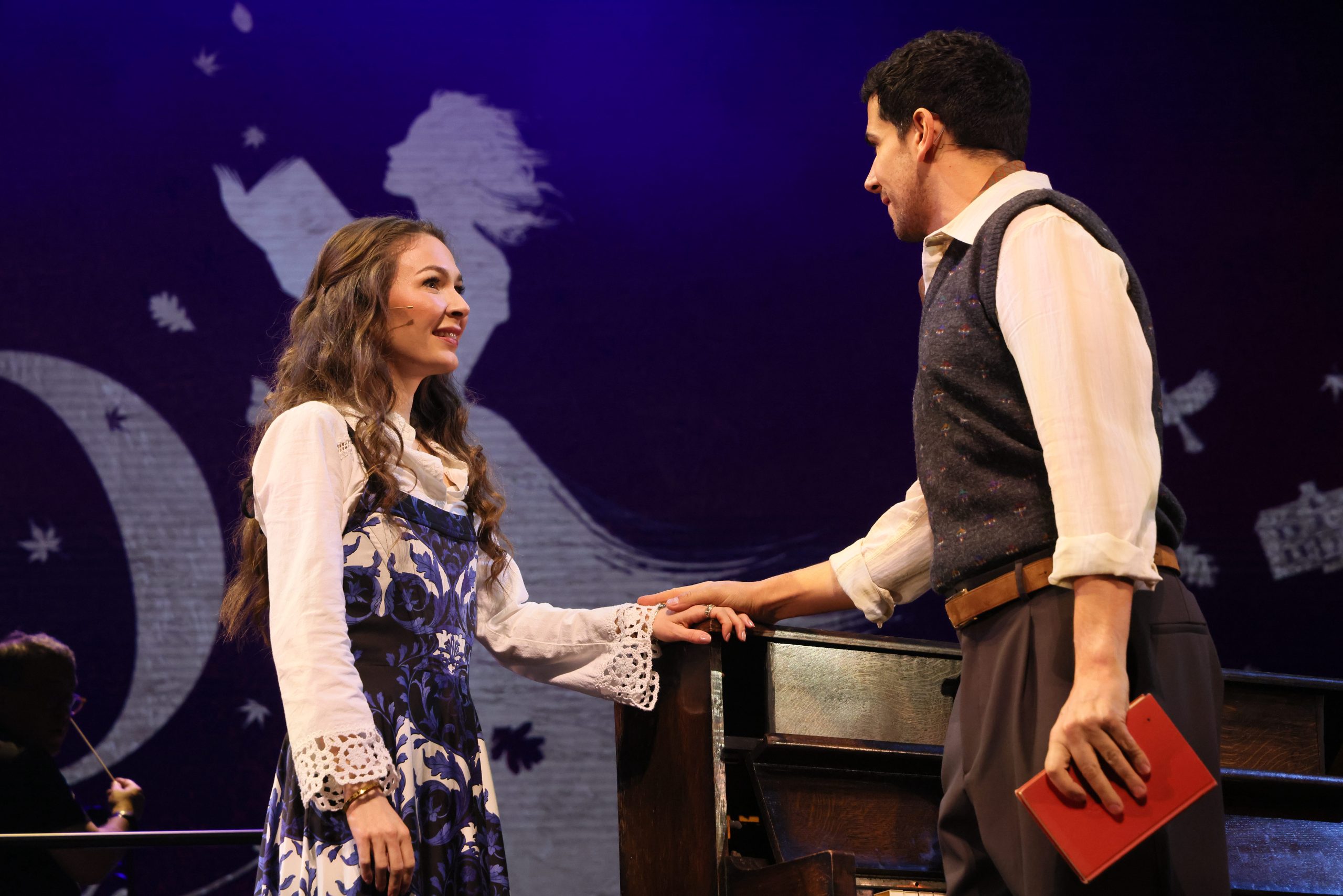
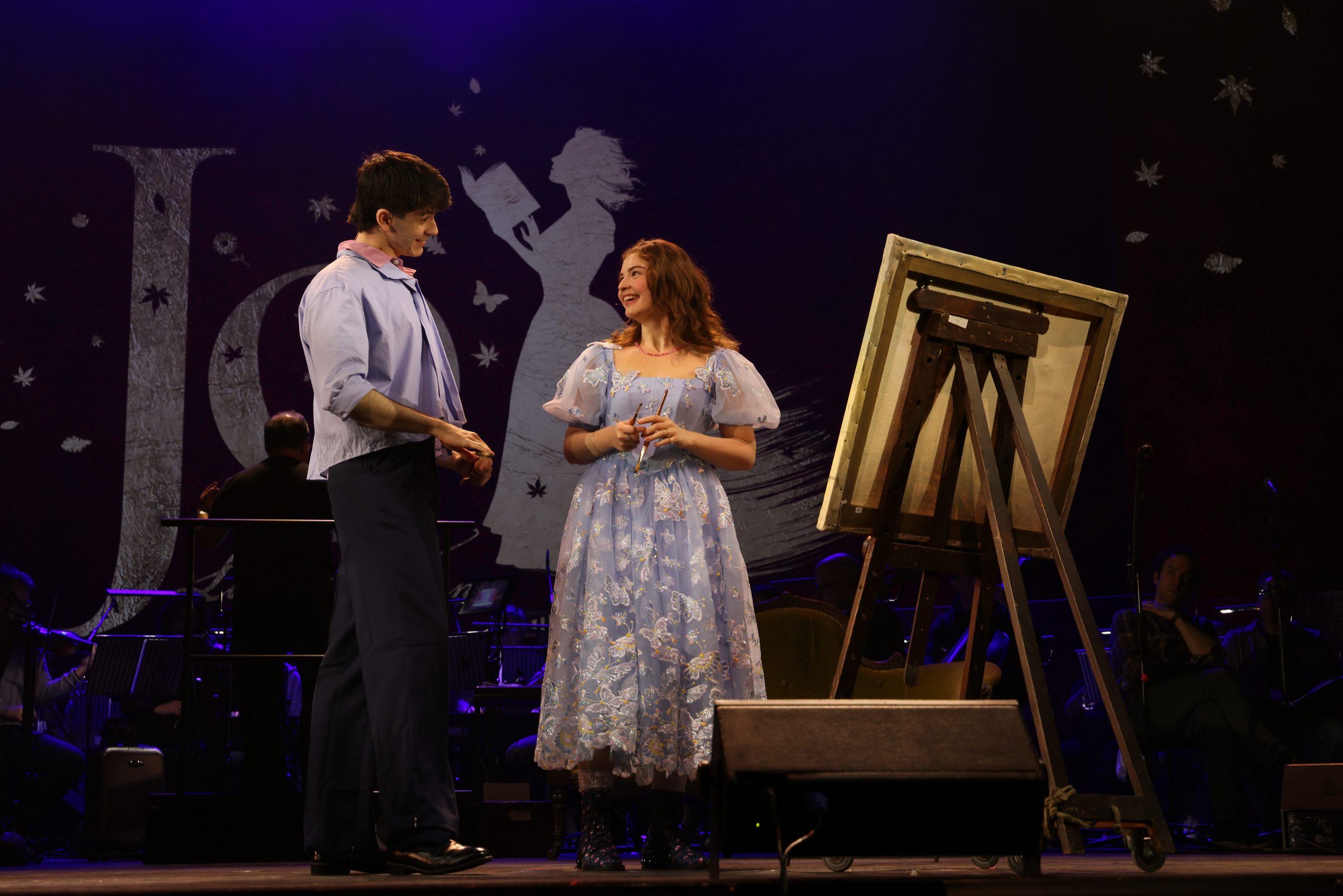
That said, the chemistry between the sisters is genuinely lovely. Their opening number, ‘The Pickwick Portfolio’, is a charming introduction, full of warmth and gorgeous harmonies, and it immediately establishes the deep bond between them. Dan Redfeld’s score is undeniably beautiful, and Harding and Koladziej’s lyrics help explain why the album found such an enthusiastic following. I just found myself wishing for slightly fewer songs and a little more dialogue to anchor them.
This issue crops up repeatedly. Jo and Laurie meet at a ball, and in the next scene they’re already close friends, play-acting and sword-fighting. Meg shares a brief, charged moment with John Brooke, and almost immediately launches into a heartfelt love song. The music itself is often lovely, but the emotional leaps sometimes feel unearned, as though key connective tissue has been skipped over.
Allado’s Jo is an interesting presence. There’s a wide-eyed, almost Disney-esque quality to her energy – curious, earnest, and brimming with enthusiasm – which occasionally feels heightened compared to the more grounded performances around her. It won’t work for everyone, but it certainly gives Jo a distinct flavour.
There are plenty of musical highlights. Sophie Pollono’s ‘Dreams and Figments’ is a standout, beautifully capturing Amy’s artistic worldview. ‘To Swear My Love to You’, the love song between Meg and John Brooke, is another highlight, with Mathieson’s operatic voice making it abundantly clear why she spent three years playing Christine in The Phantom of the Opera.
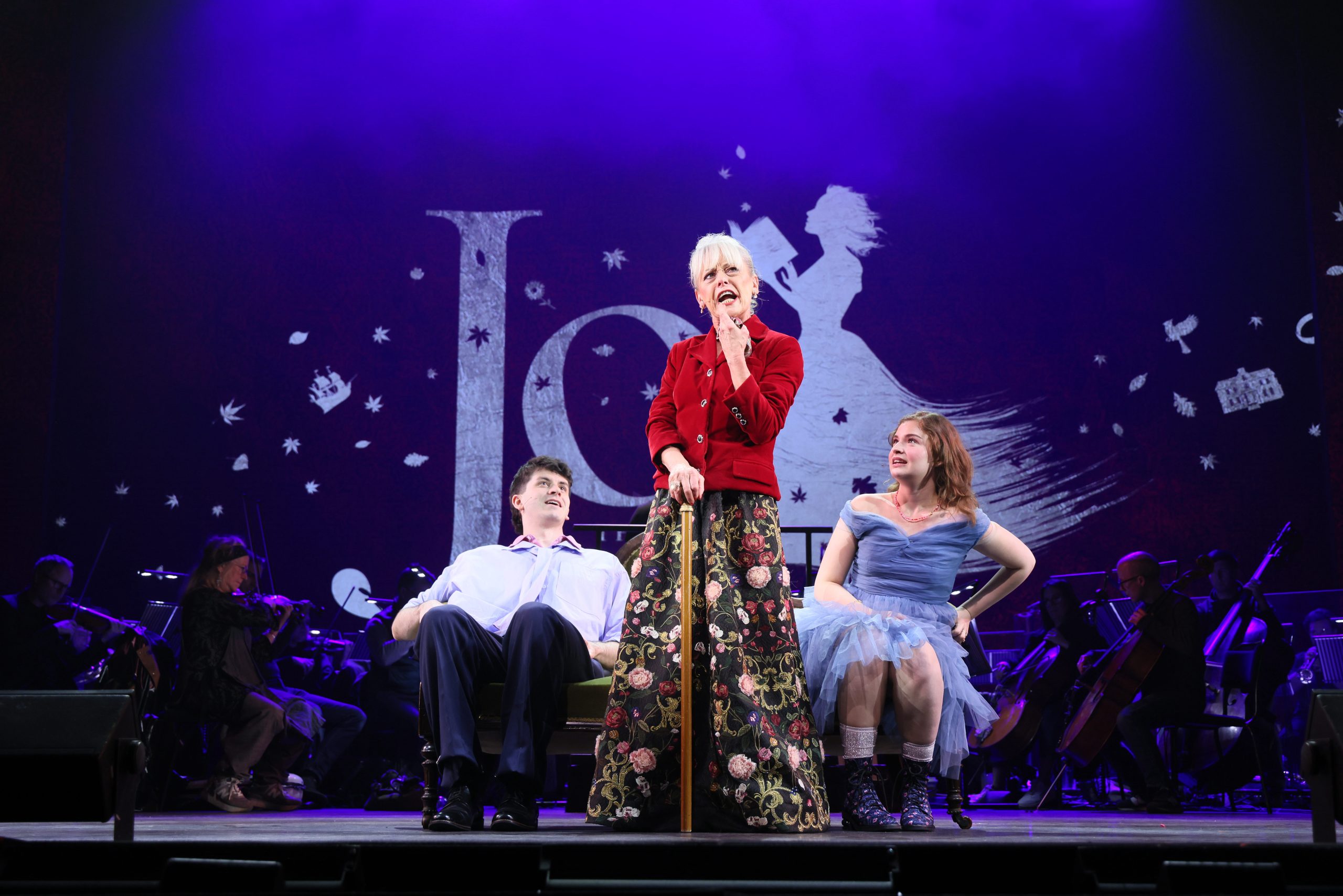
Tracie Bennett, meanwhile, is an absolute gift as Aunt March. Cantankerous, pessimistic, and obsessed with money over romance, she cuts through the earnestness like a knife. Bennett has an almost supernatural ability to wring humour out of every line, and here she gets some of the biggest laughs of the night. The character exists largely to be proven wrong by the younger generation’s idealism, but Bennett makes her so entertaining that you almost don’t want her to soften. She steals every scene she’s in.
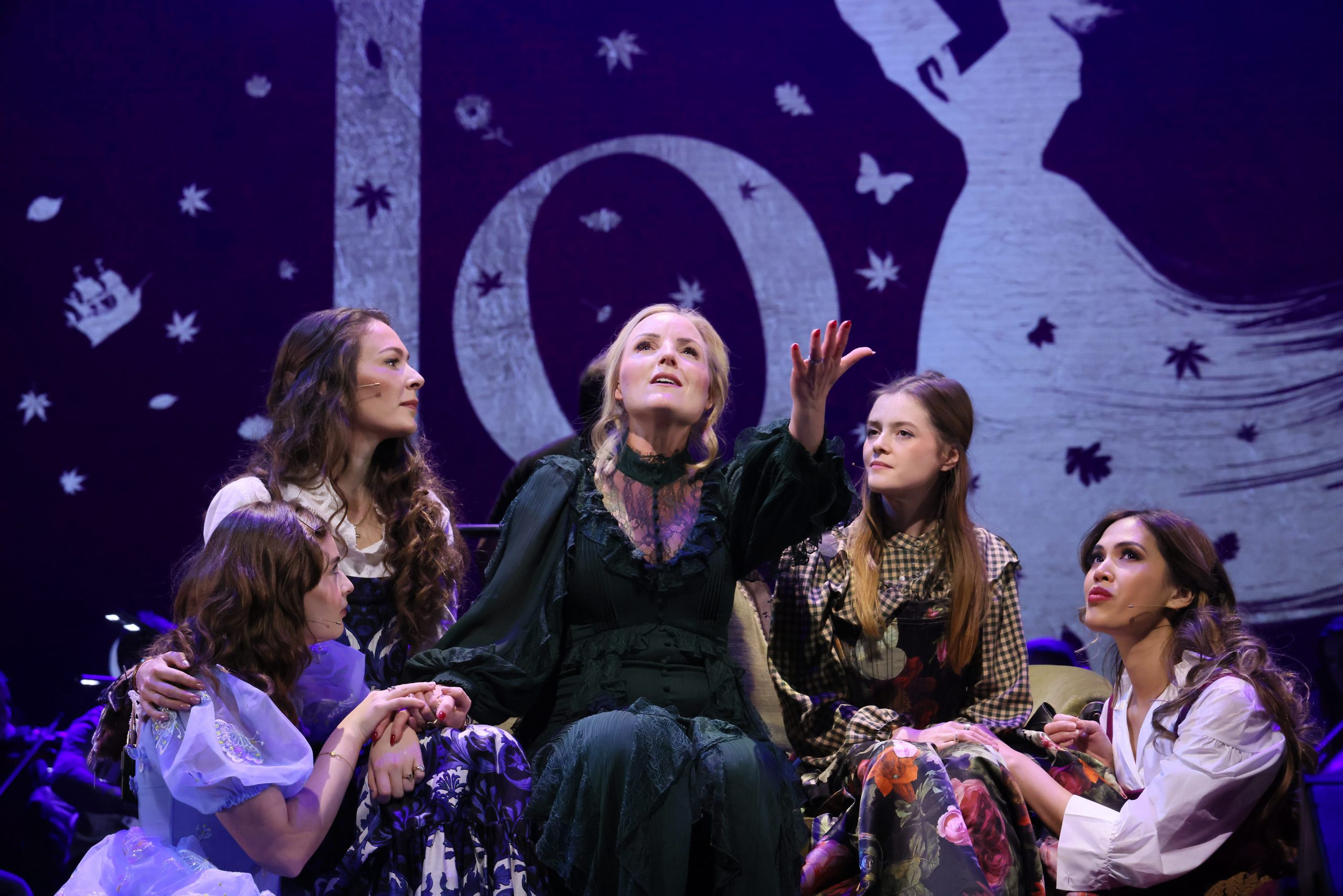
Kerry Ellis, as Marmee, brings a grounded warmth to the production. She has two standout numbers, one in each half, and when she sings, the room settles. Ellis has one of those voices that immediately reassures you that you’re in safe hands, and her presence helps anchor the show emotionally when things threaten to rush ahead too quickly.
Tobias Turley’s Laurie grows on you. Early on, the chemistry between him and Jo feels slightly forced, but once the show settles, he finds a more natural rhythm. Turley has a strong, clear voice and a genuine likability, and by the second half he feels far more at ease within the world of the show.
Fred Vaughn, the wealthy English suitor for Amy, is very much written as a caricature. He feels like an Englishman imagined by Americans, broad and slightly cartoonish, though this isn’t the fault of the performer. It’s another example of how the musical sometimes leans into shorthand rather than nuance, something that could easily be addressed as the show continues to develop.
Musically, the score wears its influences proudly. At times it feels Disney-adjacent, at others it leans hard into old-school Broadway, and occasionally it flirts with the grand romantic sweep of Les Misérables. Amy and Laurie’s later duet, ‘My Captive Heart’, is undeniably beautiful, but its tone and structure are so reminiscent of Cosette and Marius that it momentarily pulls you out of the story. Elsewhere, Meg and John Brooke’s love song is gorgeous but similarly upfront and too soon, rather than being allowed to simmer.
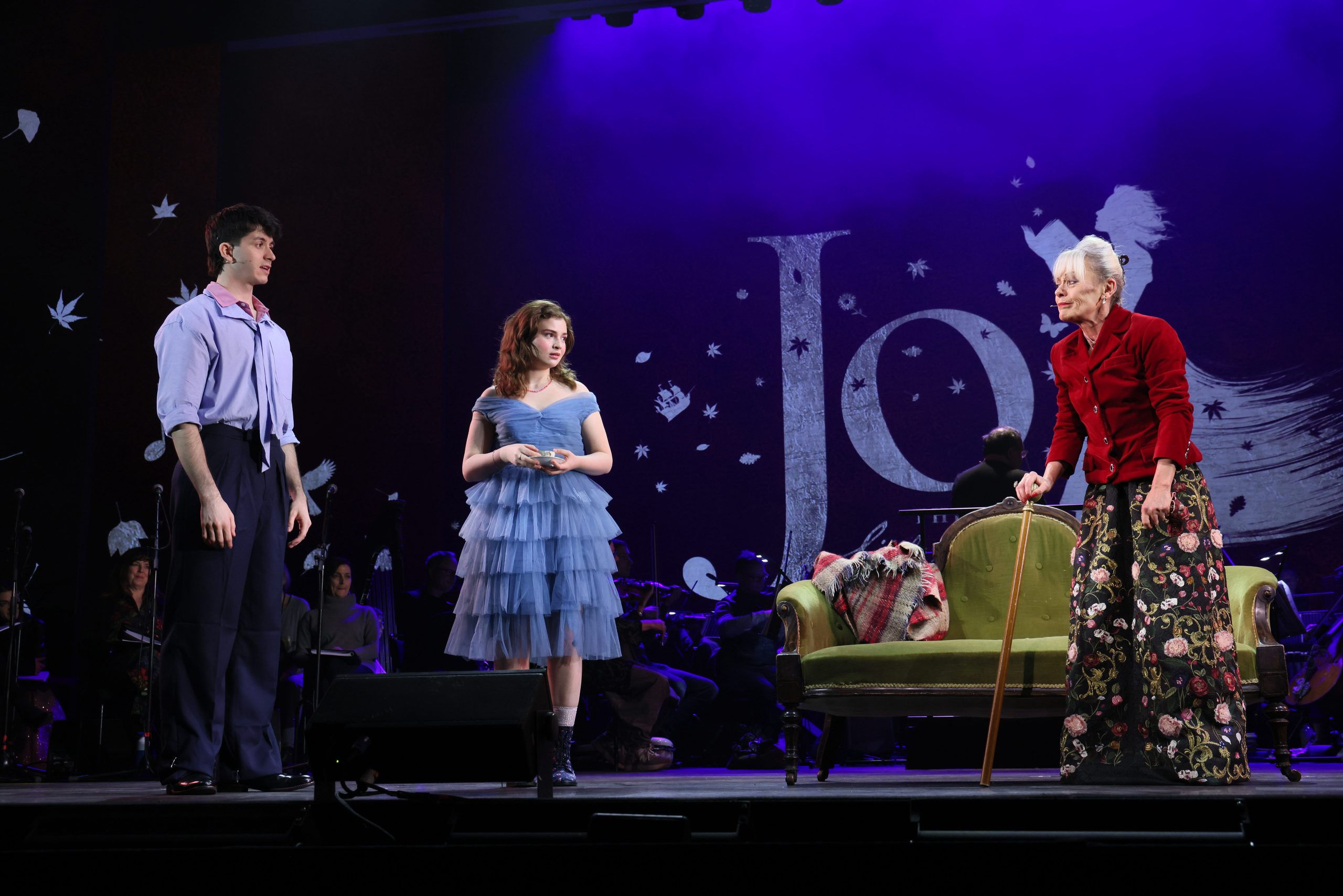
That said, beneath these tonal shifts, the musical is asking genuinely interesting questions. About ambition. About love. About courage. About what a woman’s place is, and who gets to decide that. Jo, in particular, is caught between the desire to love fiercely and the need to define herself on her own terms, and while the execution may need refining, the intent is absolutely there.
What ultimately makes this evening feel promising rather than frustrating is the sense that the creators know this is still a work in progress. Every audience member was given a card asking for feedback, an unusually open invitation that speaks volumes about the producers’ intentions. This isn’t a finished product being presented as such, but a confident, ambitious step towards one.
One thing that was made very clear by this concert is the scale of the ambition behind Jo – The Little Women Musical. The songs are already rich, the performances impressive, and the emotional spine of the story firmly in place. With clearer storytelling and a little more space between the musical numbers, this has all the ingredients of something genuinely special. If this is what Jo looks like at this stage of its journey, I have no doubt that the finished production will be a musical for the ages.
For more info and to keep up with Jo – The Little Women Musical’s journey, sign up for their email list at jothemusical.com
Check out the studio album on Spotify here.
Words by Nick Barr
Photos by Roger Alacorn