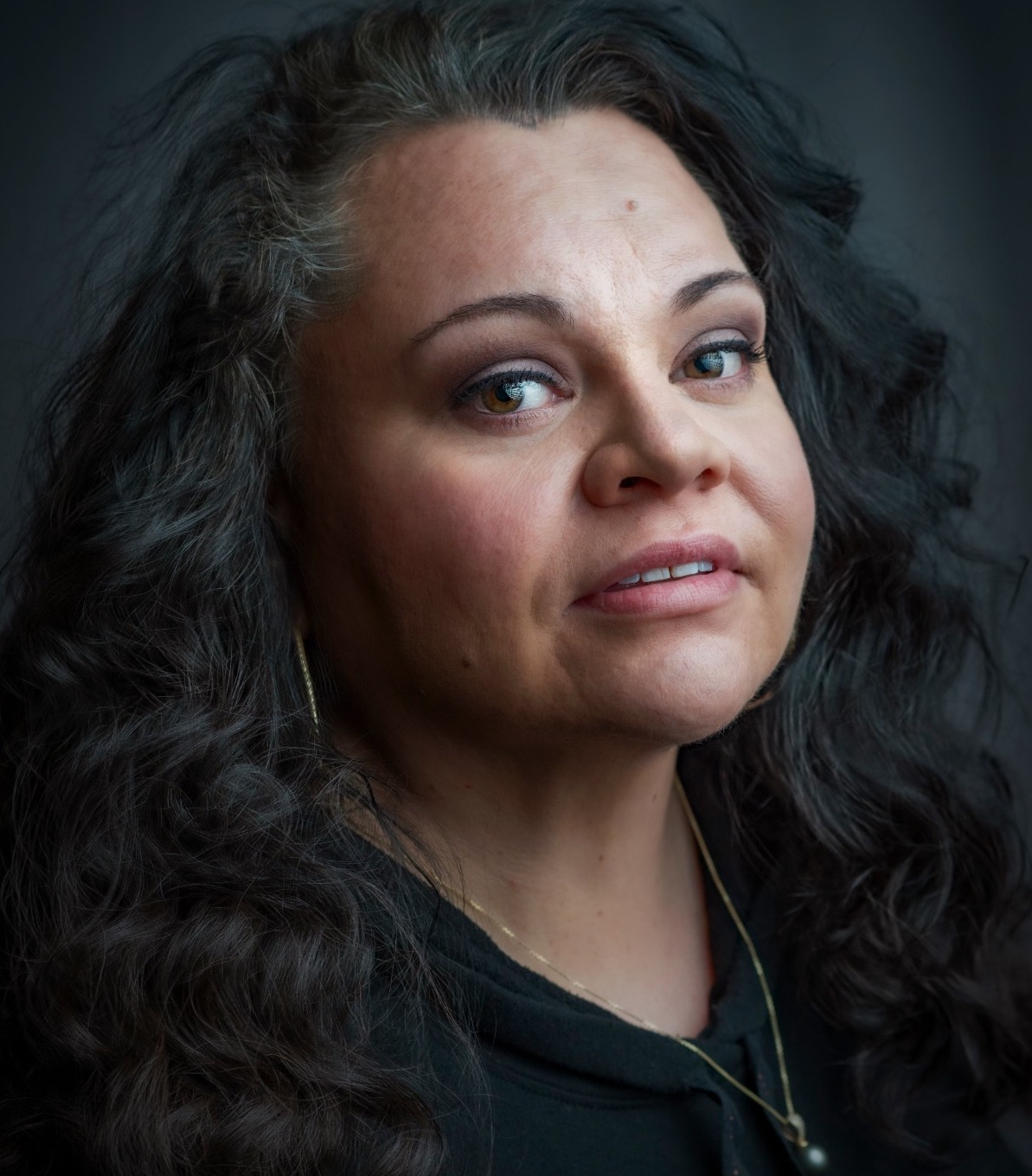
When Keala Settle talks about her career, she resists the word altogether. What others might frame as a steady ascent through Broadway, film, and international stages, she describes instead as survival – as a series of lives lived in response to circumstance, history, and instinct. That resistance to neat narratives sits at the heart of her latest role.
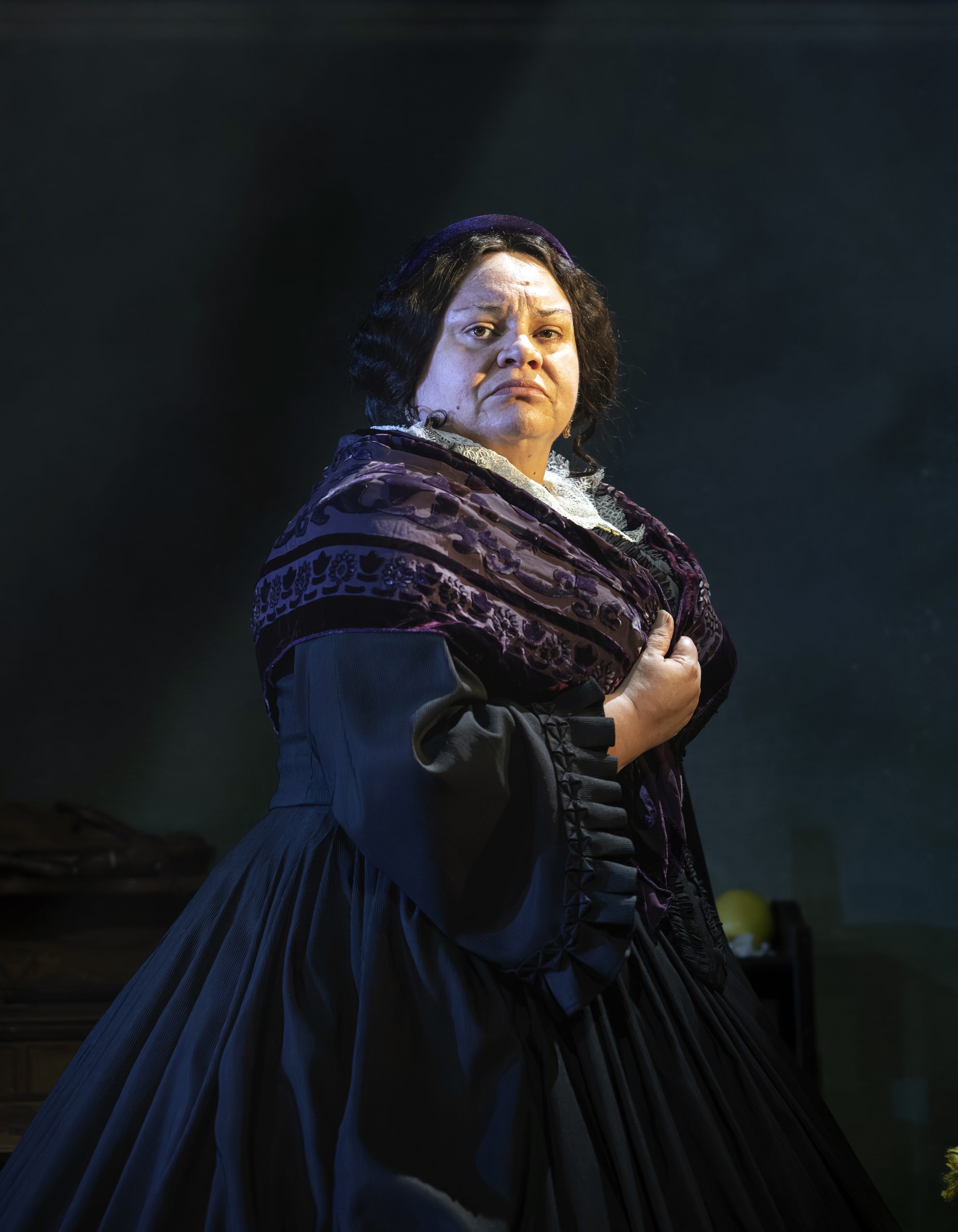
In Mrs President, at Charing Cross Theatre, Keala takes on Mary Todd Lincoln, a woman long reduced by history – and elsewhere on the West End, in Oh, Mary! – to caricature: unstable, extravagant, inconvenient. It’s a non-singing, psychologically demanding turn, and a deliberate shift for a performer so often associated with musical theatre. But as Settle makes clear, this isn’t a departure so much as a continuation: an exploration of grief, power, identity, and what happens when a woman refuses to be flattened into something more palatable.
I sat down with Keala as she reflected on immigrant survival, ensemble storytelling, neurodivergence as strength, and why Mary Lincoln’s story feels urgently contemporary. What emerged is not just a defence of a maligned historical figure, but a broader meditation on who gets to define us – and what it costs when we let them.
You’d already built a substantial body of work on Broadway before many people knew your name. When you look back, what period of your career feels most formative for you as an artist?
To be honest with you, I never looked at what I was doing as a career. It was really just the way that I survived as an immigrant child, a first-generation American, being born and raised not on the continental United States, but on an island in the Pacific Ocean, by two lovely parents who were themselves immigrants to the USA.
That informed a lot of the thousands of lives that I’ve got to live up until this point. About thirty years of that just happens to be what everyone else in the ‘business of show’ would call a career.
I’m not your run-of-the-mill performer. I did a lot of it to spite my mother, because my mother wanted me to be a recording artist. She wanted to be a recording artist herself in New Zealand. She was an extremely gifted musician, and a lot of my uncles were too – they actually formed a band and performed before she met my father.
My father is originally from Manchester. He was serving a Mormon mission when they met, and later they pulled up stakes and went to Hawaii. My father was attending school there on a very precarious basis, adapting at the same time to Polynesian culture and to Hawaii being the fiftieth state of the United States. All of that shaped who I am.
I’ve always tried to ingrain myself into characters rather than imitate them. Sometimes that works, sometimes it doesn’t, but it gave me a place to escape what I was going through by delving into other lives. I’m grateful for all of it – the good and the bad – because I learned not just about the industry, but about the potential of the human existence within myself.
I came to understand what you might now call my neurodivergence as a strength. It helped me not just survive, but thrive, both in life and on stage. I’ve been many different versions of me, and I think that’s something we should all be striving for.
In that sense, this play is very much a celebration for me, even if it doesn’t read that way on the surface. Looking back at all these years and the opportunities I’ve had to be on stages across the US, the UK, and Australia, I know how lucky I am, and I’ll never take that for granted.
I’m also a massive believer in ensemble work. One person can tell a story, but it takes a lot of people for that story to exist in the first place.
Mrs President is a very deliberate shift for you – a non-singing, psychologically demanding role. What was it about Mary Lincoln, and about this play, that made you want to step into that space?
When I read it, I demanded to speak to Bronagh Lagan, our director. What struck me immediately was how much of Mary’s life we actually know, through her letters, through the people who wrote back to her, and through the historical record of how often she was asked to endure grief while being watched, judged, and discussed by everyone around her.
So much of what people think they know is reduced to, ‘Well, she was mad’. You hear the stories about her running through corridors in her knickers, or people telling her surviving son that his mother was unstable and needed to be put away. That’s the version that’s survived. But we now live in a world where we’re more inclined to ask why people are the way they are, rather than just dismiss them.
I can only speak for myself, but that requires a willingness to look at why I react the way I do, where my coping mechanisms come from, and whether they actually serve me. You can do all the inner work you like on your own, but it doesn’t mean anything unless you go back out into the world and exist alongside other people. That’s where all of this stuff is formed, and that’s where it has to be tested.
When I looked at Mary through that lens, it became unavoidable. What would you do if you lost your mother at six, were raised by someone who told you you were Satan’s limb, lost a child, then another, while being told you would never be good enough for the world you were trying to survive in? What would you do if your son was dying upstairs while you were expected to host an inaugural party? If your husband was assassinated in your lap, taken from you, and you weren’t even allowed to be present when he died?
And then the only son you have left wants to put you away.
You tell me. You tell me how you’d cope. That’s what this play is.
Mary’s identity has been defined by other people for over a century, and a lot of those people were men. Men who were threatened by her influence, jealous of the relationship she had with her husband, and uncomfortable with the fact that they were a team. She advised him. He listened. They were best mates, and that dynamic was deeply threatening.
She spent money wildly, yes, but that was likely another coping mechanism. Another attempt to prove she was good enough for a country tearing itself apart in civil war. Somewhere along the line, someone told her she wasn’t enough, and millions of people have lived with that message ever since. We can still recognise them today, in how they present themselves in public.
That’s why I wanted to step into this space.
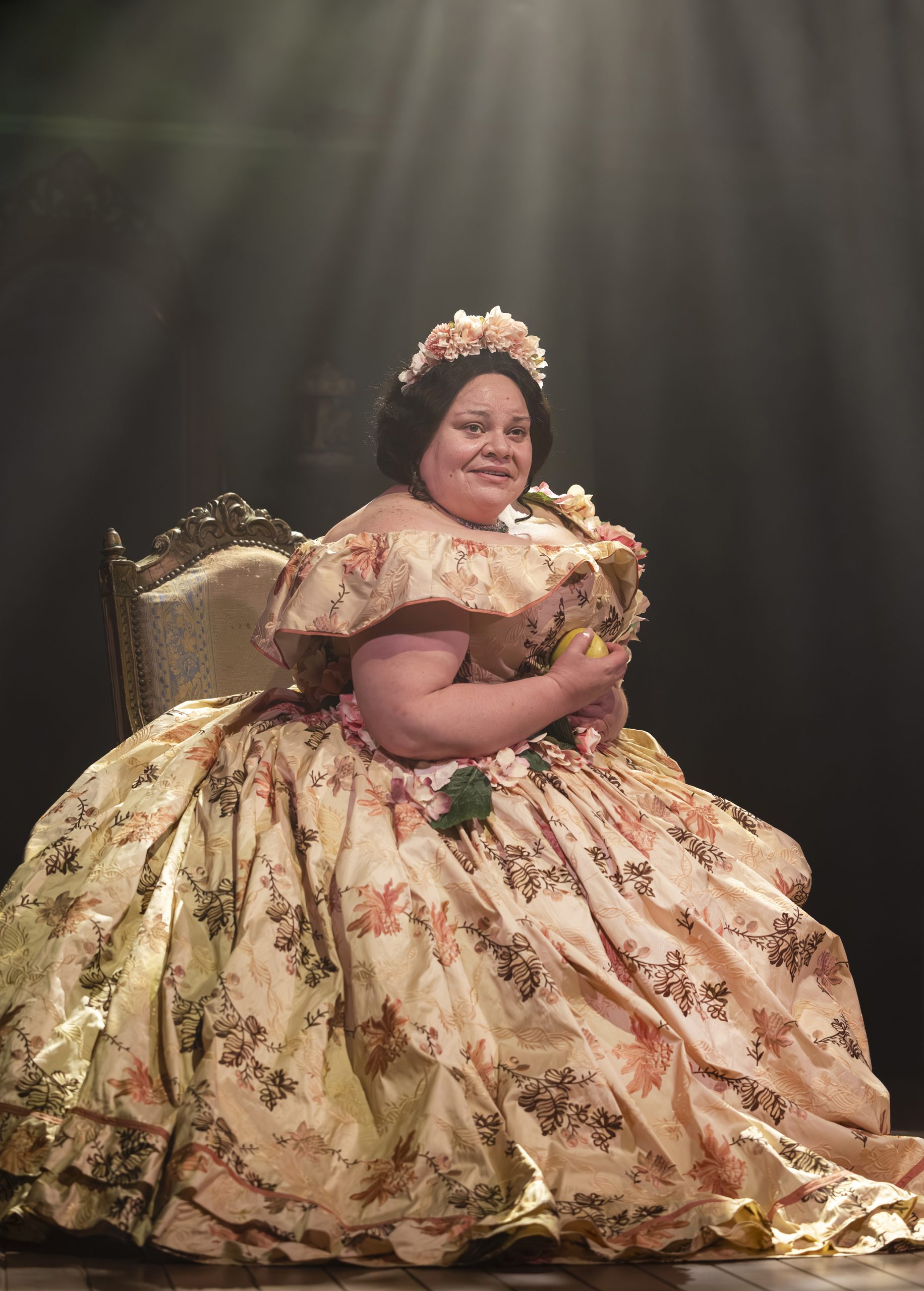
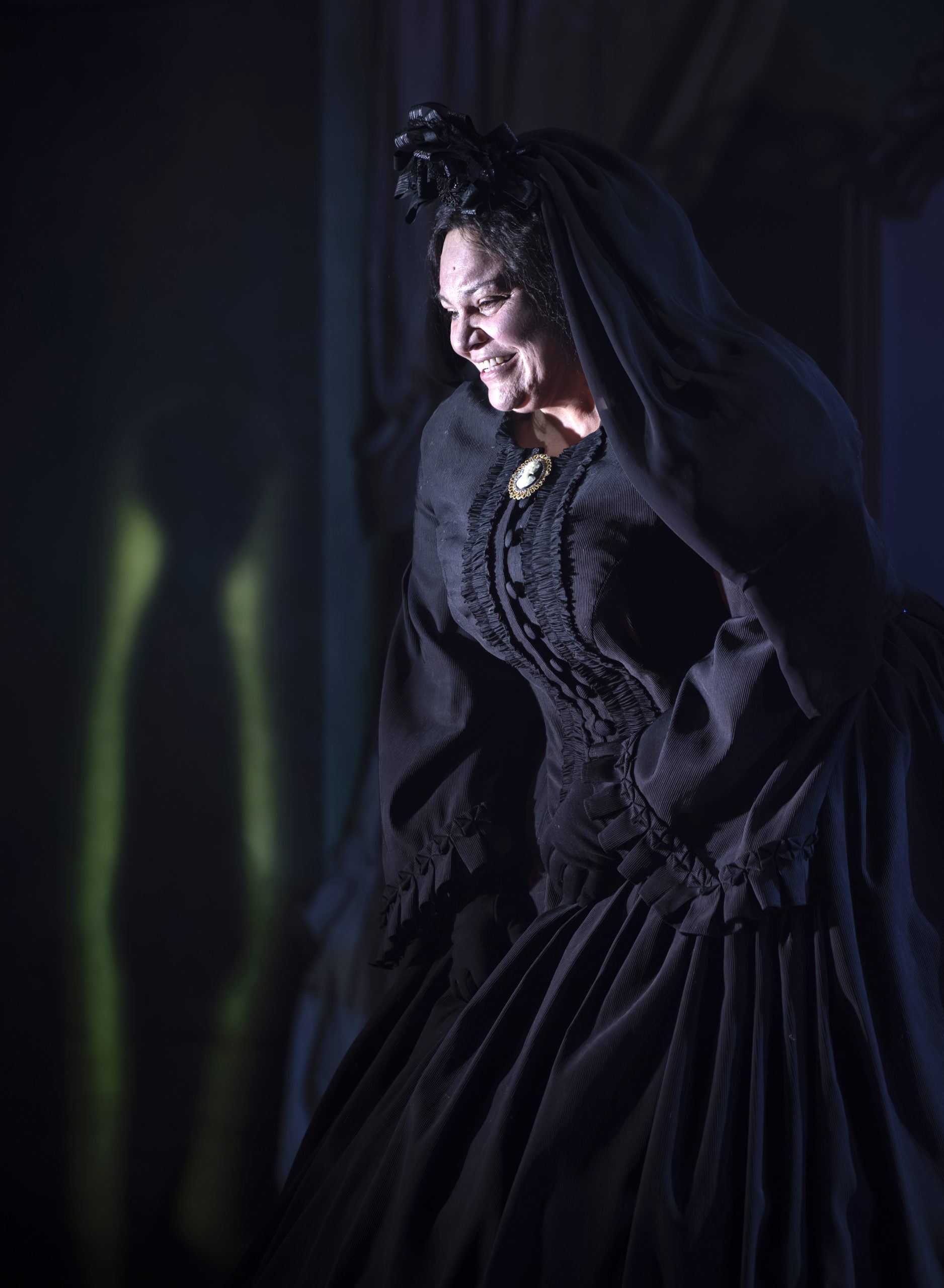
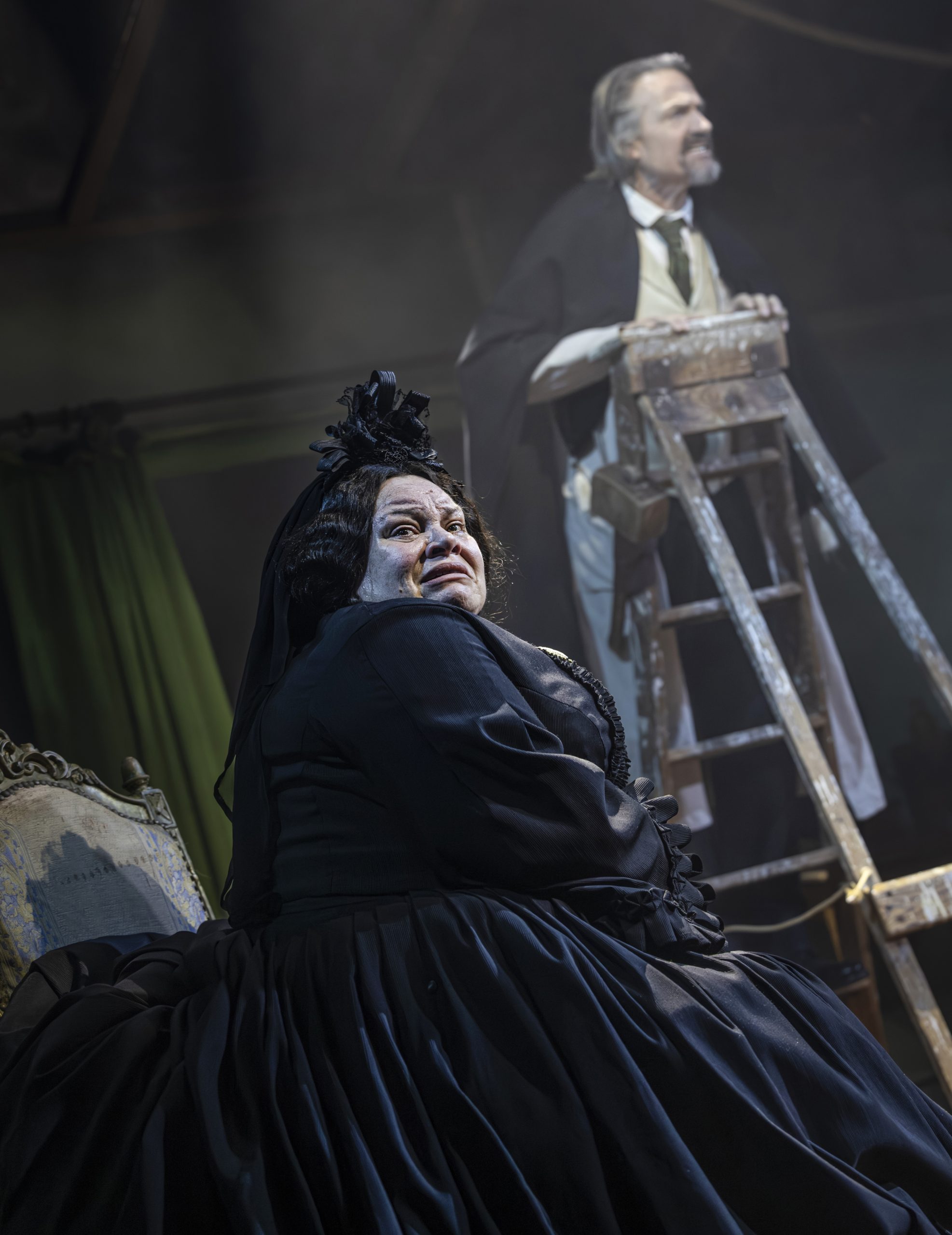
Mary’s often been dismissed historically as unstable or difficult. As you’ve explored her, what feels most misread about her?
I think it’s exactly what we’ve been talking about. A lot of it comes down to ego. Ego exists in all of us. What we say goes. Social media is a perfect example of that now, but back then it worked through gossip, power, and bandwagons. People latch on to whatever feels popular or convenient. ‘This is what everyone’s saying, so I agree too.’
You only ever get part of the story, because people either don’t care about the rest of it, don’t know it, or both. What I have are just the facts: who she lost, when she lost them, and who she was through all of that. She lived thousands of lives, not just for her own survival, but for her husband and for the children she kept losing.
By the end of it, I imagine she was probably thinking, ‘I helped all of you, and every single one of you turned against me’. But that was just the way things worked. If something happens, vulnerability is suddenly not the cool thing anymore.
What’s strange is that now, in this day and age, everyone keeps saying they want authenticity. You hear it everywhere – podcasts, interviews, memes – ‘we’re looking for vulnerability’. And yet when vulnerability is actually presented, people run.
They find it uncomfortable.
Yes. Because then they’re the ones who have to curate it. And once it’s curated, it’s no longer vulnerable or authentic.
There’s a very different Mary Lincoln on London stages at the moment in Oh, Mary!, which leans heavily into satire. Does it feel interesting to be part of a moment where her story is being explored in such different tones at the same time?
Yes, because it’s the whole idea of storytelling, isn’t it? It’s about how the legacy she left behind carries on.
What I’m really grateful for is the spread – the entire spread – because she was a charmer. Politics and seduction go hand in hand, and she knew exactly what she was doing. But it was for survival.
So the fact that all of these different interpretations can exist for this one woman should tell you everything. It shows just how utterly fascinating she is.
How did your early conversations with director Bronagh Lagan shape your understanding of who this Mary is in the play – and just as importantly, who she isn’t?
I think I already had a strong sense of it from the way the play is structured and written, which is exactly why I was so desperate to talk to her. I needed to know whether I was completely off, or whether what I was seeing was actually there. We ended up meeting over Zoom because I just couldn’t wait, and it turned into a really profound conversation.
It’s that feeling you get when you’ve been struggling with something for a long time and then suddenly you see it written down, or you come across information that makes everything click. You go, oh, so I’m not crazy. Or, yes, that’s it, that’s what I’ve been trying to articulate. That was very much the experience of that conversation.
A lot of it comes down to empathy. I know that if I hadn’t lived the life I’ve lived, if I hadn’t gone through the things I’ve gone through, there’s no way I could even have read this play properly, let alone approached it. That’s a real gift, because the job that Hal Fowler and I have is to relay what looks like a duet between two people, but actually feels like a duet between you and your own mind.
That terrifies a lot of people, and understandably so. The unknown is scary. People love what they know. I do too. So when I’m faced with something I don’t know, I have to consciously make space for it. Accept that it’s going to be uncomfortable, that it’s going to be frightening, and trust that we’ll figure it out. That applies to work, to family, to life in general.
For me, that’s what this is really about. Connection. Since the pandemic, something fundamental has been lost between human beings, and what I’m here to do is try to reconnect people. If I can do that by being an empath, by exploring why these internal battles matter, then it almost doesn’t matter that it’s Mary Todd Lincoln and Matthew Brady.
It becomes about you versus the voices telling you what’s right, what’s wrong, what counts as success or failure. Failure only exists because someone else names it as such. It comes from the outside, from other people’s expectations that you’re not meeting. And you’re left thinking, ‘well, I don’t know what your table of contents is, but I’m not sure I agree’.
That, to me, is the human experience. And I love calling it out – in myself, and with other people who aren’t afraid to talk about it.
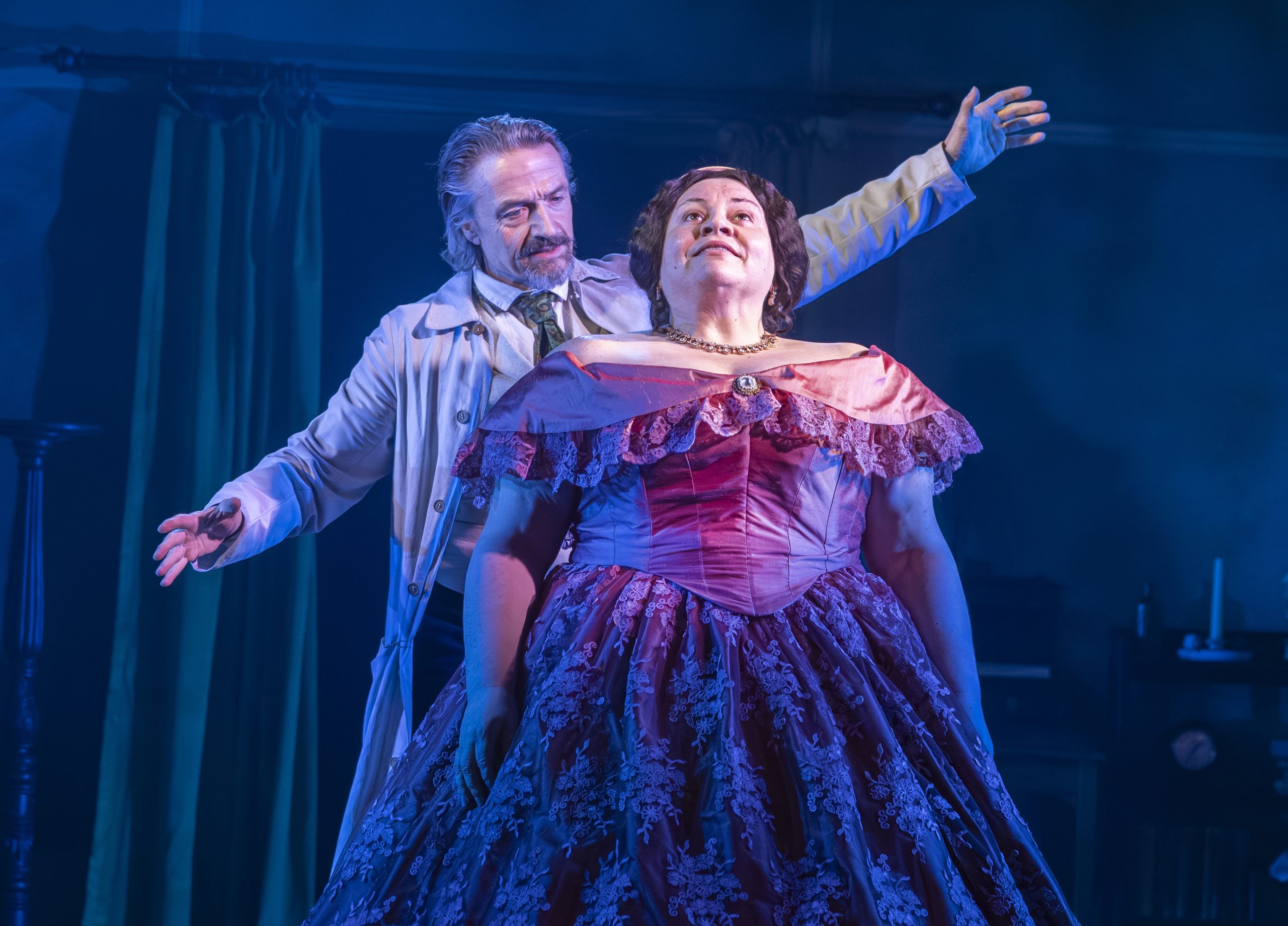
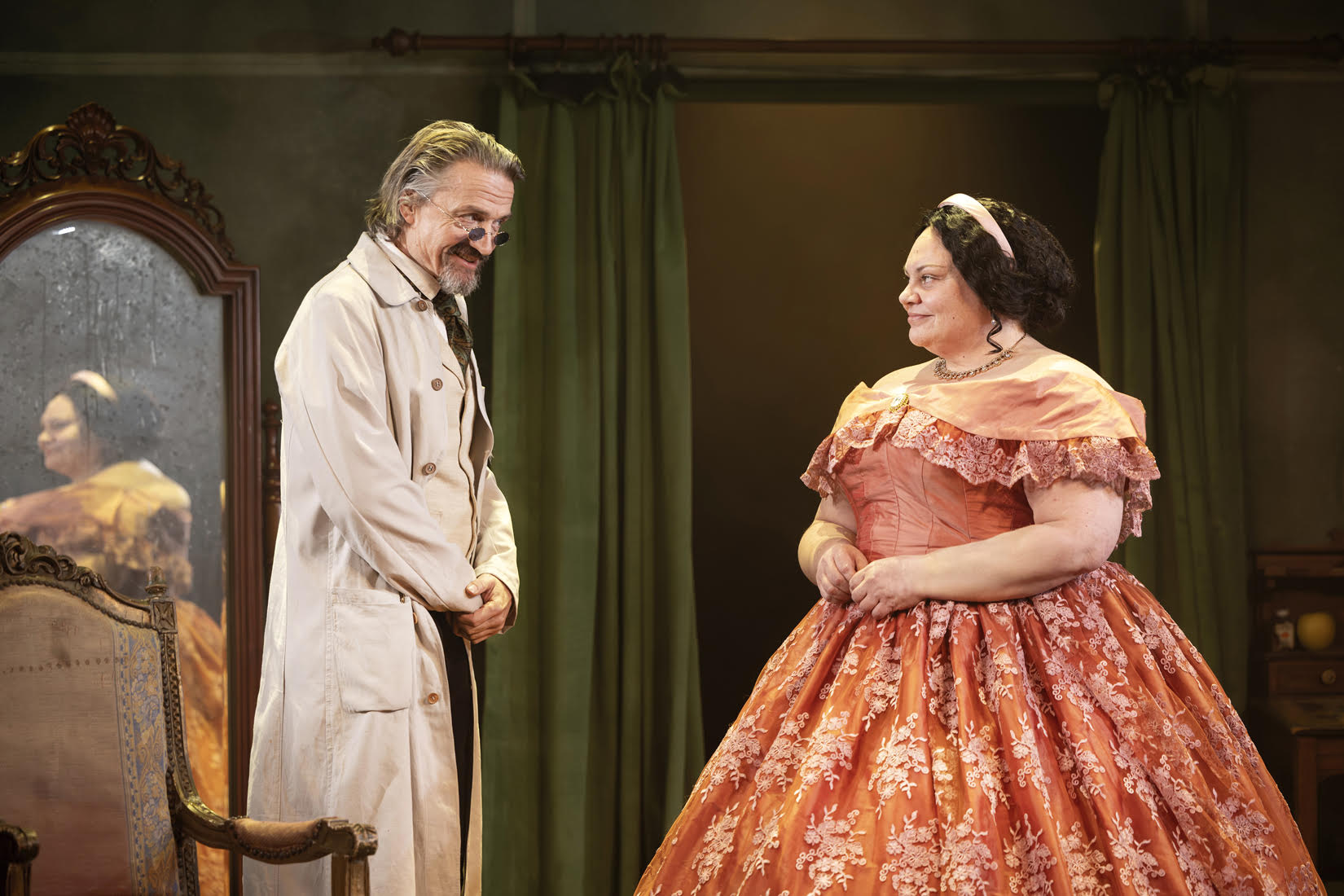
Mary spends much of the play negotiating how she’s seen versus who she feels herself to be. How do you approach playing that tension on stage?
Thankfully, I have someone to play off against. Having Hal Fowler there is everything. Our chemistry is uncanny, and the intensity of the moments we create together really matters. You can do this work on your own, but no one can challenge you in the same way. No one can say, you’re doing this, or you’re not doing that.
When you’re faced with someone who might represent your own mind, or this other force in the play, the only way through it is to go through it. It becomes a kind of pas de deux. It’s deeply psychological. We worked on a scene yesterday that I won’t describe, but physically it felt very Black Swan. I woke up this morning thinking, why do my shoulders hurt? Why can I barely move? And then I realised it was because of the work we’d done.
It starts almost subtly, like, let me see what you can do for me. And then suddenly it becomes, this is who you’ve always been, and you’ll never escape it. But I won’t spoil anything – what I will say is that there’s so much hope at the end of the play. After everything that happens, there’s real hope. It’s quite extraordinary.
It feels very important to be part of it.
When audiences come to Mrs President, what do you hope they leave seeing differently – about Mary herself, about power, or about women who refuse to be simplified?
I hope that whoever comes to the show – because it’s not just women – can weed through the fact that I’m playing a character and recognise something of themselves. That feeling of being told, this is where you’re supposed to be, tick this box, fit into this mould, be this and this and this for us, or you’re nothing.
I hope they can empathise with that and realise, ‘oh, it’s actually okay that I can be anything and everything and all of it and more. What people think I am is not the end of me. It never was. I’m only just becoming who I am, in spite of what everyone else has said and done.’
There’s a lot of strength in that. Real strength. And it feels almost like a breath by the seaside – all that wind coming in on a sunny afternoon. That’s what it feels like. It carries everything with it. It gives you the freedom to simply be.
I love the human race. I really do. I believe in us, and I want to bring as many people into that belief as I possibly can. I’ve made mistakes. I’ve lived thousands of lives before. The only way I can move forward is by forgiving myself, and that’s hard. Shame, guilt – all of that stuff you hope to help your kids navigate – it’s heavy.
But it’s those pockets of hope that mean everything, especially in a world that feels like it’s on fire.
Thank you, Keala. It’s always such a pleasure to talk to someone who’s so passionate and honest. I’ve been really moved by what you’ve shared today.
Mrs President is playing at Charing Cross Theatre until 8 March 2026.
Book your tickets now at charingcrosstheatre.co.uk
Words by Nick Barr
Production Images by Pamela Raith
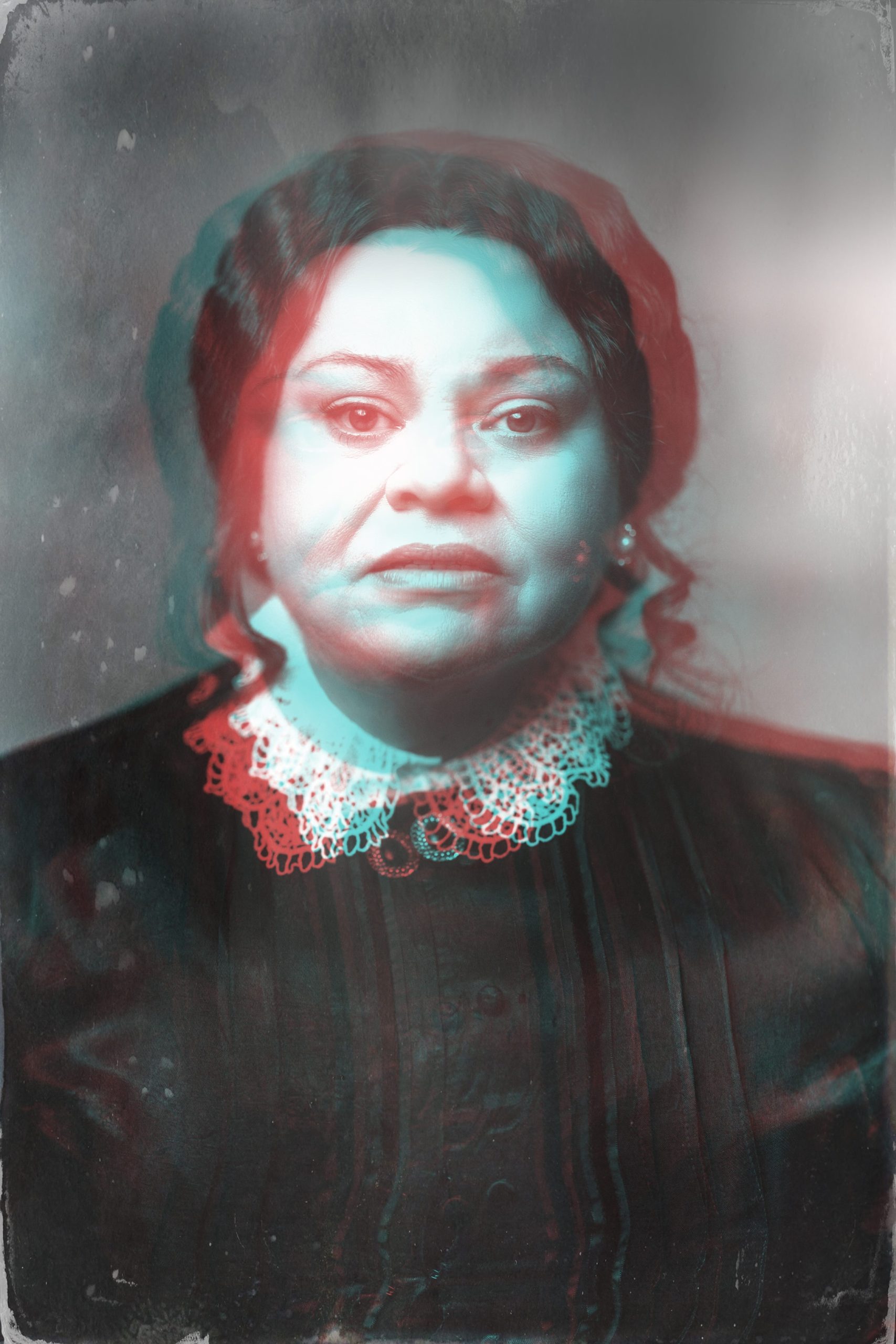
In Costume Portrait by Michael Wharley