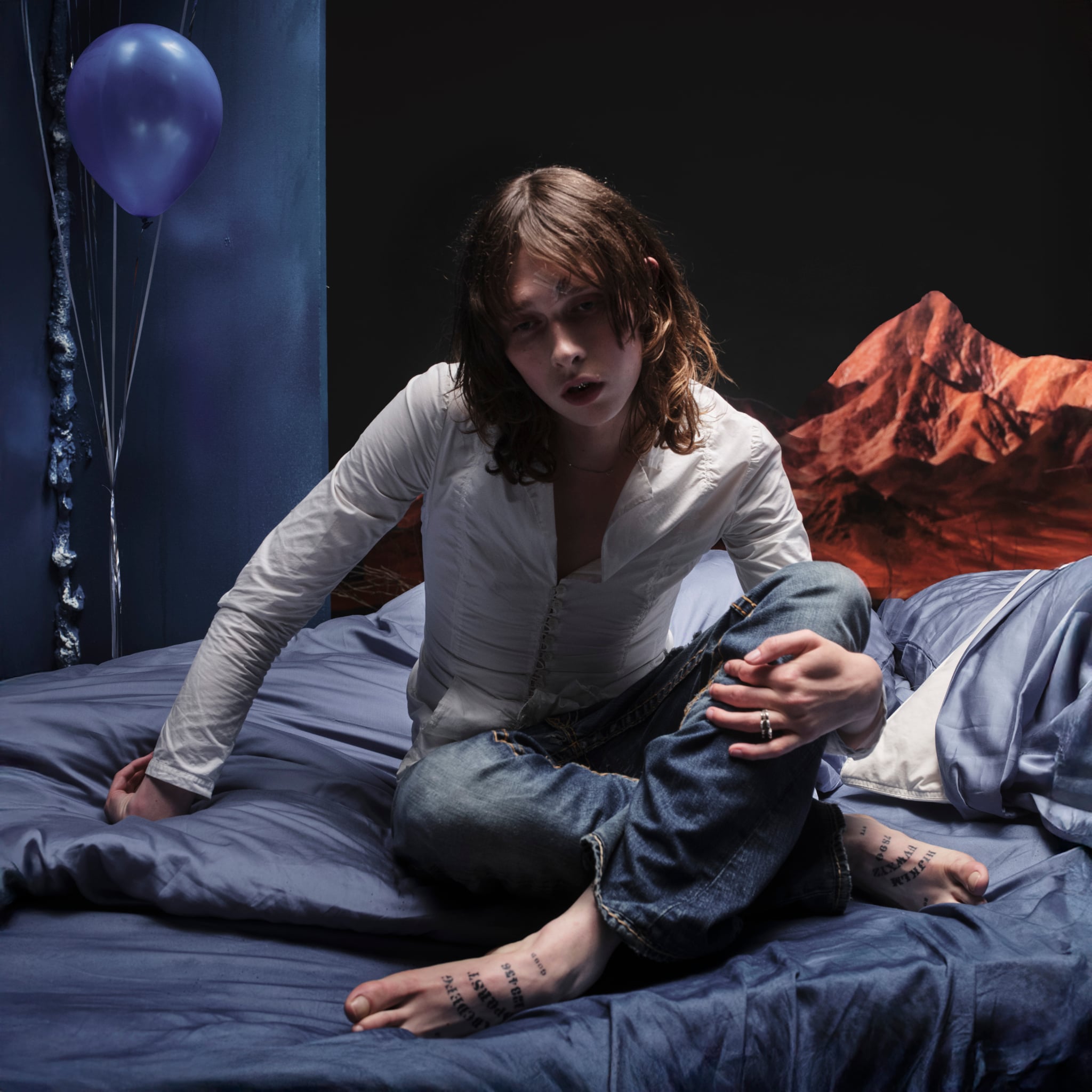
Under the warm glow of the moon, London quiets. Inspired, Baroque-pop composer Lauren Auder takes to the streets to dream. The adrenaline buoys thoughts that have long hidden in her mind, and slowly, she speaks new stories to life.
Many of Auder’s nights are marked by long walks like these spent whispering softly into her phone. Eventually, Auder accumulated enough material to travel to Paris to puzzle her murmurings together with the help of two trusted collaborators. The resulting songs, a tight collection of 10, have come to form her radiant second LP Whole World As Vigil.
Auder uses the French meaning of “Vigil” in the record’s title, which refers to ideas of remaining aware and bearing witness. Auder may have needed the privacy of the night to collect her thoughts surrounding her LP, but art only imitates life. In reality, she is a frequent friend to strangers, and encourages the world to stay open so they can remain curious about each other’s experiences. Because no matter how niche or deeply personal we imagine our stories to be, chances are, they’re universal.
Take the topic of one of Auder’s songs “no outline.” A lush track marked by flourishing piano chords, Auder looks at a bygone era of romance, and contemplates the notion of moving forward, renewed. Next, picture “praxis,” a power pop track built on ideas of resilience and playing the hand in life you are dealt. Each track is highly specific, but reaches out to strangers, shared connections made through familiar words. It’s not a new power of Auder’s, this seeing, who has no problem getting to know someone new. Our feelings are not unique, she says, and according to Auder, that is exactly why we must keep revealing them.
In conversation with 1883’s Camryn Teder, Lauren Auder dives into her honest thoughts on talking with strangers, her recent obsession with film, and the making of her new record Whole World As Vigil.
Your second LP Whole World As Vigil is almost out. What spurred the start and how long has it been in the making?
There are so many different ways to consider the making of a record. The true making of it will be the past two years, but the seeds of it have been present for a long time. The very first thrust of lyrics and melodies were written maybe four or five years ago. Life calls you to make records when the time comes, and this felt like that. That was just where I was at in life. I wanted to sing and felt like there was no way of me not making this project.
I feel that way as a writer with my projects too. I was reading a little bit about the themes present in your new record, and while it contains a lot of different stories, this one was centered mostly around love, whereas your last one was about identity. In your own words, what do you think makes Whole World As Vigil different from the infinite spine?
I think the infinite spine was very much about, how am I gonna deal with being me? This record is more like, how am I gonna deal with being me around other people? How am I connected to other people, and what’s my place in this world now that I feel a bit more centered in myself?
A lot of the infinite spine was also about accepting darker feelings and thoughts of ourselves and getting through misery, on some level. This one’s kind of like, but how do I deal with joy? The potential of that and the complicated feelings. That felt really important.
That definitely comes through. There’s so much dialogue about transformation in these songs. I love that it’s almost the antithesis of your last record in a lot of ways.
It is on some level. I need to feel like I’m making some kind of progression. I think that was something I was very conscious of. I wanted to make something that felt like an answer or a difference. A true sense of moving forward.
One of the songs I really like off of the record that reflects that is “Candles,” which is about the concepts of luck and healing. I read you wrote after seeing a close friend battling an illness. I really like what you’re saying in this one. Can you talk a little about the making of it?
That one’s an interesting one to talk about the writing of. The first line is very much a statement of intent. It was a specific relationship and situation, seeing a friend lose grip with the world at large and how heartbreaking that is, and not being able to be able to anchor someone in that way. How do you move on with life knowing that that’s a possibility, and what do you hold onto to make yourself continue?
It’s about trying to find peace in the world that you know can be harmful. How do you still find joy and community and care and love in a world when you know that that’s there? I think that that’s what spurred the writing of that song. It’s deeply personal. On the record, it has the most storytelling. At least on these verses, it’s very much a transcription of something that happened, and it’s quite devoid of metaphor in those moments. It was something that I needed to write.
This song is obviously personal, but I feel like there’s a lot of universal feelings in here as well, which, I guess, is why music is so great. So thanks for sharing that. I really connected with it.
I definitely agree that that’s music in general, and I think that’s the conceit of this record. Your own personal experiences and the present and the personal relationships you have, they map to the world. It’s kind of a collapsing of scale on that level where the interior and the exterior are all the same. They reflect and refract each other. I think that’s more than what it does. It’s very much what it’s about.
That’s beautiful. I think we need a reminder of that every now and then, that most of our experiences mirror each other. Speaking of which, I was reading that you recorded some of the demos for this record as voice notes while walking around London. I really liked that. It has sort of a whimsical vibe. I’m big on voice notes as well, but I am pretty shy about it and record them at home. I like the idea of doing it out in the world.
*Laughs* I think that most of that was quite late at night, so I didn’t have to be so worried about people listening in. Most of ’em are also extremely mumbled, but I think every single song, bar one of them, was made through that format. All of the songs were written from the vocals. The vocal melody came first, and then it was just about mapping chords and the rest of the music. So that was an integral part of it.
The center of my music is always gonna be the lyrics and my voice, so it just felt natural to do that. I wanted to write catchy pop songs and I felt that if the vocal melody could sustain that, then you’ve got a good chance at making something memorable.
Typically, when I talk to musicians, it’s the music that comes first. I like that you follow what feels natural to you. In those first moments when you’re forming the lyrics, are you more inspired by your surroundings, or is it more that a thought pops in your head and you’re just inspired to record it?
I think it’s more of an internal process, but also, being in motion kind of spurs the inner workings. I’m not so good at sitting down and going, now it’s time to write. I can, but when I do that, it tends to be because I’m going from an original idea that just started in movement.
I definitely feel that way too. I feel so much more creative after a walk or a drive. Sort of shifting gears a little bit, I was reading that with this record, you chose to work with a smaller circle of collaborators. Was that an intentional shift? Why was it important to you to narrow down the circle?
Once I started working on this record, I brought in Alex Parish and dviance co-produced and co-wrote a load of the last record. It just was coming out of us, and I think that was it. Just like with my previous record, I was in a very emotionally vulnerable state writing a lot of these, and was very much working through it while writing and it felt right to be around people who know me so well.
That makes total sense, finding that comfort with the familiarity. You just mentioned those two collaborators, dviance and Alex Parish. What are some of your favorite parts of the creative relationship that you guys share? What do you feel like they bring out of you and vice versa?
They’re very different people, but I think that often dviance is quite intransigent and very demanding of the art. I know that he’s never sugarcoating anything for me. I’ll be like, is this good? And if it’s not, he’ll say, and that’s really useful to have in a collaborator. He also has the exact same reference points as I do, but a very different mind, and I think that’s always helpful to have someone who you trust entirely with taste but is just thinking completely differently, so there’ll always be a left field idea that ends up making for a great song.
On that level, Alex has fantastic attention to detail and sonics in a way that I find so admirable. Really, I would say it’s the glue in a lot of this. He really brings it together and makes it feel that much more pristine with his level of care. I’m quite a fidgety person. I’m easily distracted, and it’s really helpful to have someone who’s a rather calming presence and has a real professional and detail-oriented touch to things. I often throw a lot of things at the wall and I’m like, this is awesome. And to have someone who kind of grounds you and pushes you towards really finishing things in that way is great. Otherwise, nothing will get done.
I don’t know if you’ve touched on this in the past, but how did you meet both of them?
Dviance I met on SoundCloud over 15 years ago, which is crazy. I just sent him a message like, I like what you’re doing, and then we started making music. It was very organic. I think there’s not so much of that on SoundCloud anymore, but back then, it was an amazing time for that.
With Alex, we just had loads of mutual friends in London. I think it was Alex’s brother who was just like, you guys love the same music, you should meet up. And we probably spent a couple days in the studio just listening to music. And that’s been a relationship since my second EP, so it’s been a while.
You just mentioned meeting dviance on SoundCloud, and I saw you used a sample of a drill you’d found on TikTok in your song “Praxis.” Does the internet still play a big role in your career and music process, or were those moments more spontaneous?
I think it’s just a part of daily life and would be impossible to ignore. All my inspiration was kind of coming from there, on some level, when I was a teenager. I think much less so now. I think it’s kind of symptomatic of what the Internet’s evolved into. It’s much more algorithm based and something that generally doesn’t really move me very much. I like to be an active part of the digging.
With that video, I dunno where I saw it. It’s a mythical pool, I believe the kids call it. It’s a CNC machine, which is like a metal carving tool. It’s some big tool that I didn’t quite understand but made a really beautiful sound that really felt so inspiring.
I love that that spoke to you, and I feel like it’s probably a healthy sign that you’re less on the internet. It has become an interesting place over the last few years.
Yeah. The lack of agency, the fracking of our attention span, it’s all much less of an involved process. I say this and I’m online, but less so. It used to be the space where I’d really curate my taste and discover things. And I think that less and less myself.
Speaking of curating tastes, I wanted to talk about how you’ve made beats for other artists in the past and even composed music for Louis Vuitton campaigns. Do you feel like there’s a difference when you’re making music for other people and when you’re making it for yourself? Or is it the same process?
It’s a case by case basis really. I think in terms of when I’ve made beats, which is something I wanna do much more of, it was really fun for me ’cause it felt really spontaneous and exciting and exploratory. With my projects, because I am so focused on my lyrical content, it’s kind of like a thesis. It’s still fun, it’s still exploratory, but I do think that I have a more precise goal. With a lot of that stuff, it was kind of more about trying things out, and if it stuck, it stuck, and I didn’t feel like I was on the line so much emotionally.
When I’m working in that fashion, it allows me to kind of fail in a way that I feel like would be really painful if I was working on a track for my album and felt like it missed a mark. It’s quite emotionally devastating. Obviously, when it’s like a commission for something, there are different stakes and you’re working with other people’s visions, but when I’ve had experiences of just sending through ideas and stuff, it just felt quite exciting to do something that might not work.
I love that so much. I think a lot of people are afraid of failure, but you seem to really love the process of trying new things. I read something you said recently that reflects that. You said that music gives you a constant sense of evolution, which to me, is a love for learning. I’m curious, what’s something new that you’ve learned recently, whether in music or life, that you’re open to sharing?
I’m learning every single day. Lately, I’ve been delving deeper into film. I’ve always loved film and I’m relatively well-versed in the classics, but this year I’ve really been exploring what I get from movies that I can only get from movies. Lately I’ve been really interested in watching films about film and images and that kind of thing. For example, I was watching F is for Fake a couple weeks back. It’s amazing. It’s all about the image and what the image means. So that’s been exciting to explore this year.
It’s funny, I was thinking recently about how different the experience of reading a book versus listening to music and watching a film is. It’s all art, but it does all give you something different.
Exactly.
Sort of going a little bit more into what you’ve been consuming, I read that you’re a big Scott Walker fan but listened to a lot of dance music while making this record. What was playing in your ears at the time?
It’s a really wide palette, but I was really loving listening to old house and dance music in general. I was listening to a little Orbital, I was listening to Mr. Fingers a bunch. It feels like an endless list. Frankie Knuckles was a big person for me to listen to at that moment. At the same time, I was also really interested in guitar music. I was listening to a lot of Placebo and Robert Fripp’s stuff. Texturally, it felt really interesting. I’m always trying to bring together the unique sources that only my listening habits could produce, you know?
That’s always a hard question. It’s like, which ones do I mention?
Exactly. I’m constantly listening to music. It’s my favorite thing in the world. It’s always happening.
That’s definitely a big thing for me too. I just had one more question for you. This is sort of an off the wall one, but I figured it’d be sort of fun to ask. In the past, you said, in the context of travel, ‘access to more makes you want to keep knowing more.’ I’ve traveled a lot my life too, and I definitely agree with that. I’m curious, what else do you think people should be giving themselves more access to?
I think people should talk to strangers more. Obviously it’s not easy to do this, and also you need to be up to rejection, which is a big part of it. But everywhere I’ve gone, I’ve found I’m pretty good at striking up conversation, and that has led me to some interesting places. It’s a banal piece of advice, but I think it’s often the case that the most important and life-changing ones feel very near because we kind of instinctively know them. It’s good to be reminded.
I think a lot of this record is like that too. I dunno if there’s any groundbreaking lines in there on a philosophical level, but all of them feel important to remind yourself of.
I love that and I think people do need a reminder of that. I don’t know how it is in a bigger city, but sometimes I try to talk to people and they’re shocked that a stranger has approached them.
I dunno if it’s any different. I think in my experience it’s actually maybe worse in a bigger city. People have their own particular lives and feel very disconnected from their surroundings. I feel like you kind of create your own world inside the world, and people are so different and there are so many varied lives in the big city that it can feel impossible to reach through those barriers.
I grew up in the middle of nowhere, like really, really deep countryside, and I think that kind of taught me that I’ve gotta find a way to get along with everyone. At least on a conversational level. I say this as someone who’s probably not the most conventional person. Many, many aspects of my life I choose to live unconventionally. But I think that people have a lot more time for [talking] than you might expect.
I think that’s sort of a lost art, honestly, approaching strangers.
Yeah, I mean, I’ve worked in a bar a lot, and it’s definitely the spice of life, you know. If nothing else, it’s taught me how to talk to anyone, which is important.
Lauren Auder’s sophomore record Whole World As Vigil is out on Friday.
Interview Camryn Teder
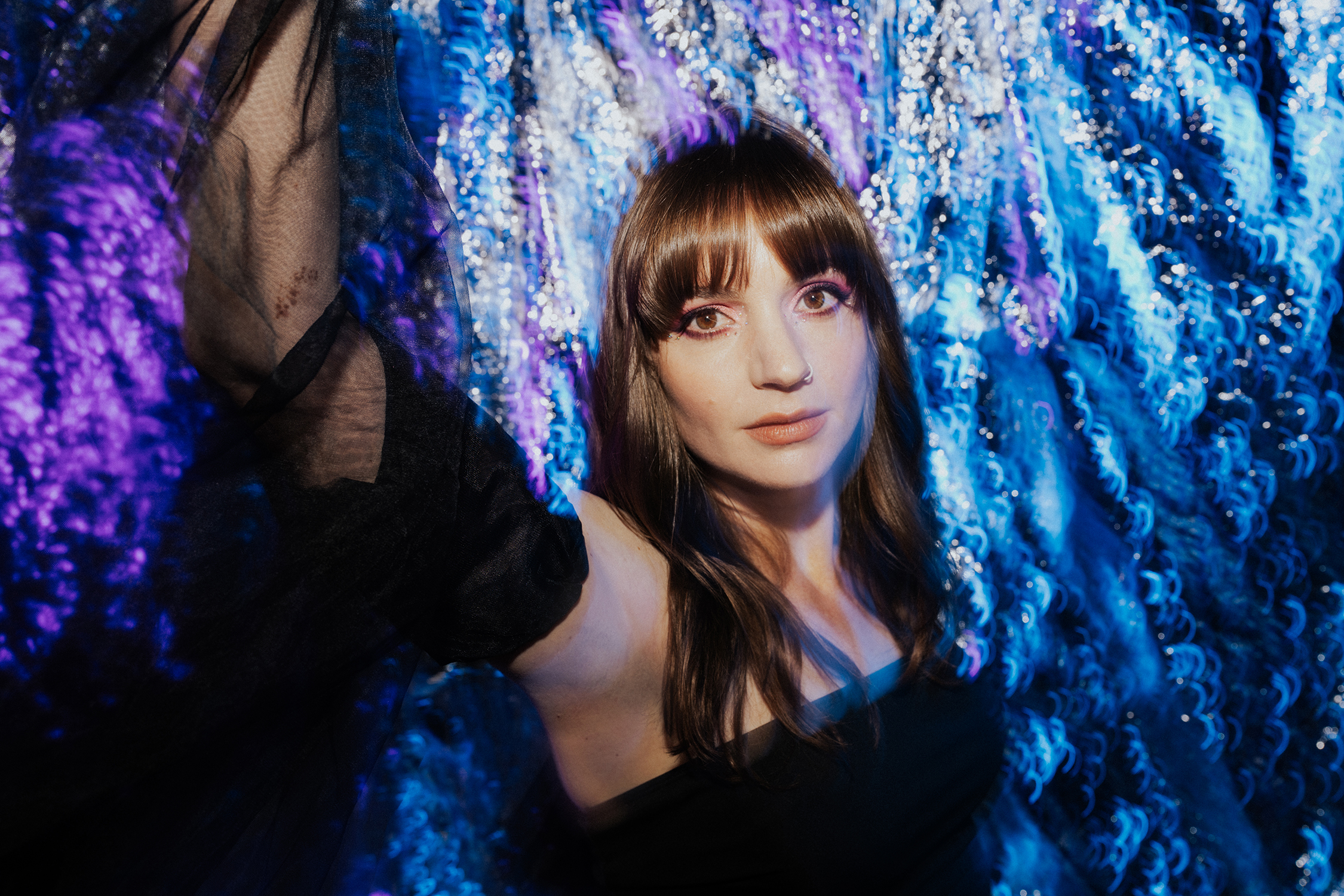
Photography (main image) Alice Schillaci
Thanks Good Machine