
Lexi Hensler is part of a new wave of founders reshaping what wellness actually looks like, and she’s doing it from lived experience, not theory. With a huge audience across YouTube, TikTok, and Instagram, she’s built a following on being open about the parts most people avoid, especially when it comes to mental health. That same honesty now carries into Hugz, the company she co-founded, which takes the science of deep pressure therapy and turns it into something you can actually hold onto.
The idea didn’t come from a trend forecast or a gap in the market. It came from necessity. After experiencing severe panic attacks from a young age, Hensler found herself relying on physical tools to get through moments that felt overwhelming, something tangible to bring her back into her body when everything else felt out of control. Hugz grew out of that, a way to make that kind of support more accessible, and less isolating.
There’s a clear intention behind it. This isn’t about selling a version of self-care that looks good online. It’s about building something that works in real life, especially in the moments people don’t talk about.
That thinking extends beyond the product itself. Through partnerships like the Inspiring Children Foundation, the brand feeds directly into mental health support for young people, grounding it in impact rather than messaging.
For this 18 Questions, Hensler talks about the habits that keep her grounded, what it really feels like to live with anxiety, and how those experiences shaped both her outlook and the business she’s building.
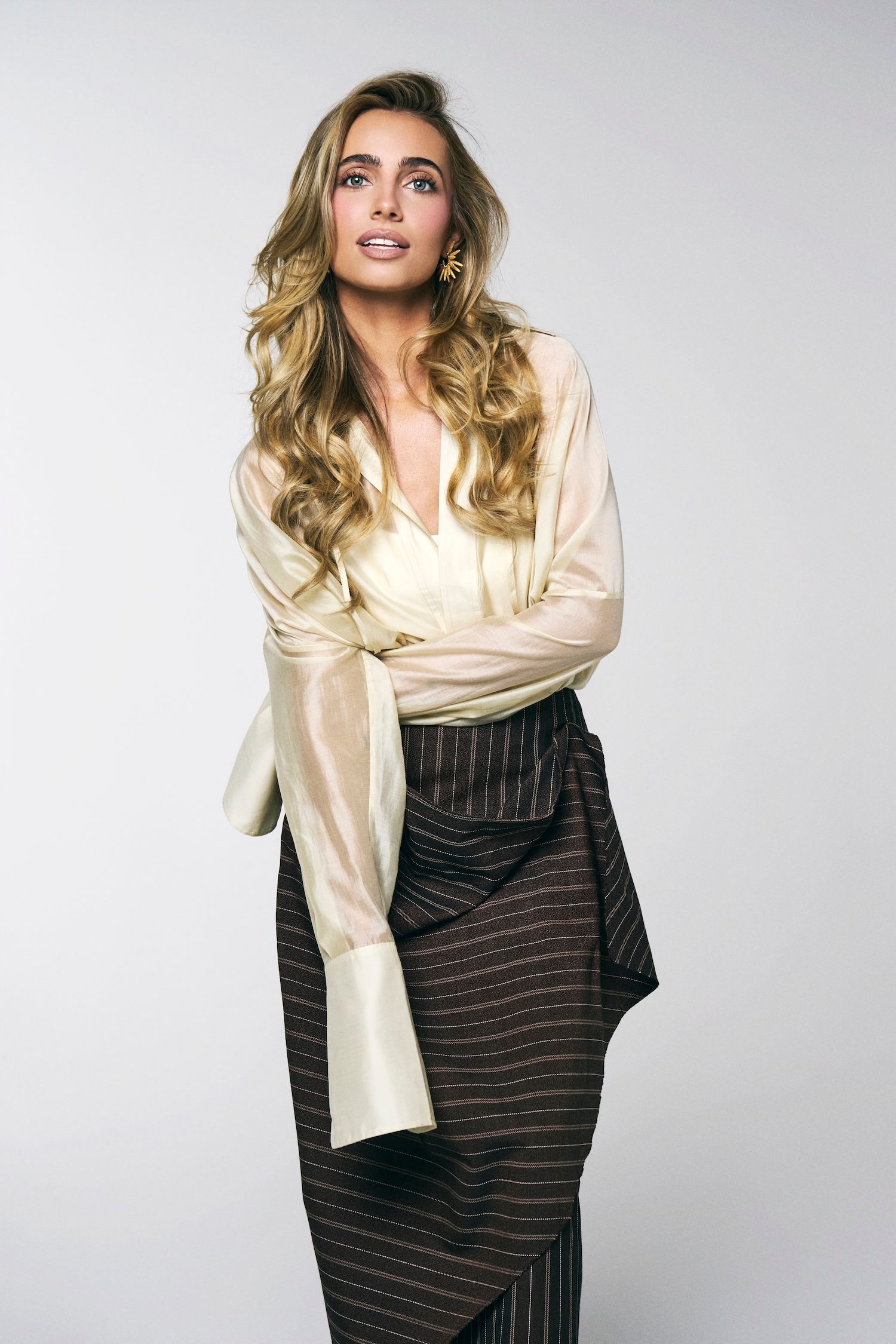
1. What’s the first thing you usually do when you wake up in the morning?
Honestly? For the longest time, it was reaching for my phone before my eyes were even fully open. And some days, I still do that. But I’ve really been challenging myself to shift that. Now I try to make the first moments of my day intentional and unplugged, whether that’s saying good morning to my dogs, connecting with my fiancé, or just being present before the world rushes in. I’ve had to remind myself that whatever is waiting for me on that phone will still be there in an hour. The emails, the notifications, the noise, none of it is going anywhere. My peace is worth protecting, even if I only get a few moments of it.
2. What’s one habit that helps you stay grounded when everything feels busy or overwhelming?
Horseback riding, without a question. I get out to the barn once or twice a week and it is truly one of the only places where I can decompress. When I’m riding, I can’t think about anything other than what I am doing in that moment. You can’t be distracted by life or work when you are riding a 1,200 pound animal, you will fall off. And honestly, it is not just the riding. I try to soak up as much time there as I can, feeding them, mucking the stalls, just being in their presence. Horses’ heartbeats can actually sync with yours, and they are incredibly intuitive animals. They sense your energy before you even realize what you are feeling yourself. They have taught me more about myself and healing than I ever anticipated.
3. When you hit a creative block, what actually helps you move through it?
For me, a creative block is usually my mind and body’s way of telling me to slow down. So I try to listen to that instead of pushing through it. Getting outside, taking a walk, moving my body in some way, it almost always starts to shake things loose. Getting out of your head and into your body really opens everything back up. I always come back feeling refreshed and with a much clearer perspective than if I had just sat there staring at a screen willing myself to create.
4. Are you someone who trusts your gut quickly, or do you tend to overthink decisions?
Honestly, both. I think it depends on the situation. There are areas of my life where I have learned to trust my instincts completely. But there are other areas where I am still building that confidence, and I can definitely talk myself in circles before landing somewhere. I think the older I get, the more I recognize which version of myself is showing up in those moments. Am I overthinking because something genuinely needs more consideration, or am I overthinking because I am scared? That distinction has been a really important one for me.
5. What’s a small daily ritual that makes a noticeable difference to your mindset?
I am a big believer that how you start your morning sets the tone for the rest of your day. My fiancé and I have built a morning routine where we spend every morning working out and then making breakfast together. It has become something we both really look forward to and protect. On the days we are able to stick to it, we genuinely feel our best, individually and as a couple. Not jumping straight into emails and chaos first thing has made such a difference for my mental health, and I think doing it together makes us both more accountable to actually showing up for ourselves.
6. How do you reset after a long or stressful day?
I usually pick one, or all three, of my favorite things. Cooking a comfort meal, reading a good book, or just being with my dogs and my fiancé. Coming home to that little family of mine makes everything feel more manageable, no matter what the day threw at me. I’m also a big talker and out loud thinker. I love getting whatever is in my head out into the open and venting to my fiancé instead of letting it spiral in my brain. I’m really lucky to have found a partner in this life who is my safe place, and I know with him by my side we can get through anything.
7. What kind of environment do you feel most creative in?
I actually feel most creative when I’m outdoors and away from screens, which is a little ironic given what I do for a living. You would think that scrolling through social media would spark ideas but I have actually found the opposite to be true. Some of my most creative periods have come when I have not been on the internet for days at a time. I get so much clarity when I’m focusing on my wellbeing. When I am connecting with nature, animals, and people who genuinely inspire me, that is when ideas start flowing naturally. Creativity for me is less about sitting down and forcing it and more about creating the right conditions for it to show up on its own.
8. What’s something people often misunderstand about you?
I think people often underestimate me. And I get it, I am bubbly and optimistic and that can read as naive to some people. But underneath that is someone who has fought really hard to be where she is. I have been through experiences that have tested me in ways I would not wish on anyone, and I have come out the other side more resilient and more clear on who I am because of them. Being a woman in business adds another layer to that. There is a boys club mentality that still very much exists and you feel it. That is why I have been so intentional about who I surround myself with and who I build with. I think the biggest thing I have learned through all of it is that nothing, no deal, no opportunity, no relationship, is worth sacrificing your peace.
9. You’ve been open about experiencing panic attacks. Can you take us back to when things first started to shift for you?
I was seventeen the first time it happened and I thought I was dying. I did not know what a panic attack was. I just knew that my body was doing something terrifying and I had no control over it. For months I suffered through them, scared and completely lost. Still living at home, I remember wondering if this was just going to be my life now. If I would ever be able to move out, travel, chase my dreams, or do any of the things I so desperately wanted for myself.
I eventually found exposure therapy and spent months doing really intensive work. It gave me my life back in a way I will never be able to fully put into words. But anxiety does not just disappear. It becomes a part of you, and you learn to carry it with more grace over time. I recently went through the worst stretch I have experienced in nearly a decade and it brought me right back to that seventeen year old girl who was so afraid. It was humbling and heartbreaking and it required me to slow down and completely reassess.
But I have learned that everything has a season. Every storm passes. And on the other side of my darkest moments has always been the most profound growth. That experience is what led me to create Hugz, because I never wanted anyone to feel as alone in those moments as I once did. Sometimes you just need something to hold onto.
10. Was there a specific moment where you realised you needed something more tangible to manage anxiety, not just talk about it?
At my worst, I was grasping for anything that could pull me through. I tried antidepressants, exposure therapy, talk therapy. I was willing to try anything. Over time I put together a little toolkit of things that helped me ride the waves when they would hit. And what I kept coming back to, aside from exposure therapy, was holding ice and wrapping myself in a weighted blanket. That physical pressure was the only thing that could quiet the noise enough to bring me back to earth. That is when it clicked. What if that comfort did not have to stay at home? What if you could carry it with you wherever life took you? Hugz was born out of my own desperate need for something more tangible to hold onto.
11. Hugz is rooted in deep pressure therapy. What made you confident this was the right direction to build a product around?
I have always been someone who needs to understand the why behind things, especially when it comes to my own body and healing. So when I first felt the effects of deep pressure therapy working on my own anxiety, I needed to know why it was actually helping me. I dove into the research and what I found was that the relief I was feeling was not in my head. There is real science behind it. Applying firm pressure to the body actually signals your parasympathetic nervous system to activate, which is your rest and digest center. It is a completely natural way to bring your body out of fight or flight mode. That science gave me the confidence to build around it. I never wanted to slap a wellness label on something that did not actually work. It had to be real. And then through research and development we discovered we could incorporate a nontoxic glass bead that holds temperature, meaning you can heat or cool it, which unlocks even more therapeutic benefits. At that point it felt less like a business decision and more like something I was meant to do. I just kept thinking about seventeen year old me, alone and terrified, wishing she had something to hold onto. That is who I built Hugz for.
12. There are a lot of wellness brands out there right now. What did you feel was missing that Hugz could offer?
Honestly, heart. I think the wellness space has become incredibly crowded and consumers are savvier than ever. They can feel the difference between a brand that was built from a boardroom and one that was built from a real experience. I never wanted Hugz to be a trend. I wanted it to be a tool. Something that was created by someone who actually needed it, used it, and built it because nothing else like it existed. That authenticity is something I will never compromise on.
13. How involved are you in the actual design and development process of Hugz? What details matter most to you?
Honestly, heart and intention. The wellness space has become incredibly crowded and consumers are savvier than ever. They can feel the difference between a brand that was built from a boardroom and one that was built from a real experience. So many brands use wellness as a marketing strategy and I think people can see right through that. Every single decision we make at Hugz, from the materials we use to the way we show up for our community, is rooted in intention. Hugz was created by someone who actually needed it, used it, and built it because nothing else like it existed at the time. When you buy a Hugz you are not just buying a product, you are buying into a mission that was born from a very real and very personal place and we will never compromise on the intention this brand was founded on.
14. The idea of making something functional feel comforting and emotionally supportive is quite specific. How do you balance science with that softer, more human side?
The premise of that balance never really existed for us. The science and the human side have always been one and the same. The whole point was to take something that is clinically proven to work and wrap it in something that feels like a hug rather than a medical device. When you are in the middle of a panic attack, the last thing you want is something that makes you feel like a patient. You just want something that makes you feel safe. That is the heart of Hugz. We just want people to feel less alone and supported in those moments.
15. You’ve built a huge audience across YouTube, TikTok and Instagram. How has that community shaped the way you approach Hugz?
Transparency has always been the foundation of everything I do online. I believe it’s even more important to show the moments of struggle than it is to show the wins. That vulnerability is what built the trust I have with my community, and that same philosophy is what we brought into Hugz from day one. We launched without a single paid ad or paid partnership, and instead we focused on building a real community. We talk about mental health, we check in on our community, we listen. These new generations are incredibly smart and they can smell inauthenticity from a mile away. The old tired marketing playbook does not work anymore and frankly it should not. People want to feel seen and heard, not targeted. So we treat them accordingly. At the end of the day my community taught me everything I know about showing up authentically. Hugz is just me trying to give that back.
16. Was it difficult shifting from being seen as a content creator to being taken seriously as a founder?
Absolutely. And I am no stranger to walking into rooms where people were waiting for me to fail. Even when I first started as a creator, people would laugh and say things like ‘see you in six months when you fail in LA and move back home.’ That never left me. But neither did the drive to prove them wrong. There is an assumption that comes with being a content creator that you are simply the face of something rather than the force behind it. But I have never been interested in just slapping my name on a product and walking away. I am deeply embedded in this business, from the product development to the marketing strategy and community building. We are on a mission that is so much bigger than a product. We partner with charities, host events, and are creating an entire world around Hugz, where we aim to genuinely reshape the conversation around mental health. People can think whatever they want. They can understand it or not. It will not stop us. We built this to make an impact.
17. Your partnership with the Inspiring Children Foundation adds another layer to the brand. Why was that important for you to build in from the start?
Giving back has been built into Hugz since day one. It was never something we wanted to add as an afterthought. It had to be part of the foundation. But it was equally important to us that we were partnering with organizations that were actually making a measurable impact, where we could see exactly where the money was going. That is the intention we bring to every decision we make and we hold our partners to that same standard. We have donated to six incredible organizations over the few short years we have been in business, and finding the right partner to formalize a deeper relationship with was something we were very excited about. We found the Inspiring Children Foundation at their Not Alone Mental Health Summit last year and spent a few days out there getting to know their team and playing tennis with the kids. That experience said everything. They were not just talking about impact, they were creating it right in front of us. We felt like a perfect fit because they lead with the same intention we do. I look forward to all the ways we will continue to show up in this community because for us this is just the beginning.
18. Looking ahead, what does success actually look like for you? Is it about scale impact or something more personal?
Honestly, I am still defining it. And I think that is okay. I used to think success was a destination, something you arrived at and then finally felt settled. But the older I get the more I realize it is something that evolves with you. What I know for certain is that success to me will always be rooted in the relationships I keep, the joy I feel, and whether or not I can look at myself in the mirror and know I never compromised my values to get there. On the Hugz side, success looks like reach. Not revenue, reach. How many people did we actually help? How many lives did we touch? Somewhere out there is a seventeen year old girl lying awake at night, terrified, wondering if she will ever feel normal again. I was her. And if I can reach her, if Hugz can be the thing that helps her get through that night, then everything I fought for will be worth it. Little Lexi would be really proud of that.
For more info visit wwwgivehugz.co
Photography Ben Cope