
Liviu Alexa is one of Romania’s most well-known investigative journalists, but at 46, he shocked everyone when, without anyone having a clue, he launched himself into contemporary art with a solo exhibition that “broke” the audience. “Noi suntem Apocalipsa” (“We Are the Apocalypse”), held at the Cluj-Napoca Art Museum (Romania), attracted thousands of curious visitors and, incredibly for an emerging artist, saw his canvases sell at significant prices — between 10,000 and 15,000 euros each.
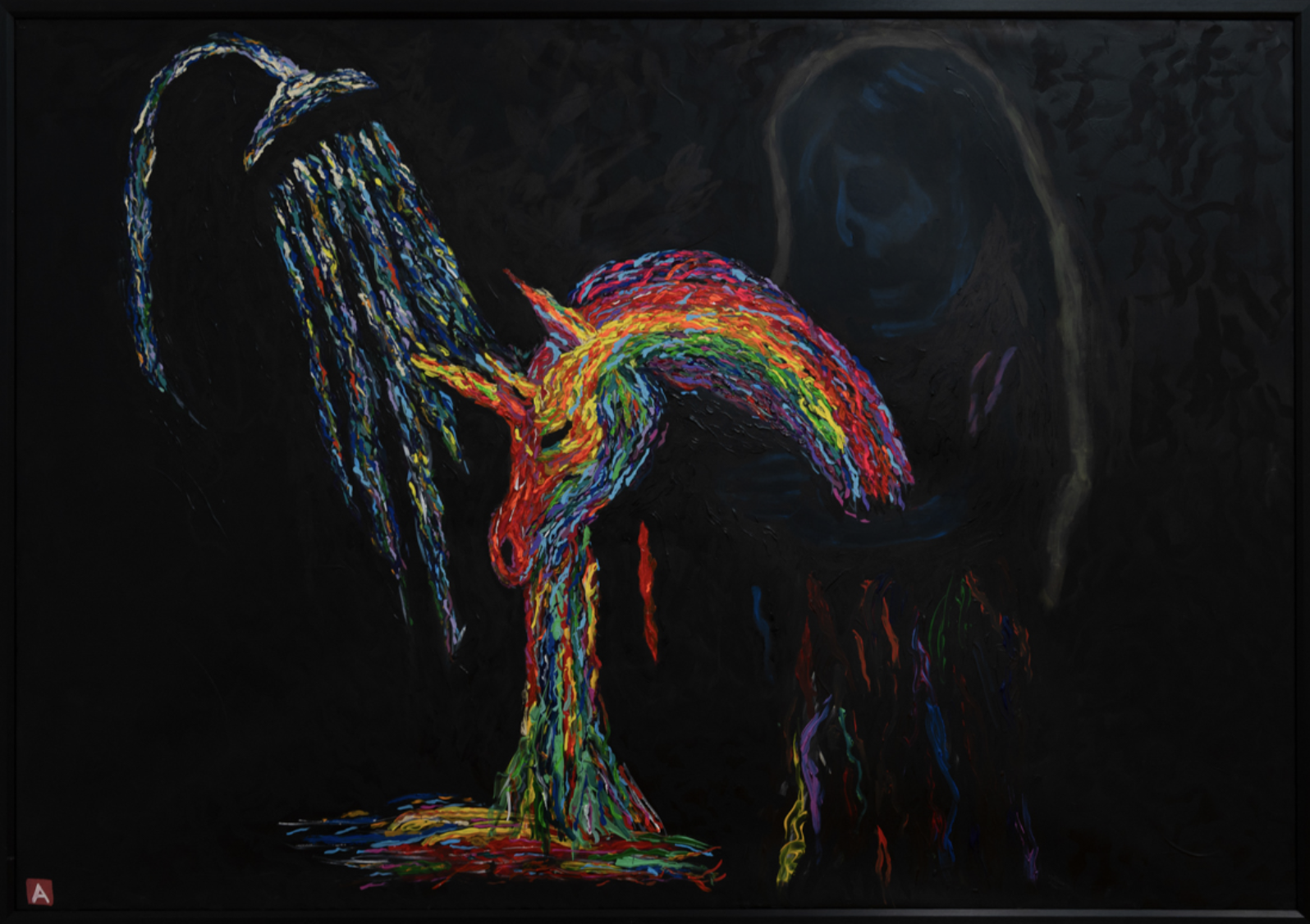
He is not part of “the art world,” but he entered it without asking permission. He is a bad boy both as an investigative journalist and as an artist. Mysterious and non-conformist, Alexa shocked Romania’s art scene by not seeking anyone’s approval before joining it — he simply barged in, a fact that did not go without consequences: he is nearly sold out from his first exhibition and, less than two months after it, he will have another one, in Bucharest, on April 16, 2026, with a completely different theme — something absolutely unusual for an emerging artist.
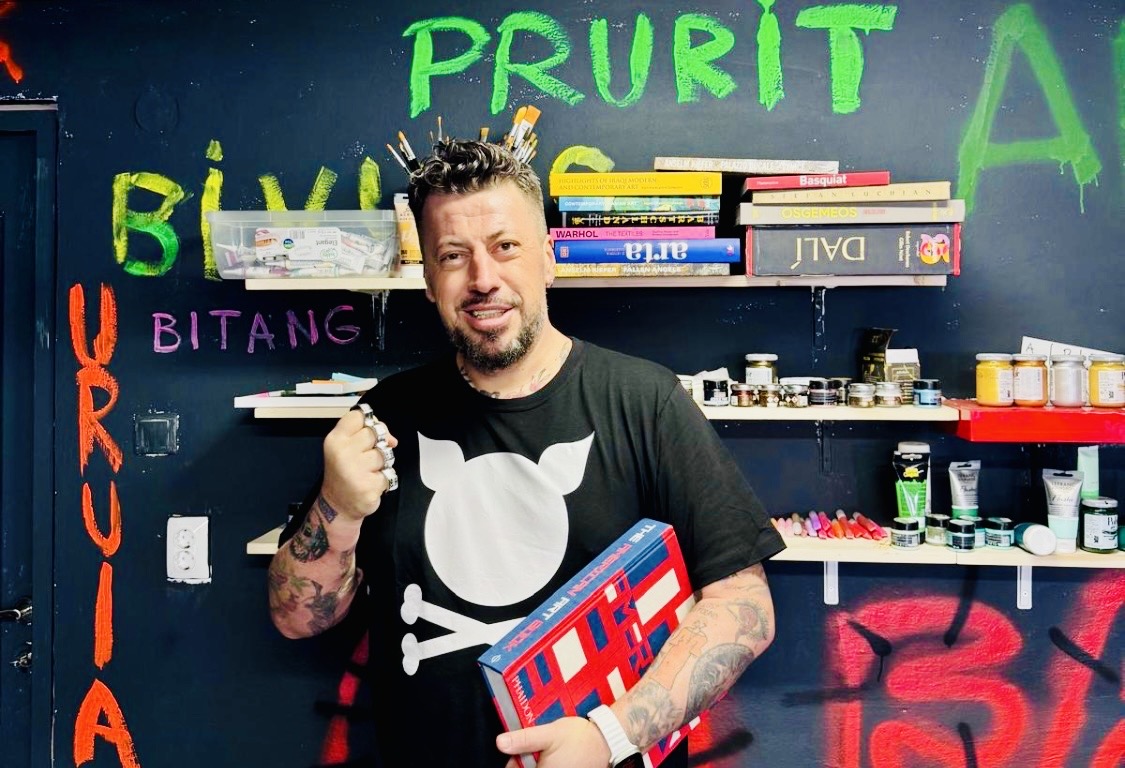
Alexa paints in the garage in the basement of his house, accompanied by two dogs, many books, and a great deal of energy. It is the place where he sings, swears, creates, and destroys canvases when he doesn’t like the way they turn out. “There’s no problem with that — it’s how I let off steam. Tennis players break their rackets too…”
Alexa is a self-taught painter, but his creative force comes from the grueling work of investigative journalism he has been doing for 27 years at a very high level, work that exposes him to all the filth of society. “I’m not lying when I say I paint what I can no longer write with words. Art gives me the possibility to detoxify myself — emotionally and mentally.”
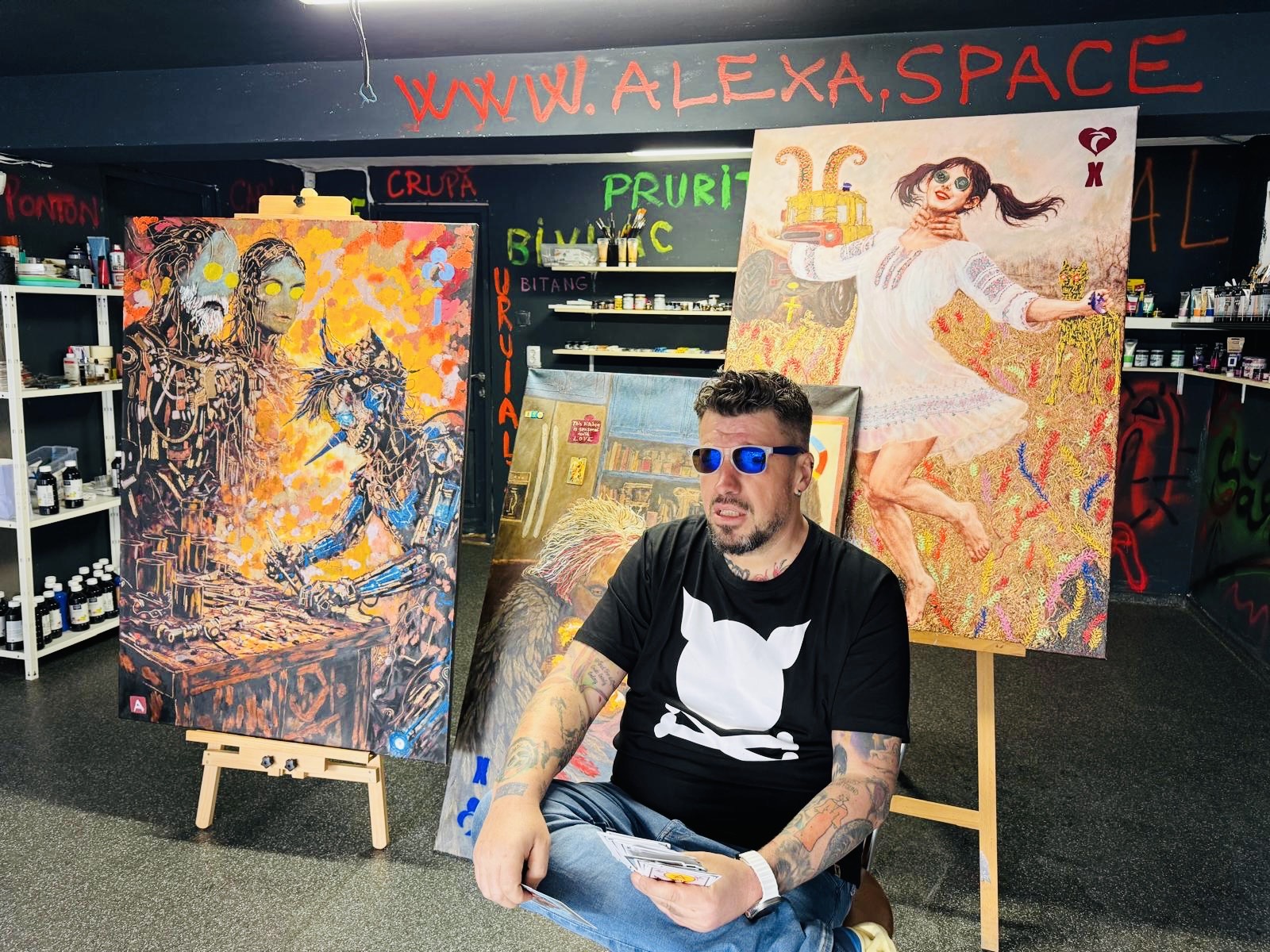
The new solo expo in Bucharest is truly weird and interesting.
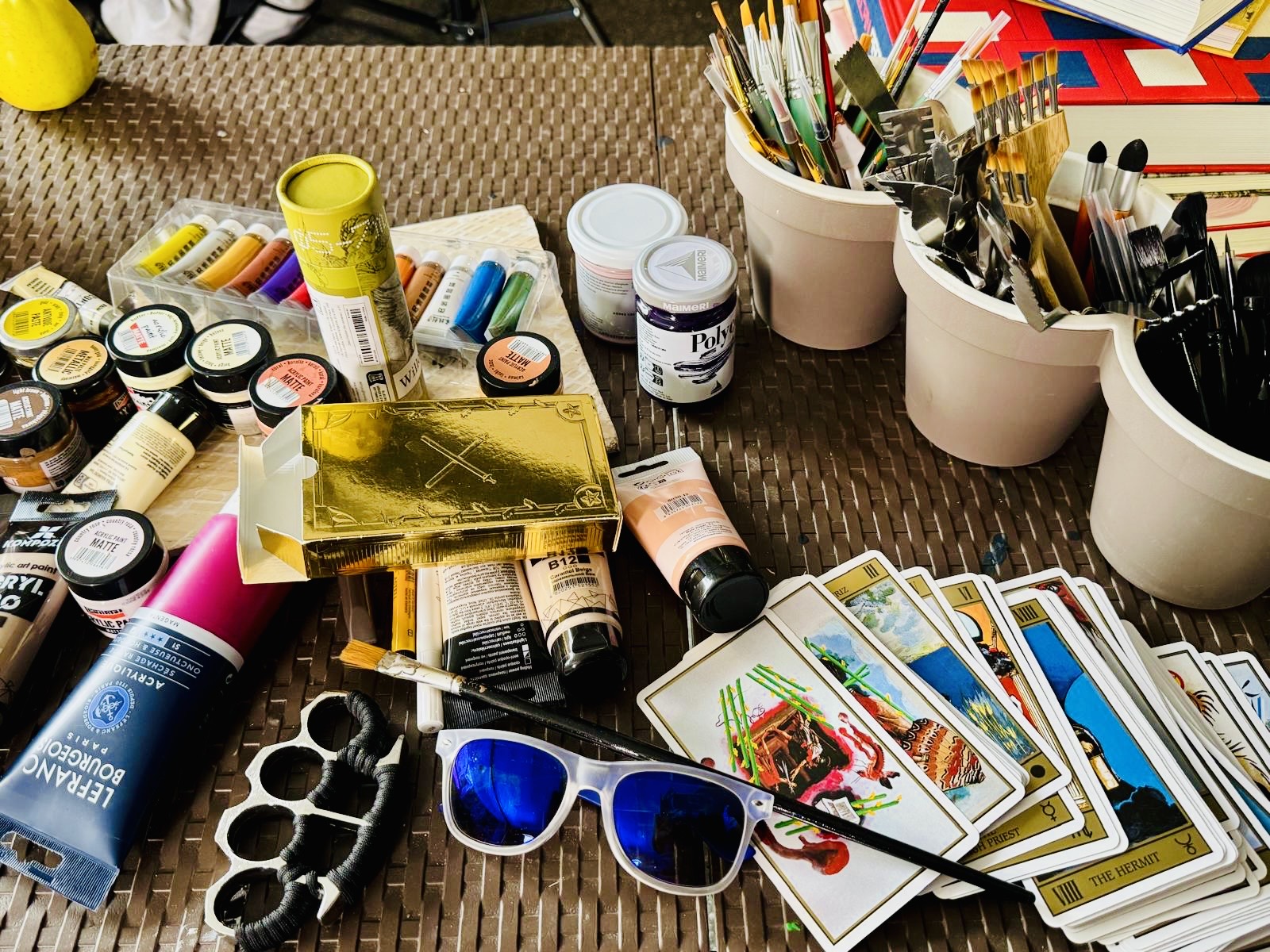
“Initially, I wanted to focus on a story centered around “demons,” but then another idea came to me. It was right under my nose, in my own library: the tarot cards designed in the 80’s by the magnificent Dalí.”, says Alexa.
The story behind this remarkable artistic act is worth knowing. It all began with a proposal from Hollywood for the 1973 James Bond film Live and Let Die, where the producers needed a spectacular deck of cards for the character Solitaire. Dalí accepted immediately, but his enormous ego and exorbitant financial demands led the producers to abandon him in favor of another artist.
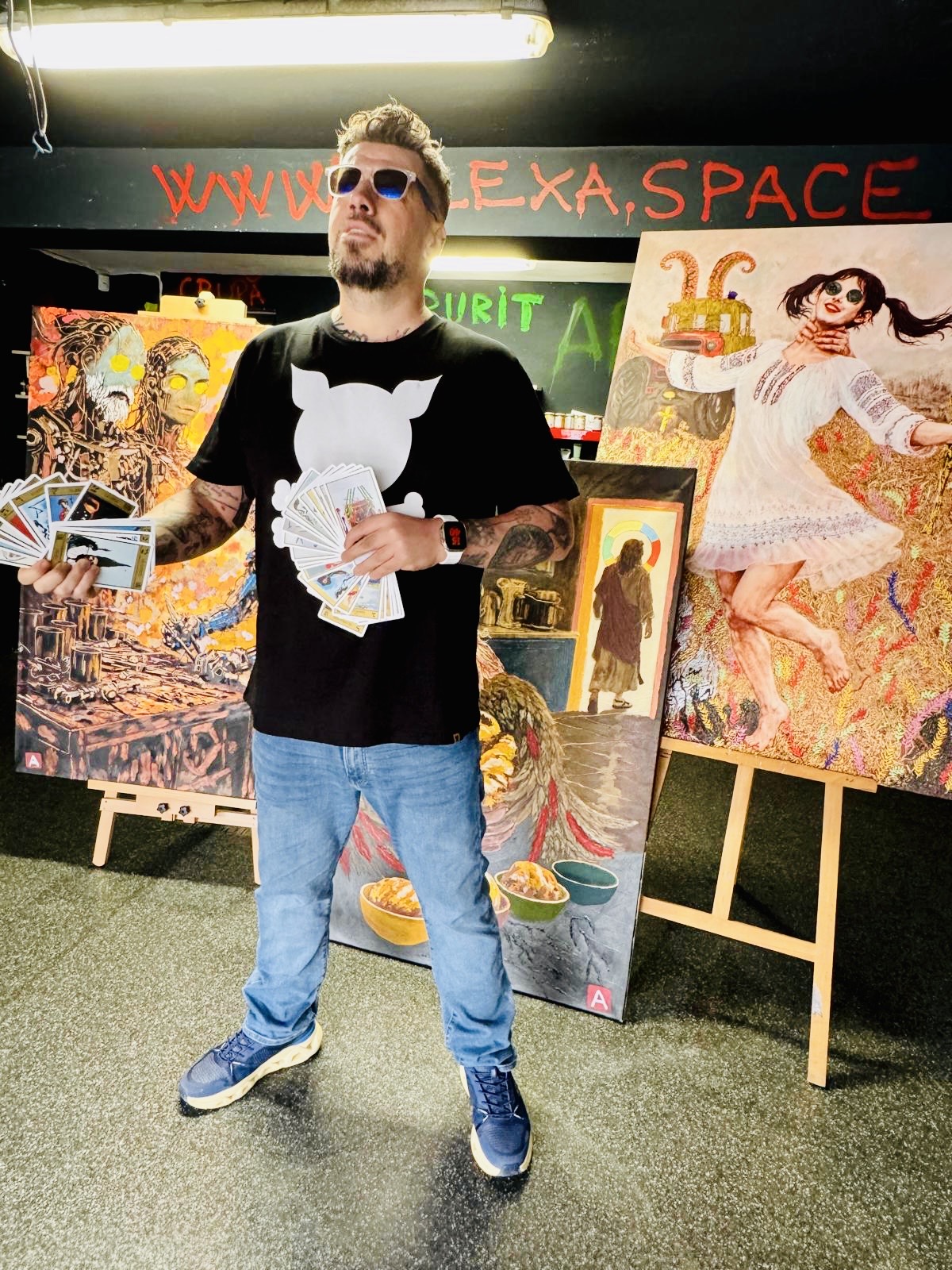
Liviu Alexa realized that there exists in Romania, more precisely in the famous Transylvania, the Dracula’s “headquarters” a celebrated card game — Filcai — the commuters’ game, the game played at funerals or at the neighborhood pub, one that enjoyed incredible fame during communism.
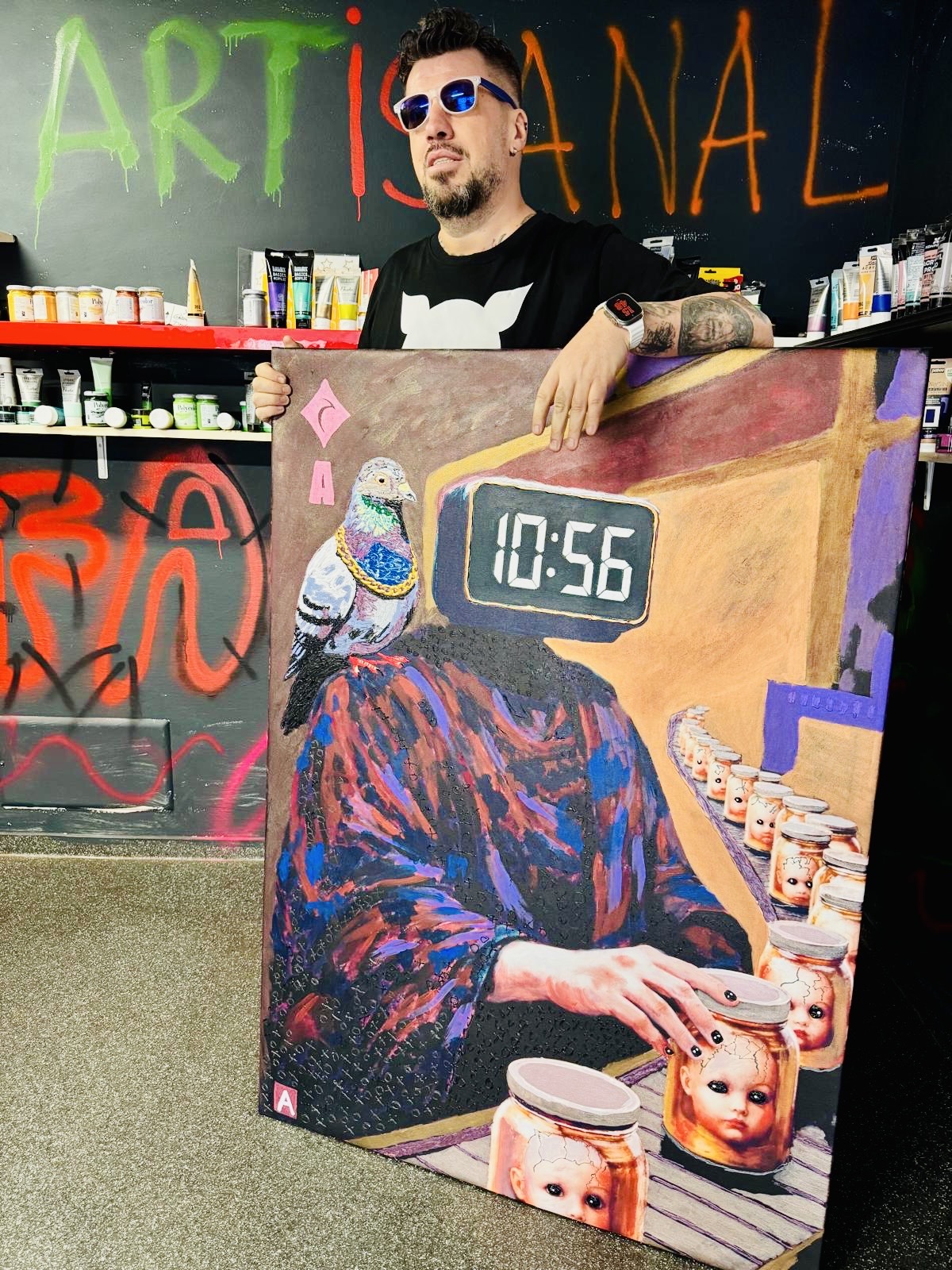
“It is still played in many families today, but somehow this more… plebeian card game never crossed the borders of Transylvania — it is completely unknown in the rest of Romania. It is a very fast-paced game, demanding sharpness, teamwork, and luck — a subcultural artifact, because its origins are remarkably interesting and, like any subculture, through the imagery designed for the playing cards back in the days of the Habsburg Empire, it served as a form of resistance against Austro-Hungarian rule.
My obsession is this: that this game — Filcai — should not disappear from social memory. So I decided to dedicate my work and inspiration to it and redraw the entire deck of 20 cards as paintings, imagining new characters for them — a mix of stories featuring decrepit heroes, forgotten gods, modern kings, and even mythological figures from fairy tales that even you have forgotten, let alone our children who no longer read anything. It is my modest sign of respect for the modest roots that I have, and that many of you have too,” says the artist.
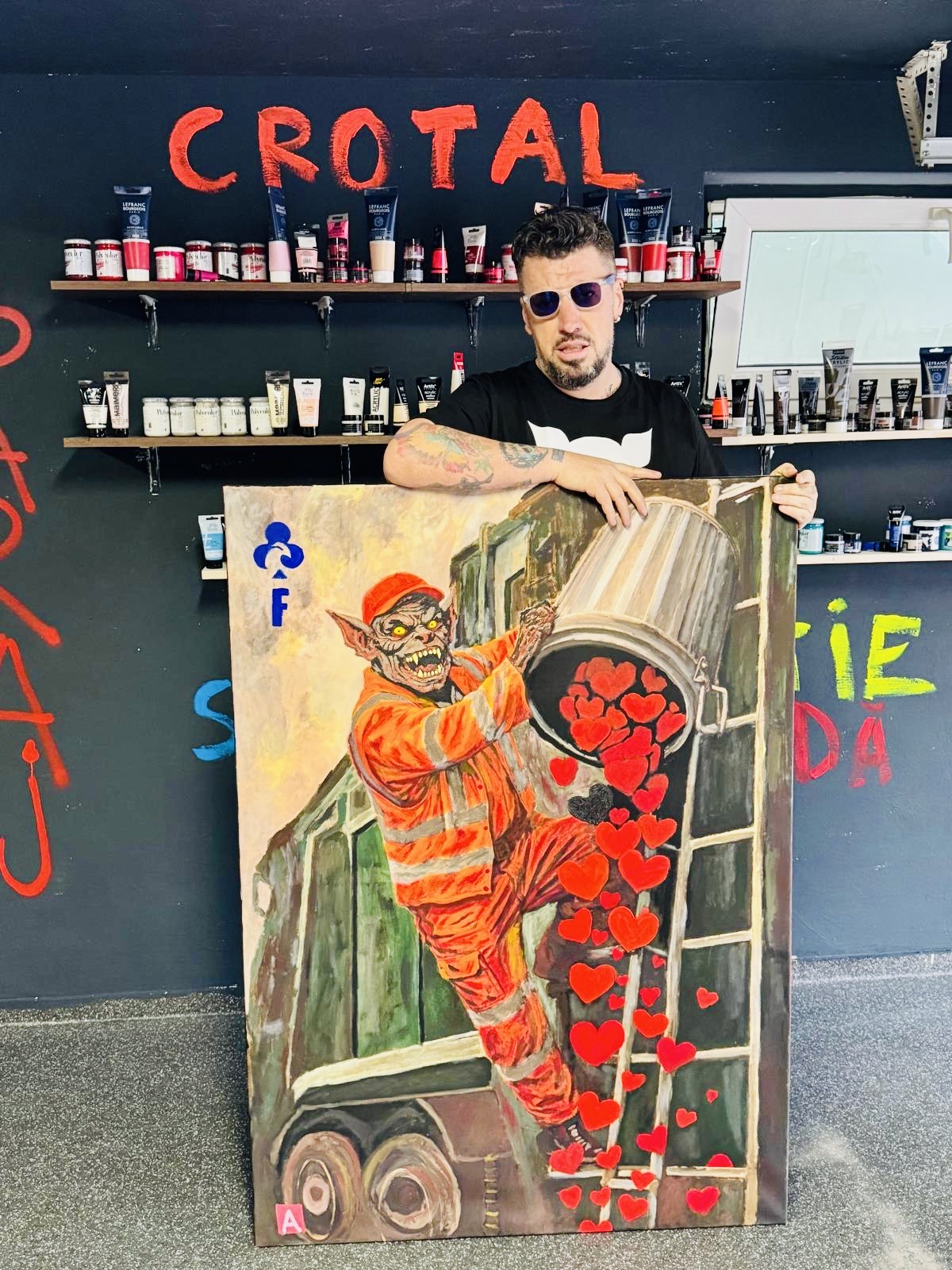
The acorn knave is today the Căpcăun — the ogre of Romanian fairy tales — who, after thousands of years of stealing princesses’ hearts, has ended up unemployed and was forced to take a job as a garbage collector at the local sanitation company. Times are hard and there is much work to be done, for today people no longer have hearts — people throw their hearts wherever they can, into loveless loves, tossing them at each other on Facebook, and a great many hearts end up discarded on streets or in dumpsters. This is what the Căpcăun does: he collects them and takes them to the city’s recycling pit, where they will become compost. It is not noble work for a Căpcăun who once fought shepherds and princes charming, but at his age, not even the Devil will hire him anymore — and truly, the Devil turned him away from hell, as jobs are being cut there too.
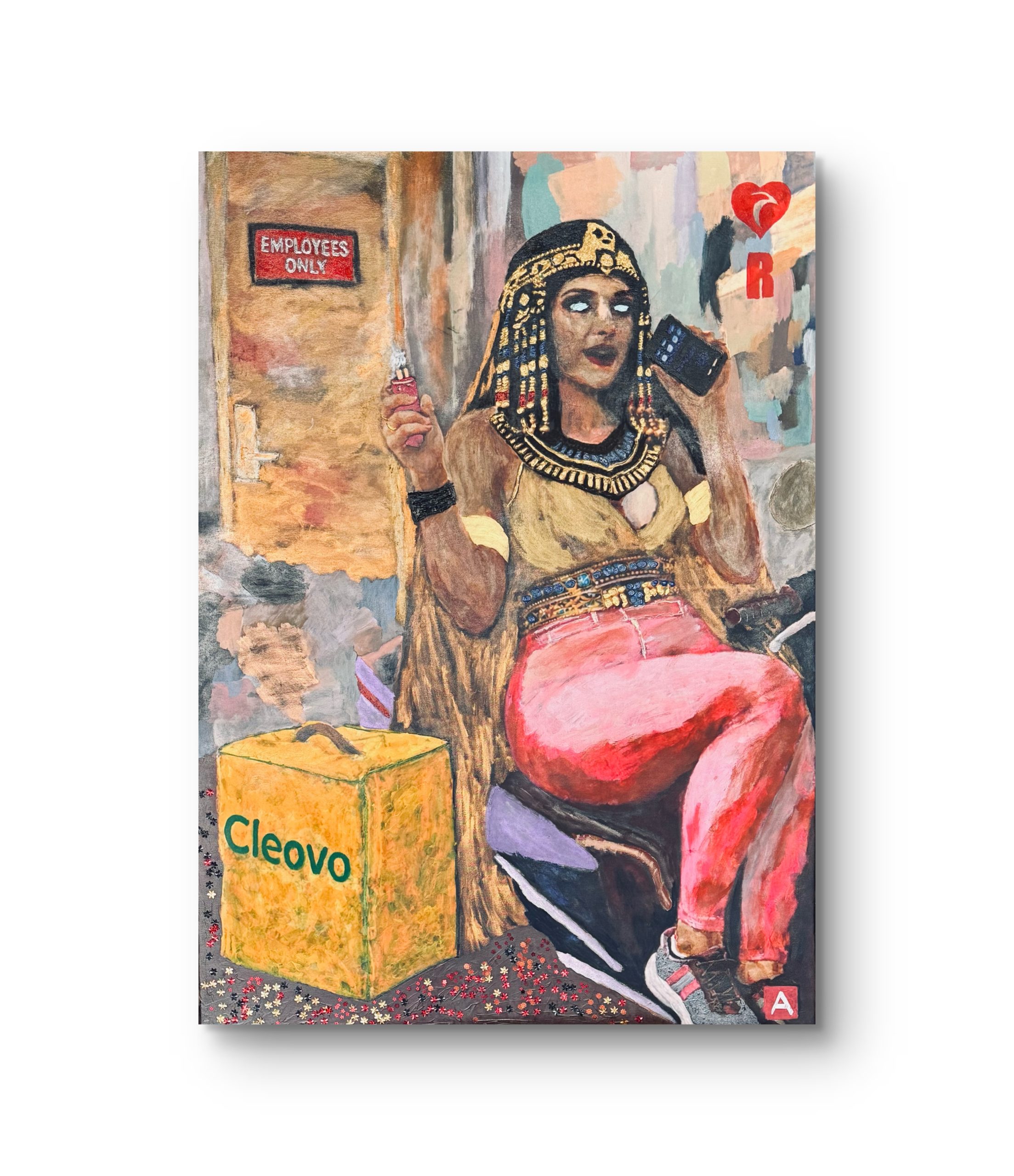
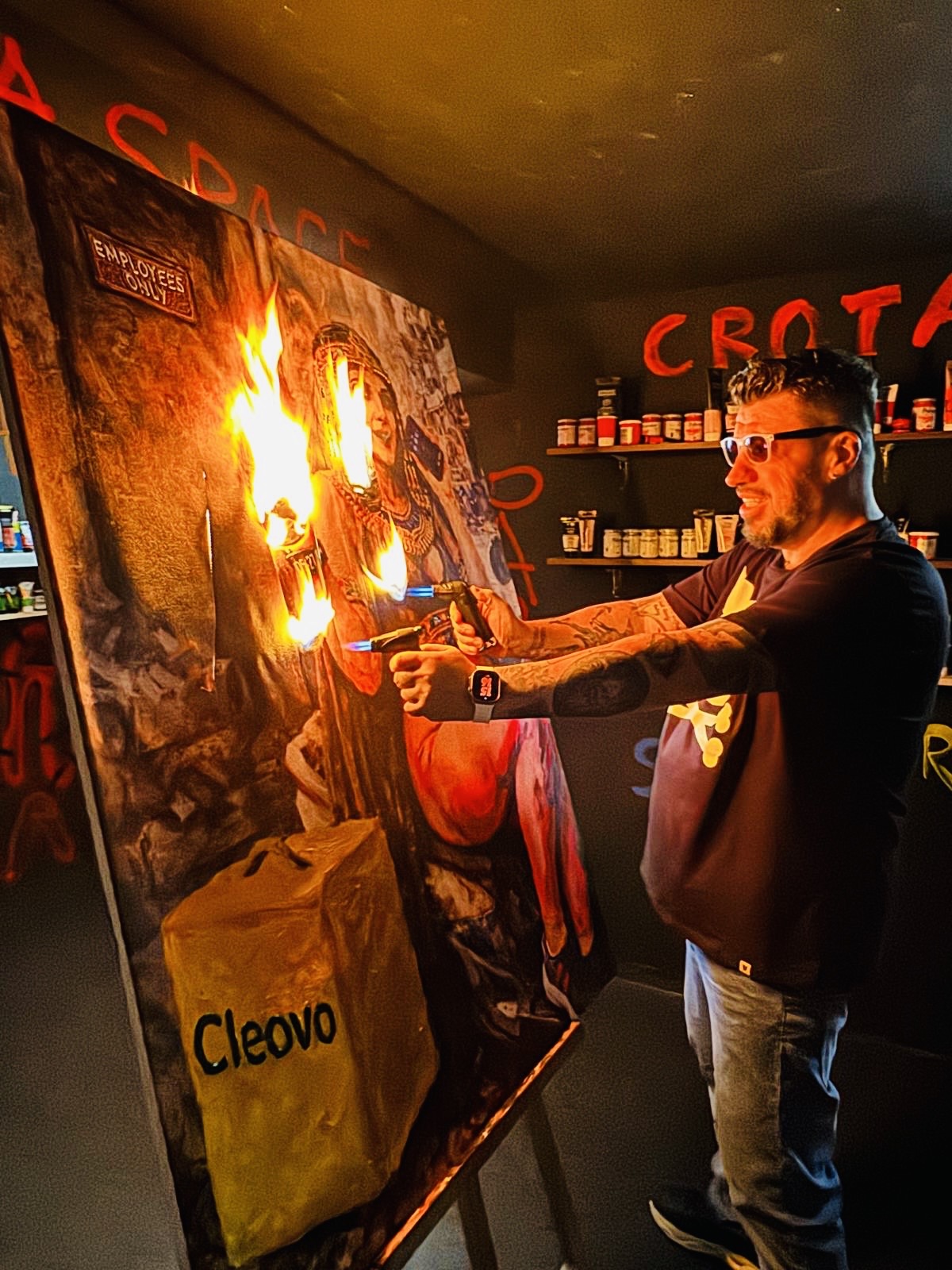
Cleopatra, oh, Cleopatra with her olive skin, her blood like a fine cocktail in which the stubbornness of the Macedonians has been blended with the intelligence and cunning of the Greeks — she truly has seen it all: she was not the most powerful nor even the only female pharaoh, but compared to Merneith, Sobekneferu, Hatshepsut or Neferneferuaten, whom nobody remembers anymore, she has been famous for thousands of years, starred in films, and on top of that loved the most powerful men in the world. Cleo was always drawn to drama — even her suicide, when she let herself be bitten by an asp rather than fall into Roman hands, was a magnificent piece of staging. Cleopatra did not die, stay calm — goddesses do not die.
True, it didn’t help her much that she speaks nine foreign languages. She couldn’t get a teaching position at Harvard, as there are no longer any departments of Aramaic or Ethiopian or Ancient Egyptian, so she navigated the chaos of modern times as best she could and started a delivery company — Cleovo. Now she’s on a break at work, hitting her vape and talking on her phone with a customer who received a somewhat cold shawarma. That’s just how it goes — you can’t please everyone. Delivery is tough too, but anything is better than driving for Uber.
She’s still beautiful, with those husky eyes of hers, her bubblegum-pink leggings stretched over a figure that is perhaps a little on the voluptuous side — but Cleopatra no longer wants to love. Love has brought her nothing but suffering.
Yet no one can escape Love, no matter how hard they try to avoid it. Love is stronger than Evil — it has brought even gods to their knees — and so, most likely, sometime in the next millennium, Cleo will fall in love again. Because although she has suffered, it was Love alone that gave her, whenever she let it into her heart, the power to conquer the World.
“Let’s burn prejudice!” says Liviu Alexa. Well, some people talk about changing the world. He’s in his garage, painting this change.
See more about the artist on www.alexa.space