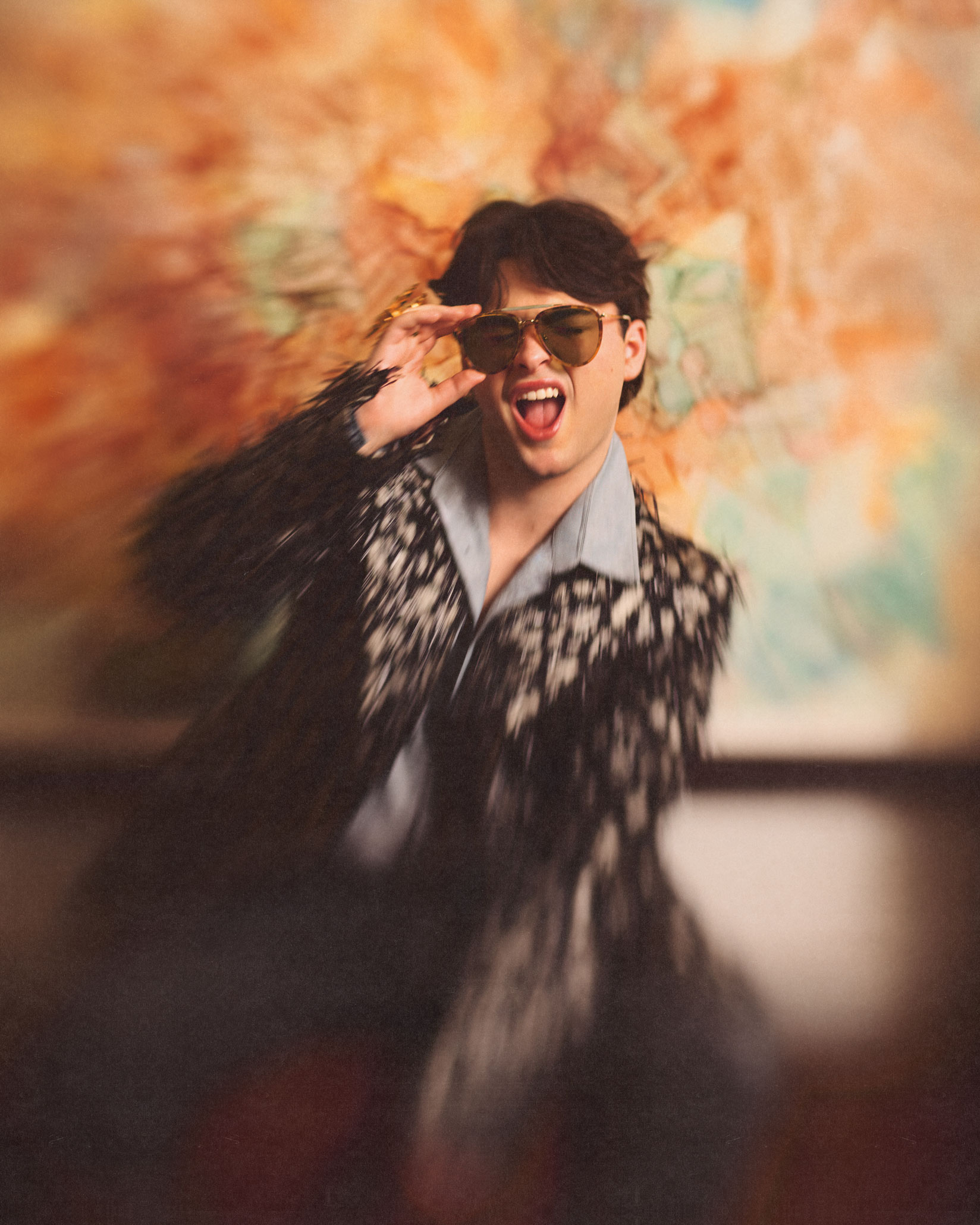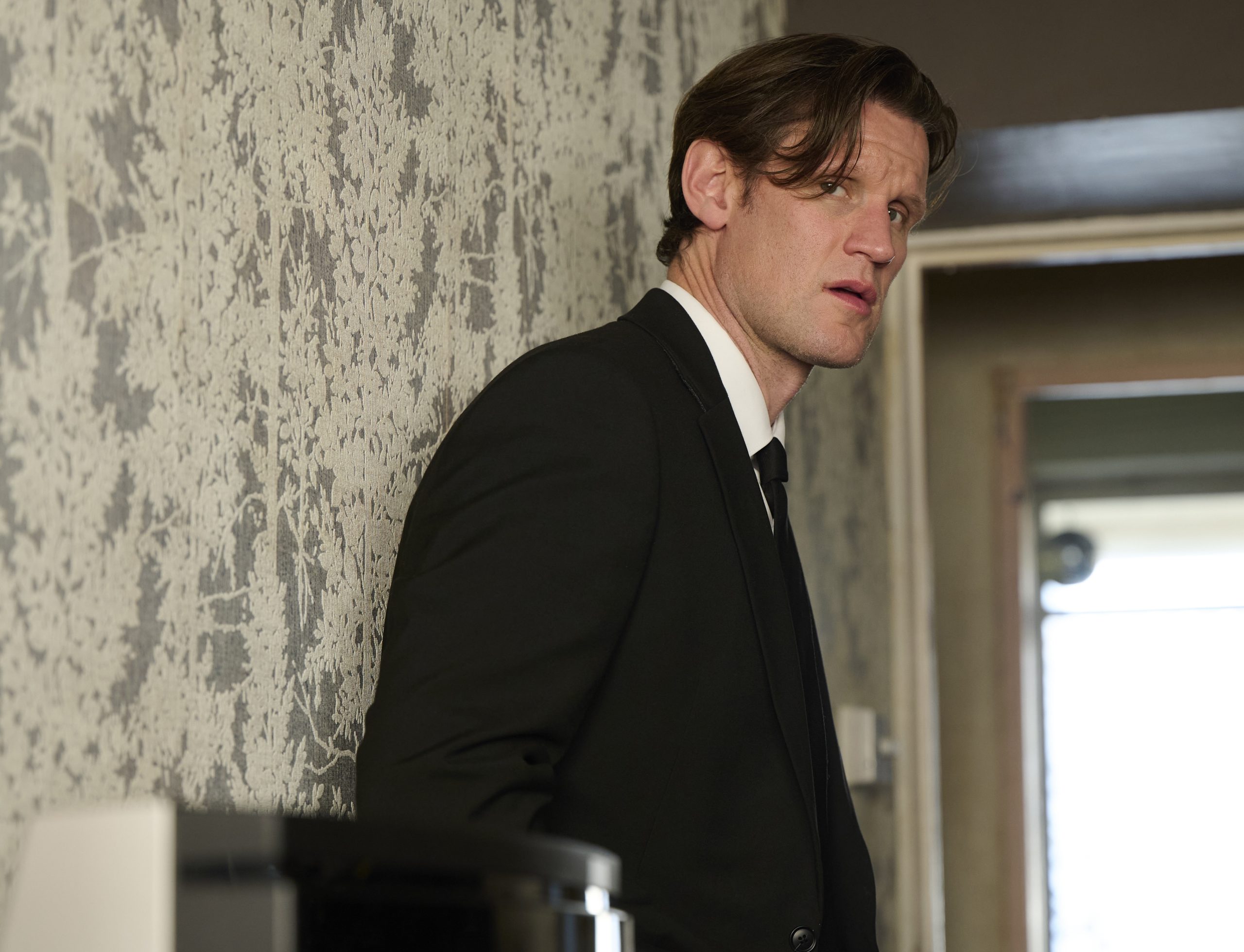
When you think of exceptional British actors who bring a high level of grace, skill, and versatility to each performance, Matt Smith is part of the conversation.
Over the last two decades — both on stage and on screen — the actor has cemented his reputation as a true talent. The Northampton-born performer comes from humble beginnings, learning his craft at the National Youth Theatre (NYT) and graduating from the University of East Anglia in the early 2000s. By 2004, he had already appeared in NYT productions in London such as Murder In The Cathedral. Over the next few years, he continued to build his stage career before earning the role that propelled him into mainstream public consciousness. In April 2010, Smith made his debut as the Eleventh Doctor in the beloved BBC sci-fi series Doctor Who.
Fast-forward to now, and Smith’s star has only continued to rise. It’s thanks to roles such as Prince Philip in Netflix’s The Crown, Daemon Targaryen in the Game Of Thrones spin-off House of The Dragon, Darren Aronofsky’s crime thriller Caught Stealing, and Edgar Wright’s Last Night In Soho. With every part, whether for TV, film, or theatre, Smith brings a deep understanding and commitment to the characters he portrays, whether they’re heroes, villains, or morally grey figures.
For his latest project, the BAFTA and Emmy-nominated actor stars in the stylish and intense six-part series The Death of Bunny Munro. Written by Pete Jackson (Somewhere Boy) and directed by BAFTA-nominated Isabella Eklöf (Industry, Holiday), the series is based on acclaimed musician Nick Cave’s novel of the same name. Smith plays Bunny Munro, a seemingly charismatic travelling salesman and lothario, a relic of a bygone era, a man built from the worst traits of toxic masculinity.
Saddled with his young son, Bunny Junior, after the death of his wife, the story becomes an extremely dark tale exploring grief, addiction, depravity, and redemption. Most importantly, it offers viewers a complex and sometimes tender portrait of a father–son relationship. From start to finish, it’s a thrill to watch.
In conversation with 1883 Magazine’s Cameron Poole, Matt Smith discusses The Death of Bunny Munro, working with Nick Cave on the project, and what it meant to see Oasis at Wembley Stadium.

Matt Smith, thanks for speaking with 1883 Magazine, are you okay today?
My absolute pleasure, I’m great today, I’m really pleased to be here. I’m excited for a day talking about Bunny Munro.
I watched it on the weekend – it is fantastic. When did you first come across The Death of Bunny Munro – It would have been Nick Cave’s book but when did you think ‘right, I want to not just star in it but be an executive producer for the adaptation?
Well, I got the pilot through, the first episode, and then went for breakfast with Nick. At which point I hadn’t read the book. He said maybe it is pertinent that I read the book. So, I went away and read the book. I loved it, I thought let’s do this. It was always an early intention to try and get on to be one of the producers on it, I loved that responsibility, I thought it was great.
The wonderful Pete (Jackson) went away and wrote the other five scripts and I think he did a marvelous job in that adaptation.
Putting it as kindly as I can, Bunny is a total bastard. In the opening scene of the first episode alone, we see how despicable the character is. We know he is not just an alcoholic, he’s a sex addict, liar, and has this smooth talking persona which is a complete facade. It all comes from a place given his upbringing when he was a child, we’re not excusing his actions but he is very complex.
Agreed, I think that is well put actually.
So apart from having the source material, what helped you tap in to play such a complex and broken man?
That’s a good question. Well look, I was really drawn to play him because I thought what a brilliantly complex man. In many ways, this show is about the sins of the father. You really see that in episode five when we go back and meet David Threlfall’s character who plays Bunny’s dad, how he has been treated, and thank god, Rafael Mathé, Bunny Junior, is hopefully the cog in the machine which breaks the cycle.
I was really drawn to it, as you said, it is wonderfully complex and he does do some appalling things. Deep down, you have to remember when you’re playing someone—and I think it is important we tell stories about these people who are very complicated—but also he’s a human being. Actually, deep down, I really found that in him, inside somewhere, there is a light that shines. There is a goodness in him somewhere.
I hope by the end of the story, you see there is a slight sense of redemption to him.
I agree, I kept wondering when is he going to wake up and better himself for his son. Do you think the character deserves a sense of redemption at all?
I think that is up for audiences to decide, some people will probably see that in him and some people probably won’t. I think that is good and how it should be. It’s like anything but particularly with a book like this and a story like this, it is going to be polarising. But I think that is really important, I think it is really important to make work like that.
I found the redemption in him because in a way I suppose I had to, that’s not to say you can excuse or endorse his behaviour because you can’t. It is inexcusable. But the complexity of the man is such that by the end, he is trying to do the right thing at least.
It’s just a shame, if he had made a few different choices, he probably would have turned out to be an alright dad in the end. He was so close.


You sing a Brenda Lee classic in the show — You have sung in the past, and I believe one of the most recent times would have been on stage for American Psycho. So what was it like actually getting back into singing when working on a scene?
It was nerve-wracking to be honest, and you’re also doing it in front of all these actors that you’ve worked with who played the various women that Bunny has betrayed or wronged throughout the course of the show. They are all piercing eyes into you. I’m not particularly an accomplished singer, so it was nerve-wracking but also fun and thrilling.
I really like episode six, I like how mad and lynchian it aims to be.
Sure, I thought you sounded good by the way!
I’ll take that, I’ll take that, thank you very much.
We need to chat about Nick Cave – what was it like working with the music legend behind the scenes and actually then sharing a scene with him?
Amazing. You know, firstly the fact he has given us permission to make this story, also the fact, he then chose to be involved with it to such a degree – he did the score with Warren. And then even better, he’s going to come be in it, it was a dream come true. He is a cultural icon, not just here either, everywhere.
We’re very lucky to have him as one of our own, we are really lucky to have his involvement in the show across the board, so it was brilliant.
Finally, off-topic, speaking of other music legends, you went to see Oasis at Wembley, I know they are one of your favourite bands. What did it mean to actually see them at Wembley and if it happens, would you go see them at Knebworth next year?
They are, they are my favourite band. Yes, I would go see them anywhere. I would go see them in a garden shed. I think, personally speaking, it was electric. I went to see them when I was 15, twice on the trot at Milton Keynes Bowl. That was a really seminal gig in my life. These gigs which have just come through feel the same.
I think culturally it was really needed in this country, there is something that goes on within the walls of those stadiums when the guys are playing those songs which have such significance to different generations of people in Britain. There’s a collective consciousness which is really fucking exciting.
I can’t remember the last gig I went to which generated such momentum and had such character. It was fucking brilliant man,I loved it.
I bet, let’s see if it gets announced for next year.
Who knows, yeah. Here’s hoping.
Thanks for your time, Matt. Take care.
It was a pleasure to meet you, thanks for watching the show. I’ll see you on the next one.
The Death of Bunny Munro is out now on Sky and streaming service NOW.
Interview Cameron Poole