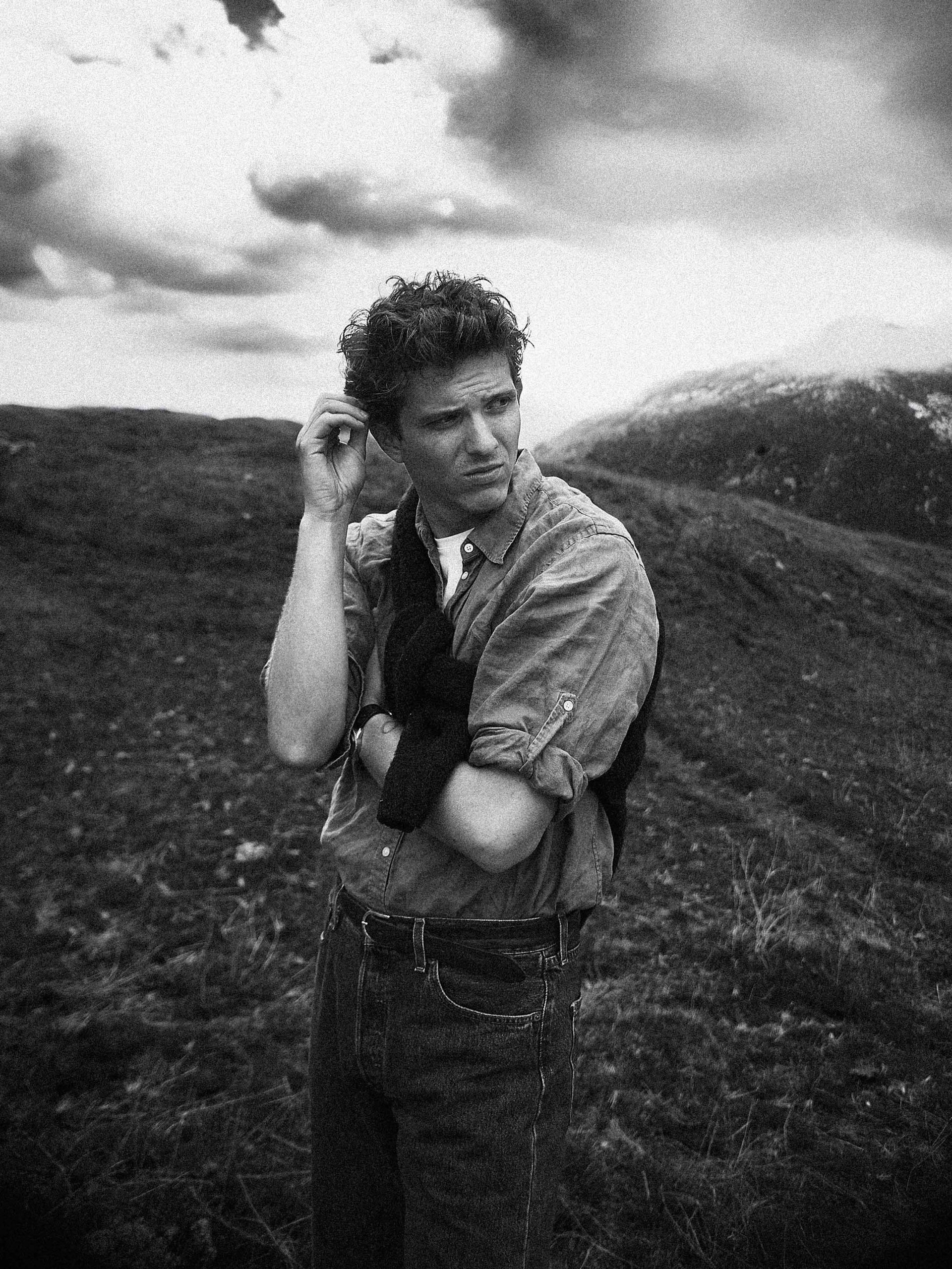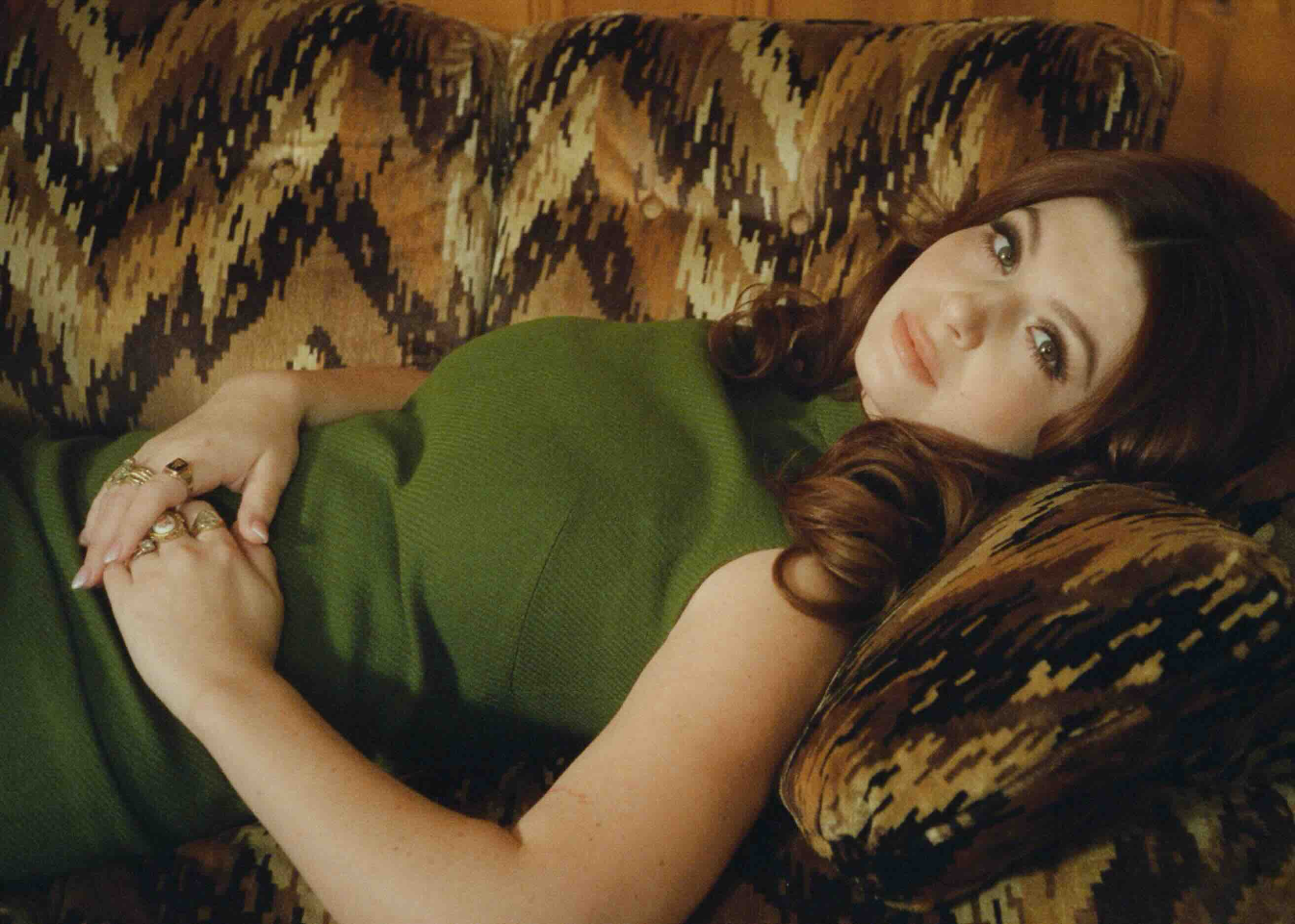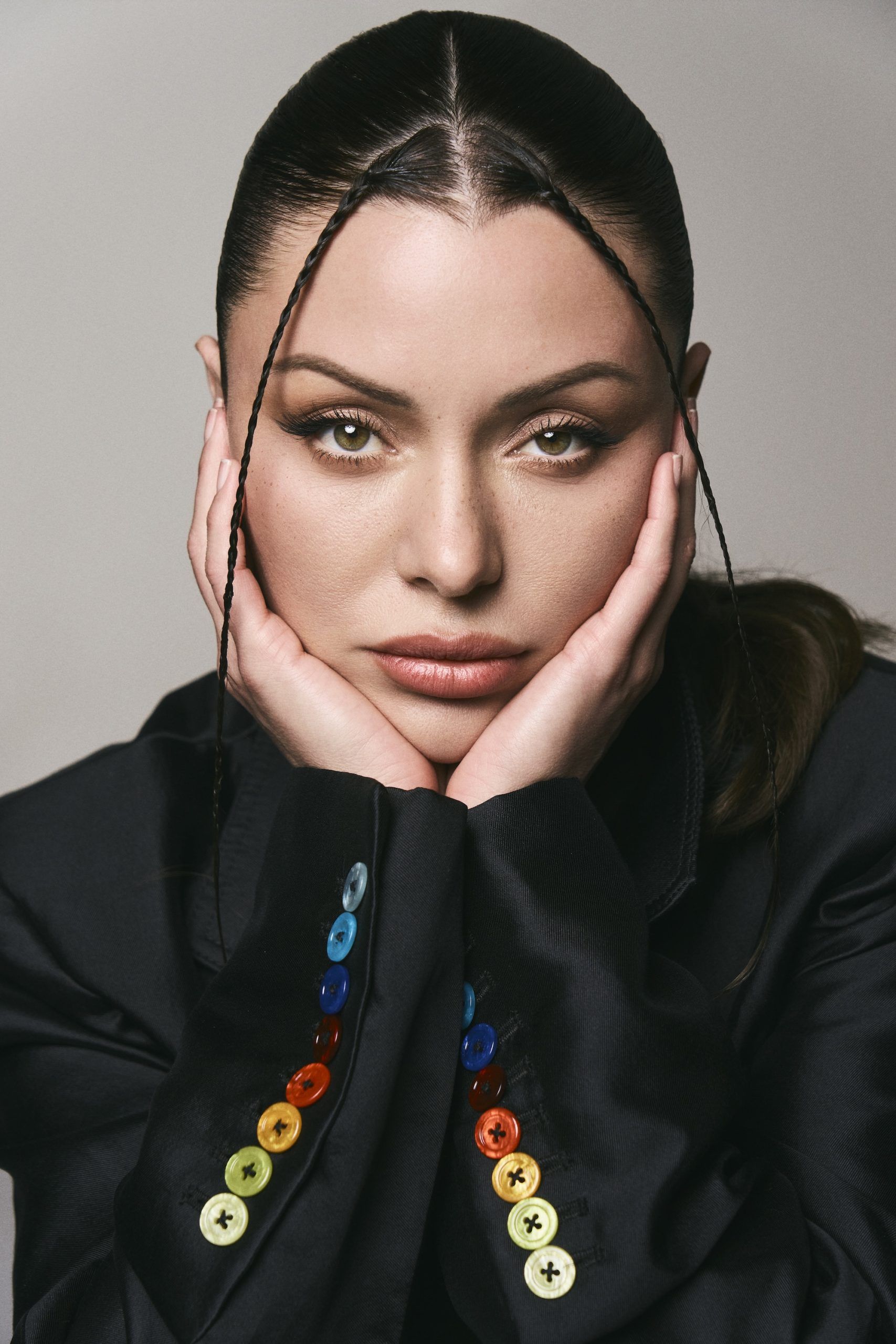
Neraida Bega doesn’t approach her work lightly. You get that quickly, not just from the roles she chooses, but from how she talks about them. There’s a discipline behind it, shaped as much by her upbringing as her training. Born in Durrës and raised in Italy after her family left Albania, she grew up between cultures, languages, and identities.
That fluidity carries into her work. She’s fluent in multiple languages, trained in martial arts, and moves between film, television, and performance work without locking herself into one lane. From Dog and Monstrous to WandaVision and Star Trek: Picard, she’s built a body of work that leans into both physicality and emotional detail, while also stepping into producing to create her own opportunities.
Now, she enters a bigger stage with Once Upon a Time in Hollywood: The Adventures of Cliff Booth, directed by David Fincher.
It’s a project with weight, but her approach stays the same. Preparation, instinct, and consistency sit at the centre of how she works. What comes through most is momentum. She’s still early in her career, still focused on learning and growth, but there’s nothing passive about it.
For this 18 Questions, Bega talks about instinct, discipline, and why sometimes the most important thing is simply to keep moving forward
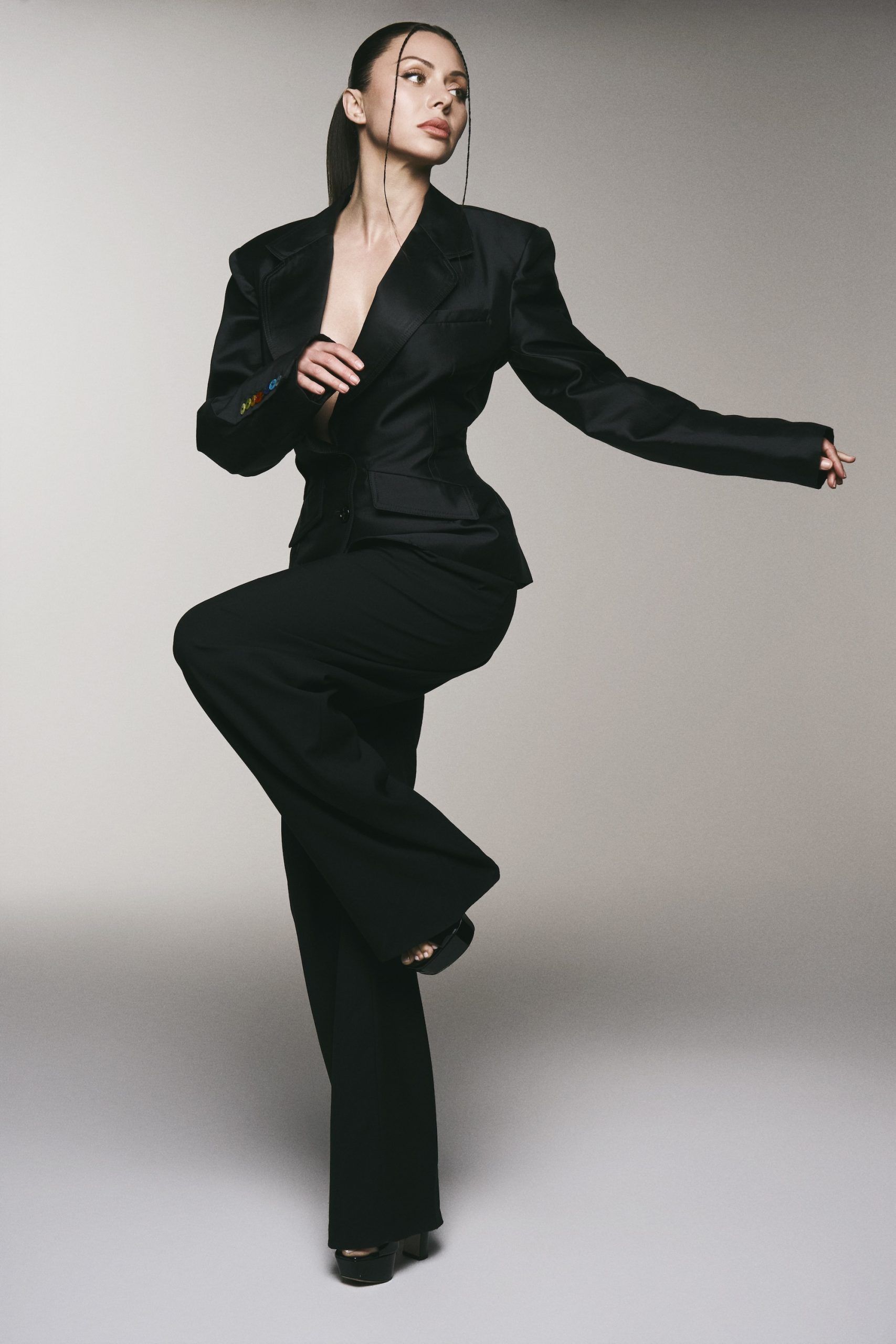
1. What’s the first thing you usually do when you wake up in the morning?
My cats sleep in bed with me, so the second I wake up, I cuddle with them first. Then I feed them. We’re all part of the 5 a.m. club. After that, I immediately take a cold shower and brush my teeth. That’s the ritual that fully wakes me up and gets me ready for the day.
2. What’s one habit that helps you stay grounded when everything feels intense or fast moving?
I really love to journal. It helps me clear my thoughts and has a very calming, grounding effect on me. When I write, I can disconnect from the outside world for a moment and reconnect with my inner world. It gives me space to reflect, process my emotions, and understand myself better. I guess it’s my form of introspection.
3. When you hit a creative block, what actually helps you move through it?
When I hit a creative block, I honestly don’t try to force it. For me, that usually means I’m too much in my head, and my left brain is trying to control the whole scene. So I do something simple and physical. I’ll play the piano, garden, or go for a walk. Something that gets me out of “figuring it out” and back into feeling.
4. Are you someone who trusts instinct quickly, or do you tend to sit with decisions for a while?
Most of the time, I trust my instincts pretty quickly. I’ve learned that when I sit with something for too long, I can start to get in my own way. That doesn’t mean I’m impulsive, but I do feel like my first instinct is usually very honest. When I overthink, I start overanalyzing, and then the decision becomes more complicated than it needs to be.
5. What’s a small routine that keeps you feeling like yourself, no matter where you are in the world?
I’m a very physical person, and I feel the most like myself when I work out. When my body feels strong, healthy, and energized, I carry myself differently, and I love that feeling. There’s a different kind of confidence that comes with it.
6. How do you reset after a long day on set or in training?
If I’ve had a long, intense day, I usually keep it really simple. I like to spend time with my husband and my cats, or if I’m on location, I’ll call my family or friends, and we’ll talk about our day. If there’s time, I love watching a good movie or show and just relaxing. But if not, I prioritize sleep. I’ve learned that sleep really affects how I feel, how I work, and how I show up the next day.
7. What kind of roles do you feel most drawn to at this point in your career?
I’m drawn to characters that are emotionally complex and have a lot going on underneath the surface. I love roles that challenge me, allow me to explore new worlds, teach me something, and affect me as a person. A beautiful example is Claudia Draper from Nuts by Tom Topor, played so powerfully by Barbra Streisand. I worked on this play in my theater class, and she stayed with me. She’s such a complex human being. Fierce, intelligent, wounded, defensive, seductive, explosive. She’s fighting for her sanity, her autonomy, and her truth, while trying to navigate her pain the best way she knows how.
8. What’s something people often assume about you that isn’t quite right?
I’m Albanian, so I think there’s naturally a little intensity there. We can be very direct, very observant, and at first maybe a little hard to read. I know I can have a serious face and strong eye contact, so sometimes people assume I’m cold or unapproachable. But that’s not really me. Once I feel comfortable, I’m actually very goofy, playful; I have a very childlike side to my personality. There’s a lot more softness and humor underneath the surface. 🙂
9. Being fluent in multiple languages, does that change how you connect with a character or a script?
I speak multiple languages because I grew up around different cultures, and I think that definitely widened my awareness and emotional intelligence. It helps me understand people differently, and it has helped me find my way into certain characters. When I first moved to LA, reading scripts in English was really hard for me. I came here speaking almost no English, so I had to Google the meaning of everything. I would sometimes practice my scenes in Albanian or Italian first, connect to the emotion there, and then bring those acting choices back into the English version.
10. You’re stepping into the world of Once Upon a Time in Hollywood: The Adventures of Cliff Booth what drew you to this project in particular?
My team sent me an audition for something called Untitled Fincher Project, and honestly, I was already over the moon just at the idea of auditioning for a film connected to David Fincher. He’s one of my favorite directors. I found out I booked the job months after the audition, which made it even more surreal. I’m always drawn to projects that involve filmmakers of that caliber. There’s a certain level of excellence, vision, and detail that you want to be around as an actor.
11. Working under David Fincher brings a certain level of precision what has that experience been like so far?
It’s honestly a dream come true. Being on a David Fincher Tarantino set is a masterclass in filmmaking. The level of precision, focus, and detail is something you can feel in every moment. I was very aware that not many actors get the opportunity to work with filmmakers of that caliber, so I never took it lightly. I fully understood how lucky I was, and what a privilege it was to be on a set like that and be part of such an iconic film. I wanted to learn and absorb everything I could while I was there. I’ll never forget that experience. I loved every minute of it.
12. This project connects back to Quentin Tarantino’s original world how do you approach stepping into something that already has such a strong legacy?
My only goal was to be extremely prepared, do the job to the best of my ability, and deliver. I felt I had the responsibility to show up fully and respect the world I was stepping into. It already has such a strong legacy, so you understand that you’re not just showing up casually. Everyone operates at such a high level, and knowing how fantastic Once Upon a Time in Hollywood is definitely pushed me to step up my game even more.
13. You’re trained in martial arts how much does that physical discipline influence the way you build a character?
Motion creates emotion. Martial arts taught me how to commit fully, keep showing up, keep training, and push through discomfort. Those lessons naturally bleed into other parts of your life. As an actor, that kind of discipline really helps me. Building a character takes patience, repetition, vulnerability, and commitment. Martial arts have also made me much more connected to my body. It helps me understand how to express power, confidence, fear, or even softness through physicality. The more in touch I am with my body, the faster I can access those emotions.
14. You’ve worked across film television and even game related productions like Apex Legends does each medium demand something different from you as a performer?
Yes, absolutely. I think each medium asks something different from you, but the level of preparation never changes. As an actor, you have to be able to shift gears and adapt to the job. Film can be more intimate and detailed; television often moves faster, and game related productions require a lot of imagination because the world may not fully exist around you yet. So it’s our job to understand the medium, adjust to it, and still keep the performance truthful. At the end of the day, the goal is always to be prepared, present, and make the character and the story come to life.
15. You’ve also stepped into producing with The Proposal what pushed you to move behind the camera as well?
The main reason was that I wanted to create more opportunities for myself and not just wait around for someone else to give me a job. As actors, so much is out of our control, but producing gives you a way to take some of that power back and create your own chances. I’m a multidimensional person, and I like to challenge myself and step into new adventures. Producing felt like a natural extension of that. It allowed me to use more of my skills, my ideas, and my capabilities. It’s also a great way to learn more about the business from a different perspective. For me, producing is another way to expand, learn, and take more ownership of my path.
16. With such a mix of international work and genres how do you decide what’s worth saying yes to at this stage?
I’m still in a baby phase in my career, so right now I’m very hungry for expansion, learning, and growth as an artist. I don’t believe in waiting around for the perfect role to keep moving forward. At this stage, the focus is to work, learn, build, and repeat. Not every role has to be iconic. Some roles are training, some create relationships, some give you exposure, and some teach you how to show up like a professional. I’ll always say yes to things that help me grow, as long as they don’t go against my values.
17. Looking ahead what kind of roles or stories are you still chasing that you haven’t had the chance to explore yet?
Honestly, this is just the beginning for me, so there are still so many roles and stories I’m excited to chase. At the moment, my heart is really in producing my first feature film, a story that allows me to tap into my Albanian culture, honor where I come from, and bring something personal and powerful to the screen. And yes, I’ll definitely be using all my action skills too.
Follow via @neraidabega