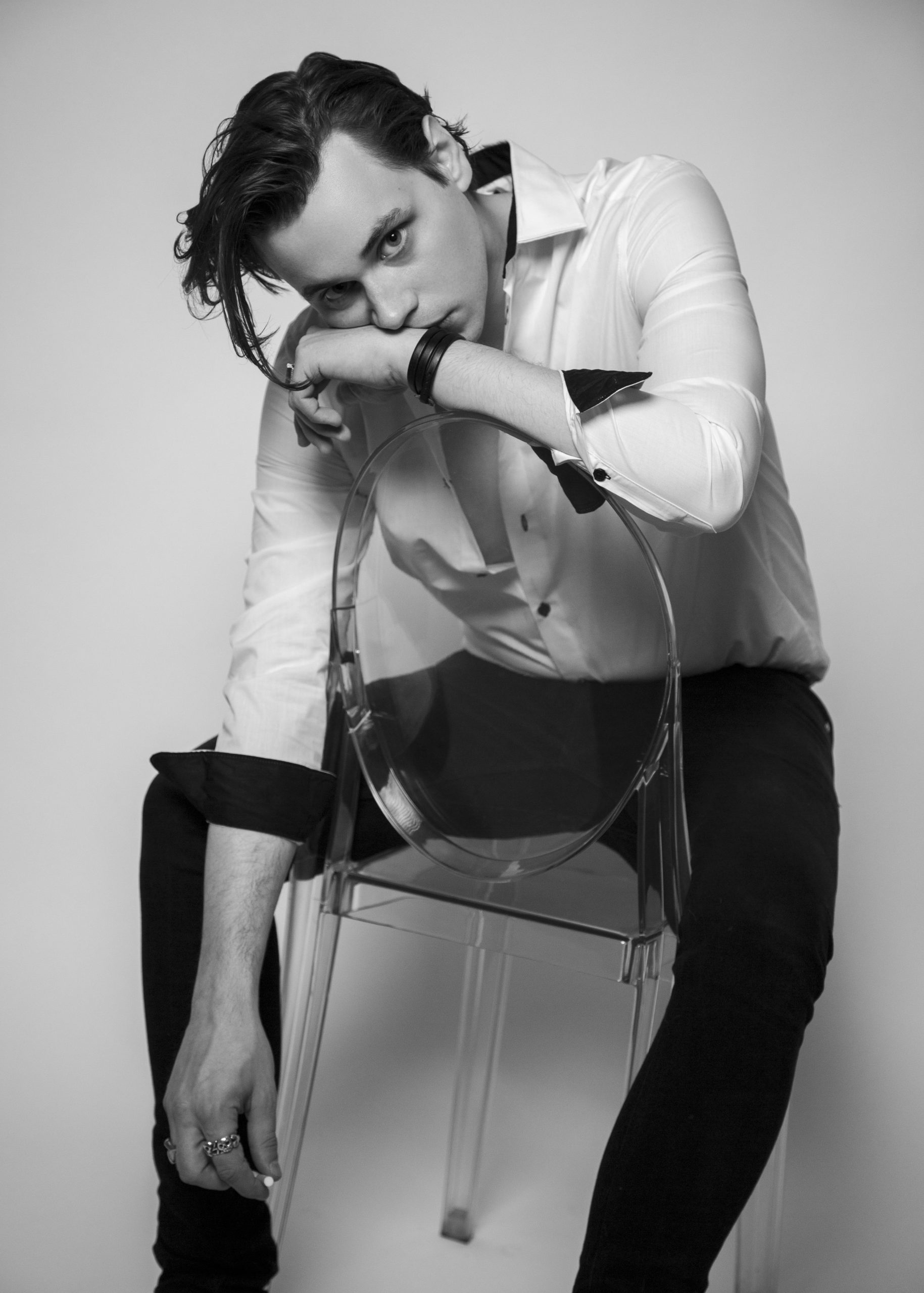
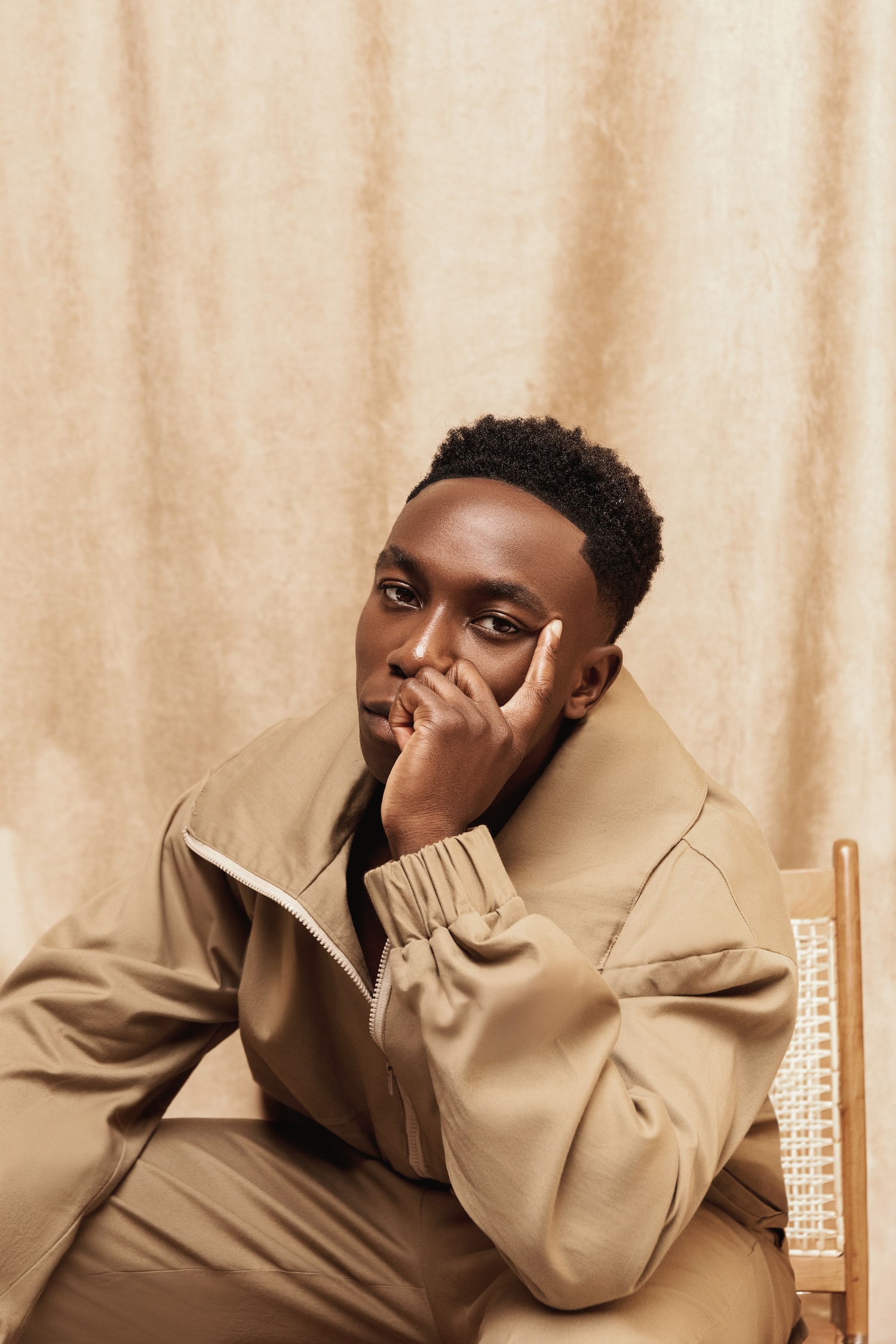
Olly Sholotan has never treated a role as something to simply step into. He inhabits it fully, carving out emotional space with a precision that feels both raw and deeply intentional. As Carlton Banks in Peacock’s Bel-Air, he has spent four seasons reshaping one of television’s most iconic characters into someone more human. Someone who is prickly, wounded, ambitious, and ultimately learning to love the parts of himself he once buried. It’s a performance that has earned him critical praise and multiple award nominations, but more than that, it’s reflected his own evolution.
But acting is only one lane in Sholotan’s creative circuitry. Born in Atlanta, raised in Nigeria, shaped by Houston, and sharpened in Los Angeles, he draws on a cross-continental upbringing to craft a musical sound that defies genre and embraces cultural collision. Through his independent label, Lamintin Records, he has created a sonic world where Afrobeats, analogue synths, Amapiano percussion, R&B textures, and pop sensibilities converge, reflecting the many places and identities he once tried to fit into.
Now, with Bel-Air coming to a close, he’s entering an era defined by choice. We sit down with Sholotan to talk reinvention, creative autonomy, his new single HOTSHOT and why he believes being fly, in every sense, should make a comeback.
As you step into the final season of Bel-Air, how did you approach bringing Carlton’s journey full circle? Was there a particular emotional thread you wanted to resolve or honour in his story?
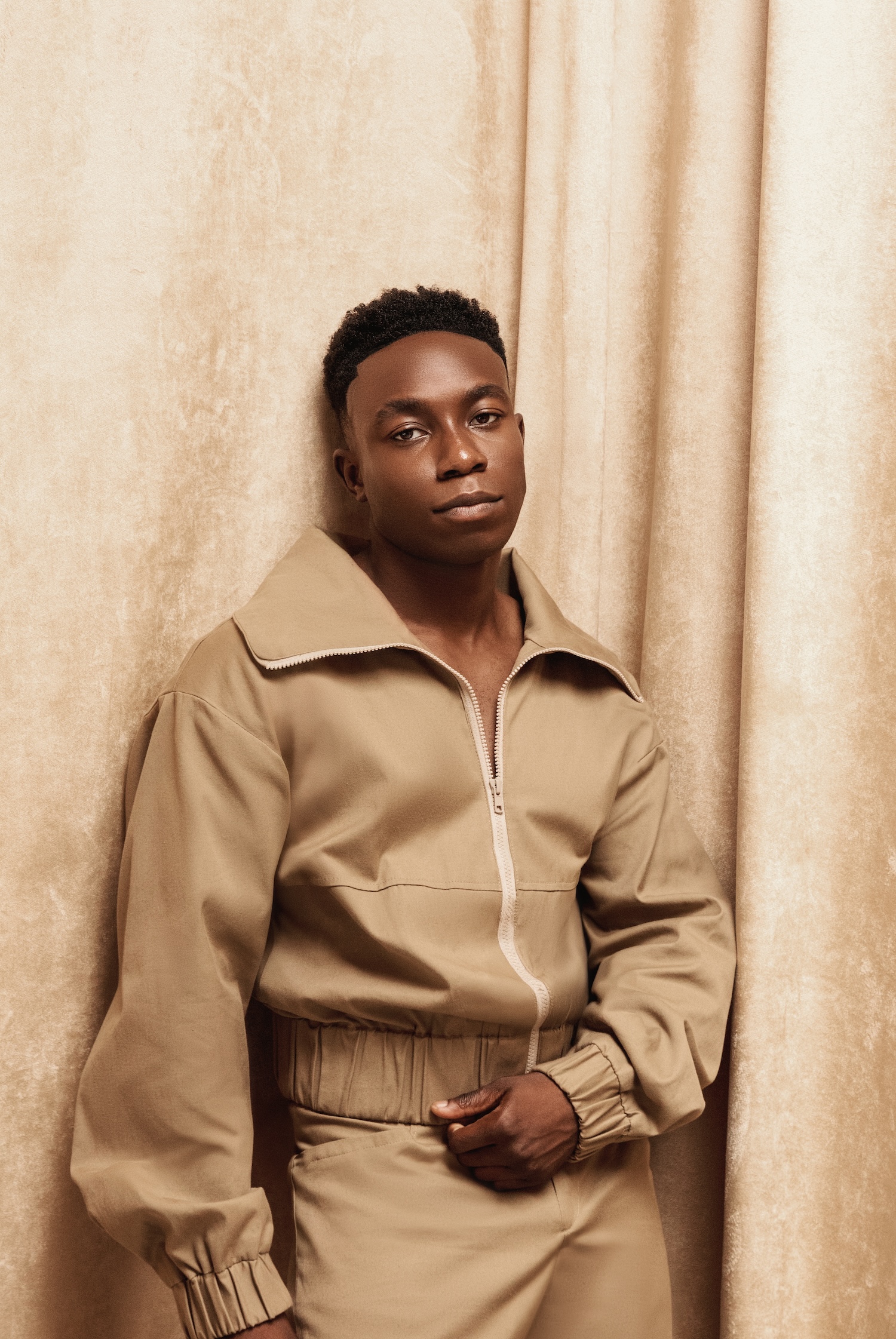
I think that the writing in the show is so good. And from jump, with the writers and Morgan Cooper, the creator, we’d all had conversations about what Carlton’s journey was going to be. We meet Carlton in this part of his life where he’s relatively unlikable, and I think a lot of fans and early viewers responded to that, and it was great. And so then we had this challenge over the last four seasons of crafting a character that goes through an evolution to get to a point where you finally like him. And what’s crazy is I think we did it, which is a really, really hard thing to do, but for me, my main thing was just focusing on Carlton’s journey to self-love, because we meet a character in season one who has compromised so much of his own identity in order to fit in, and by the end of the fourth season, we say goodbye to a character that’s really come into his own and learned to love all the parts of himself.
Over four seasons, what part of Carlton became most personal to you? And how has playing him reshaped the way you see vulnerability, both on screen and in your own life?
I have become a way more emotional person. And not that I was never emotional, because I think obviously, in order to be an actor, you have to feel deeply, but this role has taught me a lot of patience, a lot of compassion. Carlton, in a lot of ways, feels like a little brother to me now, and it’s funny, because it’s me playing him, but I’ve just always looked at him as a different person. He’s made me a lot more compassionate, because you just kind of never know what people are going through. And that’s, in a way, the whole point of, not only the show, but Carlton specifically. This idea that all that glitters isn’t gold, and what you see on the surface may not necessarily be what’s going on underneath. So, I think having compassion for others, especially on their worst days, makes, in theory, the world a better place.
I think the older I get, the more compassionate I become, because I’m aware of the world’s realities, and it’s not easy for everyone. So you’re more compassionate in that sense, too.
It’s exactly that. It’s even little things like hearing a baby cry on a plane.
Watching an old person carry groceries.
Oh my God, it makes me so… because when I’m 12, 13, or 14, it’s like kids are crying on a plane, whatever. Why can’t that mom just shut that baby up? Or like people drive so slow. But then you kind of hit your mid-20s, and you realize that man, life is hard. Life is really, really hard. And that old person has lived for decades on this earth, and all I can do is hope that it’s been an easy multitude of years. And you know that mother with that kid is trying her best. Maybe it’s also just a being 27 thing, but everything just makes me sad and feel things.
I also think that playing a character for that long, you definitely pick up pieces of them and leave behind pieces of you.
I think there’s a lot of my snark that I put into Carlton, and for better or for worse, right? A lot of Carlton’s one-liners were not actually scripted. It’s just me being on set and kind of being like, I feel like I would say this, but then also, a lot of Carlton’s vulnerability and his love were left with me. I think from the get-go, one of the things that I felt a kinship with Carlton for was this idea of holding yourself to sort of an impossible standard, and it doesn’t matter what you achieve. Something I’ve always done my whole life is I’ve always moved my own goalposts. I achieve one thing, and I want the next thing. I’ll never forget getting off the phone with my agent when I actually got the show. He had called me and said the offer came in. They love you. You’re going to be Carlton Banks. I was like, wow, that’s amazing. So after this, what show am I going to do next? And I remember he took a pause, and he was like, Olly, I want you to enjoy the fact that you just got your first television show. But, you know, I think that that probably might have been the most Carlton thing I’ve ever done. Okay, now that I’ve done one show, I have to do two in a year. And even though I have an EP out and an album out, I need to put out two more albums by the end of this year. The gift is the experience and the journey, and making the thing. I think that’s something I’m still working on.
You’ve lived across continents and cultures at formative ages. How do those roots shape the emotional textures you bring to your roles and the sonic palette you build in your music?
Yeah. I really lived such an incredible life. I was born in Atlanta, and then, very shortly after, moved to Nigeria. My parents were Nigerian. I grew up in Nigeria until I was like 10, and then moved to Houston. While I was living in Houston, living in Sugar Land, I went to an international school for a little bit, then an art school, and then at 17, I moved to LA to go to college, and all of these experiences have really shaped so much of how I create music. I have fallen in love with such an interesting amalgamation of different types of music, from pop music to rock to R&B to reggae to Afrobeats. And I think even when you listen to my music, it’s all there. I always say I make pop music, just because I think pop is the genre that I’m unafraid to borrow from. Pop music goes through EDM phases. It goes through the Hip Hop phase. I think just the coolest thing about pop music is it’s so unashamed to take all these textures. And in my music, as I create, I’ve learned to be so unashamed of carrying all these cultural and geographical textures with me and with Carlton. I think in a lot of ways, that is something that I bring into the character. Because in all these places, I’ve always had to make the decision of how much of myself I need to give up to fit in, and at varying parts in my development, the answer was oftentimes higher than I’d like to admit. But the beautiful thing about growing up is that you realize that yourself and your uniqueness are what actually make you… you.
You’re a true multi-hyphenate, and yet each craft requires a different version of you. How do you navigate the emotional and creative switches between actor, producer, musician, and label founder?
It kind of works like a switch in my brain, which I’ve never been able to explain to anyone. But it really is just you. You take on a different role in each thing, and I love different things about each role. And so I always say, with movies and television, for the most part, I get to tell other people’s stories with other people’s words. In my music, I sometimes tell other people’s stories and sometimes my own, but in my own words. That requires different roles. When I’m on set, I am truly there to be a vessel. The words are here, I’m here to speak those words and collaborate with scene partners and the director’s vision. But in my studio, I mean, I’m sitting here right now. If I’m not on set, I spend 80 to 90% of my time here, and it’s really just me. I even go through different roles when I’m producing, versus when I’m writing, versus when I’m singing, because when I’m producing, it’s a little more analytical, it’s a little more, what frequencies does the song need? And then when I’m writing, it’s just about the feeling and the vibe, and when I’m singing, it has to come from the heart, and then the business side of it all, that’s numbers. That’s a whole other thing. As I’ve grown older, I’ve cultivated the ability to switch between these different roles to be the most effective in what I’m doing at that moment.
With Lamintin Records, you’ve created a space where you’re not just making music, you’re shaping artists. What does creative autonomy mean to you right now, and how has running your own label changed the kind of stories you want to tell through music?
I think creative autonomy is about choice. And the conversation around artistic independence, creative autonomy always goes back and forth. This idea of being completely independent versus the big machine and the big label. I think it’s a gradient. I don’t think it’s black and white. Creative autonomy is about the choice to do whichever and throughout my four years on the show, I’ve made a very intentional choice to stay independent and kind of cultivate what I want my sound to be, and what I want to say with my own music, and how I want to market it, and, you know, how often I want to release it. With the show coming to a close and my schedule opening up, I am having meetings and looking to partner with a label, just because, at the end of the day, it’s about resources. And this is kind of what I mean when I say I need to take on different roles depending on what I’m doing from the business standpoint. It’s a lot of moving parts to have a label and achieve a global impact with your music, and I think my goal is to be global. I want my sound heard in every corner of the world. And in a lot of ways, you do just need the resources for that. So I’d say creative independence for me is about choice, and in the next year, I’m excited to see what choices I’ll make with the label.

Your sound pulls from Afrobeats, R&B, and pop. What does your next era of music sound like? What emotional space are you in as you create it?
That’s actually so funny that this is the craziest question you’ve asked me today. I think the way I’ve always made an album is that I write a bunch of stuff, I make a bunch of stuff, and then I look back and, only retroactively, can I see what that sound is. But in a way, while I’m making it, I’m a little blind to it, which is a strange thing to explain. You know, it’s kind of like artists will often say, ‘Man, that performance was crazy. I don’t remember a single second of that. I blacked out,’ because you’re just so in that moment. But if I had to really look at what I’m making right now, I think it’s this really exciting and interesting blend of analogue synthesizers, Afrobeat percussion, but with, like, a strong pop melodic sensibility. I always say, I love pop music. I love a little earworm. I love something that gets stuck in your brain. That’s actually a really hard question. I don’t know.
The great thing about music right now is that no song is just one genre anymore. It’s a mix of multiple.
I’m excited to see what the next era of my sound will be, because I think I know what it is, but like, I’m going to have to listen to it later and be like, oh, that’s what I was doing.
You’ve worked with major fashion labels, and your style feels like its own narrative. What role does fashion play in your self-expression, and how does it intersect with the world-building you do through acting and music?
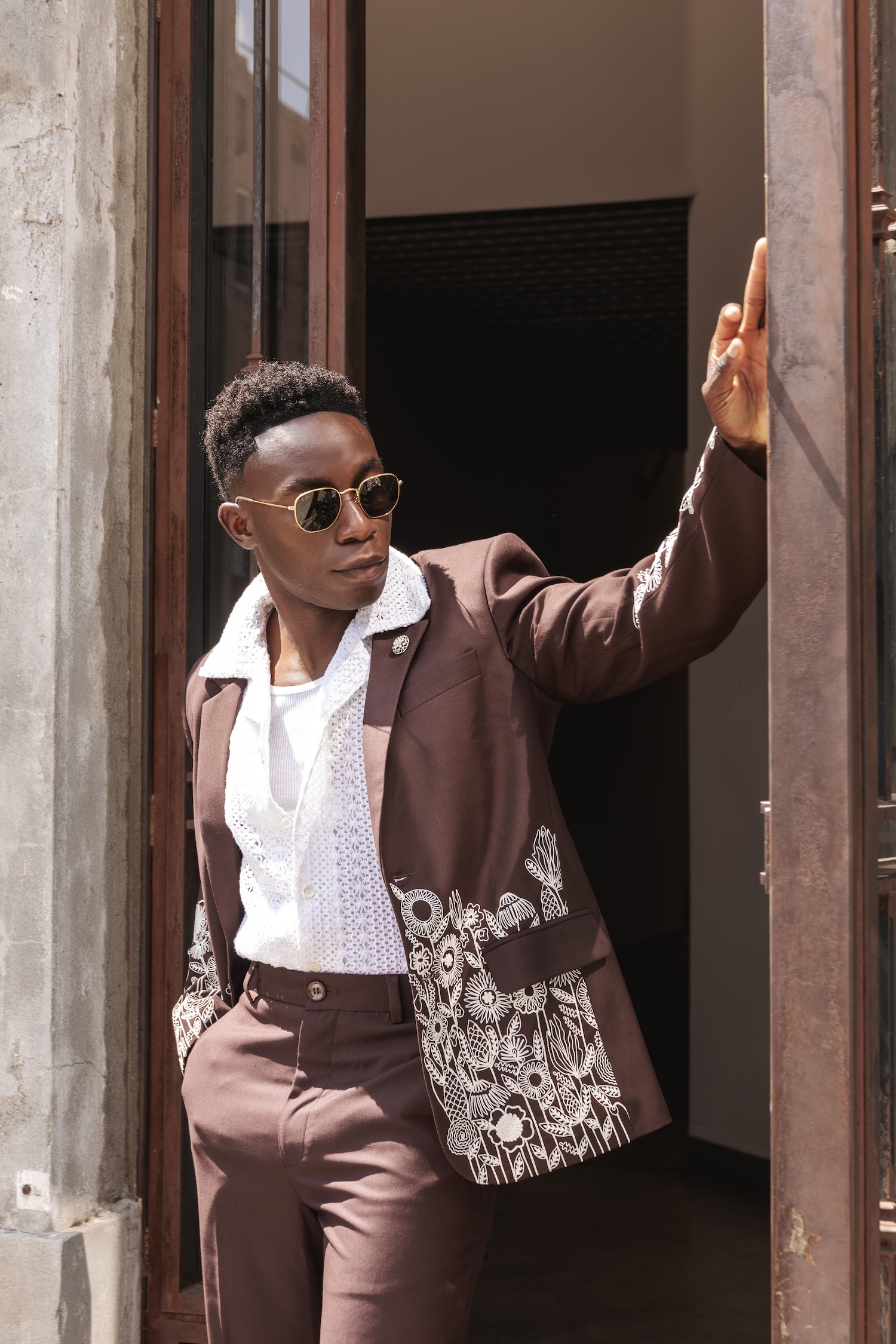
Man, I love clothes. I’m such a… I think they call it swag jacking… I am such a swag jacker. I will look at you, look at the jacket that you have on and say, where is that from? And I will buy it in front of you. I don’t have any shame about it. I know it’s kind of like that thing where people don’t feel embarrassed to Shazam a song that you play. The same with clothes. I think that fashion is such an incredible mode of self-expression and narrative building, and storytelling. People see you before they hear you. And so what you’re wearing at that moment in time says so much about you. And over my career, my goal has been to cultivate a style that is beyond silhouettes. It’s beyond material, it’s beyond texture. I really want to redefine what we understand male fashion to be. I don’t think it has to be boring. I don’t think that men’s red carpet has to be just a black tuxedo. What are the limits of what Black Tie can look like? It can still be classy. It can still be heightened, but also, I think it could look fly. I want to bring back the era of fly. Fashion, in a lot of ways, has become homogenized. A lot of that has to do with social media and trends and fast fashion and etc. But I just want everyone to be fly again.
After portraying such a culturally iconic character and expanding your music footprint, what kind of roles or creative pursuits are you eager to pursue next?
First of all, I kind of want to sleep. The show has been a lot of work, but right now I’m really, really deep in my music bag. I’ll be putting out a project soon. I don’t have a date yet. I think I’ll be dropping a song around the premiere of Bel-Air. We’ll see. As far as types of roles, you know, my parents are huge, huge fans of comedy in my career. So far, I, for the most part, have only done drama and really, really sad things. And so I would love to make my mom and dad happy and just do like a good old funny movie or funny show. I would love to play a character that’s fun and likable off the rip. I also want to do an action movie. I grew up an athlete. The gym is the place where I kind of feel the most sane, and I think I would definitely love to take those physical abilities and put them on screen.
Bel-Air is streaming now on Disney+.
Olly’s new single HOTSHOT is out now, listen via Apple Music or below.
Interview Naureen Nashid
Photography Dalvin Adams