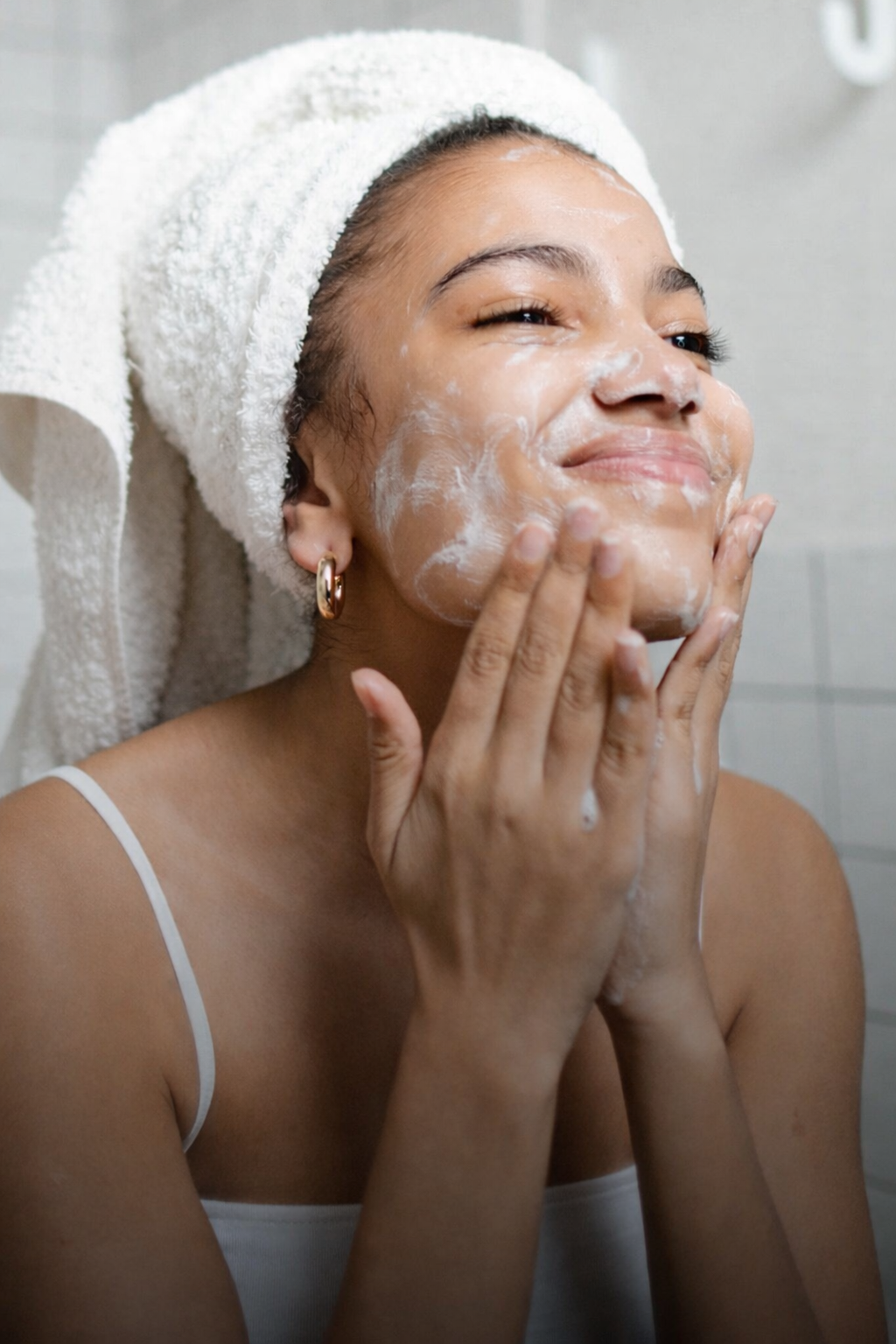
On a warm November morning at Mortimer House, Dermatica gathered a room of skincare enthusiasts to launch their new Retinal Range. But this wasn’t your typical product launch. Hosted by beauty broadcaster Nicola Bonn, the panel brought together Dr Khawar Hussain, Dermatica’s Dermatology Lead, and Lisa Payne, Head of Beauty at Stylus, for an honest conversation about why retinoids remain the most evidence-backed ingredient in skincare and where the category is headed next.
We’re Not Shopping for Brands Anymore
Here’s something that should terrify legacy beauty brands: Sainsbury’s recently reorganised their entire skincare section. Not by brand. By ingredient. The reason? Customers were walking in asking for niacinamide, not Neutrogena. Hyaluronic acid, not L’Oréal.
“We’re not necessarily brand loyal anymore,” Payne explained, and the shift goes deeper than retail strategy. The under-35 demographic is now the fastest-growing market for retinol products, armed with ingredient knowledge their predecessors never had. They’re not waiting for wrinkles to appear, they’re thinking in terms of preventative ageing, longevity, skin health. It’s a fundamentally different relationship with skincare, one where TikTok dermatologists hold more sway than department store beauty counters.

But with ingredient literacy comes ingredient confusion. And nowhere is this more apparent than in the retinoid space, where the terminology alone: tretinoin, retinal, retinol, adapalene, can feel deliberately obfuscating.
The Science, Without the Smoke Screen
Dr Hussain cuts through it cleanly: “Most of the evidence base that we have is from topical retinoids. It’s one of the most studied areas in dermatology.” This matters. In an industry where “clinically proven” can mean a study of twelve people over two weeks, retinoids have decades of robust research behind them.
At a cellular level, they’re doing something rather elegant. Vitamin A derivatives bind to specific receptors in the skin, helping to normalise everything from pigmentation to collagen formation. It’s why dermatologists prescribe them not just for ageing, but for scarring, texture, hyperpigmentation, they’re genuine multitaskers in a field full of single-use gimmicks.
The hierarchy is straightforward once you know it. Tretinoin sits at the top: most potent, closest to the active retinoic acid your skin needs, prescription-only. One step down is retinal (retinaldehyde), which converts faster than retinol but remains gentler than tretinoin. Then comes retinol itself, requiring two conversion steps, available over the counter. Adapalene, synthetic and primarily for acne, rounds out the main players.
“It’s not about which is better,” Dr Hussain stressed. “We use them for different things.” The evidence for skin ageing? That’s tretinoin’s domain, backed by American research. But not everyone needs or can tolerate the strongest option. Which is where the retinal conversation gets interesting.


Why Retinal Is Having Its Moment
Full disclosure: I’ve been a long-time user and fan of Dermatica. Their prescription formula treated my melasma when nothing else would, and it remains the only thing that’s genuinely worked on my acne. So when I heard they were launching an OTC retinal range, I wanted to understand how it would fit into the clinical approach that’s made their prescription service so effective.
Dermatica’s new range – three strengths of retinal, from 0.05% to 0.2% – acknowledges something the industry often ignores: skincare shouldn’t require a dermatology degree to navigate. The encapsulation technology (plant-based cellulose, since you asked) does two crucial things. It protects the active ingredient from breaking down, and it allows for slower, gentler delivery to the skin.
“We’ve added things like Vitamin E and specific moisturisers to make sure that tolerability element is there,” Dr Hussain noted. Translation: you shouldn’t have to suffer for results. The three-tier system lets people start low, build tolerance, and eventually work up to prescription tretinoin if they choose. It’s skincare as a journey rather than a destination, which feels refreshingly honest in an industry obsessed with “miracle” transformations.


The real talk came when discussing how to actually use these products. The sandwich method: moisturiser, retinoid, moisturiser isn’t just helpful for sensitive skin, it’s essential for areas like the neck and around the eyes. Start twice a week. Build to alternate nights. Then, maybe, nightly. Give it three months before expecting visible results. Use SPF religiously in the morning, even on grey London days, because UV damage doesn’t take cloudy days off.
And the purging? “That’s a good sign,” Dr Hussain said, probably to the horror of anyone mid-breakout. “Your body’s resetting.” The caveat: it should be temporary. Persistent problems mean something else is going on.
The Sephora Teen Problem And When To Actually Start
The elephant in the room: teenagers emptying their pocket money on Drunk Elephant and The Ordinary, convinced their unlined faces need aggressive intervention. When should someone actually start using retinoids?
Dr Hussain’s answer was notably nuanced. No one under 16, full stop. After that? It depends entirely on what you’re treating. Hormonal acne at 22? Fair game. Preventative anti-ageing at 24? Depends on your skin type, sun damage, lifestyle. For fairer skin types, signs of photoageing can appear earlier. For others, it might be pregnancy-related pigmentation that becomes the concern.
“By the time you’re 25 to 30, you’re going to start to see signs of losing skin elasticity,” he explained. “But will you see that on a macroscopic level? Probably not.” The changes are happening microscopically, which raises an interesting question: are we solving problems or creating anxieties?
The clean girl makeup trend, Payne noted, hasn’t helped. “It’s really spotlighted the fact that you need to have really good skin underneath the makeup.” The result? Increased engagement from younger demographics, but also increased pressure. Retinoids can help with texture and tone, yes. But the base matters more: UV protection, diet, exercise, not spending your twenties on sunbeds.
Why Men’s Skincare Needs Better Than “Just For Men” Branding
A mother in the audience asked the question so badly needed asking: what about boys and men? The room was overwhelmingly female. The marketing is overwhelmingly female. Yet skin doesn’t care about gender.
“There’s a massive gap in the men’s healthcare market,” Dr Hussain confirmed, citing his own Durham MBA research. Men present late for treatment, for acne, rosacea, pigmentation. They’re using products because David Beckham endorsed them, not because they understand what’s actually in the bottle. And while women will happily build a six-step routine, men want “one and done” – hence the rise of moisturiser-retinol-SPF combinations.
The data suggests men are increasingly interested in skincare, particularly anti-ageing. But they’re not comfortable asking for help in-store, so they’re diagnosing themselves via ChatGPT instead.
The opportunity is obvious. The question is whether brands will move beyond lazy “for men” packaging to create genuinely useful products and education.
What’s Next: Algae, Ozempic Face, and AI Skin Scanners
Payne’s trend forecasting gets genuinely interesting when discussing bio-retinoids – retinol derived from algae rather than synthetic sources. It’s the sweet spot for the clean beauty crowd who want efficacy without compromise. The sustainability angle alone should appeal to a generation increasingly concerned with environmental impact.
But the real disruption is coming from an unexpected place: GLP-1 medications. Ozempic, Wegovy, Mounjaro – whatever you want to call them, they’re causing rapid volume loss in the face. “It doesn’t just selectively target fat loss,” Dr Hussain noted. The result? A surge in interest around ingredients that support skin structure and collagen. Retinoids, with their decades of evidence, are suddenly relevant in an entirely new context.
“Retinol is one of the few ingredients that actually has really robust clinicals,” Payne emphasised. “Everything else is still new and still needs to be tested.” While Korean ingredients like Centella Asiatica trend on TikTok, and while new peptides launch weekly, retinoids remain the gold standard. Not because of marketing hype, but because the research exists.
As for AI in dermatology? Dr Hussain has seen the machines at conferences – devices that can analyse skin temperature, microbiome, biological age, sun damage. “I do think AI will be quite helpful,” he admitted, though the evidence base is still early. The regulation, even earlier. But the potential for detecting problems before they’re visible? That could change the game entirely.
The irony isn’t lost: ChatGPT is being used to self-diagnose skin conditions, while proper AI dermatology tools are still in development. We’re living in the gap between amateur and professional AI application, and it shows.
K-Beauty’s Complicated Relationship With Active Ingredients
Korean beauty’s second wave is here, driven by better distribution and Instagram aesthetics. The focus on barrier repair aligns perfectly with retinoid use in theory. In practice? Dr Hussain sees the casualties in his clinic.
“Often I see patients with irritant dermatitis or allergic contact dermatitis from the different layering of active ingredients,” he explained. Too many steps, too many actives, skin that simply can’t handle it. The ten-step routine looks good on camera. It doesn’t always look good on your face.
The appeal of encapsulated retinoids and supportive barrier ingredients makes sense in this context. You get the efficacy without needing to build an elaborate routine around it. Sometimes, as Bonn put it perfectly, skincare “shouldn’t be sexy. It’s a bit boring, you know, but it works.”
Light a candle next to your skincare routine if you need the ritual. But the routine itself? Keep it simple, keep it consistent, and give it time.
Three Months, Minimal Drama, Maximum Evidence
What becomes clear over the course of this conversation is that retinoids aren’t going anywhere. While trends cycle – K-beauty to clean beauty to clinical beauty and back again, the science remains constant. Decades of research. Multiple mechanisms of action. Results that show up not in days but in months.
The breakfast concluded with goodie bags containing the Retinal Range, along with explicit instructions to finish the over-the-counter products before moving to prescription. A reasonable approach to a category that rewards patience over panic-buying.
For an industry often characterised by bold claims and flimsy evidence, there’s something almost radical about Dermatica’s model. Personalised assessment. Ongoing support. Products that require commitment rather than promising miracles. It’s unsexy in the best possible way.
The question attendees left with wasn’t whether retinoids work, that’s established science. It was whether they were ready to commit to the journey. Two to three months on that 0.05% retinal. Then reassess. Perhaps step up. Always with SPF. Always with patience.
Not exactly Instagram-friendly advice. But then again, good skin rarely is.
Dermatica’s Retinal Range is available online in three strengths: 0.05%, 0.1%, and 0.2%. For prescription skincare consultations, visit dermatica.co.uk
By Raluca Tudose