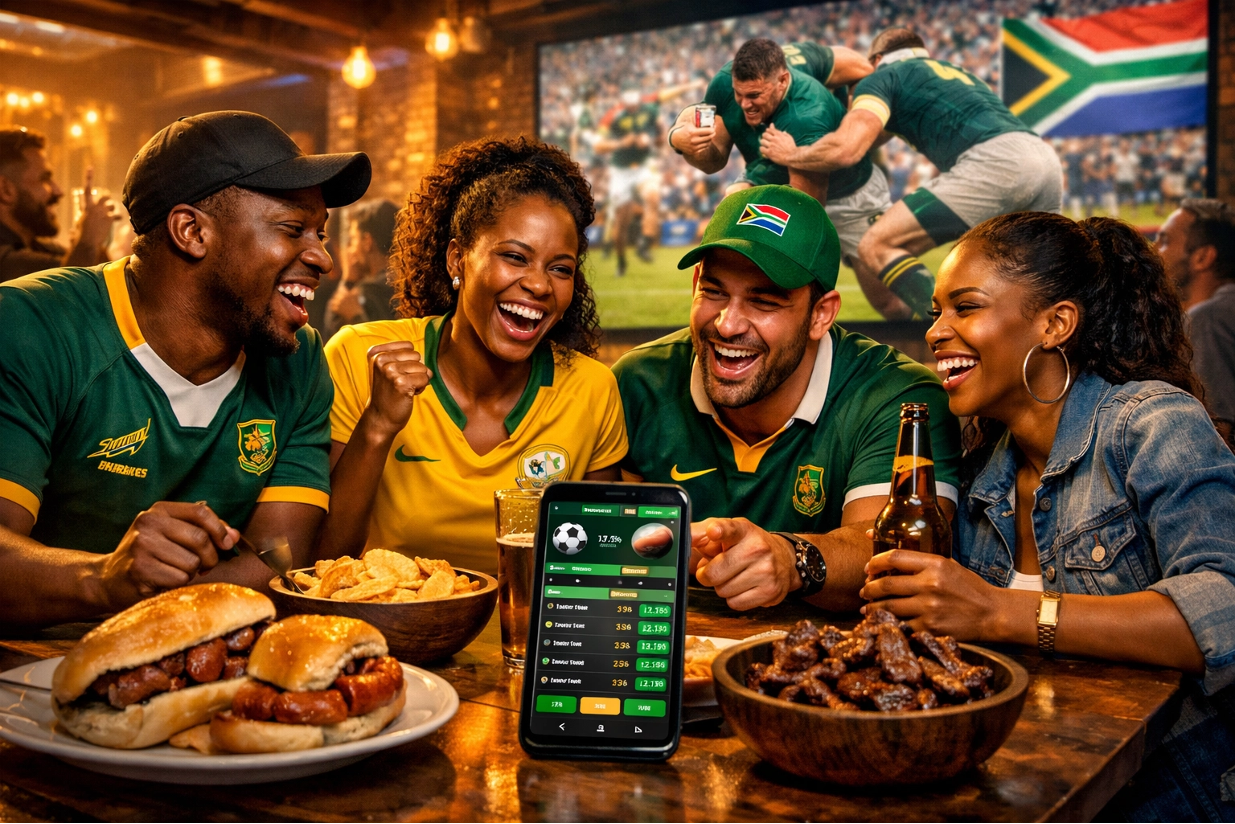
Every win is a national event. Mens Football team, aka Bafana Bafana, qualifying for 2026 made noise in every taxi rank, pub, braai and barbershop in the country at once. When sport comes with this much emotion, adding money to it does not feel like gambling and just means being more present.
Using money to participate more in the game is how betting embedded itself into South African sports culture so quietly and not through aggressive marketing alone, though there has been plenty of that. Through the simple fact that following a game with something on it feels different from watching without. Ask anyone who has sat through a Kaizer Chiefs vs Orlando Pirates derby with a bet running; the 90 minutes do not pass the same way.
Football First, Everything Else Close Behind
GeoPoll report from 2025 states that 61% of South African sports bettors say football is their primary market, and 91% place bets via mobile phone.
When these two numbers are put together, they explain most of the story. The Premier Soccer League (PSL) is followed with the kind of emotional investment that European leagues attract in their home countries, and the phone in every pocket made participation frictionless in a way that no one could have imagined a decade ago. A generation grew up with odds one tap away and treated that as normal, because for them it always was.
The upcoming 2026 FIFA World Cup has added something on top of that. South Africa is in the tournament for the first time in 16 years since hosting it in 2010, opening against Mexico on June 11 in Group A. The excitement of the team fans is already through the roof, and whatever happens on the pitch, the betting interest around Bafana Bafana’s campaign will be unlike anything the local market has seen in a decade and a half. In most cases, the fans who follow the team for emotional reasons and the fans who track the odds are the same people.
Rugby sits alongside football for obvious reasons. The Springboks have given South African fans consistent expectation at the highest level, which is something genuinely unusual in global sport. Backing a team you believe in is different from backing a team you hope surprises everyone. Test match weekends carry a different energy when the scoreline and the accumulator are both running simultaneously.
Cricket and horse racing are also very popular. After being in a slump for a while, the Proteas (official nickname for the South African national cricket team) have rebuilt credibility in white-ball cricket after years of tournament disappointment, and their World Cup and bilateral series fixtures attract a massive betting volume. Horse racing has a long history in South Africa, with Hollywoodbets extending the Durban July prize pool to R10 million in 2026, and the betting culture around it is among the most established in the country. Movies usually portray horse racing as an elite sports which gets pretty big bets, and that you can actually see during the horse sports seasons in South Africa.
What the Numbers Actually Say About This Culture
Statistics South Africa put gambling at 1.6% of total household spending in 2025, placing it 12th in the consumer price index basket, just behind beer. South Africans have quietly decided that gambling belongs in the same category as going out, streaming music, and watching a match rather than treating it as a niche activity. Culture is just behaviour that enough people share for long enough. By that measure, sports betting is already embedded.
Smartphones accelerated everything. 91% of bettors placing via phone means the betting experience lives inside the same device as WhatsApp group chats, social media commentary and live match streams. Match day is no longer a single activity; it is a lot of things happening at once on one screen, and betting is one of the layers that never gets switched off.
Where to Bet in South Africa in 2026
For betting in South Africa through a licensed platform, Lottoland South Africa covers football, rugby, cricket, horse racing, and all other mainstream sports under one sportsbook. The platform is licensed by the Western Cape Gambling and Racing Board, which shows its legitimacy matters in a market where the National Gambling Board has flagged at least 90 unlicensed operators still targeting South African players.
The World Cup window running from June 11 to July 19 will be the biggest single betting period South Africa has seen since 2010. Knowing the platform you are using is properly licensed and regulated before that window opens is worth doing now.
What This All Means for South African Sport
South Africa’s passion for sports betting existed long before the apps arrived. Apps only give that passion a new way to express itself, one that is immediate, measurable, and available in the palm of your hand during every minute of every match.
The conversation about what that means at scale is still developing. Responsible gambling frameworks are being updated, advertising regulations are tightening, there are crackdowns against illegal platforms, and the National Gambling Board is working through a legislative reform process that will reshape how the market operates over the next few years.
None of that changes what is already true in 2026: for millions of South Africans, watching sport and having something on it have become part of the same experience.