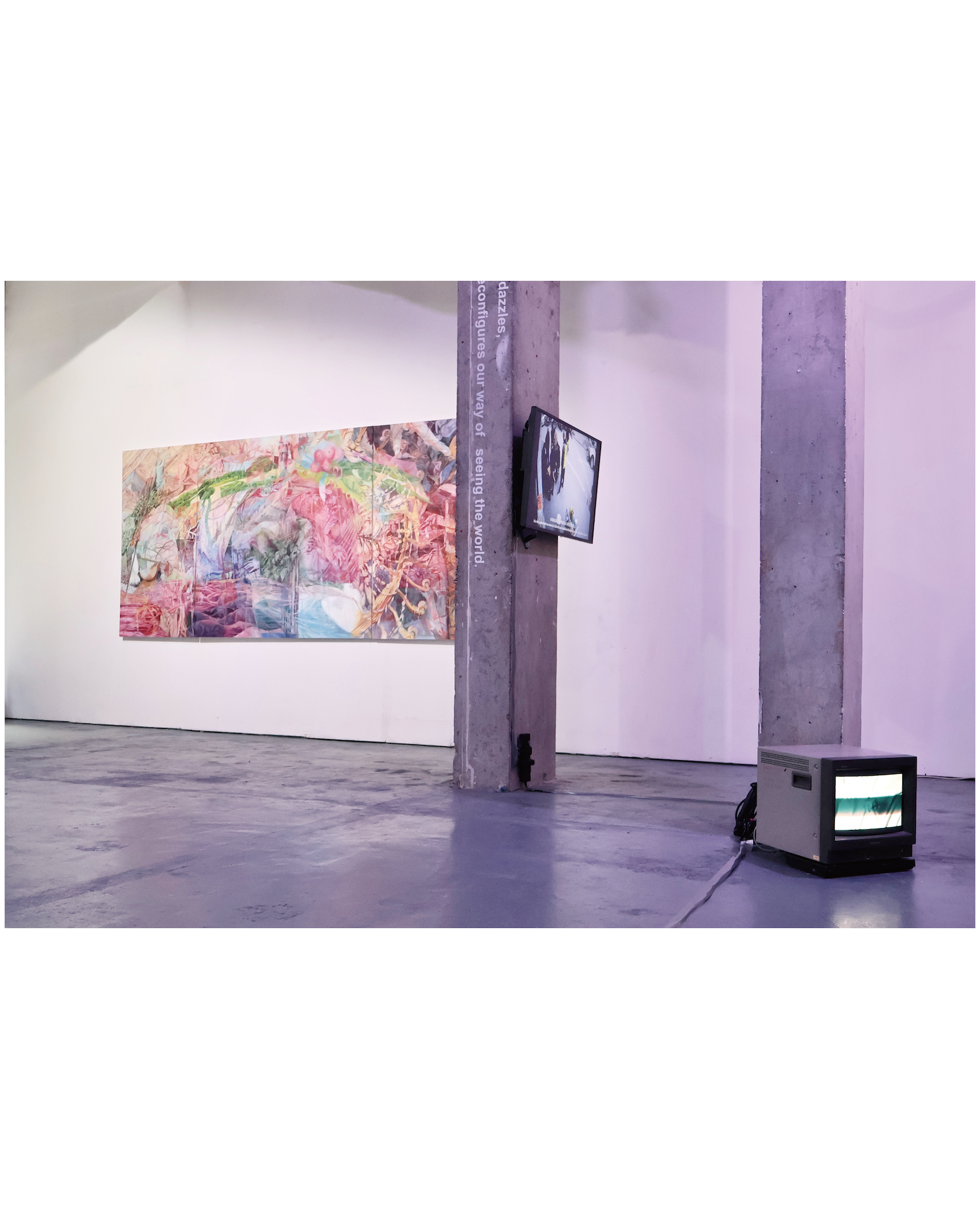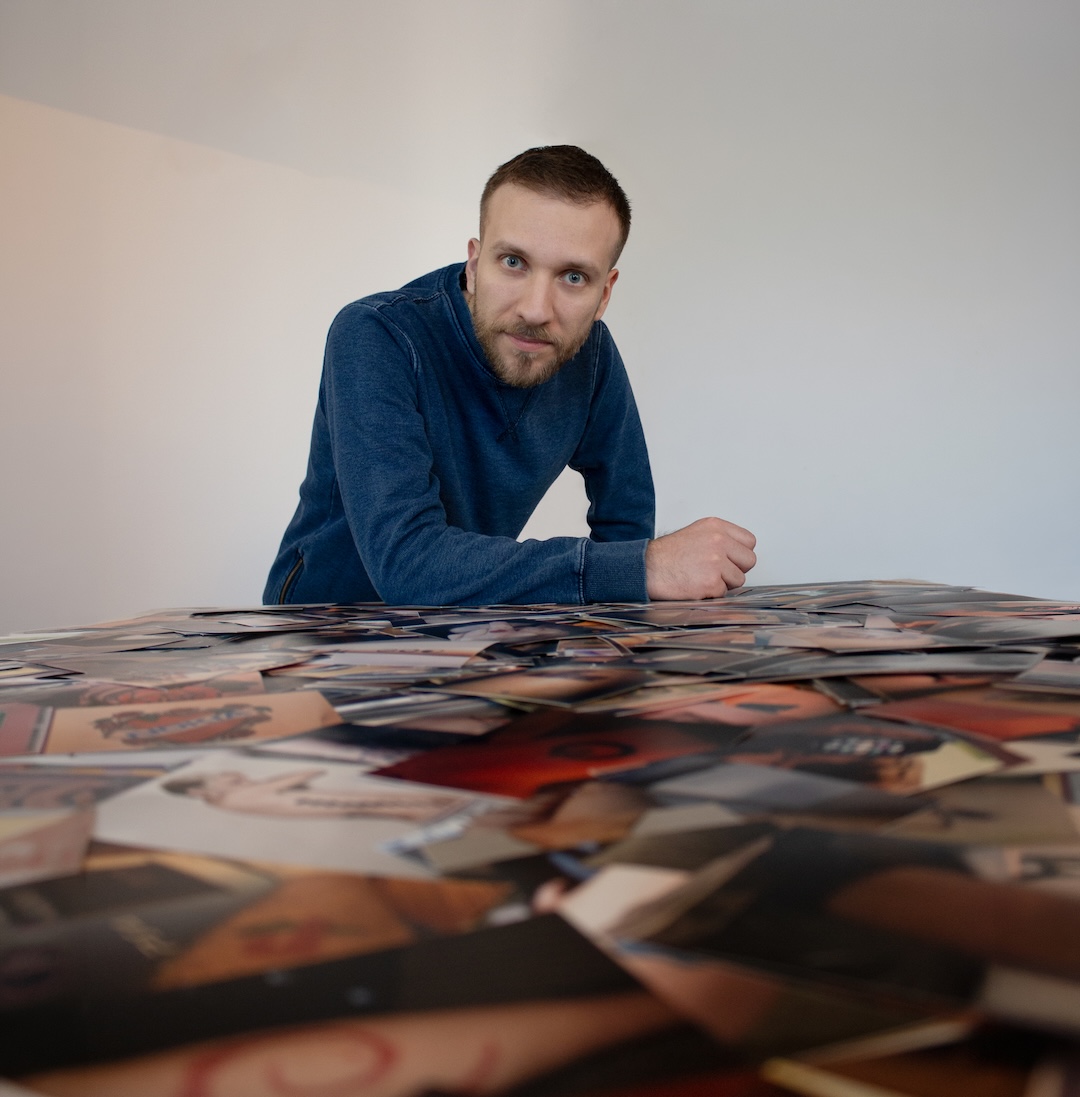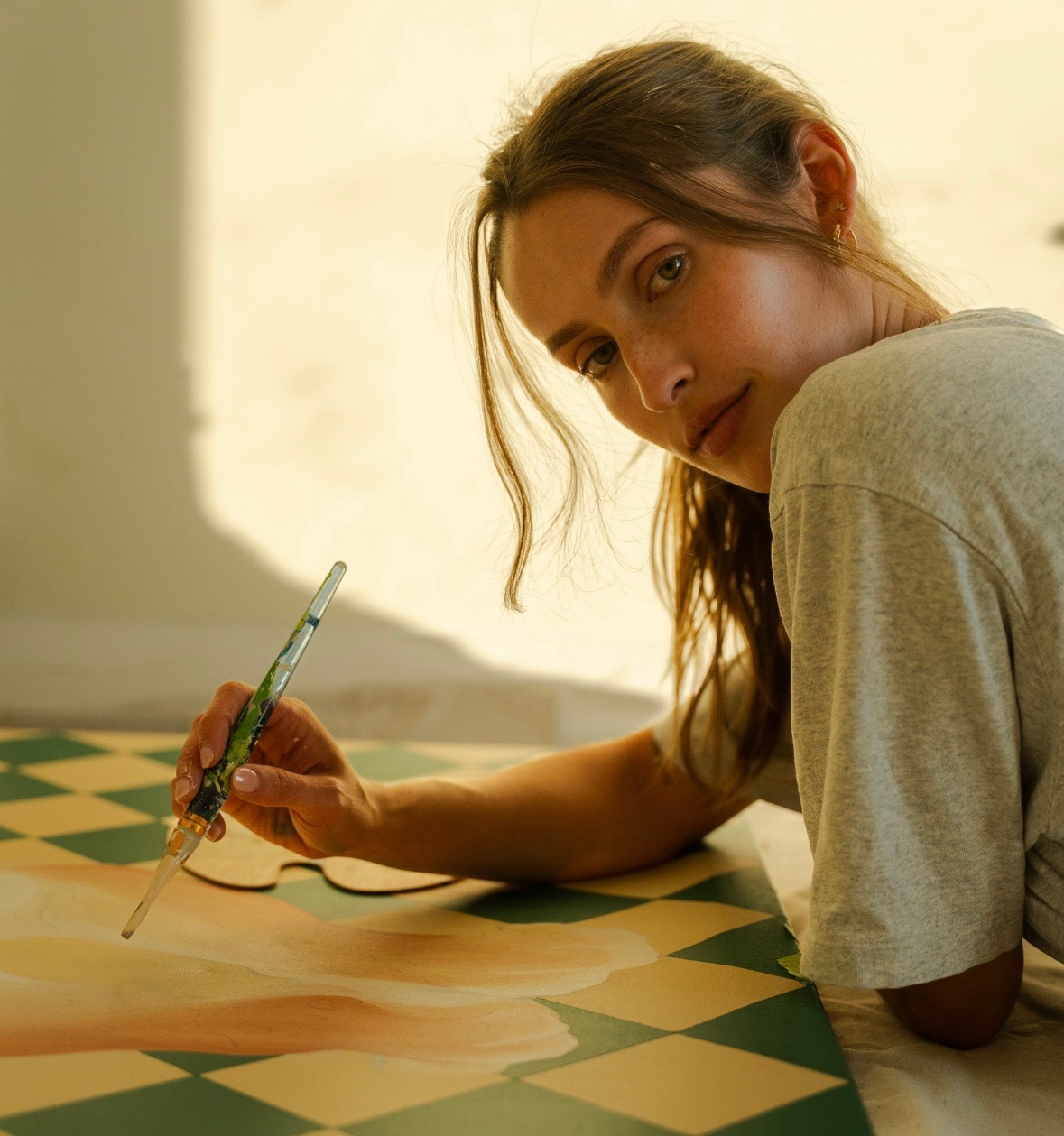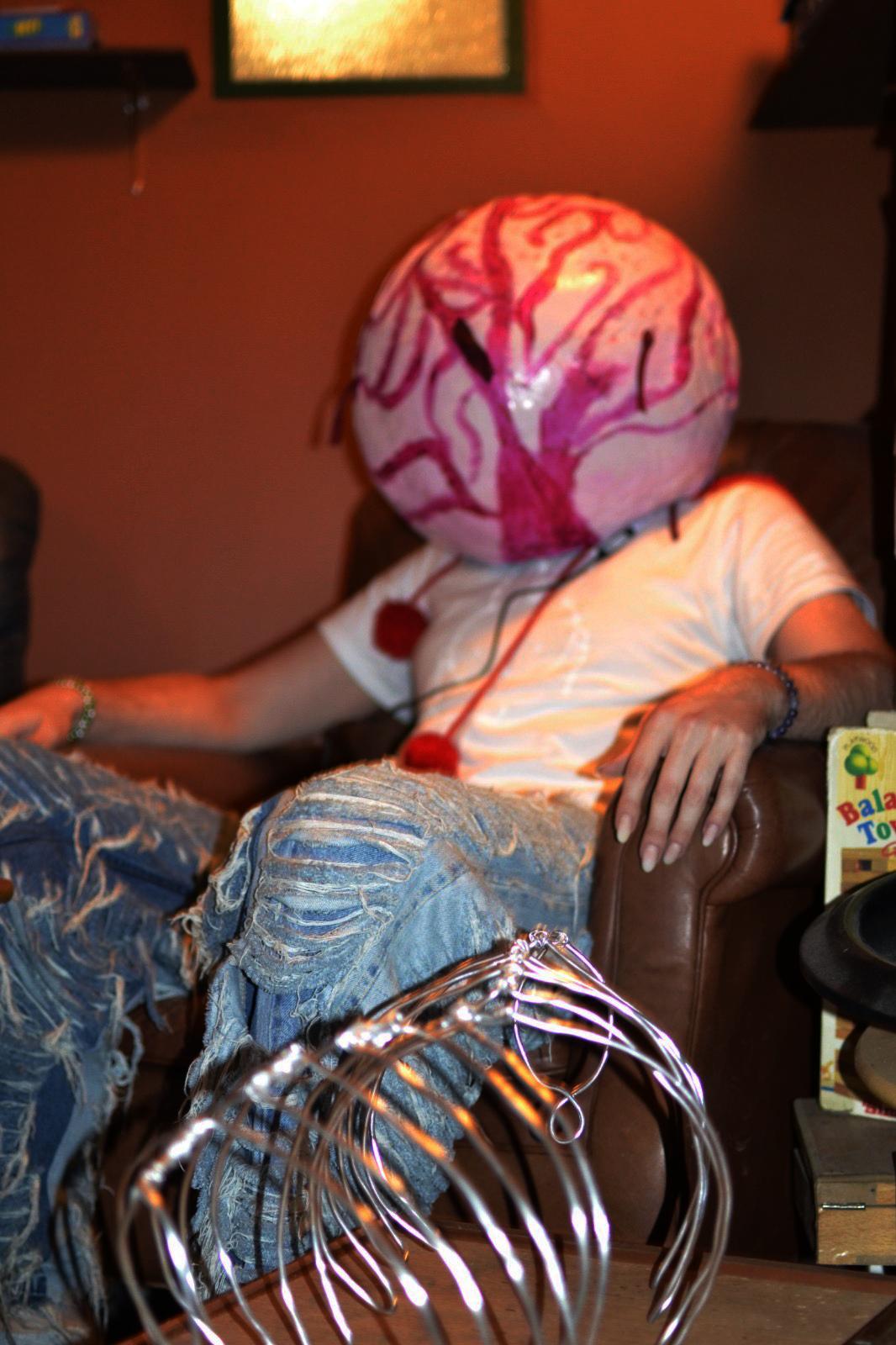
Stimulation Arts, Lil Bolingbroke and Drew Thwaites, are a neuroqueer collective that is embracing mess, divergence and rupture, bringing together performers, DJs and other artists to co-create nights out with audiences that build community and challenge the dominant assumptions of the art world.
Ahead of their upcoming art-rave Stimulation: Love at The Post Bar, the pair sat down to discuss spectatorship, stimming and why this work is unavoidably political.
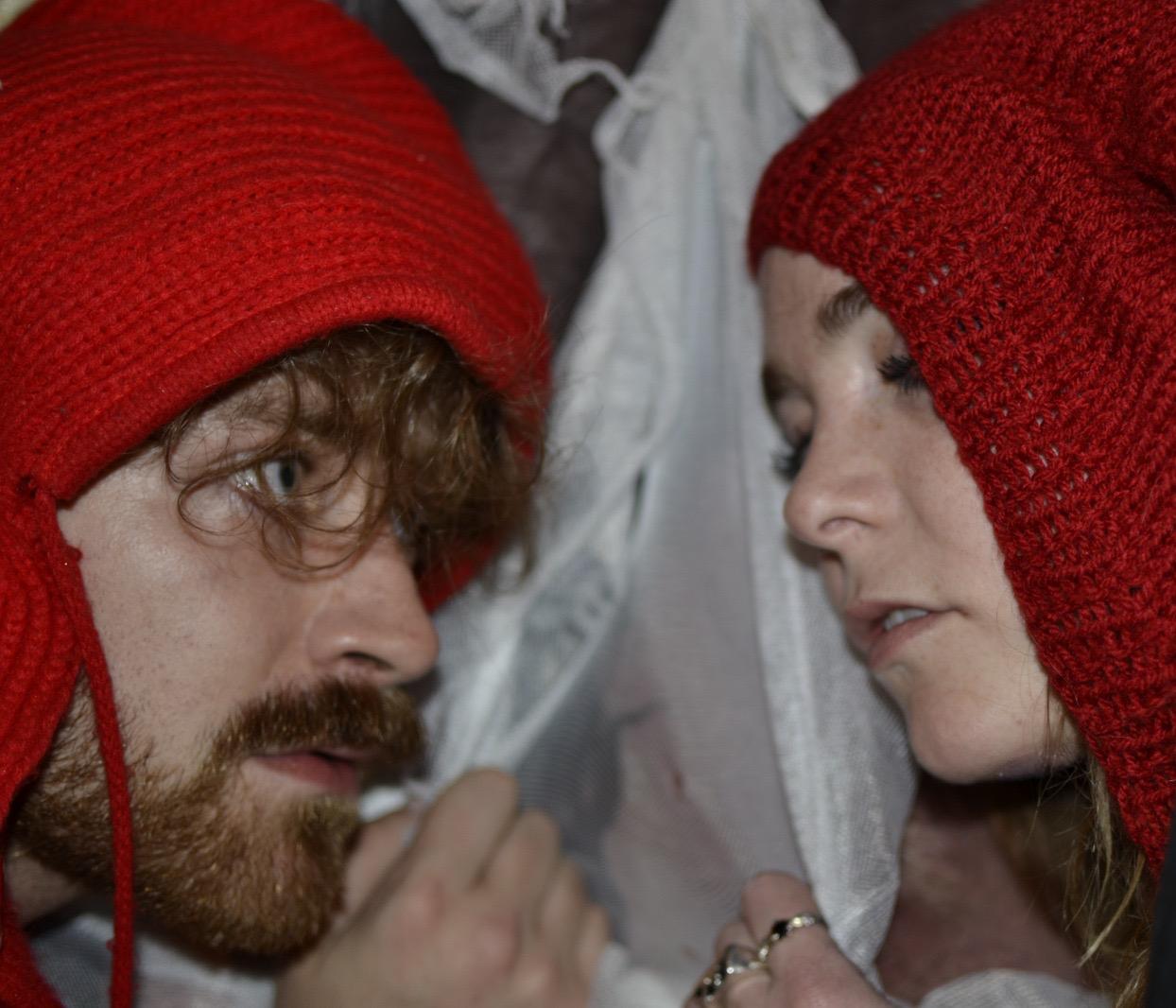
Were you happy with how the first Stimulation Arts night at Post Bar went?
Drew Thwaites: It blew every expectation out of the water. It was nerve-wracking because we put so much emphasis on the audience bringing the space to life. Going into it, people were a bit confronted with the set-up, not confident if they were allowed to engage with the pieces. At the end, there wasn’t a shred of fabric left. People stimmed their hearts out.
Lil Bolingbroke: By the end, people who had come on their own, people I’d never met before, were one big group. Everyone had a chat with each other. That’s something I’ve never experienced on a night out before.
What artists and musicians do you have lined up for your next night, Stimulation: Love?
LB: We’ve decided to focus on love as our central theme. As neurodivergent and queer people, you can have a lot of different experiences with love, and that’s both loving friends and romantic partners, but also self-love. We wanted to bring that in.
We’ve got returning artists like EULA, who is a London based Scottish transsexual anarchist river dyke, in her words. EULA does experimental sounds. EULA isn’t making noises that you’re going to hear often on a night out. The other DJs that we have coming back are DJ Husband and Wife (DJ Jessing Gown and Jessie). We’ve got some new DJs as well. We’ve got Vertex and DJ Salamander, who will be sort of getting us off on a donk-ie, kind of sound. Then we’ve got Dysfunction closing. We’re going to build the night up slowly, gradually, getting a little bit more chaotic, and that’s kind of reflective of how love can feel.
DT: At the beginning, it will be quite experimental, loose, playful, inquisitory. Then we’re going to shift it up again quite dramatically into a silly donk-ie sound where you can enjoy the freedom of maybe the honeymoon phase of a relationship. Then it shifts to a more experimental, retaining the playfulness with EULA, to to finally, a kind of darker, higher BPM release. It will be a journey.
We will have three performance artists. First will be Roman, who is exhibiting some rather glorious paintings of phalluses. They’re incredible, they’re imposing, they’re unapologetic. In addition to this he’s going to be painting one in real life. There’ll be a devilishly charming and romantic hoop performance by Seb. Then I’m going to do a performance, which will be interactive with the audience. It will be messy.
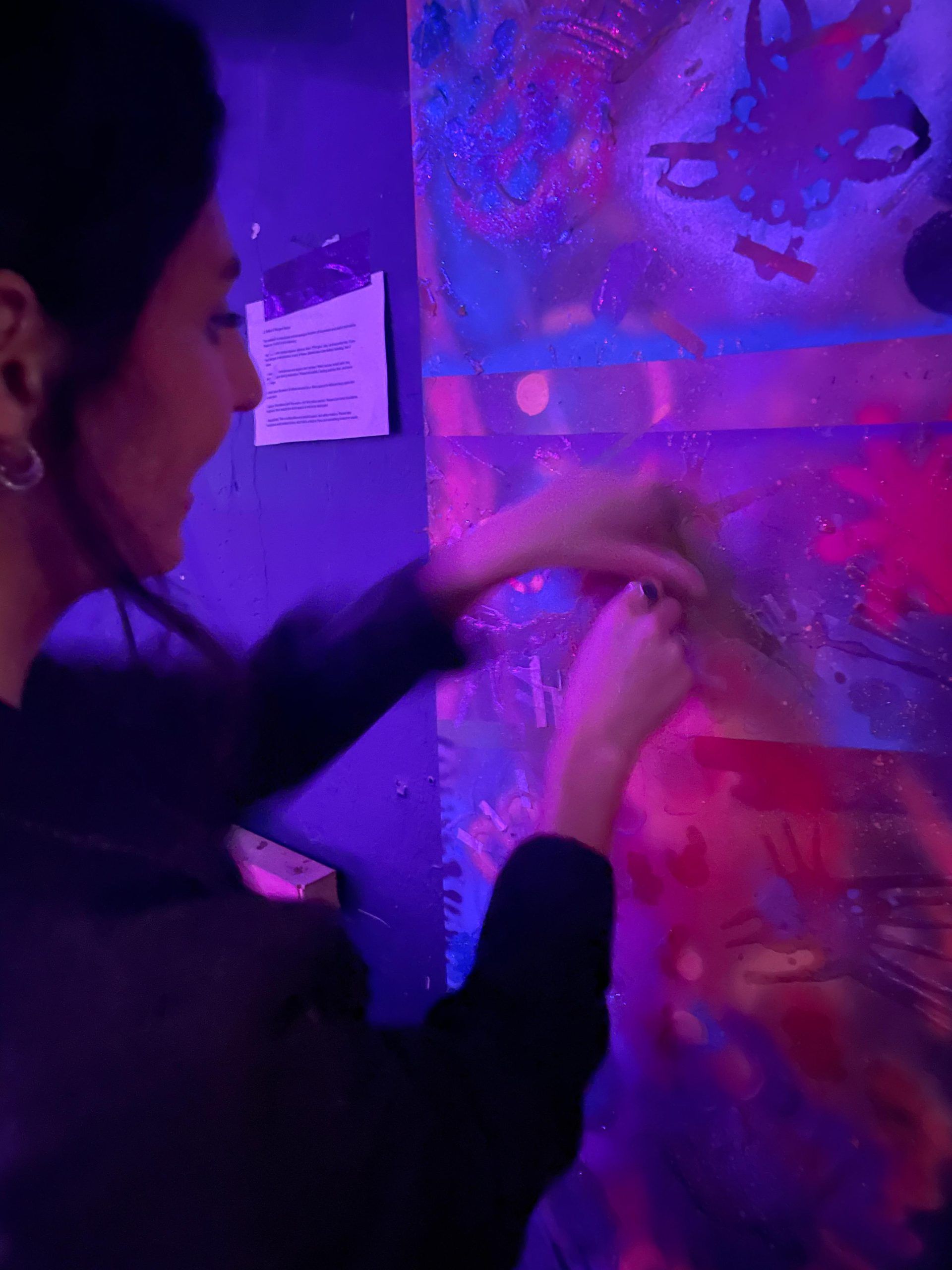
Your work leans hard into interaction, tearing, pulling, squeezing, stimming. When did you both decide that passive spectatorship was dead to you, and what were you rebelling against?
LB: I’ve never bought into passive spectatorship. Art has always felt inherently active to me. Growing up in an area of high socio-economic deprivation, institutions framed the arts as elitist and not for people like us. Choosing art was an early rejection of those class assumptions. So it has always been a political choice for me.
An element of traditional art structures, as we’ve seen increasingly with the fine art world, is that it acts to obscure value. We know that a lot of that is about asset hiding, and it’s serving the 1% and that relies on us being passive as soon as we start to engage with it and develop our understanding of value on art pieces, we start to challenge some of those functions of the art world, and we can start to bring art into the hands of the people, and that’s what stimulation does. It really centers art as an active, embodied and collective practice. It’s something that brings people together, which I think is increasingly important.
When we look at the outside world, we look at fascism, we look at the ways in which the media is dividing us, to be a space that is so focused on bringing together collective actions, collaboration, and just being empathetic and engaging towards fellow people. That’s hugely political.
DT: Creativity feels like the truest form of rebellion right now. The last thing they can control is your imagination.
In a culture obsessed with “wellness” and polish, how political is it for you to centre mess, rupture, and release?
LB: This culture is a very polished culture; in fact, the wellness culture that we’re used to is a highly curated version of wellness. However, there are significant accessibility barriers. For example, yoga classes and gong baths are not accessible to many people. In particular, there are financial, social, cultural, ability-based, and time-based barriers. As a result, it doesn’t suit everyone’s needs. Moreover, mindfulness itself can feel totally unachievable for some neurodivergent people. Similarly, yoga classes and gong baths are not accessible to people on a low income, and those spaces are often fraught with misogynistic aesthetics.
That obsession with image, surface level engagement and performance is a symptom of capitalism. It’s a symptom of an over obsession with social media. We are so aware of how we present, and it feels really disconnected from real humanity and what the actual human lived experience is about. Most of our meaningful learning doesn’t come from a really polished and methodical approach to the learning process. It comes from mistakes. It comes from chaotic periods in our lives. It’s messy. It comes from rupture, and so denying that mess denies how we actually grow as people.
That is also something that we try to do as Stimulation, embracing the mess and the chaos, you can’t optimize being a human being. We have to center experience. Neurodivergent and queer people experience much more rupture, because the world that we live in isn’t built for us, it doesn’t take in our processes and the way that we experience things. So messiness does become politicized when you don’t fit the status quo and you’re a marginalized group.
How does translating stimming into a collective space change its meaning?
LB: It doesn’t change what stimming is. What changes is the reception. By centering it, we make it visible rather than hidden. It reframes stimming as something to be celebrated. That visibility counters isolation and helps people understand themselves and each other.
DT: People discover things about themselves through experience. ‘Oh, I really do like this. I have always liked this. This repetitive movement.’ It reframes it in a safe way.
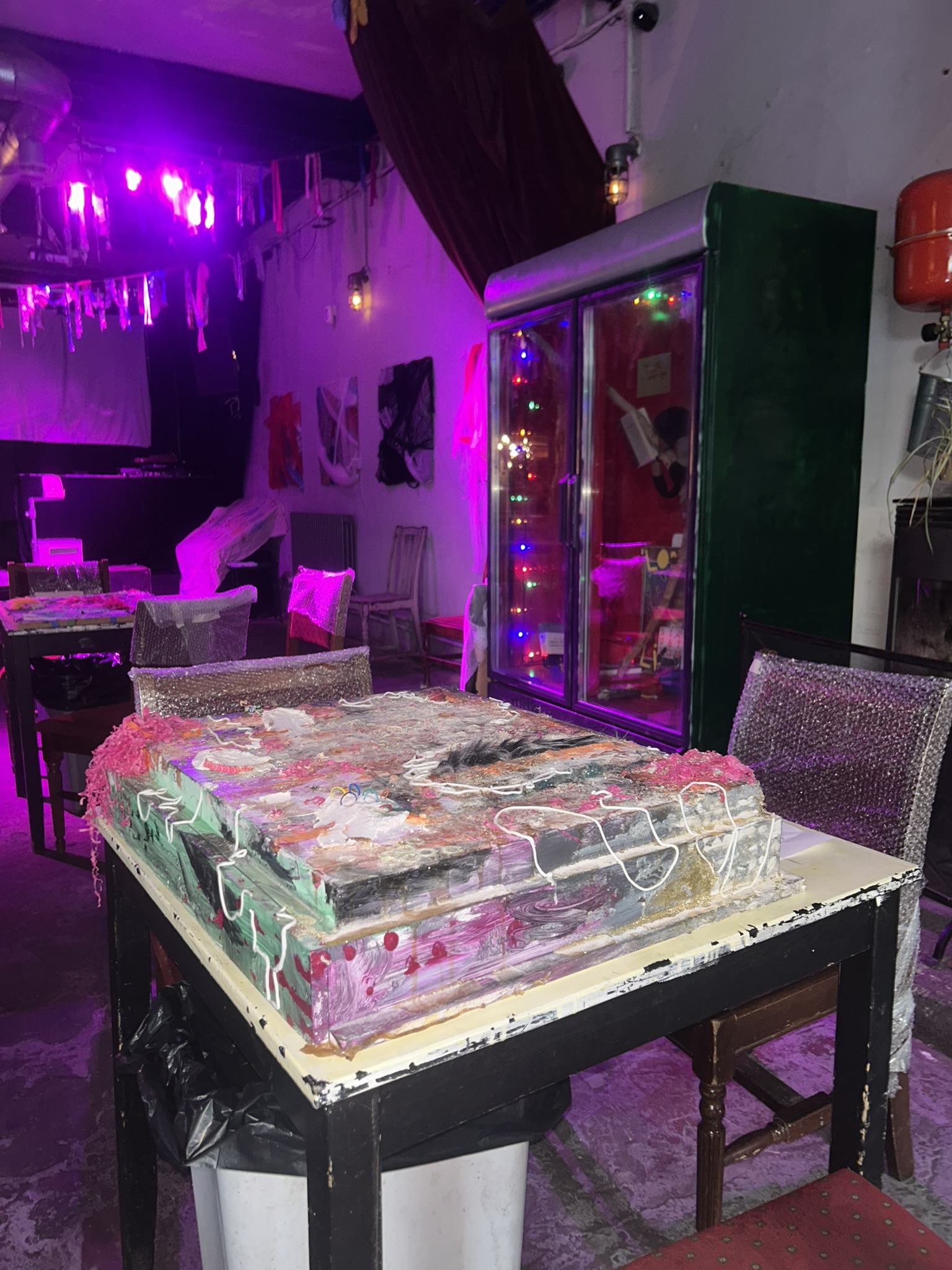
Club culture often sells community while quietly enforcing exclusion. What does Stimulation: Love do differently when it comes to who is included?
LB: Stimulation: Love centers, connectivity and collaboration, not just status or spectacle. Many club scenes, and unfortunately quite a lot of counter-cultural club scenes quietly enforce exclusion by a cultural capital. Cultural capital is a language which is inaccessible.If you don’t know the right codes, looks, references, or behaviors, others can treat you as less than. That is especially alienating for neurodivergent people. Neurodivergent interests are often non-linear, hyper-focused and uncoupled from trends. By celebrating divergence, difference and non-curated ways of being, we foster a community.
DT: There are no fixed roles or fixed ways of being the audience. The audience are co-creators. The fact that it’s temporary feels like it’s like a pocket in time in which people actually can let go of some of the prescribed rules.
Queerness in your work isn’t a theme, it’s structural. How do you design for fluidity and difference without turning neurodivergence into an aesthetic to be consumed?
DT: It’s worth addressing what we mean by queerness. It starts by refusing to treat queerness as prescriptive or as an exclusionary label. One of the reasons we’ve seen the rise of its use over the last few years is its inclusionary nature. Queer is something that sums up a huge plethora of experiences, both and often overlapping with neurodivergent experiences too. Queerness starts with respect. Respect for others, respect for the community around you and a willingness to be patient when it comes to the pursuit of collective shared spaces.
Why stage Stimulation: Love at The Post Bar? What does this particular venue and its community make possible that a white-cube gallery never could?
LB: I’ve got a really close relationship with The Post Bar as a venue. I’ve seen the ways that it has changed over the past year, and I know it’s a venue that’s committed to grassroots organisations and is artist focused. It’s a venue that is engaging with how creativity can tackle some issues that we’re really aligned on. Creating community and bringing arts into communities of people that aren’t traditionally seen as the audience for arts.
We see a lot of the commercialisation of the punk aesthetic and anarchy, for example the sanitisation and commercialisation of illegal raves, which have been adopted into like larger institution, but The Post Bar is anarchist. It believes in systems that are non-hierarchical. If we can use our nights to ensure that we’re generating income and support in those venues, then that’s absolutely something that we want to do.
DT: They’ve been amazing. They’ve supported us from the beginning. To be honest, as soon as we walked into this space, we knew it would be perfect. The space is beautiful.
LB: They give us a freedom that we wouldn’t have found in other spaces. We could have mad DJs until 3am, drill our pieces into the walls. And we had the freedom to throw slime around. We could really see our vision through, and they wanted to help us do that.
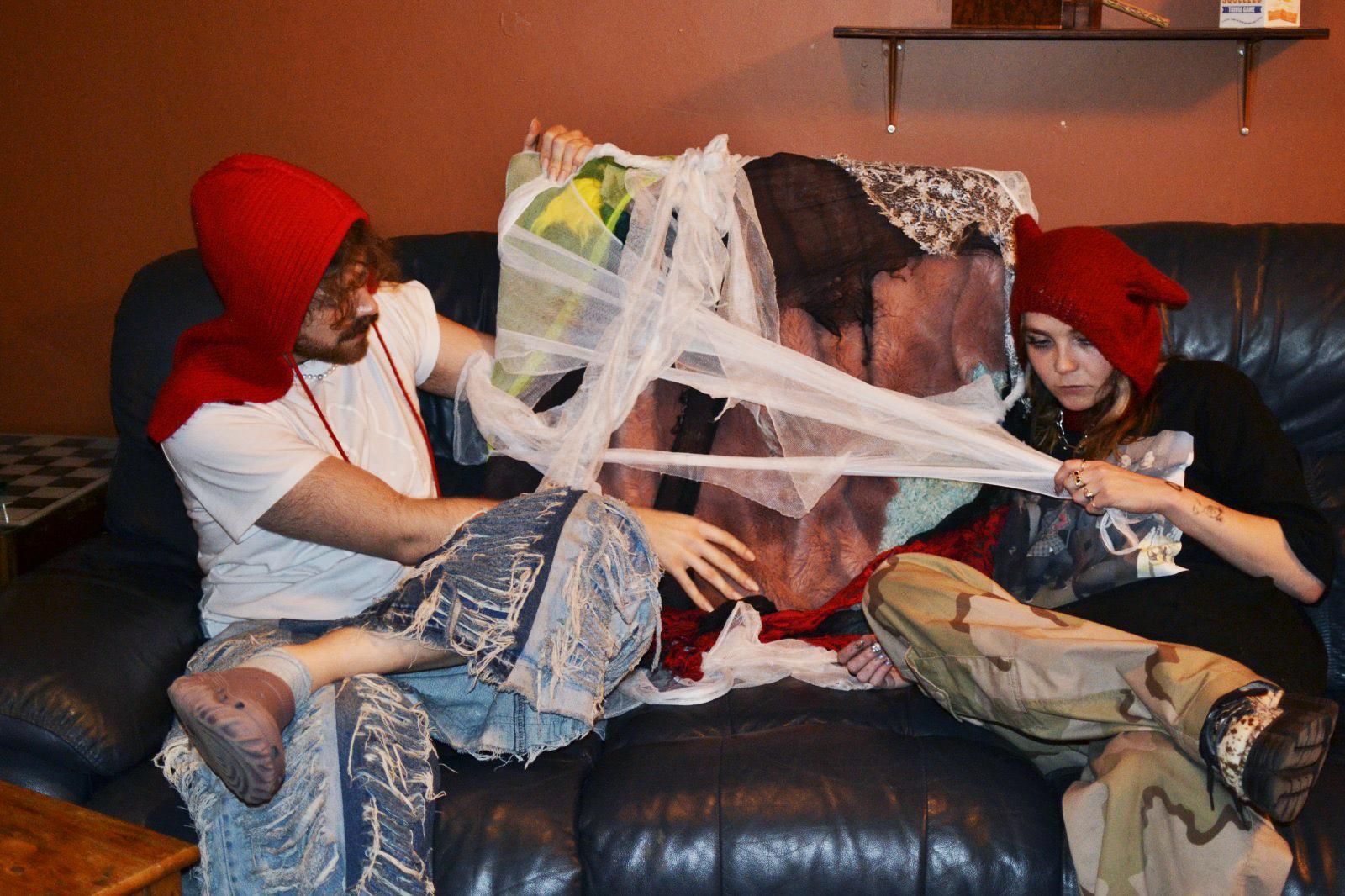
Stimulation: Love is at The Post Bar, London on Saturday the 7th of February. Find out more by following Stimulation Arts on Instagram at @stimulation_arts
Interview Alastair Ball