Design decisions rarely fail because of lack of ideas. They fail because of hesitation, overconfidence, or missing context. VDraw approaches this problem from a practical angle, using AI Room Design to help people see consequences earlier, reduce second-guessing, and move forward with clearer intent.
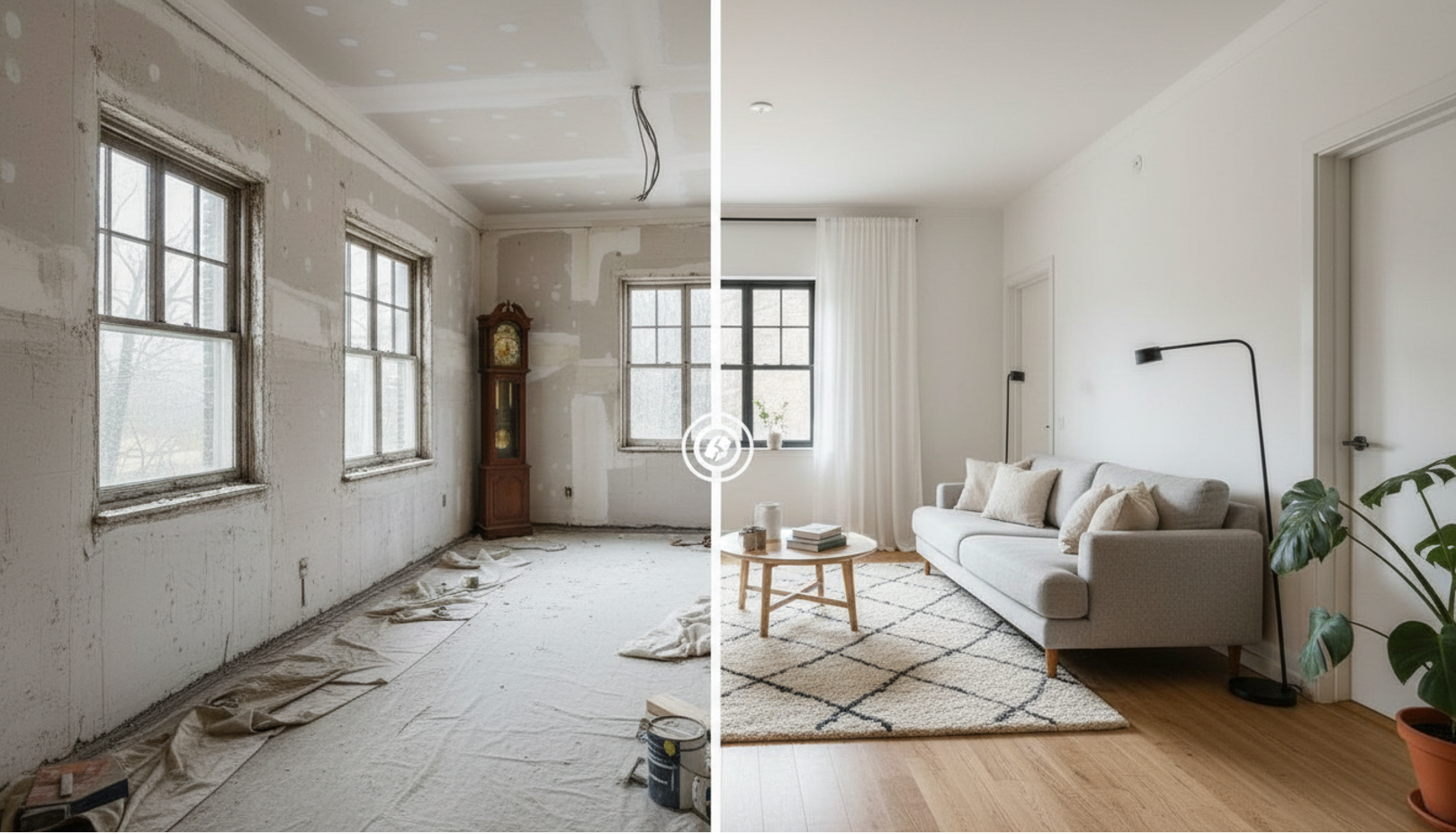
Why Room Design Is Harder Than It Looks
The gap between imagination and reality
Most people can imagine a “better room,” but imagination is unstable. Colors shift in the mind, proportions feel right until they don’t, and inspiration screenshots rarely match real spaces. This gap creates friction, especially when decisions feel irreversible.
Decision fatigue in everyday spaces
Choosing furniture, layouts, or lighting seems trivial at first. Over time, the accumulation of small choices becomes exhausting. People delay, revisit decisions repeatedly, or default to safe but uninspiring outcomes just to move on.
When taste becomes a liability
Personal taste is subjective and emotional. It changes with mood, trends, and outside opinions. Without a stable reference, even confident designers find themselves defending decisions instead of executing them.
How VDraw Frames AI Room Design Differently
From inspiration to simulation
Instead of treating design as a mood board exercise, VDraw uses AI Room Design to simulate outcomes. Users move from “what if” thinking to “this is what happens” visualization, which changes how decisions feel psychologically.
Seeing trade-offs before committing
A room can look warmer but smaller, brighter but colder, minimalist but less practical. Visualizing these trade-offs early prevents regret. The tool encourages comparison, not perfection, which is closer to how real decisions work.
Reducing emotional attachment
When ideas are generated quickly and visually, users become less attached to any single option. This detachment leads to better judgment, especially when working with limited budgets or constraints.
Practical Scenarios Where AI Room Design Changes Behavior
Renovation planning without costly reversals
Renovation mistakes are expensive because they are physical. AI Room Design acts as a buffer, allowing exploration without consequence. People test bold ideas they would otherwise avoid, then refine them into realistic plans.
Aligning teams and stakeholders
Disagreements often come from different mental images. When everyone sees the same visual output, discussions become concrete. Feedback shifts from abstract opinions to specific adjustments, which speeds alignment.
Designing under time pressure
Deadlines force decisions. With AI-generated room visuals, users spend less time debating possibilities and more time choosing between visible alternatives. Speed improves without sacrificing confidence.
AI as a Decision Support System, Not a Shortcut
Discipline over creativity
The real advantage of AI here is not creativity but structure. AI Room Design introduces a repeatable way to approach spatial decisions, encouraging users to evaluate rather than improvise.
Lowering long-term cognitive load
Repeatedly revisiting design choices drains mental energy. Visual confirmation reduces the need to “remember” or re-justify decisions later. This matters in long projects where consistency is critical.
Scaling design judgment
As projects multiply, relying on memory or intuition becomes risky. AI Room Design provides a consistent framework that scales with workload, helping users maintain quality across many spaces.
Beyond Rooms: Visual Editing as a Workflow
Integrating image editing into design cycles
Room visuals rarely exist in isolation. They are shared, revised, and repurposed across different stages of a project. A draft might begin as an internal reference, later appear in a client deck, and eventually support marketing or documentation. VDraw’s broader visual toolkit fits naturally into this cycle, letting users adjust, clean up, and adapt images without leaving the environment where decisions are being made. This continuity matters. Each platform switch adds friction, and friction breaks focus. By keeping editing close to ideation, teams preserve context and move faster with fewer misunderstandings.
Handling practical content constraints
In real workflows, visuals often come with limitations: watermarks that obscure key areas, mismatched formats that don’t fit presentation tools, or platform rules that reject certain dimensions. These issues don’t feel strategic, but they quietly consume time and attention. VDraw addresses them as part of the process rather than afterthoughts. When these constraints are handled early and smoothly, users stay focused on evaluating spaces and choices, instead of troubleshooting files. The result is a cleaner workflow where visual clarity supports decisions rather than interrupting them.
Removing friction from shared assets
For creators and teams managing video previews or walkthroughs, tools like the Video Watermark Remover help clean assets quickly, keeping focus on design intent rather than technical cleanup.
Treating Design as a Managed Process
From intuition to controlled input
Good outcomes come from controlling inputs, not chasing inspiration. VDraw encourages users to adjust variables deliberately and observe results, turning design into an operational process.
Making uncertainty visible
Uncertainty causes hesitation when it stays abstract. Once visualized, it becomes manageable. AI Room Design transforms vague doubts into concrete options that can be evaluated calmly.
Building confidence through comparison
Confidence does not come from finding the “perfect” design. It comes from seeing alternatives and choosing knowingly. Comparison builds trust in decisions, even when compromises are necessary.
The Long-Term Value of Visual Decision Tools
Fewer regrets, better momentum
When people understand why they chose something, they move forward faster. AI Room Design supports this clarity, reducing the tendency to revisit or undo decisions later.
Supporting evolving taste
Preferences change, but process endures. A structured visual approach allows users to adapt without restarting from zero each time trends or needs shift.
A practical role for AI in everyday work
VDraw does not position AI as a replacement for judgment. Instead, it strengthens judgment by giving it better information. That balance is what makes AI Room Design sustainable in real-world use.
Design is rarely about finding answers. It is about making choices under uncertainty. By making those choices visible, comparable, and repeatable, VDraw’s AI Room Design turns hesitation into action and intuition into informed confidence.