I’ll be honest, when the invite for Paula’s Choice’s longevity panel landed in my inbox, I nearly declined. Still recovering from a cold and facing a grey, rain soaked London afternoon, the prospect of leaving the house felt ambitious. But longevity has been everywhere lately, not just as a buzzword, but as a genuine shift in how the beauty industry talks about ageing. I wanted to understand if there was substance behind the hype.
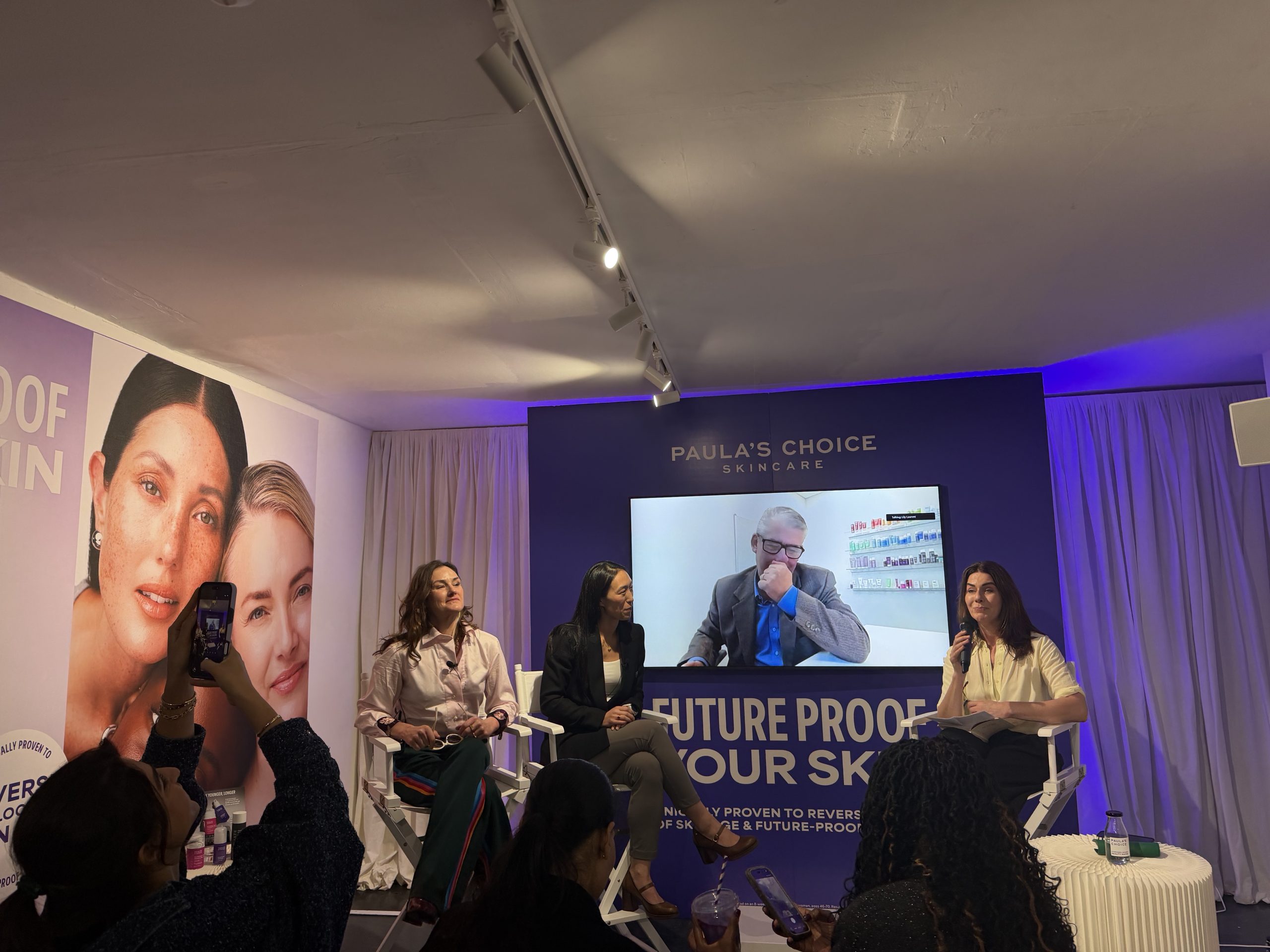
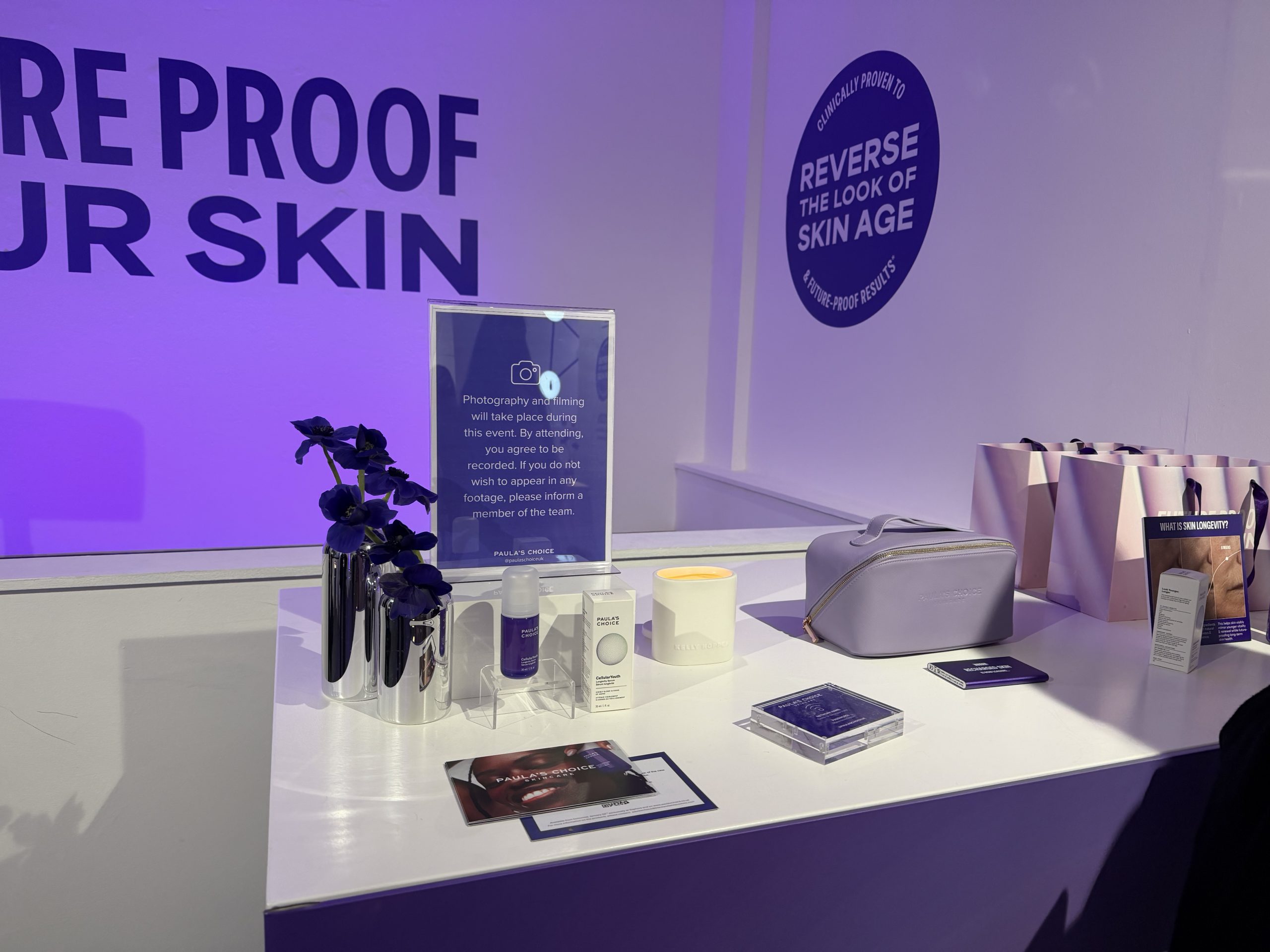
The panel itself was surprisingly substantive. Journalist Polly Vernon moderated the discussion with Dr. Timothy Falla (Paula’s Choice SVP of Research & Development), dermatologist Dr. Beibei Du-Harpur, and longevity expert Dr. Tamsin Lewis. The occasion? Paula’s Choice’s new Cellular Youth Longevity Serum, five years in the making. But the real question on the table was bigger: is longevity skincare a genuine scientific breakthrough, or just the latest euphemism in an industry that’s spent decades renaming the same concept?
The Five Year Gamble
Dr. Falla didn’t waste time with the usual product launch theatre. They didn’t set out to make a serum at all. “It started as a research project,” he said. “We wanted to work out what changed within our skin as we age, rather than just looking at signs and symptoms—lines, wrinkles, sagging, all those scary words. What underlies all of that?“
Most brands do this backwards: decide on the product, then scramble for the science to justify it. Paula’s Choice apparently spent five years not knowing if they’d end up with anything sellable. That’s either admirably reckless or genuinely committed to research, depending on your cynicism levels.
The insight was about DNA behaviour, not DNA itself. Our genetic code stays the same, but how it expresses itself changes as we age. Think of it like having a recipe that you progressively forget how to read. Falla’s team figured that if they could identify what the skin stops producing, they might be able to supplement it topically.
They landed on cellular energy. Which makes sense: energy is the first thing to go as you age. You feel it everywhere else, why would skin be different? But instead of targeting wrinkles or sagging, they went after the mechanism causing those things. Prevention rather than correction.
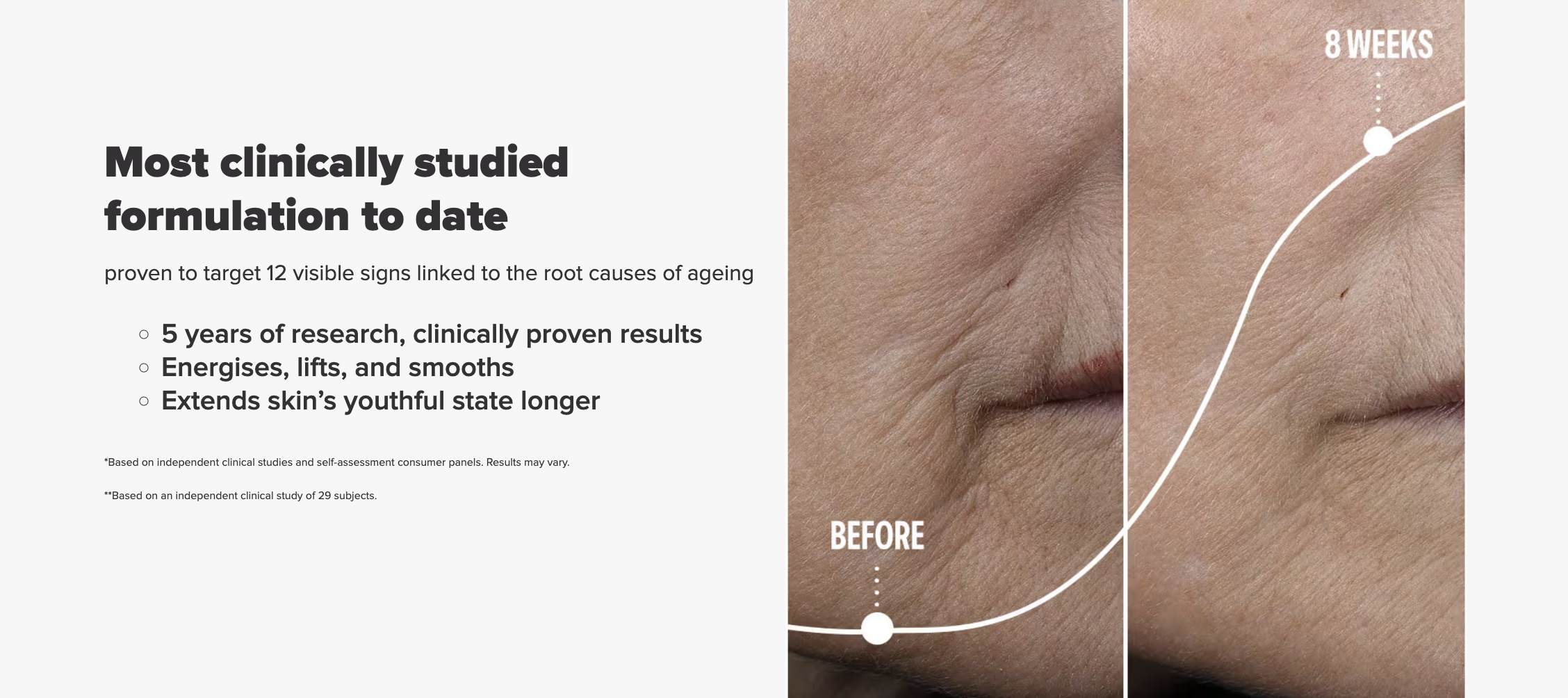
The risk? They didn’t know if it would work until the clinical trials. “The eureka moment was when we saw the clinical results,” Falla said. “What we found was that when you look at skin from a longevity point of view, the skin actually looked younger as a whole. It was difficult, almost sometimes, to put your finger on it. But people’s skin age was less than their actual age.“
Which is either a scientific breakthrough or a very sophisticated way of saying “it makes you look better but we can’t explain exactly how”
Rebranding Anti-Ageing (Again)
I loved Dr. Du-Harpur take on longevity: longevity means extending your health span, the period your skin actually functions well, not making you look 25 forever. “There are decades of basic science research showing that you can actually extend the lifespan of cells,” she said. “And some of the ways that you do that is by increasing the things that our body does naturally.”
The problem with ‘anti-ageing’ was always the framing. It positioned ageing as the enemy, something to fight, which you’re obviously going to lose. Longevity at least acknowledges reality, ageing happens, but maybe you can influence how. Less denial, more strategy.
“There’s no silver bullet,” Dr. Du-Harpur added. Which should be obvious but somehow needs constant repeating in beauty.
Lewis pushed it further: “Sixty percent of our longevity is within our control. Sleep quality, stress management, movement patterns, these aren’t just wellness trends. They’re fundamental to how our cells function.”
Sixty percent. Which sounds empowering until you consider that modern life is basically designed to sabotage all those things. Sleep deprivation, chronic stress, sitting for 10 hours a day, processed food, pollution, we’re working against ourselves constantly.
“This serum increases cellular energy, which is key,” Lewis said. “But you also need to support that through lifestyle. Breath work, strength training, proper detoxification, these all feed into the same system.“
The Unglamorous Truth About Longevity
Du-Harpur isnt buying into the tech hype. Yes, we can analyse your microbiome and predict sun damage and assess biological versus chronological skin age. “But clinical implementation? That’s still several years away,” she said. Then: “And sometimes technology tells you things you already know. If your skin feels tight and red, you don’t need a device to tell you it’s sensitive.“
Hard to argue with that.
The panel kept coming back to 1% daily improvements. Boring, consistent actions that add up. “Skincare is one of the easier places to start because it’s such a consistent ritual,” Dr. Du-Harpur said. Which is true, you’re already washing your face, might as well make it count.
Then Lewis brought up poop. And attractive mice.
She’d been discussing a Nature paper about psilocybin mushrooms extending mice lifespans by 30%. “These mice didn’t just live longer,” she said. “Their fur regrew. They became more aesthetically attractive.“
Falla jumped in: “The more aesthetically good-looking mice we have in the world, the better. I hate seeing ugly mice. We shouldn’t be wasting our time with them.”
I mean, where else are you going to hear a molecular biologist trash talk rodent aesthetics at a skincare launch? But the point landed: longevity isn’t just about living longer, it’s about looking and feeling better while you do it. Even if you’re a mouse.
Lewis then pivoted to her less glamorous prescription: “I see a lot of people who aren’t pooping enough and aren’t sweating enough.” No softening. “We accumulate a lot of things from our environment through our skin, our mouth, our food. As we age, our bones release stored heavy metals as they disintegrate. Then we get brain fog and other issues.”
Not detox tea. Not green juice. Actual cellular function digestion, sweating, liver support. The stuff that doesn’t get you likes but actually works.
Bottom line: you can’t buy your way to longevity. The serum might help, but if you’re stressed, exhausted, and sedentary, you’re fighting a losing battle. It’s the truth beauty brands hate to admit, their products need your life to cooperate.
So What’s Actually In The Bottle?
When someone asked about hero ingredients, Falla gave the most annoying answer: “It’s the blend.” But he backed it up. Peptides designed with AI, molecules that support NAD+ (a coenzyme that declines with age and is crucial for cellular energy), all working together. “Think of it like giving your cells the tools to do their job better, rather than doing the job for them.”
The car engine analogy: you need ignition, petrol, and the gas pedal. All three, or nothing moves. Same with cellular energy production, you need multiple ingredients hitting different aspects of the process.
Application is straightforward: after cleansing and toning, on hydrated skin. “A dry sponge with a drop of water doesn’t absorb it. A wet sponge does,” Falla said. Layer it with your retinol or vitamin C or whatever else you’re using. “In clinical studies, we saw improvements across 12 different measures of ageing. But you’ll still want to address specific issues with targeted products.”
Worth The Hype?
Dr. Du-Harpur brought the discussion full circle with a reminder about individual variation: “Research looks for generalisable results, but everyone experiences ageing differently. Being aware of what’s going on in your own body is more important than pigeonholing yourself into categories like ‘I’m 35, therefore I need X.'”
The beauty industry rebrands constantly. Anti-ageing became age-defying became pro-ageing became longevity. Each sounds more evolved than the last, but usually it’s the same pitch in different packaging: look younger, feel better, buy this.
So what makes longevity different?
Maybe nothing. Maybe everything.
The science checks out, cellular energy decline is real and relevant to skin health. Five years of research without knowing if you’d have a sellable product at the end is unusual. So is admitting it. “It’s the long game,” Falla said. “Your skin changes constantly, and what we want to do is level that out.”
But here’s what struck me most: the panel kept circling back to what skincare can’t do. You can’t serum past stress. You can’t peptide your way out of exhaustion. Sixty percent of longevity is lifestyle, and the beauty industry can’t bottle that, though god knows they’re trying.
If longevity becomes another excuse to sell expensive serums without acknowledging the bigger picture, it’s useless. But if it shifts the conversation toward realistic expectations and treating your skin as a long-term investment rather than a quick fix? That would actually mean something.
The question isn’t whether this serum works, the clinical data says it does what it claims. The question is whether anyone’s ready for skincare that requires patience instead of promising miracles. Five years of development for slow, cumulative improvements feels almost radical when the industry runs on instant gratification.
That alone might make longevity more than just marketing.
By Raluca Tudose
Paula’s Choice Cellular Youth Longevity Serum is available now at paulaschoice.co.uk