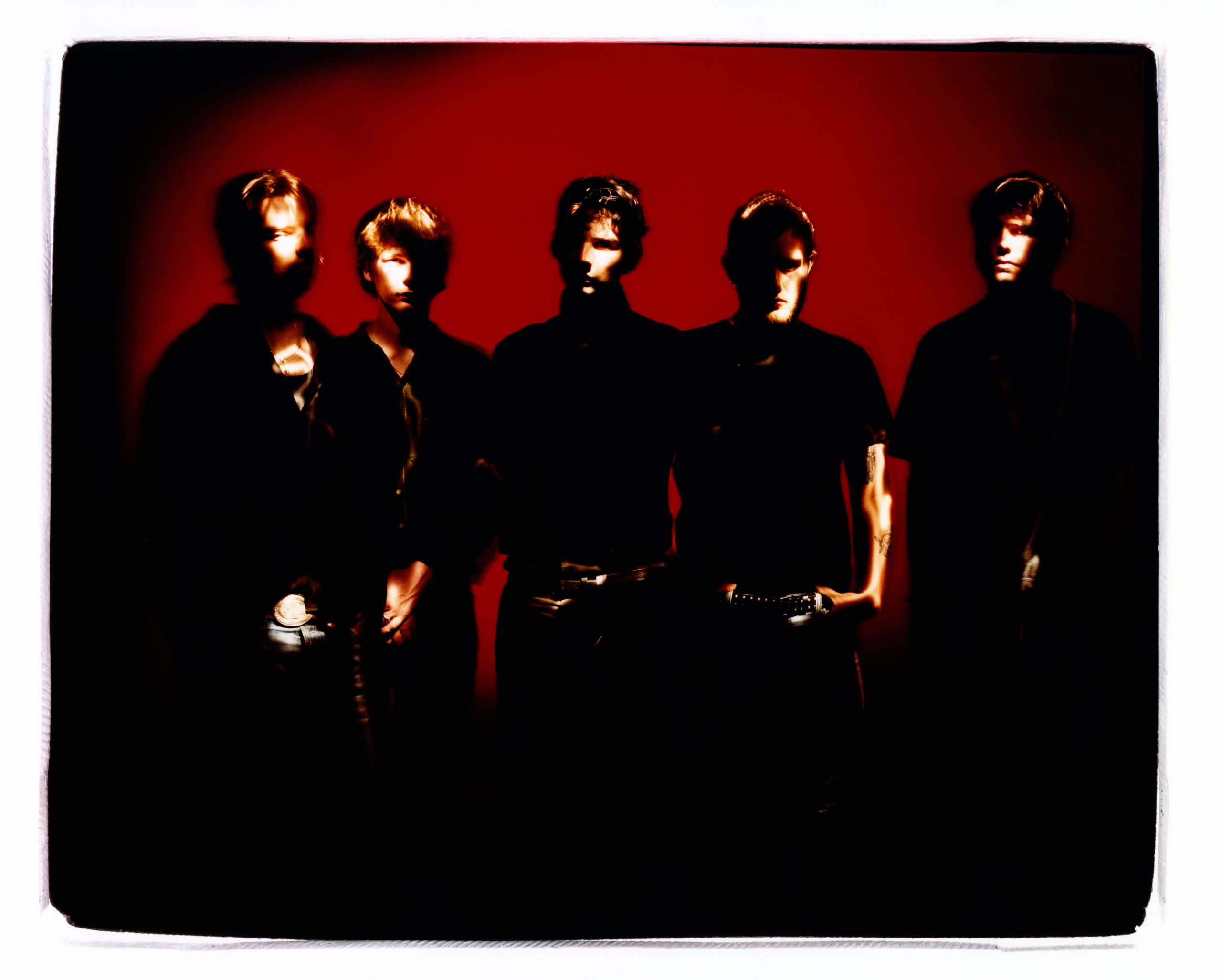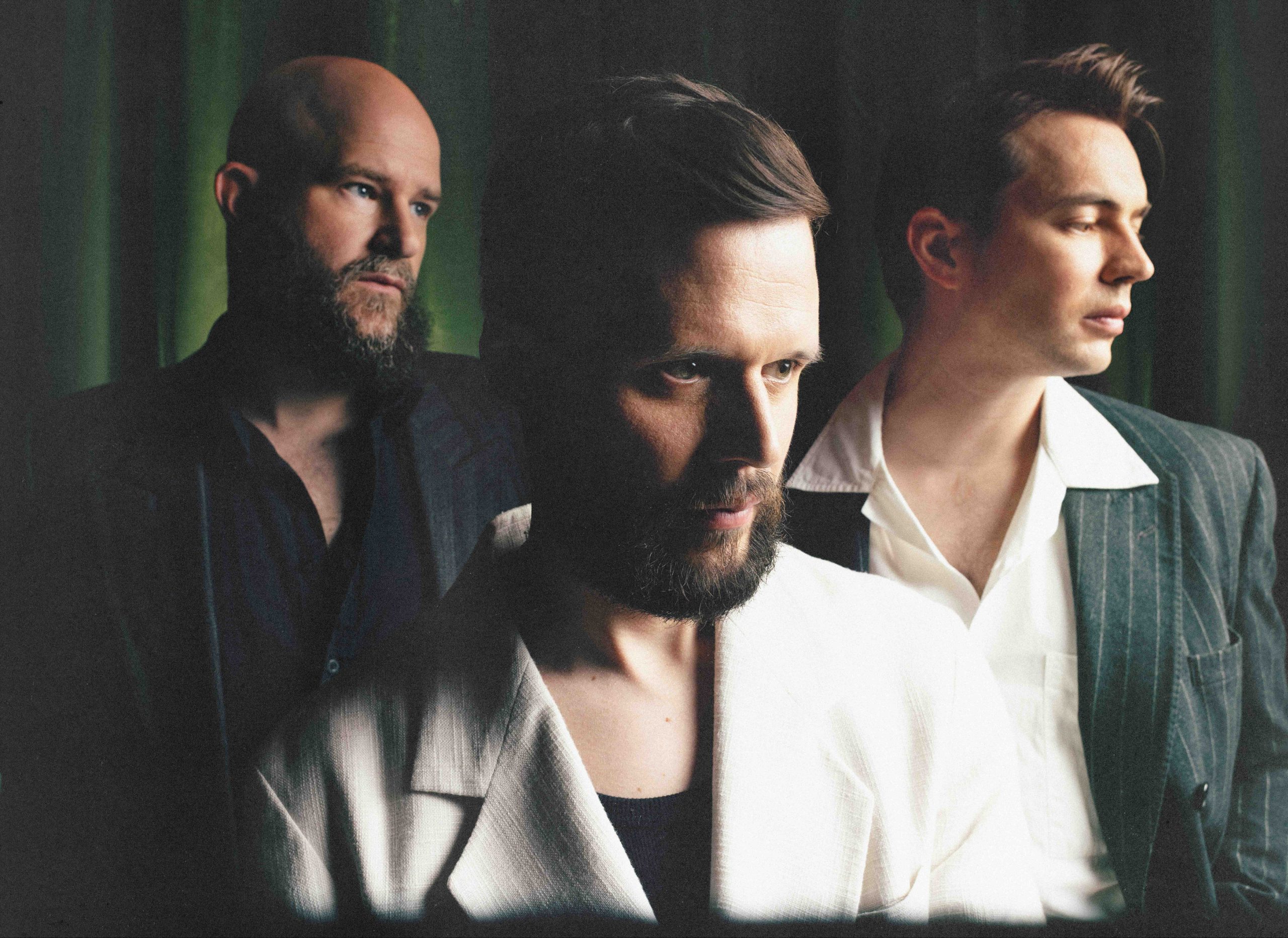
Few bands can conjure cinematic soundscapes that so deftly traverse love, death, and everything in between quite like London trio White Lies.
Comprised of Harry McVeigh, Charles Cave, and Jack Lawrence-Brown, the group first came together as Fear of Flying—wide-eyed teenagers bonded by a shared love of Talking Heads. By 2009, the band had built remarkable momentum and unveiled their major-label debut, To Lose My Life. With its propulsive blend of rock, anthemic synths, pounding drums, tight bass lines, and dark lyrical themes, the record soared to the top of the UK charts. Tracks like “Death” and “Farewell to the Fairground” have since become certified indie classics.
That distinctive mix of emotion and driving melody has become the signature of White Lies’ sound, one they’ve continued to expand with each new era so far. You can hear its evolution in the cinematic sweep of “Bigger Than Us” (Ritual, 2011), the shimmering urgency of “There Goes Our Love Again” (Big TV, 2013), the soaring intimacy of “Take It Out on Me” (Friends, 2016), the neon pulse of “Tokyo” (Five, 2019), and the existential reflection of “Am I Really Going to Die” (As I Try Not to Fall Apart, 2022).
It could be argued that the band are still somewhat underrated, yet the level of success they have achieved thanks to a global fanbase would say otherwise. During the last two album tours, McVeigh, Cave, and Lawrence-Brown sold out multiple Brixton Academy and Hammersmith Apollo shows in London. They’ve also performed headline shows across Europe and beyond, with a sold-out concert at Mexico City’s 10,000-capacity Pepsi Centre back in 2023.
Now, essentially two decades into their friendship and career, the band returns with their seventh studio album, Night Light via Play It Again Sam on Friday. There are elements of the White Lies DNA weaving throughout it, but with an invigorated energy which came from getting the songs studio-ready during band rehearsals with Black Midi collaborator and keys player, Seth Evans. It’s the first time in the band’s history they’ve worked in this manner, and the nine-track album is all the better for it. Over the LP, you can find fast-paced progressive rock, disco, synth, and genuine moments of tenderness.
In conversation with 1883 Magazine’s Cameron Poole, White Lies discuss their new record Night Light, what success looks like to the trio now, having legendary video game creator Hideo Kojima as a fan, and more.
Harry, Charles, and Jack, thanks for speaking with 1883 Magazine. Recording live is something many bands want to do but avoid because it’s risky — what surprised you most once you actually did it? Did any song on Night Light transform in a way you couldn’t have predicted, or was it the same as all the material was gig-ready?
Harry: I think it exceeded our expectations maybe. We spent a long time writing the album, for months, and then went into rehearsal for a couple of weeks before recording. That rehearsal time was probably the most transformative for the songs; that’s where they changed the most. By the time we got to the recording studio, we knew what we wanted to do.
Having said that, a couple of tracks, “In the Middle” and “Nothing on Me”, changed a lot in the studio. Each take was very different, and we chose the one the best one. Those songs felt the most improvisational; they really captured the performance the most. I’m surprised we were able to do it — we’d talked about recording live on almost every album since the first one. To actually go ahead and do it was kind of great. You don’t really know if it’s going to work until you try, and it is a bit of a risk, but it was a pleasant surprise that we made it work.
Jack and Charles, would you agree with what Harry said? Anything to add?
Jack: Definitely. What Harry said about feeling the song when playing in the studio and then changing them in between takes is really true. I think the main thing that you really sort of get from doing those songs in a live way is that you can immediately feel if something feels too fast or slow when you all play together. Whereas, when you’re tracking the drums first, you can be like ‘Oh, that feels like a good tempo’. But actually, you don’t know until everything is layered up. But when you’re doing it together in the room, instantly, between the three of us, plus Seth, who is the guy playing keyboards on this album. I think we could all tell quite quickly when stuff was just like, not grooving right.
In a way, that’s saved a lot of time actually because you do a take and rather than recording everything and then working out if it’s too slow, you go, ‘all right, well, let’s just try a bit faster this time’. On a couple of songs, we allowed ourselves to not be completely chained to a click track, which allowed the second song of the album, All The Best, to be played pretty much without a click track. And weirdly, we actually stayed in time for the whole thing anyway. Even when we play live, like a lot of bands, we’re pretty much chained to a click track for most of our shows, and it is the same when you’re in the studio.
But to not have any reference point at all and just be playing like the old days, how we used to when we were 15 or 16 years old, albeit with much more competence. It’s quite a freeing and enjoyable experience.
Charles: Yeah, I think as well, going into a session with the mindset of wanting to record like that, it just forces you to rehearse so much. We would never rehearse anything before recording, usually quite the opposite, actually. We probably were more keen on just seeing what happens when someone presses record on my part, and I have to play it then and there. I remember, especially with the rhythm section, a lot of times in the past, the song as a chord and melody arrangement is there, and there’s an outline for the groove and general feel with the other bits…
But we would always piece things together in the studio. In a way that maybe is not as loyal to the fact that we are quite groovy [laughs] as a trio. With this, the songs were feeling good, sounded good on piano and singing, just as basic chord and melody ideas.
And then we just put so much more time and effort into letting them breathe and giving them the best vessel to be transmitted. One of my favourites on the album, “Going Nowhere”, every time I listen to that one, I do think that is a kind of recording that we could have never ever done in the old-fashioned way. There is so much space, especially in the rhythm section part, between rhythm, guitar, bass and drums.
I’m not saying it was difficult. It just took time. It just took playing again, again and again. In some ways, when you do that, you play less each time. Whereas when you’re recording in the way that we’re used to, there’s a tendency to play more each time because you’re kind of like: ‘Oh, I’ve only got my one chance to record something. I’d better get all the ideas down quickly’. When you rehearse, you start taking stuff away.
Harry: Yeah, I think the final thing I would add is something that surprised me a lot was in some of the tracks where the instrumentation was very different. I was expecting that we would multi-track them, track, “Everything is Okay” or the track “Night Light”. But we still kept that approach. We just changed up the instruments. I think that was great. It really surprised me that we did that. “Everything is Okay” especially turned out great as a result of that.
If we’d recorded that the way we used to, it would have just kind of been a loop, the piano part. Whereas there’s quite a lot of variance across the song, there’s improvisation where it just changes up a little bit, and makes it sound much more organic, I suppose. So, we were thrilled with how it turned out.
White Lies have been going for almost two decades now, so when looking at everything the group has achieved over the last nearly two decades, how has your definition of “success” changed since album one?
Jack: What I define as success has changed loads because when we signed, when we were young, and in the major label system, success was really driven by literally how many albums you’re going to sell, and how much money you’re either going to not lose or make for your major record label. So for the first three albums, we would be judged relatively harshly on selling records.
And you know, we had three top-five albums, but we still got dropped at the end of that contract, because it wasn’t quite enough. That’s a really horrible way to sort of judge your success or not. Having said all that, the first album did so well that it really has catapulted the rest of our careers, where we can be doing this a few decades later, aside from the fact that we make good albums.
But now, I think especially with this album, I think the judge of success is coming away from the studio with the feeling that we’ve made something really good. Obviously, that’s quite a luxury for a band to have to be able to be like it’s a successful album because it’s a good one. Most bands are still going to need to make money, and we still need to go on tour. Actually, that’s another marker of success, keeping our fan base and growing that, putting this tour on sale for next year, and it’s sort of outstripped our expectations in terms of how well it’s selling.
It’s just exciting, and it is exciting to feel that’s all happening on the back of knowing we’ve got a great album in our pocket. We’re really excited for our fan base to get into it.
Charles: Yeah, I think success for us now, without sounding cynical, is like any kind of business really. At the outset, success is based on how well you launch an idea, business or service. For the time after that, it’s about how well you maintain it. I think the fact that we’re talking about our seventh album, and I don’t think any of us have any doubt that, at the very least, there’s a good, solid bunch of people around the world that at the very least, give a shit about what this album is.
They’re interested to hear it at the very least. I think to be 20 years in and still have such a large group of people being excited to hear it, or they might even buy a ticket, or have already bought a ticket to go see them play, that’s success for us now.
We’ve never been particularly… we’re not megalomaniacs with our band, with our career. We’re quite modest really. I think we feel very privileged and still very excited by the fact that we go to different places, Denmark, Germany, Belgium, Mexico, wherever, and just play to the people that still care about what we’re doing 20 years later. It is definitely a lot more than what can be said for the acts and artists that we started playing with back in 2008. So we’ve somehow done well with that.
Harry: When our career started, we always looked up to bands that were established. They were the bands that we listened to. I think as your career goes on, you move from being a sort of flash in the pan to becoming established yourself. It takes you a little while to realise that maybe, but I think that’s what we are now, which is great.
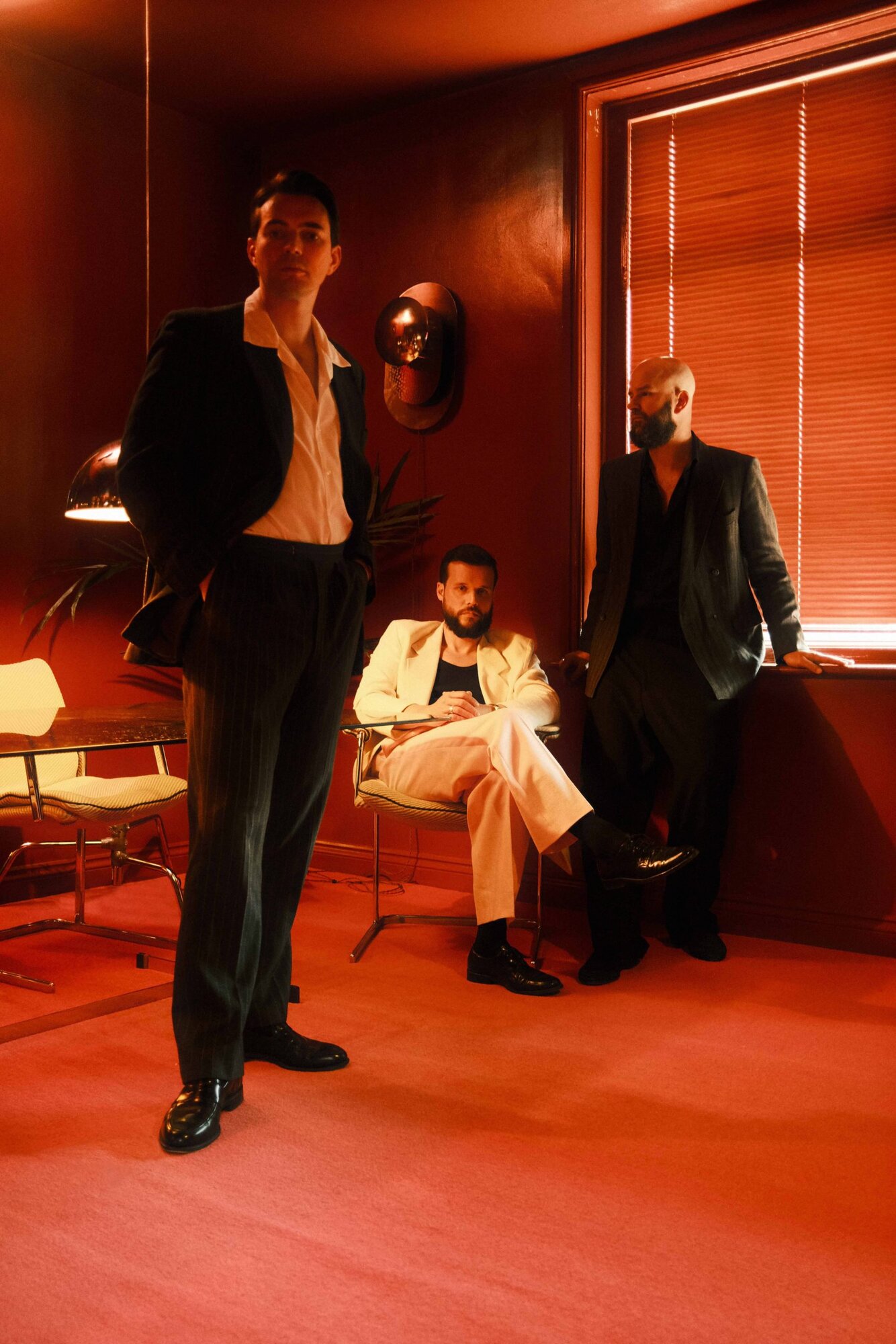
So my introduction to the band was back in secondary school, my friend sent me a YouTube link on MSN to the music video for “Bigger Than Us”. With that in mind, could you recall a moment from your childhood where you got introduced to a band or artist and just fell in love with their work?
Harry: I was doing a written interview the other day, and I remembered that one of the most formative records for our band was the Talking Heads’ Stop Making Sense album. When we were teenagers, we used to listen to that so much. I think part of the reason for that is, looking back on it, Talking Heads, they’re a very chameleon-like band. They’re kind of hard to pigeonhole. I always felt with their songs, they just explored whatever felt right. I kind of think that’s something that we took on board from that when we were teenagers and perhaps more so now even.
We always see where a song is going to go and it doesn’t really matter about genre or where it fits into what we do, I suppose. We just pursue it until the end. Also, I feel like with that, especially with that live show, each band member’s style of play is at the forefront, even though they can be quite different. They bring so much individually to the band. And I think that was looking back on it like a huge inspiration for us, that show, that album. I still listen to it a lot now, a great record.
Charles: The one that came to mind immediately when you asked that question, is… to be honest, before we were playing under the name White Lies, we spent a couple of years at least, playing around at the time, in an extremely vibrant sort of Live Indie scene in London. This was a period of time where pretty much any given night of the week there were five different sort of indie club night type things happen, or isolated gigs. You could see new music live, pretty much constantly. Of course, at that age, a lot of the love of that, of doing that, was much social as it was inspirational and artistic.
I’m trying to remember, the very first time seeing them, I think it was at a venue in Whitechapel called The Rhythm Factory. I think they were supporting a very new Baby Shambles. But anyway, seeing the Mystery Jets for the first time, I think was a really big deal for me.
I would have been 15, and that was probably a good couple of years before Mystery Jets even released their first album. They were basically a prog band, they really were. I think for me, I’d already discovered the Mars Volta, Harry and I discovered them about the same time, and that was a very new kind of music which really appealed to us. It was like wow, there’s this genre of melodic, slightly aggressive and sort of very energetic music that is full of imagination as well. It wasn’t constrained to the sort of three and a half minute form that we’d grown up listening to on the radio.
They were American. They didn’t come to London that much. So a lot of appreciation for them would be recording. Whereas there was this band, Mystery Jets, who seemed like they were playing three nights a week around London and playing 10-minute songs that had extended instrumental sections, crazy changes in style and everything like that. I do remember all of us going to see them early days and just thinking Wow.
Harry: I totally agree, they were so creative, they did so much mad stuff. They were really nice to us. I remember we hung out with them once on Eel Pie Island. They are such nice people, and I think that’s a big part of it as well. They kind of took us under their wing a little bit.
Jack: I’d agree with all of what those guys said, but I would also say that my early years of listening to music, especially when I got a drum kit, I was really into punk. I used to love this band, Rancid. I don’t think they have much real implication on what went on next with White Lies, but in terms of forming my friendship group around music at school, and a couple of my mates at my school were really into big punk bands. Rancid always seemed to be the most intriguing of those.
Now and then, in sound check, Charles will whip out a Rancid bassline, and I’ll try and play along. I’m not fast enough these days, I’m too old, but Rancid were a great band.
Just to break things up, some quick individual questions if that’s alright. Charles, you are such a fantastic photographer, and you’ve literally shot huge stars from Lana Del Rey to emerging acts like Hugo Hamlet. What do you find interesting about portrait photography and has your eye for the camera influenced White Lies’s own press shots when working with photographers, at all?
Charles: No, it’s really different. I think probably one of the most satisfying aspects about it for me is that it’s completely the opposite. Photography is very much, I suppose, what I’d call a reductive art form, in that you start with a huge mess, a subject, a landscape in front of you, and you have to just choose a little section of it to work with. It’s about getting rid of mess, basically, and just honing in on something that seems to translate how the moment felt for you.
Whereas with songwriting, if I have any you know gripes about the process, it’s of course, the fact that you start with a blank canvas. You start with absolutely nothing, and you’re actually trying to grab anything in order to begin, whether that’s listening to other people’s music and trying to steal a little thing from them, or anything. With photography, it’s just tidying up. You start with a really messy room, and your job is to organise it a little bit, but you’ve only got 1/250 of a second. So for me, it’s become something that is a creative outlet that’s very well balanced against songwriting because it’s so different.
So no, I can’t say that they necessarily influence each other, but I’m pretty certain that my general mental health, and therefore also my work with Jack and Harry in the band has benefited immeasurably from having this other side to my to my daily life, creatively. There have been many points over the last few years where I’ve sort of quite profoundly felt that, personally, if all I had was music, I think I’d actually have struggled a bit over the last few years. It’s been very important for me to have something different.
Jack, would you be willing to recall the first moment you got behind a drum kit and how your kit has changed in the band over the years at all?
Jack: It’s changed a little bit. I remember I went to this music school in Ealing which Charles went to for a bit as well, on the weekends. I’d go and what happened was I wanted to play drums, I had a go at other instruments to quite a low level, and enjoyed elements of it. But I think I just wanted to do something… the nice thing about drums is they’re kind of instant. Iif you get a saxophone, it might take you a month before you can make a noise on it properly. But with the drum kit, you can make noise instantly. So I went to this music school, but the drum teacher there was, he was a bit of a snob.
Looking back now, I could have got more involved in it, he was way more into percussion and he wanted us to play the xylophone and all sorts of other stuff that wasn’t the drum kit. I was bored with that by a couple of terms. In the end, I think my parents just got me a kit. I was playing a bit of drums there, and I guess I had an idea of how rudiments worked. I went and got a drum kit for my birthday. As soon as I got a drum kit my birthday, when I 15, all desire to really know, once you know the very basics, like, you feel you can just run. This is not true, by the way, you can’t run. You feel like you can though. When can play something that other people can play to, that really the job of the drummer, to start with anyway, to create a foundation that your mates can do stuff with.
Learning to play an instrument with other people is a really nice way to do it. Especially if you’re bored of the sort of lesson elements. It’s quite nice to have an outlet where you don’t really need to be taught. You can have a go on your own. I think the drums was that opportunity for me.
Over the years, my kit has not changed a huge amount. At some point in the early years, I got offered a 1970s vistalite kit. It was on the first White Lies album. A manager’s friend was selling it, and we had got a bit of money in the bank from our record deal, and we still lived with our parents as well. So I bought this 70s kit which was a John Bonham spec, a huge bass drum and big toms. I got that, and then I sort of stuck more or less with those sizes and that set-up ever since.
I’ve never been someone who’s found it attractive when you see a drummer with rototoms around his head, you don’t need it. My favourite drummers always have less. So that’s basically still what I have. I just have added in a bit of percussion pads and things for triggering sounds that you don’t feel like you could make them when you’re playing live. But, yeah, I like to keep it simple.
Harry, this is a complete guess, but I’m assuming you chose to follow the great Hideo Kojima on the White Lies Instagram account. What games have you been playing recently? As a band that has graced so many gaming soundtracks, FIFA, Need for Speed and others, would you be willing to pen a full score for a game?
Harry: Totally, I would do that in the drop of a hat, if we were offered it, that would be really fun. I don’t game at all anymore really, mainly as a result of having a child; I don’t really have the time. But I am really looking to when he is old enough for me to buy a Playstation and play with him – that will be really fun, getting into it together. There is so much to explore.
I do love the format, the creativity of it, especially back in the day, we grew up on the Nintendo 64, but even SNES Games, when they are really good, I suppose the graphics don’t really matter, it can be so immersive, and I think that experience is so unique and incredible. Being totally drawn into a game is like real magic. The people who make these games are so creative, it’s almost one of the ultimate creative endeavours. It’s like making a film, but you also have to make it interactive and make it all work. It is so technical.
But with Hideo Kojima, the reason we follow him is because he’s a big White Lies fan, I think he follows us and likes our music. Probably our most famous fan, actually. Shoutout to Hideo, come to a show, we’d love to meet you [laughs].
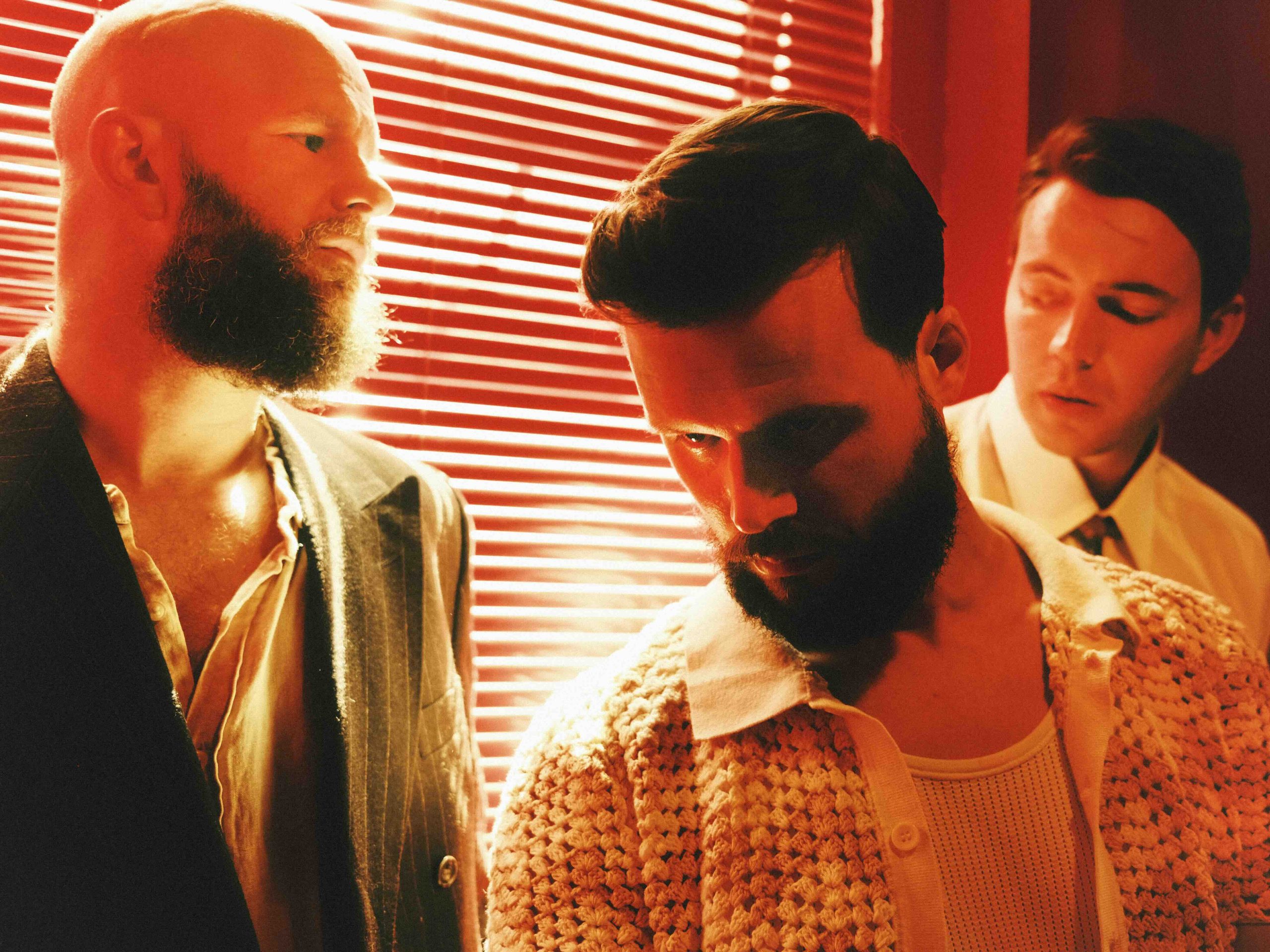
Given how you’ve recorded the record, I imagine you’re all feeling good about the headline UK and European tour in January and February. Seth Evans wasn’t just brought in to fill space, but to push the songs further. How has his presence changed the dynamic on stage?
Harry: So Seth isn’t playing with us live, we still use our live keyboard player, Tommy Bowen.
Ah, forgive me!
Harry: Tommy has played with us since the start. He was one of the first people we met after meeting our management. He came into rehearsals with us, and he’s been with us ever since. He’s almost part of the band, really. He is so fundamental to our live shows. He plays what he is told to play but in the best possible way; it is a real skill in itself, I don’t think I’ve met anyone who can learn how to play a song as fast as Tommy. Working with anyone else, even Seth at times, could be frustrating at times, as they don’t get how we want it to sound. I suppose, it can be hard for them to wrap their heads around it. Whereas Tommy is so quick at that.
Having said all that, Seth brought so much to the record, especially in the rehearsal time we had before the studio; he shaped so much, gave loads of feedback about the tracks and has a great creative mind. He’s a record producer in his own right, that’s the main thing he does now. He’s a thoroughly lovely bloke and understands the band dynamic and how it works. It was great to have him in the studio. He brought so much to the record, we had never brought in a new musician before, it was kind of a risk but really paid of and we so grateful to Seth for doing it.
Charles: I’m sure we’ll do another with Seth, there is a lot more mileage on that collaboration.
I’m excited for people to hear “Everything is Ok” – can you walk me through the writing process for that one?
Harry: It was born out of that piano part. We wanted to write a song that is really simple, just two chords. We thought what can we do with this really simple chord structure, almost challenging ourselves, and that is how it turned out. It’s almost Springsteen-esque, I suppose, in some ways, he did that a lot.
Jack: We saved that one for a weekend recording, it felt like the sort of song that we didn’t want to feel too intense during the day, we wanted it to feel like bit of an off-day thing, where we could feel our way through it. We gave ourselves a day in the studio where we could gently add ideas. It’s one of your favourites, isn’t it, Charles? It sounds like a grown-up song. You can feel proud of that.
Charles: Yeah, it feels like an achievement because of the balance of writing a heartfelt ballad in this day and age, but it’s also kind of cool and not too Disney. It’s tricky, it’s a fine one to balance, and I think we’ve only done it once before with our song, “Change”. It’s not something we have desperately tried to do on each record, so the fact that one came naturally on this record feels good.
Finally, you’ve been friends since your teen years, when the band started as Fear of Flying. How have you navigated this huge part of your lives together? You’re a band of brothers in a way, spent a lot of time together.
Harry: I think we’ve Peter Pan’d it [laughs], we’ve never really grown up, we’re still sort of trapped in our teenage mindset. In our lives outside the band, we are grownups, both Jack and I have children, we’ve all moved on with our lives, Jack and I are in long-term relationships, we’ve all bought properties, we all have settled down, I suppose. But when we get together again as a band, you revert back to being a teenager, I think anyway.
Charles: So true.
Harry: I think that’s a big part of it, it’s really fun to capture that part of your life and to live it forever, it is a great privilege. I think when you see other bands, I won’t name names, bands we have toured with, and they don’t have that, it is really obvious they sort of hate each other. You have to have that silliness about yourself, not taking yourself too seriously, to have that kind of longevity. If you get down into the weeds and get too serious, it overtakes you and becomes something… you sort of fall into conflicts with each other, resentment, I suppose.
It’s kind of a good framework, that teenage mentality for overcoming any gripes or conflicts.
Jack: I can’t think of anything more miserable than the idea that you would still tour as a band if you didn’t get along. It would be such a drag. Going on tour has its ups and downs for sure, but in general, we have a really good time still. I think if that ever changes, it would be such a pointless way to spend your time. Whereas for us now, it’s still something we all really look forward to. Harry is completely right; it unlocks a massive element of silliness in you that you are allowed to display every day for us anyway. Being able to go and have a really fun and stupid time, and not at all be serious.
For many years, people have considered us a really serious band, and we’ve always struggled to shake that idea. We are deeply unserious.
Charles: I completely agree with everything said. I’m sure it is very much the same as many creative exploits, but the actual making and doing, in some ways, unfortunately, when you do achieve some sort of success, actually becomes a minority of how you spend your time. If we look at when we’re on tour, that is a 24-hour experience; we’re living together the whole time. Out of that, only less than two hours of it is actually playing and being creative together.
You then have days off where you’re not doing that at all. I think it is when you hit those parts of your existence as a band that it is so imperative you get as much out of those moments as the creative ones, if possible. Looking back at a summer show in Darlington, in a crusty rugby club with mysterious stains all over the floors of the dressing room, and not much more than four packets of crisps for entertainment, and then with five hours to kill… I just have photos on my phone of us three just having a group nap lying down on the floor because that was all there was to do for four hours [laughs].
I do think about days like those, of which there are many, basically, if you’re not able to have a nap on a carpeted floor of a dressing room with your bandmates, I just think it would be really tough and miserable. That is a huge part of us continuing and having had a 20-year career. I think it would be too miserable to continue if you didn’t have that. I don’t know what bands which aren’t in our situation do in that room when they are faced with a dressing room like that for hours. So long may it continue [laughs].
Thanks for your time, guys!
Harry: Thank you, Cameron.
White Lies’ seventh studio album Night Light is out Friday.
Interview Cameron Poole
Photography Jono White