On Cross-Cultural Visual Codes, Material Metaphor, and the Distorted Memory in the Media Era
Interview by Lu Gao
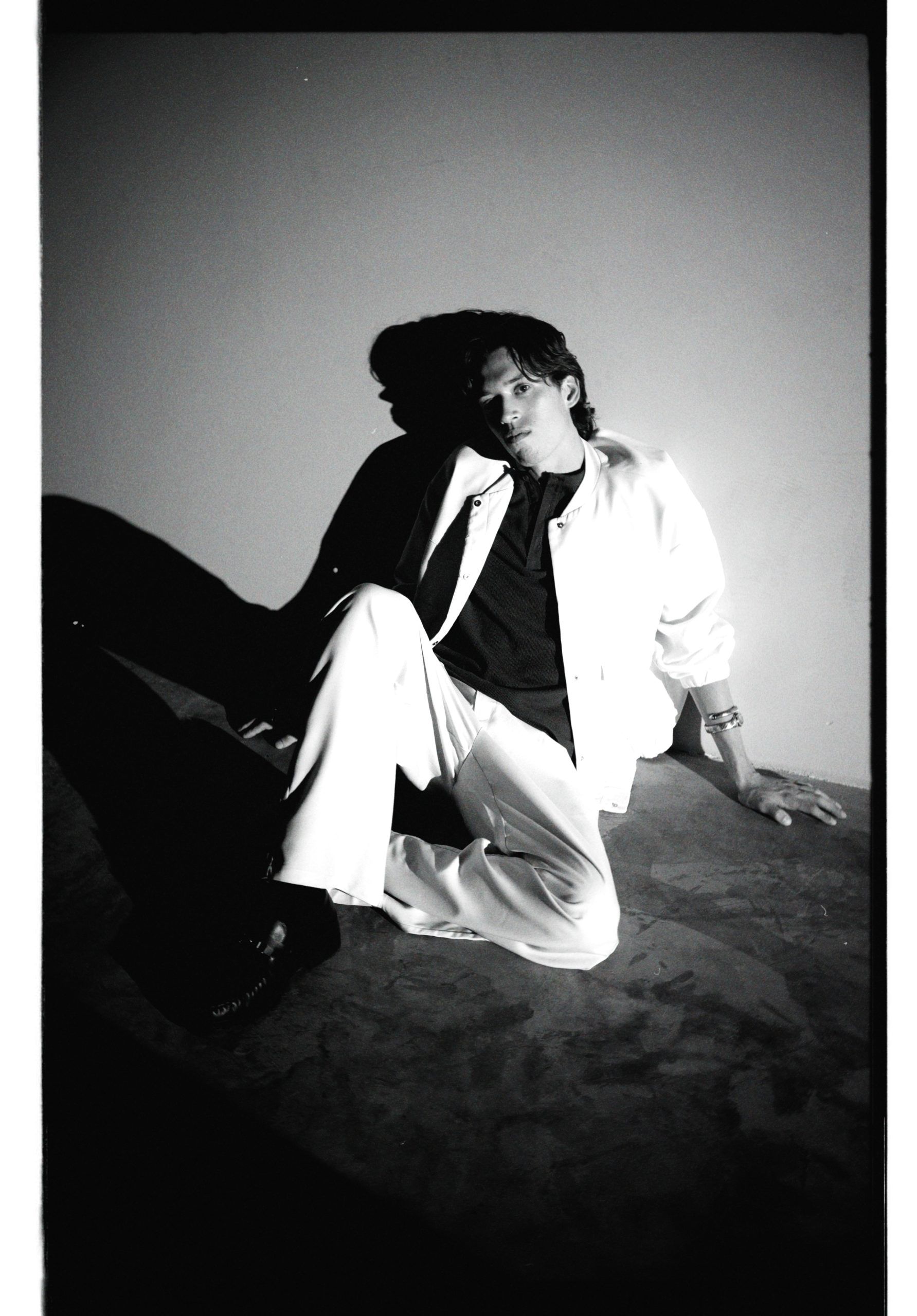
Billy Chen is a photographer and visual artist based in New York City. Born and raised in Shanghai, he moved to the United States at the age of thirteen. His cross cultural upbringing informs his sensitivity to the visual codes embedded within different societies. Working across digital and tactile processes, from scanning and photography to papier-mâché and collage, Chen reconfigures fragments of the everyday into layered reflections on cultural translation, memory, and the saturation of visual media.
Lu Gao is an artist, curator, and the Program & Communications Manager at Arts Letters & Numbers. Her practice often explores the intersections of image, language, and ephemeral perception through walking, shadow, and site-specific interventions.
In this conversation, Gao speaks with Chen about his material and conceptual processes, exploring how distortion, memory, and media shape the way we see and remember.
Lu Gao:
Your work often reflects the tension between different visual systems shaped by your upbringing in Shanghai and New York. How do you think this cross-cultural experience shapes the way you perceive and reconstruct images?
Billy Chen:
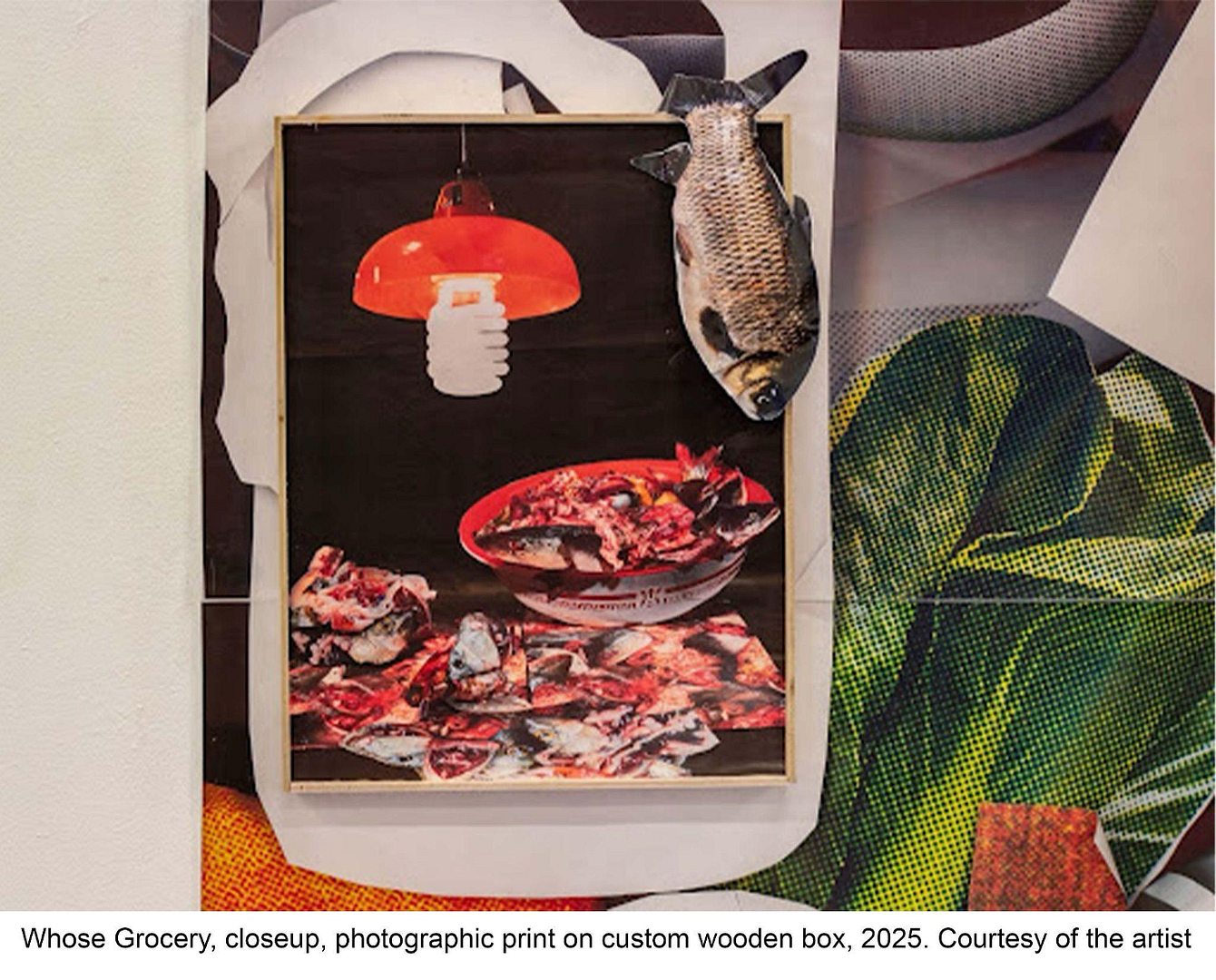
Growing up between two vastly different societies—both culturally and visually—made me very aware of how messages are conveyed beyond language. It’s not just about English and Mandarin; it’s about the icons and visual codes that structure how people think and communicate. Over time, I began noticing not only what differs between cultures, but also what connects them—how food, play, and daily rituals are shared human experiences that just take on different forms. When I combine symbols like the red lamp from a Chinese fish market and the supermarket price tag from the U.S., it mirrors my own psyche. These images coexist naturally in me. They might seem foreign to some, but for me they’re both familiar and strange at once.
Lu:
In Whose Grocery, you juxtapose floating vegetables, red lamps, and supermarket price tags. Why do you choose this kind of arrangement, revealing both the materiality and imperfection of papier-mâché?
Billy:
That’s part of the dichotomy I’m drawn to the coexistence of two opposite states. The paper cut-outs, the photographs, and the black paper underneath all point to the dualities within the work. The photo is both an object and a surface; it shows what’s visible and what’s left out. The exposed black paper mirrors the tension between positive and negative space, Chinese and Western symbols, presence and absence. My visual language is divided, and that division becomes the very subject of the work.
Lu:
You move fluidly between digital and tactile processes, from scanning and photography to papier-mâché and collage. What draws you to these material transformations, and how do they relate to distortion or memory in your work?
Billy:
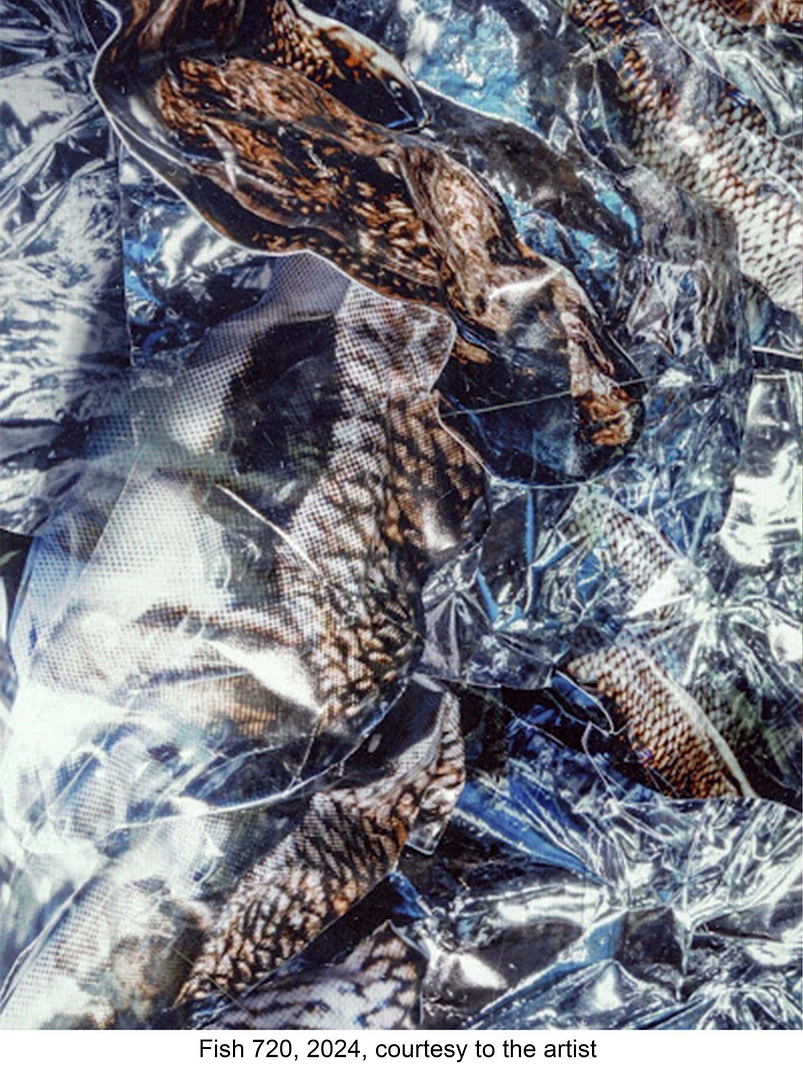
I started in darkroom photography, but over time photography became more than a way of representation, it became a material, like paint. When I print, scan, or manipulate an image, I’m engaging with the photo surface. Scanning allows me to treat an image as texture rather than plain surfaces, to dissect what makes an image an image. When I apply halftone textures, colored dots from an old printing method, it’s a gesture of nostalgia. Those small dots are the building blocks of vision in both print and digital media. They’re metaphors for memory, tiny fragments forming an illusion of continuity.
Lu:
In A Fisherman, you explore how memory shifts through exaggeration and self-narration. How do you see the relationship between truth and invention in your artistic process?
Billy:
We’re all fishermen telling stories about our own catch. Distortion in memory is part of being human, it’s always been there for us. What’s different now is how digital media amplifies that distortion. Our memories are increasingly informed by screens, and that shapes what we remember and how.
In one series, I use long-exposure photography and interfere with the process by moving light or the camera itself. The result is an image fragmented by time, a visual metaphor for how our recollections blur and shift as they’re being formed.
Lu:
Your series Whose Grocery, exhibited in two person show, Mass/Void earlier this summer, questions how pervasive media shapes collective perception. What do you think is the artist’s role in confronting this flood of visual information today?
Billy:
I see two possible responses. One is to slow down people’s mind, to redirect attention toward what’s missing in real life while they’re scrolling endlessly on their phones. The other is to “beat the opponent at its own game”, to use the same digital tools that overstimulate us, but push them to the edge. Sometimes I make images that are intentionally overwhelming, layered, or chaotic. By mirroring this visual saturation, I hope viewers become aware of the very condition we’re all immersed in.
Lu:
That awareness feels essential now, that we see not only through images, but also through the distortion they create.
Billy:
Every image we make is both a reflection and a distortion. The challenge and the beauty is to live with that tension and still find meaning in what remains visible.