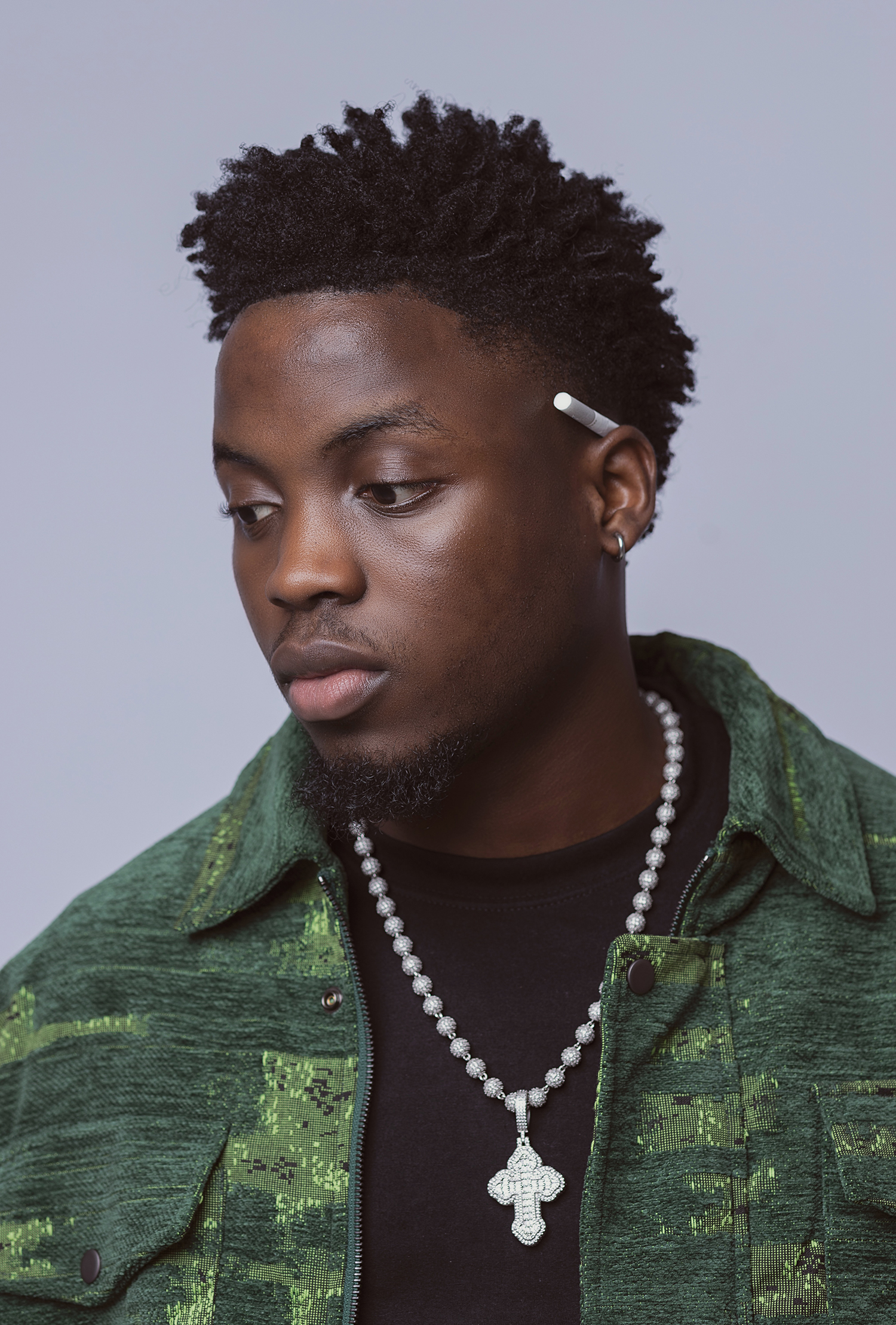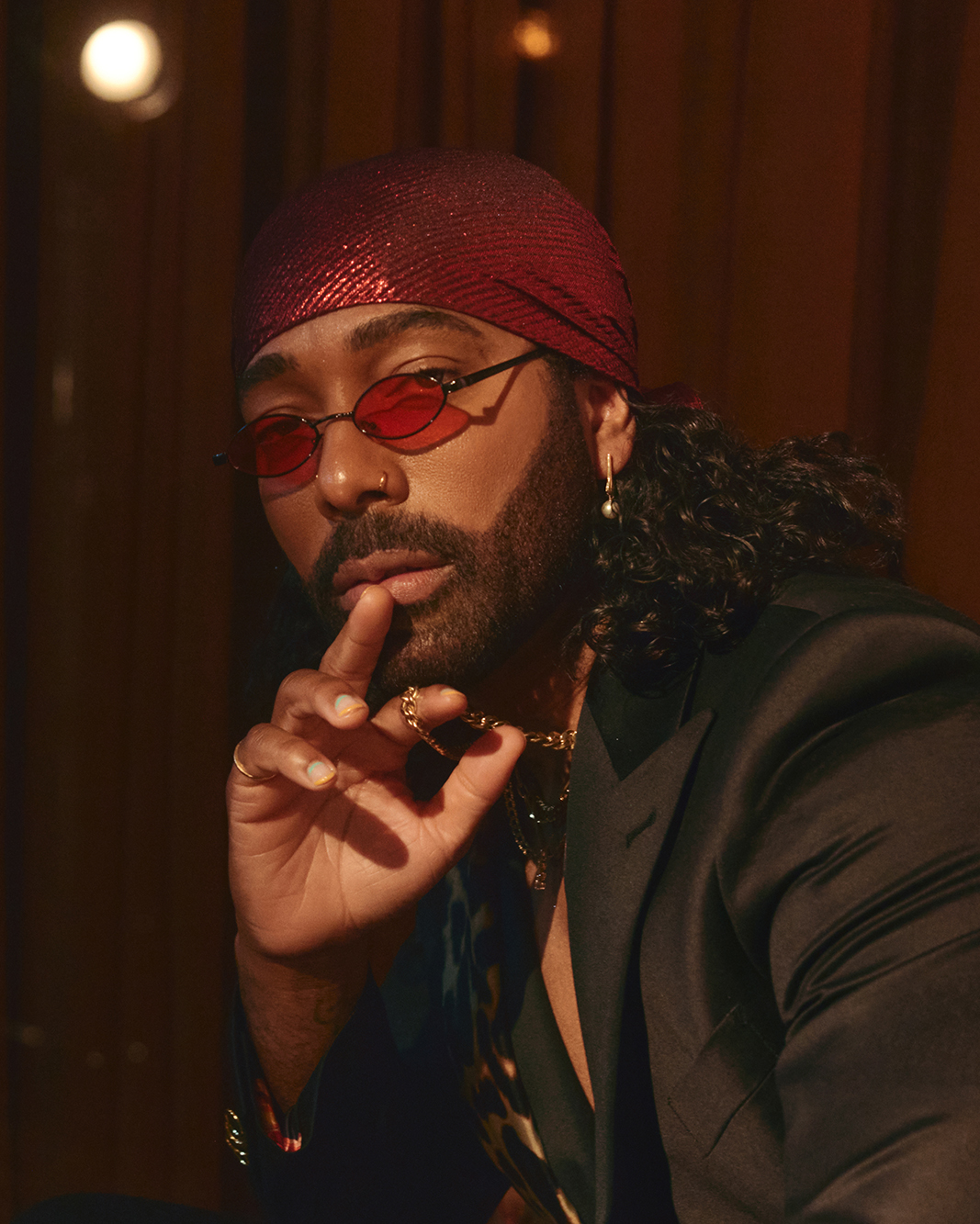
The Los Angeles singer, songwriter and performer puts sex, heartbreak and failure front and centre on his debut album, Love Fails, his most honest work yet.
Making it felt like opening his personal journal. It also helped him let go of experiences that had held power over him for far longer than he realised.
Across the record, desire, disappointment, confidence and doubt all get their moment, each treated as an equally real part of being human, and that honesty peaks on “I Love Sex.” The title is blunt, but the song is more thoughtful than its provocation suggests, pushing back on the idea that kindness, vulnerability and sexuality can’t share the same room. The cinematic video drops Rochone into a glamorous 1970s Las Vegas fantasy, swapping shame for playfulness, beauty and real connection.
Movement has always been his language. Trained in several styles of dance and naturally athletic, he starts picturing the physical and visual life of a song almost the moment he starts writing it. Before going solo, he performed with boy band Radio For People on stages including America’s Got Talent and The X Factor. The lesson stuck: not everyone will get his vision, and their approval can’t be where his confidence comes from.
Now, he’s learning to bet on himself.
Inspired by the fully realised worlds of Michael Jackson, Prince, Bruno Mars and The Weeknd, Rochone wants every detail to feel intentional without losing what makes his own story different. Perfection is no longer the goal. Authenticity is.
In 1883’s 18 Questions, Rochone talks about sexuality without shame, the healing behind Love Fails, finding peace underwater and why rejection can sometimes be exactly the redirection an artist needs.
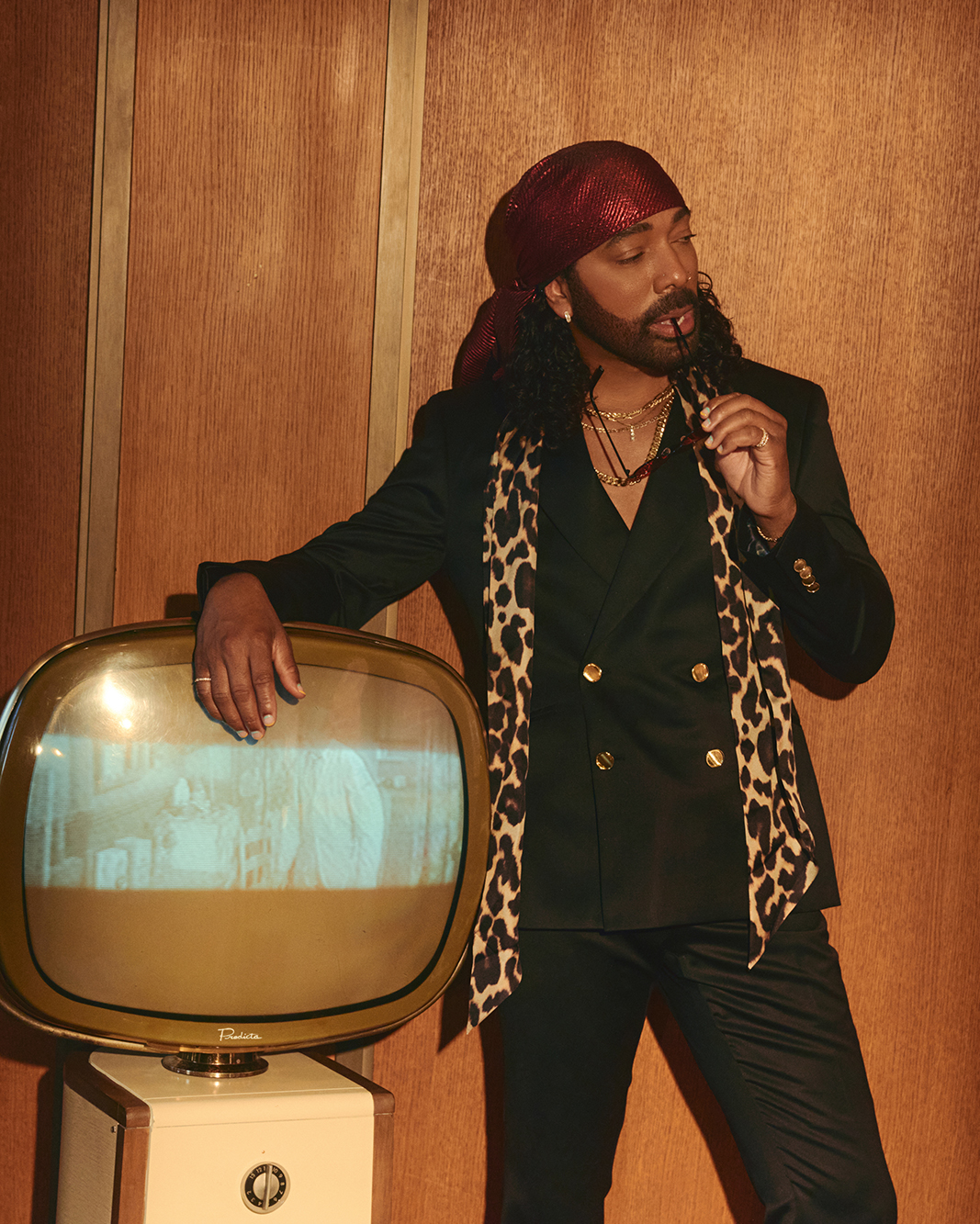
1. What’s the first thing you usually do when you wake up in the morning?
Believe it or not, the first thing I usually do when I wake up is grab my headphones and listen to music. There’s something incredibly calming and inspiring about starting my day that way, especially as an artist and songwriter.
I have so much respect for so many incredible artists, and listening to their work constantly pushes me to grow and think about the ways I can evolve within my own artistry. It sounds strange saying it out loud, but music really is in me. No matter what time of day it is, it’s always somewhere in my mind.
2. What’s one thing you can’t live without right now?
More than ever, I would have to say my family. As I continue pushing further into my music career, it has become increasingly important to keep people around me who genuinely love me for who I am and have my best interests at heart.
Being a Taurus, I’ve always valued feeling grounded, and my family gives me that. Honestly, I don’t think this is something I could say only about this moment in my life. The idea of living without my family is incredibly difficult for me to even think about. They are such an important part of who I am.
3. What’s the best piece of advice you’ve ever been given?
The best advice I’ve ever been given is to live as my authentic self. That resonates with me now more than ever. Whether it’s my career, my personal life, my sexuality or simply the way I see the world, I feel like I am constantly becoming more confident in who I am and less concerned with how other people may perceive me.
The more I embrace myself authentically, the more I’ve realised that it has made me a better person, a better songwriter and, ultimately, a better artist.
4. If you could have dinner with any musician, dead or alive, who would it be and why?
This is almost impossible for me to answer with only one person. I think I would need a dinner table with Michael Jackson, Prince, Whitney Houston and Beyoncé.
When I think about those artists, I think about people whose artistry became so significant that it became ingrained in culture. I would want to hear the stories behind the songs, understand where certain visual and wardrobe choices came from, and learn what they were feeling during moments when they themselves may not have felt completely confident.
Something people sometimes forget is how vulnerable being an artist can be. I would love to know how people operating on that kind of global stage handled the pressure, doubt, expectations and responsibility while still holding onto their humanity.
5. What’s a song you wish you had written yourself?
That’s difficult for me because I love music so much, and as a songwriter I really respect that songs are born from someone else’s experiences. There are countless songs that I deeply appreciate and that have helped shape who I am, but I don’t know that I’ve ever wished I had written them myself.
The songs I write come from my own experiences and from my particular time in this world, and I think that is what makes songwriting special. So rather than wishing I had written someone else’s song, I look forward to the day when my own work reaches enough people that perhaps one of my songs becomes a classic or becomes that meaningful song in someone else’s life.
6. When you’re not making music, what’s your favourite way to completely switch off?
When I’m not writing music, I’m usually studying movement or finding another way to express myself physically. I’ve always been very athletic. I love dance, gymnastics, movement and swimming.
Swimming in particular is incredibly calming for me. When I’m swimming laps and I’m underneath the water, so much of the noise of everyday life disappears. I think that’s where I feel most at peace.
My mind is extremely active as a creative person, so when I’m not creating art or writing music, I often find myself craving stillness. Water gives me that space to sit with my thoughts, reset and recharge.
7. What’s somewhere in the world that always inspires you creatively?
I don’t think there is one specific place. For me, inspiration comes more from elements of nature: large bodies of water, open landscapes, greenery and places where I feel connected to the earth.
There is so much you can learn from nature. Water, for example, can be incredibly peaceful and beautiful, but in large amounts it can also be extremely powerful and dangerous. There is something about that duality that resonates with me.
Balance is really important to me. When I look at water, I see stillness, movement, beauty, strength and unpredictability all existing at once. So rather than one location inspiring me, I would say it is those natural elements of the world around us that continually inspire me.
8. If you could go back and give your younger self one piece of advice before beginning your music career, what would it be?
I would tell myself to keep moving forward no matter what.
When you’re going through difficult moments, it can be so easy to convince yourself to give up or walk away from your dreams. What I’ve learned is that life has a funny way of working itself out, and not everything is supposed to happen according to your timing. Sometimes what feels like rejection really is redirection.
The artist I am today is far more confident and powerful than I ever imagined I could become. One of the biggest lessons I’ve learned is not to draw my confidence from other people’s approval.
If I had understood that earlier, I think I would have given myself much more grace. I would have poured into my creativity without so much hesitation, doubt or fear of failure.
At the same time, I now understand that all of those experiences were necessary to bring me to this place. No stage of life is permanent. We are constantly growing and evolving, and I’ve learned to welcome that.
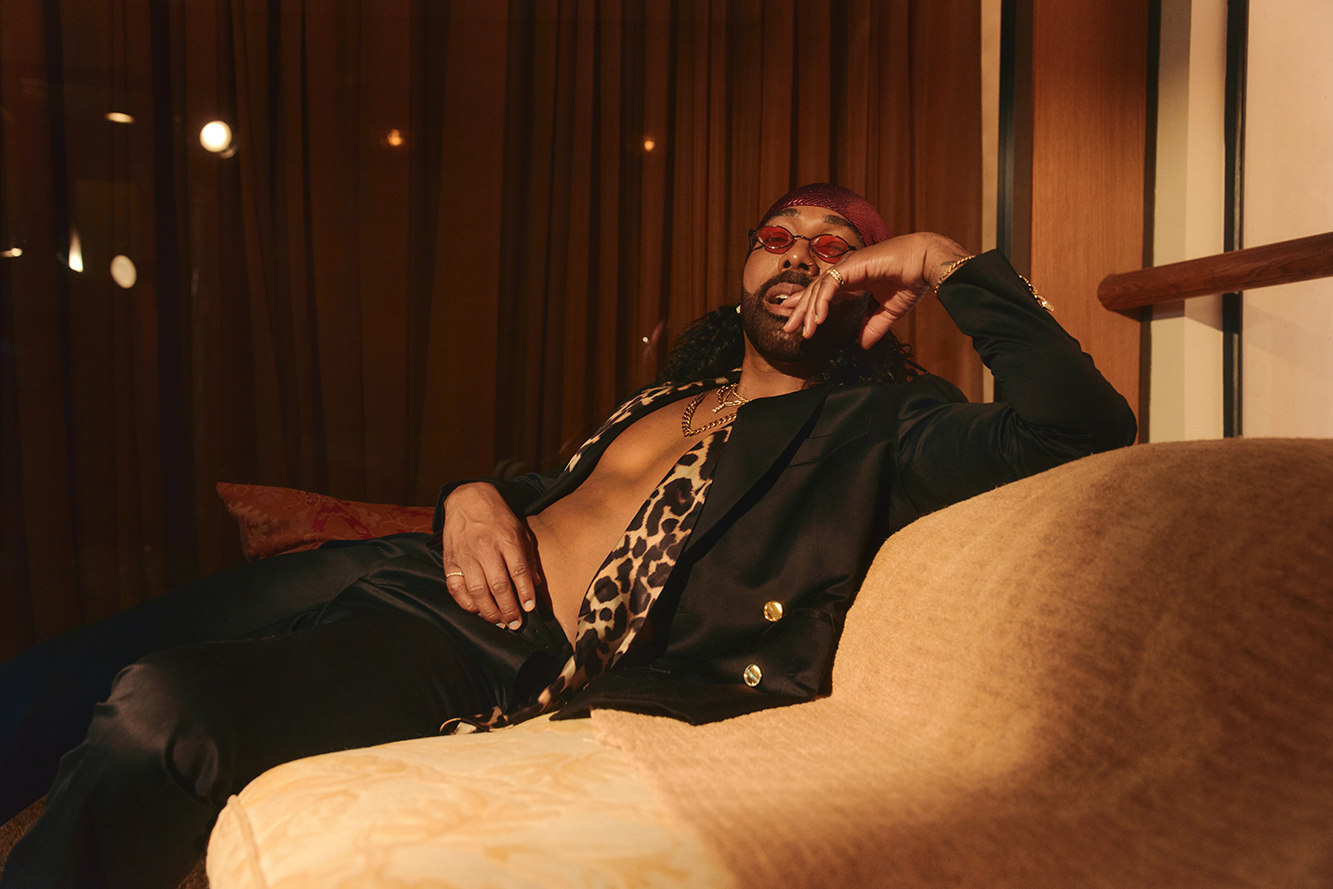
9. Your debut album is called Love Fails. Is that title an admission, a warning or a challenge to keep believing in love despite everything?
Love Fails came from realising that love is one of those things that can be both beautiful and disastrous, yet somehow we continue coming back for more.
Despite heartbreak, failed relationships, disappointment and loss, love has this incredible ability to draw us back in through hope, desire, excitement and attraction.
The album takes you through many of those different experiences. It isn’t only about the good or only about the bad. It explores the temporary moments, the heartbreak, the passion, the hope, the mistakes and all of the complicated spaces in between.
Love is incredibly universal. No matter where you come from, most people at some point in their lives long to experience it, and I think most of us have also experienced a moment when we felt like we failed at it.
10. The album moves through heartbreak, desire, resilience and self-discovery. Which song required you to reveal the most uncomfortable truth about yourself?
Honestly, I don’t know that I can isolate it to just one song because the entire album required me to be incredibly raw and vulnerable.
I finally reached a place where I was willing to accept myself in my entirety, whether I was feeling sad, sexual, confident, heartbroken or completely unsure of where I stood with love.
I wanted the album to capture the reality of what it took for me to move through some of the most difficult experiences of my life, while also celebrating the fun, sensual and liberating parts of being human.
I wanted listening to Love Fails to feel almost like reading pages from my personal journal.
11. “I Love Sex” is deliberately direct and unapologetic. Did you ever worry about how people might react to the title, or was that discomfort part of its appeal?
Initially, there was definitely a thought about how people might perceive it. But I also remembered exactly how I felt while writing the song.
I’ve always tried to live my life from a place of kindness and respect, and with this song I wanted to reveal another part of myself. There was something incredibly empowering about allowing myself to do that.
You can be vulnerable, warm, kind, inviting and still embrace your sensuality and sexuality. Nobody is only one thing. We carry different energies at different moments and different stages of our lives.
For me, “I Love Sex” became incredibly liberating. It became a declaration of my sexuality and of not allowing other people’s opinions to dictate how I feel about myself.
Sexuality is natural. It is part of being human, and I don’t think we should automatically approach it from a place of shame.
12. The song celebrates desire and confidence, but confidence can sometimes hide vulnerability. What lies beneath the bravado of “I Love Sex”?
I actually see it a little differently. I don’t think the song is hiding vulnerability. I think real confidence requires vulnerability.
When you choose to live honestly, not everyone is necessarily going to understand or like you, and I’ve learned that firsthand. To me, confidence is being willing to live in your truth anyway.
Sometimes confident people are perceived as though they must be hiding something, when in reality they may simply be comfortable with who they are. Sometimes that authenticity can leave you standing alone or outside of spaces where people are more comfortable remaining at the surface.
With “I Love Sex,” I’m making a declaration about something many people may enjoy but still feel embarrassed talking about. To me, sexuality can be beautiful, playful, intimate and completely human. I think there is value in moving beyond some of the shame and stigma surrounding it.
13. The music video transforms the song into a 1970s Las Vegas fantasy filled with glamour and theatricality. What did that era allow you to express that a contemporary setting could not?
When I was developing the visual direction for “I Love Sex,” I knew I wanted it to feel glamorous.
I wanted to move away from sexuality being portrayed as slapstick, overly raunchy or simply in-your-face. I wanted something sensual, playful, confident and visually elevated.
Obviously, I wasn’t around in the 1970s, but there is something about the photography and film from that era that I feel incredibly connected to. When I look at those images, there often seems to be so much life behind people’s eyes. Whether they were experiencing something beautiful or difficult, you can almost feel that lived experience.
That was something I wanted to bring into this visual: desire, glamour, confidence, playfulness and genuine connection. Sexuality doesn’t have to feel like some dirty secret. There can be joy and beauty in it, and connection can elevate the experience far beyond the physical.
14. Your background in dance gives your performances a strong physical presence. When you are developing a song, how early do you begin imagining how your body will communicate it onstage?
Almost immediately.
When I’m writing a song, I naturally begin thinking about visuals, movement and what the music physically makes me feel. I believe that if a song can move you emotionally, it should have the ability to move you physically as well.
Dance has never represented just one style to me. It encompasses so many different forms, and I think my songwriting works the same way. I never want to pigeonhole myself into one way of writing, performing or creatively expressing myself.
Because I’m trained in several forms of dance, movement naturally spills into my writing process. I often see the song visually and physically from the moment it begins taking shape.
15. You’ve performed on major stages, including America’s Got Talent and The X Factor. How did those experiences shape you as a performer, and how has your approach evolved as you’ve developed your identity as a solo artist?
One of the biggest lessons I’ve learned from those experiences is that everything happens when it is supposed to happen. Looking back, I’m incredibly grateful for the way those moments pushed me to grow and become more comfortable with the fact that not everyone is going to understand or connect with my vision.
They also taught me never to give up on the things I want for myself. My goals and dreams are achievable, and so much of that begins with the way I see myself. In this industry, confidence is essential, and there will always be moments, situations or experiences that try to shake that confidence. I’ve learned that if you stay focused and continue believing in yourself, so much is possible.
As I’ve developed my identity as a solo artist, I’ve learned to bet on myself in ways I never did before. I’ve also learned to look for the lesson when things don’t go according to plan. I believe every experience has something to teach you, and when you carry those lessons forward, they can elevate you in ways you may not have expected.
For me, it’s all part of the journey. I’ve learned to give myself grace, take moments to find clarity, always get back up and stay open to whatever the next chapter may bring.
16. You cite Michael Jackson and Prince alongside Bruno Mars and The Weeknd as influences. How do you draw from performers with such distinctive identities without losing the qualities that make you unmistakably Rochone?
I think having influences is completely natural. There will always be artists who came before us and showed us what was possible.
As I’ve become more comfortable with myself, I’ve learned that I can appreciate someone else’s artistry without comparing myself to them. My experiences in this world are uniquely mine, and those experiences ultimately shape what I write about, what matters to me and how I express myself.
What inspires me most about artists like Michael Jackson, Prince, Bruno Mars and The Weeknd is their commitment to evolution, detail and creating a complete artistic identity. They take their artistry seriously. Whether it is one album era or an entire career, there is thought behind the visuals, performances, music and branding.
That level of commitment is something I deeply admire and want to continue building within my own work.
Hopefully, one day there will be another young artist looking at what I created and feeling inspired by my commitment to detail, continuity, evolution and authentic artistry in the same way these artists inspired me.
17. You have said that you believe music heals. Was making Love Fails genuinely healing, or did revisiting those experiences sometimes reopen wounds you thought had closed?
Making Love Fails was incredibly therapeutic. In many ways, it helped heal wounds I didn’t even realise were still open.
Writing these songs required a tremendous amount of courage and honesty. There were moments when I really had to sit with myself and ask whether I was willing to expose certain parts of myself so openly.
Once I fully committed to the project, there was a lot of healing within that process.
What became really interesting was that after I released those emotions into the songs, they stopped holding the same power over me. Instead of feeling captive to those experiences, I could look at the music almost like a timestamp of the obstacles I had faced, the lessons I had learned and the person I had grown into.
18. Now that Love Fails has established who you are as a solo artist, what part of yourself are you ready to reveal next that listeners have not yet seen?
I’m excited for people to simply continue watching me grow.
One of the most important things I hope people take away from Love Fails is that we are all perfectly imperfect by design. That is where I am in my life right now, and I’m finally comfortable with it.
I no longer hold myself to this impossible standard of perfection. I’m learning to give myself grace every day, and I want the people who listen to my music to know that I will always try to be real with them.
I’m excited to continue making music from an honest and vulnerable place, so regardless of where I am in my journey, listeners can trust that what they are hearing represents my truth in that moment.
More than anything, I want people to see me as a full human being and not simply as an entertainer. I’m still learning what balance looks like in my own life, and I think there’s beauty in admitting that.
It’s okay not to have everything figured out. It’s okay to fail. It’s okay to hurt, to be disappointed or to have moments when things don’t work out the way you imagined.
The important thing is not giving up. There is almost always something to learn from the experience.
“I Love Sex” is out now. Follow via @rochonemusic
Photography Raul Romo