Why WowAngel’s Crochet Hair Extensions Are a Top Pick for Summer Protective Styling
Summer creates a difficult balance for anyone who wants to protect their natural hair without wearing a style that feels heavy, hot, or difficult to maintain. Heat, humidity, sweat, swimming, and frequent outdoor activity can all make an otherwise attractive hairstyle less practical.
A good summer protective style should reduce daily manipulation while still allowing reasonable access to the scalp. It should also be light enough for warm weather, secure enough for an active routine, and versatile enough to work for vacations, workdays, and social events.
Crochet styles meet many of these needs because the natural hair is braided underneath and extension pieces are attached through the cornrows with a crochet hook. The installation can create curls, waves, boho braids, or fuller textured looks without requiring every extension strand to be braided directly into the natural hair.
Here are the main reasons this method can be particularly useful during summer, along with the installation and care decisions that determine whether it truly functions as a protective style.
1. Pre-Separated Hair Can Reduce Installation Time
Long installation sessions are uncomfortable at any time of year, but they can feel especially inconvenient before a vacation, festival, or busy summer weekend.
Pre-separated crochet pieces simplify the process because the stylist does not need to divide a large bundle into many similar sections. Each piece can be attached individually to the prepared cornrows, making it easier to maintain consistent spacing and volume.
The WowAngel collection includes pre-separated human-hair options designed for crochet and Miracle Knot or boho-braid styles. It currently features textures such as Deep Wave, Water Wave, Deep Curly, Kinky Curly, Loose Curly, and Burmese Curly.
Faster installation does not mean the foundation should be rushed. The natural hair still needs to be washed, conditioned, fully dried, and braided securely. Cornrows should feel firm enough to hold the extensions but not so tight that they cause pain around the hairline or scalp.
2. The Style Can Feel Lighter Than Heavily Packed Braids
Summer hairstyles often become uncomfortable because too much extension hair has been installed. Excess weight can pull on the cornrows, trap more heat, and make the style difficult to gather into a ponytail or updo.
Crochet hair allows the installer to control volume by adjusting the spacing between individual pieces. The nape can use wider spacing, while the crown and visible hairline can receive more careful placement.
The WowAngel collection describes its crochet pieces as lightweight and comfortable and notes that the installation is intended to create minimal scalp tension. However, the finished style will only remain lightweight if the installer avoids overcrowding the base.
A natural-density result usually needs less hair than a dramatic, extra-full style. Installing more pieces than necessary may hide the cornrows, but it can also create bulk, increase drying time, and place unnecessary pressure on the natural hair.
3. Multiple Textures Make It Easier to Match the Season
Summer styling is not limited to one curl pattern. Some wearers want defined curls for parties, while others prefer loose waves that can move naturally in warm weather.
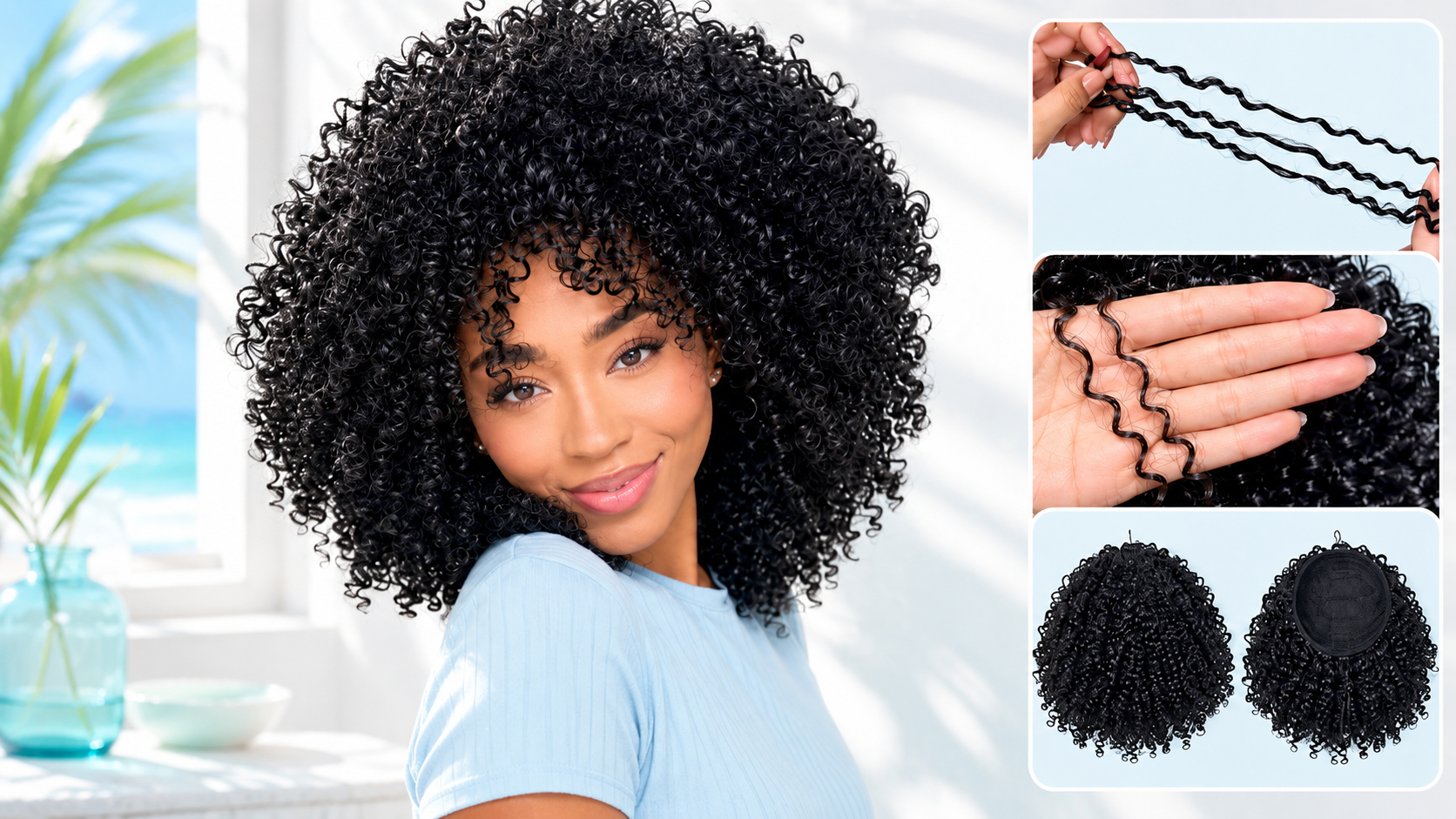
Tighter textures such as Kinky Curly and Deep Curly create considerable visual fullness. They may provide a dense appearance with fewer installed pieces, although they often need regular moisture and careful separation.
Deep Wave and Water Wave offer a balance between definition and movement. They can be worn with a polished shape or gently separated for more volume.
Loose Curly and similar open patterns create a softer finish. They may be easier to gather into loose ponytails or half-up styles, but buyers seeking substantial fullness may need more strands.
Color also affects the finished look. Natural shades create a subtle transition, while brown, highlighted, blonde, or ombré options can add dimension without requiring the wearer to chemically color the natural hair.
4. Human Hair Provides More Natural Movement
Synthetic crochet hair can be useful for short-term styles, but it may feel different from human hair and can have limitations when the wearer wants to restyle the ends.
Human hair generally offers more natural movement and can be easier to blend into boho braids, curly pieces, and styles with loose strands. It can also respond more naturally to washing and conditioning when cared for correctly.
This is particularly valuable during summer, when a hairstyle may need to transition between different settings. The same installation might be worn loose during the day, gathered for an outdoor activity, and styled more deliberately for an evening event.
Readers comparing lengths, colors, and curl patterns can browse WowAngel’s crochet hair extensions after deciding how much fullness and maintenance their summer routine can realistically support.
The linked collection is most useful as a comparison resource because the appropriate choice depends on texture, strand count, length, and installation goal—not simply on selecting the fullest-looking product photo.
5. Crochet Styles Reduce Daily Manipulation
The protective value of a hairstyle comes largely from what it allows the wearer to stop doing.
When natural hair is braided beneath a crochet installation, it does not need to be combed, detangled, heat-styled, or restyled every morning. This can reduce repeated handling and help protect the ends from daily friction.
However, “protective” does not mean maintenance-free. A style can become damaging if the cornrows are too tight, the scalp is neglected, or the extensions remain installed after the natural hair has developed significant new growth.
Crochet styles are generally worn for about four to six weeks, depending on scalp condition, tangling, braid stability, and maintenance. The WowAngel collection recommends the same general removal period and advises keeping the scalp moisturized and protecting the hair at night.
Anyone experiencing persistent pain, bumps, excessive itching, or pulling around the edges should remove or adjust the style rather than waiting for the planned removal date.
How Many Packs Are Needed for Summer Crochet Hair?
The quantity depends on the product format and the desired result. Pack count alone can be misleading because different packs may contain different weights or numbers of pre-separated strands.
The referenced collection suggests approximately three to seven packs, depending on length and desired volume. A lighter summer style will usually fall toward the lower or middle part of that range.
| Desired Result | Suggested Starting Point |
| Partial or accent installation | 3–4 packs |
| Natural full-head volume | 4–5 packs |
| Full or longer installation | 5–6 packs |
| Extra-full result | 6–7 packs |
These figures should be adjusted for strand count, head size, texture, and braid spacing. A tighter curl expands more than a loose wave, while longer pieces may need additional hair to maintain fullness through the ends.
Ordering one spare matching pack can be useful for filling small gaps or replacing pieces later. The goal is preparation, not installing every strand simply because it was purchased.
Summer Installation Mistakes to Avoid
Braiding the foundation too tightly
Tight cornrows do not make the style more protective. They can create discomfort and place unnecessary tension on the hairline. The base should feel secure without causing pain.
Adding too much hair at the nape
The back is usually installed first, so it is easy to use too many strands there. This creates bulk and leaves less hair for the visible crown and front.
Ignoring scalp access
Leave enough space between rows to cleanse and dry the scalp. A completely packed installation may feel hotter and make summer maintenance more difficult.
Installing over damp natural hair
The natural hair and cornrows should be fully dry before extensions are added. Trapping moisture beneath a dense style can contribute to odor and an uncomfortable scalp environment.
Keeping the style too long
A style that still looks acceptable may no longer be supporting the natural hair. Significant new growth, matting, loose cornrows, or persistent irritation are signs that removal should not be delayed.
How to Maintain Crochet Hair in Hot Weather
Clean the scalp gently after heavy sweating. Apply diluted shampoo along the cornrows rather than aggressively rubbing the loose extension hair. Rinse carefully and make sure the base dries completely.
Use lightweight leave-in products instead of coating the hair and scalp with heavy oils. Product buildup can attract dirt and make curls feel stiff.
At night, gather the hair loosely and protect it with a satin bonnet or scarf. Longer curls may be divided into several sections to reduce tangling.
After swimming, rinse the hair to remove chlorine or salt. Do not leave the natural hair damp beneath the extensions for long periods.
For curly textures, detangle with the fingers or a wide-tooth comb, beginning at the ends. Water and a small amount of mousse or leave-in conditioner can help restore definition without weighing the pattern down.
Final Thoughts
Crochet hair works well for summer because it combines a braided protective base with flexible extension placement. Pre-separated pieces can shorten installation time, controlled spacing helps reduce bulk, and multiple curl patterns allow the style to match different routines and occasions.
The method is most successful when comfort and scalp access are prioritized over maximum density. Choose the texture and pack count according to the desired result, keep the cornrows secure but comfortable, and remove the style when new growth or tangling makes proper care difficult.
A summer protective style should simplify the wearer’s routine—not create new problems. With thoughtful installation and consistent maintenance, crochet hair can provide length, texture, and versatility while reducing the need to manipulate the natural hair every day.