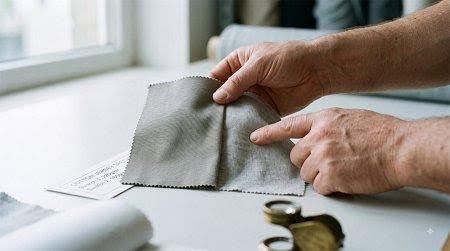
Sourcing children’s apparel has never been simple, but 2026 has made it genuinely different — and I’ve watched the gap between brands who adapted and brands who didn’t widen into something you can measure in defect rates.
A founder I worked with last year put it well. She’d used the same factory since 2019, same terms, same process. Then a retailer asked for social audit documentation she didn’t have, her EU distributor flagged testing gaps that hadn’t existed two years earlier, and a competitor launched an organic line that made her cotton basics look dated overnight. Nothing about her product had gotten worse. The ground had moved underneath it.
That’s the reality this guide addresses. The brands doing well right now aren’t the ones who found a cheaper factory — they’re the ones who got specific about what quality means, built a process around verifying it, and stopped treating manufacturing as a transaction. Here’s how to do that.
What “Quality” Actually Means in Children’s Apparel
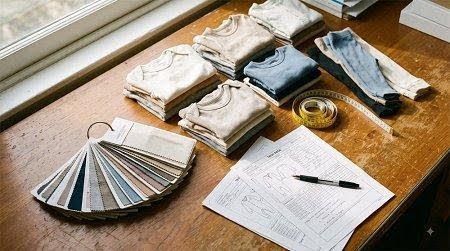
Before sourcing children’s apparel from anyone, you need a working definition of what you’re buying. Ask ten founders what quality means and you’ll get ten answers about fabric hand-feel. That’s part of it. But quality in this category is a stack of four distinct things, and most sourcing failures come from optimising one while ignoring the rest.
Material Quality
The foundation, and the most visible to your customer. Fibre content, yarn quality, weight consistency, colourfastness, shrinkage behaviour, pilling resistance. For kidswear specifically, softness against sensitive skin and breathability matter more than in adult apparel, because children wear garments for longer stretches and have thinner, more reactive skin.
The trap is assuming a fibre name guarantees a result. “100% cotton” spans an enormous range — combed versus carded, staple length, yarn count, knit density. Two garments with identical labels can feel entirely different after three washes, and your customer only notices on the one they bought from you. This is why serious manufacturers publish their material options in detail rather than listing “cotton” and leaving you to guess.
Construction Quality
Where garments actually fail. Seam type and stitch density, thread quality, seam allowance, reinforcement at stress points, hem finishing, and the interior finishing a parent feels when dressing a squirming toddler.
Children’s clothing takes abuse adult clothing doesn’t — playground friction, aggressive wash cycles, being yanked on and off by someone in a hurry. Construction determines whether a garment survives to be handed down or dies in month two.
Safety and Compliance Quality
Non-negotiable and legally enforced. Component attachment security, drawstring and cord compliance, nickel release from metal trims, chemical residue limits, flammability standards for sleepwear.
This isn’t separate from quality — it is quality, in the dimension that matters most when the wearer is three.
Consistency Quality
The one nobody thinks about until run three. Can the manufacturer produce the same garment, to the same measurements, in the same shade, twelve months from now? A factory that makes a beautiful first sample and a mediocre bulk order hasn’t delivered quality. It’s delivered a demonstration.
Consistency is a function of systems — documented specifications, controlled fabric sourcing, real QC processes, stable workforce. Hardest to assess in advance, most important to your business over time.
Step 1: Define Your Standard Before You Contact Anyone
The most common mistake I see in sourcing children’s apparel: brands start talking to manufacturers before deciding what they’re actually asking for. The result is quotes you can’t compare, samples that miss, and a slow drift toward whatever the factory finds convenient.
Do the definition work first.
Write a specification, not a description. “Soft cotton t-shirt” is a description. A specification says: 100% combed ring-spun cotton, 160gsm single jersey, minimum 30s yarn count, pre-shrunk to under 5% residual shrinkage, colourfast to grade 4 after five washes. The second version gets comparable quotes and accurate samples. The first gets you whatever the quoting manager assumed.
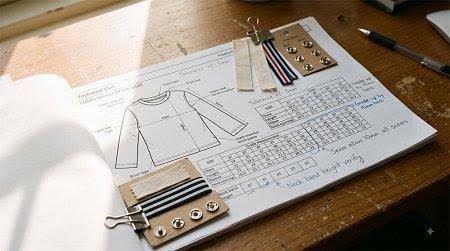
Build a tech pack. Flat sketches from every angle, graded measurements across your size range with tolerances, fabric and trim specs, stitch types and densities, label placement, packaging. This is the highest-leverage document in your entire process for sourcing children’s apparel. If you can’t produce one, hire a freelance technical designer — a few hundred dollars per style, and it pays for itself on the first avoided sampling round.
Name your compliance requirements explicitly. US CPSIA and a Children’s Product Certificate? UK GPSR and the relevant BS EN standards? EU EN 71 and REACH? Write them into the tech pack rather than assuming the factory will infer them.
Decide your quality tier honestly. Fast-fashion grade, solid mid-market, or premium construction with finished seams and quality trims are different products requiring different manufacturers. Trying to buy premium construction at fast-fashion pricing is the most reliable route to disappointment.
Step 2: Understand What Actually Changed in 2026
Advice on sourcing children’s apparel from even three years ago is partially obsolete. Four shifts matter most.
Compliance has tightened and diverged. Post-Brexit, UK and EU requirements have begun separating, so brands selling into both increasingly need dual testing and documentation. Budget for it upfront rather than discovering it at launch.
Material expectations moved. Organic cotton, bamboo, recycled fibres and OEKO-TEX certification have shifted from premium differentiator toward baseline expectation — particularly in babywear, where parents research materials aggressively. Manufacturers with established certified-material supply chains hold a real advantage that shows up in your marketing.
Social compliance became a hard requirement. Retailers increasingly demand BSCI, Sedex or WRAP documentation from the factories behind their suppliers, and EU due-diligence legislation pushes accountability upstream to brands. A factory without audit documentation isn’t just an ethical question now — it’s a closed door at wholesale.
Lead times deserve more respect. The assumption you can compress a production calendar under pressure has proven expensive for a lot of brands. Plan four to five months from confirmed order to warehouse for overseas production, and treat that as a floor.
Step 3: Choose the Right Production Route
There’s no universally correct model for sourcing children’s apparel — only correct fits for your quantity, complexity and stage.
Print-on-demand puts your designs on blank garments as orders arrive. No inventory risk, no minimums, thin margins, no control over the garment itself. Legitimate for validating demand. Limiting as a foundation for a quality-positioned brand.
Small-batch domestic production — local cut-and-sew studios at 50–500 pieces. Two to four times overseas unit costs, but fast communication, low minimums and easy oversight while you’re still learning what your product should be.
Overseas manufacturing is the route for real scale, typically from 300–500 pieces per style. Dramatically better unit economics, full customisation from fabric to labels, and with the right partner, quality matching or exceeding domestic work. This is where OEM and ODM manufacturing becomes genuinely powerful — you control fabric, construction, trims and labelling rather than decorating someone else’s blank. The trade-offs are lead time and the fact that vetting genuinely matters.
Most successful brands run these in sequence: validate small, then scale overseas once demand is proven and specifications have settled.
Step 4: Find Manufacturers Worth Talking To
Four channels do most of the work when you’re sourcing children’s apparel, each with different strengths.
B2B platforms — Alibaba, Global Sources, Made-in-China — work as a lead directory, not a storefront. Filter for verified suppliers with multi-year history and real audit reports, then move fast into technical conversation. How a supplier discusses construction, tolerances and testing tells you more than any listing page.
Trade shows compress months of vetting into days. You handle real samples, meet actual people, and develop an instinct for which companies are professional operations versus resellers with a booth.
Sourcing agents act as your representative on the ground for 5–10% of order value. For first-time importers in a compliance-heavy category, a good one often pays for themselves by preventing a single bad run. Vet the agent as carefully as you’d vet a factory.
Referrals remain the most underrated channel. Ask brands adjacent to yours — similar product, non-competing market — who they use. A recommendation attached to “we’ve done eight runs with them” beats a hundred search results. Curated comparisons help too; our breakdown of leading China kids’ clothing manufacturers is a reasonable place to start mapping the landscape.
Step 5: Vet Rigorously Before You Commit
This is where sourcing children’s apparel succeeds or fails. Work through it in order.
Verify what they are
Request the registered business name and licence number, and confirm the scope covers garment manufacturing. Establish whether you’re dealing with a factory or a trading company — neither is inherently wrong, but you need to know, because it changes pricing, minimums and accountability.
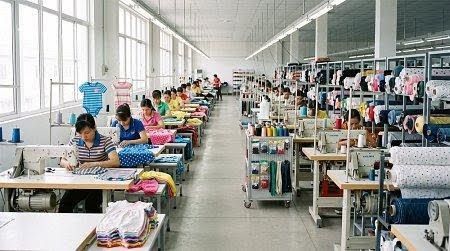
Then request a live video walkthrough of the production floor. Not a recording. Ask to see the cutting room, sewing lines, QC area and trims store while you watch. Real factories manage this within a day or two. Persistent scheduling difficulties are themselves an answer. Genuine manufacturers also tend to publish their facility details and history openly rather than keeping them vague — transparency about who you are is the cheapest trust signal a factory can offer.
Test their category competence
Generalists and genuine kidswear specialists answer differently. Ask:
- What percentage of your output is children’s apparel specifically?
- Which safety standards do you routinely test children’s garments against?
- Do you pull-test attached components, and to what thresholds?
- How do you handle nickel release on metal trims?
- Which laboratories do you use for third-party testing?
A specialist answers fluently. A generalist deflects into reassurance — “no problem, we can make anything” — which remains the least reassuring answer in sourcing, because good factories specialise and honest ones name their limits.
Demand documentation and read it
Recent third-party test reports from recognised laboratories — SGS, Intertek, Bureau Veritas, TÜV. Not certificate photos; the reports. Check the tested product resembles yours, the date is current, and the standards match your market.
Then social compliance audits. Read the findings, not just the grade — a factory working openly through an improvement plan is frequently a better partner than one presenting an unverifiable perfect score.
Sample twice
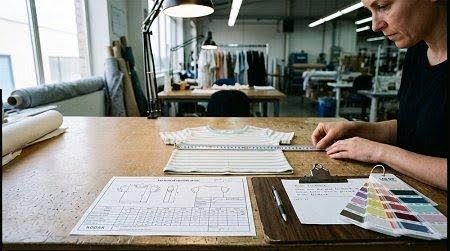
The first sample shows capability. Assess it properly: measure against specification with tolerances, check seam construction and stitch density, wash it and measure again for shrinkage, feel the interior finishing.
Then give detailed written revision feedback and order a second sample. The second one shows whether they listen — whether they read carefully, execute precisely, and flag problems rather than silently substituting. That second round predicts your working relationship far better than the first predicts your product quality.
Step 6: Build Quality Control Into the Order Structure
When sourcing children’s apparel, quality isn’t something you inspect at the end. It’s built into how the order is structured.
Approve materials before bulk commitment. Lab dips, shade bands, fabric swatches and trim cards approved in writing before bulk fabric is cut. Skipping this is how brands end up with a colour they never ordered.
Get a pre-production sample from bulk materials — different from your development sample, made from the actual fabric and trims that will run. Approve it before the line starts.
Use inline inspection on large orders. Catching problems during production means fixing them while they’re still fixable, not after 3,000 units exist.
Book third-party pre-shipment inspection. At roughly $200–350 it’s the cheapest insurance in this industry, and it changes the incentive structure before the inspector even arrives.
Set defect thresholds in writing. Undefined standards become arguments. Defined ones become checkboxes.
Step 7: Structure the Relationship Defensively
Trust is earned across production runs, so protect yourself while it’s still being built.
Standard terms are 30% deposit, 70% against inspection or shipping documents. Treat demands for full prepayment, or pressure toward informal payment channels, as disqualifying rather than negotiable.
Document everything: specifications, measurements with tolerances, fabric composition, trims, labelling, packaging, delivery dates, defect allowances. Professional manufacturers expect this — their comfort with formal documentation is itself diagnostic.
Start smaller than feels efficient. A modest first order at a slightly worse unit price buys information about how a factory actually performs, and that information is worth more than the margin you gave up.
Compare Landed Cost, Not Unit Price
A quote is not a cost. Brands routinely compare ex-works prices and get surprised by what lands.
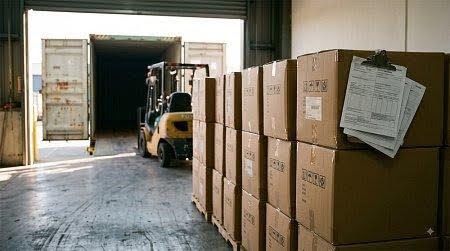
Your true cost includes unit price plus freight, insurance, duty, testing and inspection fees, currency movement, and the carrying cost of inventory sitting in transit for six weeks. Together these commonly add 25–40% to an ex-works quote.
This changes comparisons meaningfully. A European or Turkish supplier at a higher unit price sometimes lands cheaper than an Asian one once everything’s counted — and shorter lead times reduce inventory risk in ways that don’t show in a spreadsheet but absolutely show in cash flow.
Warning Signs Worth Walking Away From
The same signals recur across every conversation about sourcing children’s apparel:
- Quotes dramatically below every other bid. Something is being cut — frequently testing or component quality, exactly the things you can’t see until they fail.
- Reluctance to do a live factory tour or give a verifiable address.
- No relevant test reports for your target market, or visible confusion about what you’re asking.
- “We can make anything.” Specialisation is a feature; honest manufacturers name their limits.
- Pressure toward full prepayment or informal payment routes.
- Polished sales English paired with vague technical answers. The sharpest signal available. Judge manufacturers on the quality of their technical answers, never the fluency of their sales correspondence.
The Bottom Line
Successfully sourcing children’s apparel in 2026 comes down to a sequence that hasn’t changed in principle but has tightened considerably in execution: define your standard in writing before you shop, choose a production route matching your actual stage, find candidates through channels suited to your size, vet with documentation and live verification, sample twice and weight the second heavily, build QC into the order structure rather than bolting it on, and compare landed costs rather than quotes.
None of it is complicated. All of it is skippable — which is exactly why so many brands skip it and learn the same lessons expensively. The manufacturers worth working with will recognise this process and respect you for running it. The ones who resist it have told you something useful for free.
At SIUKID, we’ve spent over a decade manufacturing children’s apparel for brands who work this way, from our Guangzhou facility with ISO, SGS, CPC and BSCI certification behind it. Whether you’re placing a first small-batch order or scaling a full collection, we cover the full path from specification and sampling through production and delivery.
If you’re building or scaling a children’s apparel line and want a manufacturing conversation that starts with your specifications rather than a price list, we’d be glad to have it.