Introduction
Ancient Egyptian artifacts have a visual presence that few modern decorative objects can match. Created thousands of years ago from materials such as bronze, stone, faience, terracotta, and wood, these objects combine artistic beauty with a direct connection to one of history’s most influential civilizations.
Today, ancient Egyptian art and antiquities are increasingly being incorporated into contemporary interior design. A weathered bronze against a clean plaster wall, a turquoise faience amulet in a minimalist display case, or an ancient stone fragment positioned beside modern furnishings creates a compelling dialogue between past and present.
Unlike mass-produced decor, an authentic antiquity carries an individual history. Its surface, wear, patina, and surviving details reflect the passage of time, making it both a decorative focal point and a tangible piece of human history.
Why Ancient Egyptian Art Works So Well in Modern Interiors
Ancient Egyptian design is surprisingly compatible with contemporary architecture. Egyptian artists worked with strong silhouettes, balanced proportions, geometric forms, and clearly defined imagery—principles that also appear throughout modern minimalist design.
Material Authenticity and Organic Contrast
Stone, bronze, faience, terracotta, and ancient wood pair beautifully with modern materials such as plaster, marble, glass, steel, and concrete. Their naturally aged surfaces introduce warmth, texture, and authenticity that modern decorative objects often lack.
Proportion and Geometric Harmony
Ancient Egyptian art is known for balance, symmetry, strong silhouettes, and controlled proportions. These qualities allow even small sculptures, amulets, and relief fragments to create a strong visual presence without overwhelming a contemporary space.
Color Palette and Natural Patina
Ancient Egyptian artifacts often feature rich natural tones, from deep bronze patinas and turquoise faience to warm limestone, terracotta, and aged wood. These colors work particularly well with neutral interiors and add visual interest without appearing overly decorative.
How to Display Ancient Egyptian Artifacts at Home
Displaying antiquities successfully is largely about restraint.
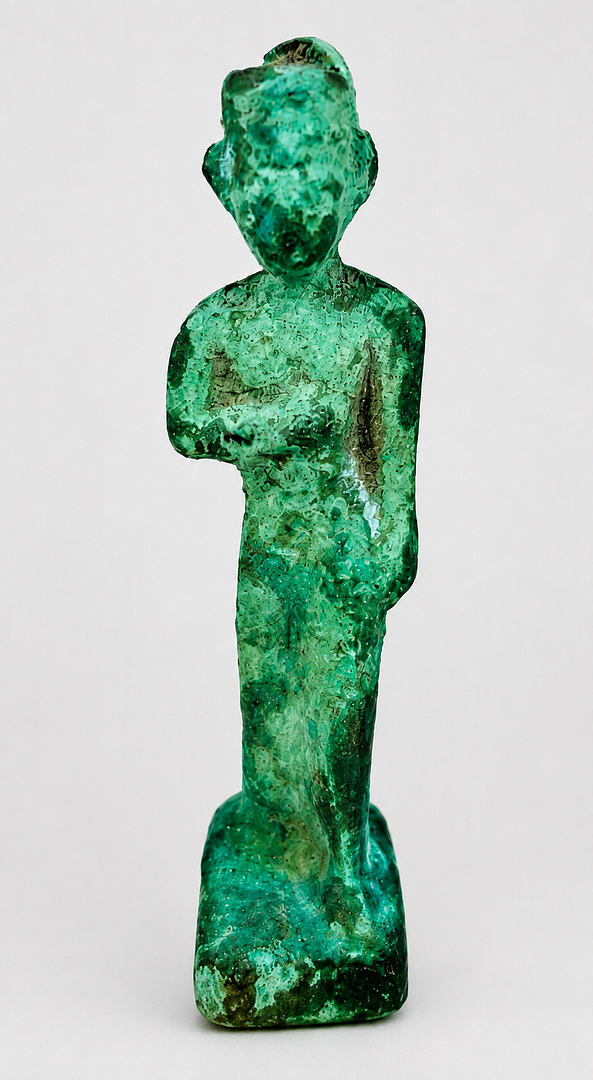
A significant artifact should have enough open space around it to establish its own visual presence. A bronze statuette might sit on a narrow pedestal, while a small amulet could be mounted within a deep frame or museum-style case.
Simple backgrounds such as warm white, stone, natural wood, charcoal, or muted earth tones generally allow ancient materials to stand out most effectively.
Lighting is equally important. Directional LED lighting can reveal surface texture, inscriptions, and sculptural details that disappear under flat overhead illumination. Warm light around 2700K to 3000K often complements bronze, stone, terracotta, and wood particularly well.
Collectors interested in incorporating Ancient Egyptian artifacts into a residence should approach each object as an individual work of art rather than simply another decorative accessory.
Simple Display Principles
| Consideration | Recommended Approach |
| Placement | Give important artifacts sufficient open space. |
| Lighting | Use controlled directional lighting to reveal form and texture. |
| Background | Choose simple, neutral surfaces. |
| Mounting | Use secure, reversible museum-style mounts when needed. |
| Sunlight | Keep vulnerable materials away from prolonged direct UV exposure. |
| Handling | Minimize unnecessary handling of ancient surfaces. |
Symbolism Adds Meaning to an Interior
The appeal of Egyptian antiquities extends beyond appearance. Ancient Egyptian objects were frequently created for religious, funerary, ceremonial, or protective purposes, and understanding those meanings can add depth to a modern display.
Scarab amulets were associated with regeneration and renewal and became one of the most recognizable symbols of ancient Egypt.
Bastet, commonly represented with feline imagery, became associated with protection, the household, women, and family life.
Sekhmet, the lioness-headed goddess, represented divine power and was associated with protection, warfare, destruction, and healing.
Ushabti figures were placed in burials and were intended to perform work on behalf of the deceased in the afterlife.
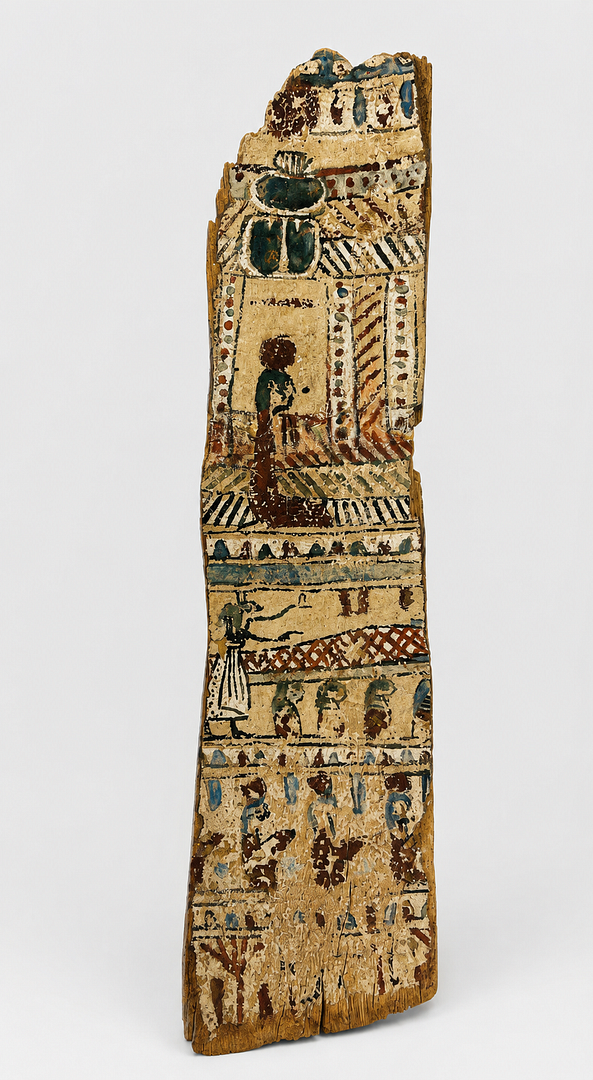
Fragments bearing Egyptian hieroglyphs provide another remarkable connection with ancient language, religion, and artistic tradition.
These meanings transform an artifact from an attractive object into a starting point for understanding the beliefs and lives of the people who created it.
Provenance and Responsible Antiquities Collecting
For collectors, appearance should never be the only consideration when acquiring an antiquity.
Provenance is one of the most important aspects of responsible antiquities collecting. It refers to the known ownership or collection history of an object and may include previous private collections, auction records, dealer records, historic labels, photographs, invoices, exhibition history, or import and export documentation.
The amount of surviving documentation varies considerably, particularly for objects that entered private collections many decades ago. Collectors should nevertheless seek clear information about an artifact’s known history and understand the legal and cultural-property considerations relevant to the material they collect.
Working with an established antiquities specialist such as Relic & Rarity can help collectors better understand authenticity, attribution, condition, provenance, and the historical context of an object.
For serious collectors, the objective should not simply be acquiring something ancient. It should be acquiring an object whose history can be responsibly researched, documented, preserved, and passed forward.
Caring for Ancient Artifacts
Ancient objects may have survived for thousands of years, but they are not indestructible.
Bronze patinas should generally be handled as little as possible and should never be aggressively cleaned without conservation advice. Ancient stone may contain cracks or weakened areas despite appearing solid, while Egyptian faience can have fragile glazed surfaces and mineralized areas.
Organic materials such as wood, linen, papyrus, and leather require particular care because rapid changes in temperature or humidity can cause damage.
Direct sunlight should generally be avoided, especially for textiles, painted surfaces, wood, mummy linen, and other vulnerable materials.
Good documentation is also part of preservation. Provenance records, invoices, photographs, auction references, condition information, and research should remain associated with the artifact whenever possible.
Why Authentic Antiquities Have a Different Presence
Reproductions can imitate the appearance of ancient Egyptian art, but they cannot reproduce its historical significance.
An authentic artifact survives from the civilization that created it.
An Egyptian amulet may have been worn thousands of years ago. An ushabti may once have formed part of an ancient burial. A bronze deity may have been dedicated as a votive offering, while a pottery vessel may still preserve marks left by its maker.
These details turn objects into historical evidence.
That direct physical connection with the past is one of the most compelling aspects of collecting ancient Egyptian artifacts.
Living With History
The growing interest in ancient artifacts within contemporary interior design reflects a broader shift toward spaces that feel personal, collected, and meaningful.
Rather than filling rooms entirely with temporary trends and mass-produced accessories, many collectors are incorporating original art, antiques, natural materials, heirlooms, and historically significant objects.
Ancient Egyptian antiquities fit naturally within this approach.
The objective is not to create an Egyptian-themed room. Instead, one or two carefully selected objects can provide contrast, history, and intellectual interest within an otherwise modern environment.
A three-thousand-year-old artifact beside contemporary furniture is a reminder that meaningful design is not limited to a particular century.
Frequently Asked Questions
Can Ancient Egyptian Artifacts Be Displayed in a Modern Home?
Yes. Many Egyptian artifacts can be displayed successfully in residential interiors when they are properly supported and kept under appropriate environmental conditions.
What Egyptian Artifacts Work Well for Interior Display?
Bronze statuettes, ushabtis, scarabs, faience amulets, pottery vessels, sculptural fragments, and mounted archaeological pieces can all work effectively. The best choice depends on the scale of the room, the artifact’s condition, and its conservation requirements.
Is Provenance Important When Buying Egyptian Antiquities?
Yes. Provenance and collection history are important considerations when acquiring ancient artifacts. Collectors should seek available documentation and work with reputable sources that clearly describe an object’s attribution, condition, and known history.
Conclusion
Ancient Egyptian artifacts occupy a remarkable position between art, archaeology, history, and interior design.
Their strong forms, natural materials, distinctive colors, and extraordinary age allow them to complement contemporary spaces while introducing something modern decorative objects cannot provide: an authentic connection with the ancient past.
Successful displays do not require elaborate Egyptian-themed rooms or large collections. Often, a single carefully selected artifact displayed with appropriate lighting and sufficient space can create a powerful focal point.
More importantly, antiquities collecting carries responsibilities beyond aesthetics. Understanding provenance, preserving original surfaces, documenting collection history, and caring properly for ancient objects helps ensure they remain available for future generations.
When thoughtfully collected and displayed, ancient Egyptian art becomes more than interior decoration—it becomes a way of living with history.
By Jordan Thomas
Founder & Head Curator, Relic & Rarity
About the Author
Jordan Thomas is the Founder and Head Curator of Relic & Rarity, a Canadian gallery specializing in antiquities, historical artifacts, ethnographic material, arms and armour, and other culturally significant objects. His work focuses on researching, documenting, preserving, and presenting historic material for collectors and others interested in connecting with the physical remains of the past.