A music video can leave a clear picture behind long after its plot has faded: a particular shade of red, a jacket caught in motion, a room that seems to belong to nobody else. Those details give a song somewhere to live. They also help an artist become recognisable beyond a voice or a name on a playlist.
Visual identity in music videos comes from the relationship between choices. Colour sets the atmosphere, costume shapes the performer’s presence, and set design establishes the world around them. When those elements share a clear idea, even a modest production can feel distinctive. When they compete, an expensive video can look like a collection of unrelated references.
Begin with the feeling of the song
Before choosing a location or assembling a mood board, it helps to describe the song without naming a visual style. Is it intimate, confrontational, restless or deliberately detached? Does the chorus release tension, or does it make the situation feel tighter? These questions give the visual team something more useful than a loose request for a cinematic look.
Imagine a song about wanting to leave a relationship while being unable to move. One possible treatment puts the performer in a small room, repeats the same camera position and lets the costume become increasingly restrictive. Another could place them in an enormous landscape, with no obvious destination. Both interpret the feeling; neither needs to act out every lyric.
Think of it like a brand anchor in a cluttered feed: just as a Kiwi Treasure casino banner stands out by committing to one bold colour and motif, a video gains clarity when it picks one visual hook and repeats it with variation.
The treatment becomes stronger when it chooses one of those ideas and develops it. A video has limited time to introduce its world, so each new image should either deepen that world or make a meaningful change to it.
Use colour to create relationships, not a formula
Colour is often discussed as a shortcut: blue means sadness, red means danger. In practice, its effect depends on context. A blue room can feel peaceful, cold or artificial. A red coat can make someone appear exposed in one scene and powerful in another. Lighting, texture and the colours nearby all contribute to the reading.
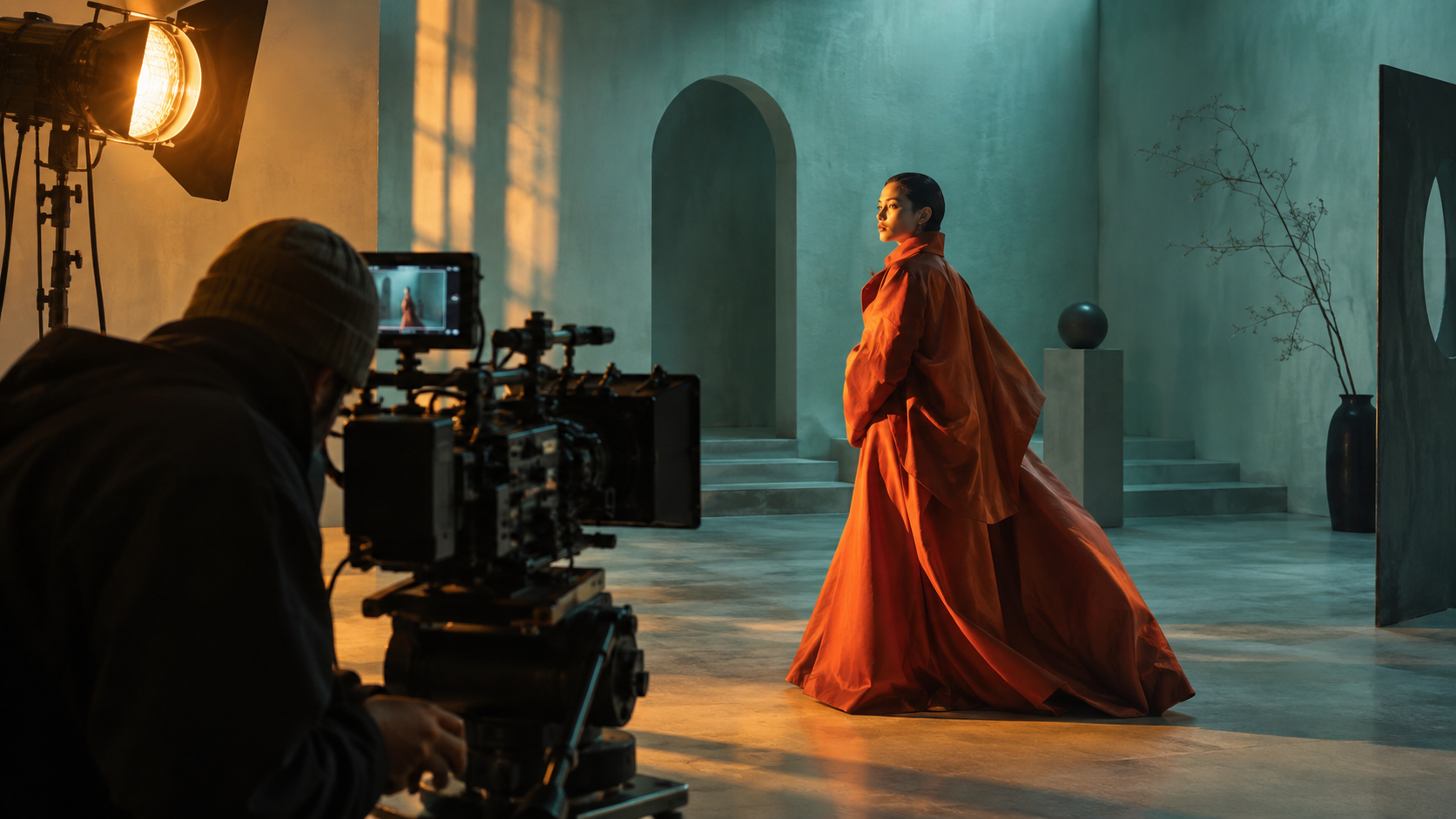
A restrained palette gives those relationships room to work. If the location is mostly pale green and grey, a warm costume can make the performer stand apart without an elaborate camera move. If the clothing and walls share a colour, the same performer may seem absorbed by the space. The contrast carries part of the story.
Continuity matters more than making every frame identical. A colour introduced quietly in the opening can become dominant in the final chorus. That shift gives the audience a visual change to feel, even when the video never explains it.
Let costume reveal a character
Clothing establishes a silhouette before the viewer notices individual details. A broad shoulder, a narrow coat or a long flowing sleeve changes how a body occupies the frame. Costume therefore belongs in the conversation about choreography and camera movement, rather than being treated as a finishing touch.
A garment that looks striking in a still photograph may behave differently during a performance. Heavy fabric can give a slow turn weight; lighter fabric can extend a quick movement. Reflective material may catch the lighting beautifully or overwhelm the face. These are creative decisions to explore in a camera test, with the actual lighting wherever possible.
A useful costume also makes sense within the video’s world. Formal clothes in an ordinary kitchen can suggest performance, discomfort or someone trying to maintain control. The interest comes from the relationship between the outfit and the setting. A recognisable look does not require every item to demand attention.
Make the set do something
Set design can influence the action as much as the appearance of a video. A doorway can repeatedly interrupt a performance. A long corridor can delay an arrival. A table between two people can create distance without either person saying a word. These physical relationships make a location part of the storytelling.
OK Go’s official video archive offers a useful example in the Rube Goldberg machine version of “This Too Shall Pass”, alongside behind-the-scenes films about the machine and the space. Here, a constructed environment is central to the video’s identity. The idea extends beyond finding an attractive backdrop: the setting provides the concept around which the film is organised.
For a smaller production, the same principle might involve a single movable wall or a curtain that changes what the camera can see. The important question is what the space allows to happen. A practical limitation can become the most memorable feature if the video commits to it.
Texture gives a visual world its personality
Peter Gabriel’s “Sledgehammer” shows how a production method can become part of a song’s visual identity. The official credits name director Stephen R. Johnson and animators including Nick Park, the Brothers Quay, Peter Lord and Richard Goleszowski. In the artist’s account of the restoration, Gabriel and Aardman co-founder David Sproxton both discuss the appeal of its handmade, imperfect quality.
That example is a reminder to think beyond colour and objects. A surface can be glossy, grainy, soft, worn or conspicuously artificial. Combining those textures thoughtfully helps a video feel like a place with its own rules. Polishing away every irregularity can sometimes remove the quality that made the image interesting.
Build a visual language that can change
An artist’s identity does not have to mean wearing the same outfit in every release. It can live in a recurring silhouette, an approach to movement, an interest in theatrical spaces or a particular tension between glamour and everyday life. Those connections leave room for growth while giving audiences something familiar to recognise.
The most useful final test is to look at the choices together. Does the costume belong in the lighting? Does the set support the performance? Does a change of colour arrive at a moment that matters in the song? When those answers connect, the video begins to feel authored. Its identity comes from decisions that belong to one another.
Sources
OK Go — Official video archive and production films
Peter Gabriel — Sledgehammer video credits
Peter Gabriel — Sledgehammer restoration and the handmade aesthetic