Somewhere between the maximalist jewelry era and the current swing back toward restraint, the accessory conversation landed on a single winner.
It’s not a bag, a boot, or a pair of bold sunglasses’ moment. It’s the watch.
Not five watches. Not a watch plus a bracelet plus a chain plus whatever else is trending this week. One watch. Chosen well. Worn with intention. Doing the work that a whole jewelry box used to do.
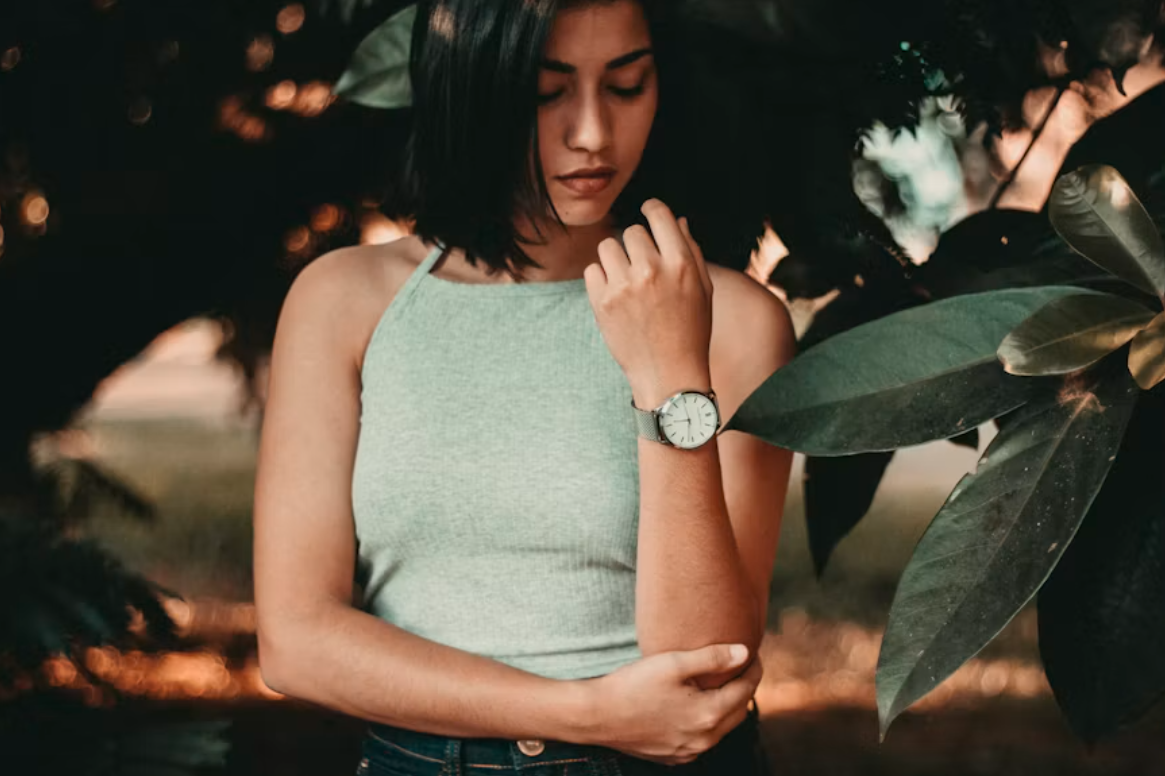
A single, considered watch reads as confidence. It says you know exactly what you’re doing. The accessorizing equivalent of a capsule wardrobe, and once you clock it on a well-dressed person, you start seeing it everywhere.
The One-Watch Theory

Pick one piece and let it anchor the whole look. No competition. No noise. Just a single object doing the job of ten.
You don’t need a six-figure piece to pull this off, either.
Something considered and well-made, like custom Seiko watches, is created around a real automatic movement rather than a logo. It does the job as convincingly as anything with a waitlist.
A thoughtfully designed, high-quality watch will always be on trend. Brands like AnovaChicago bring hand-crafted custom pieces known for their durability and versatility. Such a piece is a reflection of craftsmanship, heritage, and personal style.
Keep that in mind when you make your next purchase.
Watch the Contrast Effect
Before you go all-in on the one-watch theory, there’s a catch worth knowing.
A great watch doesn’t fix a mediocre outfit but exposes it. When one element is noticeably more refined than everything around it, the brain doesn’t average things out. It highlights the gap.
A watch sitting next to clothes that don’t fit doesn’t make the outfit look more expensive. It draws attention to how little care went into everything else.
This is the piece stylist Tess Gant lays out in her breakdown of the “nice watch” problem. A watch works best as the final detail on an outfit that’s already right, not as a substitute for the basics being wrong.
What the Trend Data Says
The wider watch market backs this up. Fashion editors speak of a narrowing of the old gender lines in watch design. People are gravitating toward pieces that feel personal rather than performative.
“You only need to look at the wrists of the most influential dressers in the industry, and you’ll notice the one unsung element that makes their outfits more alluring is the addition of a chic watch.” – Remy Farrell, Who What Wear UK’s fashion editor.
There’s also a growing appetite for brands offering legitimate value rather than a recognizable name, per Who What Wear’s rundown of key watch trends.
The idea isn’t “buy the loudest logo” but “buy the piece that earns its spot.”
Editorial Is Already There
Fashion editors have been building entire looks around a single watch for seasons.
They’re using it as the anchor point rather than an afterthought stacked on top of five other pieces. A single standout timepiece is treated as the outfit’s centerpiece, building the rest of the look around what the watch is already doing.
That’s the editorial version of the one-watch rule, straight from Harper’s Bazaar Arabia’s take on wearing your watch like a fashion editor.
For more on the etiquette side of things, Vogue Australia’s take on the sleeve debate is worth the extra scroll.
FAQs
Do I really only need one watch?
For everyday wear, yes. The theory isn’t “own one watch forever”. The secret is to wear one at a time, and make it count. A rotation of two or three is fine. A wrist stacked with a watch plus bracelets plus a chain, every day, is where the theory breaks down.
What if my watch is expensive, does it still need “help”?
Especially then. The more refined the piece, the more the contrast effect works against you if the rest of the outfit isn’t there. An expensive watch on a sloppy outfit reads as mismatched effort, not wealth.
Does this rule apply to smartwatches too?
Less strictly. A smartwatch is functional first, so it gets a pass on some of the “editorial statement” pressure. The fit-first principle still holds; a great smartwatch won’t rescue an outfit that isn’t working.
Is this just a men’s style rule?
No. The genderless shift in watch design backs that up directly. Cases and silhouettes are converging, and the “one considered piece over several loud ones” principle applies regardless of who’s wearing it.
By the Numbers: The Watch Market Backs the Theory
| Stat | What it Means | Source |
| $71.9B → $96.8B | Global watch market growth projected from 2026 to 2033 | Grand View Research |
| $63.44B | Worldwide luxury watch revenue expected in 2026 alone | Statista |
| Smaller cases, vintage cues | Luxury buyers shifting toward understated, smaller-format watches over maximalist designs | Fortune Business Insights |
| 74.6% | Share of watch sales happening offline in 2025 | GM Insights |
So, What’s the Rule?
Strip it back. Fit first, watch second.
Let the timepiece be the full stop, not the paragraph. One good watch, worn on a foundation that’s already working, reads more expensive than five accessories fighting for attention.
That’s it. That’s the whole new rule of accessorizing: less stacking, more standing out.