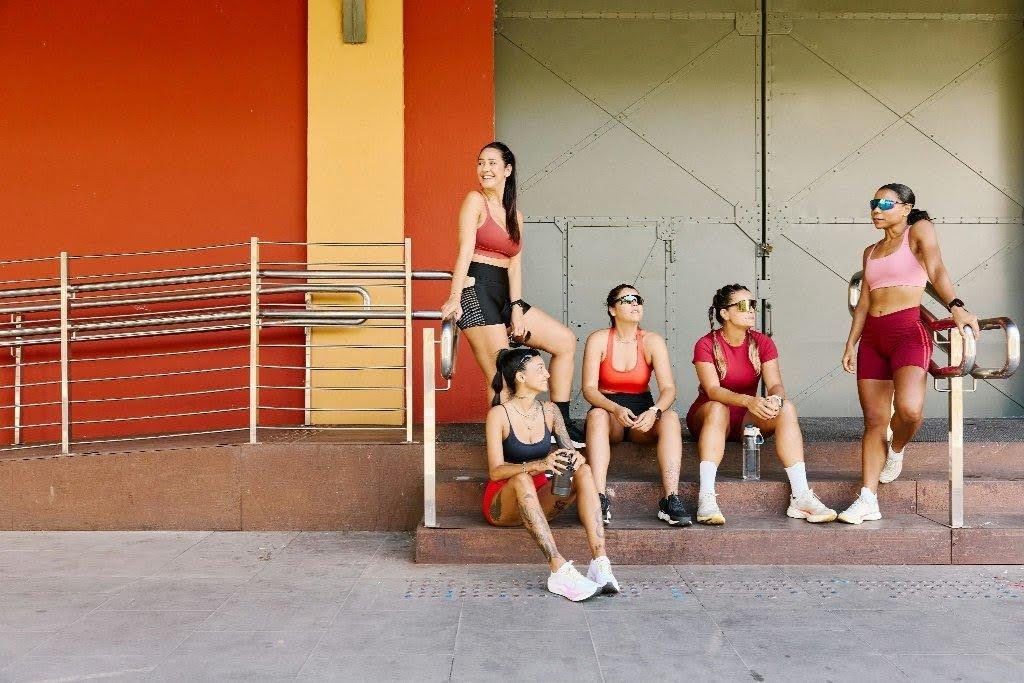
Somewhere between the pandemic and now, running stopped being something people did alone at six in the morning to justify a second coffee, and became something people did together, in groups, in matching kit, at a pace that allowed conversation, followed by coffee that needed no justification at all. Run clubs are everywhere, and the people in them aren’t who you’d have predicted five years ago.
The demographic shift in who runs, and why, has been one of the more quietly interesting cultural developments of the mid-2020s. The serious athlete training for a marathon was always going to be there. The creative director who joined a Tuesday evening run club and found it replaced most of their other social commitments is a newer arrival. The model, the musician, the someone you vaguely recognise from their Instagram who turns up at a Saturday morning run in east London with very good shoes and no particular interest in their finishing time: these people are part of running now in a way they simply weren’t before.
Why Running Became the New Going Out
The run club as a social institution didn’t appear from nowhere. It emerged from a specific cultural moment where the appetite for community was high, the appetite for alcohol-centred socialising was declining, and the desire to do something with your body that produced a genuine physical effect was growing in a demographic that had previously expressed that desire primarily through gym memberships they used inconsistently.
Running offered something that gym classes and solo training didn’t: a reason to be outside, moving through a city or a park or a coastline, alongside other people who were doing the same thing at the same time. The shared experience of physical effort is one of the more efficient bonding mechanisms available, and run clubs figured this out before most other social formats did. The conversation that happens when two people are mildly breathless and moving through interesting surroundings is different in quality from the conversation that happens in a bar, and many people who discovered run clubs found it was the kind of conversation they’d been missing.
The social media dimension accelerated everything. Run clubs are inherently visual: the matching kit, the finish line photos, the post-run coffee shots, the route maps on Strava. They photographed well and they communicated something appealing about the kind of people in them, which attracted more people who wanted to communicate the same thing. The aesthetic of run club became a cultural signal in the same way that a particular coffee shop or a particular neighbourhood had always been cultural signals, and that signal reached people who had no prior relationship with running but a strong relationship with wanting to be part of something that looked like that.
The Kit That Comes With the Culture
Every social scene develops its own visual vocabulary, and run club has developed one with unusual speed and specificity. The kit that identifies someone as a serious run club participant rather than a casual jogger is not primarily about performance, although performance is part of it. It’s about belonging to a culture that takes the activity seriously enough to have formed aesthetic opinions about how it should look.
The shoes come first, and they carry the most weight as cultural signifiers. The right running shoes for run club are technical enough to be credible and interesting enough to be worth noticing, and the conversation that happens around shoe choice in serious run club circles is not entirely unlike the conversation that happens around sneaker culture more broadly. People know what they’re wearing and they have opinions about what you’re wearing, and those opinions are informed by a genuine knowledge of the technology involved.
The clothing has moved significantly from the generic sportswear that dominated running aesthetics a decade ago. Race-style vests, high-waisted shorts, technical long sleeves in colours that reflect the particular aesthetic of a specific club: run club participants dress with a specificity that communicates membership in a way that generic gym kit doesn’t. Some clubs have their own branded pieces. Others coalesce around particular brands or colourways without any formal coordination.
The running accessories that complete the kit are the category where function and style intersect most visibly. A running vest or hydration pack for longer efforts. A GPS watch that tracks pace, route, and heart rate and that is worn not just during runs but as an everyday accessory. Running headphones that sit securely and don’t fall out on uneven ground. A structured running cap for sun or rain depending on the season. These aren’t optional additions to the run club uniform. They’re the details that distinguish someone who takes their running seriously from someone who is trying on the identity without fully committing to it.
What Run Club Gives People That Other Social Scenes Don’t
The run club’s rise as a social institution is easier to understand once you look at what it provides that other social formats don’t, and the list is specific enough to explain why it has attracted people across a broader demographic than running had previously reached.
Sobriety is one dimension. The post-run coffee or juice is not a compromise on the alcohol that a bar night would have provided. It’s a genuinely preferred alternative for a significant proportion of the people who show up to run clubs regularly, many of whom are either not drinking or drinking significantly less than they were a few years ago. Run club provides social time and social bonding without requiring alcohol as the lubricant, which turns out to be something a lot of people wanted when it was made available to them in a form that didn’t feel like a wellness retreat.
Genuine physical effort is another. Gym classes and yoga and pilates all involve physical effort, but running through a city or a park with a group of people produces a specific kind of embodied experience that studio-based fitness doesn’t replicate. The weather is real. The ground is uneven. The distance is actual distance covered rather than time spent on a machine. The effort of finishing a run, particularly in conditions that weren’t ideal, produces a satisfaction that is difficult to manufacture in a controlled indoor environment.
The community that forms around run clubs has a particular character that’s worth noting. It’s unusually democratic in the sense that running pace is a relatively poor predictor of social compatibility, and many run clubs deliberately structure themselves to mix faster and slower runners in ways that other fitness environments don’t. The fastest person in the room at a gym class is implicitly the most successful person in the room. The fastest person at a run club is just someone who runs faster, and they often lap back to run alongside slower members rather than disappearing into the distance.
The cities and neighbourhoods that run clubs move through become part of the experience in a way that distinguishes running from most other social activities. A regular Tuesday evening route through a particular part of the city builds a relationship with that place, its light at different seasons, its inhabitants at different times, its landmarks at running pace, that a commute or a social dinner doesn’t produce. Run club participants often describe knowing their city differently after a year of regular running through it, which is a form of place-based belonging that urban life doesn’t provide many other opportunities for.
Why It Isn’t Going Anywhere
The run club phenomenon has the characteristics of a cultural shift rather than a trend, and those are different things with different trajectories. Trends arrive with enthusiasm and depart when something newer arrives. Cultural shifts alter the landscape they emerge from and don’t go back.
Running has reached people who would not previously have identified as runners, and many of them have built their running habit into their lives in ways that are genuinely structural rather than performative. The Tuesday run club that replaced a Tuesday evening at the pub is not easily displaced by the next social trend, because it’s connected to physical adaptation, personal identity, and genuine friendship in ways that pub nights often weren’t.
The aesthetic dimension will evolve. The specific shoes and the specific kit that signal run club membership in 2026 will be replaced by different shoes and different kit in a few years, because that’s how visual cultures work. But the underlying social institution, the idea that running together is a legitimate and appealing way to spend an evening, that physical effort and conversation and coffee afterwards constitute a genuinely good time, has embedded itself in a generation’s social repertoire in a way that seems durable.
Run club is not a fitness trend. It’s a new way of being in a city with other people, and the kit that comes with it is simply the visible expression of something that turns out to have been filling a gap people didn’t know they had until it was filled.