In Renwei Liu’s digital video practice, the body remains an ambiguous presence. It is both not fully absorbed into the computational logic of digital systems, nor does it retreat into a nostalgic, pre-technological corporeality. Instead, the body persists in his work in a ‘residual’ form. It is a node of perception that is continually reconfigured between interfaces and screens. This approach to the body sets Liu’s practice apart from two dominant narratives of the body in contemporary digital culture, one of which regards the body as the last bastion against technological encroachment, and the other as a collection of information that can be fully digitised and simulated. His videos refuse to choose between these two narratives, insisting instead on presenting the body’s complex predicament under digital conditions.
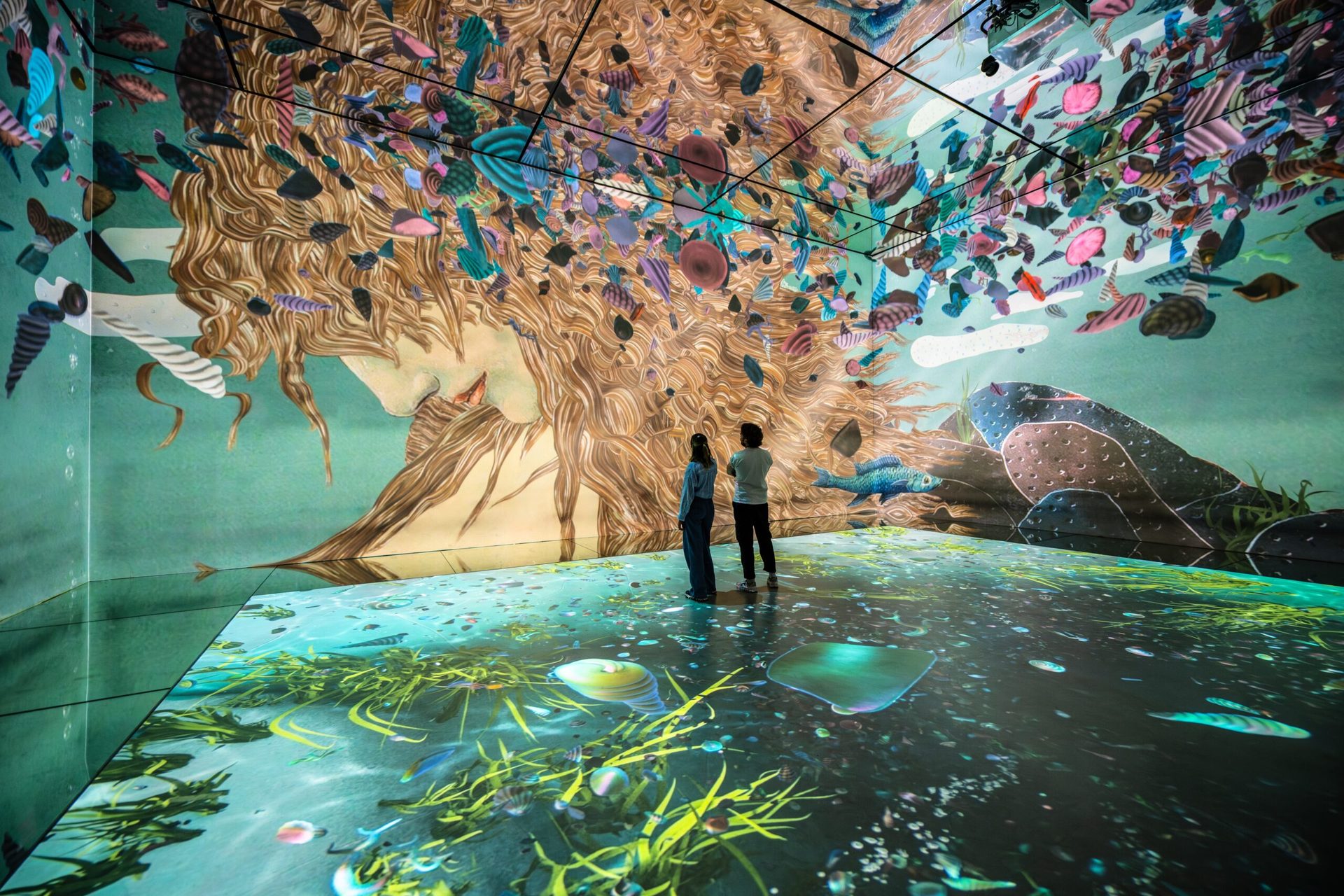
Liu’s treatment of the ‘interface’ is key to understanding his body politics. In his work, the interface is a surface of contact fraught with friction. When the body comes into contact with the interface, what occurs is less the transmission of information than a deformation of perception. The screen does more than display images, it reorganises the spatial relationship between the viewer’s body and the images, including distance, angle, temporal delay and the allocation of one’s attention, all of which are mediated by the interface. By rendering this mediating process itself visible, Liu’s moving images make the audience aware that their own bodies are constantly engaged in an interaction with the interface. The interface itself constitutes a configuration of power, a device for organising perception.
Within this politics of the interface, Liu’s use of the metaphor of ‘touch’ takes on particular significance. Although his works are primarily mediated through moving images and sound, they consistently imply an imagination of touch. Touch implies contact, boundaries, intimacy and intrusion. In the digital environment, touch is redefined as an exchange of electrical signals between fingertips and screens, and his works appear to interrogate this redefinition: when touch is reduced to a functional interaction, how much perceptual autonomy does the body retain? The recurring visual elements in his videos—which cannot be fully deciphered, including blurred edges, uncertain contours and forms that straddle the line between the figurative and the abstract—constitute precisely a resistance to the ‘fully interactive’ digital utopia. These elements refuse to be touched, clicked or consumed. They insist on retaining a perceptual residue that cannot be fully captured by the interface.
This perceptual residue is precisely the most political dimension of Liu’s practice. At a time when digital platforms are increasingly transforming all experience into computable, predictable and monetisable data, those bodily remnants that cannot be fully rendered digital, including hesitation, absent-mindedness and the grey areas of the senses, constitute a faint yet persistent form of resistance. They offer no promise of liberation, nor do they succumb to technological pessimism. Rather, they carve out an enclave within the digital space for the irreducibility of the body, allowing viewers to experience, as they watch, that they are part of the digital system without ever being entirely defined by it. This experience is uncomfortable, but it may well be authentic.