Interior design becomes particularly memorable when a designer develops a visual language that remains recognizable across different buildings, materials, and locations. Some designers achieve this through bold colors and contrasting textures. Others rely on architectural restraint, historical references, or sculptural forms that transform the character of a space.
The following five designers represent different approaches to contemporary interiors. Their work extends beyond decorating rooms to include architecture, custom furniture, hospitality environments, and artistic collaborations. Each has developed a distinctive identity through completed projects and a consistent creative philosophy.
1. Kelly Wearstler: Bold Compositions and Expressive Interiors
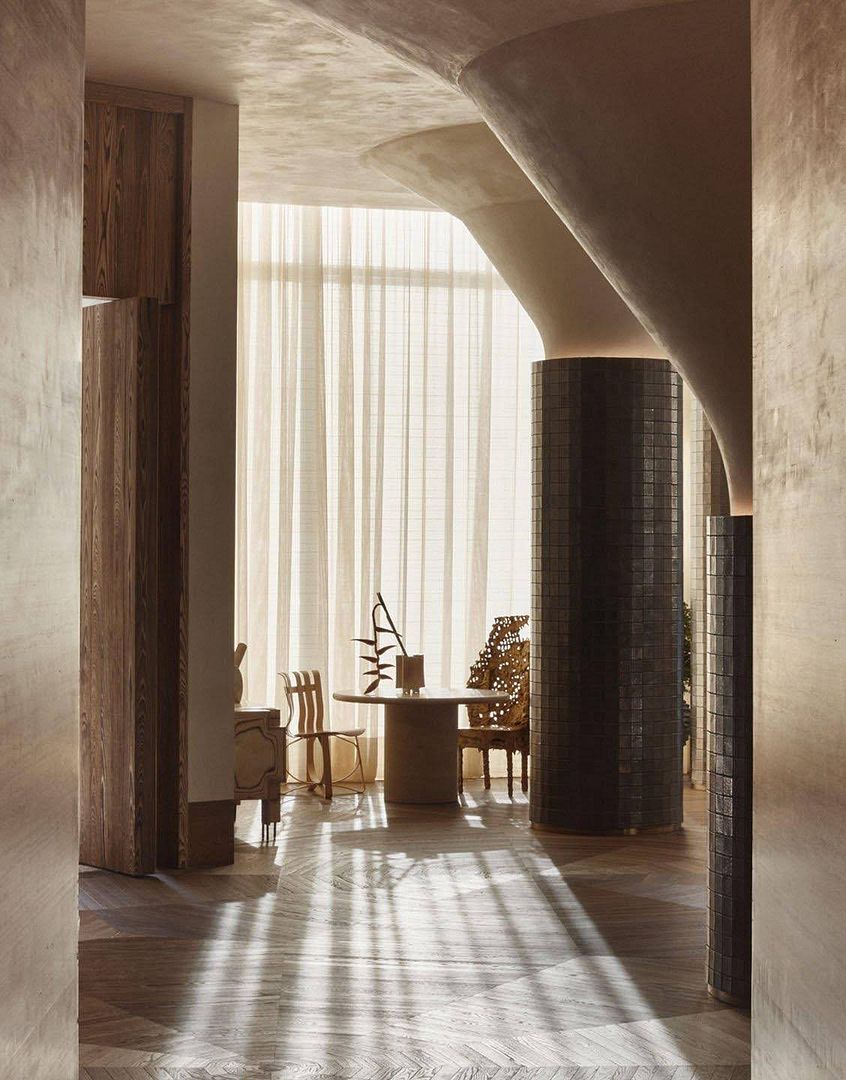
American designer Kelly Wearstler is known for interiors that combine dramatic proportions, contrasting materials, and carefully selected furniture from different periods. Her projects frequently place vintage pieces beside contemporary artwork, creating layered environments that feel collected rather than uniformly decorated.
The Santa Monica Proper Hotel in California demonstrates this approach. Wearstler worked across a historic 1920s building and a contemporary extension, connecting the two through a shared palette of natural materials, sculptural furnishings, and distinctive finishes. In the lobby, ceramic columns with a pewter glaze rise from geometric white oak flooring, while intimate seating areas combine textured wall coverings, custom furniture, and carefully arranged artwork.
Her Downtown Los Angeles Proper Hotel offers another example of this visual complexity. The project incorporates the building’s original architectural details alongside contemporary commissions, including decorative tilework, murals, and expressive furniture.
Wearstler’s signature lies in her ability to combine apparently unrelated elements into a cohesive interior. Her spaces are energetic, visually layered, and designed to reveal new details over time.
2. Axel Vervoordt: Timeless Interiors Rooted in Art and History
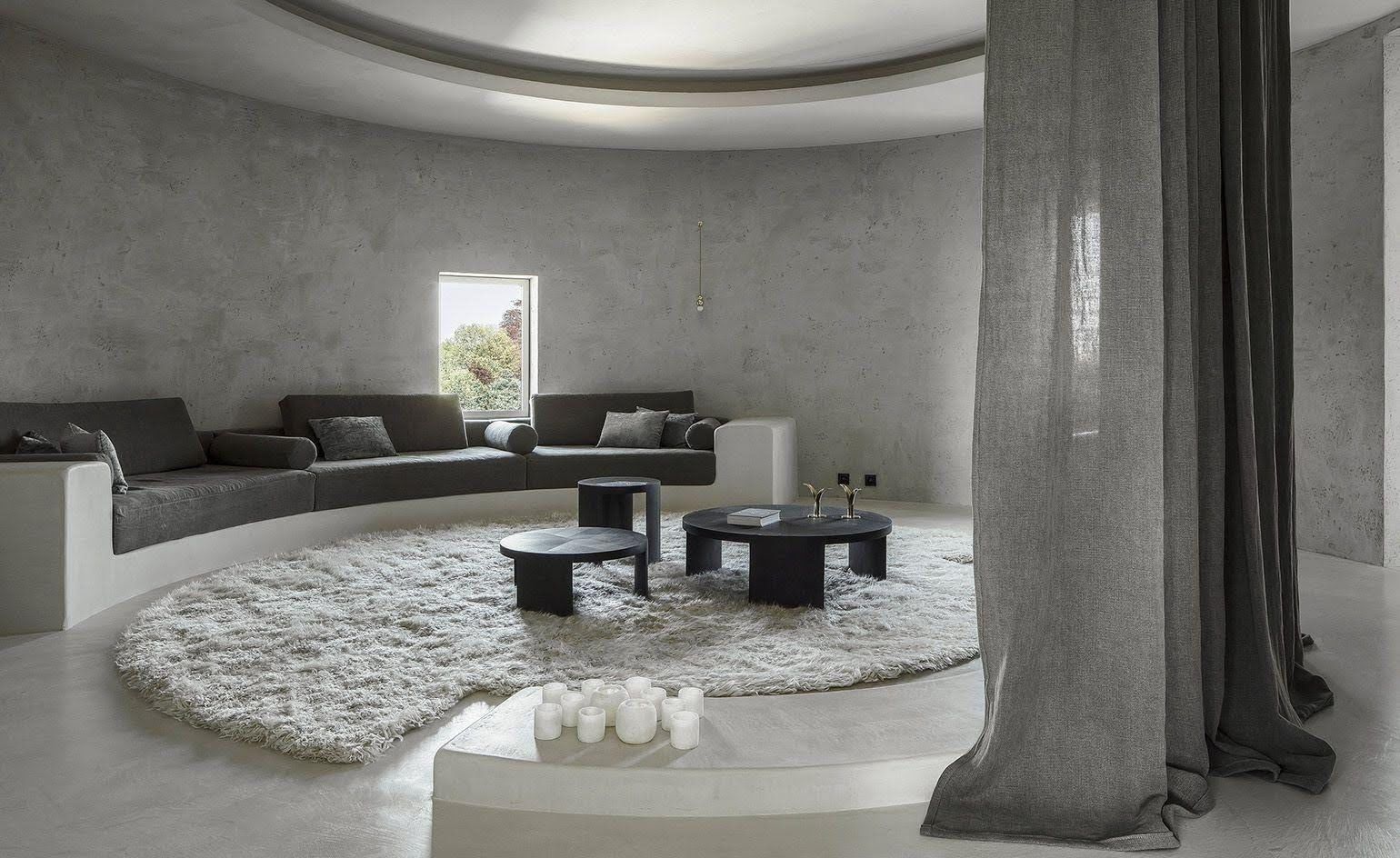
Belgian designer and art dealer Axel Vervoordt approaches interiors through the relationship between architecture, art, nature, and objects accumulated across different historical periods. His work is associated with restrained compositions, weathered surfaces, natural materials, and an appreciation for the passage of time.
One of his most significant projects is Kanaal, a former industrial complex near Antwerp transformed into a mixed residential, commercial, and cultural environment. Completed in 2017, the development includes nearly 100 private apartments alongside galleries, workshops, courtyards, gardens, and public spaces.
Rather than concealing the industrial history of the site, the project incorporates its existing structures into a new architectural identity. Old silos and industrial buildings coexist with contemporary interventions, creating an environment where different periods remain visible.
Vervoordt also develops furniture and objects through his workshops, allowing interiors to combine antique pieces with original contemporary designs. His approach is especially relevant to collectors who value collectible design furniture as part of a broader relationship between art, architecture, and everyday living.
His interiors demonstrate that strong design does not always require visual complexity. Material character, carefully controlled light, and meaningful objects can create spaces with lasting presence.
3. Vincent Van Duysen: Architectural Minimalism With Warmth and Precision
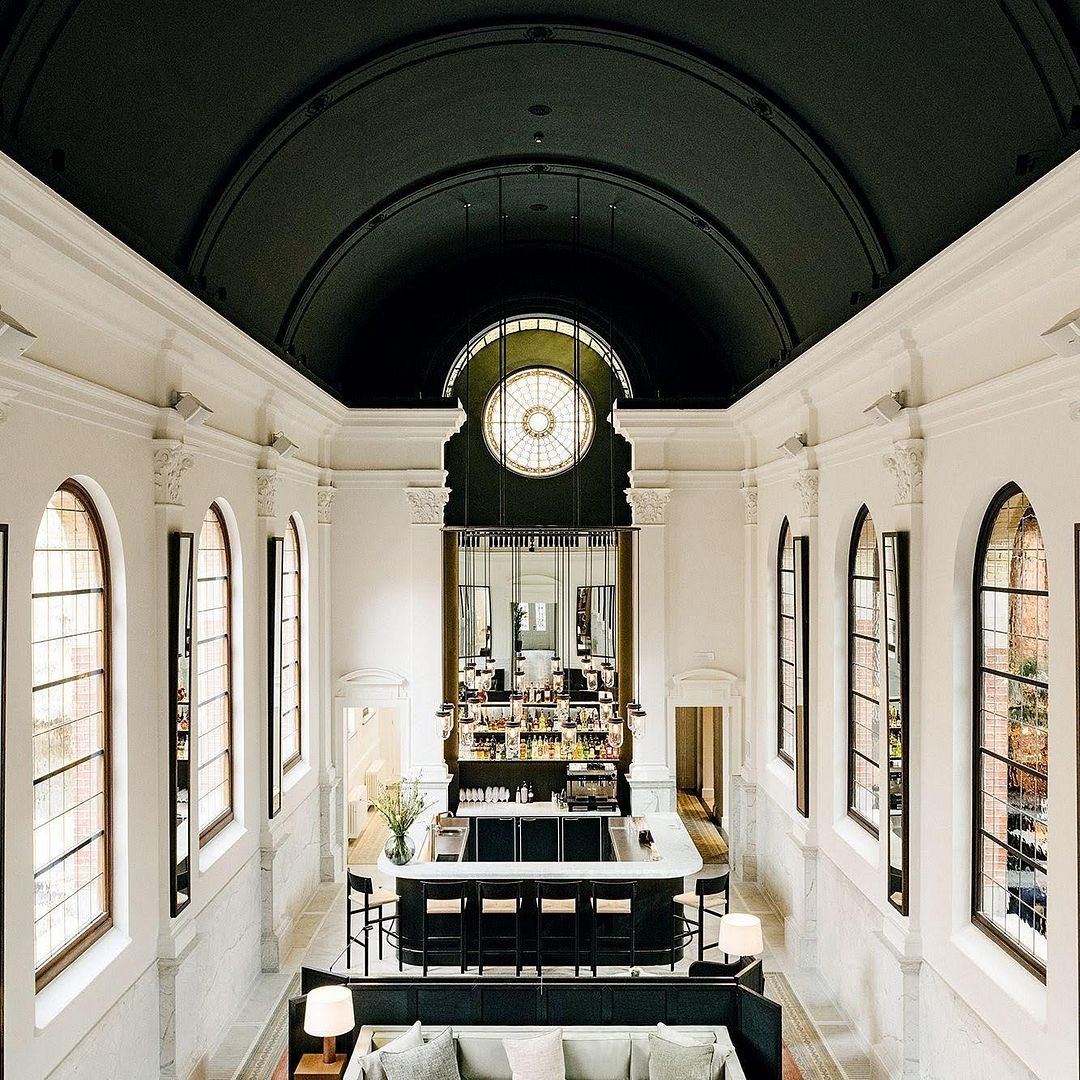
Belgian architect and designer Vincent Van Duysen is recognized for interiors defined by proportion, natural light, restrained materials, and precise architectural detailing. His work frequently uses stone, timber, plaster, and muted colors to create environments that feel calm without becoming impersonal.
The August Hotel in Antwerp, completed in 2019, illustrates his ability to adapt historic architecture for contemporary use. The project transformed a former convent within a military hospital complex into a hotel while preserving significant architectural features.
Original timber paneling, decorative moldings, marble surfaces, and historic doors were carefully restored. Contemporary black metal elements distinguish new interventions from the existing architecture, while the surrounding gardens contribute to the overall spatial experience.
The project extends beyond the guest rooms to include a restaurant beneath a glass roof, landscaped courtyards, and a secluded garden with a natural swimming pond. Each element supports a consistent architectural atmosphere.
Van Duysen’s work demonstrates how minimalist interiors can retain warmth and depth through the careful handling of scale, material, and light. His projects are recognizable not because they repeat the same furniture or colors, but because they share an exceptionally controlled approach to space.
4. Pierre Yovanovitch: French Elegance Through Sculptural Furniture
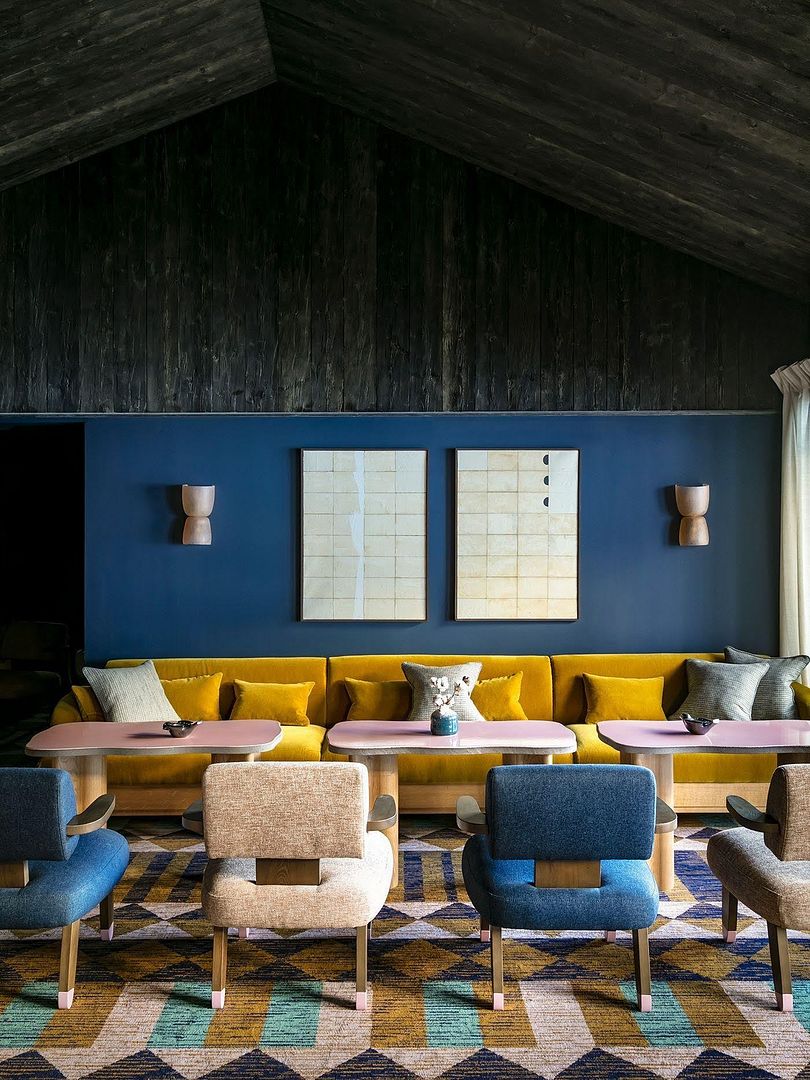
French interior architect Pierre Yovanovitch combines architectural clarity with playful furniture forms and an interest in contemporary art. His interiors often balance traditional European references with unexpected proportions, expressive seating, and custom-designed objects.
The Le Coucou Hotel in Méribel, France, is a notable example. Completed in 2019, the project reinterprets traditional Alpine design through contemporary interiors, distinctive furniture, and carefully selected materials.
More than 130 site-specific furniture and lighting pieces were developed for the hotel in collaboration with European artisans. These include seating, lamps, and decorative objects designed to support the architectural character of the property rather than simply furnish it.
Yovanovitch’s recognizable furniture designs, including the Papa Bear and Baby Bear armchairs, demonstrate his interest in transforming familiar forms into objects with personality. Rounded silhouettes and carefully balanced proportions introduce a playful element without compromising the sophistication of the interiors.
His work also extends to residential properties, art galleries, exhibitions, and opera productions. This range allows him to bring a theatrical understanding of proportion and atmosphere to different environments.
5. Victoria Yakusha: A Multidisciplinary Approach to Sculptural Space
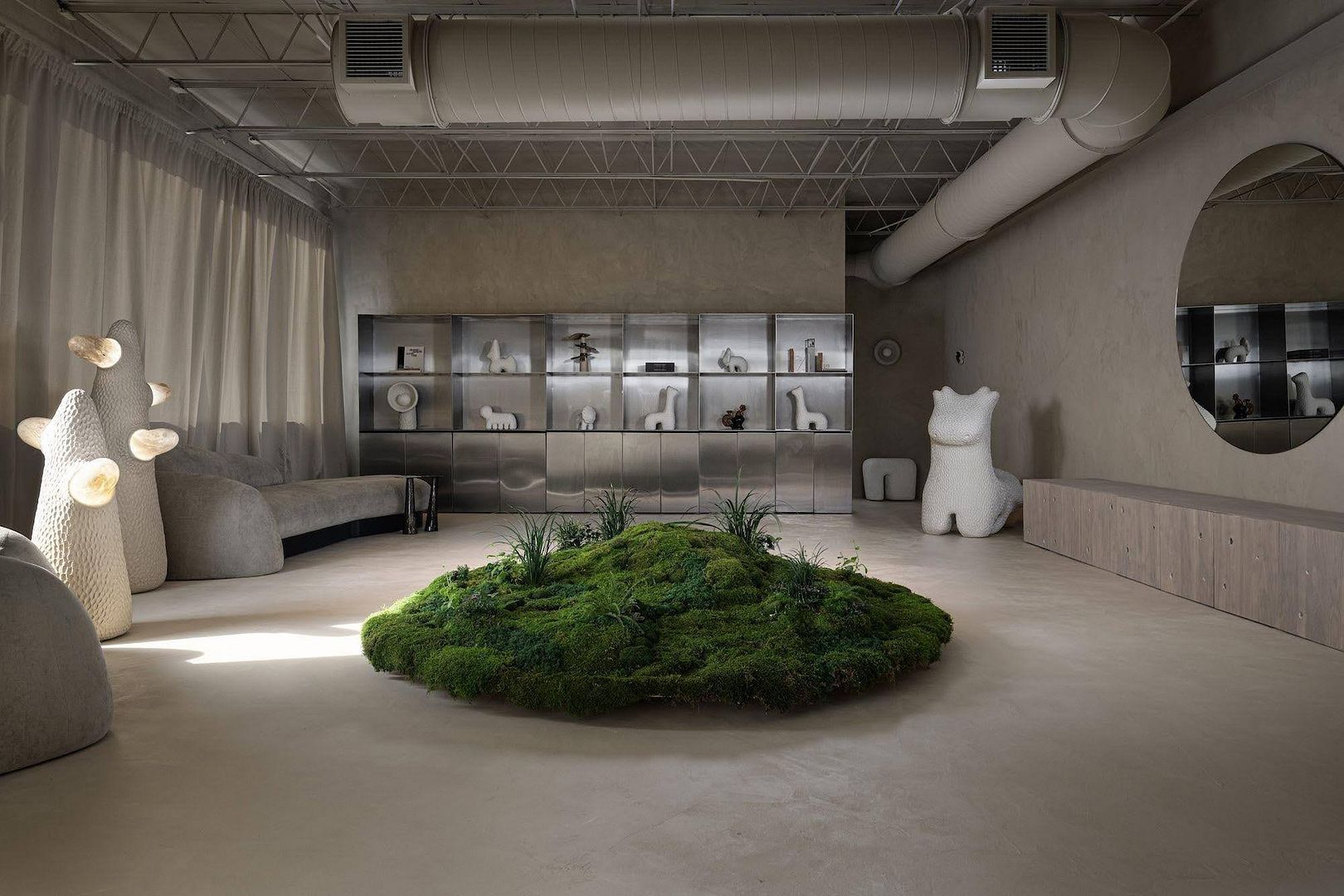
Victoria Yakusha is a Ukrainian designer, architect, and artist based in Belgium and the United States, with her principal professional activity centered on Miami and the Belgium/France region. Her practice encompasses architecture, interiors, landscapes, collectible furniture, artistic objects, and cultural concepts.
What distinguishes Yakusha’s approach is her treatment of space as a complete sculptural composition. Rather than focusing only on furniture placement or interior finishes, she works with the architecture itself, reconsidering volumes, surfaces, circulation, and the relationship between interior and exterior environments.
Her architectural education gives her the ability to reshape a building’s spatial structure. Her process can be compared to that of a sculptor working with volume or a couturier developing a form around the body. She considers the entire environment, beginning with the landscape and continuing through the building, its interior, and the objects placed within it.
This philosophy is visible in her Miami gallery and studio, where sculptural furniture, textured surfaces, and architectural elements are conceived as parts of a unified environment. Her residential projects also demonstrate how organic forms and tactile materials can coexist with the practical requirements of everyday life.
Through FAINA, her collectible design brand, Yakusha develops furniture, lighting, and objects using materials that support her artistic ideas. Her proprietary ZTISTA biomaterial is one example of this experimentation, allowing distinctive handmade textures and unconventional sculptural forms.
Her creative scope also extends to cultural architecture, including the Maria Prymachenko Museum concept. This breadth reflects an important characteristic of her work: the medium is secondary to the idea. Whether designing a private residence, an exhibition environment, an object, or an architectural concept, Yakusha seeks the most appropriate form of expression.
Among designers working on modern interior design projects, her approach stands out for its ability to connect architectural transformation, sculptural experimentation, and material development within one multidisciplinary practice.
Conclusion
Kelly Wearstler, Axel Vervoordt, Vincent Van Duysen, Pierre Yovanovitch, and Victoria Yakusha demonstrate five distinctive ways of shaping contemporary interiors. Wearstler creates expressive environments through contrast and layering. Vervoordt explores the relationship between history, art, and nature. Van Duysen relies on architectural precision and restrained materials. Yovanovitch introduces sculptural personality through custom furniture and artistic collaborations.
Yakusha approaches design across multiple scales, treating landscapes, buildings, interiors, and objects as interconnected forms. Together, these designers show that a recognizable interior is not defined by a particular trend, but by a clear creative vision expressed consistently through space and material.