
From family stories to funeral farce, Estée Stimler explores the laughter that carries us through life and death in Wits End
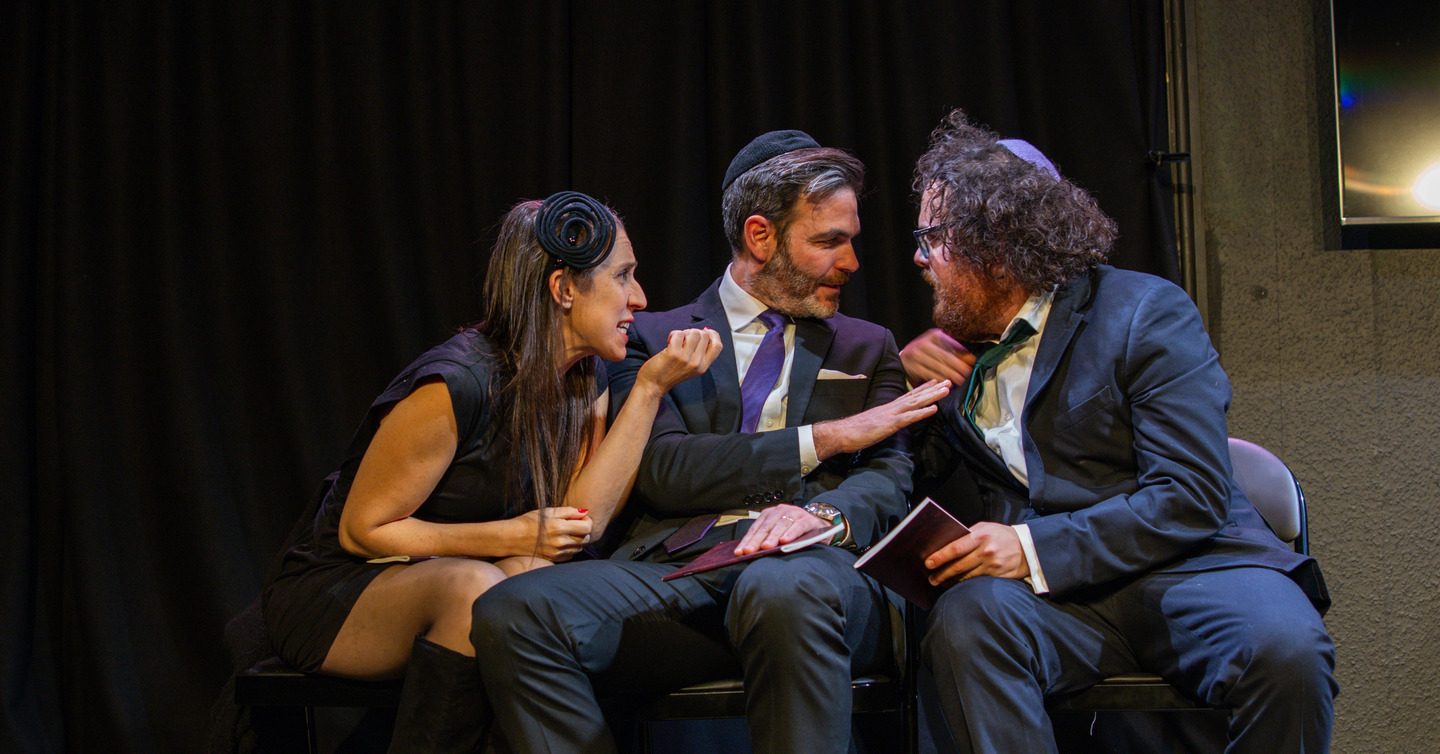
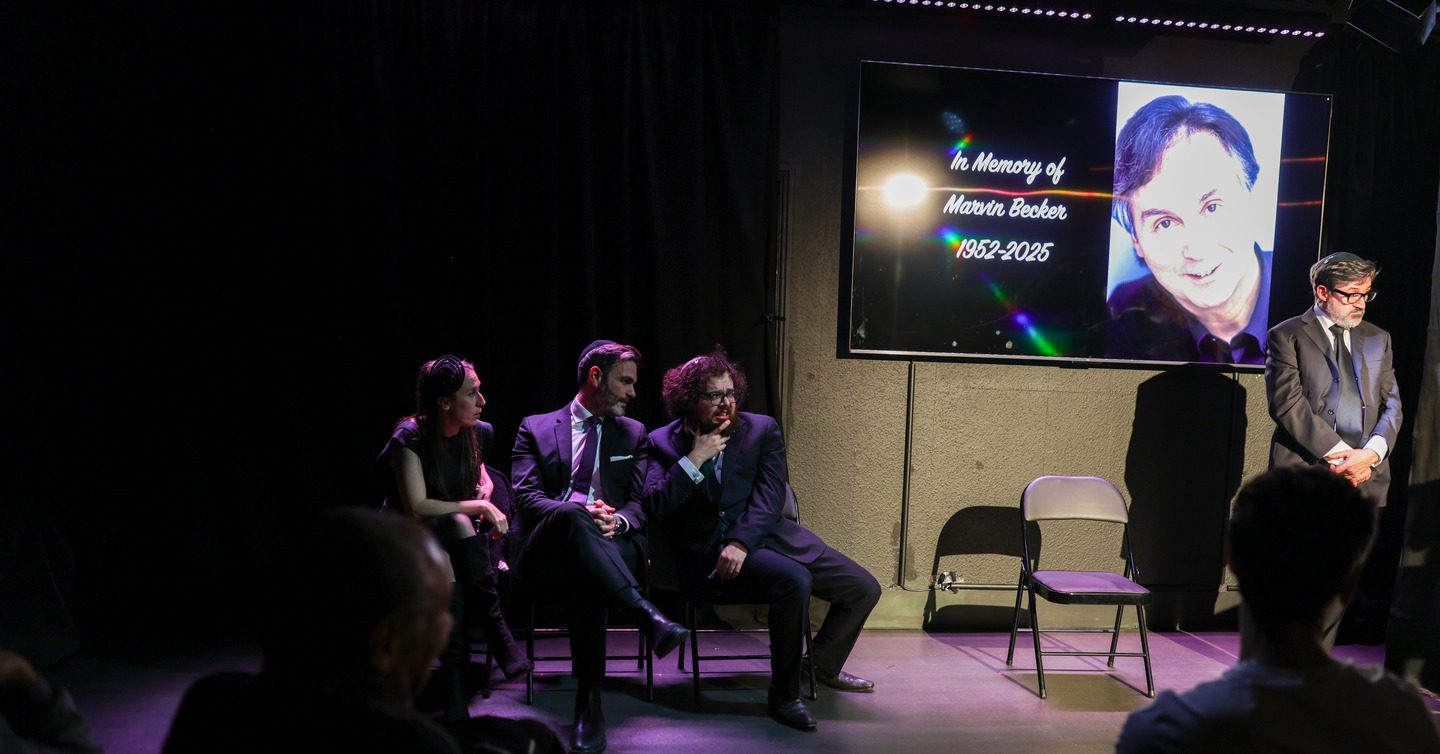
When Estée Stimler handed me a yarmulke at the Circle & Star Theatre in Hampstead, I became a mourner at the funeral of a man I’d never met. Within minutes I was laughing at condolences I couldn’t even hear. Marvin Becker’s sons were receiving guests, and from their exquisitely polite replies you could work out exactly what tactless thing some well-meaning woman had just said to them. By the time we got to the drinks post press night, it felt so much like a wake that I found myself saying, ‘Marvin would have loved this.’
Wits End, Stimler’s very funny comedy about death, gives Marvin’s three grown-up children one afternoon to bury their father. Yitzi gave up 14 years of his life to care for him. Cooper paid the bills from LA. Their sister Denise has thoughts about how both brothers might have spent their time more profitably. In attendance are a rabbi who moonlights as a stand-up and Sue Kelvin’s magnificent Aunt Phyllis, who sees no reason why a family bereavement should get in the way of finding a nice girl for her nephew.
What I hadn’t appreciated until we sat down together was just how much of what made me laugh that night had actually happened to somebody Estée knew. She grew up in Rockland County, New York, spent more than two decades writing speeches for other people, and is now researching the relationship between comedy and pathos in musical theatre at Goldsmiths. As she tells me, finding the funny side of family life (and death) was something she learnt early.
Who could reliably make you laugh growing up in New York, and what did they do that got you every time?
This is going to sound a little irreverent, but my mom is a Holocaust survivor and that’s why I’m so funny. Humour was the currency in our house. If you could make my parents laugh, you could get away with anything. When they’d go to a parent-teacher meeting, they’d give me marks on how well I’d imitated the teachers. ‘Oh, that one does more of this, and that one does…’ If I could make my parents laugh, I was good as gold.
My kids are really funny. My youngest daughter, Hannah, it was so hard to discipline her. If I got angry at her, she’d just put her finger on my lips. I’d crack up. My mother is one of the funniest women I know. Everything can be turned into something funny, so it defuses all the tension. She used to say things like, ‘With an attitude like that, who’s going to hide you?’
What did you learn from your mum about when it was all right to laugh?
You have to read a room, but it was never mean-spirited. My mother always made fun of herself. She has a thick Hungarian accent because she’s from the Hungarian part of Transylvania. She used to say to me, ‘I want you to precipitate in class.’ I’d say, ‘I’ll try, but it’ll be difficult.’ I’d say, ‘Ma, did you see my boots?’ She goes, ‘I don’t know where your bootses are.’ I said, ‘Ma, you say boots.’ She says, ‘I was just trying to say a plurial.’ She thinks it’s hilarious. She’s so funny. I learned to do humour that’s not mean.
You spent more than 20 years writing words for other people to say. What did you take from speechwriting when you started writing for the stage?
For me, each speech was like a production in itself. Beginning, middle, end. I’m also writing in other people’s voices. The best part about going from speechwriting into playwriting and musical theatre writing is the discipline, especially when you sign an NDA. This is somebody else’s speech. They’ll give you notes because they need the work to be good. The work exists outside yourself. It’s not your identity. You want notes because you want to make sure the work is as strong as it could possibly be. That’s why I love working with a dramaturg, and I love working with a director. I love the collaborative aspect of it.
I once had an agent who said, ‘How many writers does it take to change a light bulb? None. Writers won’t change anything.’ I’m very much the opposite in that respect. I know other writers who are also not precious. I think it’s only good for the work. I came to a point with speechwriting where I wanted to tell my own stories. I was constipated with my own stories. That doesn’t sound very nice!
What did it teach you about making dialogue sound like it belongs to the person saying it?
I tell young writers, as a really good exercise, ‘Go into Starbucks, sit down, start writing. You’re writing what other people are saying.’ You’re coming in the middle of a conversation and you’re trying to figure out what’s going on just by eavesdropping. You see the difference in cadence, the difference in rhythm of different people. I had a friend who used to work in writers’ rooms in Hollywood, and she used to say, ‘If you can cover up a character’s name and know who’s saying it, you’ve done well.’ That’s the aim. There are certain writers where every character sounds the same. The same rhythm, the same voice. That drives me up the wall.
Where did Wits End start for you? Was there a particular funeral moment that made you think there was a play in it?
My brother went to a funeral, and it was so whackadoo I said, ‘There’s a play in this.’ He told me everything that could go wrong went wrong. When people say, ‘Oh, this couldn’t have happened,’ I’m like, ‘It did!’ The best things come from life, when you say, ‘Oh my gosh, I couldn’t have come up with that myself.’ On the way to New York, nine and a half hours, I wrote my first draft. We had the first table read in Florida, and then I just started to work on it.
I liked exploring the dynamic between the siblings, the different relationships each of the kids has with their father. You can have kids growing up in the same household and they have a totally different opinion about their parents. With the aunt, I had a cousin come from the States, and she said, ‘Aunt Phyllis is every single one of our female relatives rolled into one. And an uncle.’
My parents moved to Century Village. We call it Cemetery Village. So rude! That’s where most of the jokes about the nursing home come from, because my parents joke about it. They call it God’s waiting room. We gave that to the rabbi to say. The Xbox story, a rabbi actually said that at a funeral. There’s an Xbox commercial where a woman gives birth, the baby shoots out the window, starts ageing in mid-air, and then crashes down to its death. The rabbi says that in the eulogy, and some people recognise it’s an Xbox commercial. I embellished it, turned up the absurd, but that actually happened. A lot of rabbis think they’re comedians, by the way.
You gave me a yarmulke and within minutes I was at Marvin’s funeral. I loved those brothers politely answering all the tactless condolences. Where did the idea come from to make us the mourners?
I grew up at a time in New York when there was Tony n’ Tina’s Wedding, all this immersive stuff. It was always my dream to do something immersive. I have another show called The Last Will and Testament of Sheila Goodwin. I mean, what is it with me and death? That one is very immersive because you don’t know who the kids are until they stand up in the middle of the audience. You’re literally coming to hear the reading of the will.
I noticed a theme! In Smother, a dead mother comes back to meddle in her daughter’s love life.
I think Smother is even funnier than this one. I got the idea because we were sitting at this really long table, all my kids, my in-law kids, my grandkids. One of my daughters was at the opposite end of the table from me, and I hear her saying, ‘I’m thinking about getting a tattoo.’ I lean over the table and scream, ‘Over my dead body!’ My daughter, without missing a beat, says, ‘It’s okay, I’ll wait.’ I go, ‘And if you think I’m not going to come back and haunt you?’ That was the idea for Smother. Death is no match for a meddling mother.
I felt like I knew Aunt Phyllis. She tells Cooper off for answering his phone at the funeral, then hers rings, and of course she has to take the call. Where did she come from, and why is she such fun to write?
Phyllis is my absolute favourite character to write for because she has no filter. She goes on these tangents with the New York Times. How can you enjoy a nice coffee struggling with the wingspan of that paper? She’s insane. I call relatives and they go, ‘Hello, stranger. You never call.’ I’m like, ‘I’m on the phone with you now!’ The phone goes two ways.
When she figures out Cooper didn’t want the Jewish Burial Society because it was too expensive, she says, ‘You went bargain hunting for your father’s funeral?’ Is there another body somewhere, so you got a two-for-one deal? Did you get a Groupon? Even with the cremation, she says, ‘You wanted to roast poor Marvin?’ The rabbi is also ridiculous. ‘You wanted to flambé your own father?’ She wants to know if he’s inviting everyone to a barbecue with only Marvin on the menu, and Cooper says, ‘We weren’t going to eat him.’ Everyone goes, ‘Ah, listen to him!’ Everything escalates. All my older relatives, all the same.
Cooper says he mourned his dad when his dementia meant he could no longer recognise him. I had more sympathy for Cooper than I expected. Paying for his dad’s care counts for something, even if he stayed away. Did your sympathies shift between him and Yitzi as you wrote?
I tried not to take sides because they both have valid points of view. Denise thinks Yitzi is copping out by looking after their father. Yitzi’s like, ‘I did the right thing.’ Cooper’s like, ‘Why should I have visited? He didn’t know who I was.’ Because I wanted it to be a comedy, I wanted the funeral to be one after a sweet release. You’re happy he’s not suffering any more. There was no quality of life there. I wanted a different presentation of death.
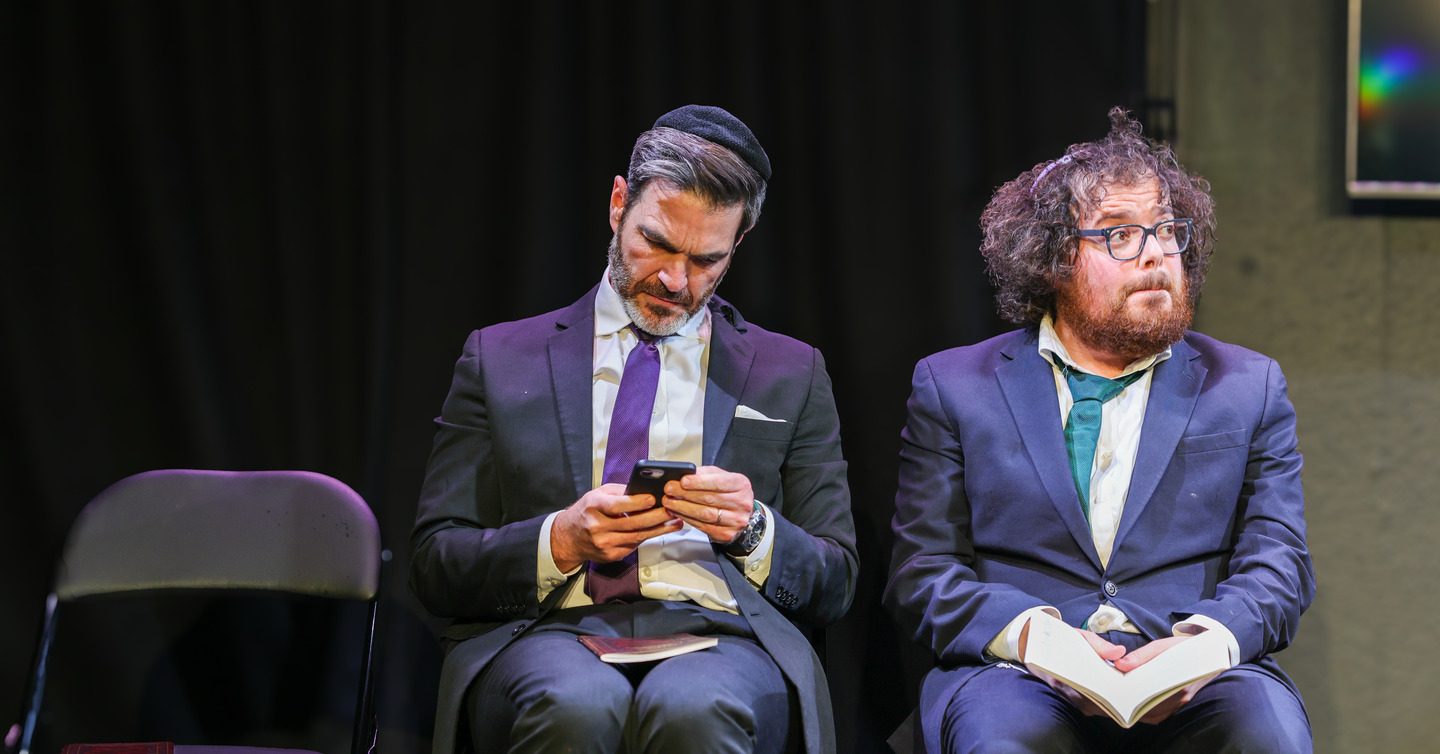
Denise thinks Yitzi has put his own life on hold. What did you want people to see in him there?
We all do things so that we don’t have to engage in certain uncomfortable facets of life. That’s something I want people to think about and explore. Are you using the right thing as an excuse not to progress in your life and fulfil your potential?
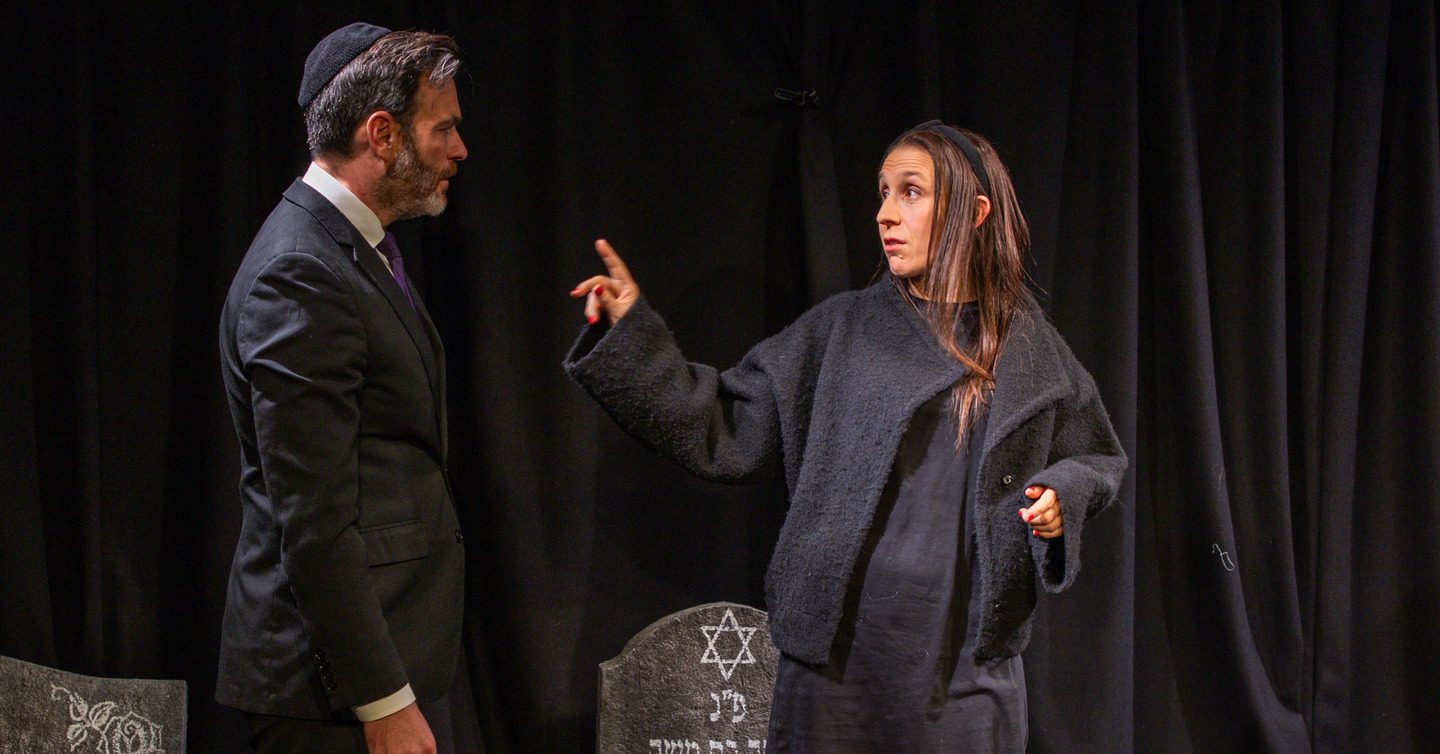
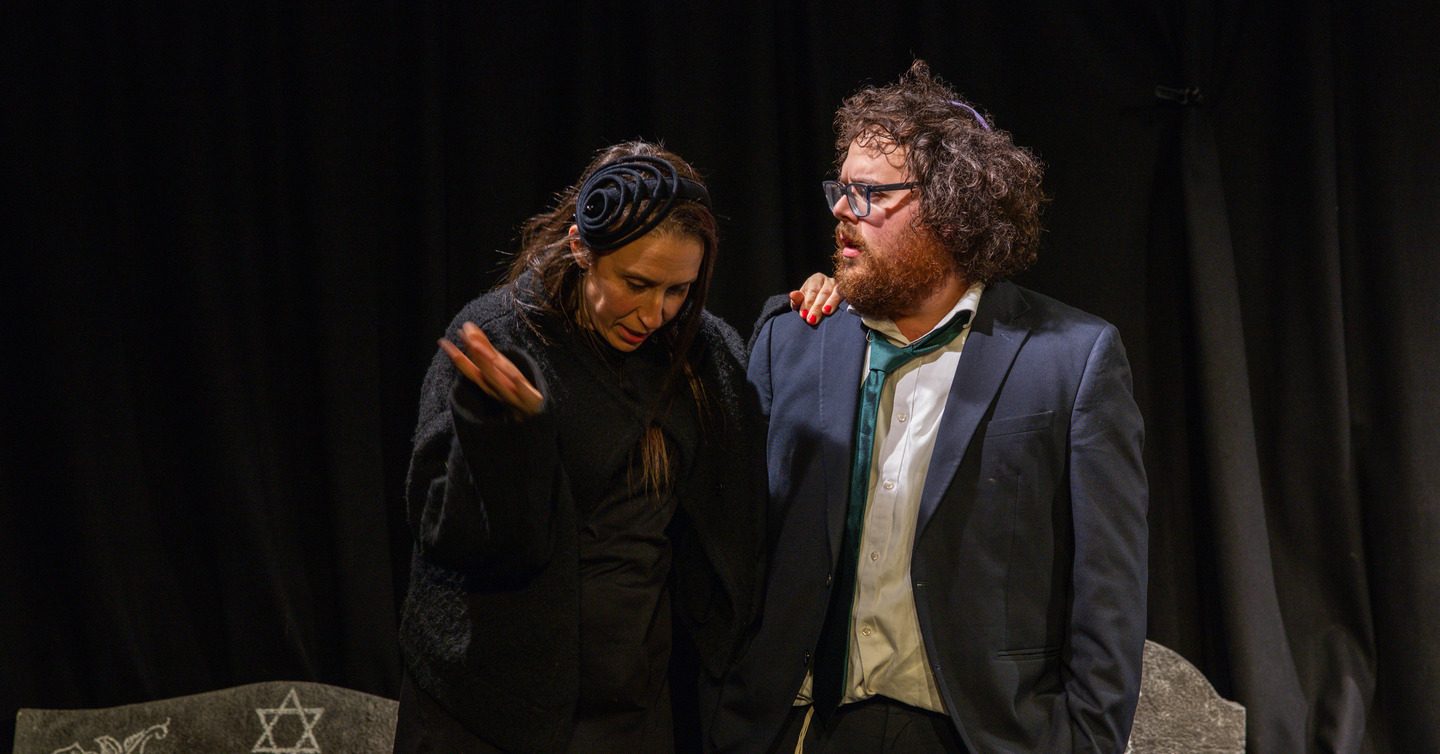
At the funeral the siblings are needling each other, but at the graveside it feels like they’re finally saying things they’ve been sitting on for years. What changes for them there?
Denise is trying to get Yitzi to do something with his life. Cooper is interrupting, and she’s like, ‘No, you shut up. It’s not about you.’ She calls him a narcissist, and he’s like, ‘You didn’t say that when I paid the bills for 14 years.’ They’re all fighting to be seen by the other sibling. They’re all fighting to be seen.
Cooper’s change of heart felt quite quick to me. What do you think tips him, and was there ever a longer version of the ending?
There wasn’t more of the family. For me, he was holding on to this façade that he has this perfect family. Once they find out about it, he doesn’t have to show everybody everything is perfect any more. At the graveside, certain things start to go wrong and once he finds himself helping in that situation, it just clicks. It’s like, ‘Oh my God, I do belong with these insane people.’ Then he says, ‘Don’t get sentimental. You get sentimental, I’m leaving.’ That’s still his character. The way I look at it, when he goes back to LA to sort out his life, they’re going to be on a WhatsApp group.
In your PhD research you talk about the ‘Mercutio Effect’. How does that play out in Wits End?
Part of my research is when to put the relief. The siblings are yelling at each other and finally Cooper goes, ‘Well, maybe Yitzi’s gay.’ Aunt Phyllis, from offstage, goes, ‘Yitzi’s gay!’ Everybody laughs because you needed the release of the tension then. I try to make sure it doesn’t amp up too much. I call it the Mercutio Effect because Mercutio was the cutest, funniest, and as an audience member you respond to him. His humour is like his humanity. He’s dying as he makes jokes, and when he goes you feel that loss keenly because you felt connected to him. I love that relationship between comedy and pathos. One highlights the other.
From its 2024 staged reading at Kings Place to the full production at Circle & Star, how much has the script changed?
I took feedback from everybody and literally rewrote it. I think I’m up to draft 15. Comedy is like baking. If something doesn’t elicit a laugh, you have to look at why. I’m sure I’m going to tweak a few things. I loved working with director Steve [Furst] on this production. You see somebody else take your words and elevate them. He got so much out of it, and he elevated the humour as well. I’m so grateful to him and to the whole Circle & Star theatre team for this opportunity.
When Phyllis starts handing out flyers to find Yitzi a nice girl, even the congregation gets roped into the matchmaking.
I have to tell you that story. My mother sat shiva for her sister. I missed the funeral because I was in London, so by the time I came she was already sitting shiva. I come to her apartment in Century Village, and I see everybody walking out with these pieces of paper. Before I even entered my mother’s house, I said to somebody, ‘What is this?’ I look down. It was a dating résumé for my son. He still doesn’t know about it. My mother thought if she’s sitting there and everybody’s coming to visit her, you might as well find her grandson a match, right? My son is now, thank God, married to the love of my life. My daughter-in-law is the best thing that ever happened to my family. She’s my reward for not killing him.
When people leave Marvin’s funeral, what do you hope they recognise from their own families?
I want them to recognise that there’s no connection like your family connection. That’s what I do with all my shows. I want everybody to realise that as crazy as your family is, it’s the only family you have. They’re the only ones who can really be there for you when push comes to shovel.
Wits End closed at the Circle & Star Theatre in Hampstead on 22 November.
For more of Estée’s work, visit esteestimler.com or follow her on Instagram at @esteestimler
Words by Nick Barr
Production photos: Justin Bovington / Circle & Star