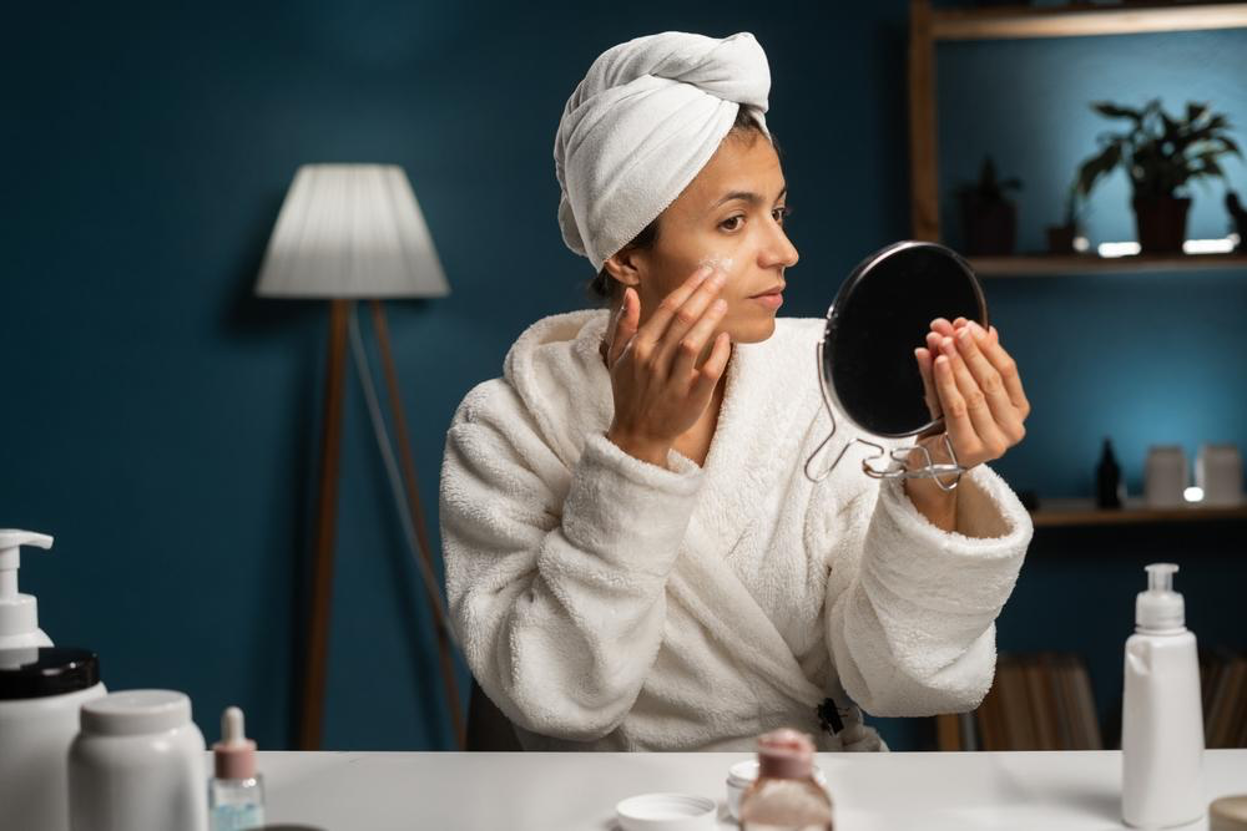
Source: Lysenko Andrii/Shutterstock.com
Evening routines often become rushed after a long day. Skin that looks tired or dull usually reflects daily buildup rather than a single issue. The purpose of an evening routine is not to add more steps; it’s to create a simple reset that feels manageable. Consistent habits tend to work better than routines that feel demanding.
Intentional nighttime routines give skin a chance to slow down after the day. By that point, skin has already dealt with hours of exposure and movement. Small changes in cleansing or hydration, like adding skin moisturizers for dry skin, can influence how your skin feels throughout the night and in the morning. Keeping the routine easy makes it more likely to happen, even on nights when your energy runs low.
1. Start With a Gentle Cleanse
Evening cleansing helps remove buildup from the day without putting extra stress on the skin. Dirt, oil, and residue can build up on the surface of your skin. Clearing these layers allows skin to feel fresher before rest. The goal at night is comfort, not aggressive cleansing. Guidance from the American Academy of Dermatology shows that gentle cleansing habits can help limit dryness caused by frequent washing.
Gentle techniques matter as much as product choice. Using lukewarm water and light pressure helps avoid unnecessary dryness. Scrubbing often leaves skin tight once it dries. Taking a calmer approach makes the start of an evening routine feel more comfortable.
Simple cleansing habits that support evening comfort include:
- Using lukewarm water instead of hot water
- Applying cleanser with light pressure rather than scrubbing
- Choosing formulas that rinse clean without leaving skin tight
- Limiting cleansing to once in the evening to avoid over-drying
2. Use Hydration to Support Overnight Comfort
After cleansing, skin often responds better when you apply a light hydration product before rest. By evening, moisture can fade even if your skin isn’t visibly dry. Applying hydration at that point can help soothe your skin. Keeping this step simple makes it easier to repeat night after night. According to the National Center for Biotechnology Information, ingredients that attract moisture are often used to support skin comfort, especially when hydration levels fluctuate.
Hydrating ingredients, like hyaluronic acid, are often used in evening routines because they attract moisture without adding weight to the skin. In most cases, a small amount is enough. Applying it as the final step helps seal in hydration. When done consistently, this habit can make nighttime care feel reassuring and soothing.
3. Choose Products That Match Evening Skin Needs
Skin can look more tired by evening due to daily exposure and long hours without rest. Choosing products that suit this moment can help support your skin. At night, the focus should shift away from quick results and toward longer absorption periods.
Some people add an anti-aging serum to their evening routine when skin feels dull after a long day. At night, lighter formulas often feel easier to wear since they absorb without lingering on the surface. Using only what feels necessary helps keep the routine manageable. In many cases, a few thoughtful steps feel better than layering multiple products.
4. Keep the Routine Simple and Repeatable
Evening routines work best when they’re easy to follow. Long or complicated steps can feel discouraging after a full day. A shorter routine is more likely to be repeated, even on evenings when your energy is low. Consistency often matters more than variety at night. According to Harvard Health Publishing, keeping skincare routines simple can make daily habits easier to maintain over time.
Keeping the number of steps limited can make evening care feel easier to manage, too. On most nights, repeating the same few actions increases certainty. Plus, over time, routines that feel familiar are often easier to continue. Simplicity helps turn evening care into a steady habit rather than an obligation.
5. Make Evenings a Consistent Habit
Evening care becomes more effective when it fits naturally into the end of the day. Many people find it easier to remember skincare when it follows daily habits, such as winding down or getting ready for bed. Routines that feel familiar are often less likely to be skipped, too. This kind of ease supports consistency in the long run.
Skin responds best to routines that are steady over time. Changing products or steps too frequently can make it harder to notice patterns. Letting a routine settle allows gradual changes to become clearer. Over time, evening care can start to feel more consistent and balanced.

Source: Prostock-studio/Shutterstock.com
6. Find What Works for Your Skin
Find out what products work best for your skin and stick with those. If your skin is dry, add heavier moisturizers in the evening. On the other hand, if you have acne-prone skin, turn to light moisturizers that don’t leave a heavy residue behind.
You should also keep in mind that evening routines don’t need to look identical from day to day. Noticing those changes helps routines stay flexible. What works at one point may need small tweaks later. Skin can feel different depending on the weather or rest, too. A summer routine may differ considerably from a winter routine.
A Simple Evening Routine That Lasts
Building an evening routine doesn’t require many steps or frequent changes. In most cases, a gentle cleanse followed by basic hydration is enough. When care feels manageable, it becomes easier to repeat on busy days.
With time, simple habits can help skin feel more balanced by morning. Small adjustments made gradually often matter more than large overhauls. Keeping evenings calm allows skincare to fit naturally into your wind-down routine instead of feeling rushed.