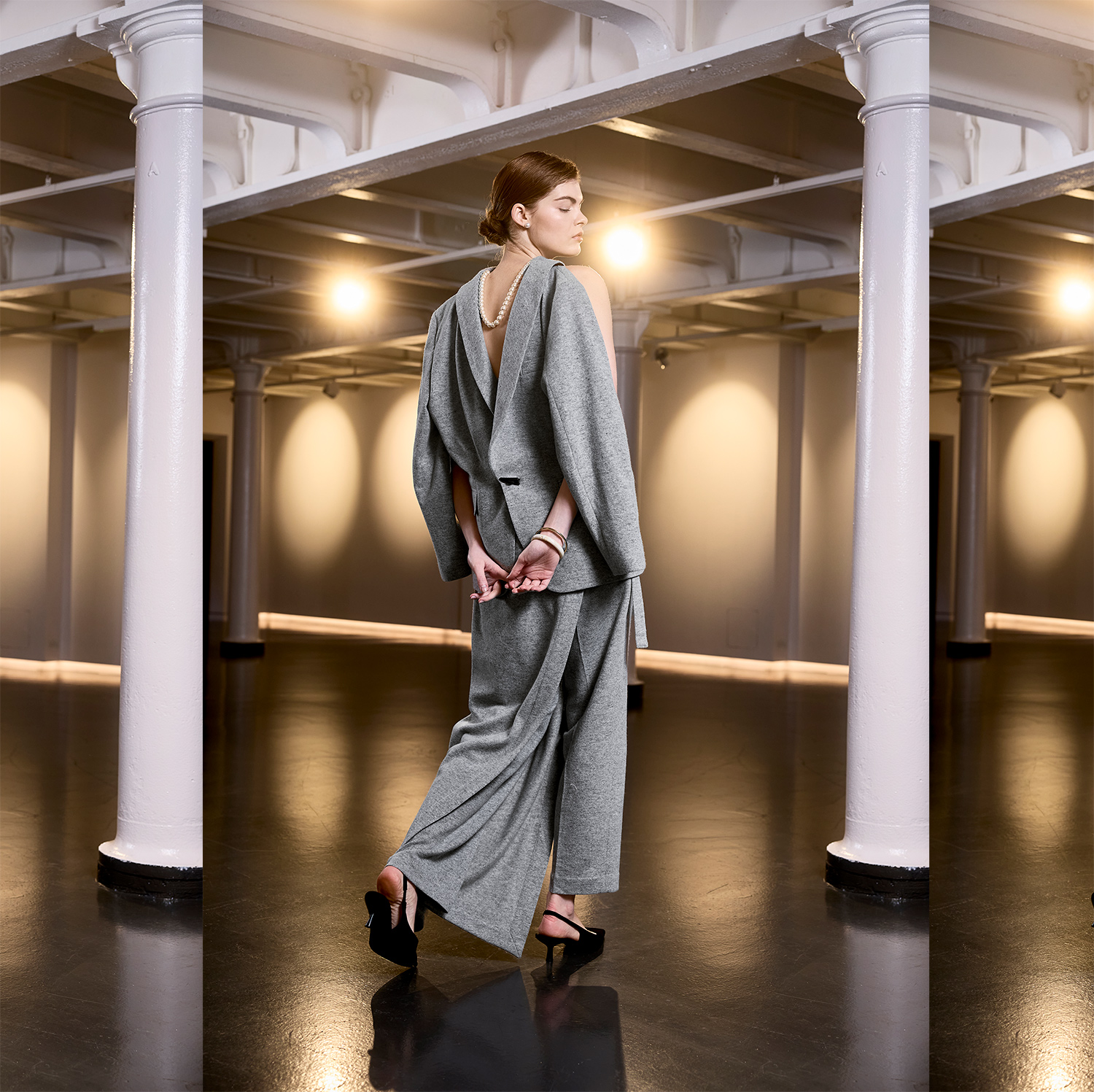
The Stables in Covent Garden is quieter than you’d expect for a London Fashion Week shoot day. While most campaign productions hum with controlled chaos, there’s a measured calm to the AYA DESIGN set, appropriate, perhaps, for a collection titled “Order.” Designer and CEO Neo Yamaguchi moves through the space with quiet precision, adjusting a drape here, conferring with his team there, entirely hands-on despite the language barrier and the pressure of capturing an entire season’s vision in a single day.
This is AYA DESIGN’s second season at London Fashion Week, but there’s nothing tentative about their presence. Founded after Yamaguchi’s experience within Japanese haute couture, the brand operates with the conviction of someone who’s learned not just how to design, but how to build, quite literally. AYA DESIGN is the flagship brand of AYA inc., a design firm with its own factory in regional Japan, where pattern makers and seamstresses are integrated directly into the creative process. It’s a model that addresses industry decline and labor disparities head-on, valuing craftsmanship not as a romantic ideal but as economic and social necessity.
“Design is the art of science,” Yamaguchi tells us. “A conceptual and human activity that constantly seeks solutions to the social challenges of a new humanity.” It’s an ambitious framing for a young fashion brand, but one that makes sense when you understand that AYA’s scope extends beyond seasonal collections. The company participates in design projects across industries, fashion is one expression of a broader philosophy.
Inside the FW26 Collection
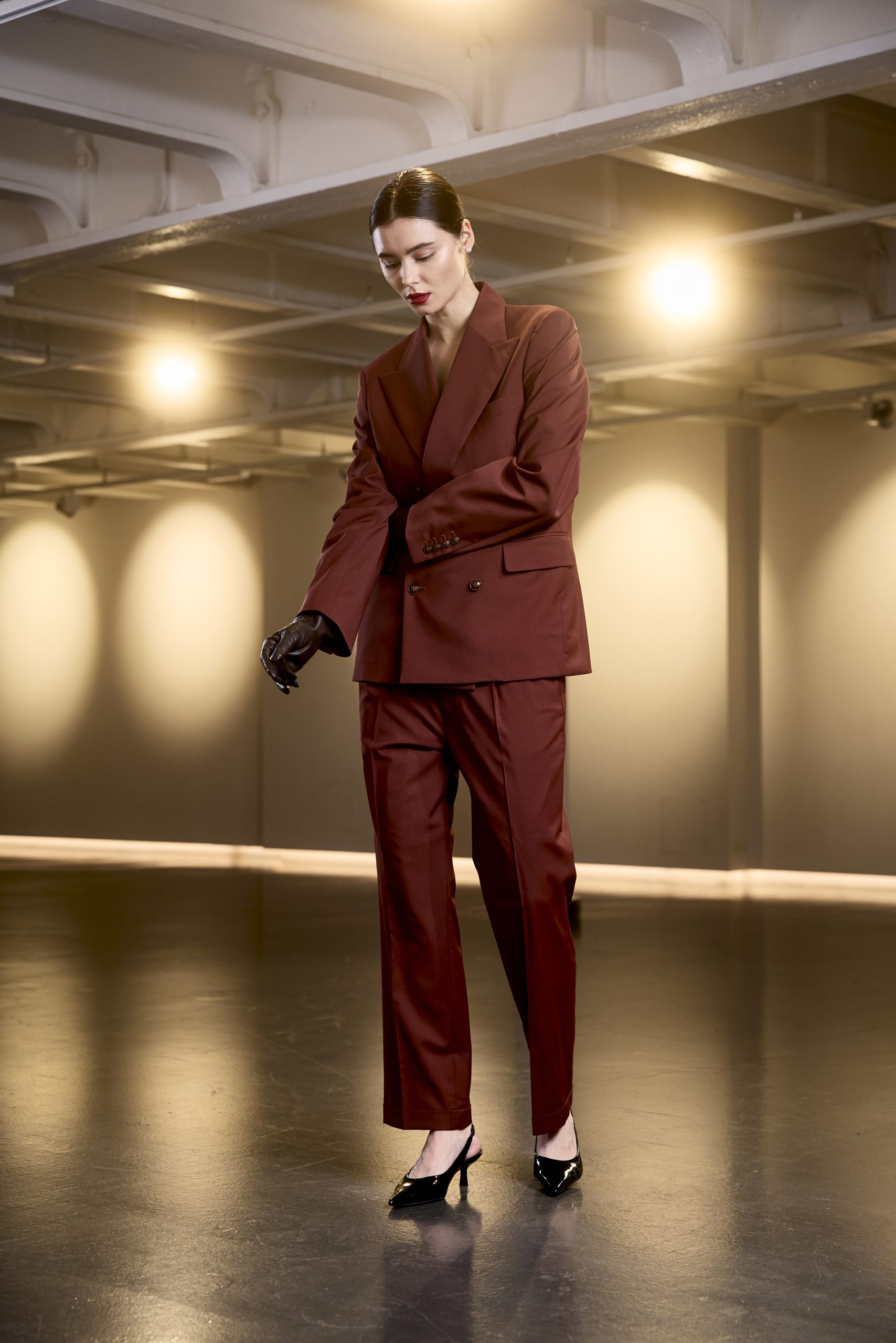
The Fall/Winter 2026 collection, “Order,” continues a narrative thread that began with AYA DESIGN’s debut. Where their first collection, L’île déserte, explored the discovery of the primordial self, this season traces humanity’s journey from the acquisition of language to the birth of philosophy, the creation of order from chaos.
The title comes from classical architecture, where columns support structures without causing harm. For Yamaguchi, it’s about creating harmony. For Yamaguchi, it’s a metaphor for social harmony. The concept is ambitious, but the clothes themselves are grounded and wearable.
“We reinterpret the aesthetics and spirit found in garments such as the himation and chiton, as well as in architecture,” Yamaguchi says, “blending them with the atmosphere of early 1900s functional fashion represented by Delphos, and translating them into a contemporary expression.” The result is what he calls “Primitive Modern”—a harmonisation of urban utility with organic beauty, stoic 1930s dress codes meeting sensual silhouettes that emphasize the décolletage.
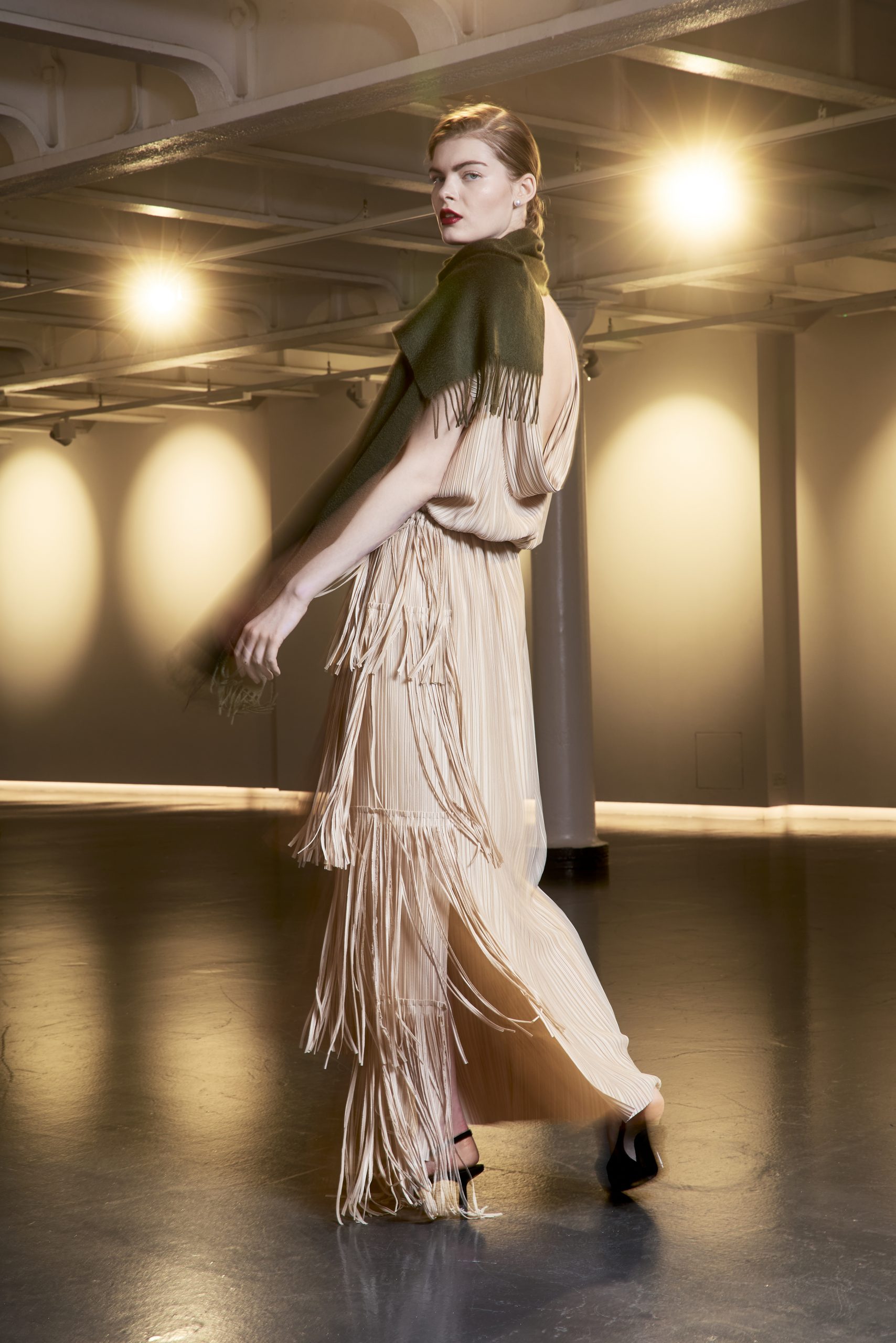
The textile story reflects this duality: herringbone, denim, jersey, gabardine, faux fur, and pleats, functional materials historically centered around wool, now updated with contemporary technology. The color palette skews earthy, painting what the brand describes as “an organic fantasy inspired by the natural world.” There’s a remnant of Art Deco in the construction, the functional mode of the 1930s elevated with Ancient Greek spirituality.
The Technique and the Vision
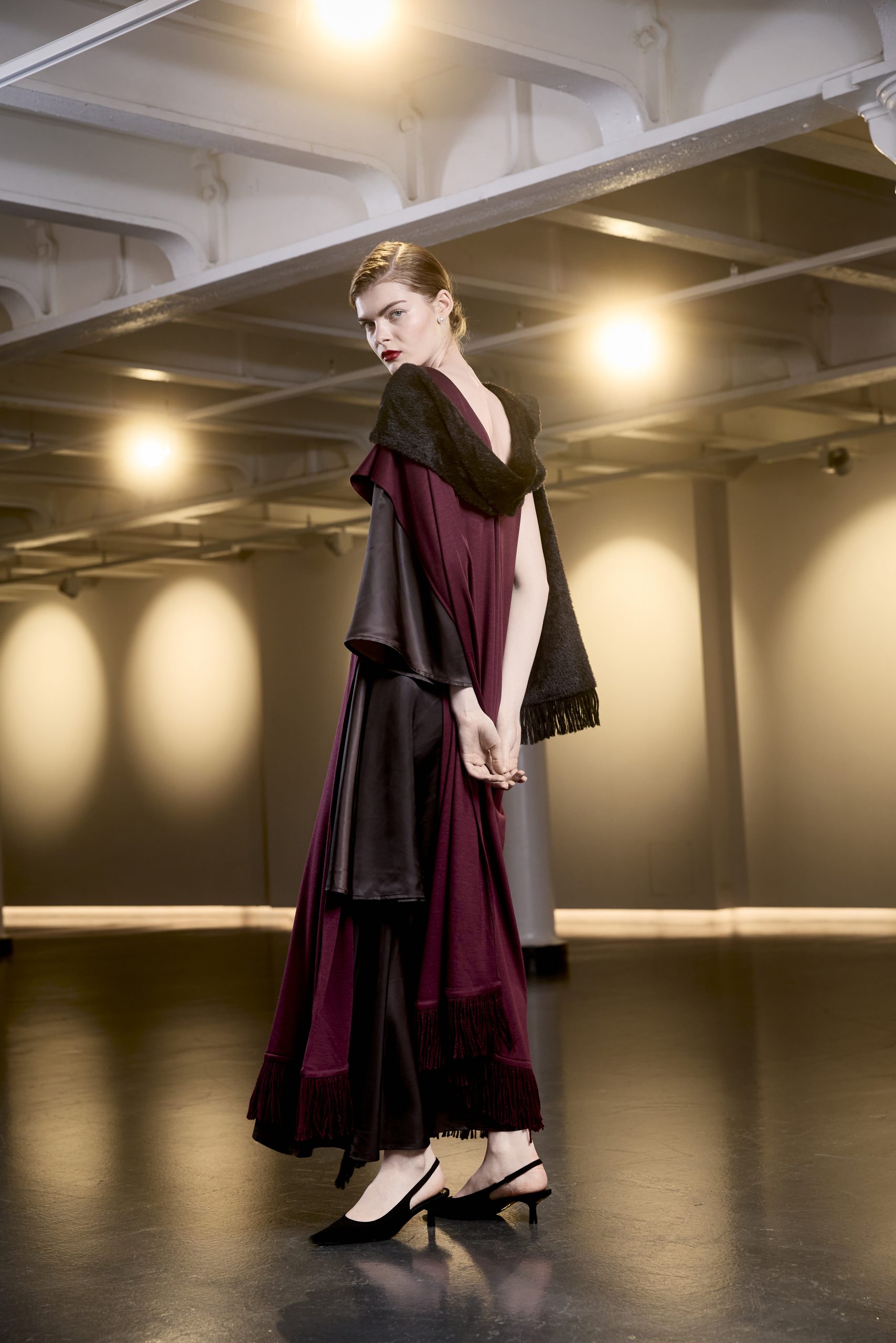
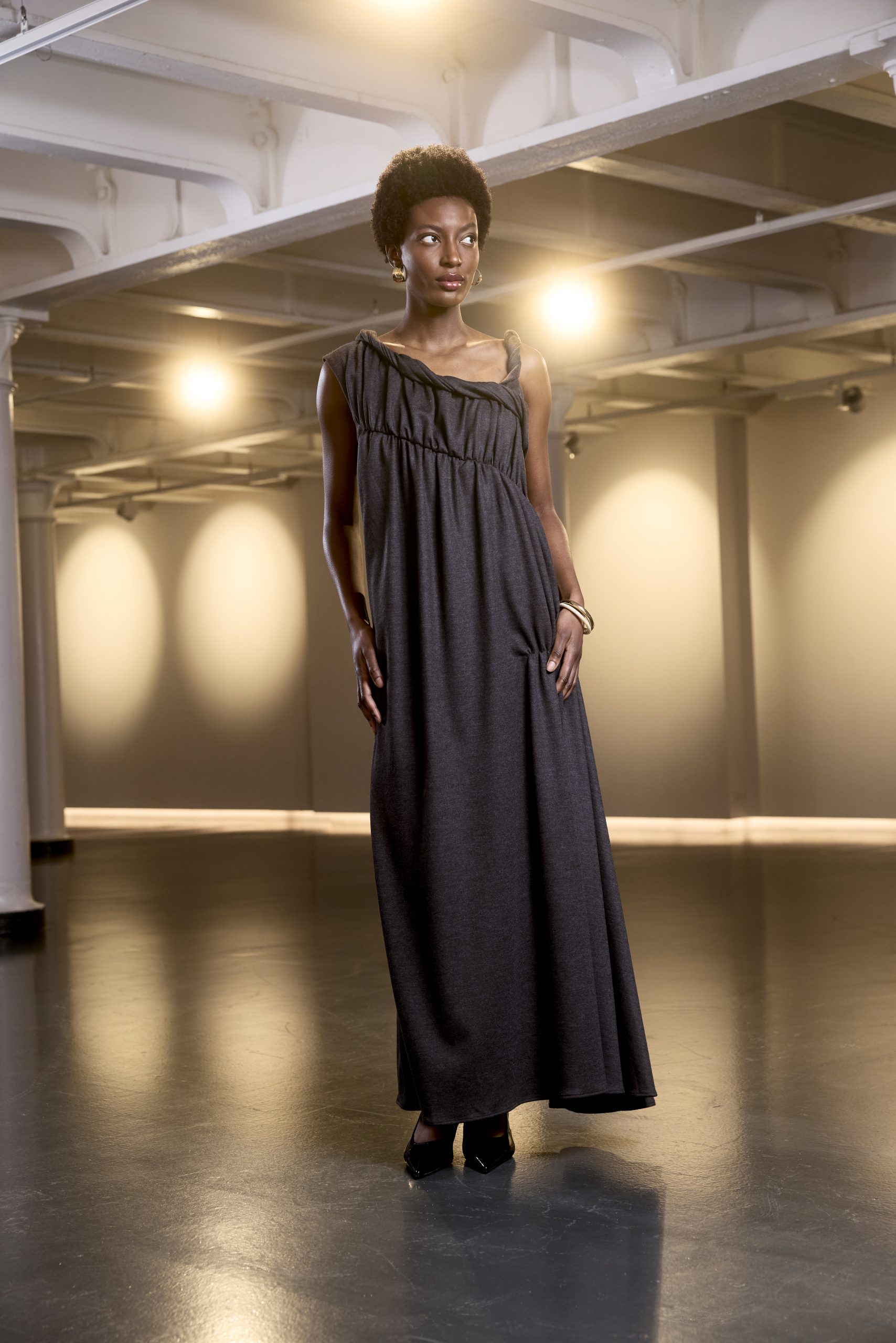
The standout technical achievement this season? Bias-cut draped dresses. “The technique and silhouette that best represent this season are the bias-cut draped dresses,” Yamaguchi confirms. “We work with modern, refined jersey fabrics with heathered textures and processed pleated materials, creating pieces that feel approachable even today.”
This represents a turning point for the brand. Yamaguchi is convinced that draping will become increasingly important in future work, a fitting evolution for a designer who embraces what he calls the spirit of “stoic creation: the constant sharpening of one’s sensibilities and the pursuit of techniques that make the impossible possible.”
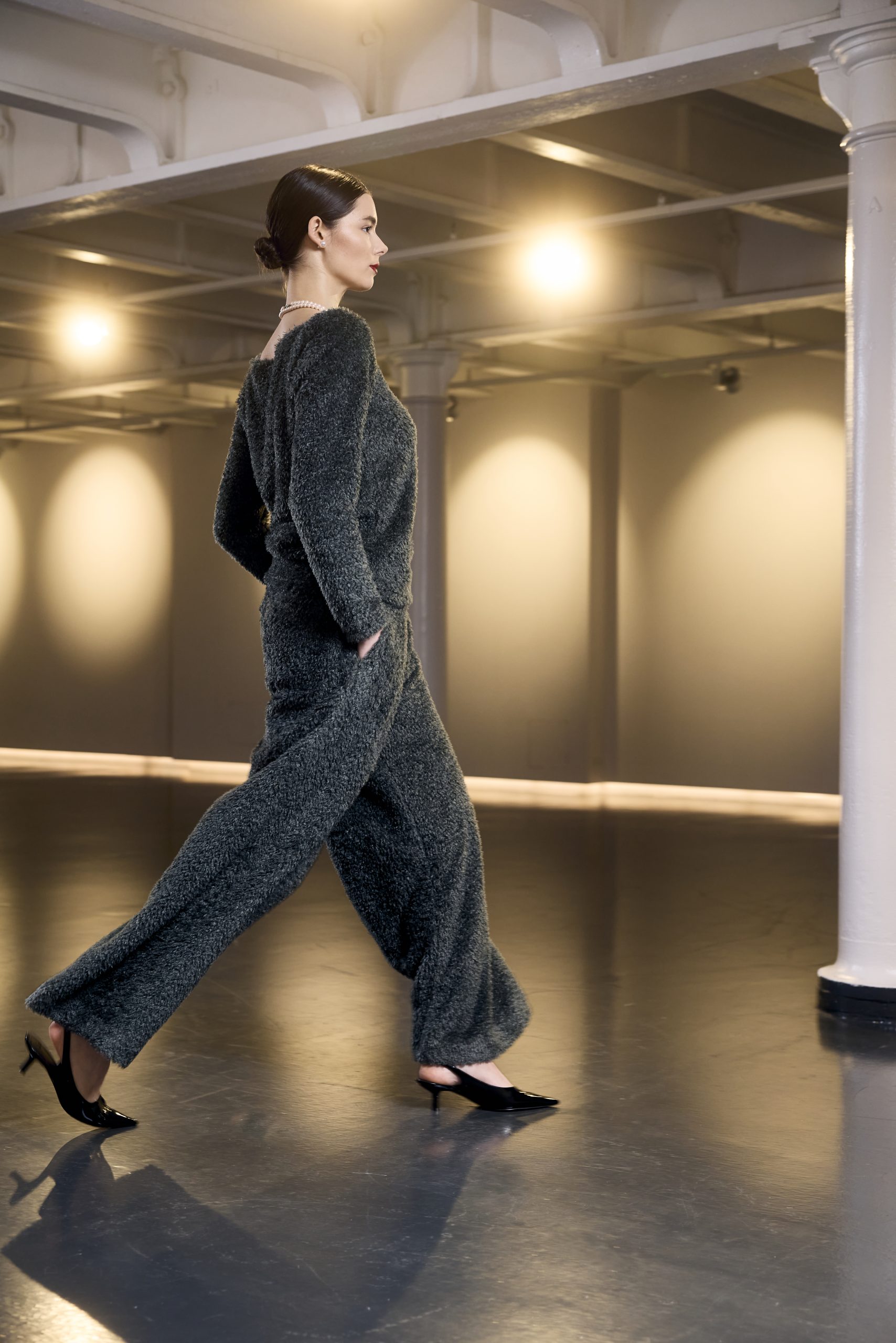
When asked which look from FW26 best embodies AYA DESIGN’s future direction, Yamaguchi points to the grey knit suit. “It distills the essence of primitive modernity,” he says simply.
As London Fashion Week continues to champion emerging international talent, AYA DESIGN represents something increasingly rare: a designer with both conceptual rigor and manufacturing infrastructure, someone thinking about fashion’s social and economic sustainability as seriously as its aesthetic evolution. In an industry that often feels saturated, Yamaguchi’s definition of innovation stands out: “Designers establishing themselves as business leaders. Designers must study not only art but also society and economic perspectives—this is essential for true sustainability.”
It’s early days still, this is only their second season, but there’s a foundation here that suggests longevity. When asked what he hopes will become timeless classics fifty years from now, Yamaguchi returns to craft: “Suits and dresses crafted through traditional techniques. By ‘traditional,’ I mean the skills passed down through unbroken chains of master–apprentice relationships, regardless of country or style—techniques with long, accumulated histories.“
Our Conversation with Neo Yamaguchi
1883 Magazine is named after the year Coco Chanel was born, as she did things differently—her designs were instantly recognisable and stood the test of time. What is it about AYA DESIGN that sets you apart? In 50 years, what pieces do you hope will become timeless classics?
Our core, as our name suggests, is “design.” For us, design is the art of science, a conceptual and human activity that constantly seeks solutions to the social challenges of a new humanity. Its scope extends far beyond fashion; we participate in design projects for companies of all sizes across various industries. To do so, we must continuously refine our individual skills and collective wisdom.
The items I hope will remain timeless fifty years from now are suits and dresses crafted through traditional techniques. By “traditional,” I mean the skills passed down through unbroken chains of master–apprentice relationships, regardless of country or style—techniques with long, accumulated histories. Pattern draping, three-dimensional cutting, the precision of tailoring, and the craftsmanship of ironing and sewing are all examples of such refined skills and the attitudes behind them.
You founded AYA DESIGN after working in Japanese haute couture. How did that experience shape your approach to design, and what lessons have stayed with you most?
Because the worlds we envision are different, most of my design approaches differ as well. I am more grounded in reality, with a stronger inclination toward design rather than pure art—perhaps because I am both the owner and the manager of a company with employees and a sewing factory.
However, the most important lesson I learned is the spirit of stoic creation: the constant sharpening of one’s sensibilities and the pursuit of techniques that make the impossible possible. The downside is that, as a result, I have probably become one of the busiest designers around…
How would you describe the core identity of AYA DESIGN today? If someone is discovering the brand for the first time, what do you hope they immediately understand about your aesthetic and philosophy?
I want people who encounter the brand for the first time to sense the distinction of Western fashion shaped through Eastern philosophy and aesthetics, and our commitment to addressing social issues through design.
Ideally, I want them to feel this not through words but through creation itself. Explaining it verbally is easy, but not very interesting. What matters is what our Eastern philosophy and aesthetics can contribute to people in the UK, and what the Western traditions rooted in the UK can bring to Japan.
AYA DESIGN is still a young brand, yet already showing at London Fashion Week. What does it mean for you to present your second season at LFW, and what does this milestone represent personally?
It is an honor and deeply moving to present in the UK, the birthplace of modern design through the Arts and Crafts movement and the foundation of contemporary fashion. And on a personal level, the small, everyday moments of interacting with British people and culture offer invaluable opportunities for growth as both a designer and a business owner.
Can you talk us through the inspiration behind the FW26 collection? Where did the initial idea begin, and how did it evolve into what we’re seeing now?
Since our first collection, we have maintained a consistent overarching theme: tracing the evolution of humanity and clothing. The previous season explored the discovery of the primordial self. The next inspiration is ancient Greece. We reinterpret the aesthetics and spirit found in garments such as the himation and chiton, as well as in architecture, blending them with the atmosphere of early 1900s functional fashion represented by Delphos, and translating them into a contemporary expression.
Was there one element, a fabric, silhouette, or construction technique—that best captures the spirit of this collection for you?
The technique and silhouette that best represent this season are the bias-cut draped dresses. We work with modern, refined jersey fabrics with heathered textures and processed pleated materials, creating pieces that feel approachable even today.
Were there any risks you took with this collection that feel new for you?
We intentionally stripped away any instantly recognisable Japonisme and approached the collection more through the lens of Western clothing. Still, the multicultural narratives and aesthetics inherent to being Japanese appear naturally in the styling and color palette.
Is there a particular look from FW26 that best represents where AYA DESIGN is heading?
The look that most embodies the future of AYA DESIGN is the grey knit suit. It distills the essence of primitive modernity.
When someone wears a piece from this collection, what do you hope they feel?
I want people to enjoy fashion freely, without being bound by formality—much like the Japanese approach to styling. And above all, I hope they go out, meet many people, and experience many places while wearing the collection.
Are there any particular silhouettes, details, or techniques in the FW26 collection that you feel represent a turning point for the brand?
The bias-cut draped dress marks a turning point for the brand. I am convinced that draping will become increasingly important in our future work.
Are there designers, artists, or cultural references outside of fashion that consistently influence your thinking?
Rei Kawakubo, Kei Ninomiya, and Virgil Abloh. From Rei Kawakubo, I learned that designers must also be capable managers, we must lead companies and society.
Being a Japanese designer presenting in London, how do you see the relationship between Japanese design culture and the London fashion landscape?
Japan naturally has no historical origin of Western fashion. Because of that, Japanese people embrace diversity and freely mix various cultures in their clothing. In contrast, the UK has a long history of fashion—a major difference.
Yet both are island nations with royal and imperial traditions, and I believe we share many values.
What does “innovation” mean to you personally in fashion today, in an industry that often feels saturated?
For me, innovation means designers establishing themselves as business leaders. I am the president of a design company with its own sewing factory. Designers must study not only art but also society and economic perspectives, this is essential for true sustainability.
What excites you most about the direction AYA DESIGN is heading in over the next few seasons?
Right now is incredibly exciting for me. I’m also looking forward to bridging what I’ve cultivated in fashion into other fields in the future.
What are your earliest memories of you realising you had a love for fashion?
Photo books of Japanese designers active in the 1980s—Comme des Garçons and Issey Miyake.
The road to becoming an internationally recognised fashion designer is full of ups and downs. What were the moments when you doubted your choice of career and how did you overcome this?
There have been many challenges, but the greatest was establishing myself as a business owner. As the leader of an organisation, I faced countless difficulties and setbacks in developing my capacity as a human being.
If you could describe AYA DESIGN in three words today, what would they be?
Design, Japanese Aesthetics, and A New Humanity.
AYA DESIGN’s Fall/Winter 2026 collection “Order” premiered digitally at London Fashion Week on February 23, 2026.
For more info visit www.ayadesign.uk or follow via @ayadesign_official
AYA DESIGN – ayadesign.uk
FW26 Campaign – ORDER
Designer Mineo Yamaguchi
Photographer Yoshitaka Kono
Videographer: Brandon Hepworth
Hair and Make-up: Kristina Pavlov
Models: ALISA G, DARIA M, NAOMY all at Body London
Photo Assistant Frankie
Production Assistant Tae Furukawa
Production Manager Ko Sugimori
Video Yoshitaka Kono