Set in a world where reputation is everything and sincerity is practically a crime, the Marquise de Merteuil and Vicomte de Valmont engineer a series of seductions for sport, revenge and something perilously close to boredom. Their chosen victims include the virtuous Madame de Tourvel, whose moral certainty becomes an irresistible challenge, and the young Cécile de Volanges, ill-equipped for the games she is drawn into. Letters become weapons, intimacy becomes strategy, and every interaction carries the threat of exposure.
Yet beneath the calculation lies something messier. Valmont begins to feel, Merteuil refuses to, and the imbalance proves fatal. As alliances fracture and consequences close in, the illusion of control collapses. What remains is a brutal reckoning in which power, once so carefully wielded, turns inward, leaving its architects undone by the very emotions they sought to master.
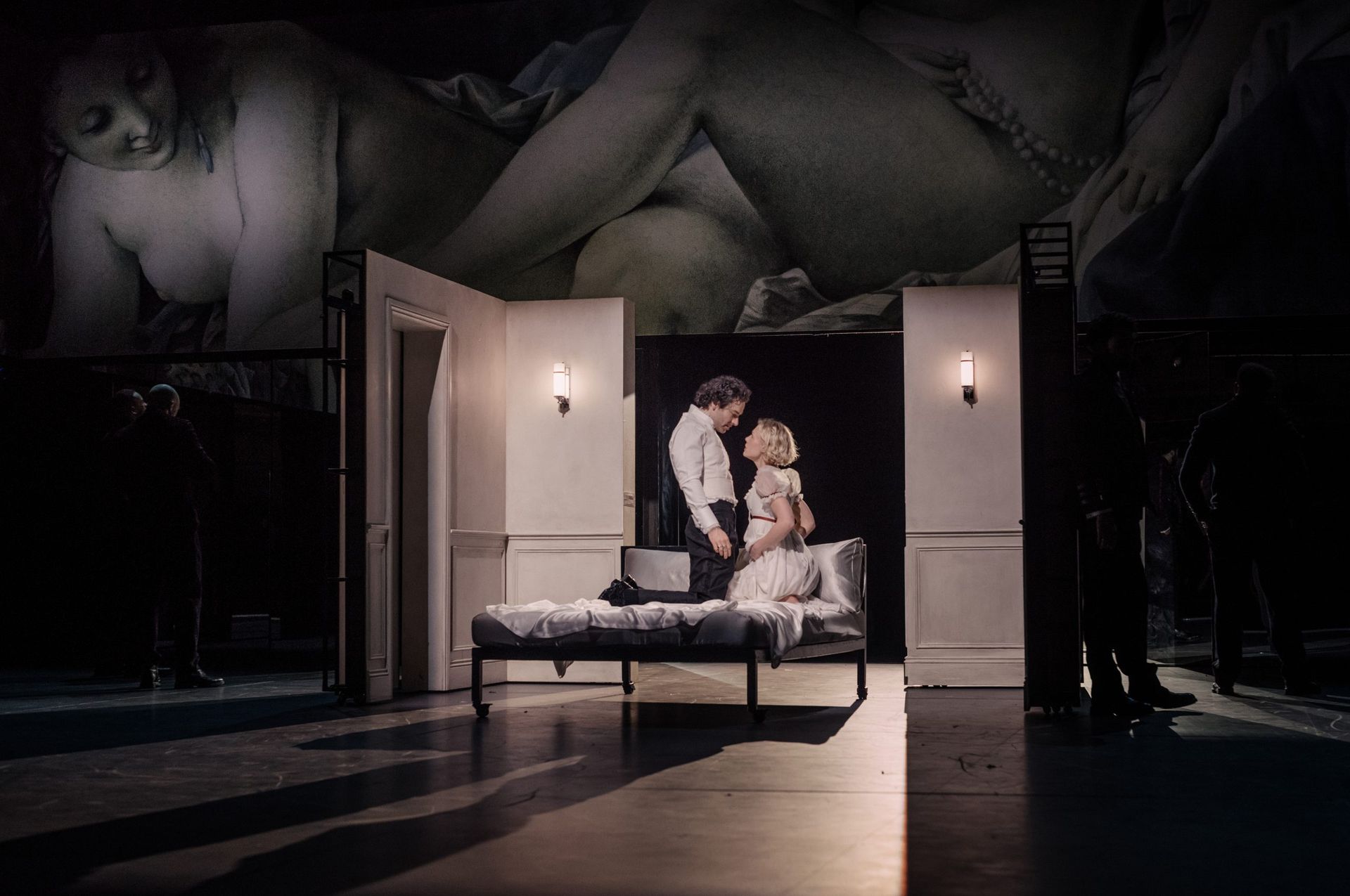
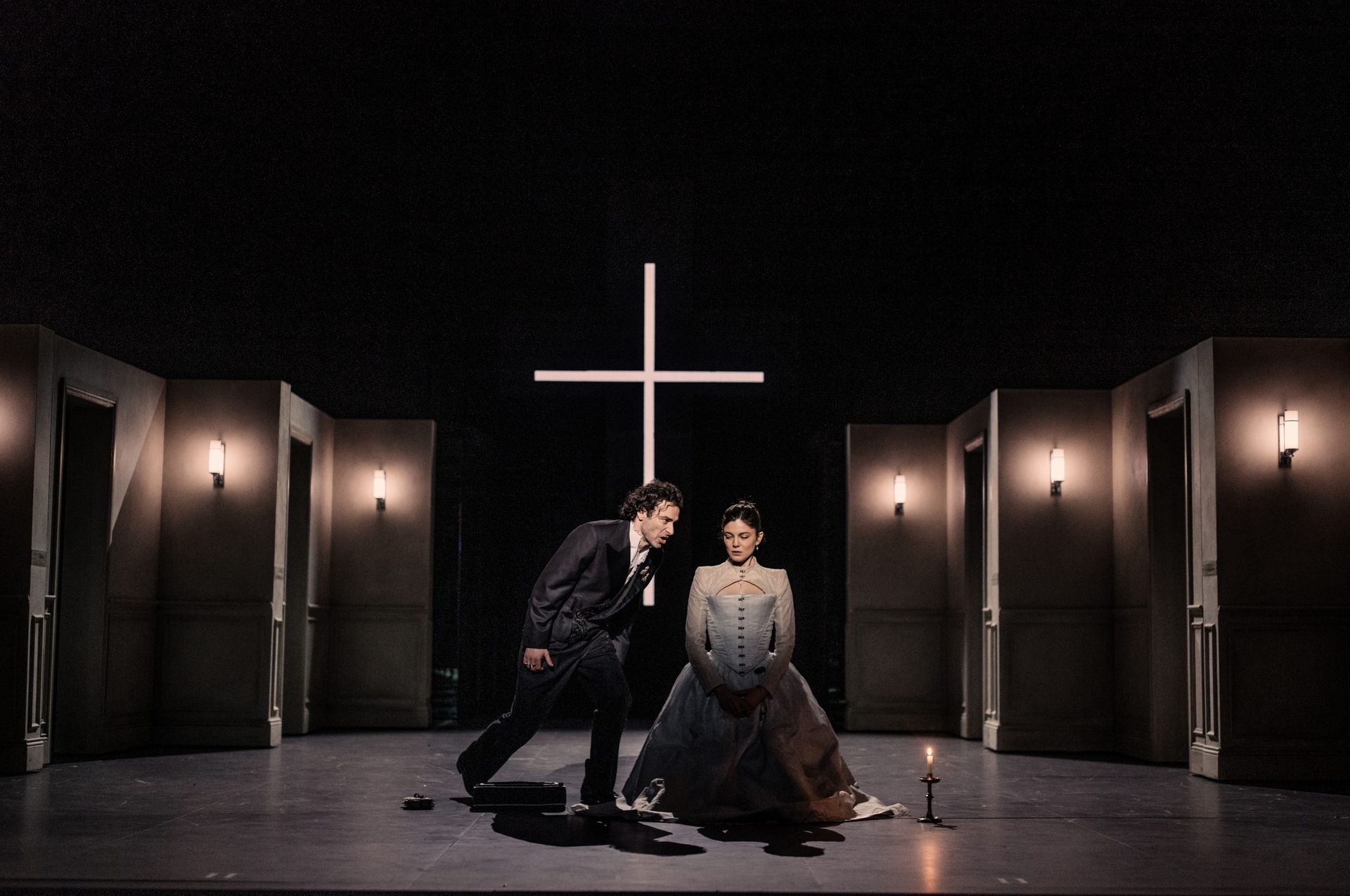
Christopher Hampton’s 1985 RSC premiere transformed Laclos’ epistolary novel into a theatrical mainstay, prized for its linguistic precision and moral ambiguity. The play has since been widely revived across the UK and internationally, with each production recalibrating the balance between wit and cruelty. Hampton’s own screenplay for the 1988 film adaptation further cemented its reputation.
This marks the first staging of the play at the National Theatre, under artistic director Indhu Rubasingham’s tenure, signalling a renewed interest in canonical works refracted through contemporary sensibilities. Marianne Elliott’s revival leans into physicality and psychology, aligning aristocratic gamesmanship with modern power dynamics.
This is less a period drama than a controlled detonation dressed in silk. Marianne Elliott directs with a cool, forensic eye, stripping away decorative indulgence to reveal the machinery underneath: language as leverage, desire as currency, cruelty as sport.
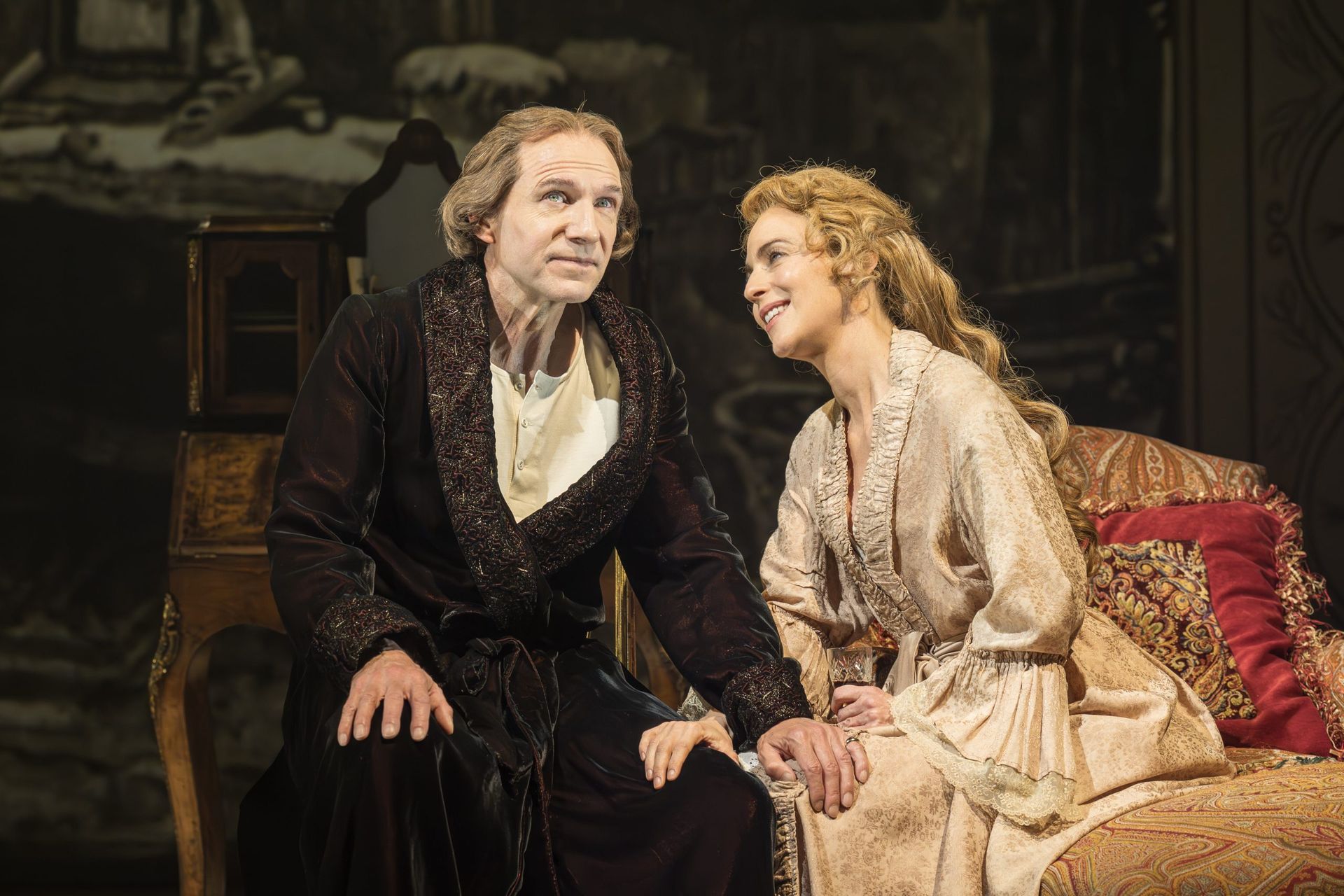
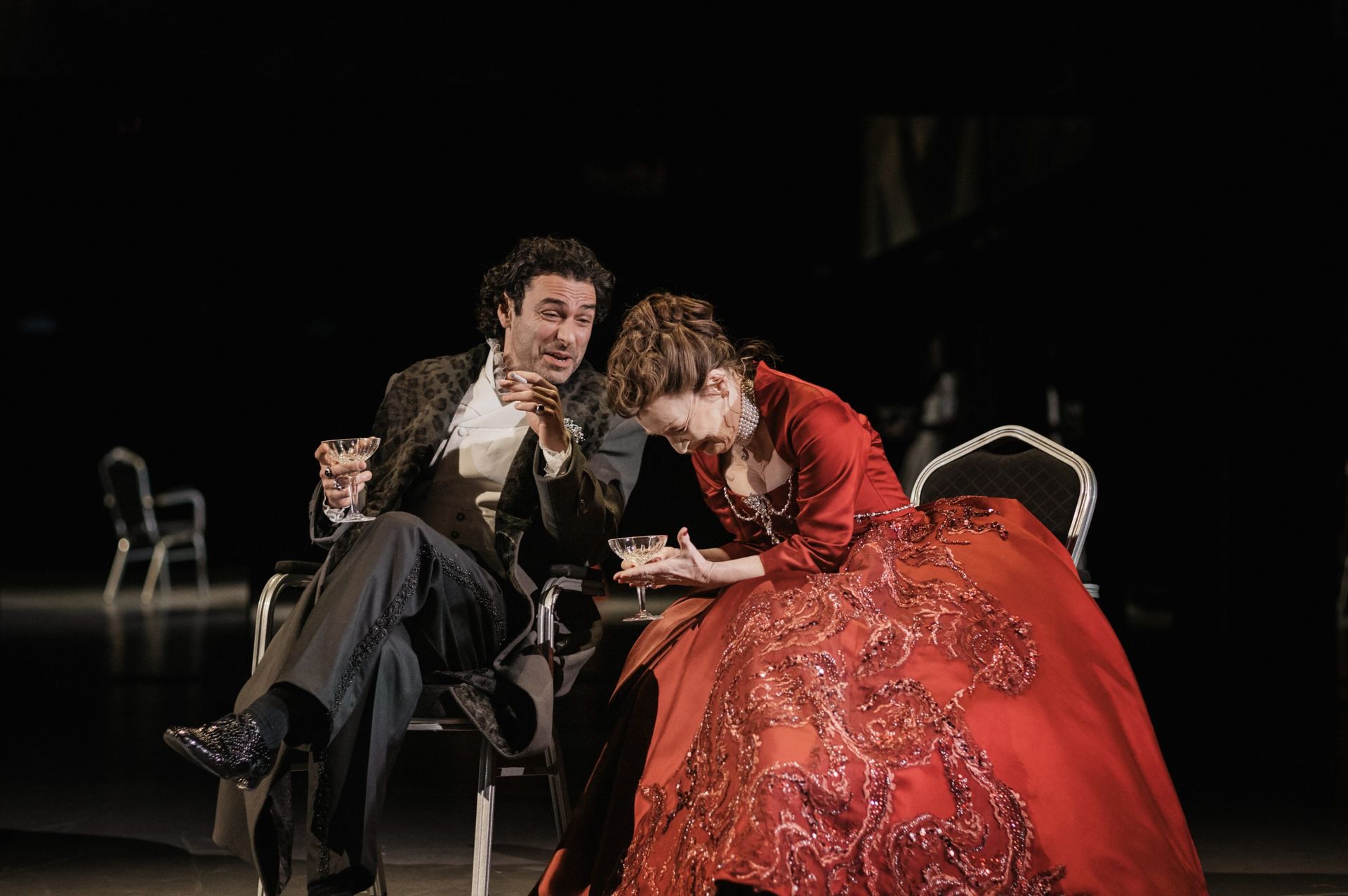
At the centre, Lesley Manville’s Marquise is a masterclass in composure weaponised, every line delivered like a perfectly aimed dart. Opposite her, Aidan Turner offers a Valmont whose charm is both asset and Achilles heel, a man seduced by his own myth. Monica Barbaro’s Tourvel brings an emotional permeability that gives the production its bruised heart, while Hannah van der Westhuysen’s Cécile charts a sharp trajectory from ingénue to collateral damage.
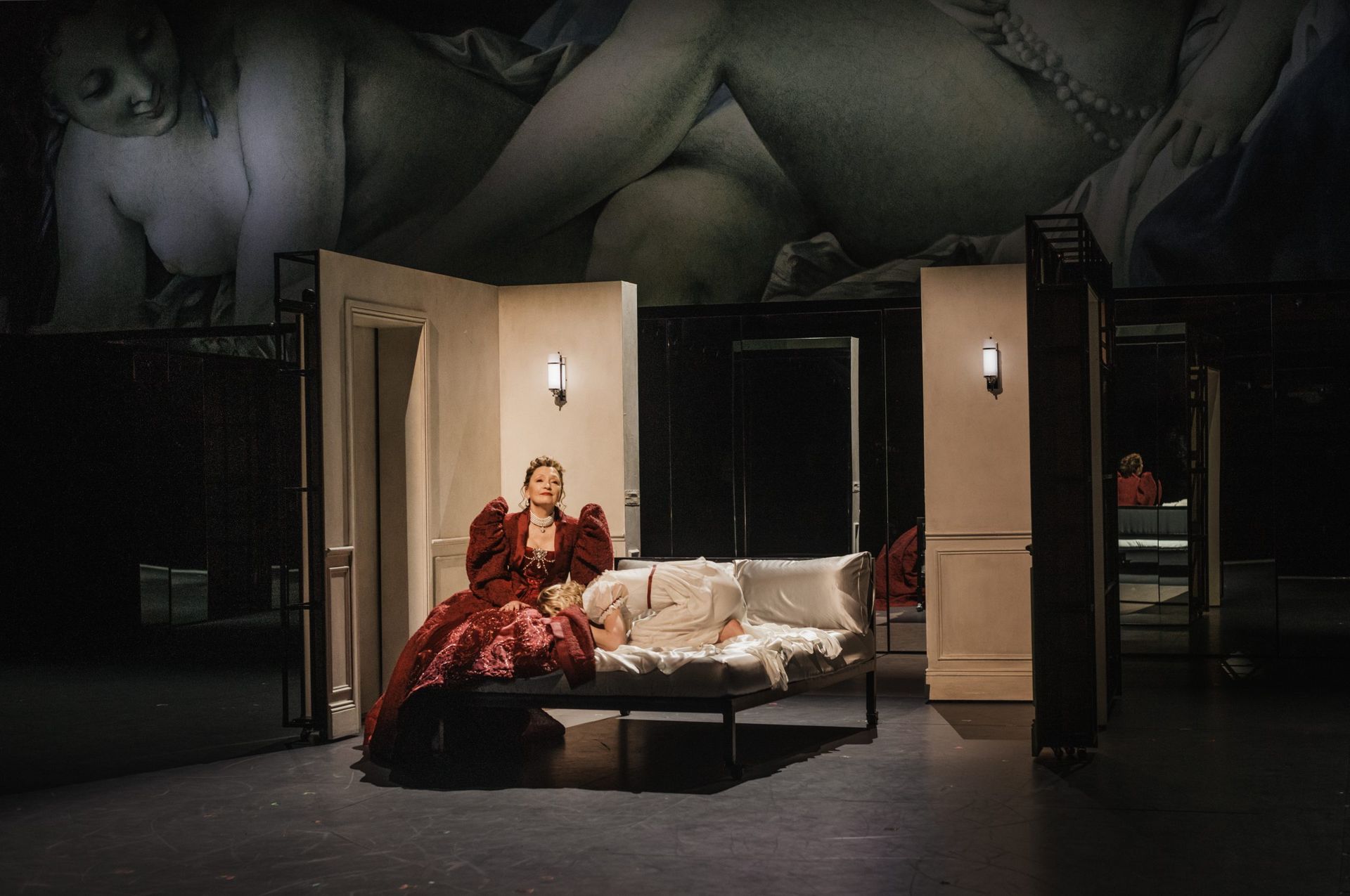
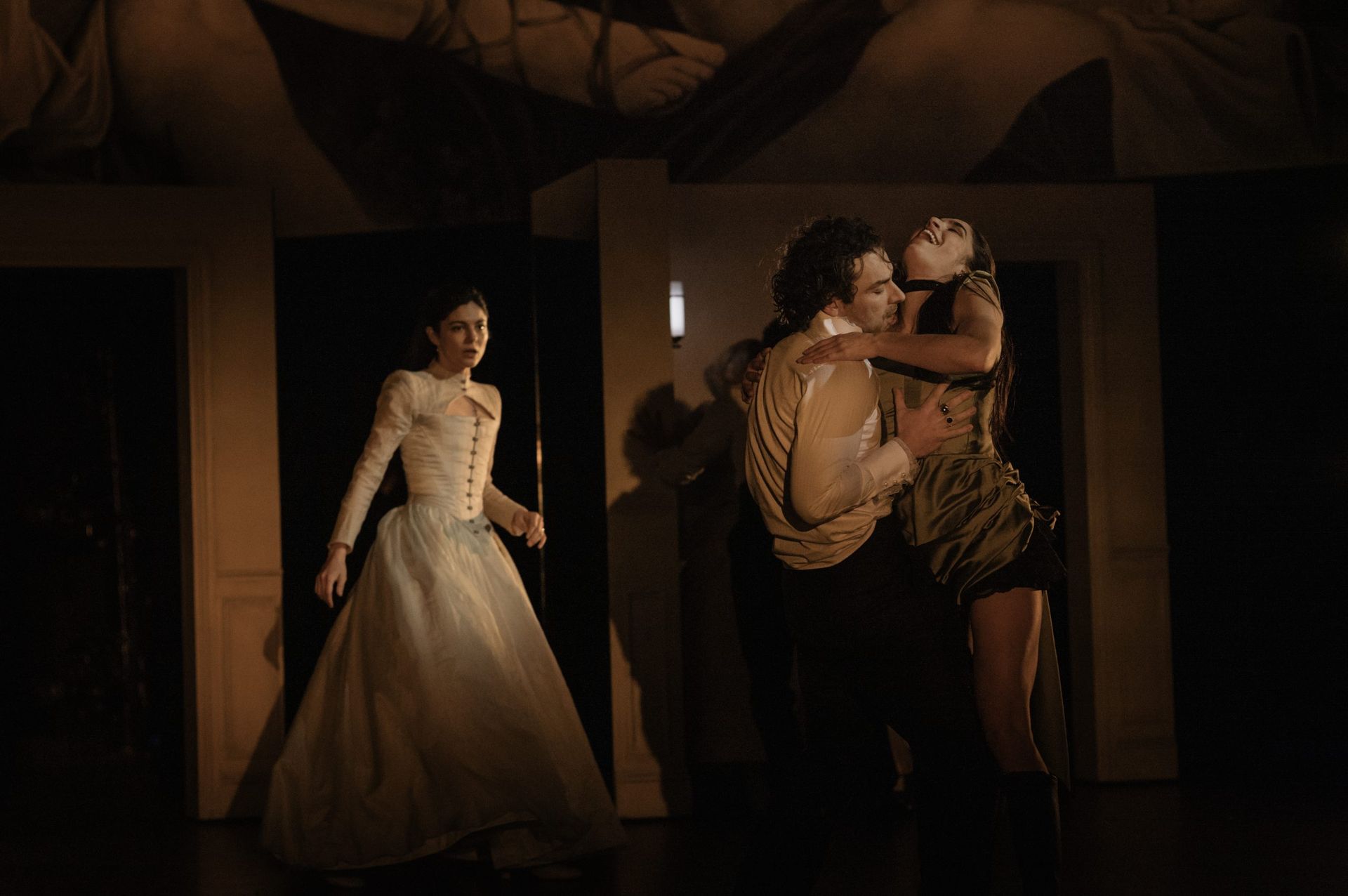
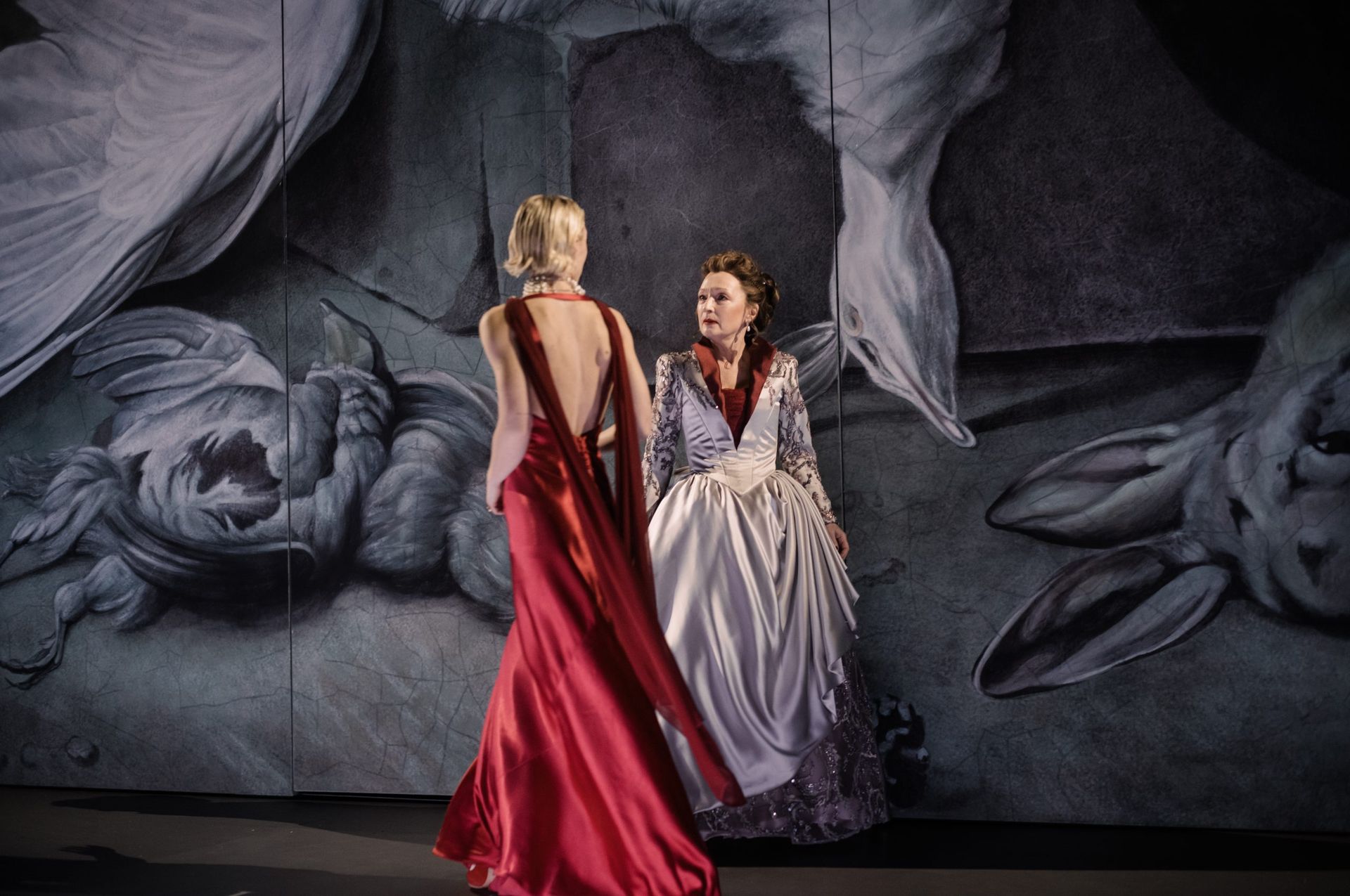
The ensemble, including Gabrielle Drake, Ishmail Aaron, Nandi Bhebhe and others, move with a choreographed precision that turns seduction into something almost athletic. Tom Jackson Greaves’s movement direction and Jasmin Kent Rodgman’s score lend the production a pulse that is distinctly modern, while Rosanna Vize’s mirrored design traps the characters in their own reflections. Natalie Roar’s mouthwatering costumes balance opulence with suggestion, never quite letting us settle into period comfort.
What distinguishes this staging is its tonal discipline. There is little interest in coquettish decadence; instead, Elliott presents a colder proposition: that power without empathy is not glamorous, but terminal. The result is witty, incisive, and enthralling, a society dismantling itself one letter at a time.
Les Liaisons Dangereuses is playing at the Lyttelton at The National Theatre until 6th June 2026
Get your tickets at nationaltheatre.org.uk
Words by Joe Miller